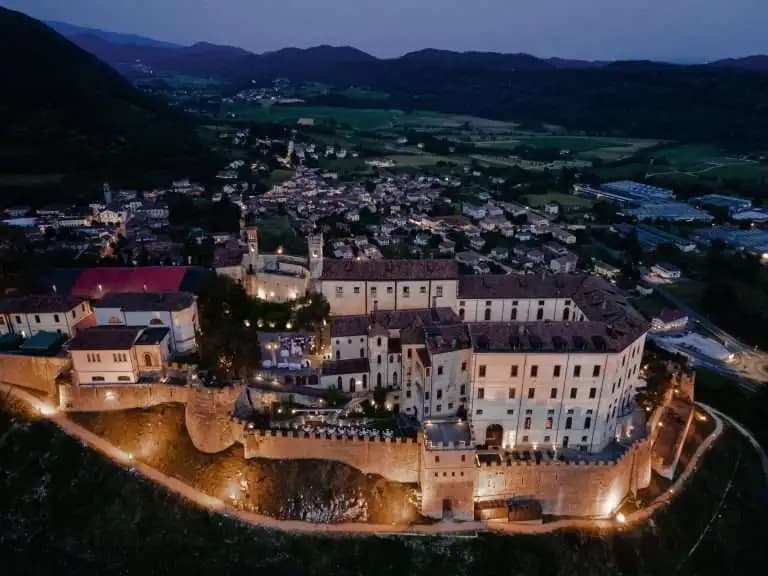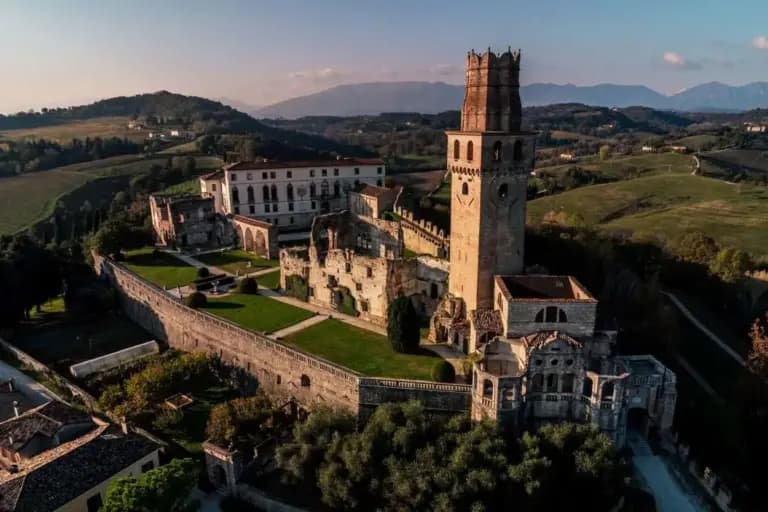

The grand remains of the fortified complex, whose foundation dates back to the dawn of the 11th century, rise on the summit of a green hill clothed in acacias, field elms, hornbeams, privets, horse chestnuts, mulberries, elder trees and many other shrubs and tall trees that follow its gentle slopes. Surrounded by mighty walls and deep moats, from the 12th century the castle area included the prisons, a domus communis and the podestà’s palace.
First mentioned in 1296, Porta Ser Belle bears witness to the prestige of the noble families who lived in the fortified area. Topped by a medieval tower, the sumptuous gateway that gives access to the castle from the north was the property of the lord and consort Corradino Belle until his death in 1313.
Similarly to the Ezzelini castle in Bassano del Grappa and the Scaliger castle in Marostica, the construction and expansion of the Conegliano stronghold shaped the territorial layout of the city, giving rise to an urban reality that in the 13th century had the majestic castle at its peak.
The formidable architectural complex was at once an expression of military power and an administrative reference point for the medieval village. Resting between the base of the wooded slope and the banks of the Monticano, the citadel was home to flourishing commercial activities, religious institutions and charitable works.
In the 14th century, under the supremacy of the Scaligeri and the Carraresi, the defensive system reached its maximum expansion with the construction of an imposing fortress, protected by several towers and surrounded by a curtain wall connected to a sophisticated network of moats.
The Castle Garden
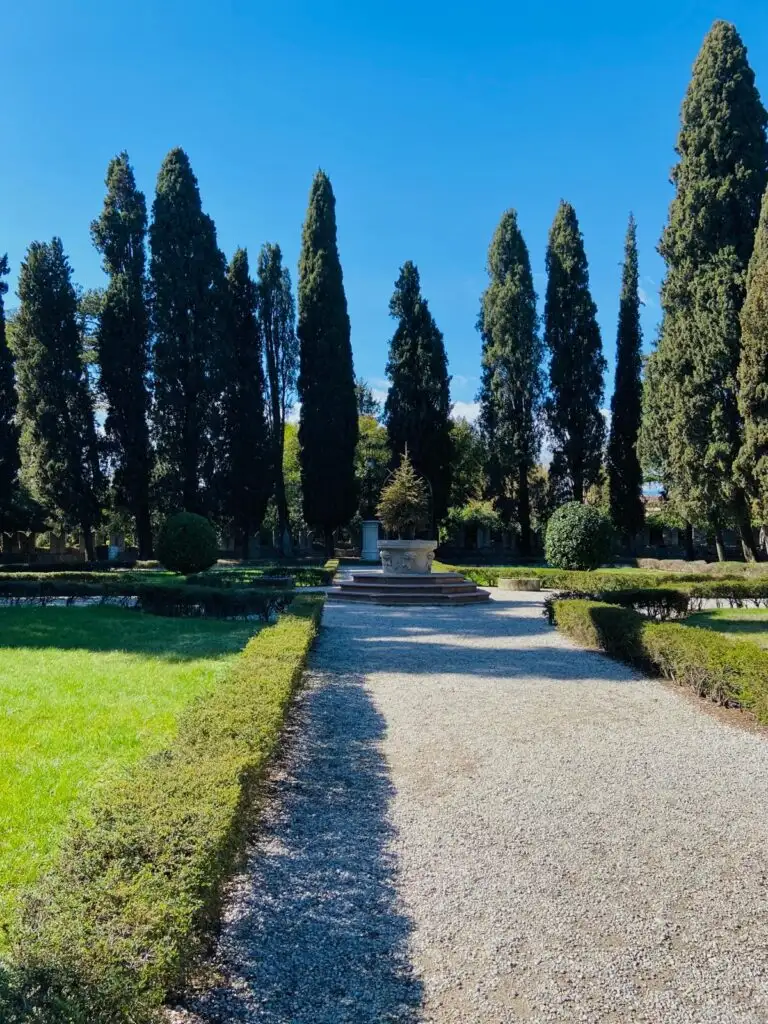
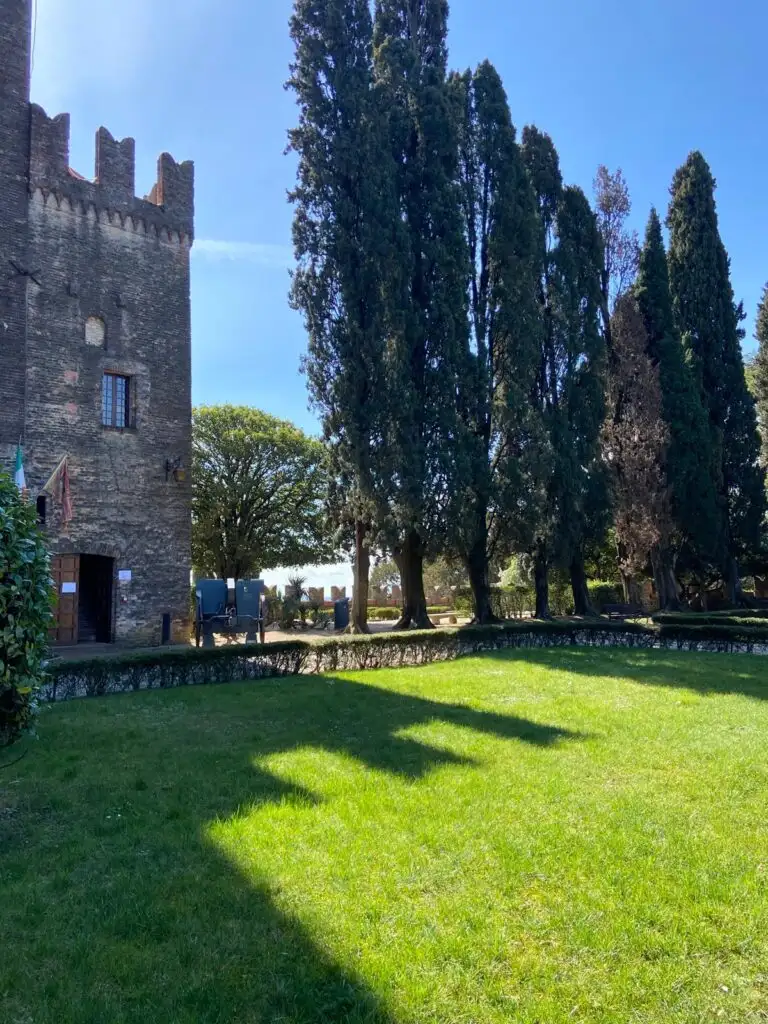
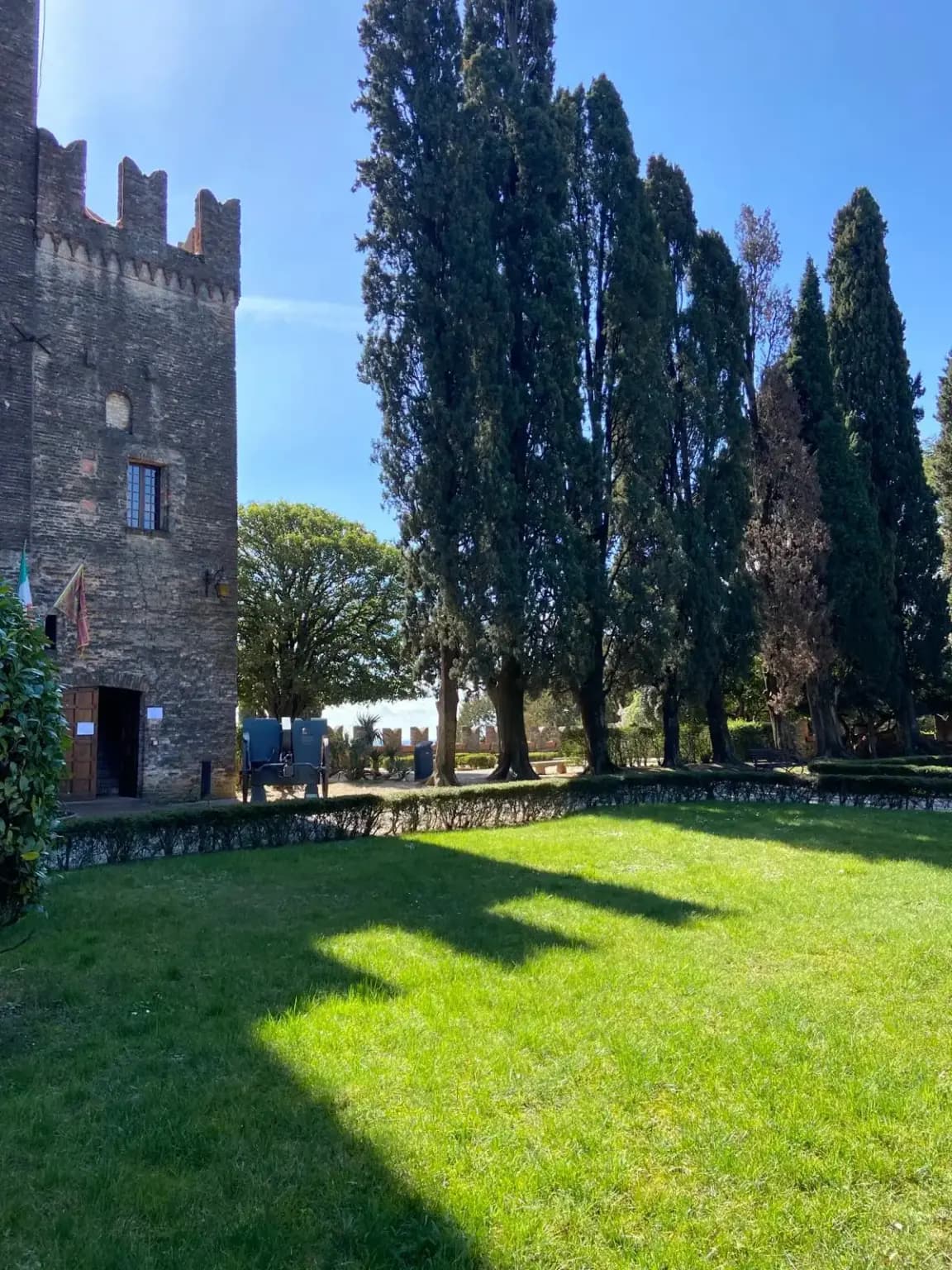
Once the summit area of the hill is reached, the dense tree cover that blankets the slopes gives way to the strict geometries of a terraced Italian-style garden, accessible via a stone staircase. Competing with the natural world, the soaring keep rises in height alongside elegant rows of cypresses that frame refined flower beds. These are defined by box hedges and crossed by two perpendicular gravel paths. At the meeting point of the two walkways stands a wellhead, formed by three octagonal steps and softened by plant motifs.
To the east of the Castle stretches Piazzale San Leonardo, a splendid cobbled panoramic area in the center of which stands out a stone well, surrounded by four concentric octagonal steps. Located at the eastern end of the square, the church of Sant’Orsola incorporates the apse and a side chapel of the church of San Leonardo, whose presence is documented since 1179. The white bell tower of the oldest medieval place of worship has also survived the test of time, softened by graceful mullioned windows.
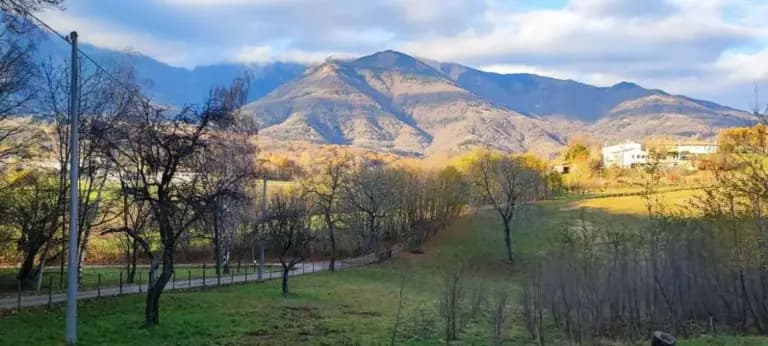
From the privileged position of the square, in the shade of tall maritime pines from which a fresh, balsamic aroma rises, looking north you can enjoy a fairytale view of the morainic hills that delimit Val Lapisina to the south, shaping the landscape on the horizon with their sinuous profile.
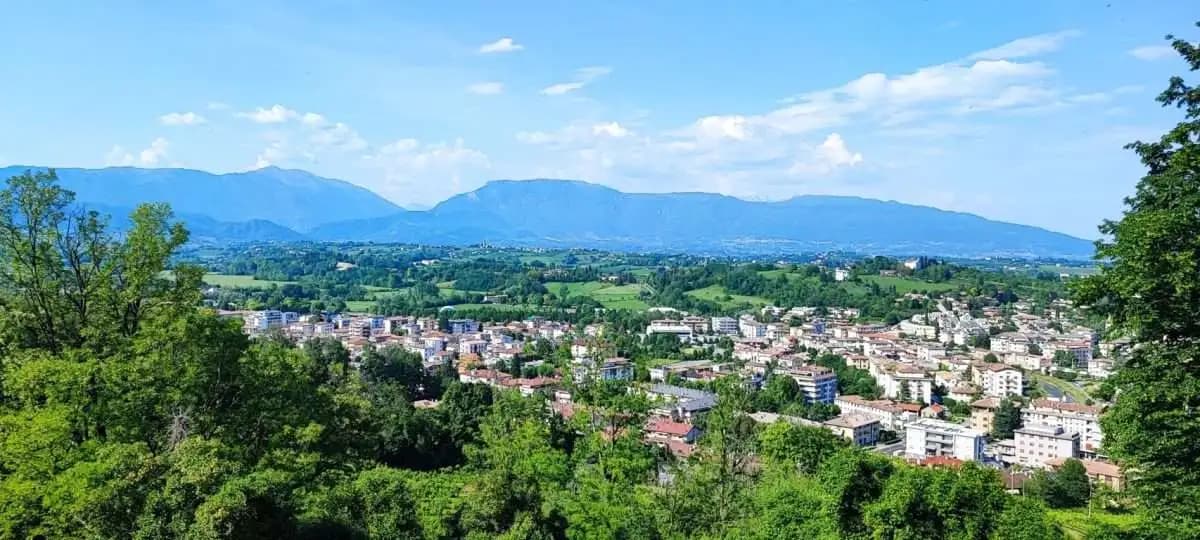
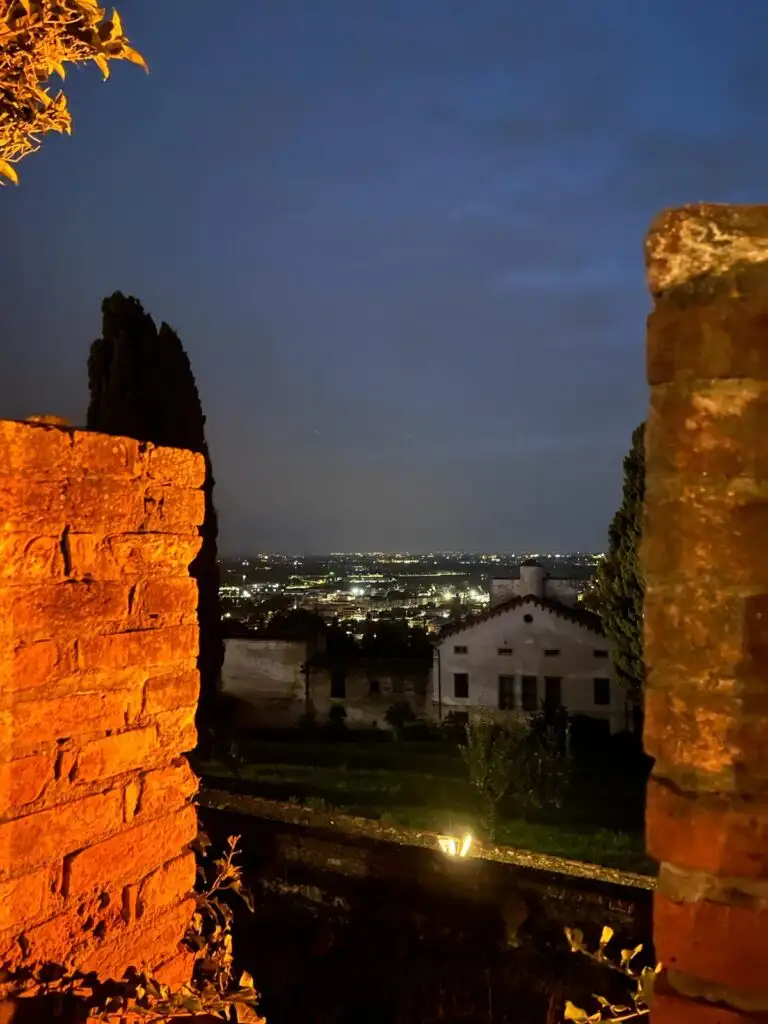
To the south, the view opens over the historic center of Conegliano, dotted with porticoed historic houses, bell towers and frescoed churches. The eye rests on the Monticano, whose course crosses the urban heart of the city and then winds through the vineyards and orchards that define the rural landscape of the Treviso plain.
On the southern slope of the bright hill, the white neoclassical bulk of Villa Gera stands out against the greenery, its majestic octastyle pronaos representing one of the city of Conegliano’s most captivating symbols.
The Keep
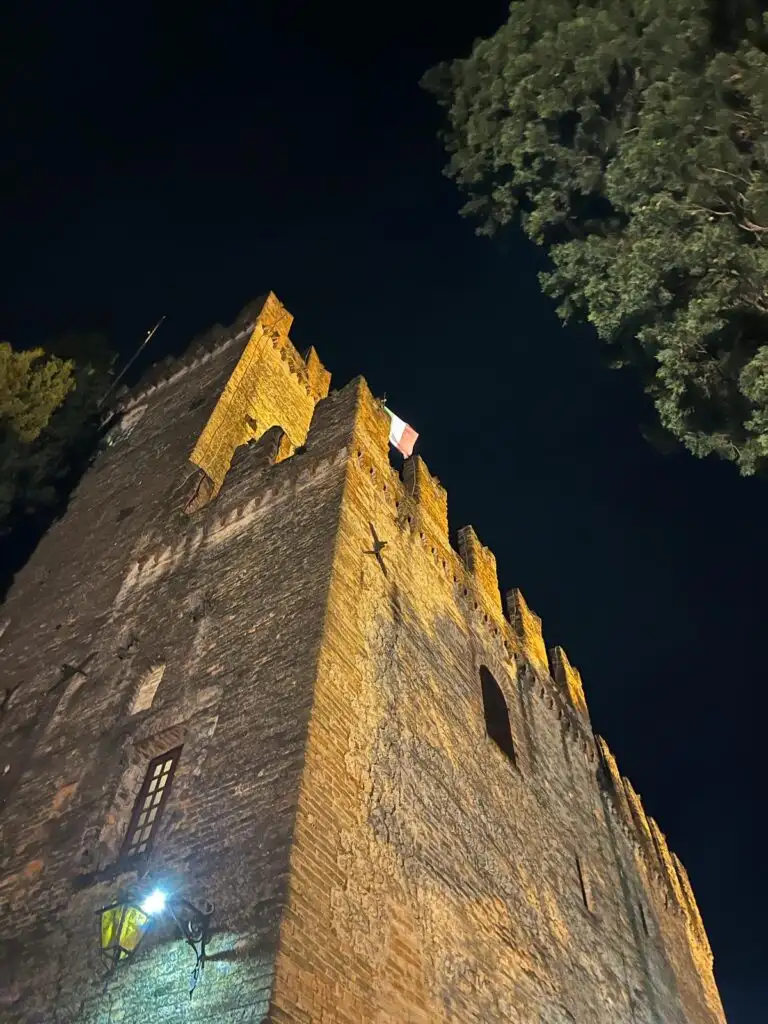
Standing guard over the inner watch court, the mighty crenellated tower tells, like a book, the various chapters that have marked its history, from the time of its foundation to the different phases of reconstruction and expansion that followed one another over the centuries.
The slender splayed loopholes that open like deep grooves in the walls of the exposed brick structure date back to the period of Scaliger domination. The small arched windows on the upper floor, on the other hand, date from the 1467 renovation.
Crowned by the anachronistic Ghibelline battlements, the upper section of the tower is the result of a mid-19th-century reconstruction, carried out after the bell chamber and the lookout post above it collapsed in 1491.
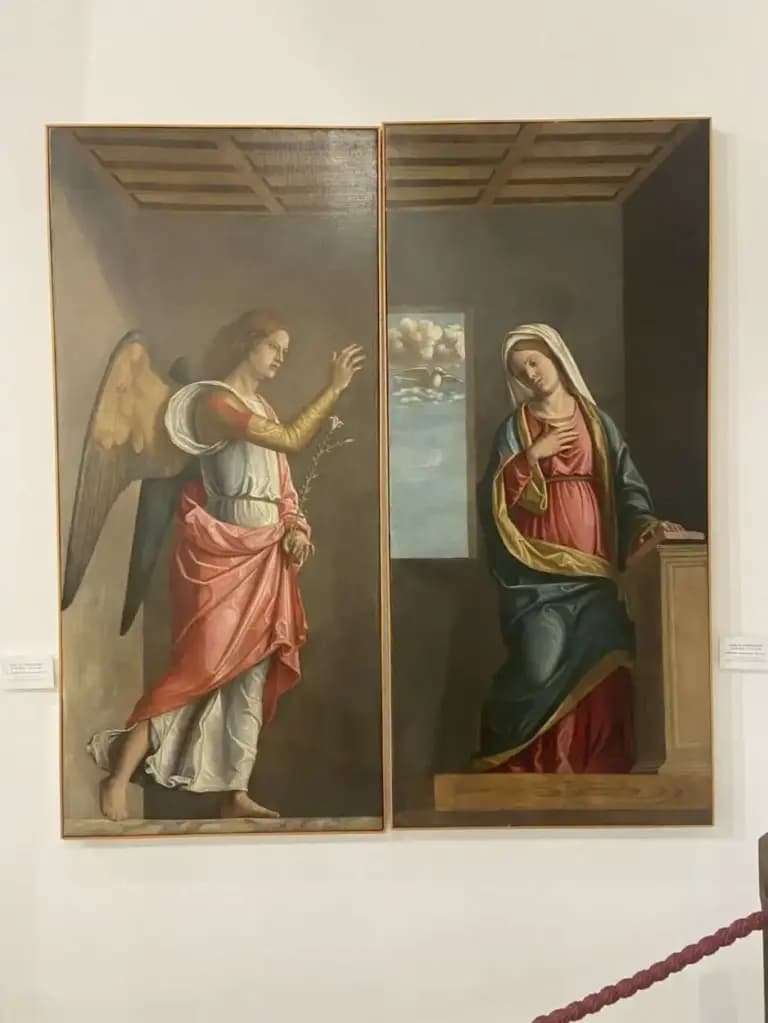
From 1946 onward, the stately rooms of the Watchtower have housed the Civic Museum, which safeguards priceless paintings, centuries-old documents and archaeological finds that bear witness to the ancient historical and cultural roots of the city of Conegliano.