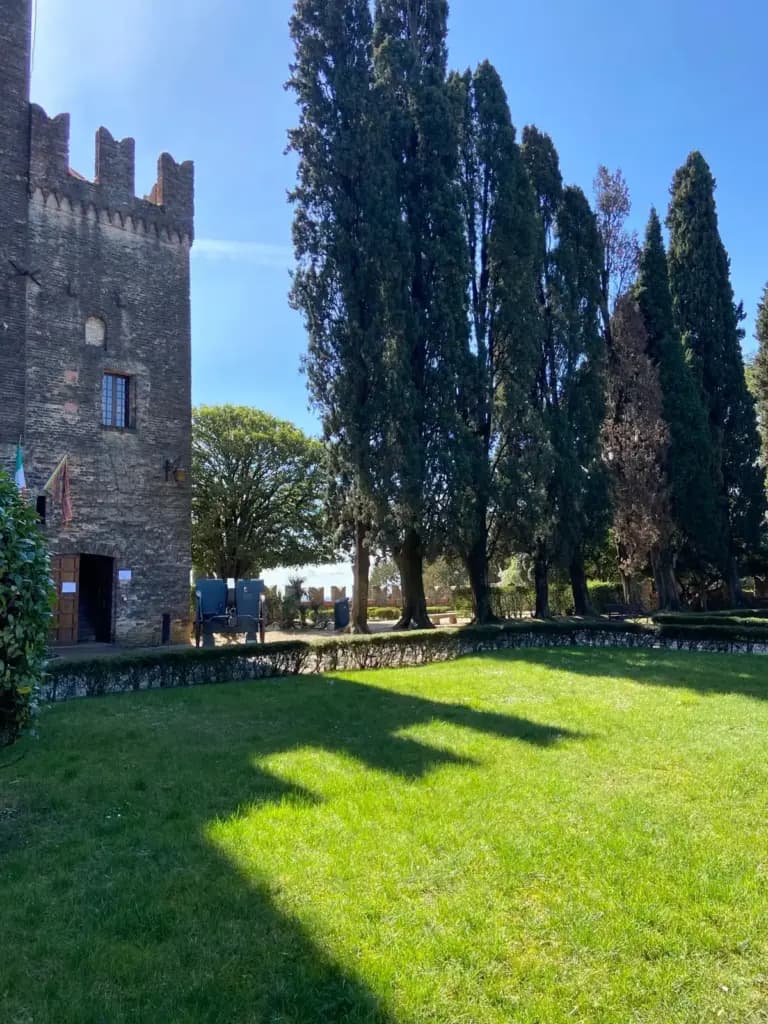

Since 1946, the Bell Tower has housed the Civic Museum of Conegliano, preserving priceless paintings, cartographic documents and archaeological finds that bear witness to the value of the city of Conegliano’s historical and cultural heritage.
The archaeological section
Among the prehistoric finds unearthed in the area and currently on display in the archaeological section, one stands out in particular: a 6,000-year-old stone saddle quern, as well as several flint tools, ceramic vessel fragments and food remains that testify to the presence of people in this area from the Neolithic to the Eneolithic period (late 4th – 3rd millennium BC) by a community linked to the Square Mouth Pottery culture, widespread in northern Italy during the 5th millennium BC.
In the 1970s, the finds brought to light during the restoration of Casa Cima confirmed the presence of human settlements on the hill during the Bronze Age in the period between the 14th and 13th centuries BC. Organized on terraces, these human groups were devoted to agriculture, livestock farming and pottery production. Excavation areas in Campolongo and the surrounding zones brought to light remains of rustic Roman dwellings in a centuriated area.
The vast array of historical finds ranges from a gigantic mammoth tooth, Bronze and Iron Age swords and axes, and a 1st-century BC funerary stele in which two magistrates are most likely portrayed. These finds were uncovered respectively in Monticella, Revine Lago, Falzé di Trevignano, Colfosco di Susegana and Campolongo.
Frescoes of the Civic Museum of Conegliano
Once past the entrance to the Bell Tower, it is easy to be struck by the Renaissance fresco that once adorned the apse area of the church of S. Antonio Abate dei Canonici Lateranensi in Conegliano, a place of worship that no longer exists. Executed in 1514 by Giovanni Antonio de’ Sacchis, better known as Pordenone, the fresco depicts Mary Magdalene, Saint Catherine and two saints flanking a representation of the Madonna and Child. The latter shows stylistic features different from those of the rest of the work.
Particularly worthy of mention are the three frescoes from Palù di Fossamerlo, San Vendemiano (TV). These 15th-century works depict the Madonna enthroned among Saints, the Crucifixion and the Last Supper. The latter is attributed to Giovanni Charlier, known as Giovanni di Francia. Notable details include the absence of forks and the presence of red river crayfish on the laden table, details also visible in the Last Supper decorating the walls of the Church of San Giorgio in San Polo di Piave, created by the same artist.
Also attributed to Giovanni di Francia is the fresco depicting episodes from the life of Saint Peter, detached from the small church of Zoppè in San Vendemiano.
The Art Gallery
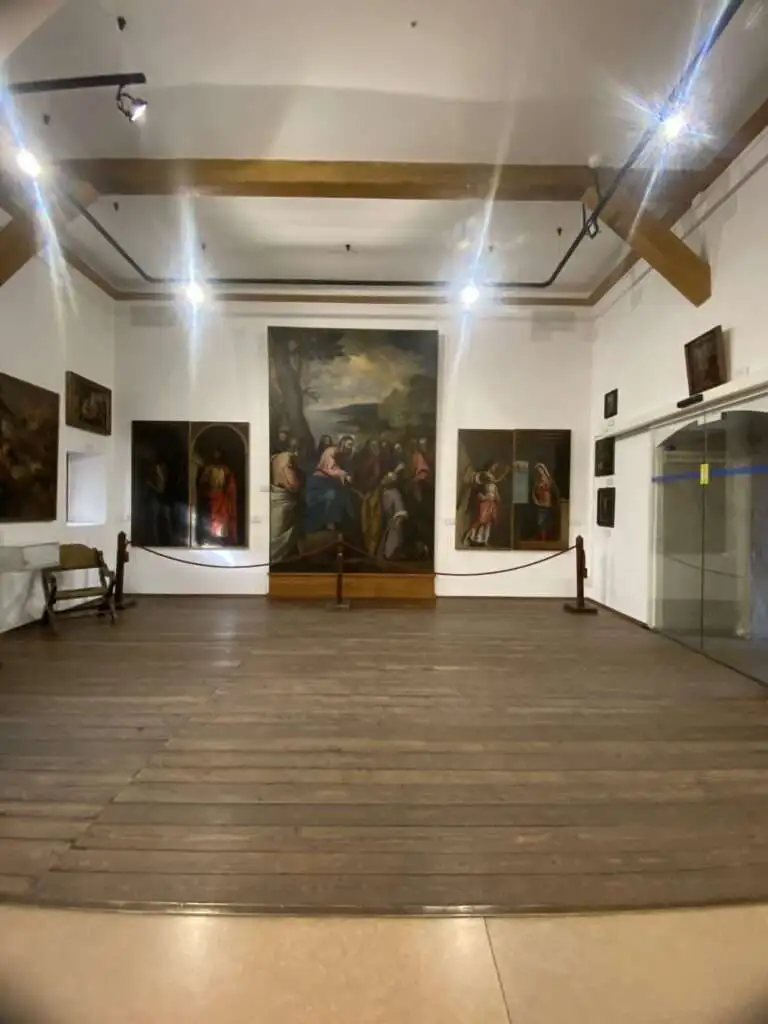
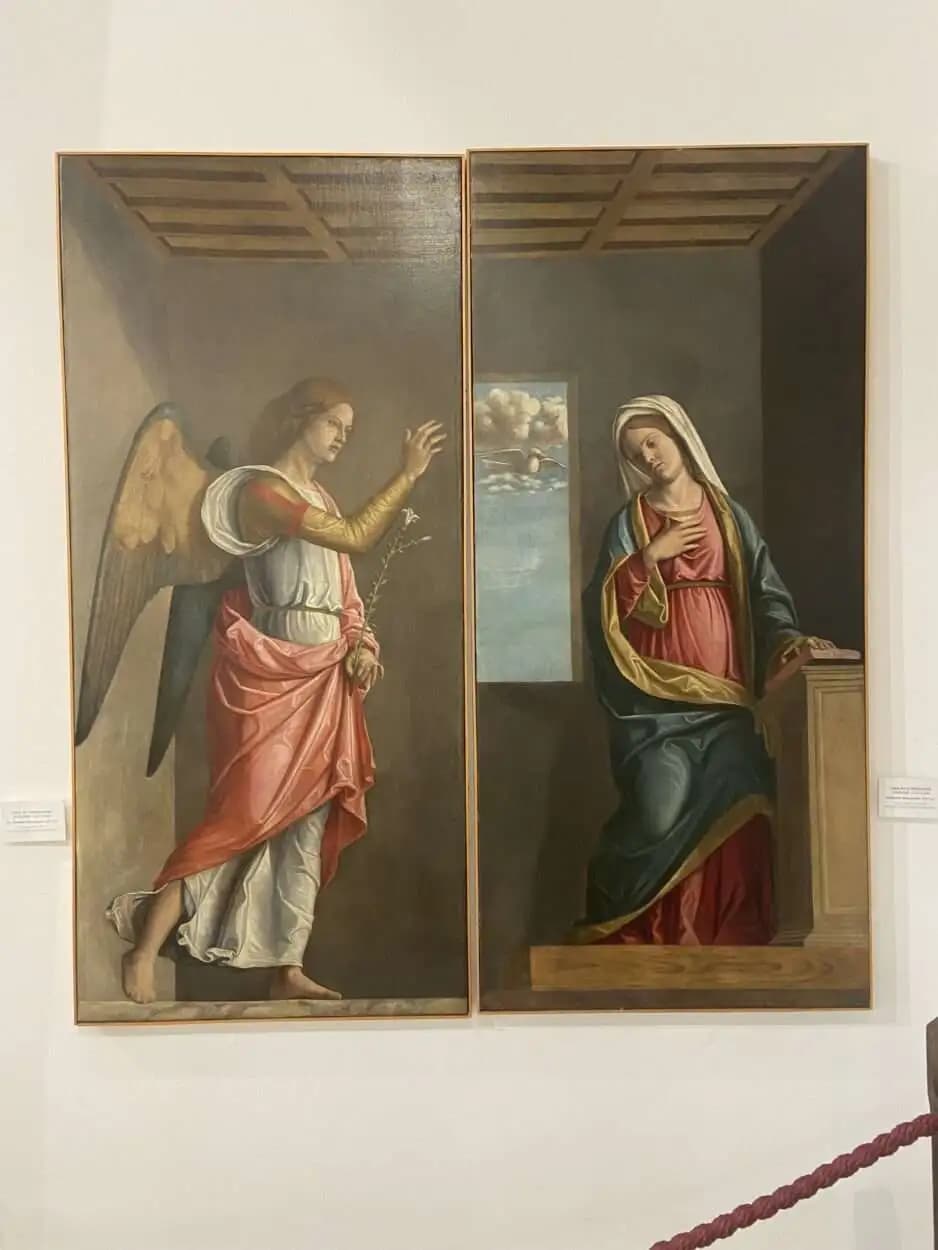
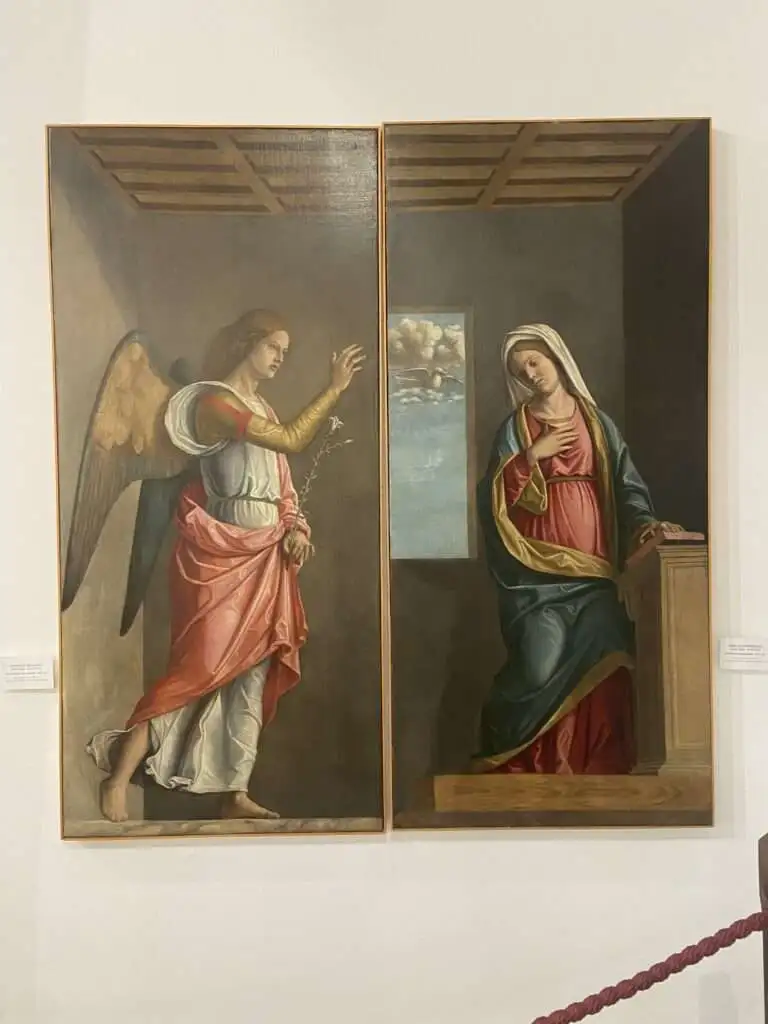
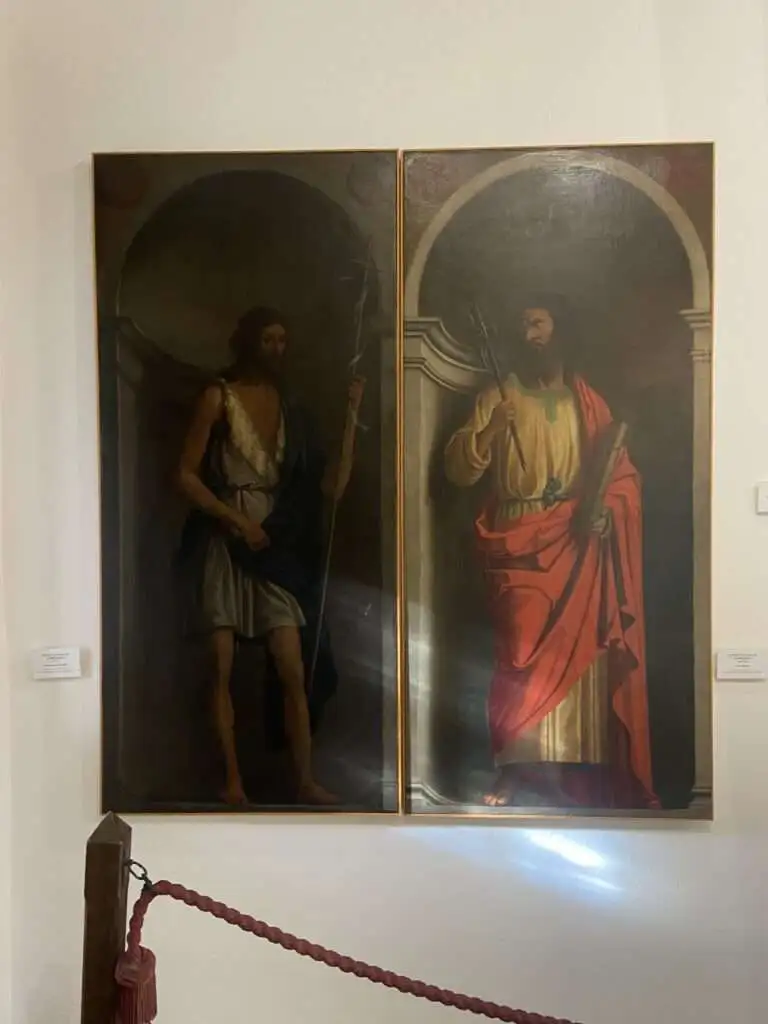
Among the most important works in the art gallery, special mention should be made of the organ shutters depicting the Annunciation of the Blessed Virgin and Saints John the Baptist and Thaddeus from the Workshop of Cima da Conegliano, dated between 1510 and 1517, and The Handing Over of the Keys to Saint Peter, made by Palma il Giovane between 1614 and 1616.
In 1987, Maria Teresa Ancillotto Mazzarolli donated eight paintings to the museum, among which stand out Saint Jerome Penitent attributed to Jusepe de Ribera, known as Spagnoletto (Xàtiva, 17 February 1591; Naples, 2 September 1652) and a depiction of the Madonna and Child, a copy of the Zingarella by Antonio Allegri known as Correggio (Correggio, August 1489; Correggio, 5 March 1534).
By Francesco da Milano (pseudonym of Francesco Pagani), a 16th-century Lombard painter, visitors can admire the Sacred Conversation. In addition to the enchanting Venetian-school portrait of Ambassador Antonio Foscarini, the collection includes the portrait of Admiral Vittore Garzoni by Pietro della Vecchia (Venice, 1603; Vicenza, 8 September 1678).
The museum route displays fine sculptures by Arturo Martini (Treviso, 11 August 1889 – Milan, 22 March 1947) and a late-17th-century terracotta oval depicting the Glory of Saint Anthony by Andrea Brustolon, an exponent of Venetian Baroque (Belluno, 20 July 1662 – Belluno, 25 October 1732).
The Fireplace Room
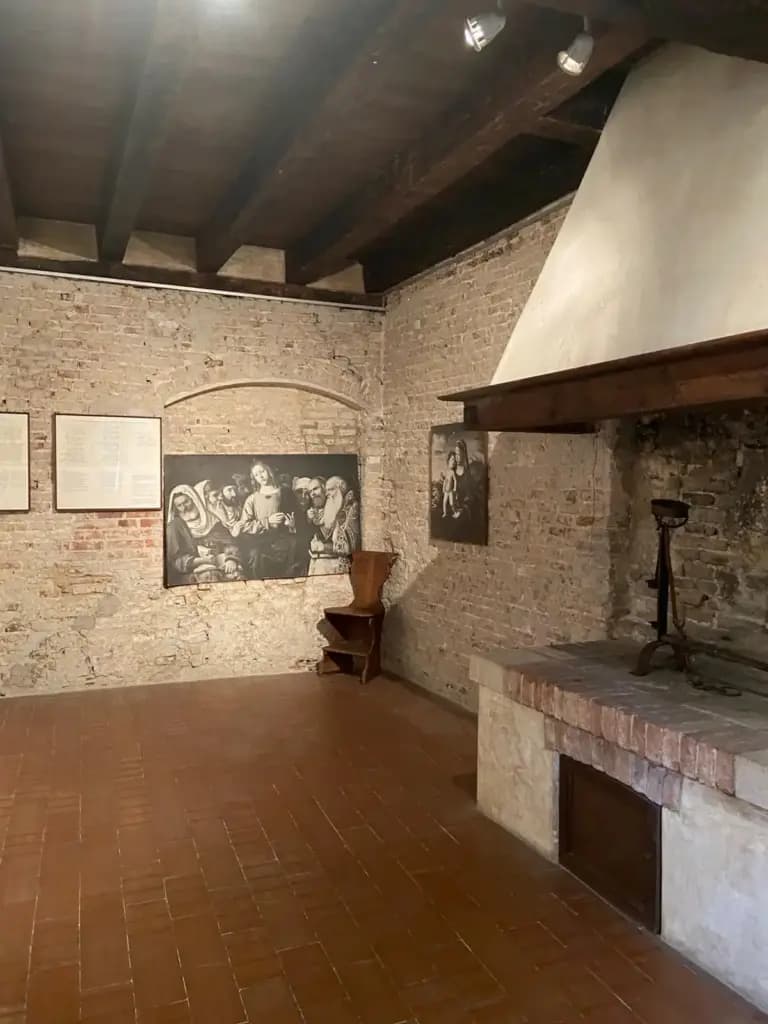
The star of the room on the first floor is a spectacular Venetian fireplace, whose shape recalls that of the ducal horn. Furnished with late Renaissance furniture, the Kitchen is adorned with fascinating and well-preserved armours from the same period. The room also displays six standard weights and measures of the Venetian Republic for controlling liquids, grain and other products.