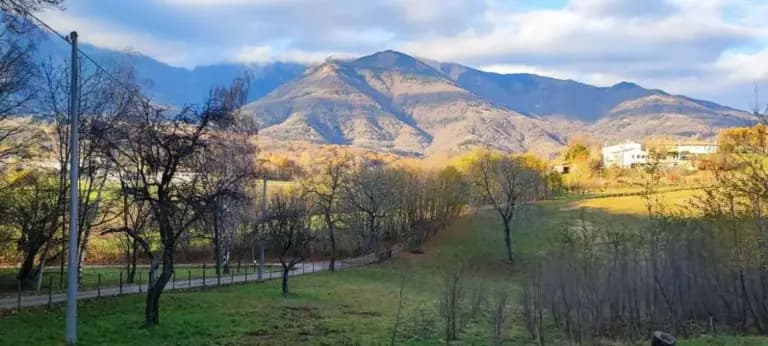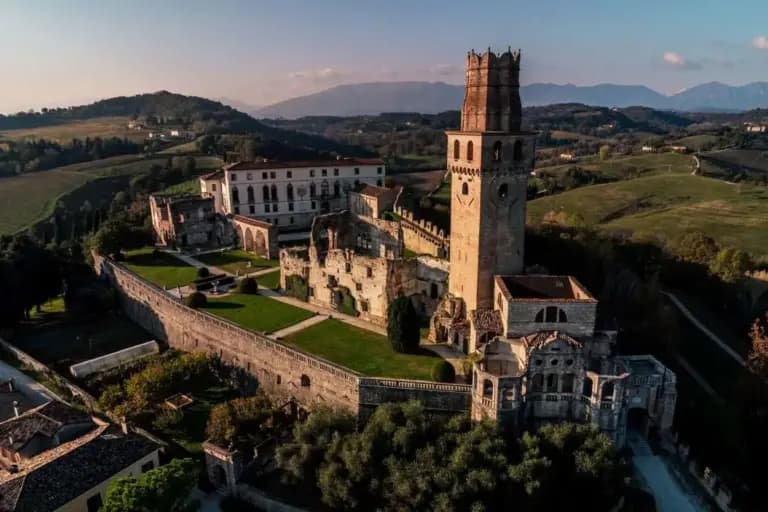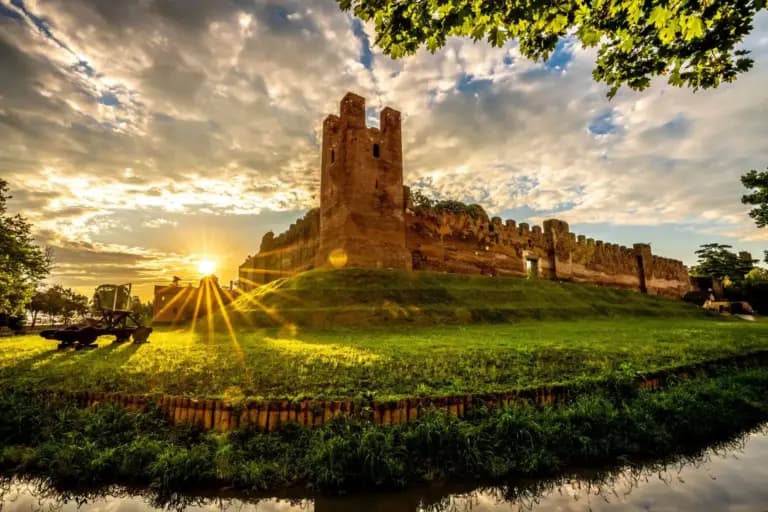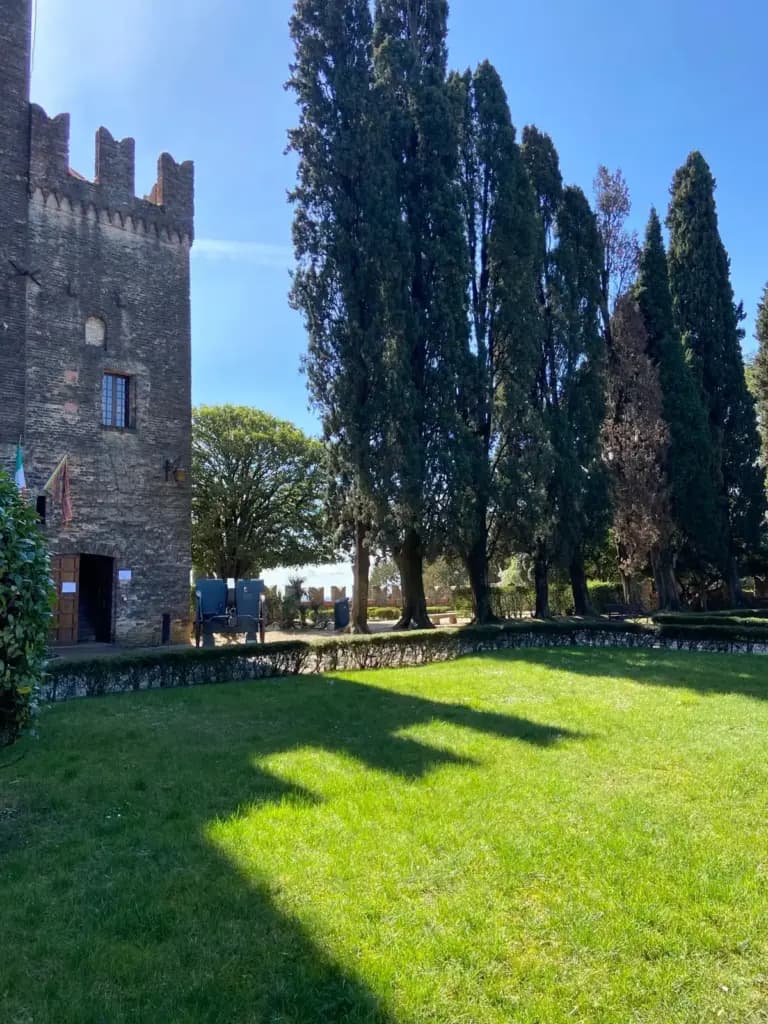

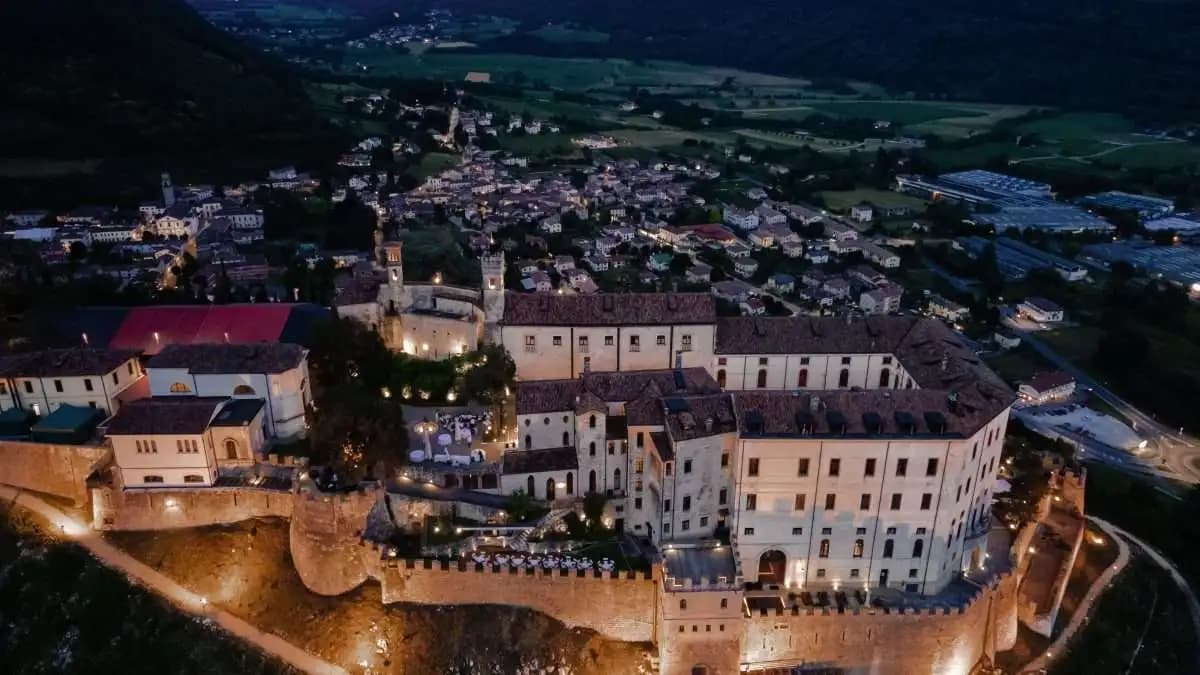
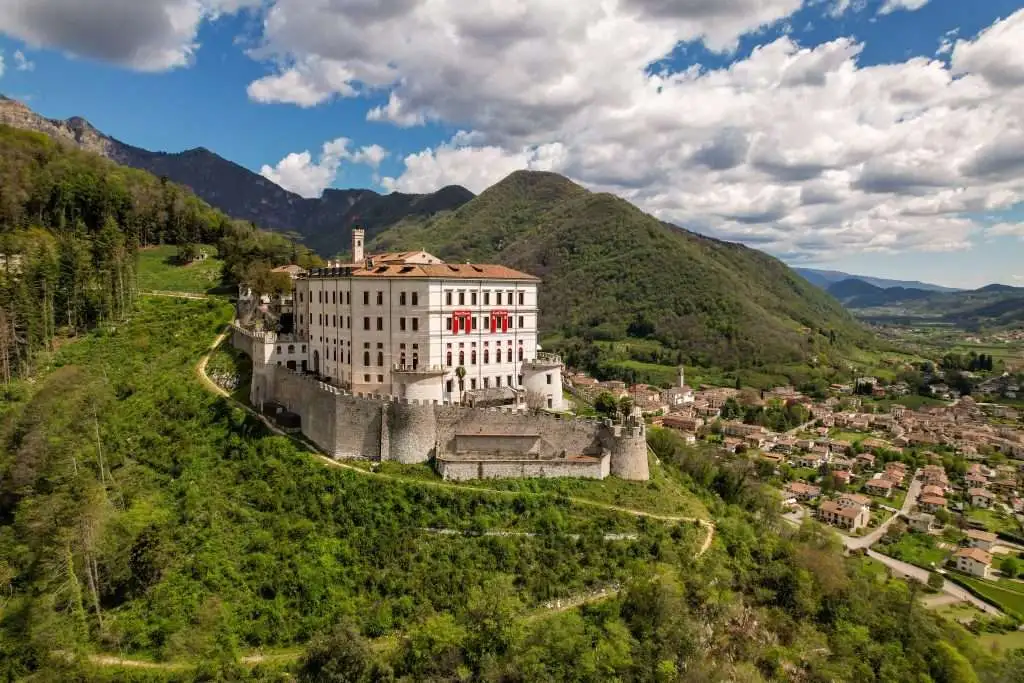
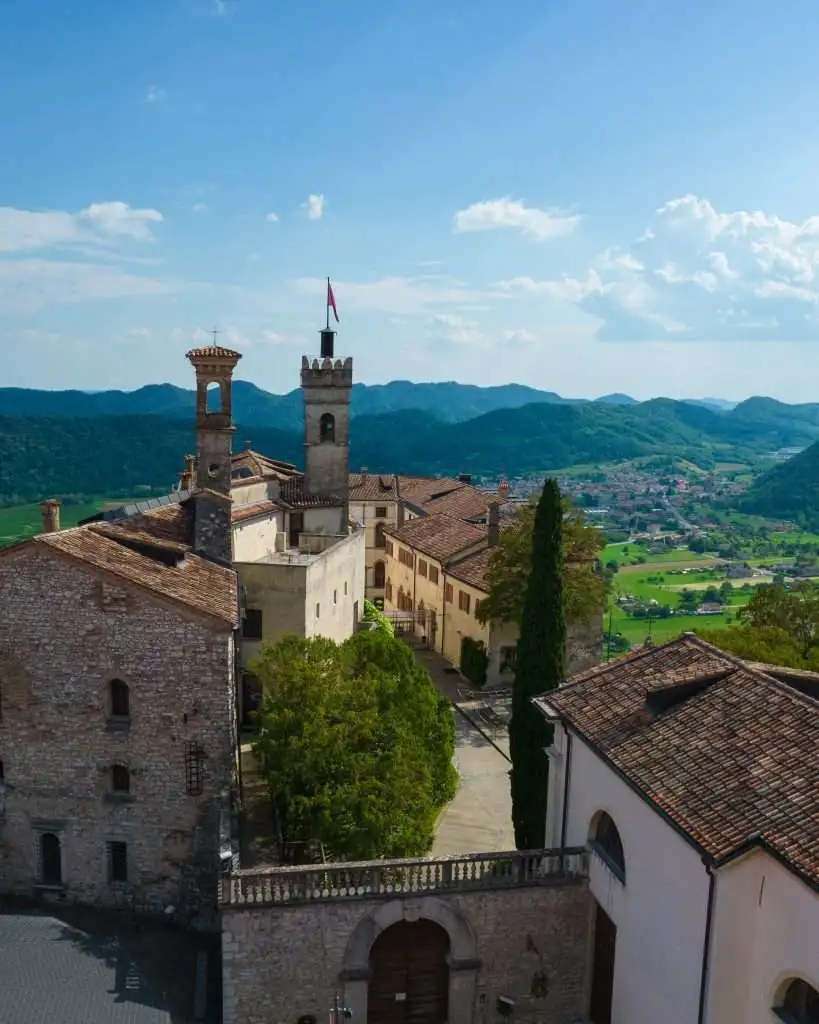
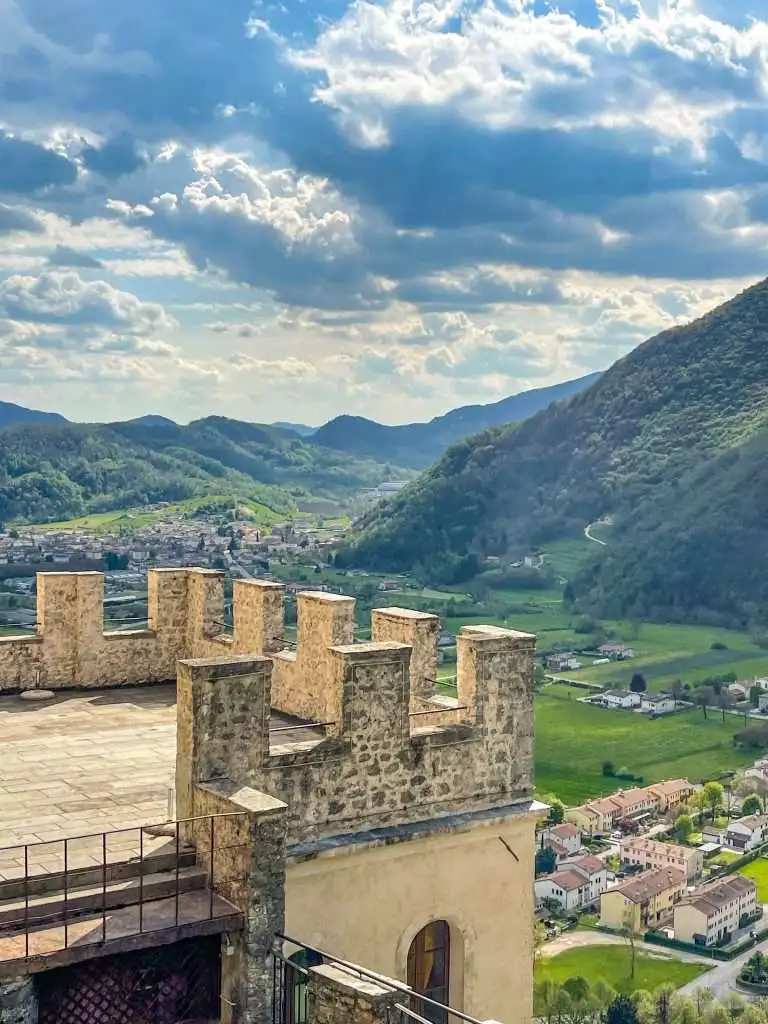
Sun-drenched wooded hills from whose belly pure crystalline waters spring, the millennia-old foundations of an imposing Roman fortification, and the bright frescoed rooms of a grand stately palace form a delicate balance where art, architecture, and unspoiled nature guide the visitor on a thrilling journey through time to discover one of the most extraordinary and ancient castles in Europe, from whose majestic crenellated towers one can gaze upon the pleasant landscape of Valmareno.
The Origins of CastelBrando
From Homo Sapiens to the Paleoveneti
Brought to light in the localities of Roncavazzai and Fondo Carnellion, just 5 km from CastelBrando, fragments of chipped flints attest to the presence of Homo Sapiens in the Venetian Prealps in 30,000 BC.
The most remote evidence of the presence of the Paleoveneti in the current site of the castle dates between 1000 and 600 BC.
The Roman castrum
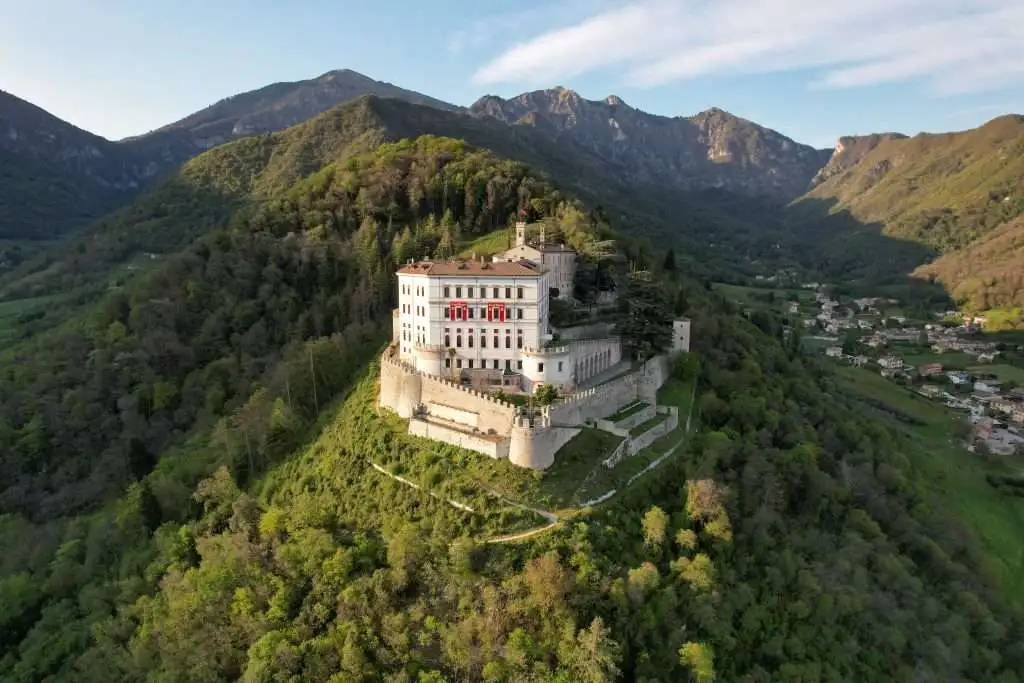
In the years between 20 and 30 AD, the Romans decided to build a fortified camp on the spot where the sumptuous castle now stands. The choice of location depended both on the dominant position of the hill and its proximity to the Via Claudia Augusta, built between 15 BC and 46 AD to connect the Po Valley to the Danube.
The water supply of the military fortification was ensured by 5 km of stone and terracotta conduits, a remarkable work of hydraulic engineering that drew water from the same springs that feed the castle today.
Of the Roman castrum, one can admire three mighty walls, a room for drying meat, and a large oven to supply bread for as many as two hundred legionaries.
From Barbarian Invasions to the Lombard Kingdom
The ruin of the thousand-year-old fort in 365 AD was caused neither by long sieges nor enemy incursions, but by a devastating seismic event. The intensity of the earthquake, estimated at around XI on the Mercalli scale, would have caused the collapse of the massive walls thirty meters high.
With the fall of the Western Roman Empire, between 360 and 476 AD, Valmareno became a territory coveted by the Goths, the Huns, and the Alemanni of Leuthari. It is said that even Attila, king of the Huns, camped in the Roman fort.
Putting an end to the barbarian invasions was the Lombard king Alboin, who in 568 began the conquest of northeastern Italy.
Queen Theodolinda
Daughter of Garibald I, first duke of the Bavarians, and granddaughter of Wacho, king of the Lombards from 510 to 540, Theodolinda was queen consort of King Authari until his death in 590. After the death of her second husband, Agilulf, duke of Turin, Theodolinda became regent of the Lombard kingdom from 616 to 624.
Much loved by her subjects, Theodolinda was the architect of the conversion of the Lombards to Catholicism, as evidenced by the presence of Lombard crosses engraved in many dwellings and fortresses, including the entrance to the castrum. During her reign, Theodolinda donated Valmareno to the Bishopric of Ceneda.
In 962, Otto I, King of Germany and Saxony, reconquered and returned to the Bishopric of Ceneda the territories of Valmareno that the Franks, led by Charlemagne, had invaded.
From Roman castrum to medieval castle
In 1154 the fief passed under the jurisdiction of the Caminesi following the marriage of Sofia di Colfosco, daughter of Valfredo, count of Colfosco, and Adelaide di Porcia, to Guecellone II Da Camino.
During the rule of the Da Camino, various expansion and modernization interventions led the fascinating vestiges of the Roman castrum to take on the characteristic features of medieval fortresses. A road and an entrance to the east were added to the architectural complex, with walls and soaring watchtowers.
Leaning against the east side, the prisons and a series of halls were built, still visitable today.
In 1335, the year Rizzardo III Da Camino died without male heirs, Valmareno returned under the jurisdiction of the bishopric of Ceneda, which enfeoffed the procurators of San Marco: Marco Morosini, Marco Giustiniani, and Giustiniano Giustiniani.
In 1343 the fief was entrusted to Rizzardo IV and Gherardo, of the Caminesi di Sotto branch, by the will of Bishop Ramponi.
The Da Camino and the Republic of Venice
Due to debts, the noble family ceded CastelBrando to the Republic of Venice, which enfeoffed it to Marin Faliero, the fifty-fifth Doge of the Republic of Venice from 11 September 1354 to 1355, the year he was beheaded on charges of conspiring against the Republic.
After 81 years of disputes, in 1436 Doge Francesco Foscari granted the county to the brothers-in-arms Erasmo da Narni, known as Gattamelata, and Brandolino “Brando” IV da Bagnacavallo.
Determined to pursue a military career, Gattamelata sold the fief for three thousand gold ducats to Brandolino IV, who thus became sole count of Valmareno and lord of Solighetto.
The War of the League of Cambrai
At the head of a small army, Gianconte Brandolini, Brandolino’s nephew, liberated the cities of Feltre, Belluno, and Vittorio Veneto, which Emperor Maximilian I of Habsburg had conquered.
Learning of the emperor’s intention to march towards Feltre at the head of an army of forty thousand men, Gianconte Brandolini gave further proof of his strategic abilities by taking refuge in the mountains, then reconquering Feltre and pushing almost to Trento.
From medieval fortress to Renaissance castle
Gianconte Brandolini’s grandson, Antonio Maria, entrusted the architect Jacopo Sansovino, Proto of the Republic of Venice, with the design of the Renaissance wing to soften the severe and austere character of the castle.
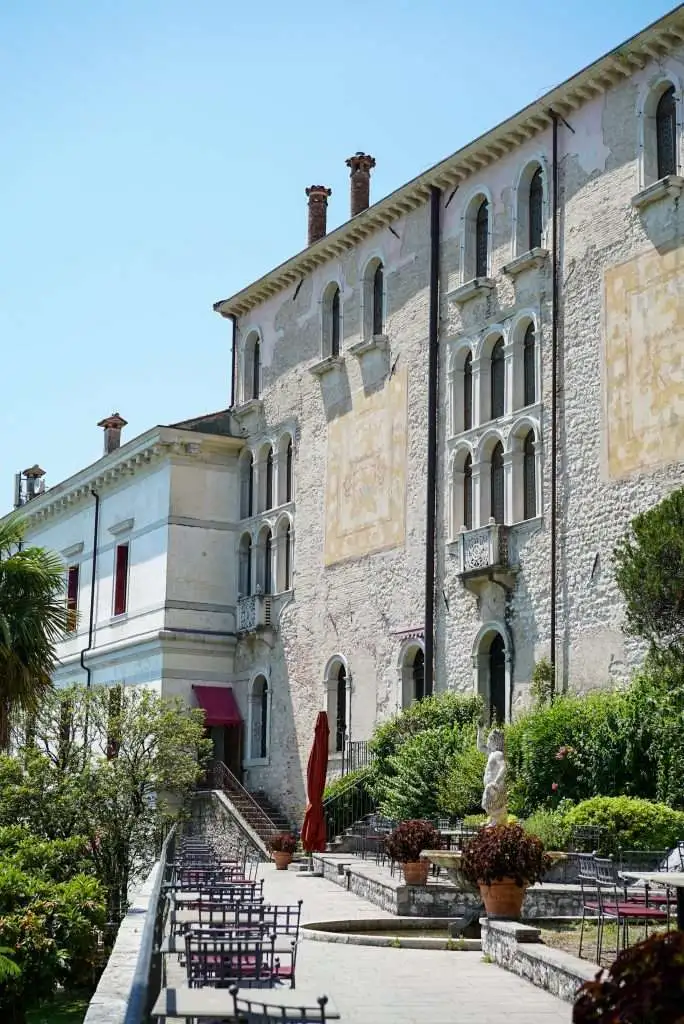
It is likely that Queen Caterina Cornaro played a significant role in the modernization of the stately palace, as evidenced by the elegant mullioned and three-mullioned windows opening onto the sixteenth-century facade, and by the coats of arms that affirm the link between the Brandolini and the houses of Cornaro, da Collalto, and Malatesta.
The Sansovino Theatre
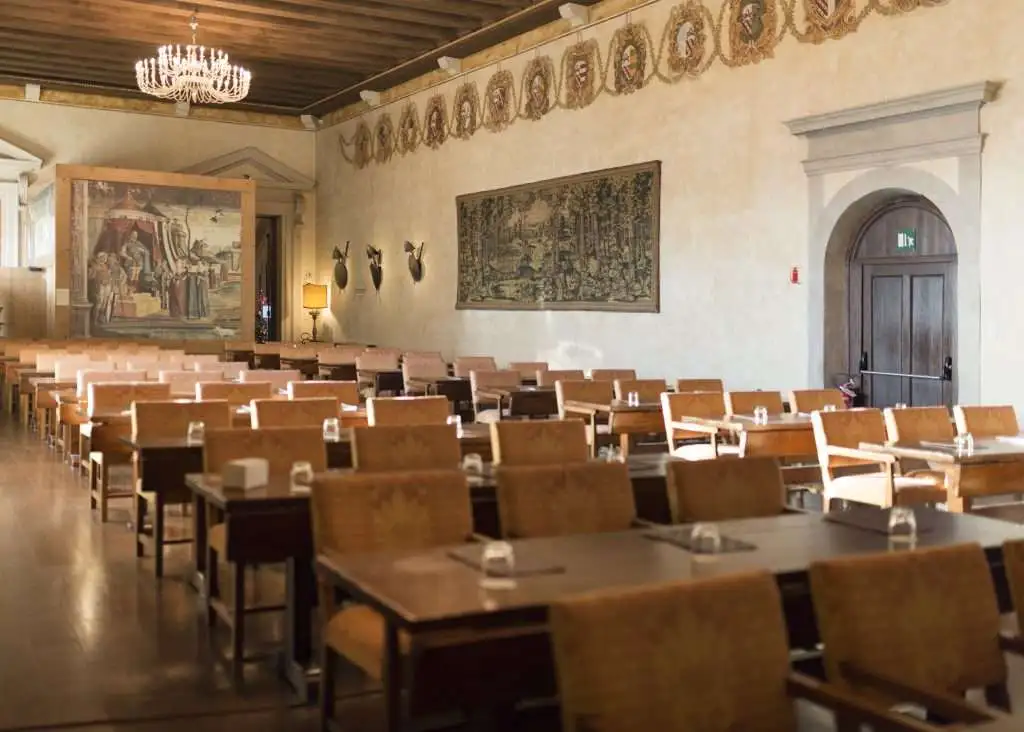
The Sansovino Theatre dates back to 1683, set up by order of Guido IX Brandolini in the Renaissance wing designed by Sansovino to host receptions, balls, and musical performances. Severely damaged by a fire and an earthquake, in 1872 and 1873 respectively, the castle was restored by the will of the brothers Brandolino, Vincenzo, Sigismondo, Guido, Paolo, Annibale, counts Brandolini.
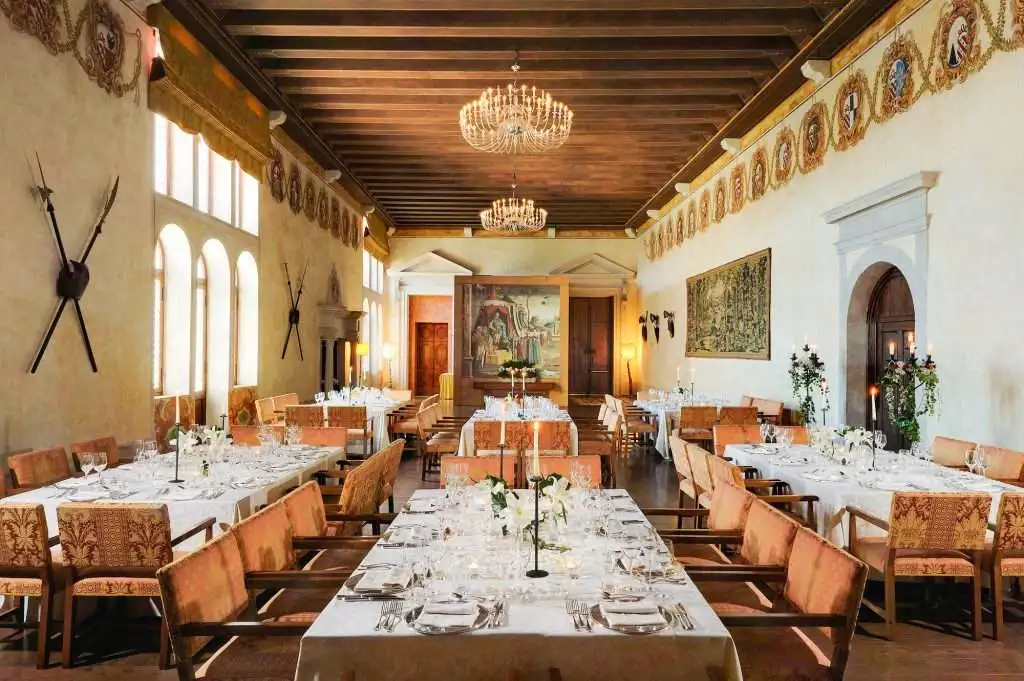
Also known as the Hall of Coats of Arms, the Sansovino Theatre displays along its walls the heraldic emblems of the Brandolini from 1240 to 1934.
Crowned by two white fireplaces that Queen Cornaro donated on the occasion of her niece’s wedding, the Sansovino Theatre is accessible from the inner courtyard through a solemn 16th-century entrance in alabaster with diamond decorations.
CastelBrando in the 18th century
After demolishing a part of the castle deemed shapeless and irregular, between 1710 and 1730 architect Ottavio Scotti designed an imposing horseshoe wing in classical style.
The architect also took care of providing the imposing central walls with a complex air conditioning system using hot air produced by an 18th-century wood boiler, still visible today.
Certainly worthy of admiration is the courtyard garden, with the foundations of medieval and Renaissance buildings exposed.
One of the most evocative exhibitions of the formidable manor is the collection of weapons and armor from the 13th, 16th, and 18th centuries that adorn the main hall, composed of sixty-nine monolithic steps, divided into five orders by five Venetian terraces.
In the cryptoporticoes, ancient restored carriages are also kept, tracing thousands of years of history, from the Roman chariot to the hunting break.
The little church of San Martino
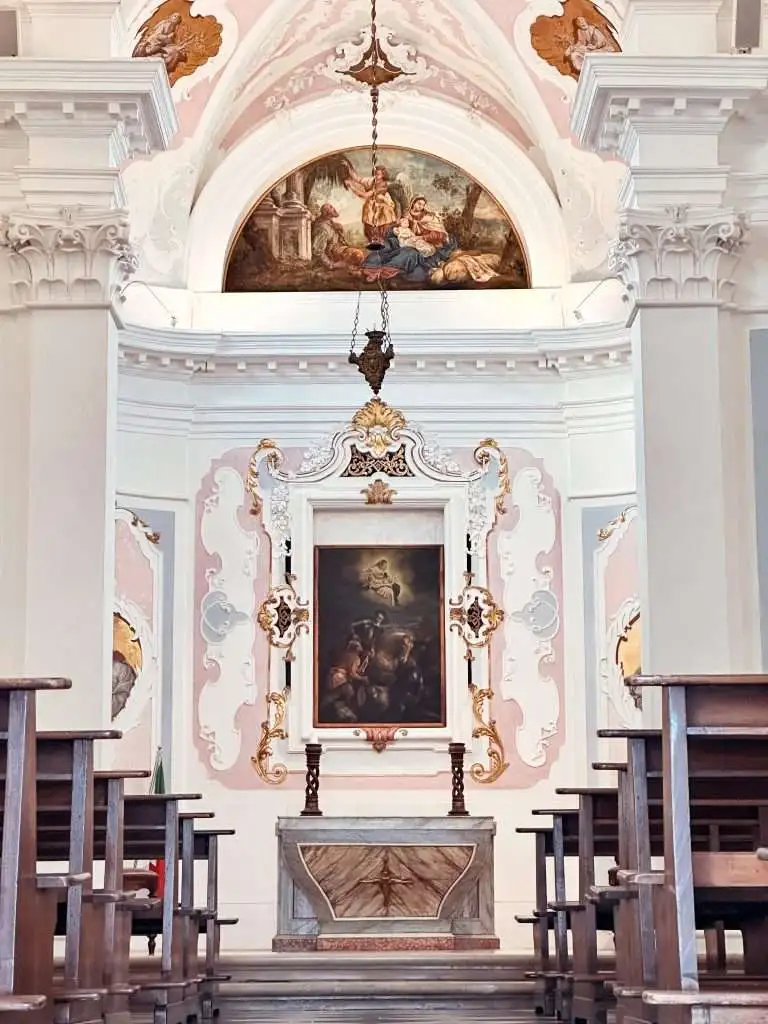
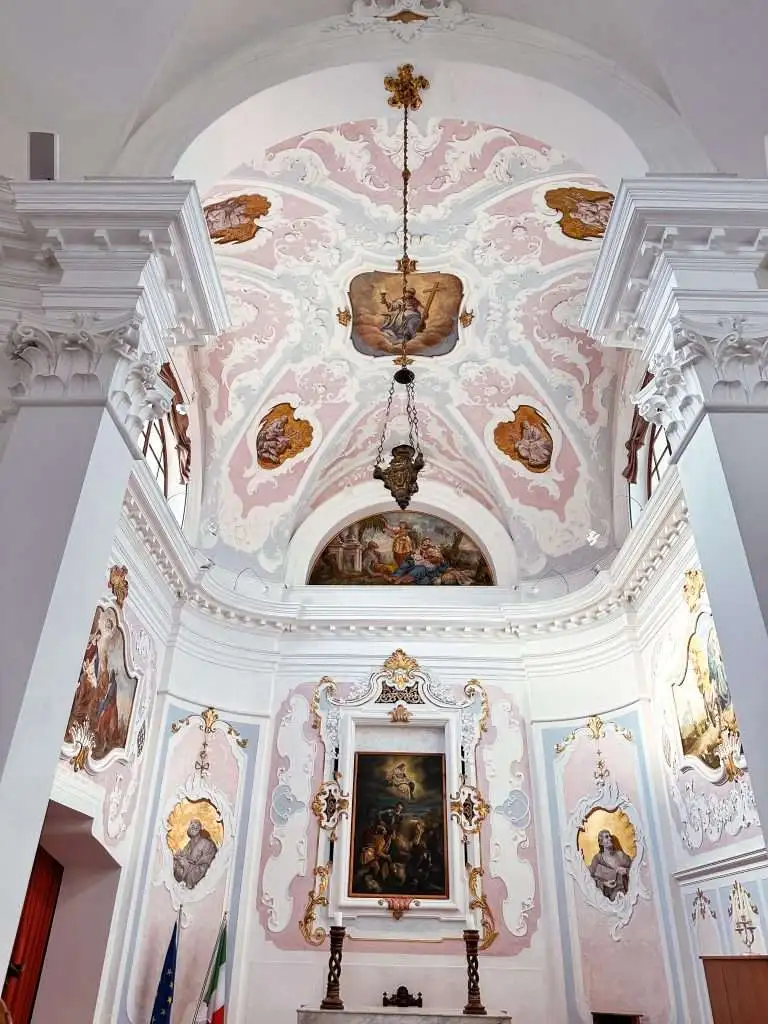
The 18th-century church stands on the remains of a 13th-century Romanesque church and probably on the ruins of a Roman votive temple.
The place of worship expresses a balanced synthesis between classical architectural style, the work of Ottavio Scotti, and the refinement of the rocaille stuccoes and frescoes by Egidio Dall’Oglio, characterized by a style tending towards Rococo, depicting the twelve Apostles, Saints Paul, Titus, and Peter, the Rest on the Flight into Egypt, the Flight into Egypt, the Nativity, and the Assumption of the Virgin.
The work depicting Saint Martin, to whom the church is dedicated, is by a student of Jacopo da Bassano.
In the center of the nave, there is a trapdoor bearing the inscription ‘Impavidum ferient’, the motto of the Brandolini taken from the famous phrase of Horace ‘Impavidum ferient ruinae’ (the ruins will strike him in vain).
In the church are the ossuary of the Brandolini from 1200 and the family tombs after 1800 up to the last Brandolini, Count Brandolino Brandolini d’Adda with his wife Countess Yasmin.
CastelBrando today
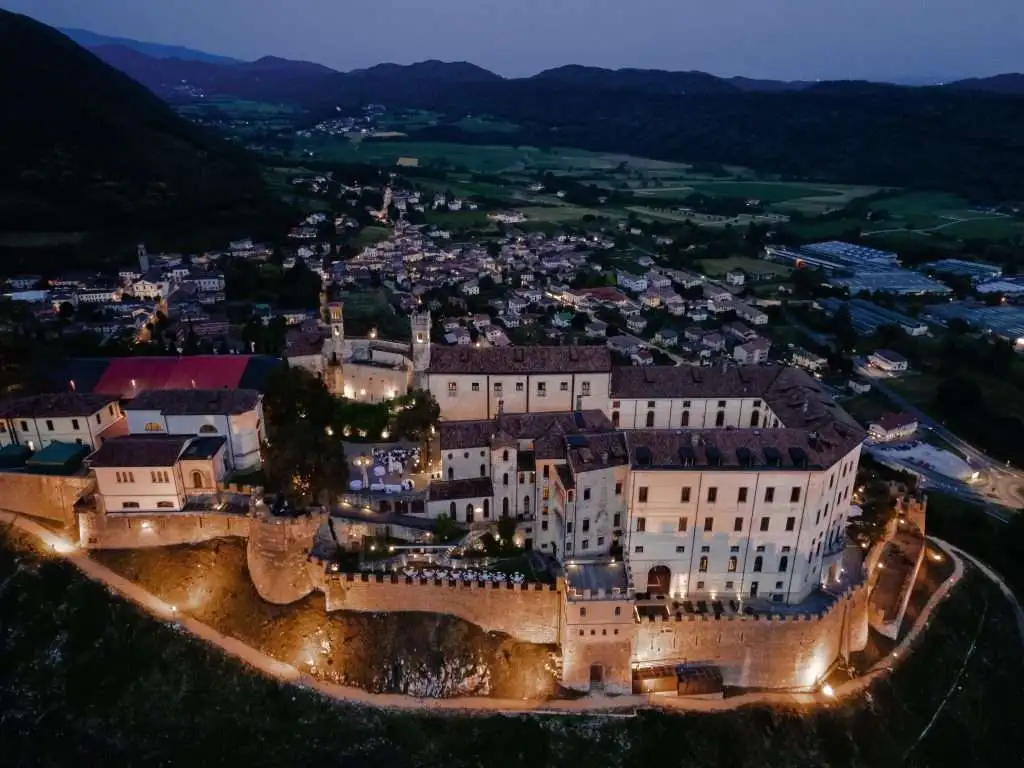
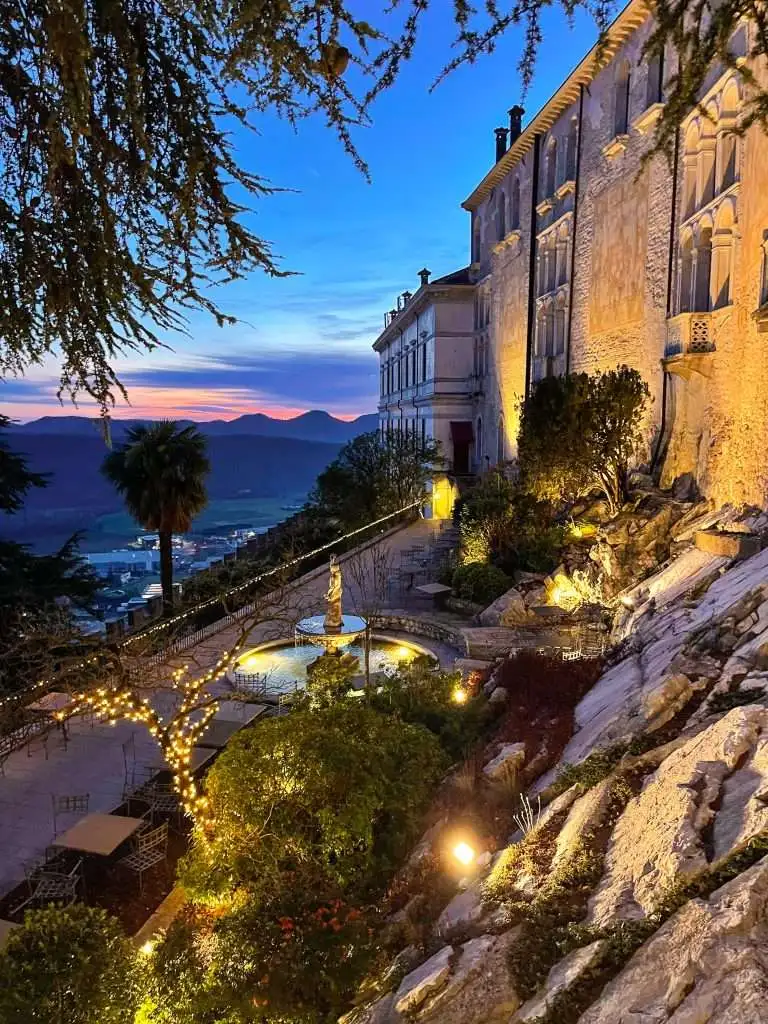
A starting point for excursions and food and wine itineraries to discover the Prosecco hills set between Venice and the Dolomites, CastelBrando offers visitors the opportunity to stay in the rooms of the 16th and 18th century wings of the castle, carefully restored under the protection of the Cultural Heritage.
The Rooms and Suites
Adorned with coats of arms, drapes, and historic furnishings, the Classic Rooms of the 18th century offer breathtaking views of the inner courtyard of the castle.
Located in the Renaissance wing, on the bel étage or piano nobile of the Castle, the Superior Rooms were reserved for ladies and other distinguished guests.
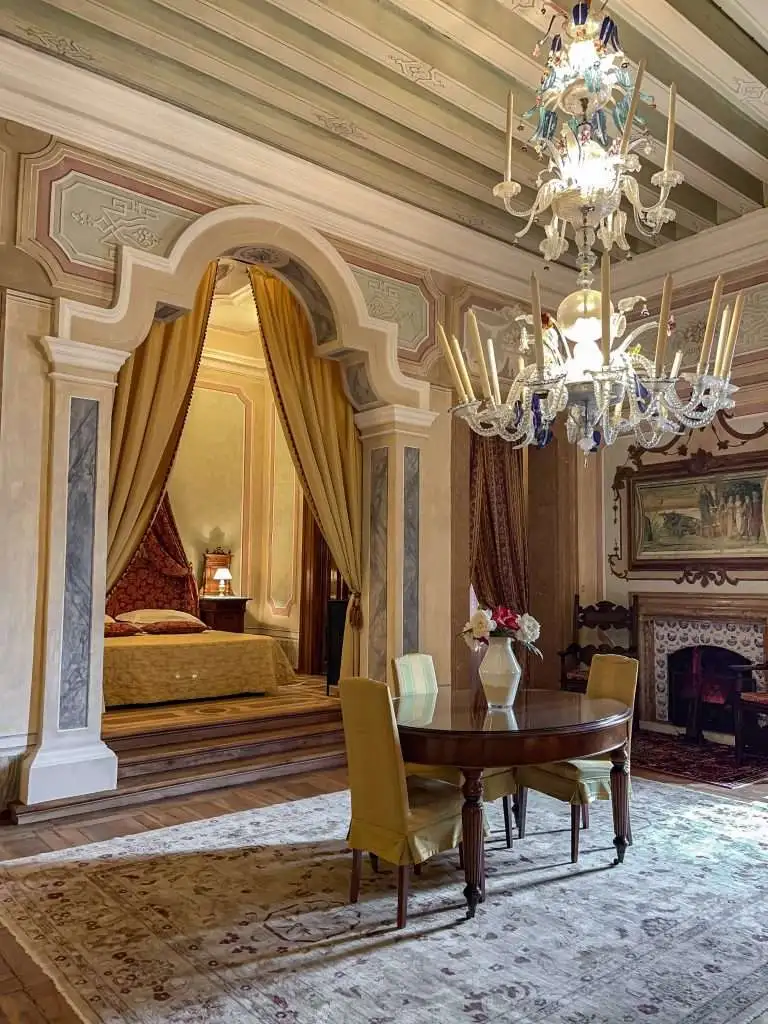
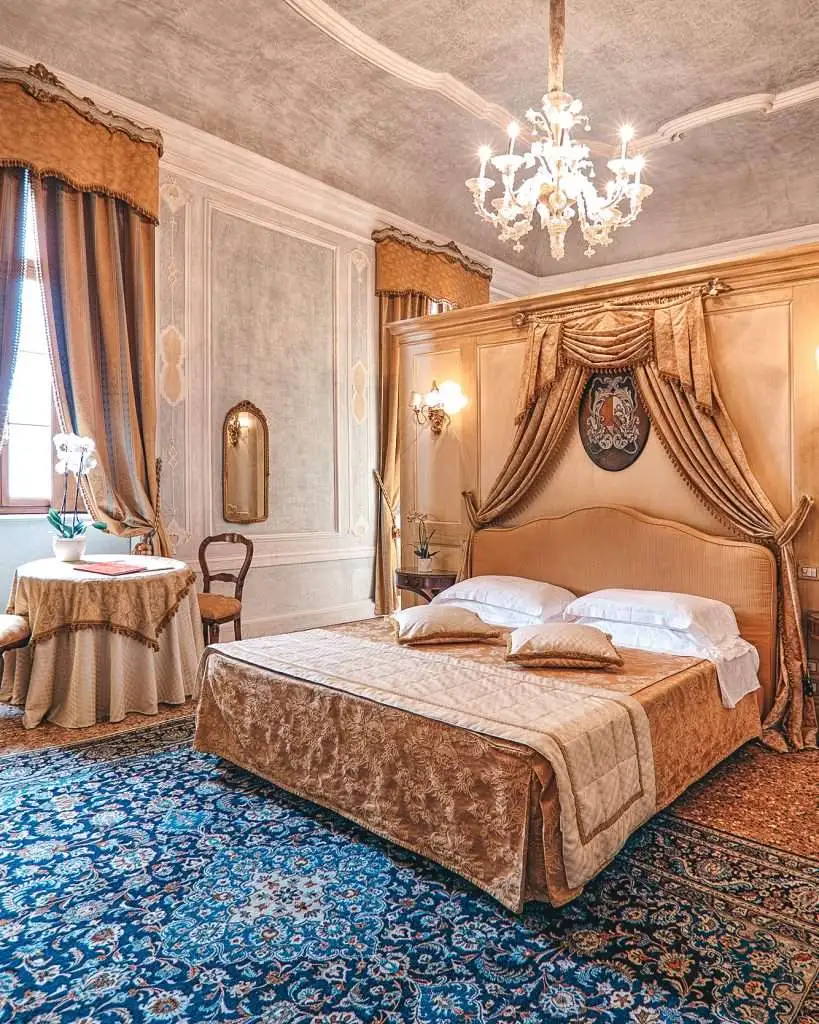
In Venetian style and decorated with original stuccoes, the Junior Suites are illuminated by precious Murano glass chandeliers.
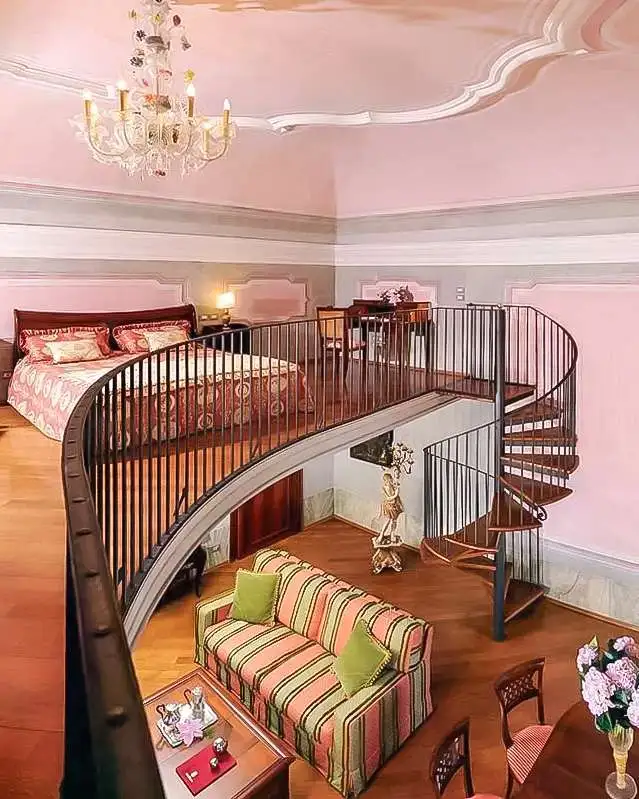
Also in Venetian style and overlooking the wonderful valley, the Royal Suites are spread over two levels connected by a graceful spiral staircase.
Decorated with fine pictorial works and a sixteenth-century Venetian chandelier, one of the most renowned apartments in the castle is the Count’s Alcove, reserved for centuries for the Counts Brandolini.
Would you like to stay in a medieval tower immersed in a fairytale atmosphere suspended in time? The Gaia Tower takes its name from the daughter of Gherardo da Camino. Both are mentioned in the Divine Comedy.
“The good Gherardo
[ … ] by any other name I know him not,
if I did not take it from his daughter Gaia”
( Dante, Divine Comedy, Purgatory, Canto XVI )
The main tower instead houses the presidential suite, the emperor’s residence built with stones recovered from the ruins of the Roman castrum.
The restaurants of CastelBrando
The castle includes splendid restaurants set up in historic halls, an ideal setting for spending significant and memorable moments in the radiant architectural frame of vast centuries-old rooms adorned with vivid pictorial works.
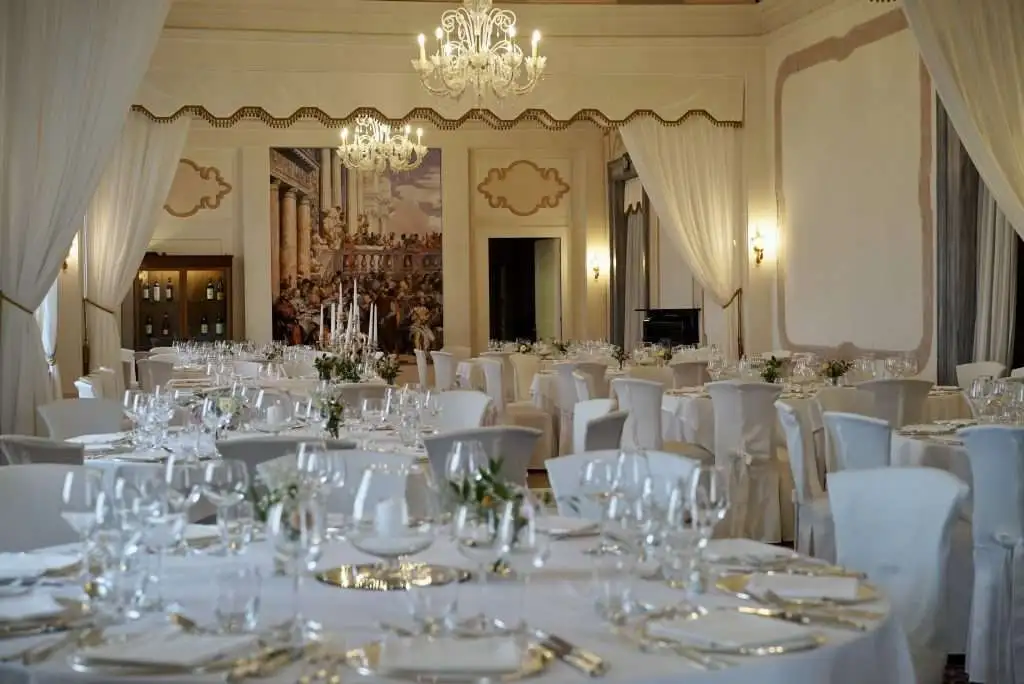
Open exclusively for events, weddings, and private groups of at least twenty people, the Sansovino restaurant is set up in historic Venetian-style rooms decorated with original stuccoes and frescoes.
Spa and Wellness Centers
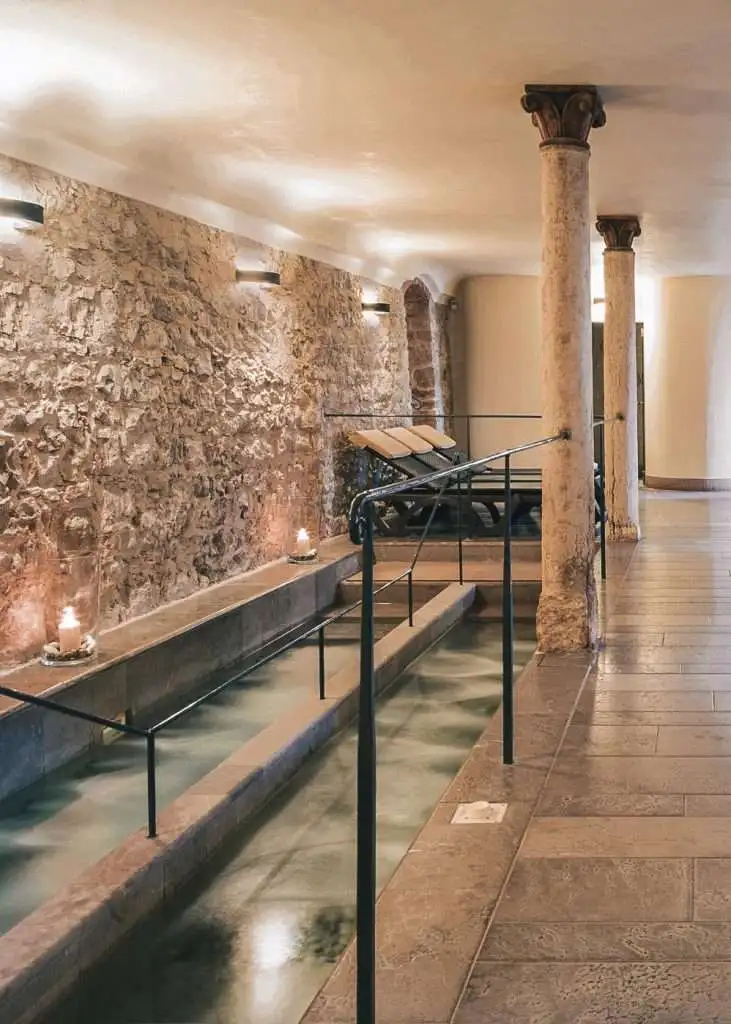
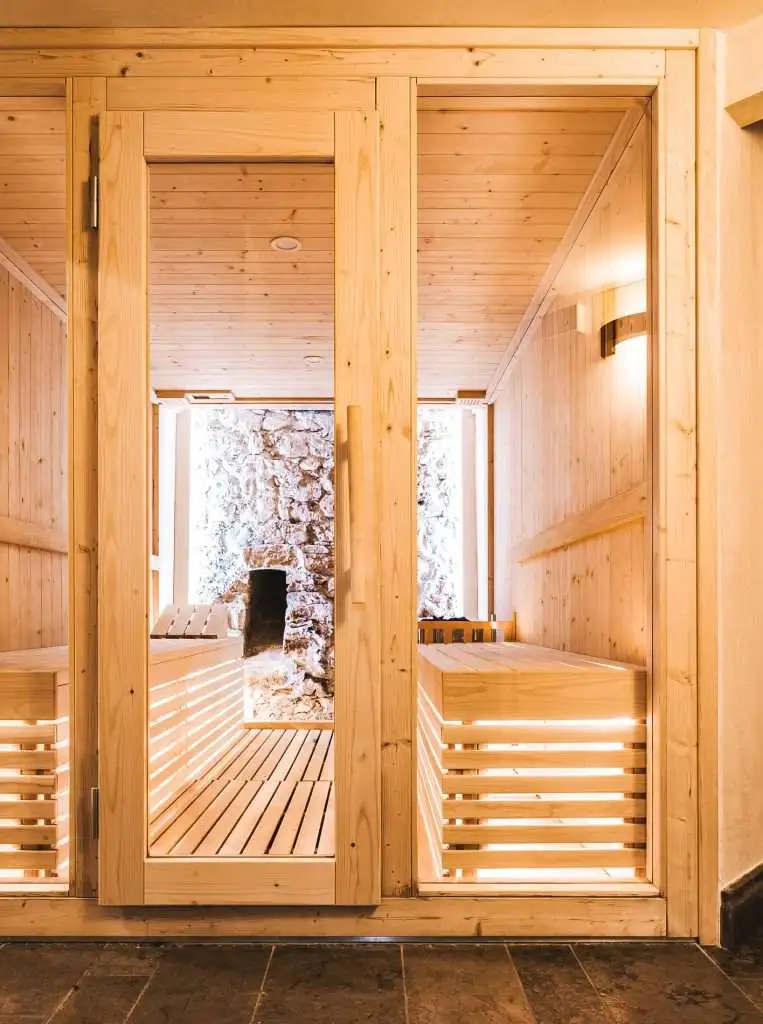
Enhanced by mosaics and Roman finds, the oldest part of the Castle houses a spa with a pool, saunas carved into the rock, whirlpool, Turkish bath, fitness room, chromotherapy shower, and relaxation area.
The heart of CastelBrando combines the splendor of Roman baths with the comforts offered by the most modern technologies aimed at purifying the body and achieving a deep state of psycho-physical well-being.
Words are not enough to describe the charm that the spectacular castle and the lush wooded hills in which it is harmoniously inserted evoke in those lucky enough to visit Cison di Valmarino.
If you wish to live a dream experience among millenary castles, enchanted forests, gentle grassy slopes, and lush vineyards in a dimension where the boundaries between history and magic are lost, visiting CastelBrando will be an unforgettable experience!