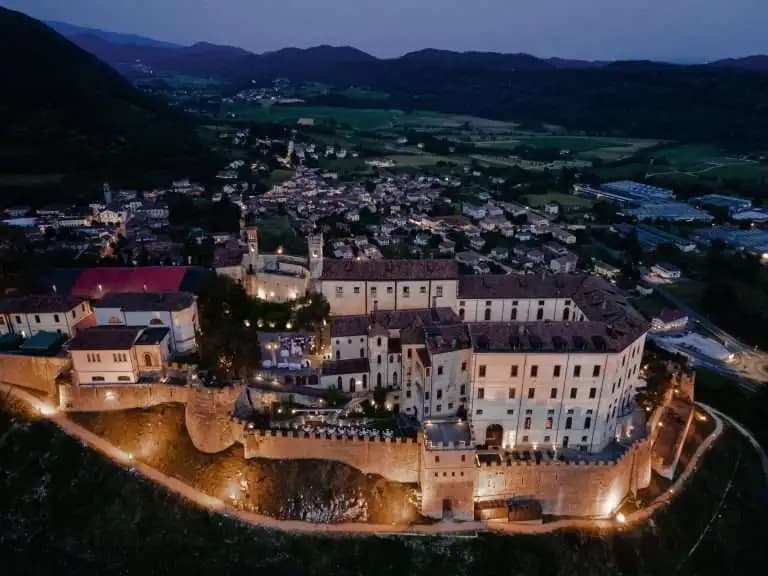

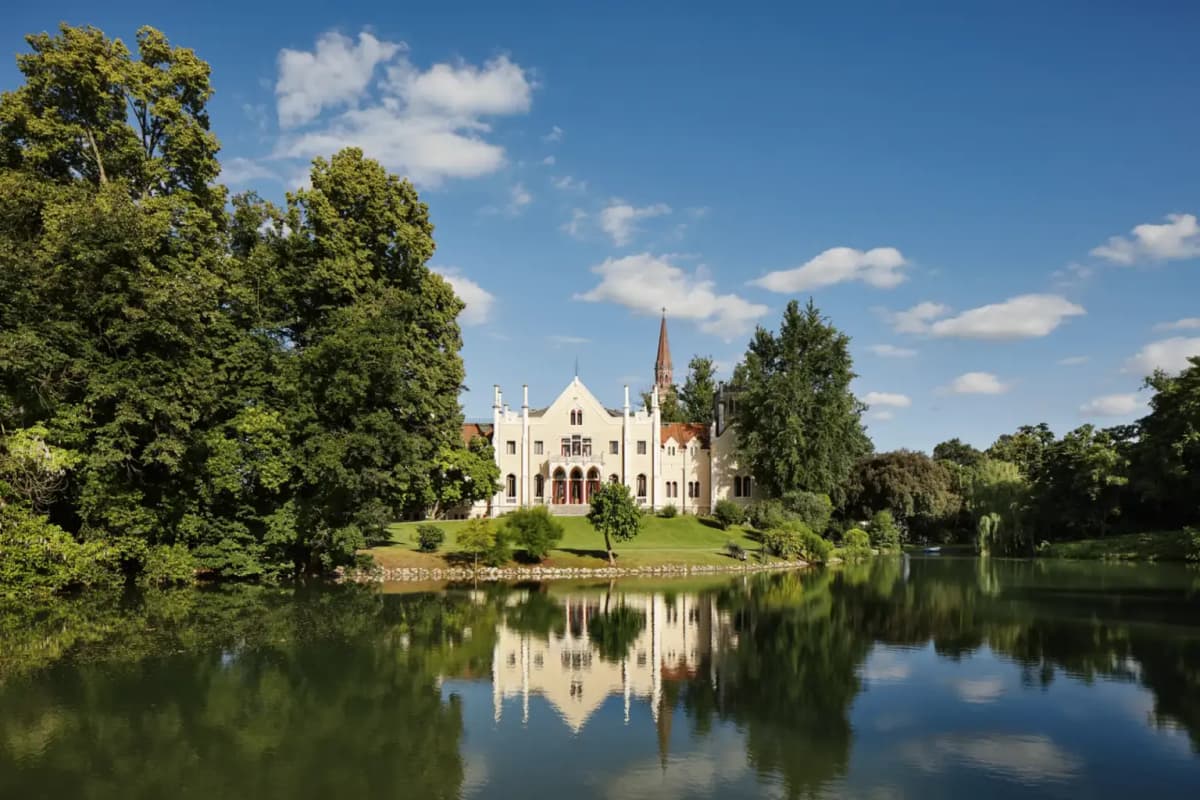
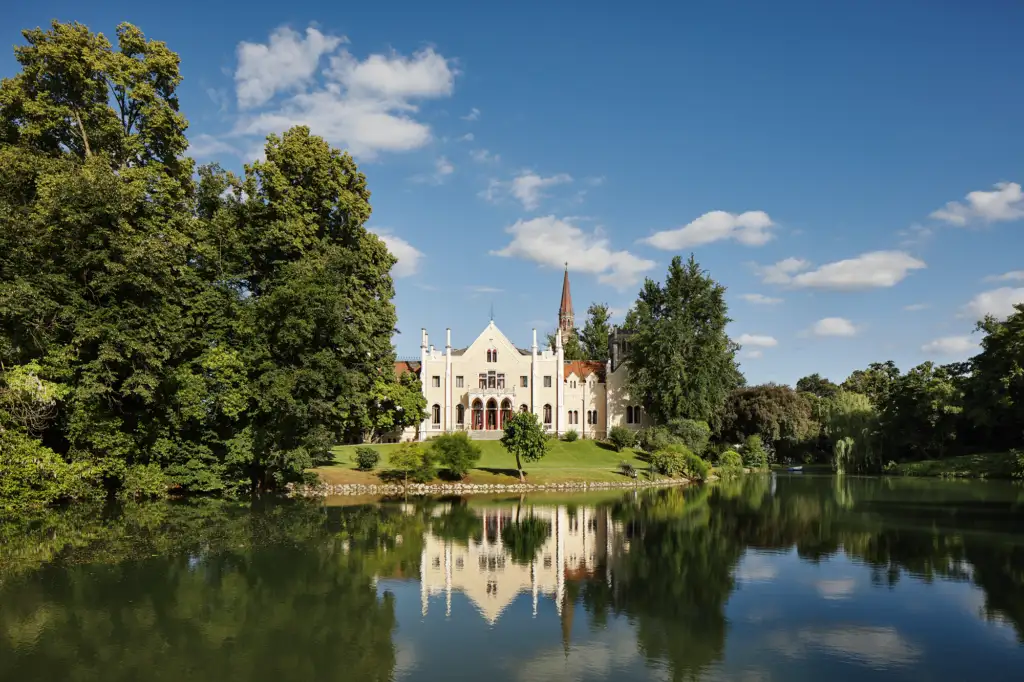
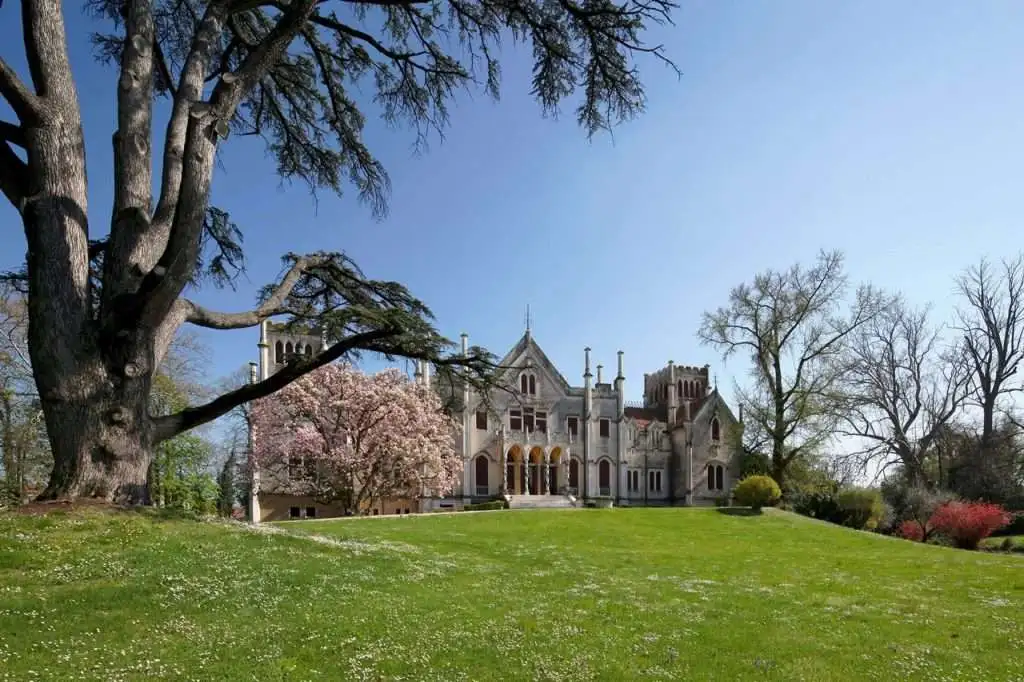
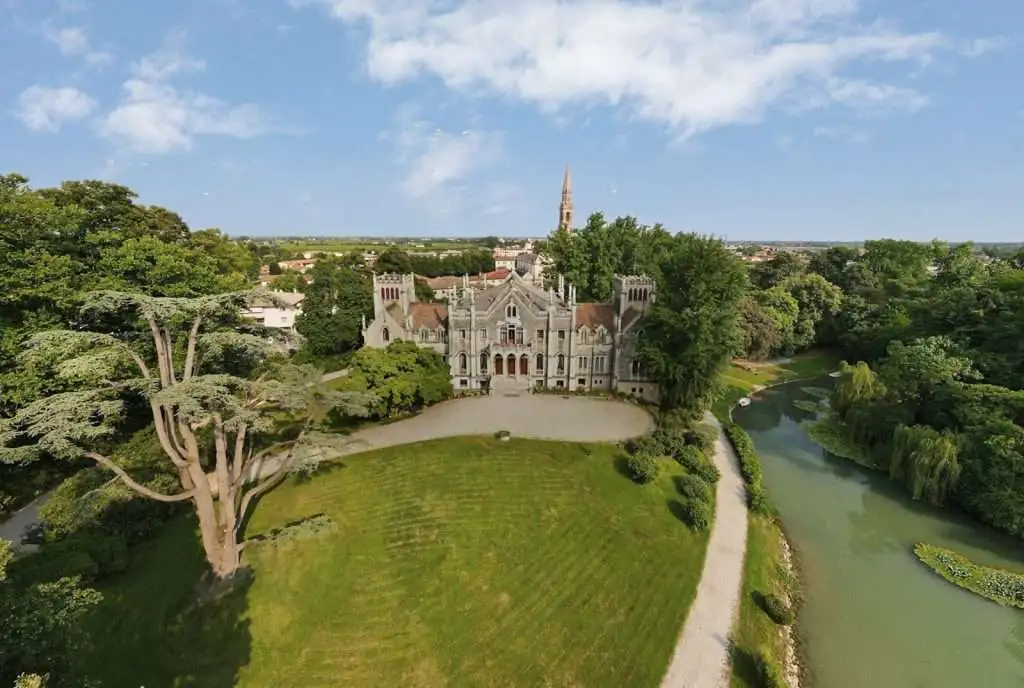
Built on the ruins of a fortress dating back to 1192, the Castello Papadopoli Giol is one of the most charming and significant cultural and architectural landmarks in Italy.
A synthesis of the genius of some of the most brilliant architects of the 19th century, the scenic beauty of the English Neo-Gothic palace surprises and delights the observer with its high crenellated towers, white chimneys disguised as pinnacles, and wide, bright bay windows.
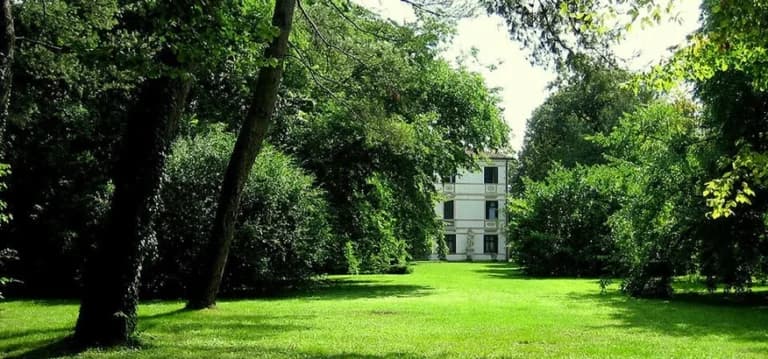
The sumptuous building is reflected in a suggestive spring-fed mirror of water surrounded by the soft grassy carpet of a vast wooded park.
The wise balance between nature and architecture creates a fairy-tale aura suspended in time, which centuries later still arouses wonder in those fortunate enough to visit the splendid manor and the radiant romantic garden that surrounds it.
The History of the Fiefdom of San Polo
The Da Tolentino
In the 15th century, Nicolò Mauruzzi da Tolentino distinguished himself for courage and strategic ability in the Lombard wars and against the Kingdom of Hungary, serving as Captain General of the Republic of Venice. At the end of the conflict with Sigismund of Hungary in 1427, Venice recognized the merits of Nicolò Mauruzzi by granting him the fiefdom of San Polo. However, the condottiero fell in battle before he could enjoy the territories granted to him.
In 1452, Doge Francesco Foscari rewarded Cristoforo, Nicolò’s firstborn, for having demonstrated his valor and loyalty to the Republic of Venice, definitively granting him the fiefdom of San Polo.
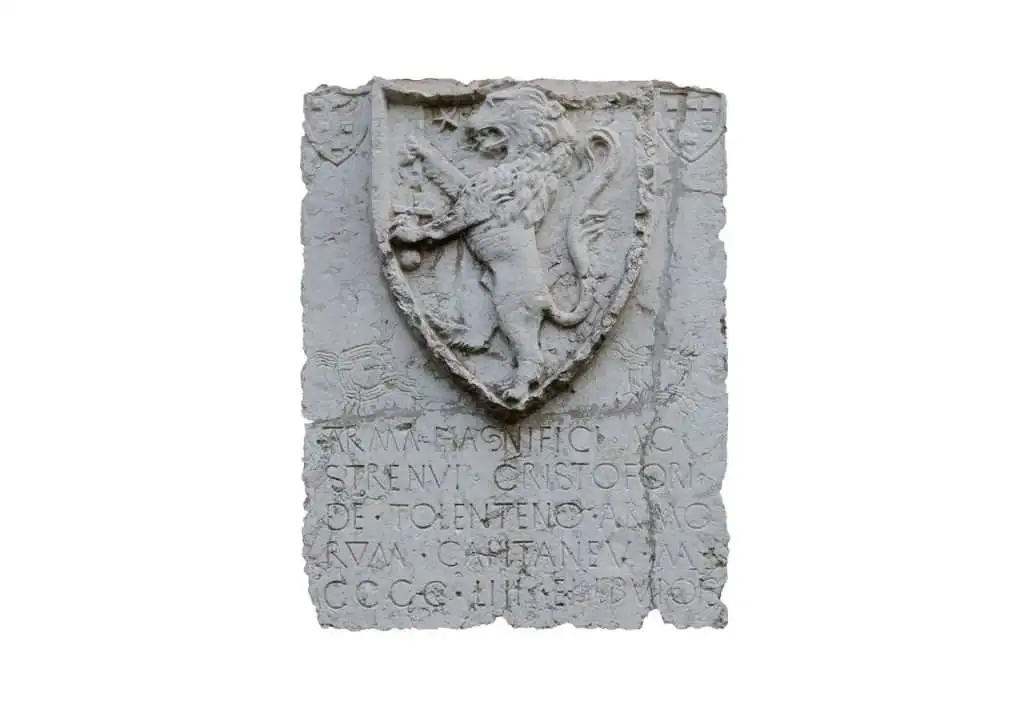
To testify to the presence of the illustrious family in the territories of San Polo, an ancient marble coat of arms depicting a rampant lion brandishing a sword stands out on the exteriors of the stables.
The Counts Gabrieli
In 1503, the house of the Counts Gabrieli obtained the fiefdom of San Polo following the marriage union with the daughters of Lancillotto da Tolentino.
Upon the death of Angelo Maria, the last Count Gabrieli without heirs, in 1805 the fiefdom passed to the treasury of the new Kingdom of Italy, and was then purchased by the Vivante brothers.
The Counts Papadopoli
Wealthy merchants from the island of Corfu, the Papadopoli moved at the end of the 18th century to Venice, where they became part of the Venetian nobility.
In 1814, Count Angelo Antonio purchased from the Vivante the possessions of the former fiefdom of San Polo, where the count’s son, Spiridione, would have a palace built, later enlarged by his cousin Nicolò.
On November 9, 1917, following the defeat of Caporetto, the Austrians reached San Polo and established their headquarters in the Castle. At the end of the war, a handful of Italian Bersaglieri occupied the castle and lit a fire that caused a blaze which severely damaged the structure.
In 1919, the property passed to Commendator Giovanni Giol, who repaired the damage caused to the castle during the First World War.
The Castello Papadopoli Giol
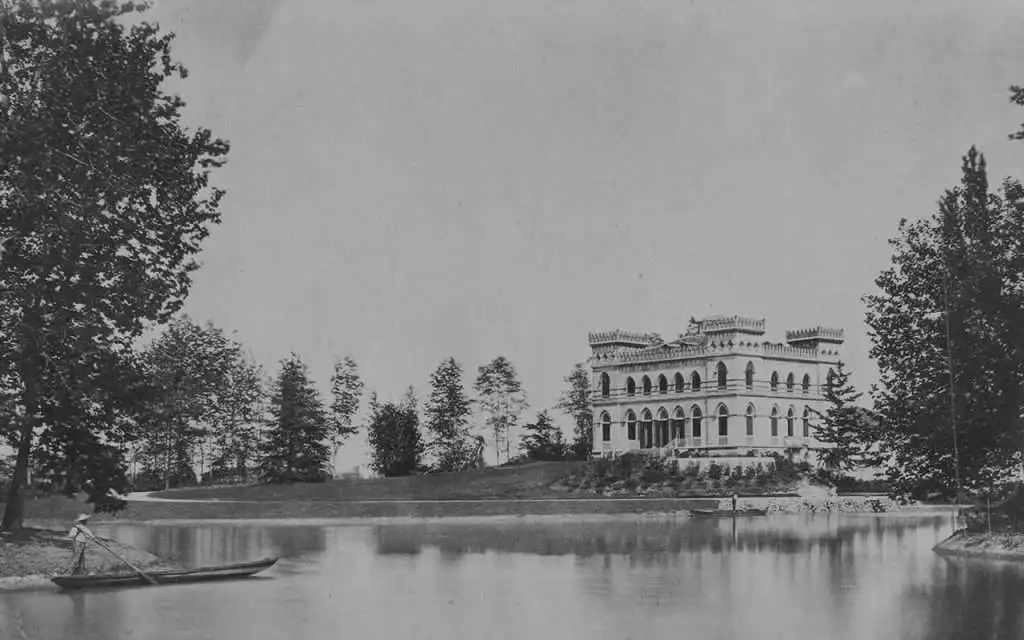
In 1850, Count Spiridione and Countess Teresina Mosconi commissioned Francesco Bagnara to create their magnificent manor house. The project resulted in a Venetian Neo-Gothic palace on a square plan, adorned with four crenellated towers at the corners, all harmoniously set within a radiant twelve-hectare romantic park.
In 1868, Nicolò and Angelo Papadopoli commissioned German architects Ludwig and Emil Von Lange to expand the residence of San Polo. The project was completed in 1888 by Turin engineer and architect Giovanni Battista Ferrante, who is credited with adding the two wings and adapting it to the English-inspired Neo-Gothic style.
The Romantic Park
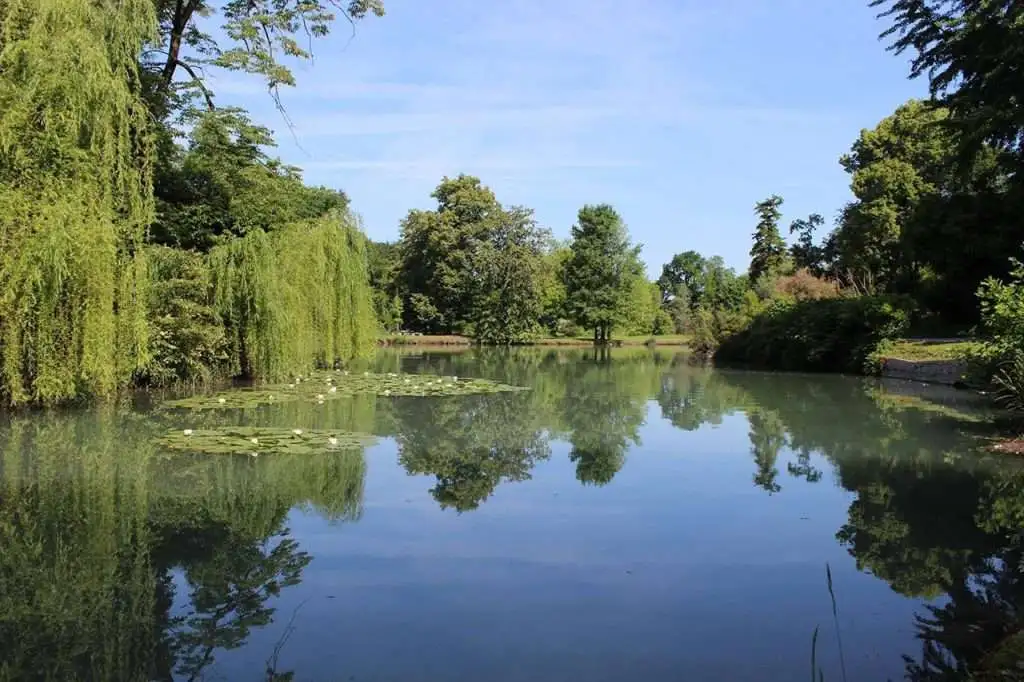
Set designer at the Teatro La Fenice in Venice and professor at the Academy of Fine Arts, Francesco Bagnara was the creator of the radiant romantic garden of the San Polo estate.
In response to the severe geometric rigor that had characterized the landscape of Italian gardens in previous centuries, Bagnara contrasted the curvilinear forms of the English garden, whose sinuous designs evoked the inscrutable and changeable character of the natural world in its primordial dimension.

This philosophy was intended to generate an effect of disordered grace meant to stir a whirlwind of emotions in those who ventured into this pristine environment, ranging from astonishment to joy, from excitement to quiet contemplation of sunny grassy hills and gentle dips, of winding streams and majestic centuries-old trees, of lively waterfalls and pleasant lakes whose placid muddy banks blended with the vast and radiant meadow that surrounded them.
In the second half of the 19th century, during the expansion phase of the property, Count Nicolò Papadopoli commissioned garden architect Monsieur Durant to modernize the park, harmonizing the picturesque character of English parks with the linearity of French gardens.
The enchanting scenery of the Papadopoli Giol estate, combined with the dreamlike atmosphere of the romantic park, provides the ideal setting for celebrating fairytale weddings, hosting exclusive corporate meetings, and organizing exciting historical-nature guided tours.
The Wine Estate
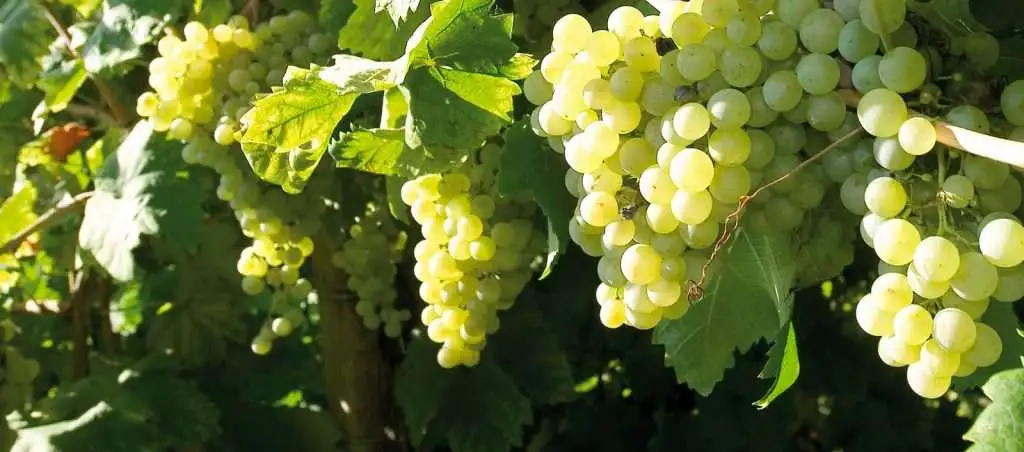
Since 1987, the historic estates of the manor house have been producing organic and vegan wine qualities with maximum respect for the environment and raw materials.
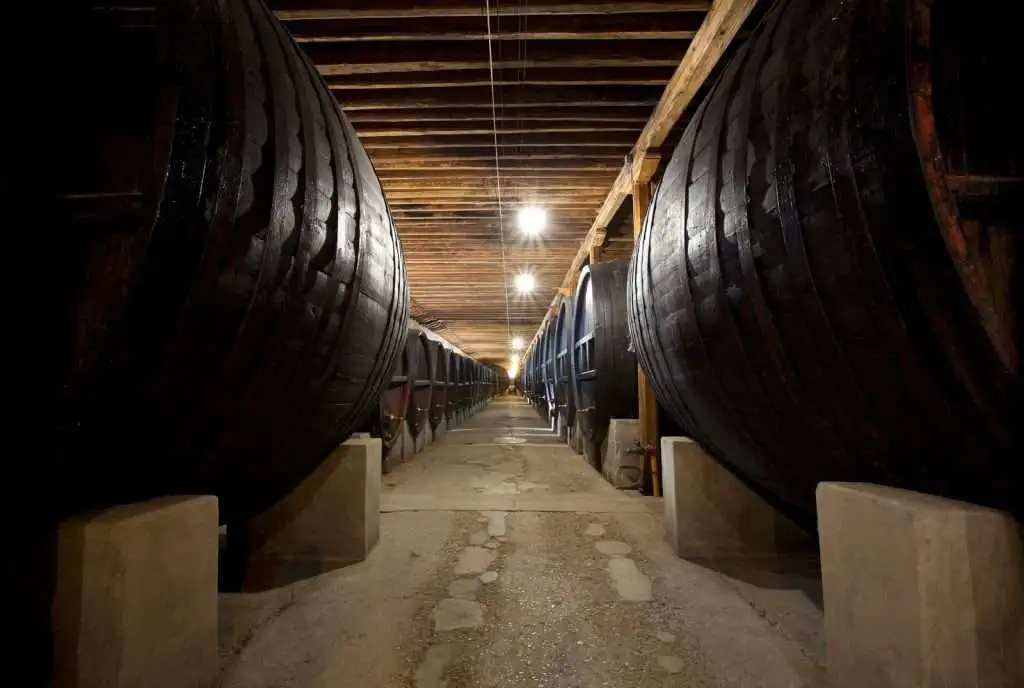
One of the most evocative and rewarding experiences that the Giol estate offers its visitors is the tasting tour in the ancient aging Crypts of 1427, an ideal atmosphere to appreciate the delicate organoleptic qualities of the wines produced on the farm.