
Inaugurated on 12 May 2007, the Livelet Educational Archaeological Park was created through the coming together of the aims and sensibilities of the Province of Treviso, the Comunità Montana delle Prealpi Trevigiane and the Municipality of Revine Lago, with the goal of enhancing the nearby archaeological site of Colmaggiore di Tarzo and the natural features of the area.
Since 2009, management has been entrusted through an agreement to the UNPLI Treviso Provincial Committee, in collaboration with the Municipality of Revine Lago and the Consorzio Pro Loco Quartier del Piave. Since 2018 it has been part of the network of Educational Archaeological Parks of the Alta Marca Trevigiana.
Thanks to fruitful teamwork and active collaborations, in 2023 the Park surpassed 16,000 visitors.
Where is the Livelet Educational Archaeological Park located?
The Livelet Educational Archaeological Park is located in Via Carpenè, 31020 Lago (TV).
Panoramic views in Revine Lago
Bordering Limana and Borgo Valbelluna to the north, the enchanting village of Revine Lago lies at the foot of the majestic Treviso and Belluno Prealps, whose grand mass is covered by the sharp crowns of silver firs and spruces, soaring larches and many other thriving tall trees.
When the sun’s rays pierce the dense tree canopy on clear autumn days, a magical atmosphere suspended in time reigns in the undergrowth, its deep silence broken by the lively crunching of the leaf litter of oaks, beeches, hazels, elms, ashes and maples that wraps lush ferns and moss-veiled rocks.
From the commanding position of the Prealpine ridge, the bright meadowland of Pian de le Femene offers breathtaking views of the sunlit mountain slopes and the placid valley in which Lake Lago and Lake Santa Maria extend. The two crystal-clear bodies of water are fed by deep underground springs and by the Piaveson, a sinuous stream that rises from the icy karstic heart of the Treviso Prealps and then flows into Lake Lago, about 300 metres away.
During the Würm glaciation, in the period between 90,000 and 10,000 BC, a branch of the Piave glacier moved from Val Lapisina towards the southwest, shaping the valley all the way to the present-day settlement of Gai, the two splendid lake basins and the wooded moraine slopes that shape the landscape further south.
The origins of the Livelet Educational Archaeological Park
The stilt houses that can be visited today were reconstructed thanks to information gathered from the excavation campaigns of the 1980s and 1990s at the Colmaggiore site, as well as from other “prehistoric pile-dwelling sites of the Alpine arc”, inscribed in 2011 on the UNESCO World Heritage List, including the site in Fiavè (TN). Excavations carried out by the University of Ferrara since 2019 will in future provide new useful information to update them, based on the latest discoveries, in order to give as faithful an idea as possible of everyday life on the lakeshore between the Neolithic and the Bronze Age.
Both the stilt houses and the furnishings in the Livelet Educational Archaeological Park are faithful reconstructions based on these archaeological finds.
How did our ancestors live 6,000 to 3,500 years ago?
Some of the most significant finds uncovered in the area include remains of vertical posts and traces of charred wood. Most likely, the floorboards and stone embankments brought to light had been conceived as the foundations of the stilt-dwelling site and as drainage works and structures for holding back the lake banks.
The artefacts linked to the daily life of the early community of Revine included chipped flint blades, scrapers used to work hides, arrowheads as well as bone awls and spatulas, and remains of ceramic containers.
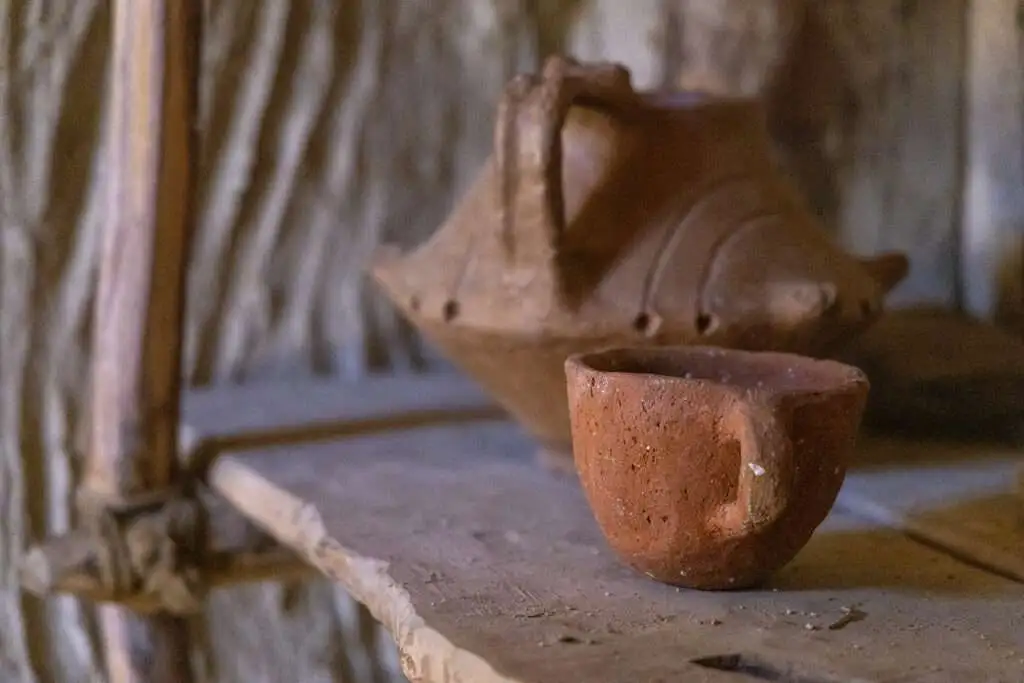
At the Colmaggiore site, cereal cultivation and farming are evidenced by the presence of a flint sickle, fragments of millstones and bones of cows, goats, sheep and domestic pigs.
The discovery of animal bones, fossilised seeds, charcoal and fruits such as hazelnuts, acorns, water chestnuts and cornelian cherries has proved essential for understanding our ancestors’ diet and the type of flora and fauna that characterised the environment of that period. The presence of snail shells and freshwater bivalves also confirms that molluscs were part of the diet of the time.
These finds show that hunting, fishing and gathering continued even after the introduction of agriculture.
The discovery of a pair of bronze swords of the Sauerbrunn type and a Peschiera-type dagger, dating respectively to the 15th and 13th centuries BC, confirms that the site was frequented even after the Colmaggiore settlement was abandoned.
The stilt village
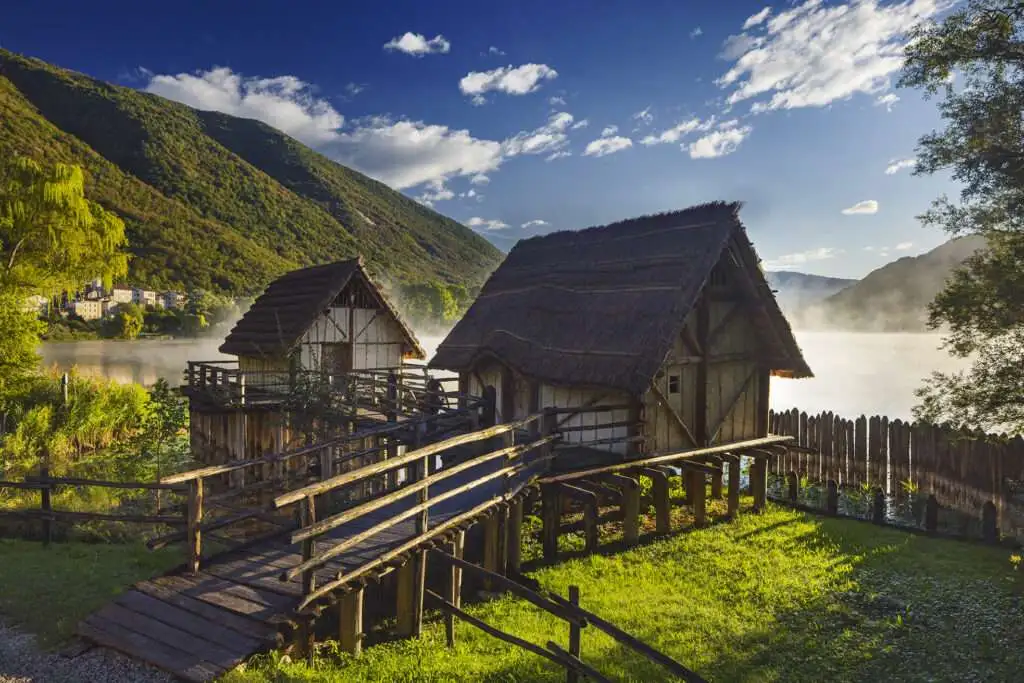
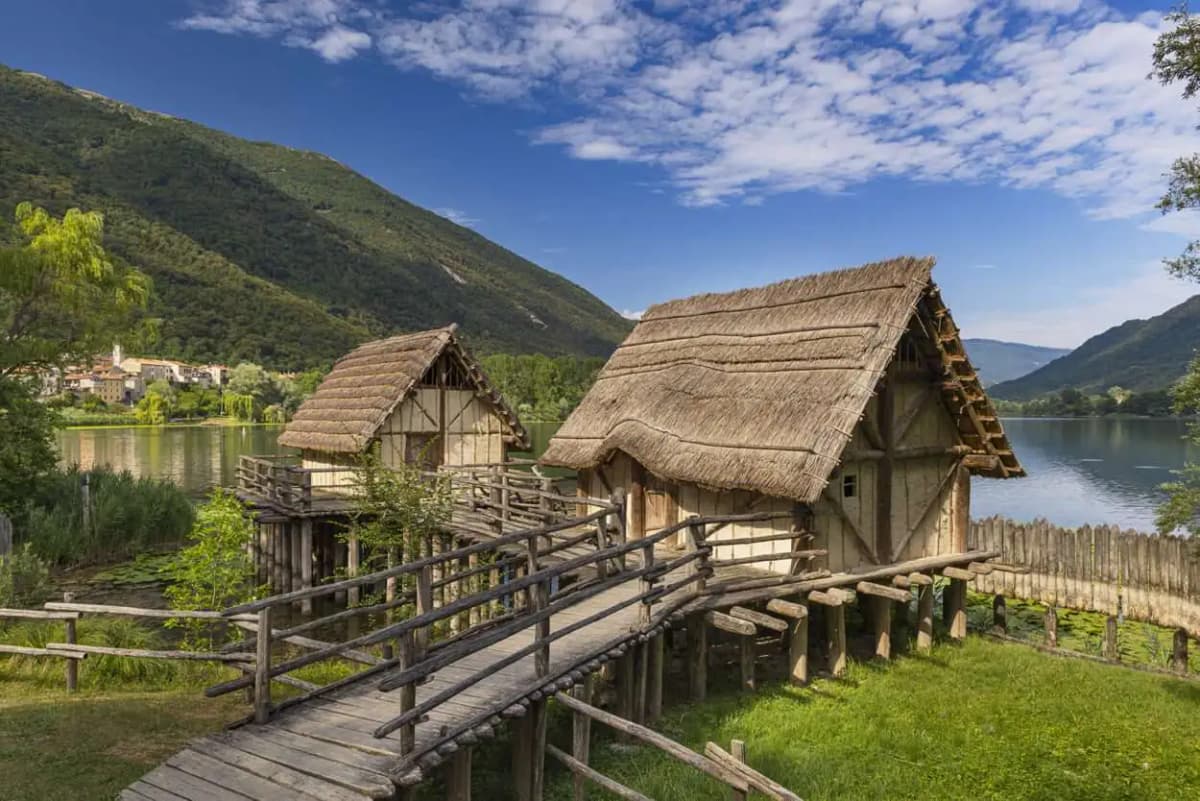
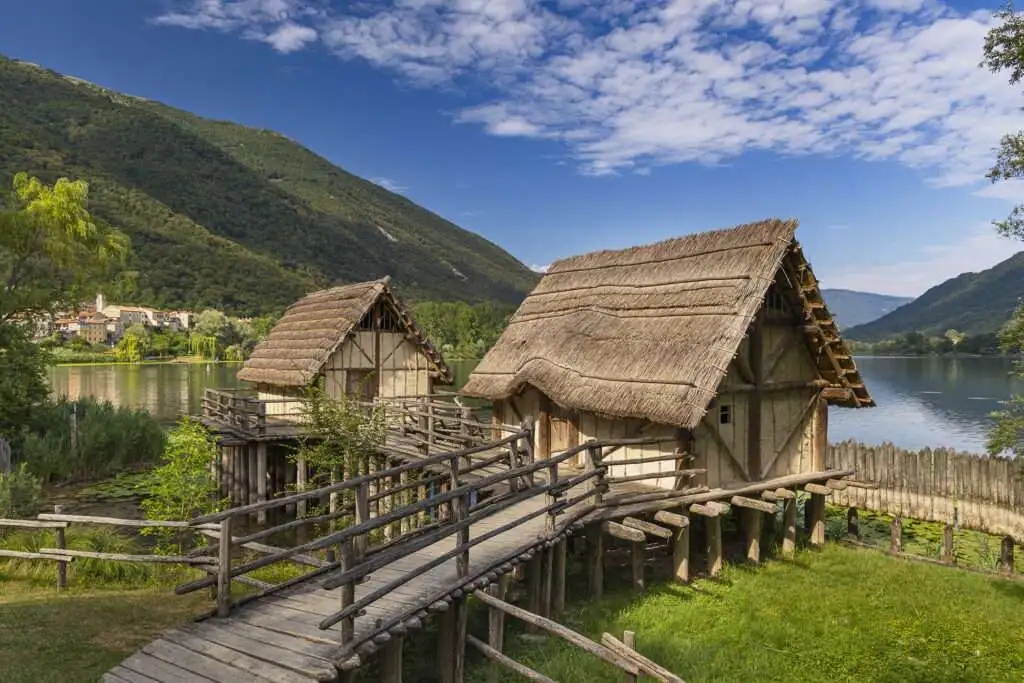
Built on the shores of Lake Lago, both on water and on land, the suspended dwellings are connected to each other by sturdy wooden walkways. In addition to marking out the perimeter of the settlement, the palisades that surrounded the stilt houses could extend into the water to regulate wave motion.
During the Neolithic, the trunks used to build the stilt houses were worked with stone axes; in later periods, with copper and bronze axes.
The dwellings in the Livelet Educational Archaeological Park were built using tree species found in the area such as chestnut, oak, hazel and cornelian cherry. The support posts of the structures, however, were made of larch, a type of timber that, although not present at these altitudes, was chosen for its stability, durability and water resistance.
The raised dwellings and those on reclaimed ground are distinguished by a floor made of wooden beams, covered by a layer of plant material topped with wooden planks. The dwellings by the lakeshore, on the other hand, have a floor of packed earth, gravel and pebbles.
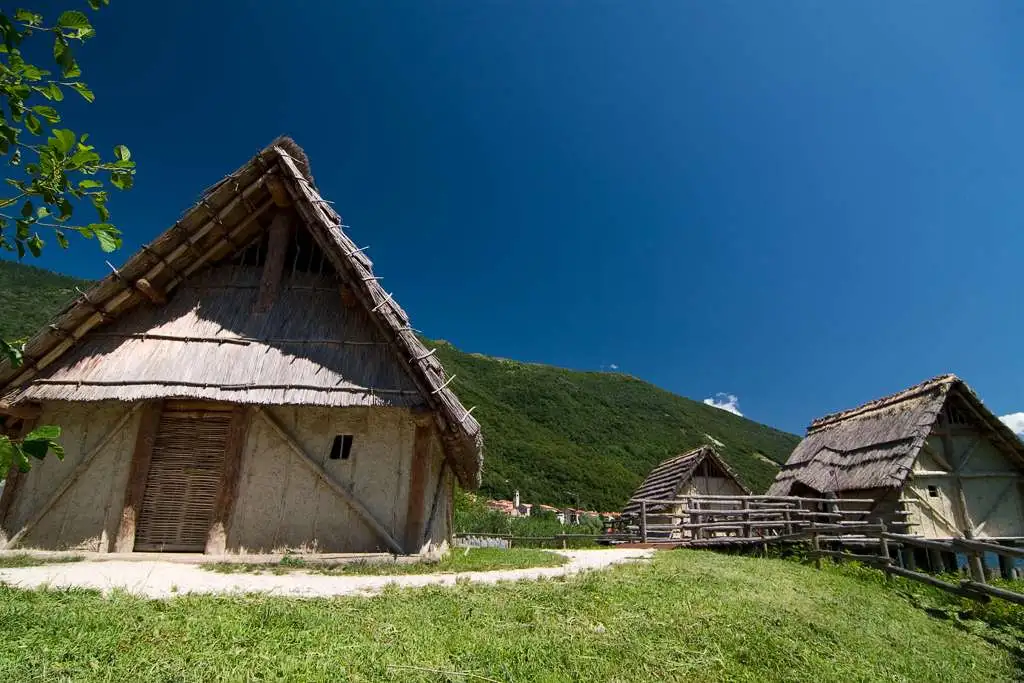
The walls of the structures are made of reed beds and woven branches covered with plaster made from a mixture of clay, sand and straw.
The prehistoric dwellings were finished with a characteristic gabled roof made of reeds and straw. The roof had openings needed to let the smoke from the domestic hearth escape, which also helped keep parasites and insects away.
The three dwellings are wrapped in the lush hygrophilous vegetation of white willows, black poplars, black alders, sallows and buckthorns. In this luxuriant environment it is possible to spot elegant herons, little egrets, night herons, cormorants, buzzards and several species of woodpecker, to mention only some of the many bird species that find their ideal habitat in this oasis of peace.
Copper extraction and processing
Around 3,500 BC, with the beginning of the Chalcolithic in Italy, people learned how to work copper to create tools and weapons. Originally, copper was collected exclusively in its native state. As extraction techniques became more refined, it became possible to obtain the precious metal from minerals such as cuprite, chalcopyrite, malachite and azurite.
The metal was melted inside special terracotta crucibles placed on the fire, which was fed through a blowpipe. During the Bronze Age, the invention of the bellows proved extremely useful in speeding up the time needed to reach the melting temperature.
The nature trail
Starting from the Livelet Educational Archaeological Park, the circular route runs along the reed-lined shores of Lake Lago until it reaches the isthmus and the bridge over the Barche Canal. The trail circles Lake Santa Maria and then heads into Fratte, a charming historic village beautifully frescoed.
The path winds through evocative settings typical of wetlands. Along the way, the pond catches the eye with its clear surface dotted with water lilies, frogbit and duckweed. Here, water forget-me-not stands out with its bright yellow flowers, harmonising with the deep purple hue of purple loosestrife, the pure white blooms of May snowflake and the reed beds that line the banks of the little lake inhabited by molluscs and crustaceans.
Particularly striking is the sight of dragonflies dancing over the water’s surface, accompanied by the lively croaking choruses of frogs and toads hidden in the vegetation.
The trail leads into the reed bed, covered with slender reeds and common rushes, Salix caprea, sedges and many other marsh herbs and plants. In addition to providing material useful for making rope and woven artefacts, the site’s flourishing vegetation is ideal for nesting by herons, little egrets, swallows, moorhens and reed warblers, delightful songbirds.
The healthiness of this exceptional oasis, a true treasure trove of biodiversity worthy of protection and preservation, is confirmed by the presence of foxes, stone martens and roe deer in the radiant undergrowth, as well as amphibians such as Lataste’s frog and the common toad Bufo bufo. Among the rare bird species that can be spotted in the reed bed are the bittern, a wader distinguished by dark ochre plumage speckled with black, the kingfisher and the black kite.
Visiting the Livelet Educational Archaeological Park: useful information
Visits to the Livelet Educational Archaeological Park are always guided. The park is open to the public on Sundays and public holidays from April to October. For schools, the Livelet Educational Archaeological Park can be visited from February to November.
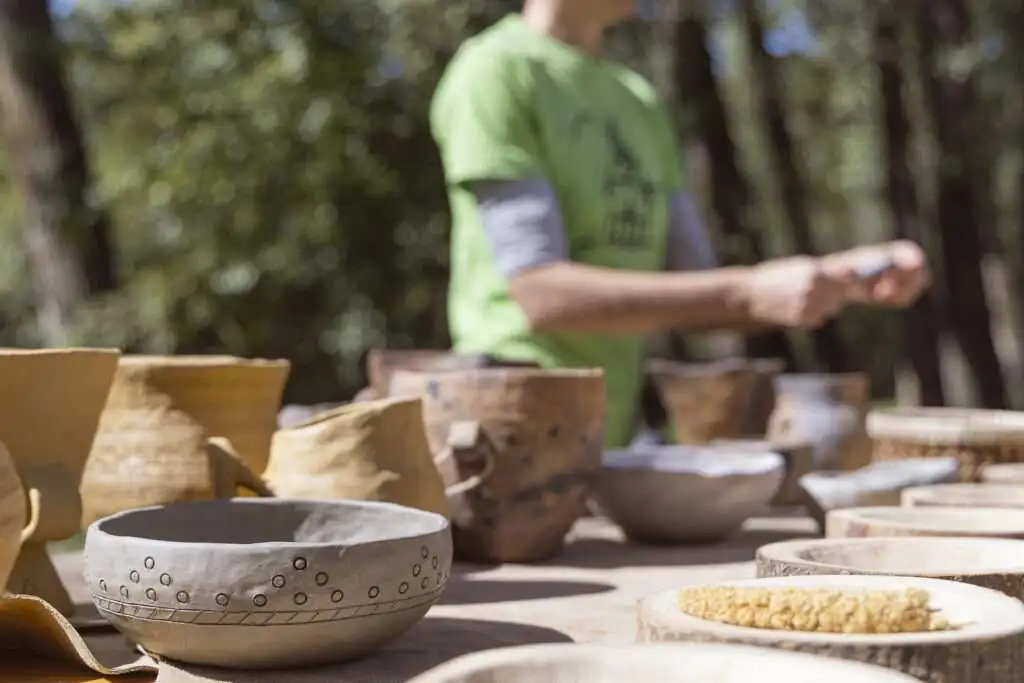
In addition to displaying accurate reproductions of ancient artefacts, the Livelet Educational Archaeological Park itinerary involves visitors of all ages in a fascinating sensory journey designed to explore the culture, history and spirituality of our ancestors who lived 6,000 to 3,500 years ago, stimulating participants’ creativity through workshops to learn about the evolution of the techniques used to forge bronze swords, create polished stone tools, make fabrics and produce ceramic artefacts.
Thanks to the guidance of professional archaeologists, the nature guides of the Associazione Naturalmente Guide and the volunteers of the Pro Loco of Revine Lago, exploring the Livelet Educational Archaeological Park and the nature trail in which the stilt village is harmoniously set will be an unforgettable experience.