
Table of contents
Where is Villa Chiminelli located?
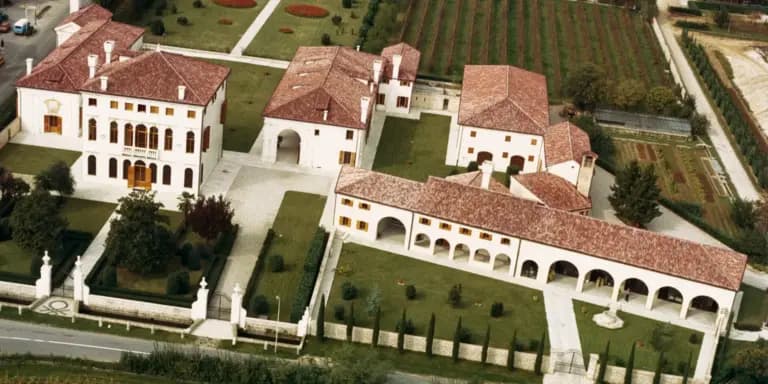
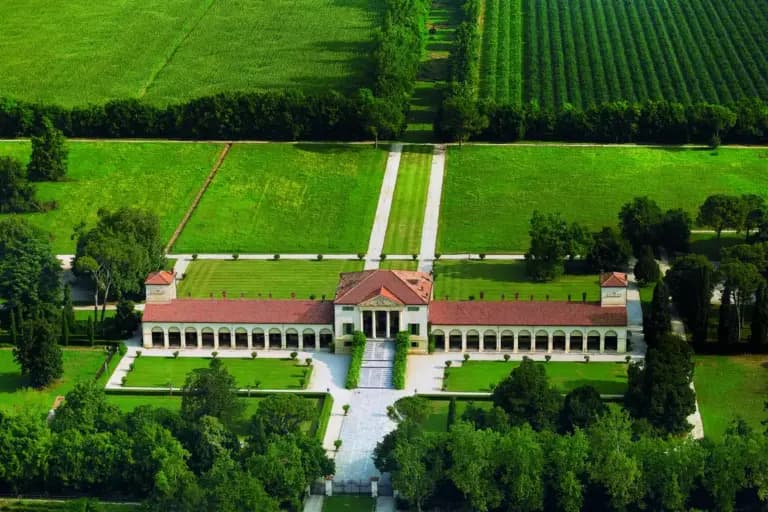
Villa Chiminelli is located at number 1 Via Lama in S.Andrea oltre il Muson, about six kilometres southwest of the towering brick-and-tower walls of Castelfranco Veneto. Famous for being the birthplace of Giorgione, the fortified medieval citadel stands in the heart of the Po Valley, a short distance from the cities of Treviso, Padua and Vicenza.
The place name of the pleasant rural locality where the 16th-century residence stands is linked to the Muson dei Sassi, a sophisticated feat of hydraulic engineering carried out in the 17th century at the behest of the Dominante. At the level of Castelfranco Veneto, the straight canal channels part of the waters of the Muson Vecchio toward the Brenta, whose course flows into the Adriatic Sea south of Chioggia.
Turbulent in its first stretch, the Muson Vecchio begins as a stream from springs emerging at the foot of the Monte Grappa massif, descends the sunlit slopes of the Asolano and cuts through the placid plain toward the Laguna di Venezia.
The history of Villa Chiminelli
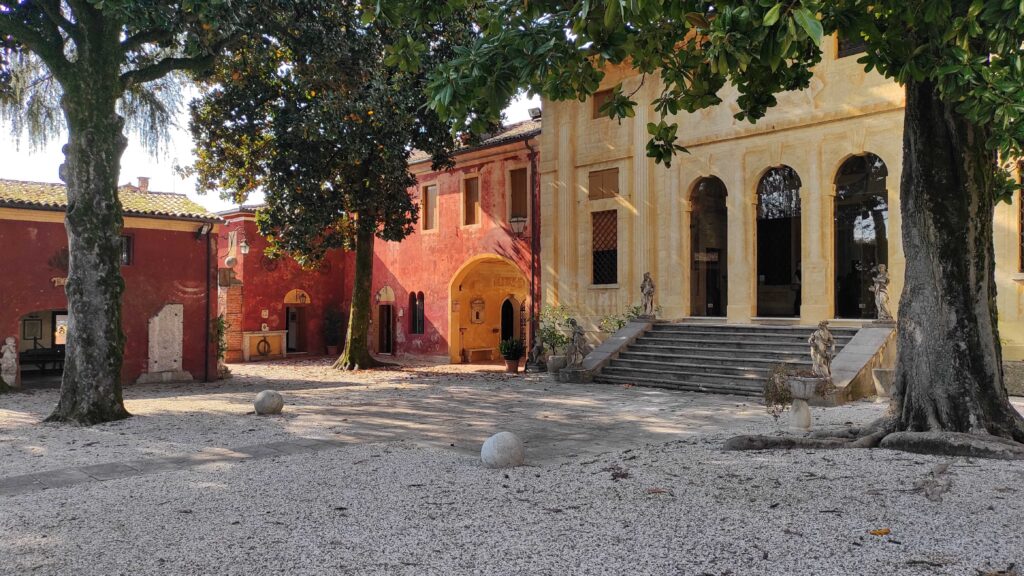
Commissioned by Francesco Soranzo, parish priest at S.Andrea from 1563 to 1595, Villa Chiminelli was built as a canonical residence on an earlier building already documented in a division deed of 1477.
Exchanged with the Curia upon the patron’s death in 1597, the historic residence passed to the Piacentini in 1614. The villa belonged to the Tiepolo from 1852 to 1944, the year in which the noble complex was acquired by the Chiminelli family, its current owners.
A jewel of Renaissance art and architecture, Villa Chiminelli is embellished both inside and out by frescoes by Benedetto Caliari, brother of Paolo Veronese, and his school.
The dating of the decorative scheme can be traced to 1578, the year stamped on a roof-tile tablet found on site, coinciding with Francesco’s appointment as Bishop of Treviso.
The architecture of Villa Chiminelli
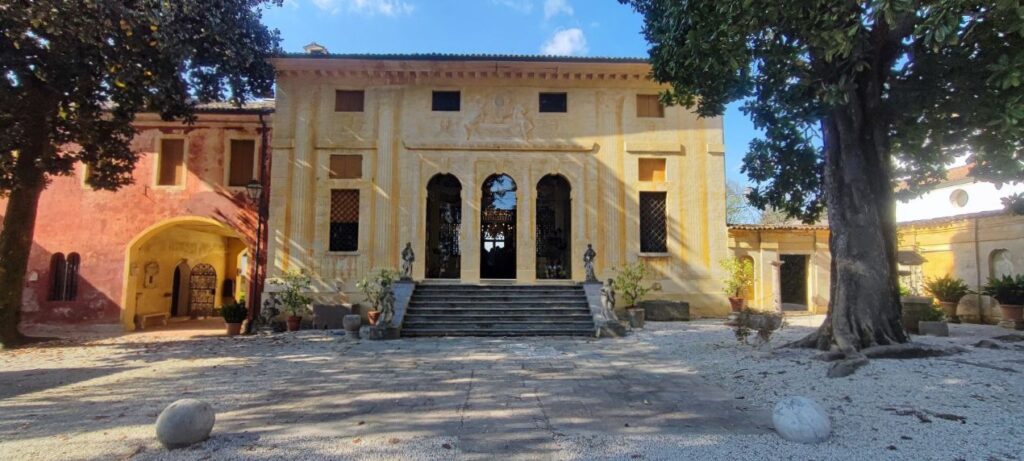
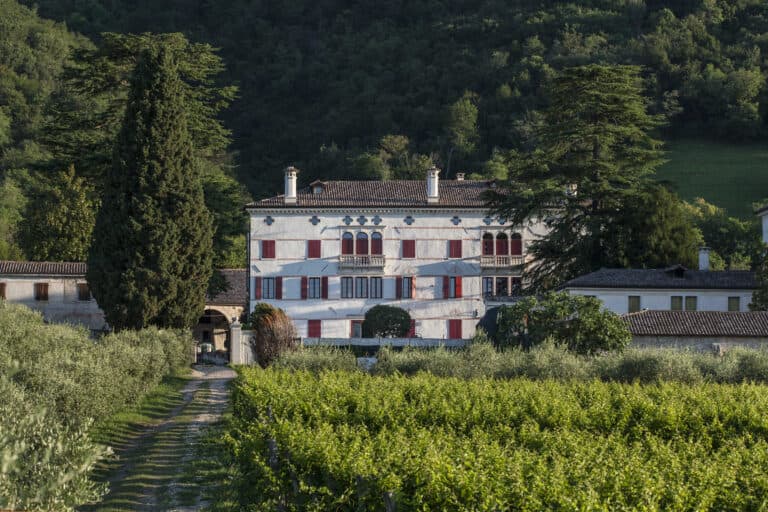
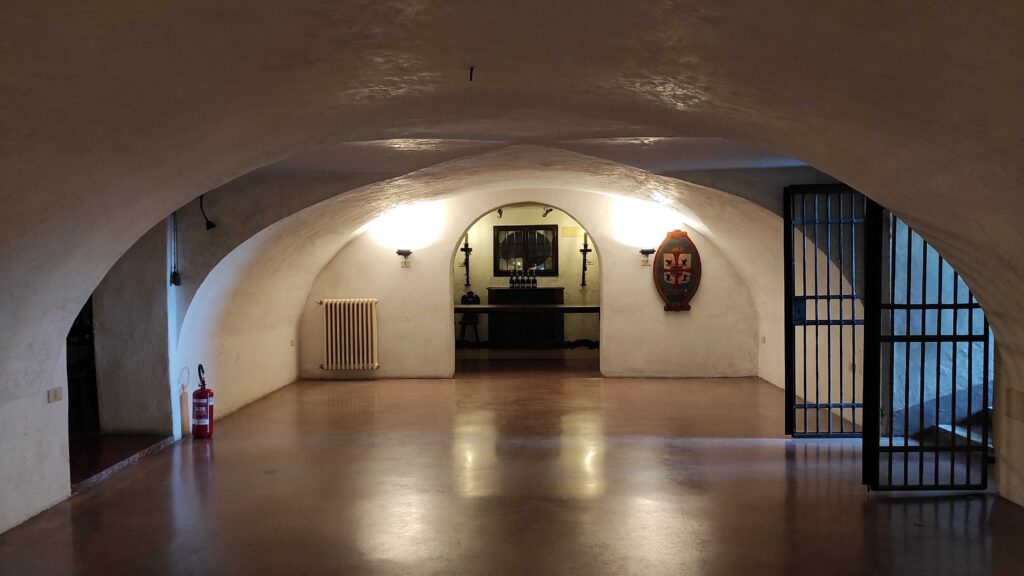
The compact volume of the residential core consists of the semi-basement used as a cellar, the raised piano nobile entirely frescoed, and the upper floor, once used as a granary.
The floor plan of the manor house reflects the compositional scheme of the Venetian palace with a central through-hall, four side rooms and an entrance loggia. The traditional layout is reflected both in the internal distribution and in the design of the façades.
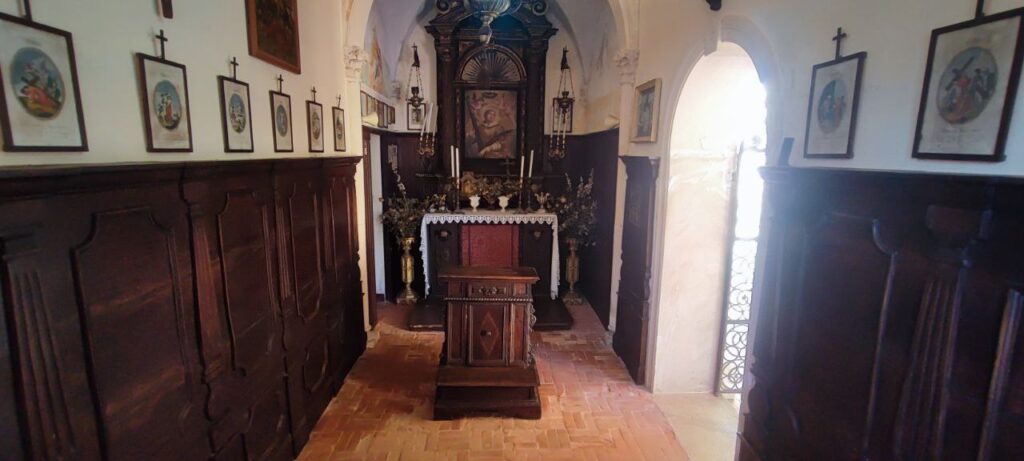
The building complex is completed by two adjoining arcaded wings with a rectangular plan located to the west, beside the villa, and by the refined private chapel accessible from the entrance portico.
The frescoes of Villa Chiminelli, on the border between reality and illusion
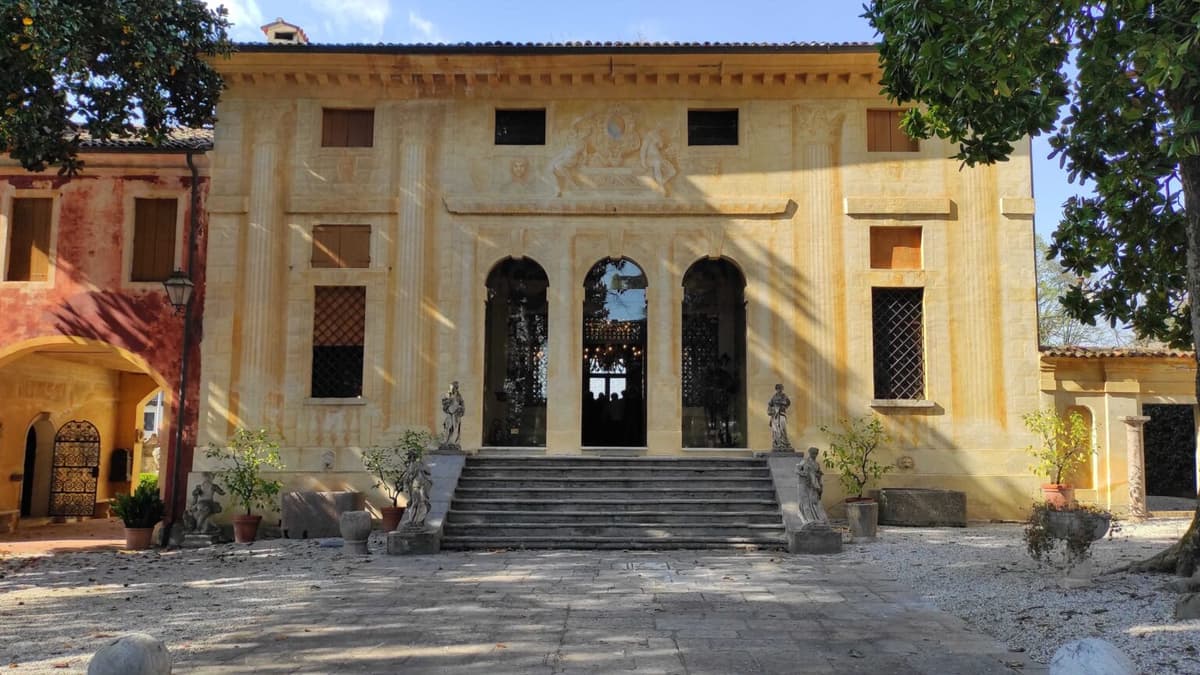
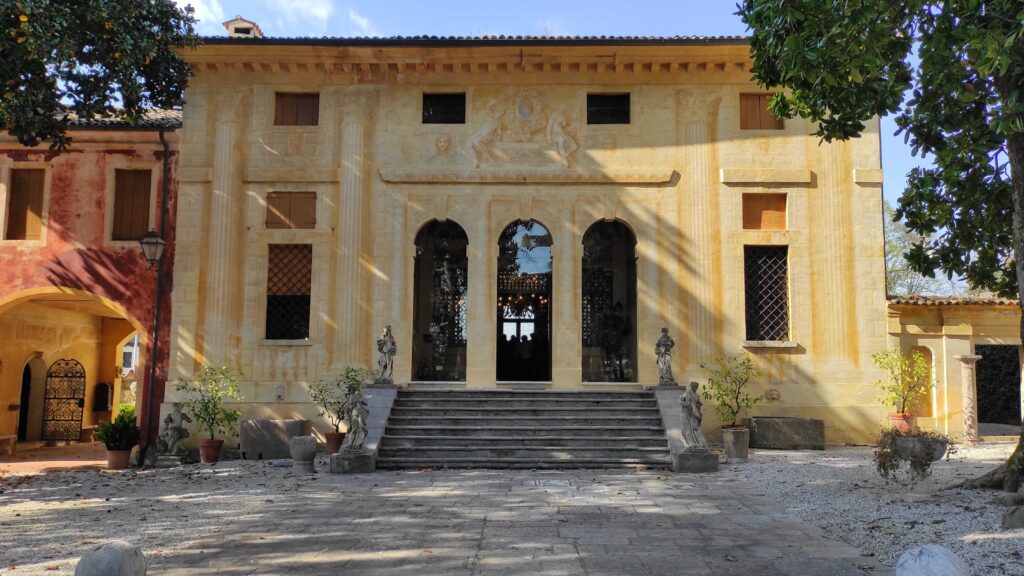
Facing south towards the Italian-style garden, the main façade of the manor house is entirely frescoed with a series of Palladian-inspired architectural elements, finely painted using the trompe l’œil technique.
Executed in yellow earth tones, the illusionistic work consists of two pairs of fluted Corinthian columns, painted against a faux ashlar background on which the noble coat of arms of the Soranzo family stands out. Supported by a male and a female figure, the gold and blue quartered shield is aligned with the triple opening of the loggia, accessible by a short staircase adorned with 18th-century statues depicting the Four Seasons.
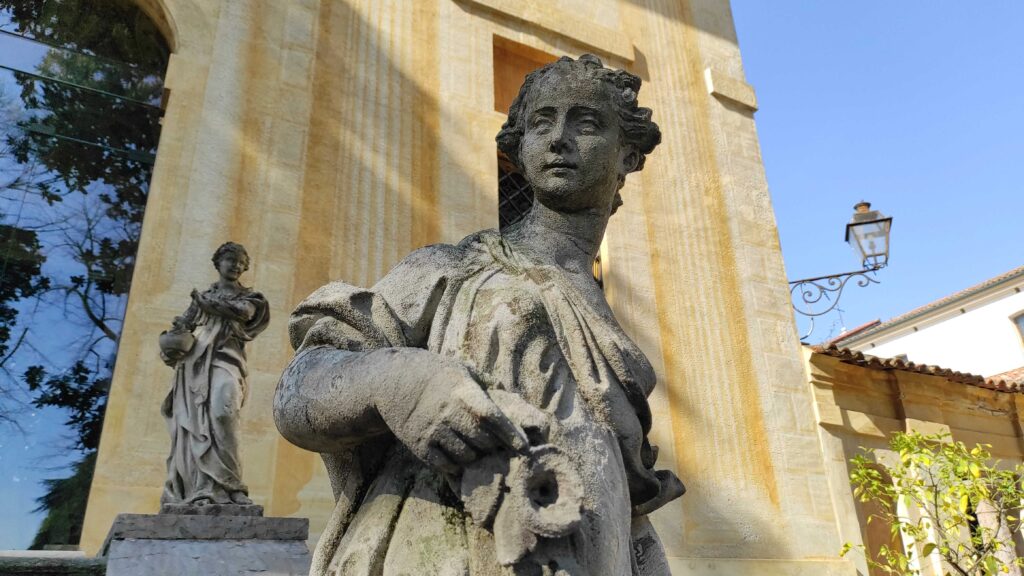
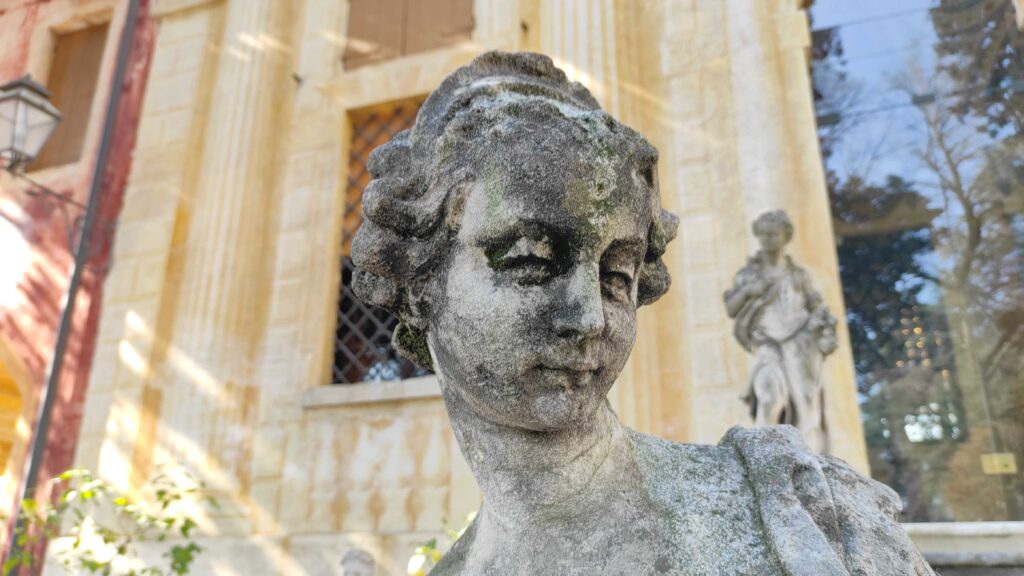
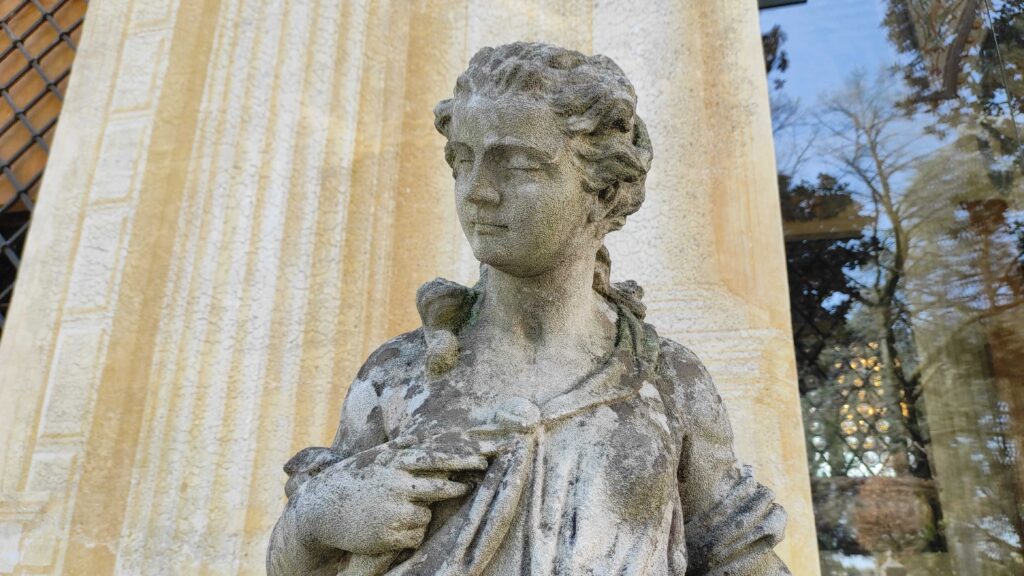
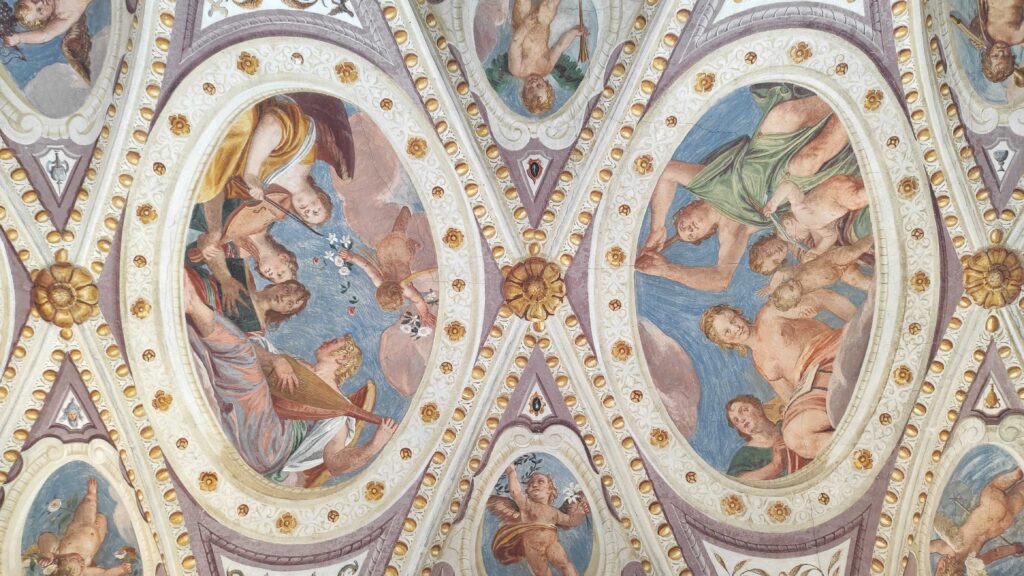
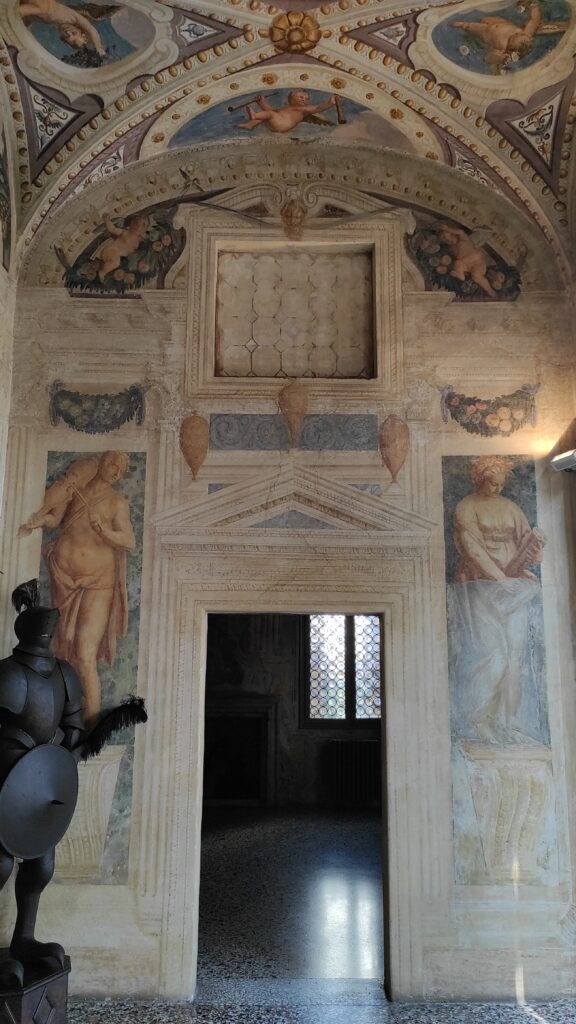
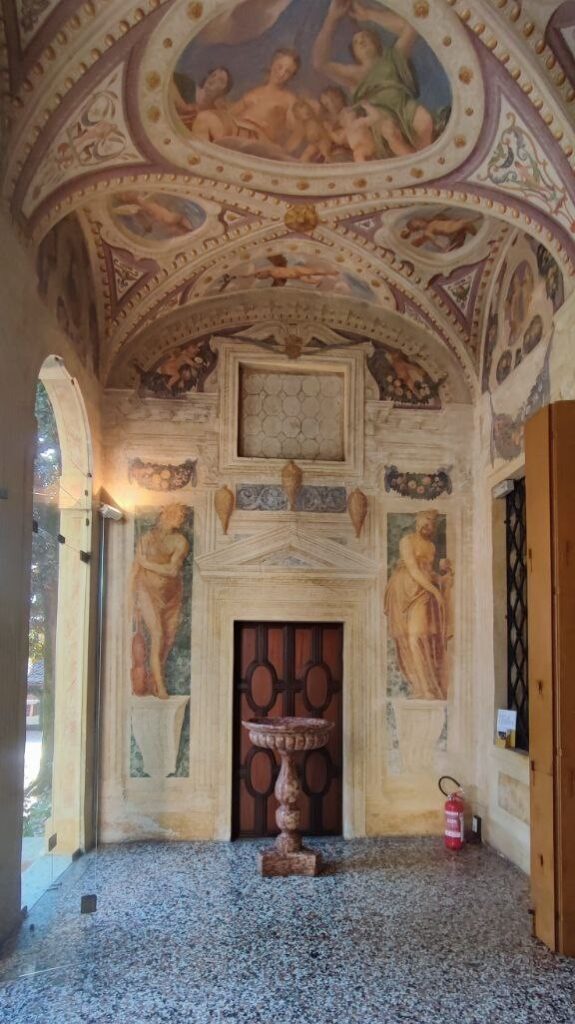
The large, bright atrium is marked by fake Corinthian pilasters framing figures of musicians, set on high pedestals. On the vault, within medallions, joyful putti flutter among little clouds against a clear sky. Two oval frames enclose singers and angels playing trumpet, lute and violin. The decorative scheme includes musical instruments, vegetal garlands with flowers and fruit, as well as sheet music painted on the friezes above the side doors.
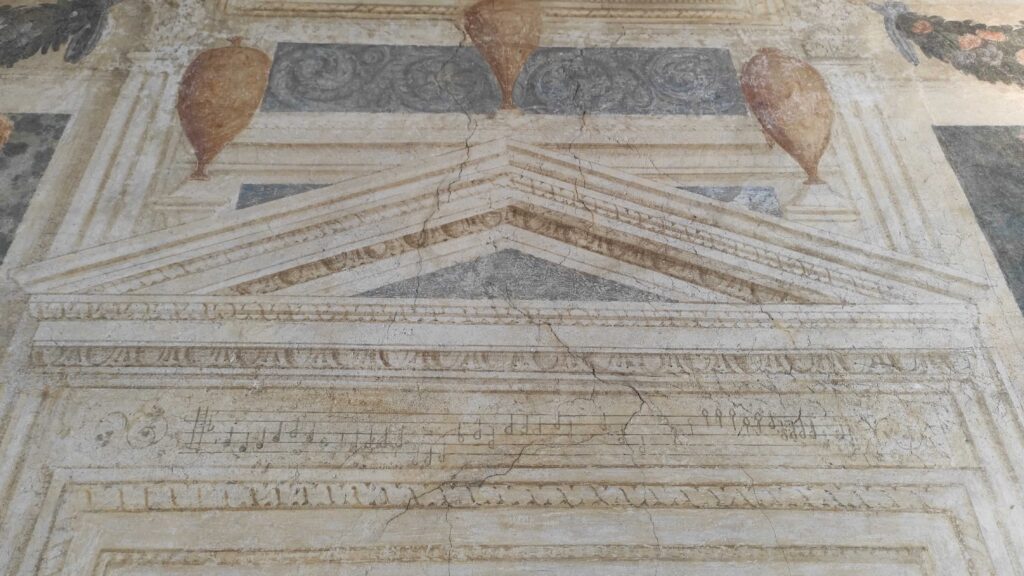
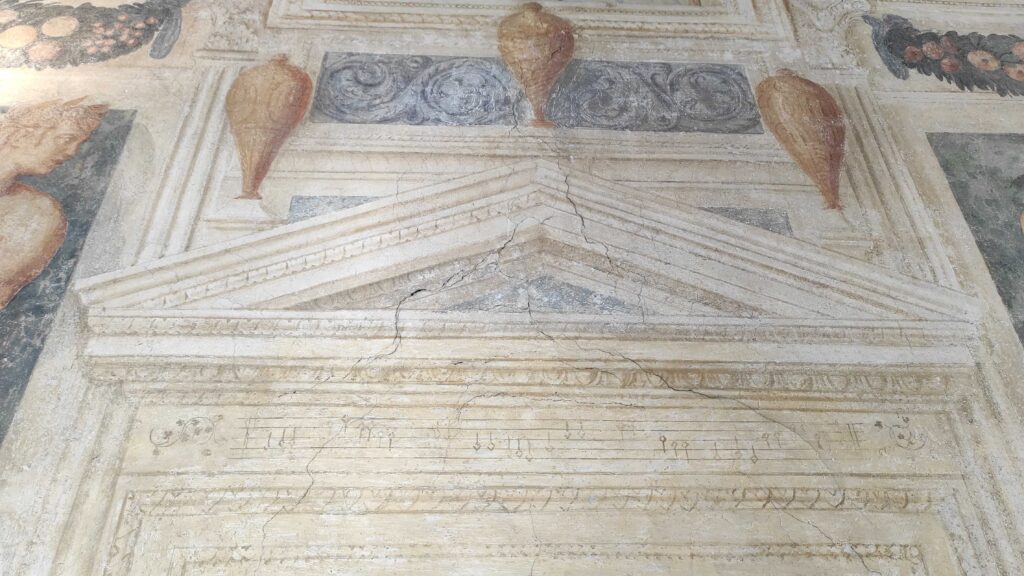
Before entering the main hall, attention lingers on the coat of arms of the Corner family, protectors of Francesco Soranzo, which stands out on the north wall.
The frescoes on the piano nobile
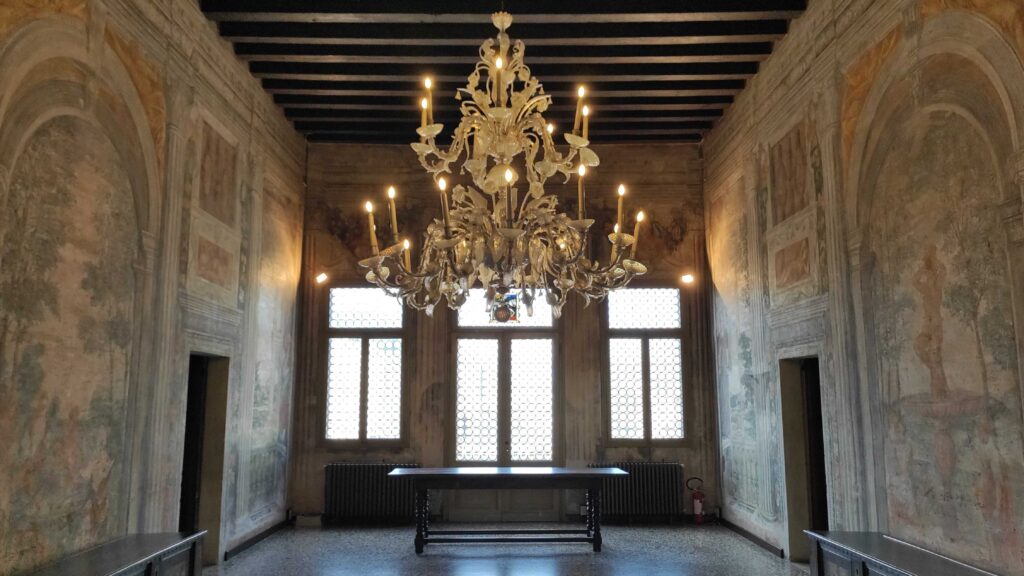
Framed by illusionistic architecture, extraordinary frescoed landscapes amplify the perceived space of the reception hall, creating an expansive imaginary depth.
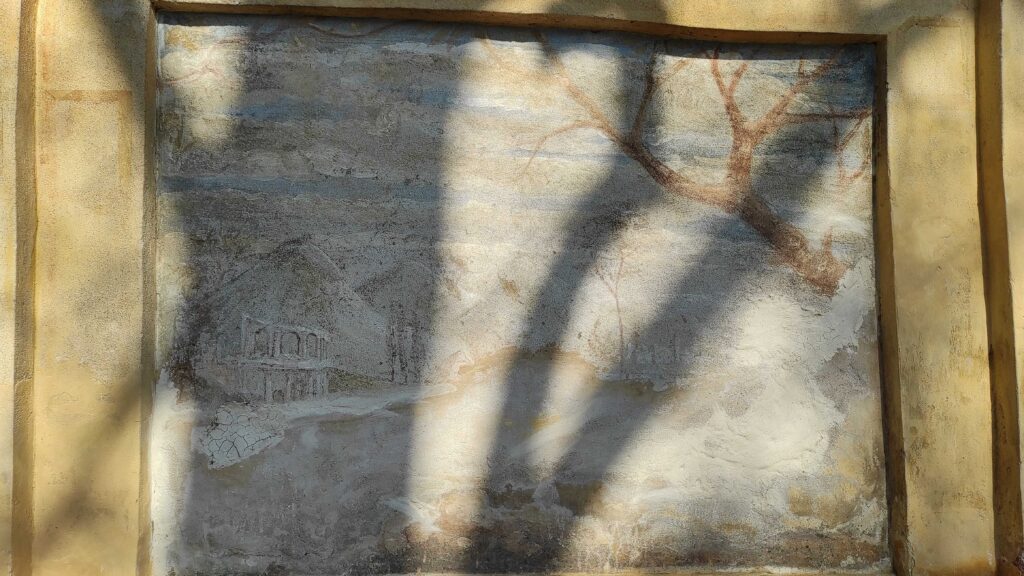
Interspersed with fake Corinthian columns, the arches, loggias and painted windows on the piano nobile open onto gentle sunlit slopes, dotted with the remnants of ancient civilisations surrounded by green hills that fade softly into the horizon.
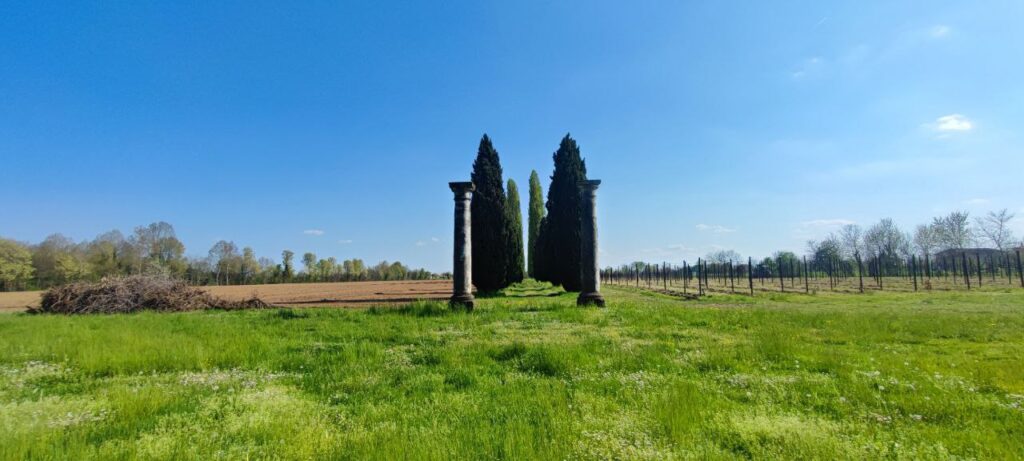
A splendour of forms, light and colour echoes the boundless Venetian countryside that surrounds the villa and the lush agricultural estate, crossed by a long avenue of cypresses and Lombardy poplars.
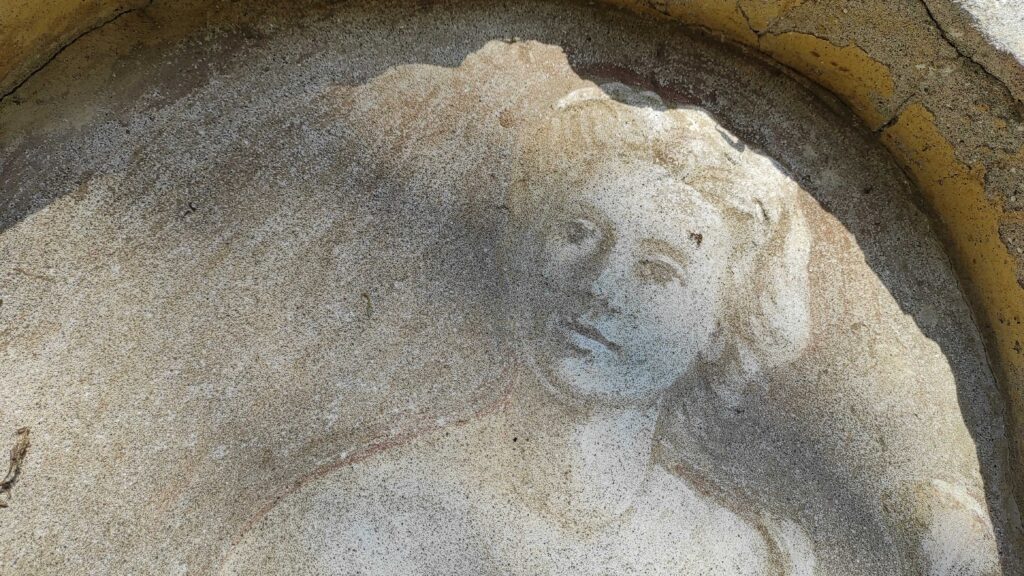
Decorative pillars support a broad round arch, beneath which stands a fountain with a sculpture in a graceful pose, arms raised above its head. At its sides we see three female figures, shaded by luxuriant trees that stand out against the sky.
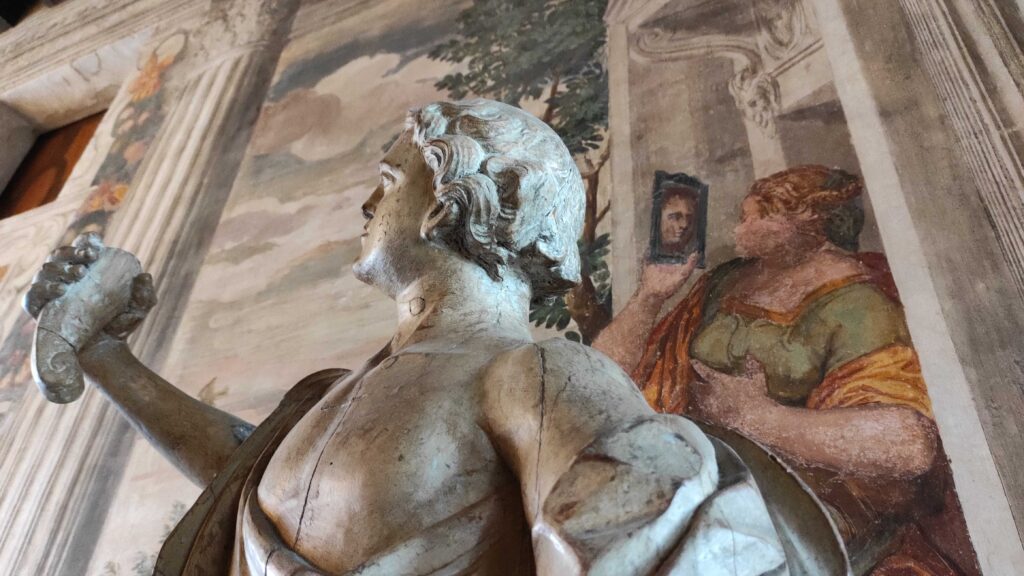
On the opposite wall, beneath a large arch, a countryside concert unfolds in the shade of green trees. Among the instruments, the lute, violin and cello can be recognised.
The Cardinal Virtues, Prudence, Fortitude, Justice and Temperance are set in the side panels within aedicules, backed by airy rural panoramas extending beyond fake balustrades. Above the side doors, the monochrome personifications of the Four Seasons can be seen. The central overdoors depict “Susanna and the Elders” and “Samaritan Woman at the Well”.
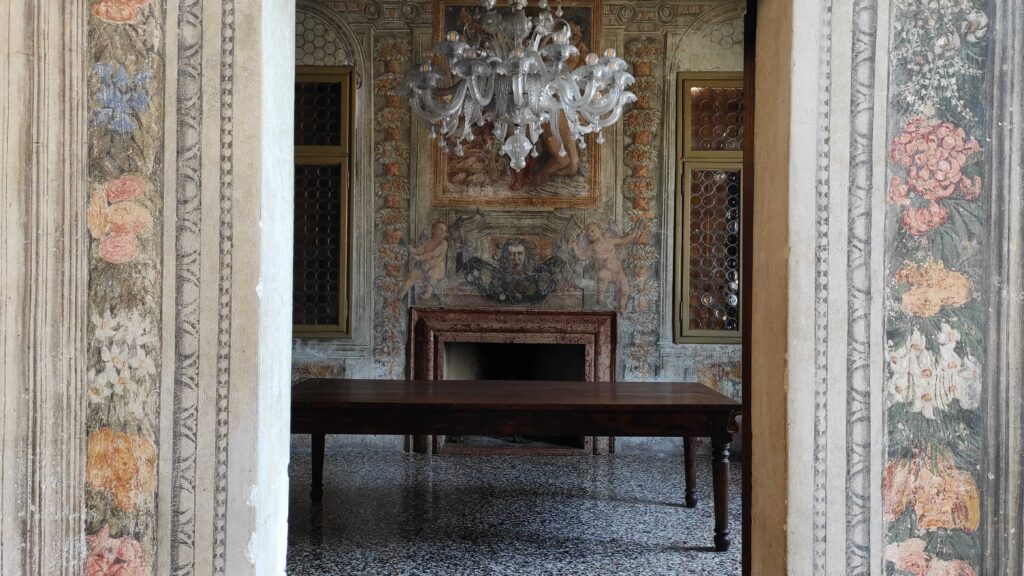
In the centre of the room, a sumptuous chandelier hangs from the enchanting Sansovino-style ceiling, whose original beams rise above the fine Venetian terrazzo floor.
The side rooms on the piano nobile
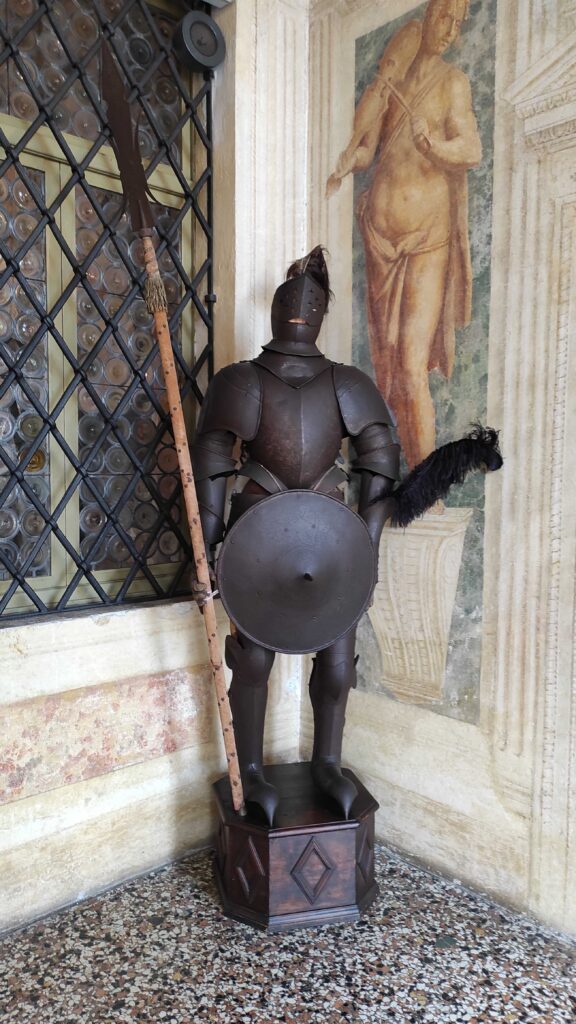
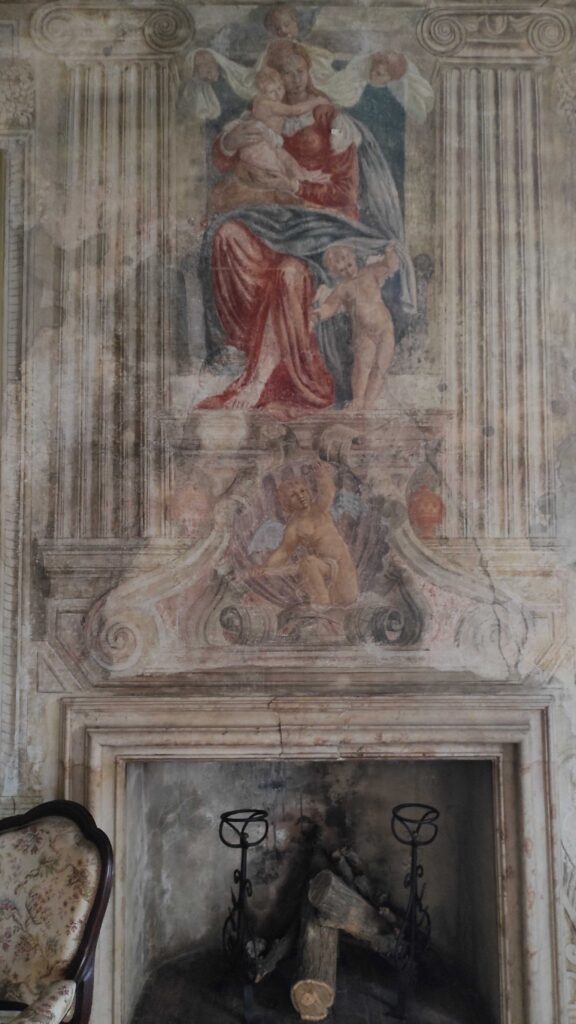
The east door of the loggia leads to the music room, adorned with a triumph of garlands and trophies framing a wide variety of musical instruments.
Above the marble fireplace stands a Madonna enthroned with Child surrounded by putti, while in the overdoor we find the likenesses of Mary Magdalene and St. Jerome.
On the north wall, ennobled by the monochrome figures of Faith, Charity and Hope, fluted Ionic pilasters flank a broad arch decorated with an egg-and-dart motif. This opens onto a lively landscape touched by a winding bubbling stream. Beyond the stone bridge linking its banks, among the canopies of leafy trees, an obelisk stands out before a small village from which rises a tower, topped by the mountains dominating the background.
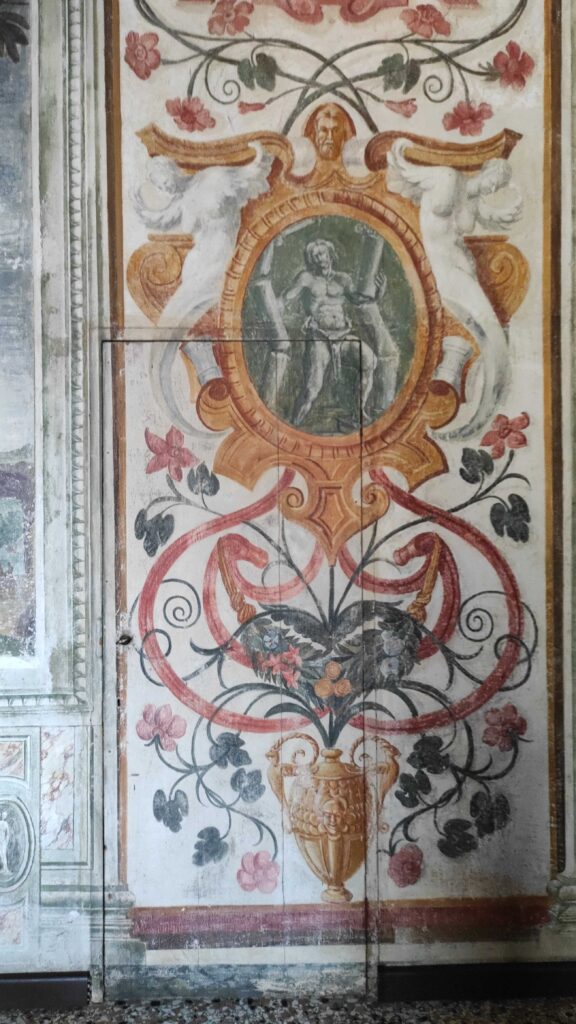
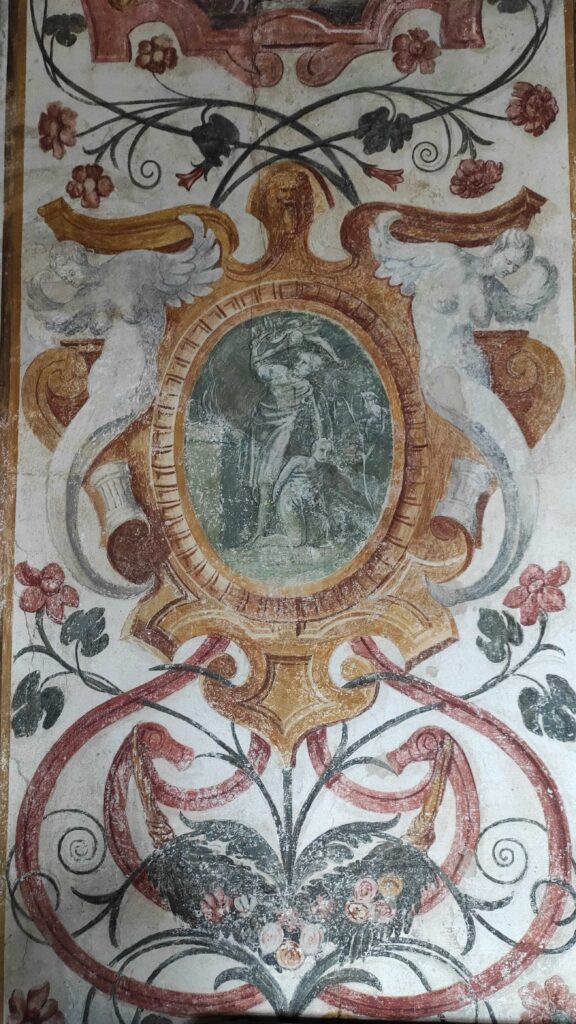
In the morning room, the decoration is articulated in a series of monochrome religious medallions framed by floral motifs. Large painted windows open onto pleasant rural scenes framed by fruit trees.
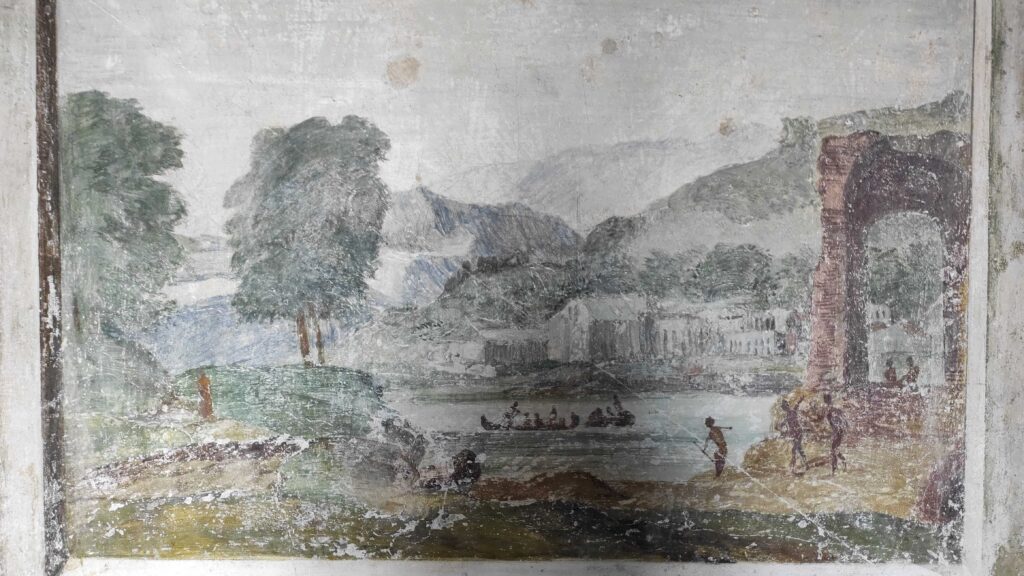
A white painted window, finely moulded, opens onto a world far from us: in the foreground, on the left, a tree laden with ripe fruit dominates the scene. In the middle ground, the eye rests on the ruins of an ancient arch, beyond which flows a watercourse crossed by small boats. On the horizon, the outlines of imposing hills dissolve in soft vibrations of green and blue.
In the evening room, a medallion at the centre of each wall illustrates biblical episodes surrounded by vine leaves, winged putti and arms trophies painted with armour and banners. Above the Verona marble fireplace, the depiction of the martyrdom of Saint Giustina is striking.
The kitchen
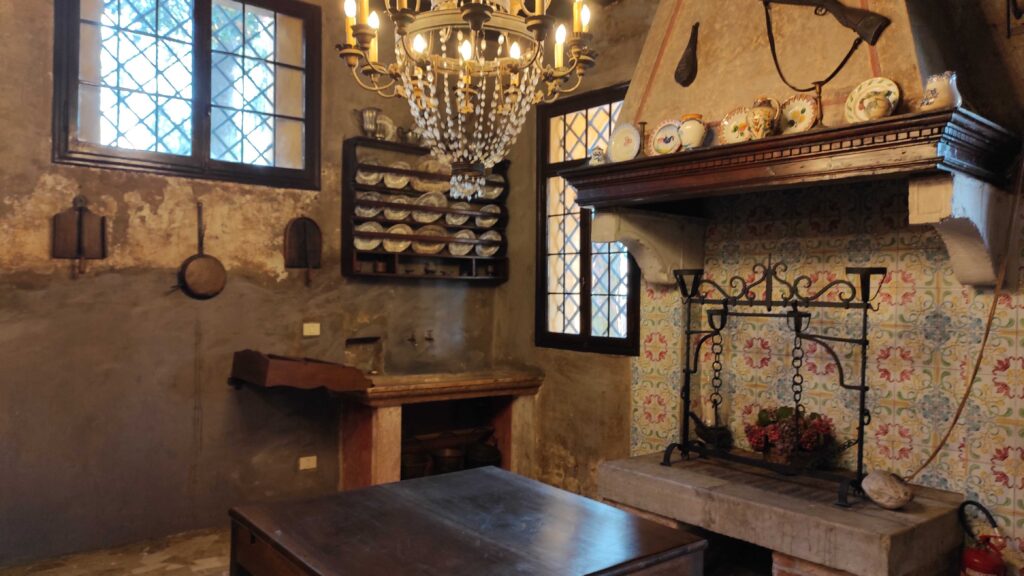
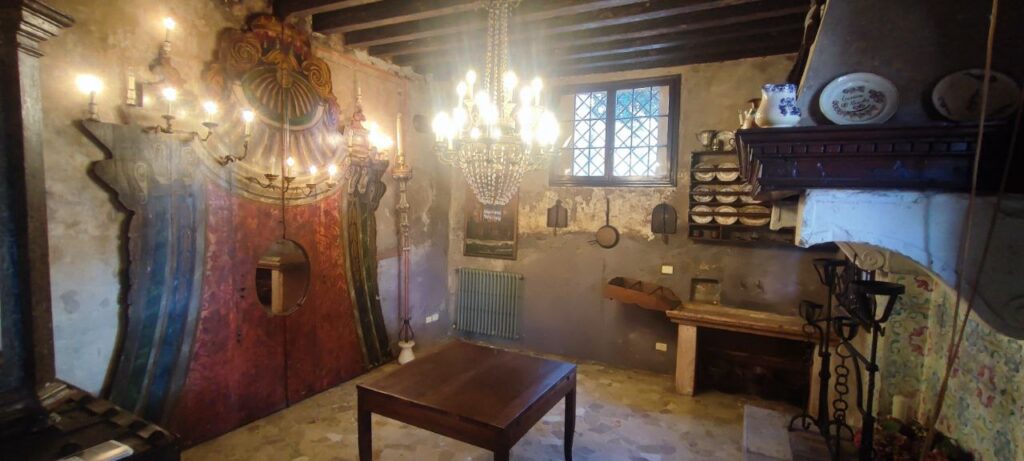
To the west is the kitchen, located at the level of the entrance portico. The heart of the domestic hearth is an elegant fireplace decorated with polychrome tiles. Above the mantel, where plates and colourful ceramic jugs are neatly arranged, we find a muzzle-loading rifle hanging from the hood. On the opposite wall there is a flamboyant painted wooden backdrop. Lit by a sinuous branched chandelier, the kitchen is one of the most welcoming rooms in the historic residence.
From the landing one reaches the 19th-century wing and the upper floor used as a granary, with the roof beams exposed.
The garden of Villa Chiminelli
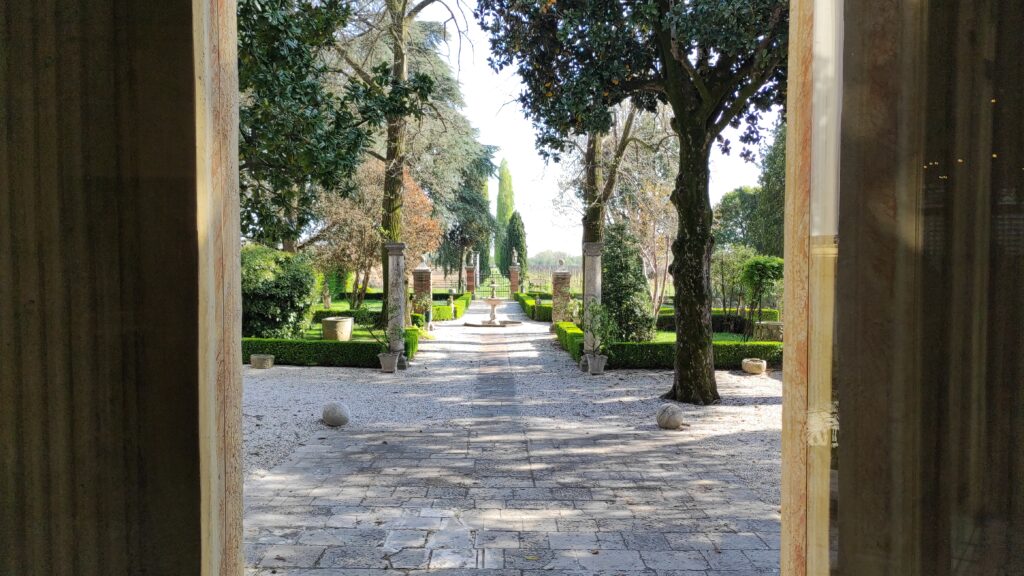
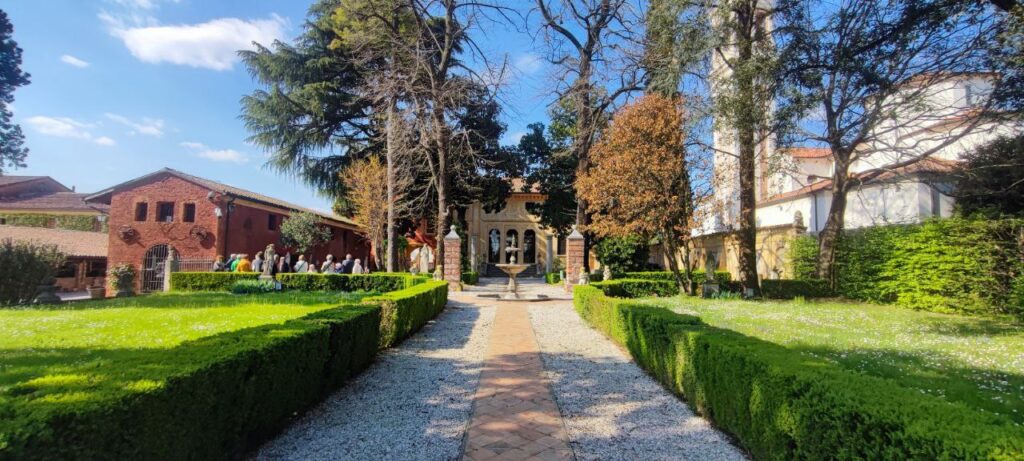
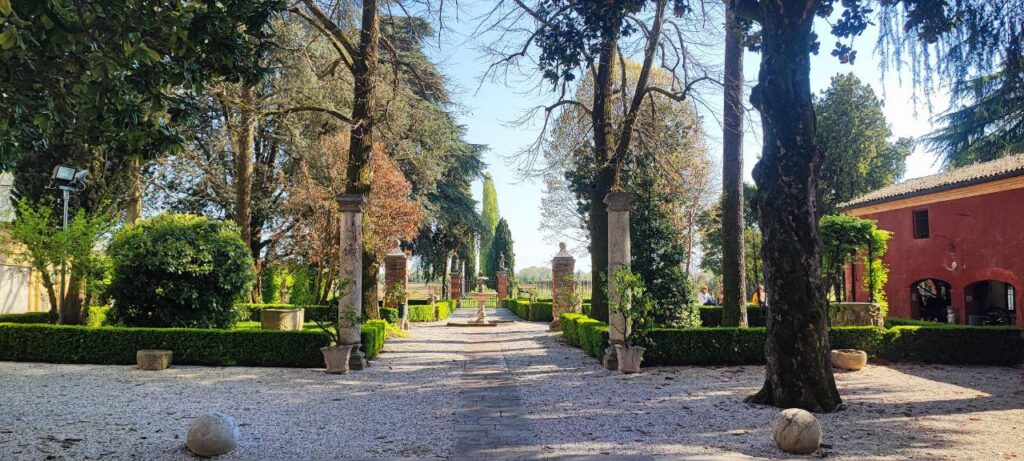
From the elevated position of the southern entrance, the gaze is directed along the central avenue that runs from the Italian-style garden to the ancient gate, set into brick pillars crowned with statues, beyond which it continues in the shade of cypresses and Lombardy poplars stretching as far as the eye can see across the vast estate of the villa, offering a perspective that takes your breath away.
Spotted with stone statues, evocative relics and ancient wells, the garden of the noble residence is adorned with jasmine and fragrant lemons, privets, Atlas cedars, Lebanon cedars, magnolias, lime trees, holm oaks, firs and many other lush tall trees, whose thriving canopies rise above the frescoed wall that marks the property on the east side, rivaling in height the white mass of the nearby neoclassical church of Sant’Andrea Apostolo.
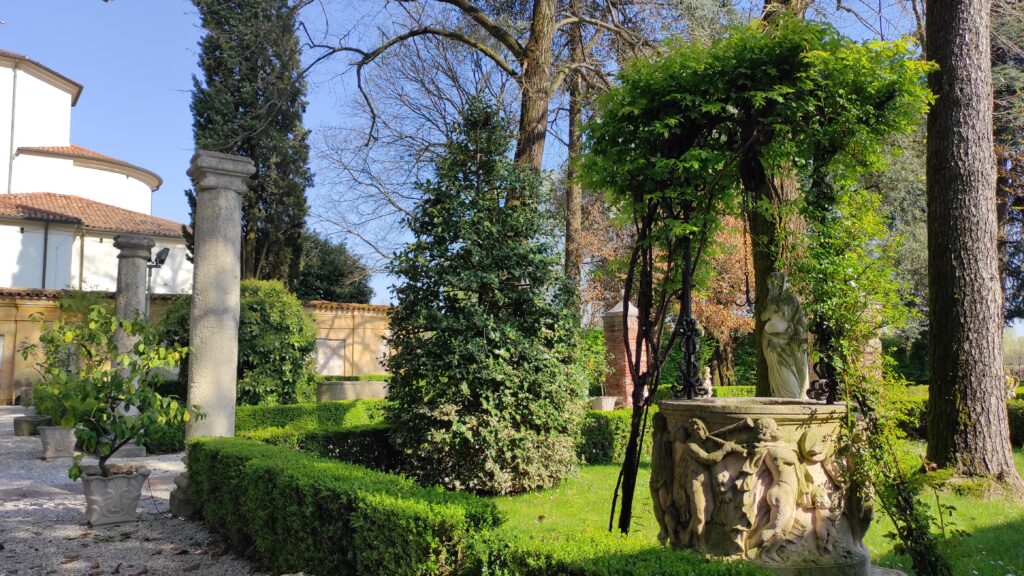
The four boxwood hedges framing the avenue reflect the balance and symmetry of the Renaissance garden, based on the classical concept of the villa as a place where one could devote oneself, in addition to managing the estate, to otium, that is, conversation, culture and intellectual leisure. In this context, the order of the “built nature” of the Italian-style garden connects Villa Chiminelli with the surrounding landscape, where the kitchen garden, the brolo and the cultivated fields find space.
The estate of Villa Chiminelli
Marked by the regular succession of rows trained with Sylvoz, double inverted, the 19th-century vineyard adjoining the villa has been restored to its original splendour in continuity with the original vocation of the Venetian villa, conceived by the Venetian nobility as the nerve centre of a productive settlement, in which the majesty of the manor house is combined with the functionality of the rustic outbuildings, necessary for managing the farm.
The fortunate location of the Villa Chiminelli vineyard, in the fertile DOC area of Marca Trevigiana, offers the ideal microclimate and terroir for the ripening of pleasantly aromatic grapes from which “Terre di Giorgione” is made, its name inspired by the Ville di Giorgione project promoted by the Municipality of Castelfranco Veneto.
The Prosecco DOC Treviso Extra Dry produced on the Villa Chiminelli estate appears straw yellow with golden reflections and persistent mousse. On the nose it offers a pleasantly fruity aroma; on the palate it is dry, harmonious and velvety, an expression of the identity of a territory long devoted to producing wine excellence.
The Tanning Museum
Inside a rural annex to the west of the villa, a rich mosaic of machinery and tools used in the tanning sector keeps alive the memory of Scamosceria del Grappa, one of the most prosperous production businesses in the Bassanese, whose sign can still be admired today.
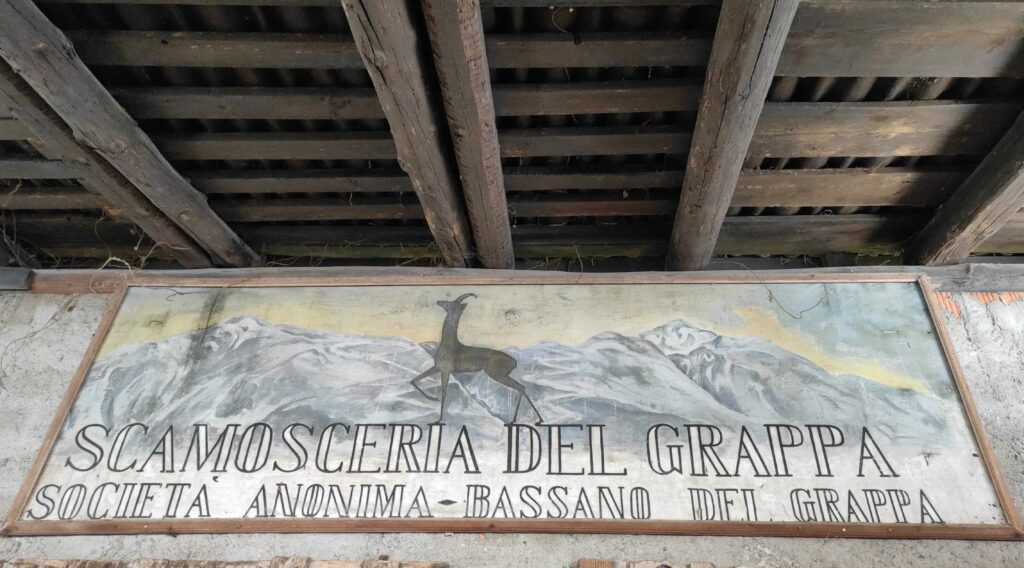
Founded along the course of the Brenta, the historic company of the Chiminelli family originates from the factory “for dressing chamois leather for use in Germany”, founded in Bassano in 1773 by B. Jonoch.
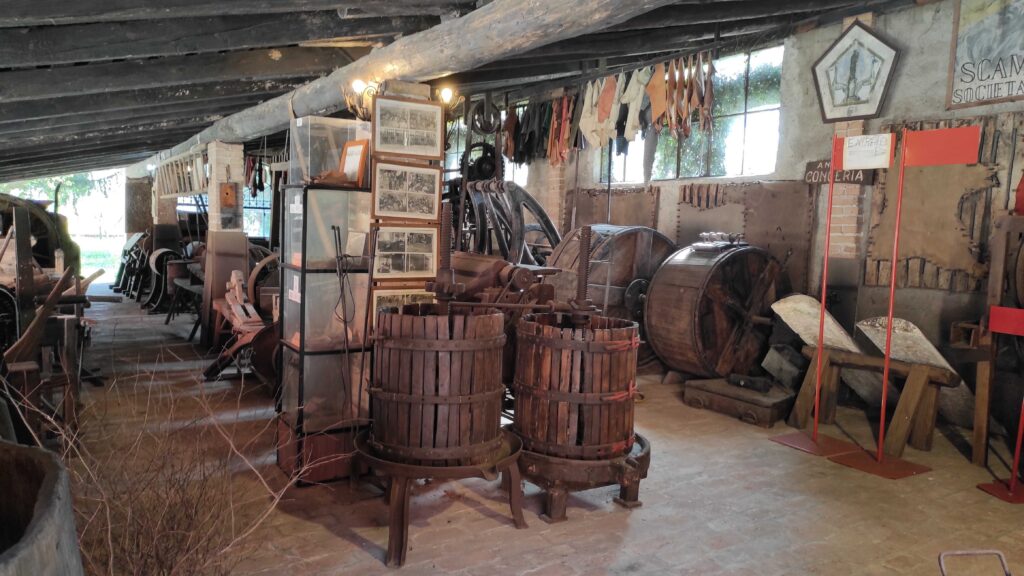
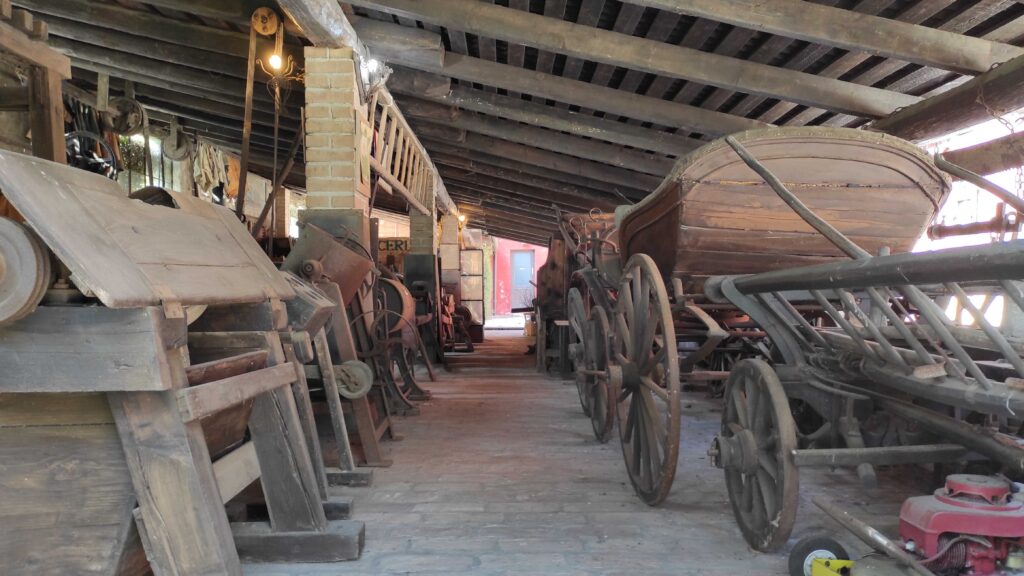
Inside the rustic building with exposed brickwork, among ancient tanning drums, presses and trestles for working hides, we also find some centuries-old carts and carriages.
The Agricultural Museum
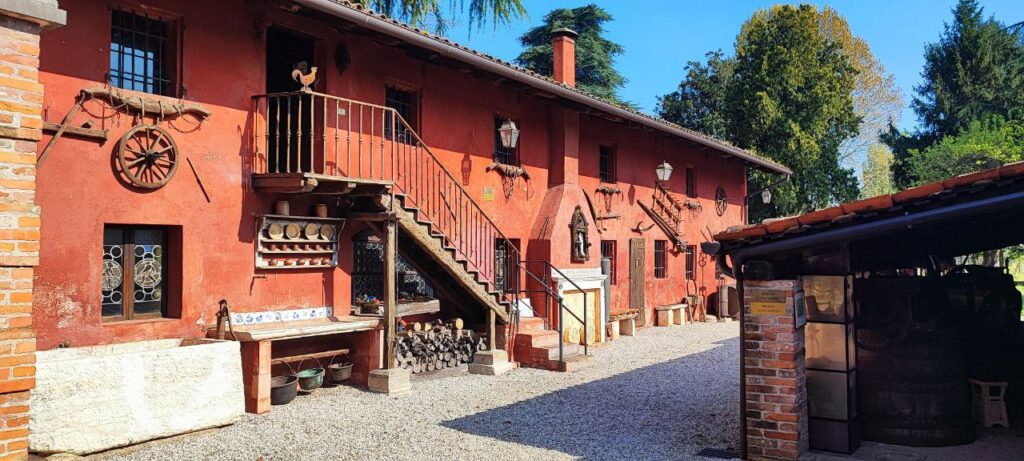
Set up on the first floor of the late 18th-century arcaded barchessa, located between the garden and the Tanning Museum, the Rural and Craft Museum guides visitors through more than one thousand objects that defined the daily life, traditions, agricultural activities and crafts of our past. The exhibition route, organised into thematic sections, includes tools used in forestry, field work, textiles and traditional cooking.
The Ethnographic Museum
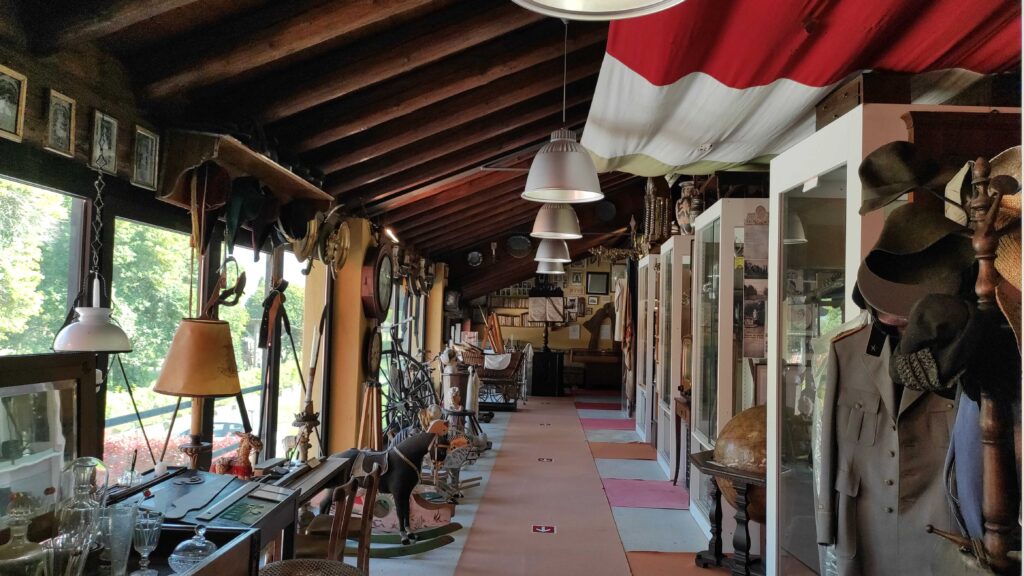
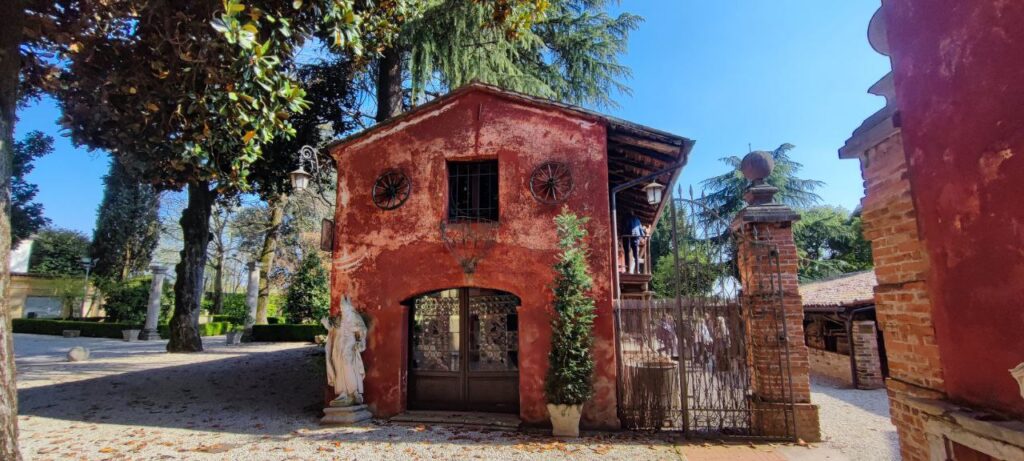
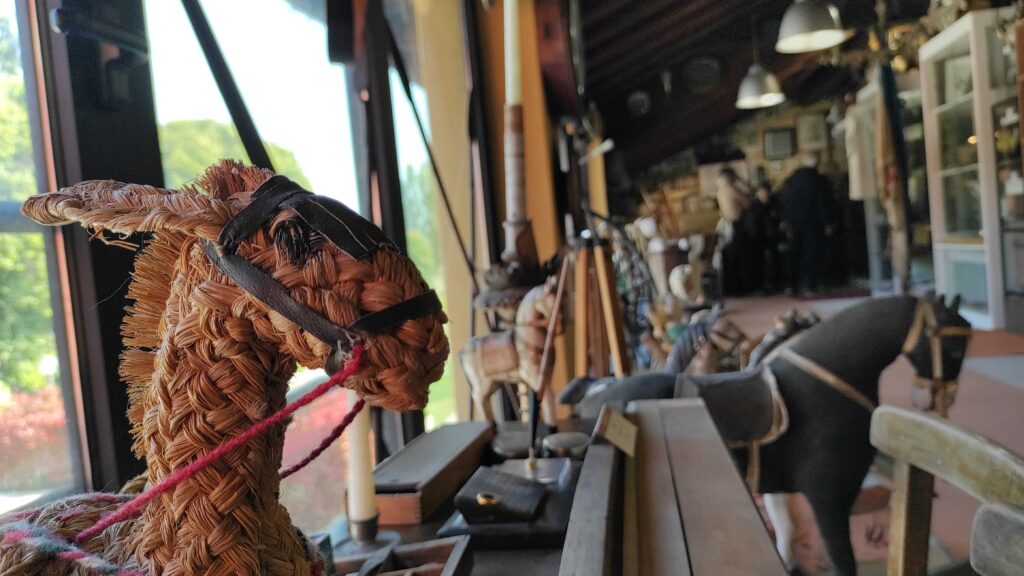
Among the rarities preserved on the first floor of the west wing of the Rustici, stand out rocking horses, a detailed wooden globe, a bicycle in excellent condition, musical instruments, sports equipment such as skis and a wooden rower, as well as tubs, washbasins, playing cards and precious period prints of timeless historical charm. The collection is enriched by printing machines, gramophones and projectors, significant testimonies to the radical technological and social changes introduced by the industrial revolution.
Why visit Villa Chiminelli
Spectacular illusionistic frescoes, executed by masters of the Venetian school, continue the Palladian-flavoured architecture of a prestigious residence from the second half of the 16th century, ideally extending into the perspective avenue that crosses its lush garden and renowned estate. From this skilful dialogue between art, nature and architecture comes the harmonious synthesis between the villa civilisation and the garden civilisation of which Villa Chiminelli is a remarkable example.
In this magical place, in the heart of the Po Valley, the large and bright rooms of the Renaissance residence and the green-surrounded rural outbuildings provide the ideal setting for conferences, congresses, ceremonies and memorable events of every kind, in a fairytale atmosphere where the boundary between dream and reality seems to fade.