
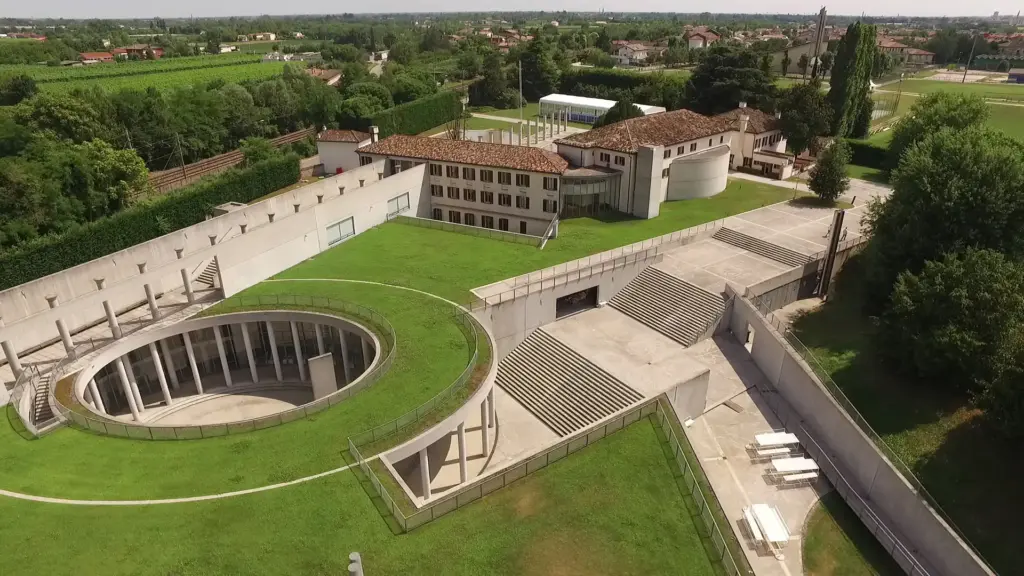
Tadao Ando Architect & Associates Project
With a Renaissance inspiration and an approach based on learning by doing, Fabrica offers a free six-month artist residency to under-25 creatives from all over the world, who embark on a path of research and training in the fields of photography, visual communication, interaction design, video, writing, music and much more through a programme of workshops, lectures and screenings with internationally renowned artists, mentors and professionals.
Where is Fabrica located?
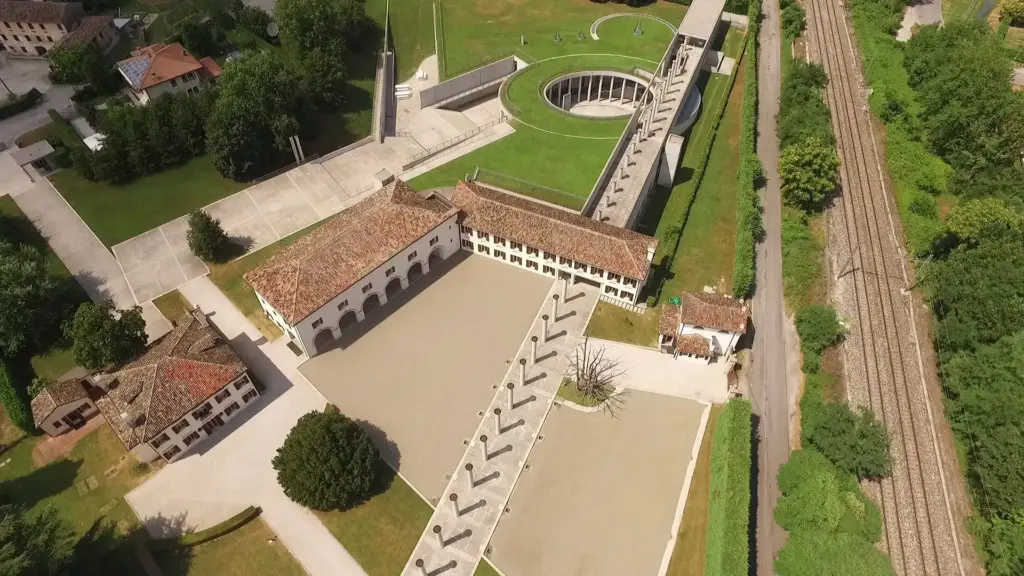
Located at Via Postioma 54/F, in Catena di Villorba, the building complex stands where Via Postumia, a consular road dating back to 148 BC that connected Genoa and Aquileia, intersected with the ancient route leading to the Piave ford at Lovadina, a crossroads of pilgrimages and flourishing trade since Roman times.
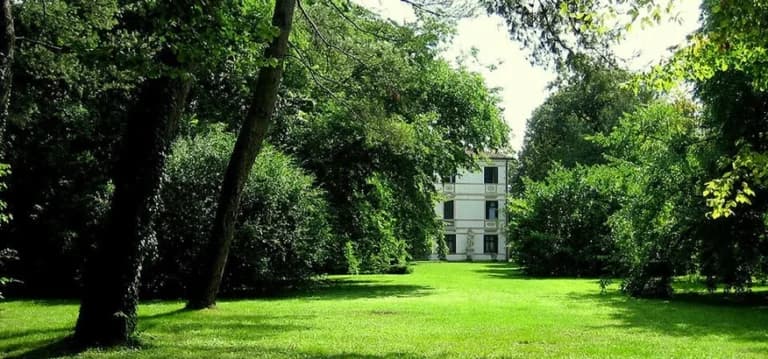
The centuries-old park of Villa Pastega Manera
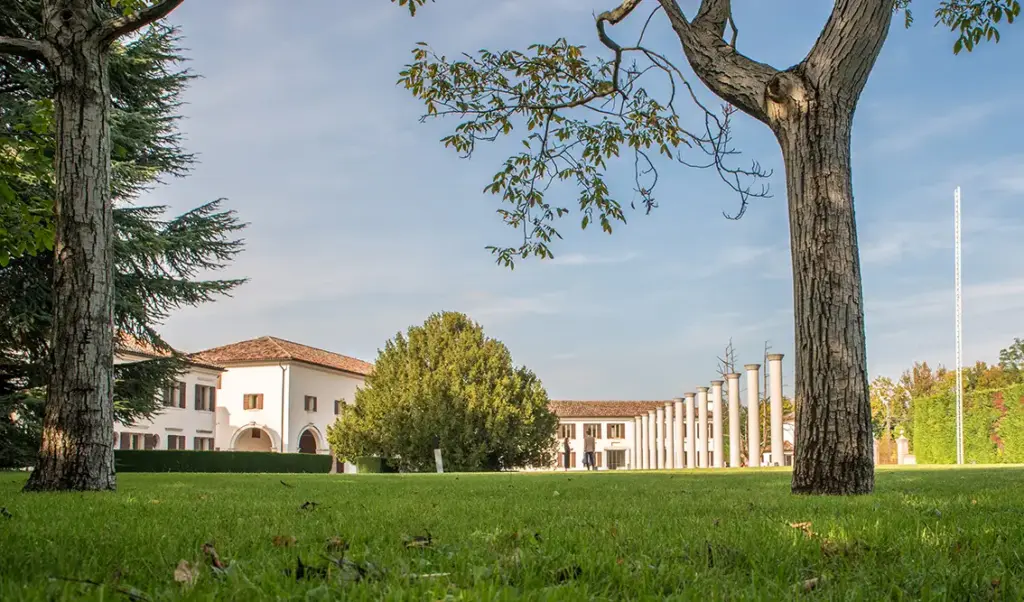
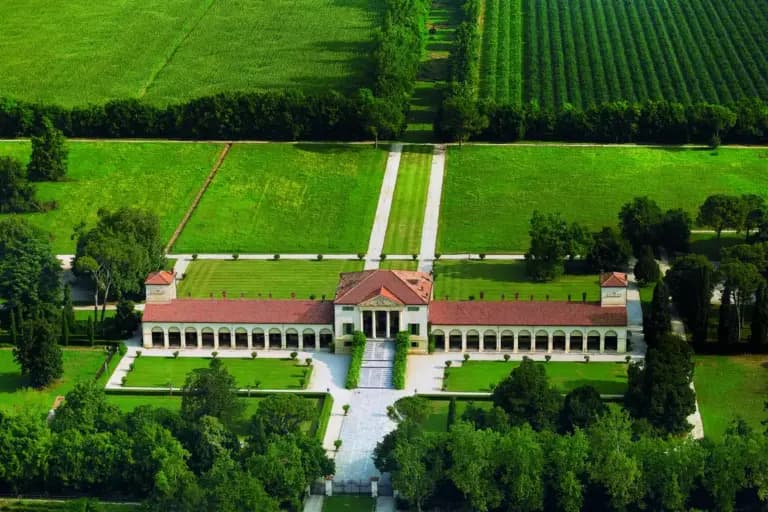
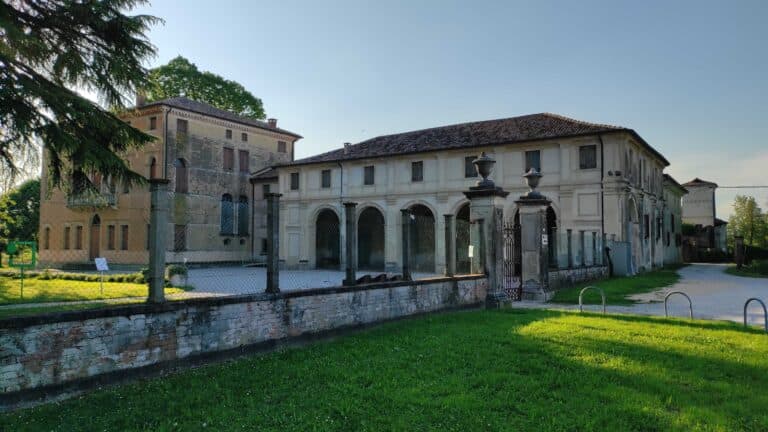
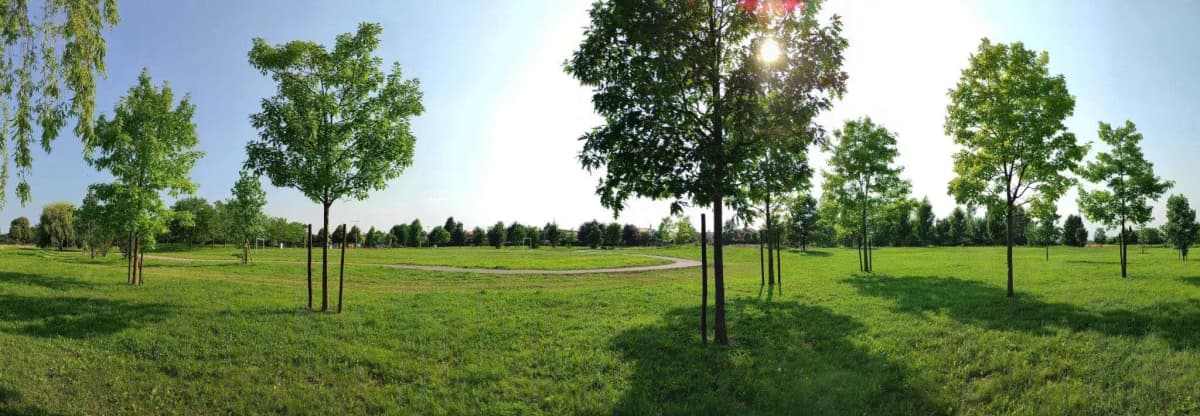
Immersed in the fertile Treviso plain marked by maize fields and sunlit vineyards, the noble complex is surrounded by a lush garden shaded by cedars, magnolias, Lombardy poplars, fir trees, walnuts and many other thriving tall trees. Framed by a tall, neatly trimmed hedge, the centuries-old park is enclosed by a perimeter wall of pebbles and exposed brick, with two sinuous wrought-iron gates opening on the east side, bordered by pillars topped with white ornamental spheres.
Architecture and restoration of Villa Pastega Manera
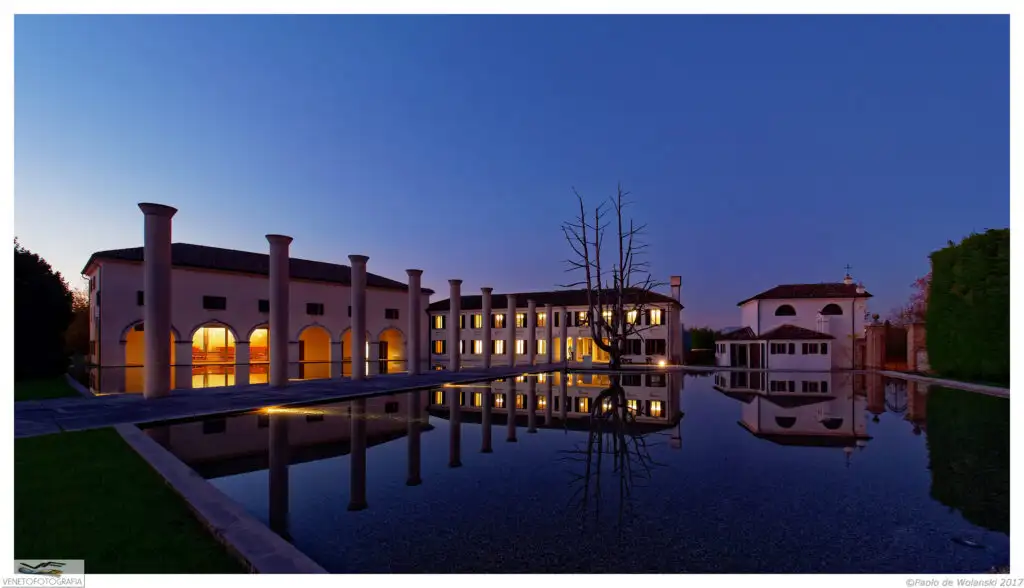
The main building
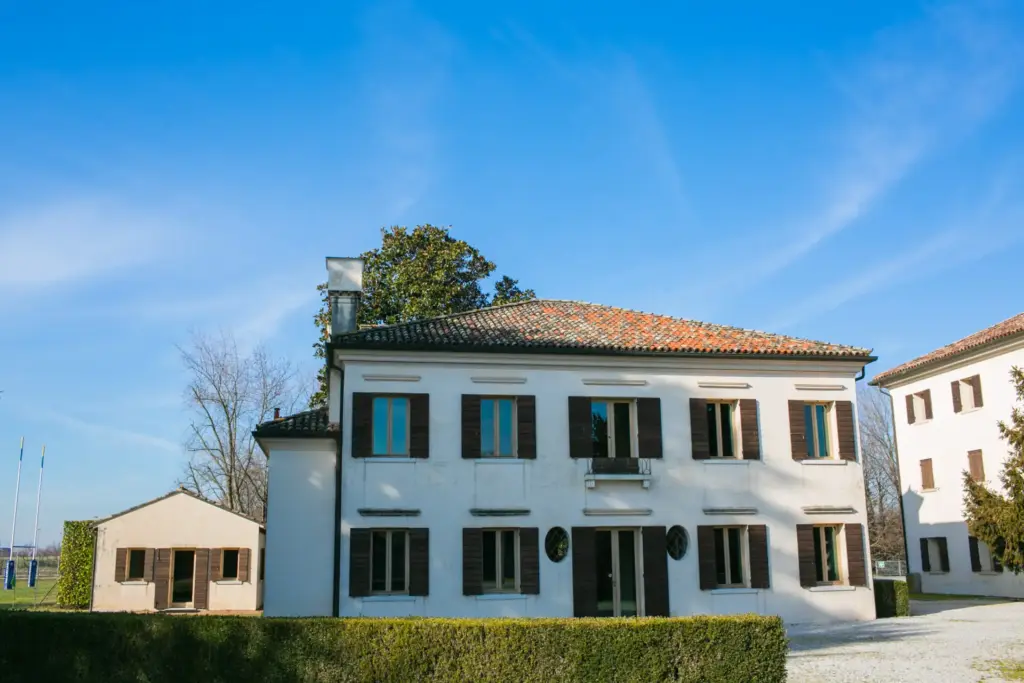
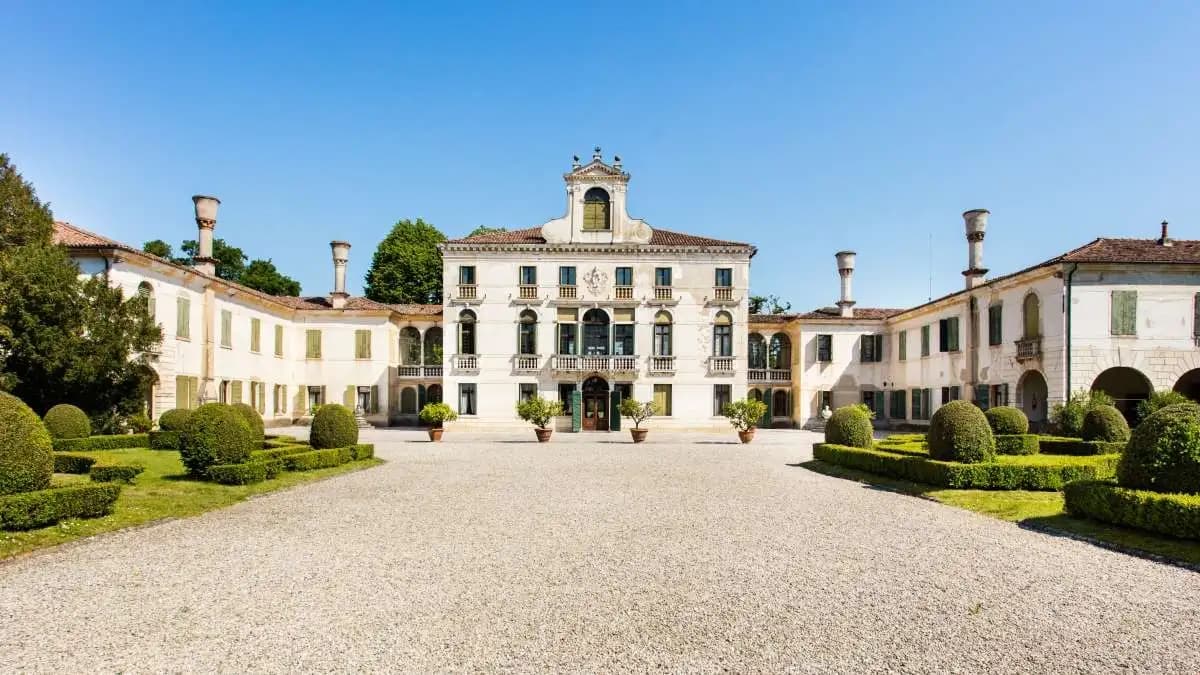
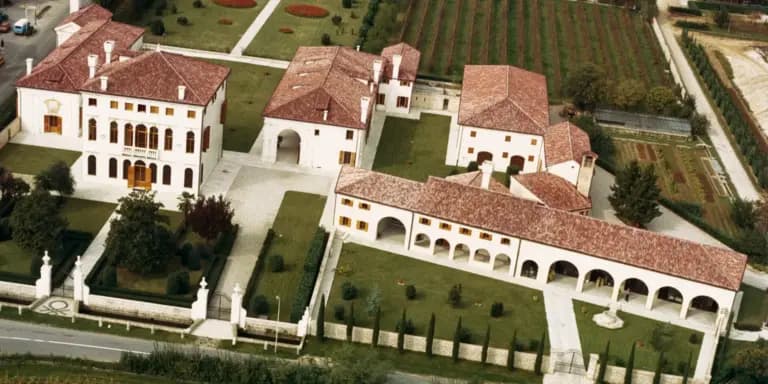
Rising over two floors, the main house is topped by a hipped roof with two dormer windows, one to the north and one to the south. The latter is framed by two symmetrical chimneys projecting beyond the wall line. Another chimney rises on the north side.
The east facade is marked by a series of rectangular openings topped by a cornice, arranged along five vertical axes. Above the entrance portal, flanked by small oval windows, there is a French window opening onto a balcony, supported at the ends by two corbels and decorated with a wrought-iron balustrade.
In order to preserve the historical authenticity of the architectural complex and the decorative features that enrich its interiors, the renovation and restoration of Villa Pastega Manera involved a careful study of traditional techniques and materials. For this purpose, more than 200 material samples were prepared in duplicate, one in Treviso and one in Osaka. During the works, old bricks, cocciopesto plaster and marmorino finishes were used, while the floors were redone in the “Palladian” style or with wooden planks.
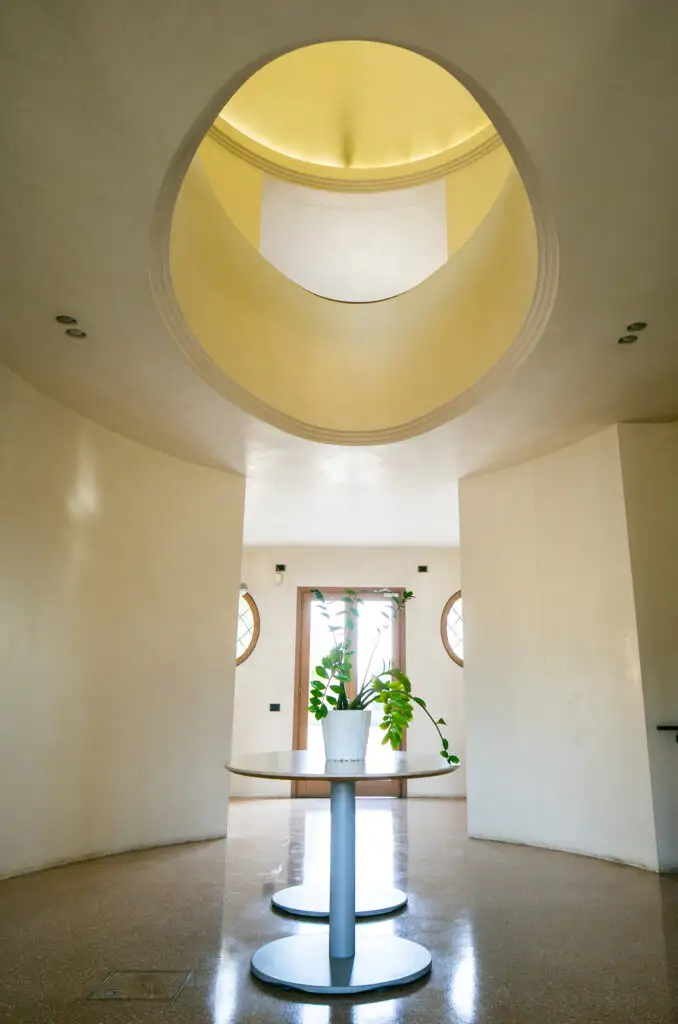
Redesigned in elliptical form, the atrium of Villa Pastega-Manera, on two levels, develops through the passageway between the two fronts.
The barchesse of Villa Pastega Manera
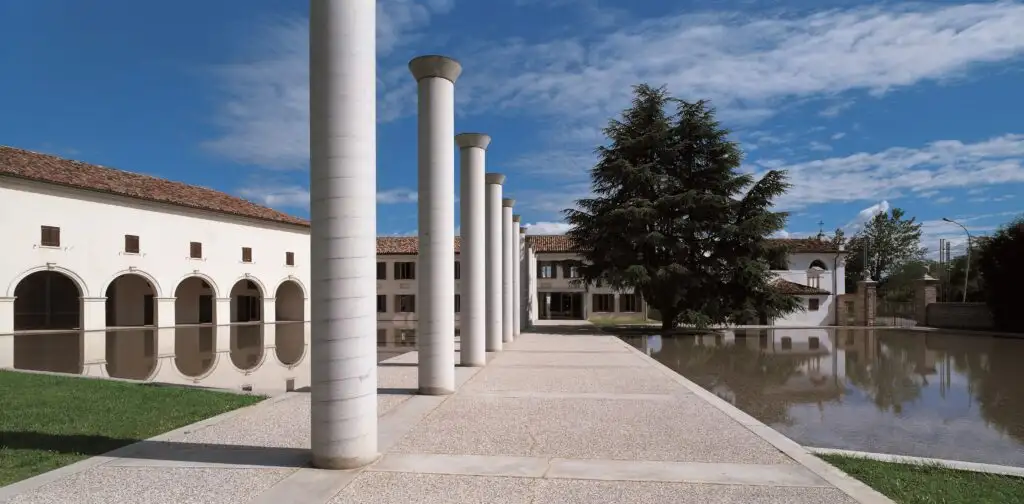
Beside the residential core extends a rectangular-plan barchessa. Arranged over two levels, the adjoining building features on the east side a portico marked by six round arches with a volute in the keystone, topped by a square opening. The building is connected to the smaller barchessa by a modern glazed structure, built to replace the previous dilapidated masonry structure.
The auditorium
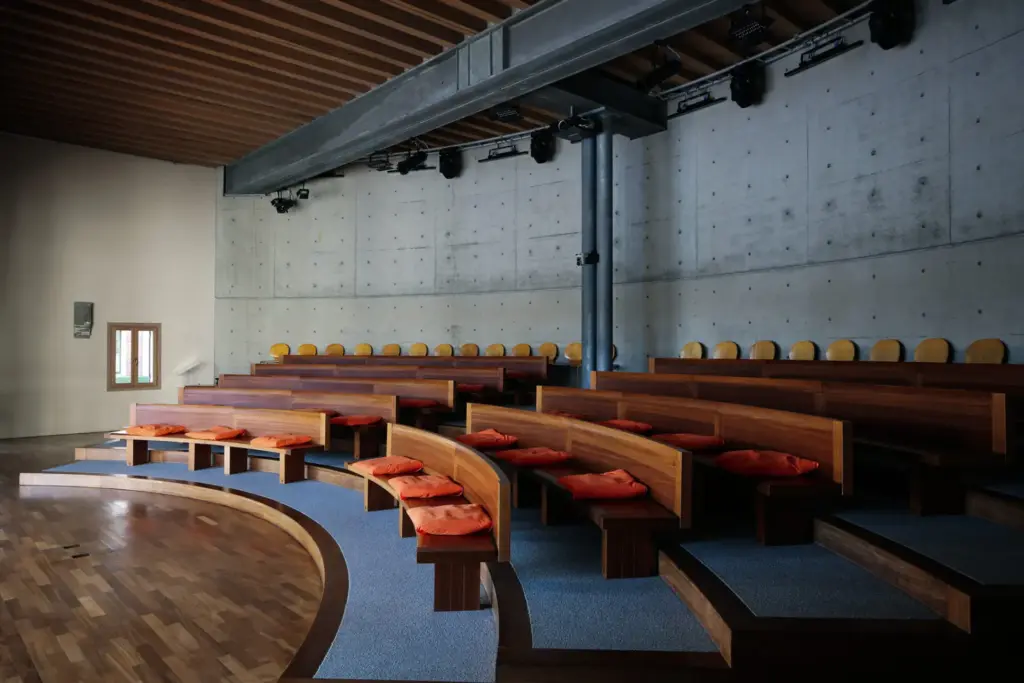
From the outer front of the larger barchessa emerges the exposed concrete curved wall of the auditorium. Located between the noble residence and the underground area, it faces a large opening that allows visitors to contemplate the inner courtyard and the enchanting sheet of water that borders the new access path to the smaller barchessa on both sides.
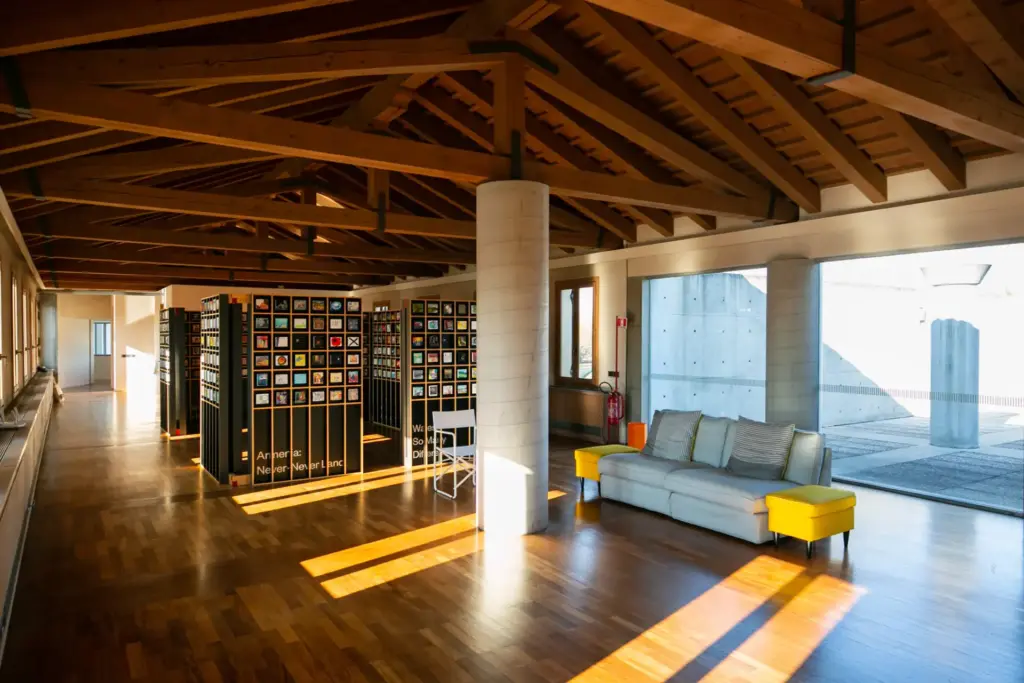
Set between the evocative body of water and the patio next to the elliptical square, the Sala Imago Mundi takes its name from Luciano Benetton’s art collection, an encyclopedic catalogue of contemporary artistic production that includes the works of twenty-six thousand artists from more than 160 countries and native communities from every continent.
The seventeenth-century chapel
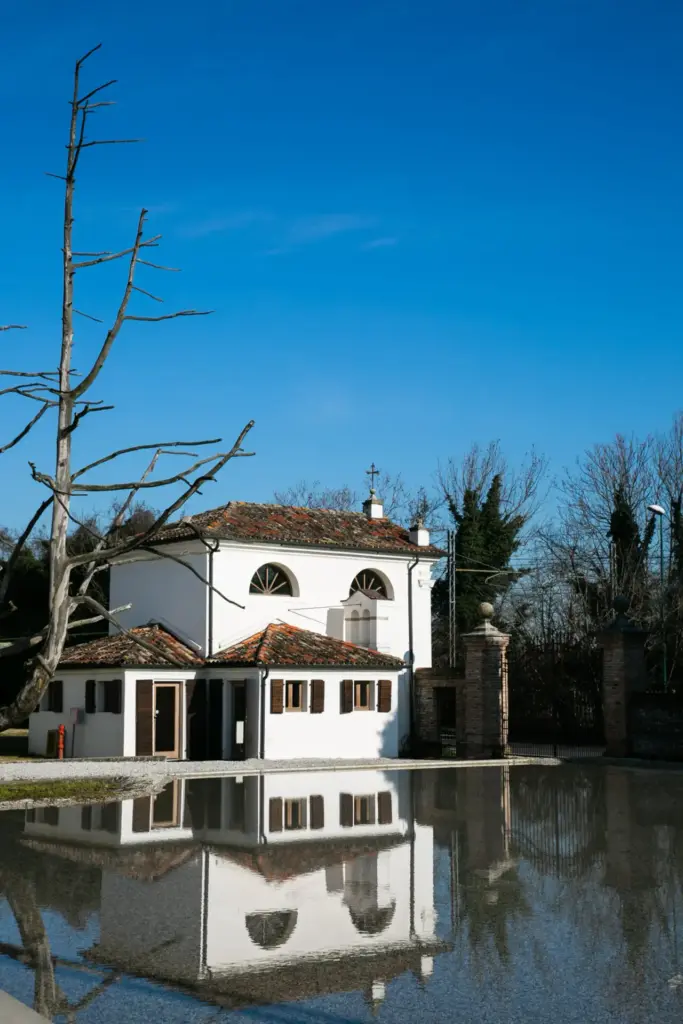
Facing Via Guglielmo Marconi, the Pastega family chapel stands out for its double-pitched facade, crowned by a triangular pediment supported by two pairs of Ionic pilasters resting on tall plinths. On the south side of the building, two semicircular windows open.
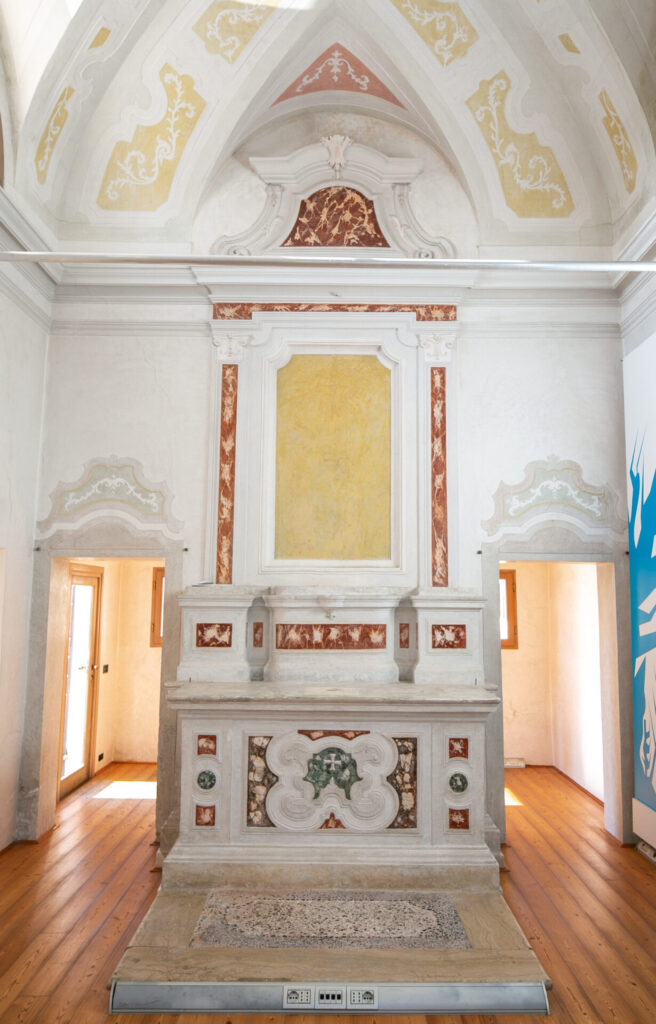
The restoration work to which the white church has been subjected has brought back the former splendour of the decorative apparatus of seventeenth-century stuccoes and frescoes, as well as the enchanting altar in polychrome marble that stands out in the single nave of the place of worship.
Architecture of Fabrica
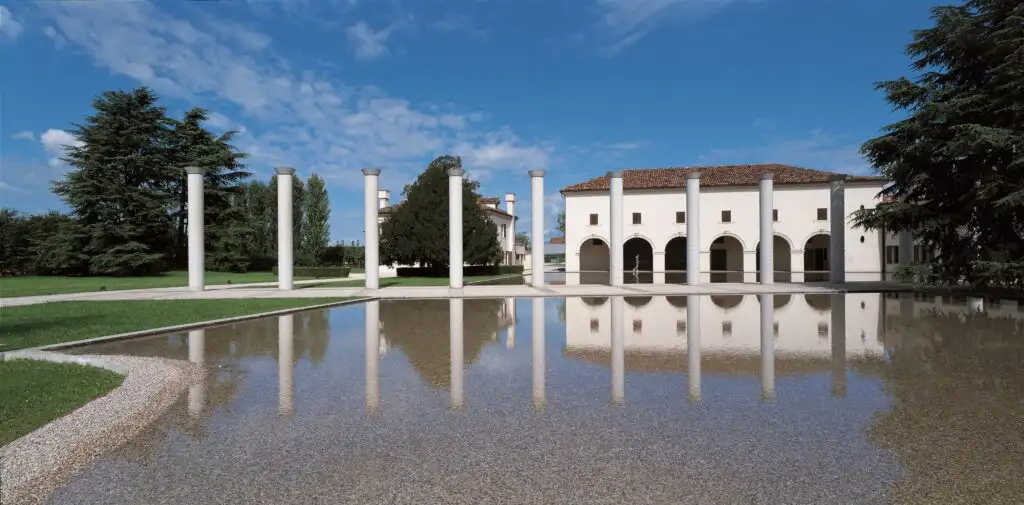
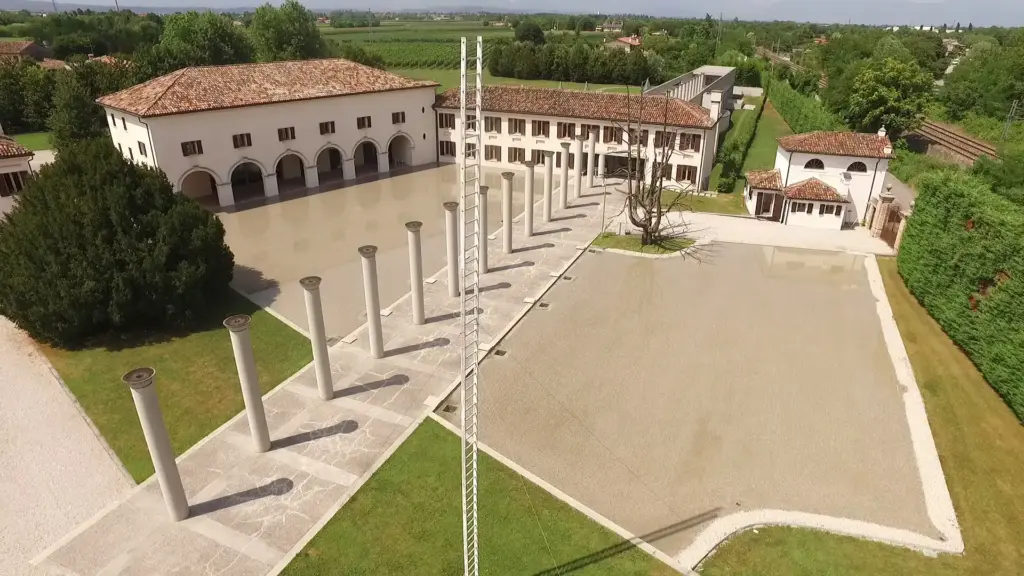
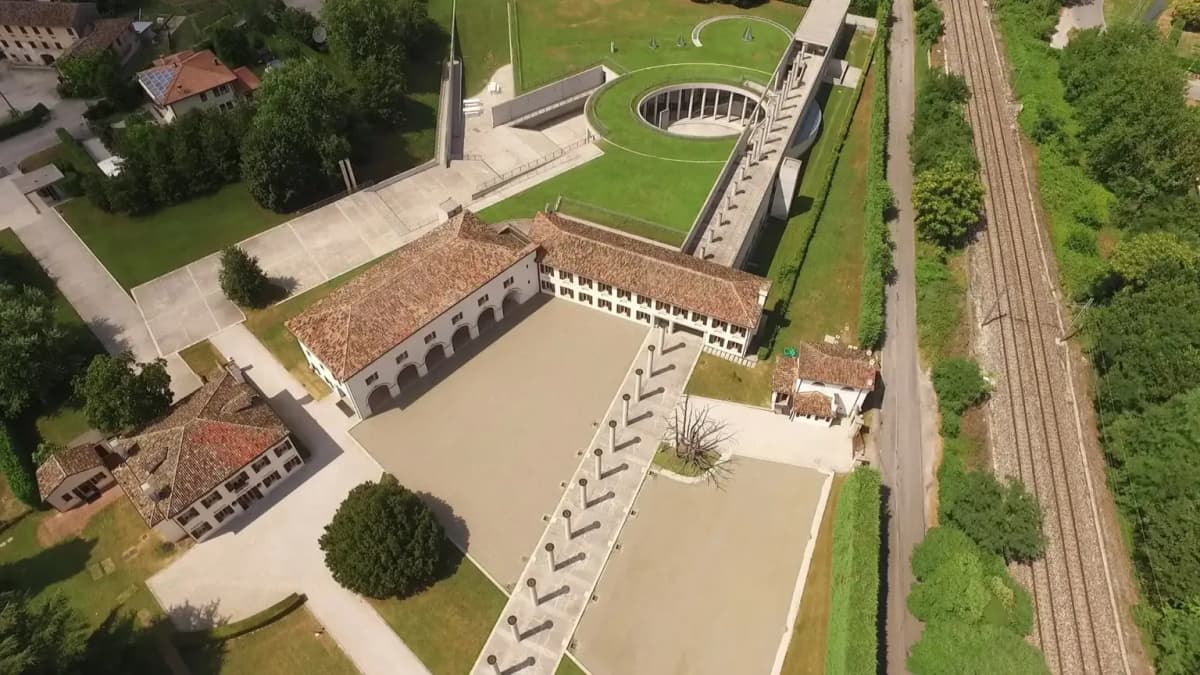
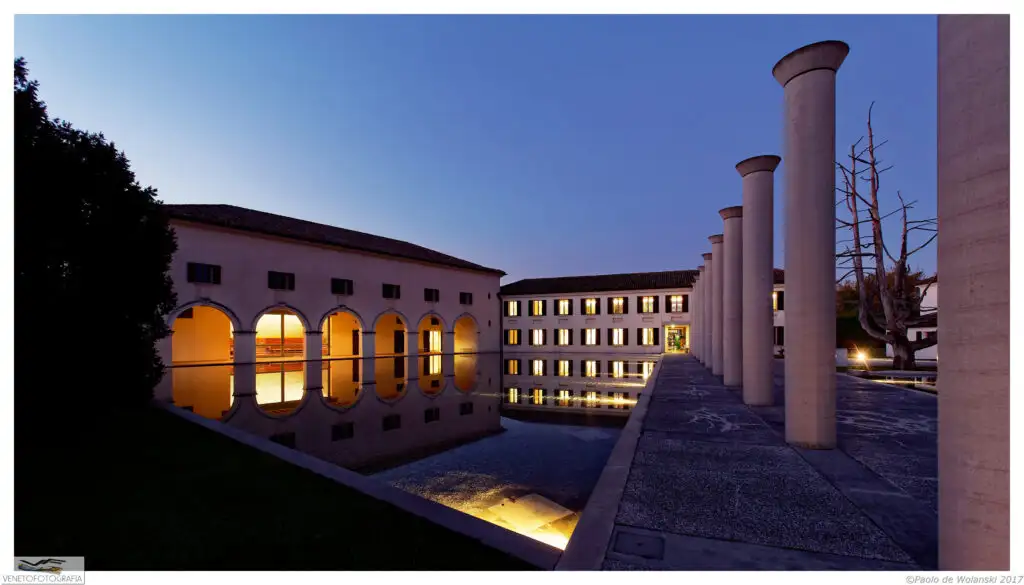
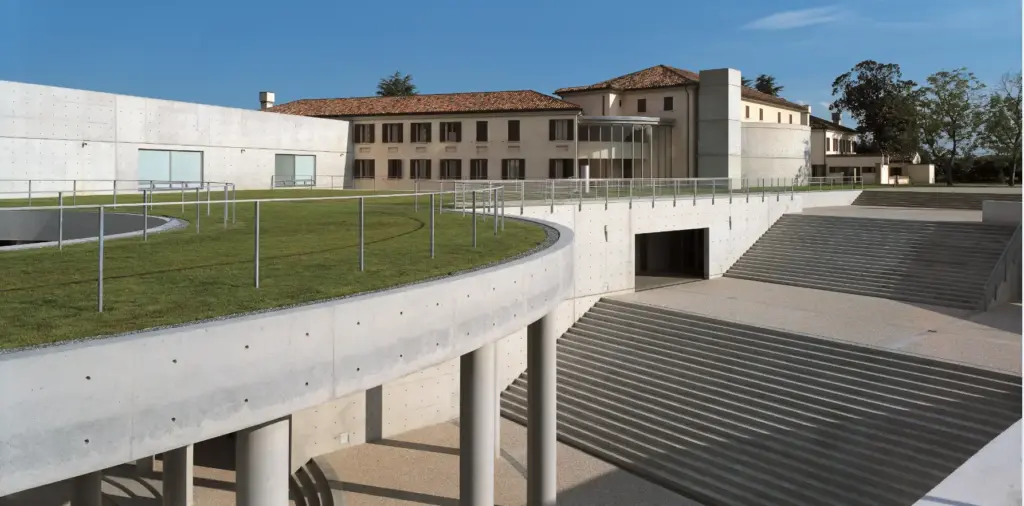
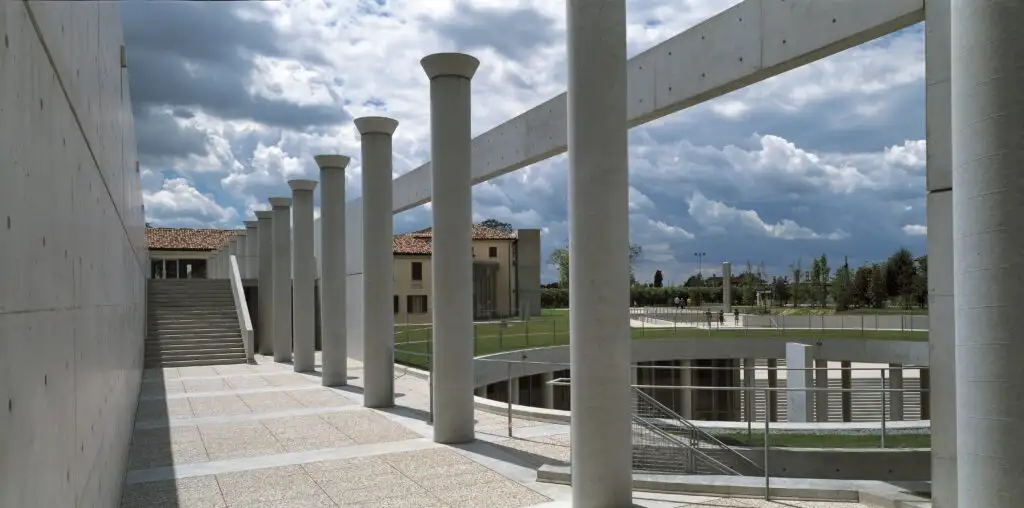
A series of free-standing columns with truncated-cone capitals marks out the straight path which, after crossing the centuries-old park, is reflected in the water basin and gives access to the smaller barchessa, beyond which it continues into the parallelepiped-shaped volume that stretches almost to the edge of the area, creating a harmonious dialogue between Tadao Ando’s contemporary work, whose focal point is the fascinating elliptical square, and the seventeenth-century noble complex, representative of the area’s historical and cultural roots.
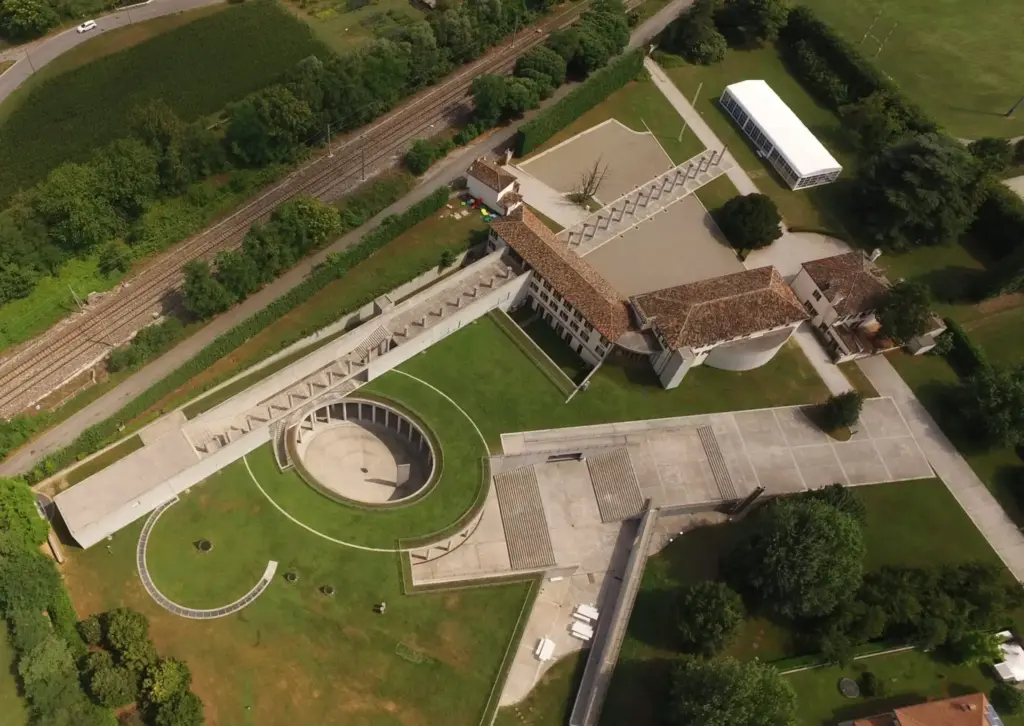
The concrete building, of which the long colonnade represents a spatial and geometric anticipation, consists of a sequence of solids and voids enclosed between two lateral retaining walls.
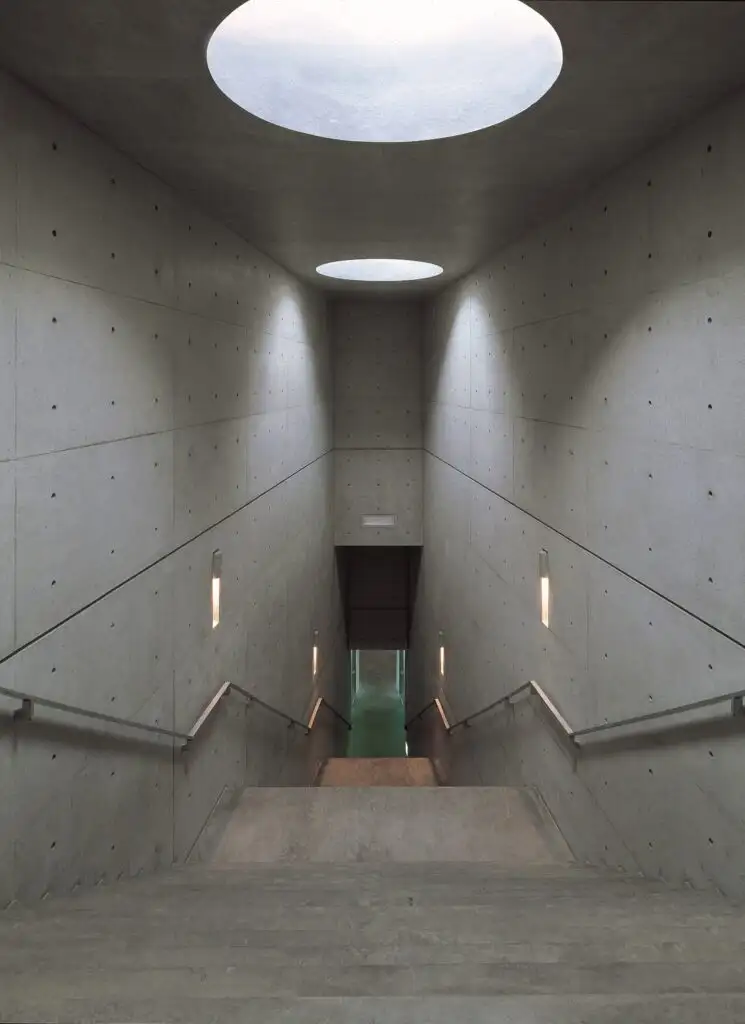
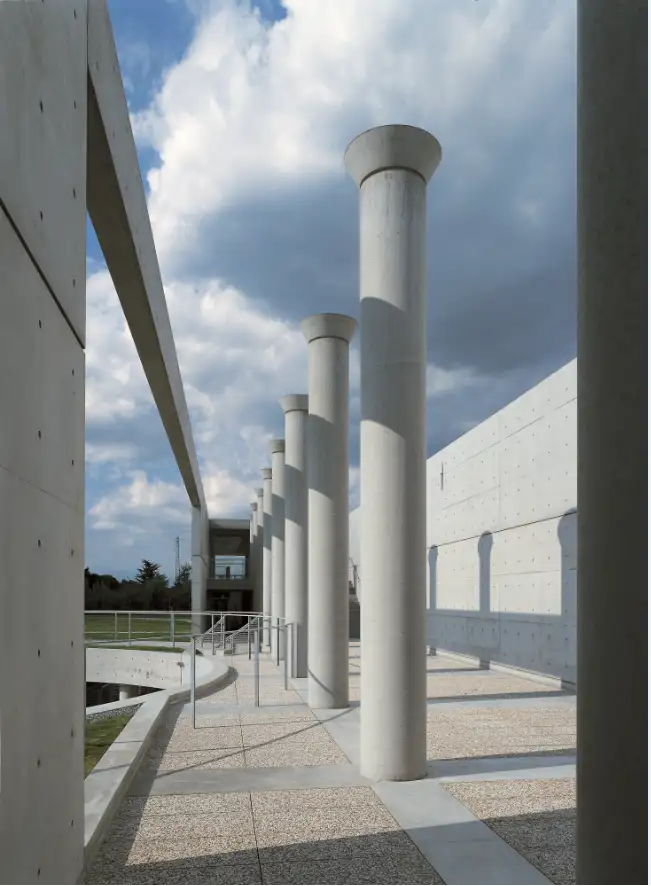
The atriums and galleries that make up the internal route serve as a link between the various levels of the building, from the underground spaces to the terraces, where the offices and workshops are located. This spatial arrangement is designed to create places for pause and “communication and encounter between people, between people and history or nature,” in the words of Tadao Ando.
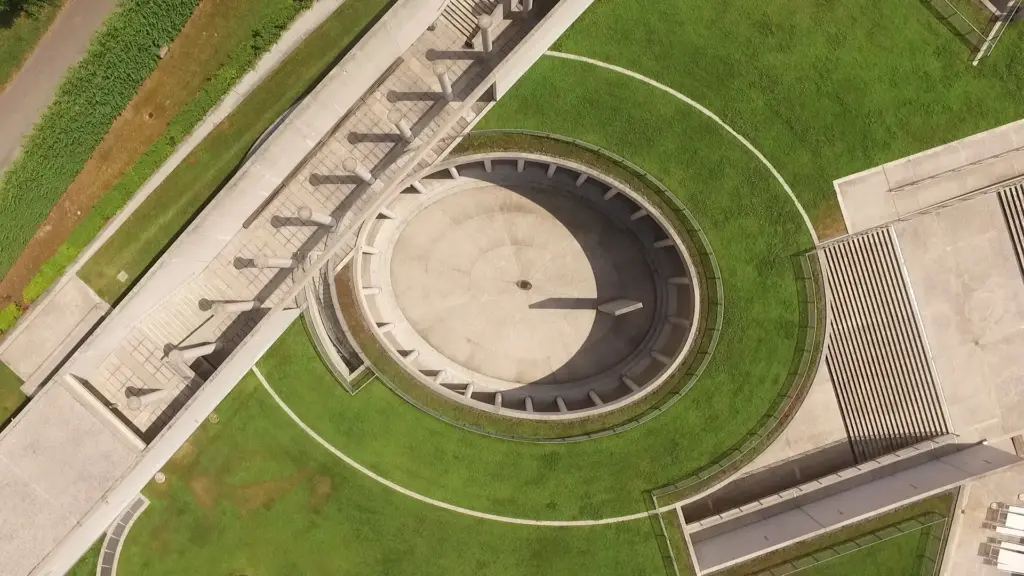
The elliptical square
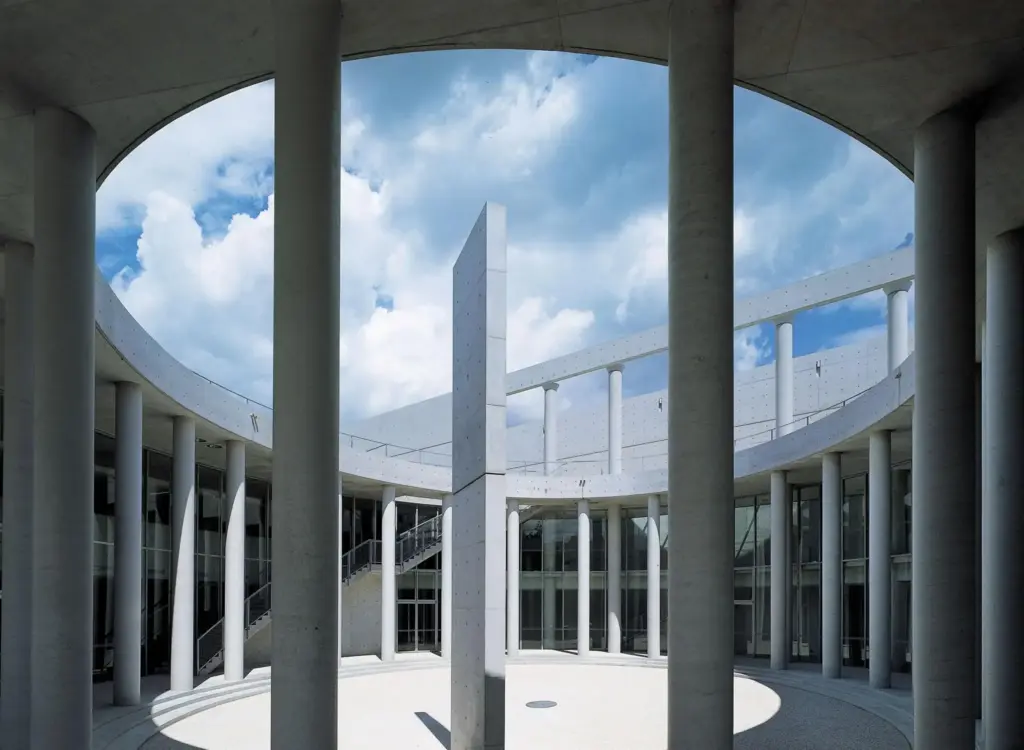
The elliptical square develops below ground level down to eight metres, visually connecting with the surrounding spaces through large glass surfaces.
In the area where the curve of the elliptical square intersects the linear building, the latter is longitudinally sectioned, revealing its spatial and structural organisation. From here a staircase leads down to the bright underground space.
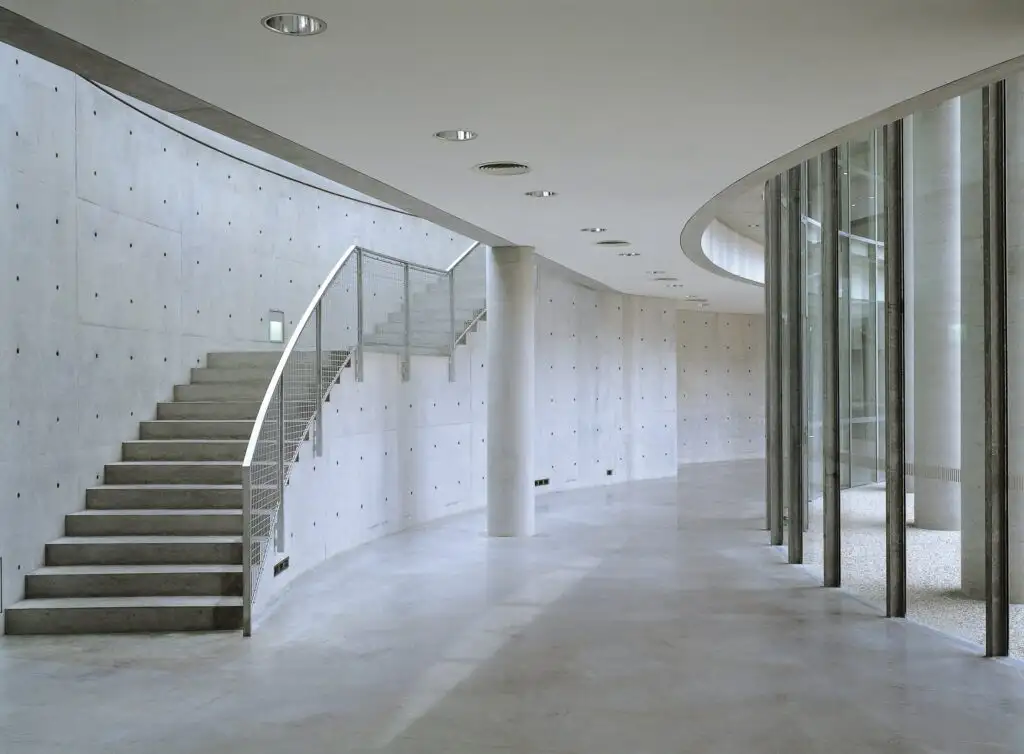
On the opposite side, a large stepped basin allows you to descend, from near the villa’s entrance avenue, to the centre of the square.
The library
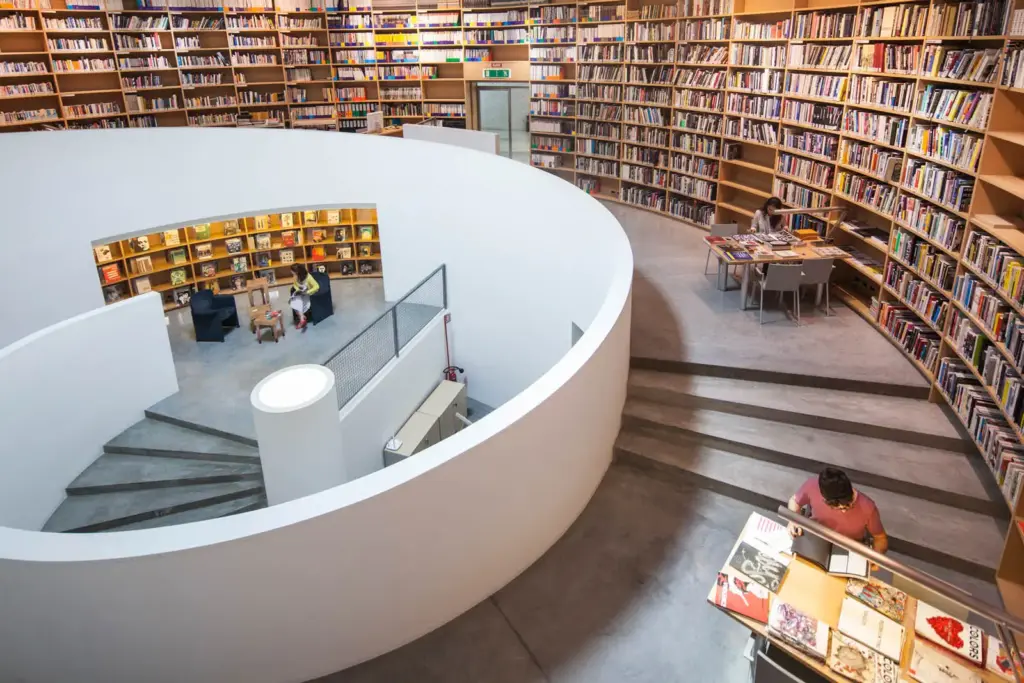
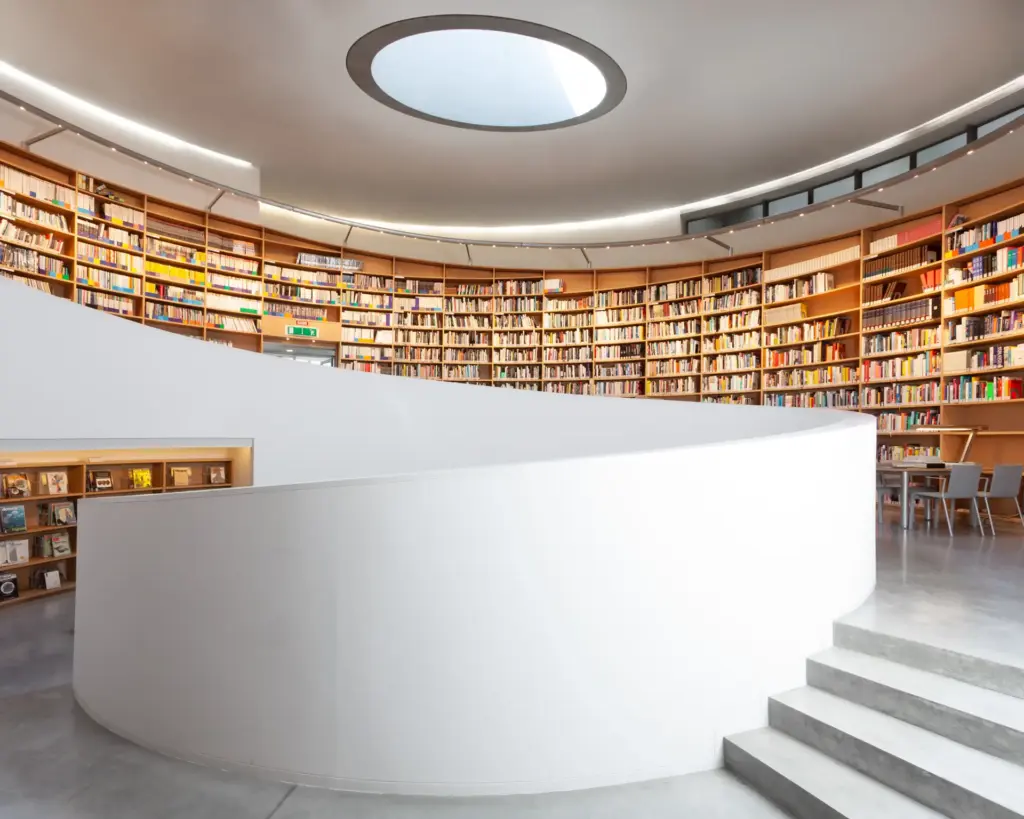
Lit from above, a striking underground space – a sort of spiral embedded in the ground – houses the library, described by AD France as one of the most beautiful in the world, where around ten thousand volumes on photography, industrial design, art, graphic design and visual communication are kept.