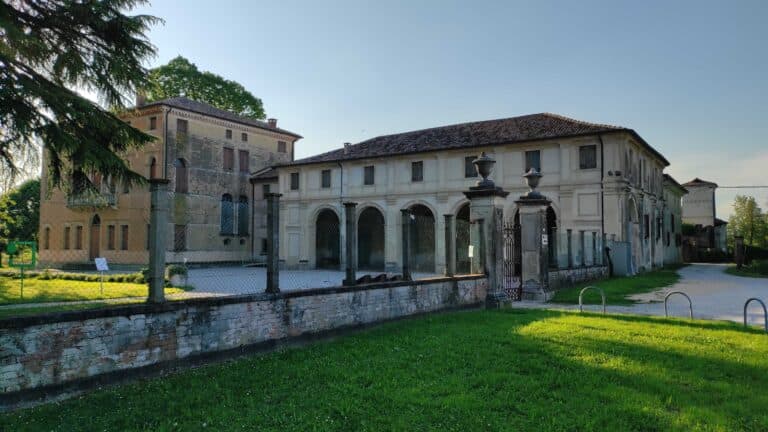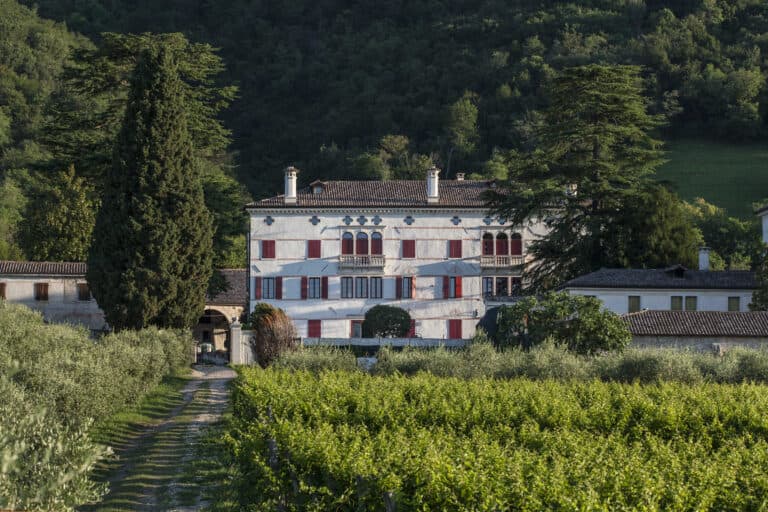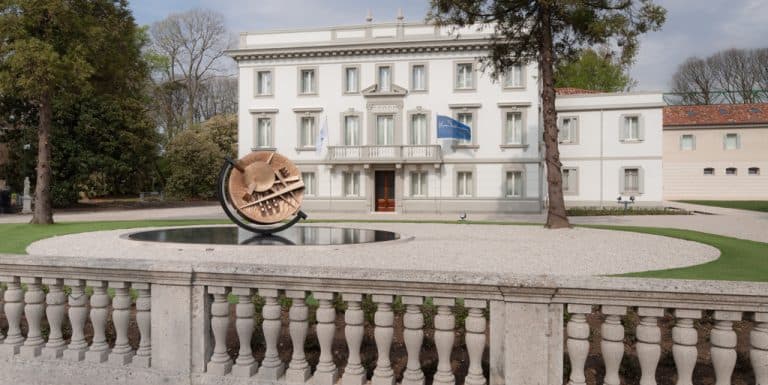

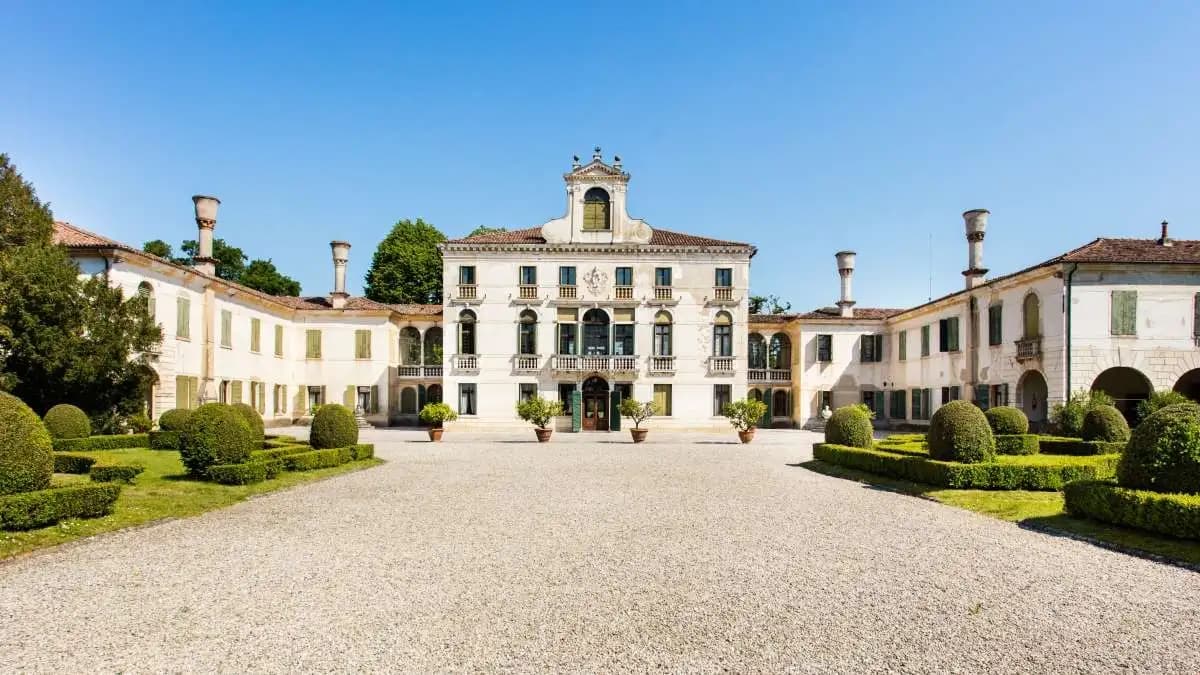
Located at Via Brigata Marche, 24, Villa Tiepolo Passi is one of the most significant historical, architectural, and artistic landmarks of the Veneto region.
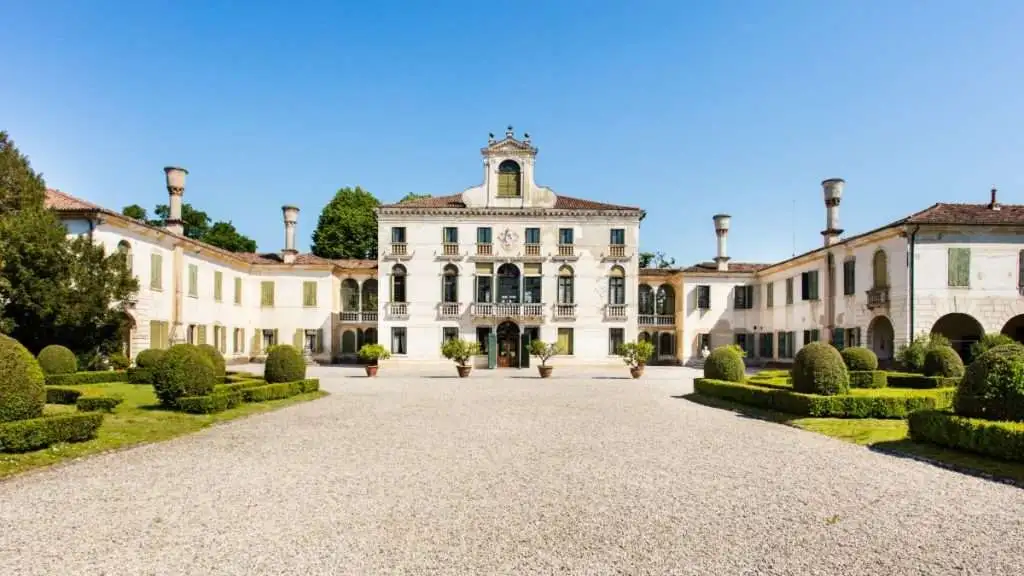
The Origins of Villa Tiepolo Passi
The sumptuous noble residence rises on a millennia-old quadrangular embankment raised two and a half meters above ground level. Aligned with sunrise and sunset on the winter and summer solstices, the paleo-Venetian sundial was used in Roman times as a castrum thanks to its strategic position equidistant from Treviso, the Sile River, and the ancient Via Claudia Augusta.
Placed on the east and west sides of the selese, that is, the noble courtyard in front of the Villa, the busts of Democrito and Eraclito, one laughing, the other weeping, are turned towards the sun as it rises and sets during the summer and winter solstices.
The Architecture of Villa Tiepolo Passi
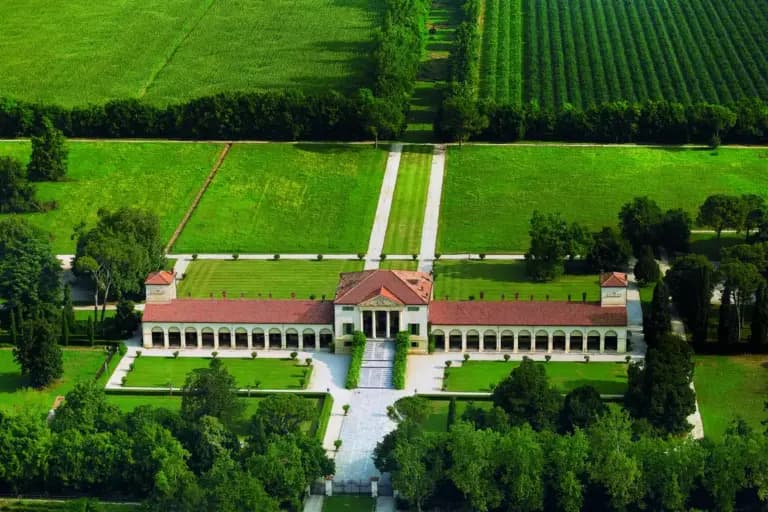
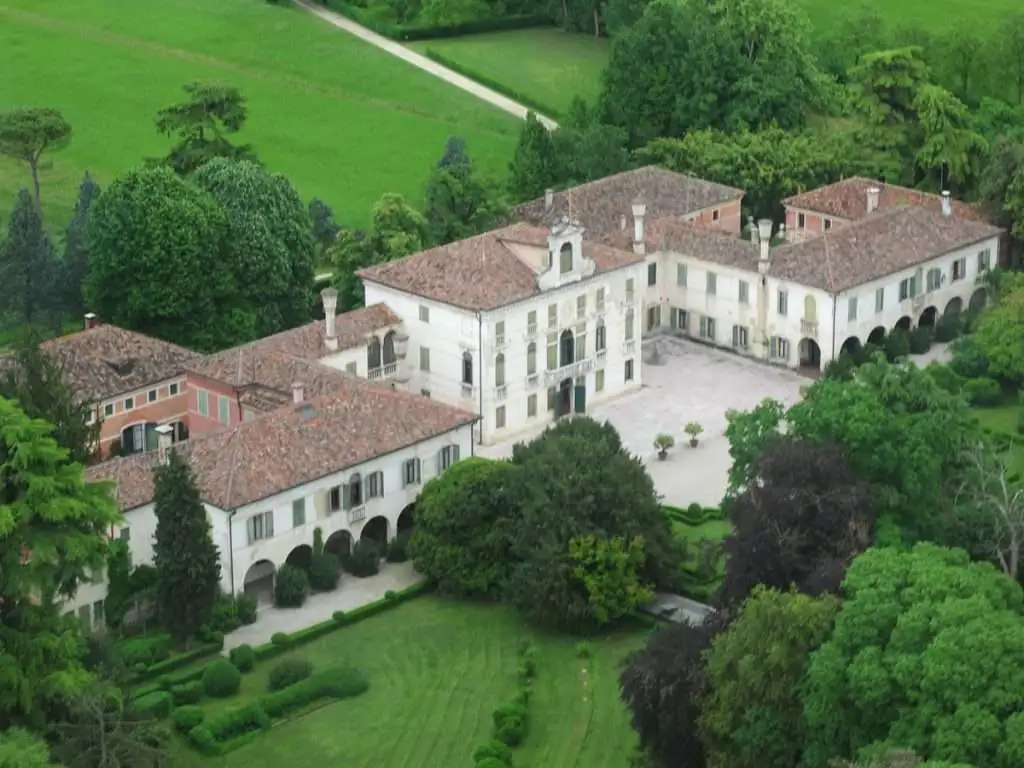
Following the construction of warehouses, granaries, and stables, Ermolao Tiepolo commissioned at the beginning of the 17th century the building of the manor house and the barchesse according to the canons of Venetian Baroque and following the stylistic patterns of the architect Vincenzo Scamozzi (Vicenza, September 2, 1548 – Venice, August 7, 1616), a pupil of Andrea Palladio.
Structured on three levels, the main body is crowned by an elegant dormer window adorned with volutes and finished with a denticulated triangular pediment.
The noble dwelling is joined to two double-loggia wings, which are in turn connected to the lateral porticoed sheds through two L-shaped structures from which rise white Venetian-style chimneys.
Pictorial and Sculptural Decoration
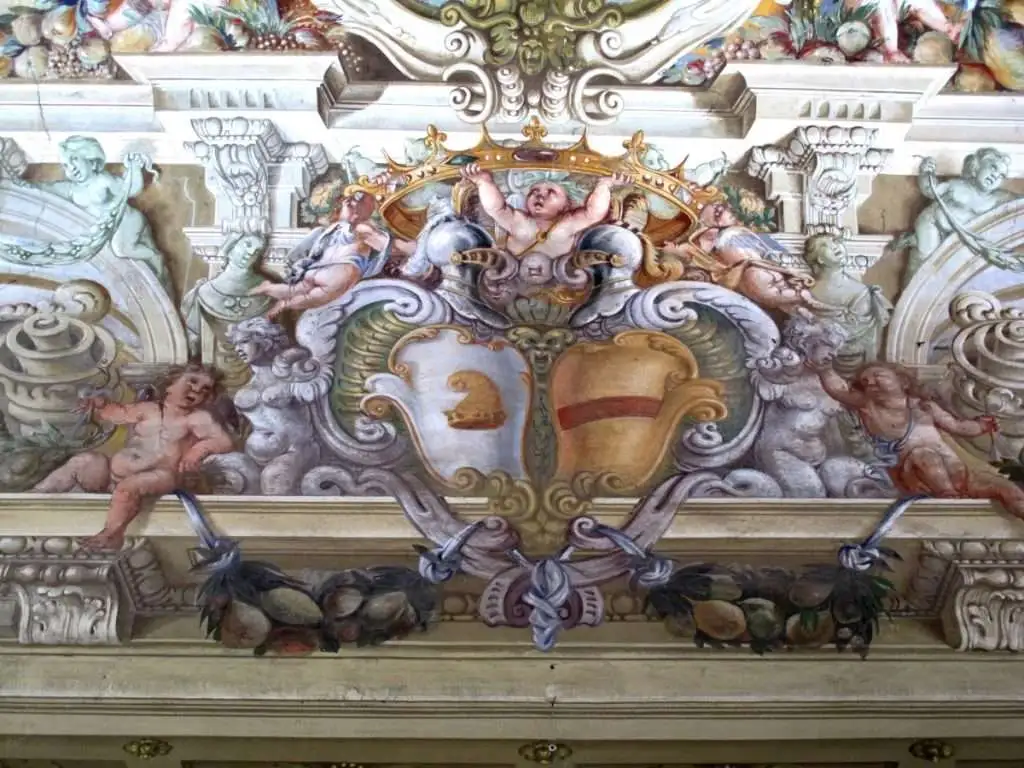
The vast and bright rooms of the architectural complex are embellished by spectacular pictorial works created by artists of the caliber of Pietro Antonio Cerva, also known as “il Bolognese”, author of the decorations on the noble floors of the manor house and the barchesse.
Giovanbattista Canal (Venice, September 10, 1745 – Venice, December 5, 1825), nephew of Canaletto, was in charge of frescoing the private chapel, while the works of Francesco Frigimelica the Elder can be admired in the Portego of the Villa.
The sculptures that enhance the royal Italian garden are works by Giovanni Ferrari and Giuseppe Bernardi known as “il Torretto”, in whose workshop the young Antonio Canova had worked.
The Park and the Agricultural Estate
The radiant Italian garden is adorned with splendid boxwood hedges, a charming example of ars topiaria whose evocative geometries frame decorative vases and a refined stone fountain.
Bounded by towering cypresses, the majestic park extends southward through a monumental perspective avenue that stretches for two and a half kilometers, the stradon corresponding to the ancient Roman cardo. The northern avenue is instead lined with maritime pines.
On the sides of the architectural complex extends an English garden punctuated by grassy hillocks, evocative grottoes, and scattered with cedars, lindens, palms, plane trees, poplars, magnolias, and many other lush centuries-old plants.
Currently under restoration, a six-meter hydraulic wheel used to carry water to the cellars, laundries, stables, fish pond, and an artificial lake located on the top of a green hill used for ice production, then stored in the hypogeum cave used as an icehouse.
A charming water mirror served as a reservoir to irrigate the lush Brolo of the Villa, rich in organic fruit.
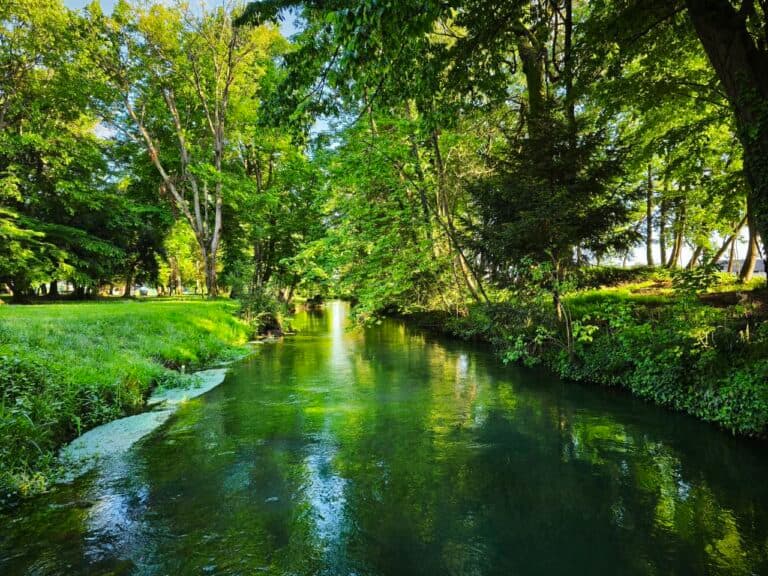
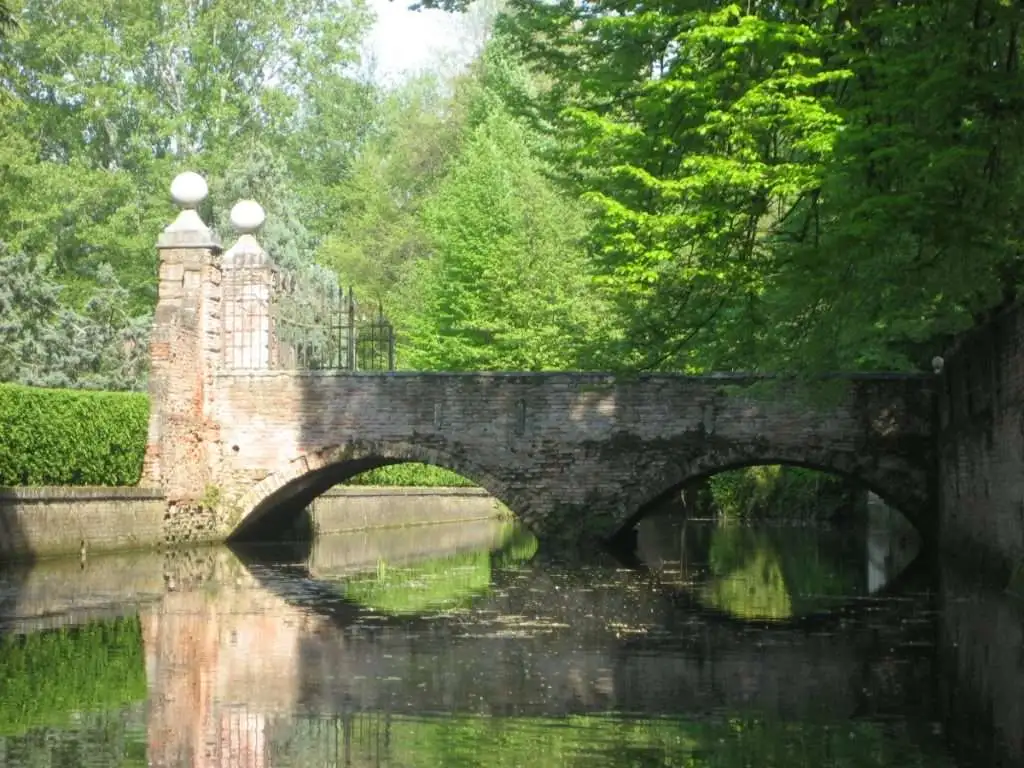
Behind the noble residence, a small brick and stone bridge connects the banks of the Rio Piovesan, thus allowing access to the rustic park of the Agricultural Estate.
If you are wondering what to do in Carbonera and wish to immerse yourself in the timeless atmosphere of an extraordinary noble residence harmoniously set within a vast 35-hectare Agricultural Estate, surrounded by fairy-tale centuries-old gardens adorned with priceless sculptural masterpieces, visiting Villa Tiepolo Passi will be an unforgettable experience.