
What to do in Gaiarine? Discover ten things to do in Gaiarine in the province of Treviso: from itineraries immersed in greenery along the Livenza River, splendid wooded areas, romantic water mills, and centuries-old villas.
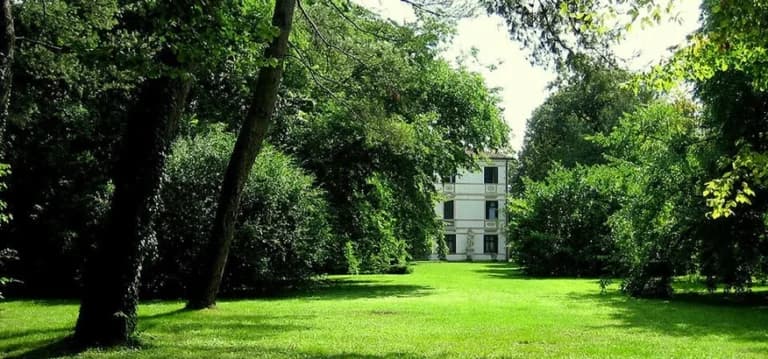
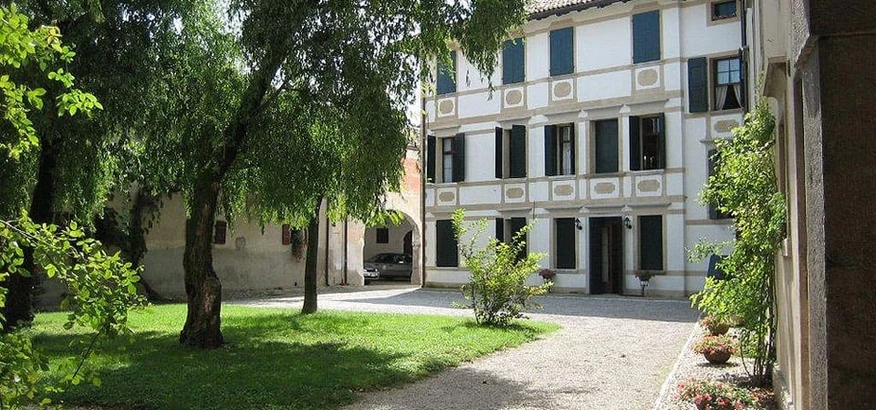
Villa Pera
Bosco Crasere and Bosco Utia
The woods of Crasere and Utia extend for about 19,000 m² in the hamlet of Francenigo and attract visitors seeking the serenity and peace that only nature can evoke.
Careful hydraulic works have allowed the formation and growth of a naturalistic site populated by native species, whose lush ecosystem reproduces the characteristics of a lowland forest that sprang up spontaneously and uncorrupted by human intervention.
Topped by the canopies of majestic oaks and tall hornbeams, as well as maples, mulberries, lindens, poplars, and hawthorns (to name a few), the small oasis snatched from concrete and industrialization includes a lively pond where various amphibian and bird species find their habitat, such as the lovely moorhen.
Delimiting the site, thick hedges welcome striking specimens like the green and red woodpecker, the blackcap (distinguishable by its colorations from pale gray to the black of its head and beak), as well as finches and wood pigeons, demonstrating the fragile but precious ecosystem that characterizes this delicate natural destination.
Bosco Zacchi
What makes Bosco Zacchi a naturalistic reference point in the municipality of Gaiarine is the preservation of an ancient lowland forest formation, of which very few examples remain in the Veneto region.
Visiting this unspoiled environment is like traveling in time and immersing yourself in a primitive ecosystem dotted with majestic oaks, hornbeams, hazelnuts, privets, blackthorns, and spindle trees, recognizable by their curious bright red poisonous fruits.
Evidence of the healthiness of this ecosystem are the numerous species of amphibians and insects that populate the forest and undergrowth.
During the spring season, the floral mantle of snowdrops, anemones, dogtooth violets, lily of the valley, and martagon lilies tinges the fertile ground of Bosco Zacchi with bright colors and attracts, besides pollinators, also visitors who cannot resist the primordial charm of the most unspoiled and serene naturalistic areas in the province of Treviso.
Maglio dei Tonet
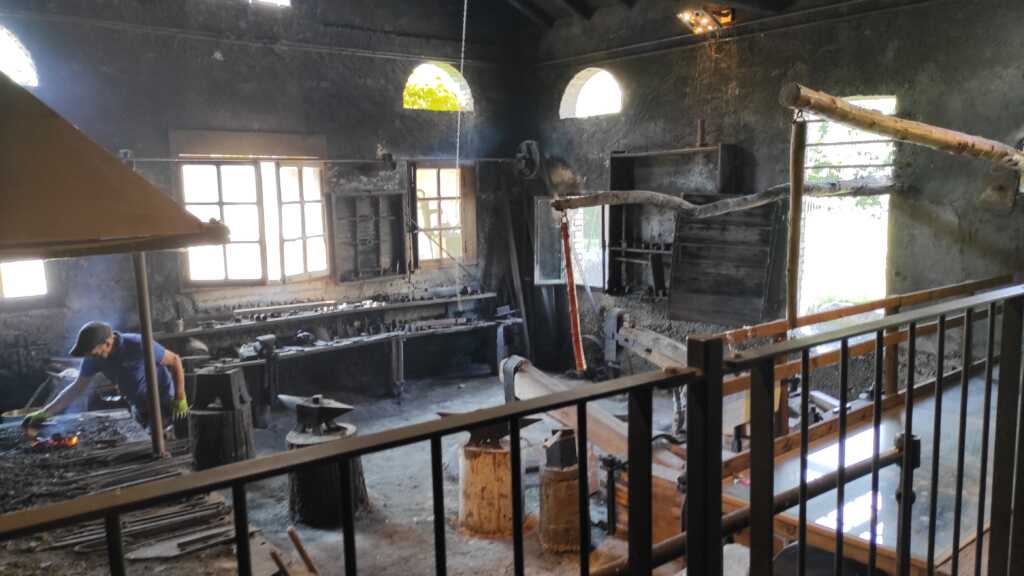
Where is Maglio dei Tonet located?
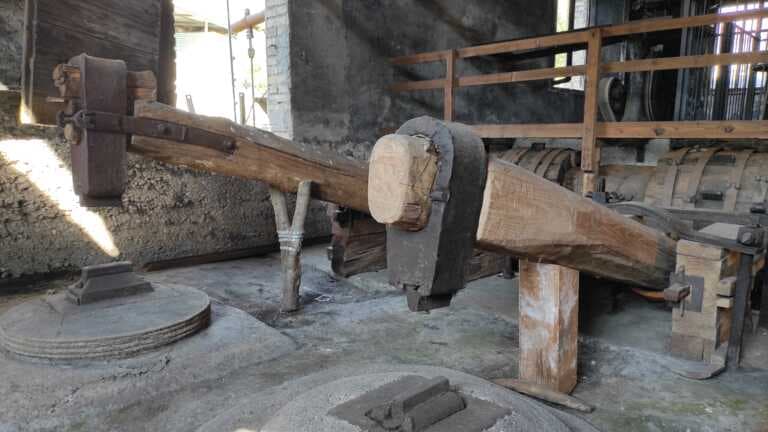
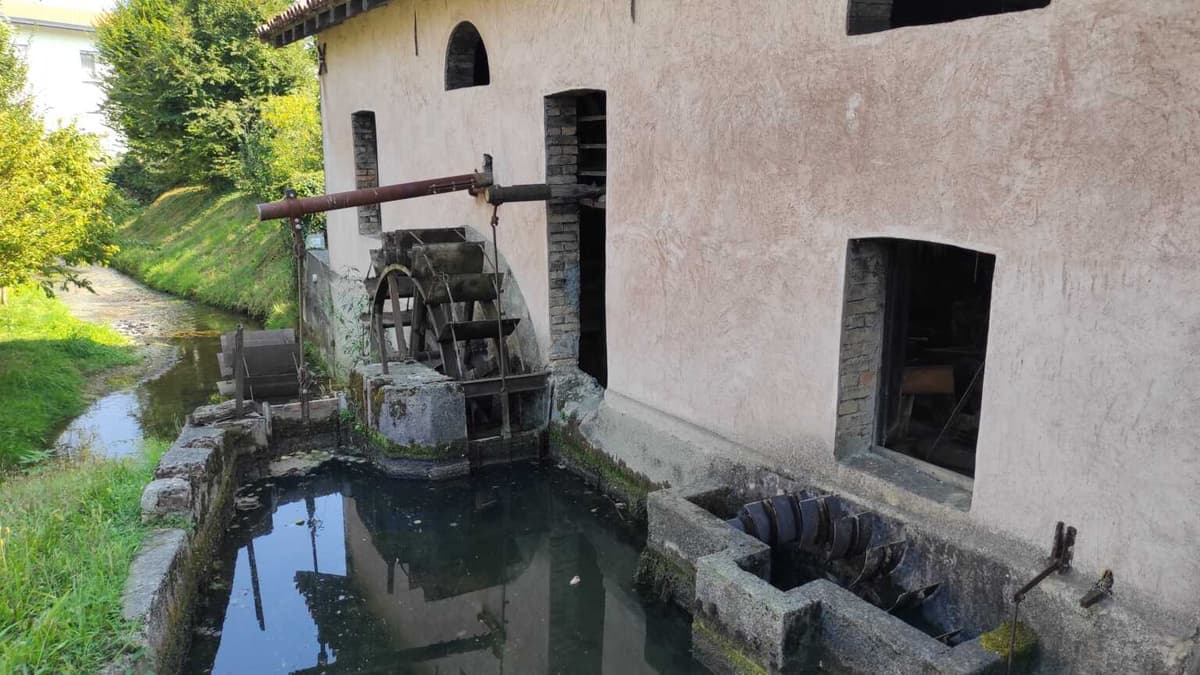
Born in the early years of the 20th century, the ancient renovated mill uses the water power of the nearby spring-fed stream that flanks the forge to operate a centuries-old hammer used to shape red-hot iron and transform it, thanks to the skill of expert craftsmen, into various tools needed to work the land.
Now converted into a museum, the Maglio dei Tonet guides the visitor through a dynamic exhibition itinerary that illustrates the operation of the hammer and the ironworking techniques that precede the more modern mechanization processes.
Visiting the ecomuseum will be a meaningful experience for anyone who wishes to discover an artisanal reality that has remained unchanged over time for more than a century.

Contacts Maglio dei Tonet
To book a visit to the Maglio dei Tonet, it is recommended to send an email to info@comune.gaiarine.tv.it
Mulino Santuz
Where is Mulino Santuz located?
Built on Via Resteiuzza in the hamlet of Campomolino, a short distance from Bosco Crasere, the Mulino Santuz is part of the characteristic and fascinating mill heritage of the municipality of Gaiarine that time and obsolescence have not yet brought to extinction.
Used as a sawmill and for threshing grains, the centuries-old mill was powered by the courses of the Resteggia and the Rasego, tributaries of the Livenza River.
For lovers of history and nature wondering what to do in Gaiarine, the Mulino Santuz is certainly a recommended destination!
Setificio Piovesana
Adjacent to the majestic Villa Piovesana on Via Per Brugnera, the 20th-century silk mill is one of the most representative buildings in the municipality of Gaiarine. Located a few steps from the Livenza, the structure is recognizable by its towering red brick chimney of the steam boiler.
The vast rooms of the industrial building house the machinery for silk reeling, i.e., the process of extracting silk threads from the cocoon’s bave, as well as the areas used for drying and storing cocoons.
Visit the Mutera di Campomolino
Where is the Mutera di Campomolino located?
The Mutera di Campomolino is located at the following coordinates:
45°51’56.9″N 12°31’21.5″E.
Visible from Via Abate Lorenzo Berlese, the artificial formation is recognizable by the towering cypresses that rise on its summit. The gentle slopes of the mutera interrupt the regular succession of lush rows that mark the vast plain and guide the viewer’s gaze towards the Alps that dominate the horizon.
Walk Ansa Restera Zandegiacomo
Located at the suggestive meanders of the Livenza in the locality of Campomolino, the Ansa Restera Zandegiacomo park is a serene naturalistic area ideal for quiet walks along winding paths, stretching out in the shade of the woods, or canoeing along the sinuous course of the river.
If you are looking for what to do in Gaiarine, this is the recommended itinerary and ideal for those seeking pleasant spots that can offer exciting panoramic views!
Canoe Landing on the Aralt River
Born from the Pordenone springs of Gorgazzo, Santissima, and Molinetto, the Livenza river flows along the border between Gaiarine and Friuli-Venezia Giulia and offers breathtaking panoramic views observable from its sinuous bends and its tributaries Rasego and Zigana, suggestive ecological corridors shaded by lush hedges.
For those who want to explore and discover the most exclusive landscape scenarios of Gaiarine and neighboring municipalities by traversing the Livenza, the Associazione Amica Terra has created a convenient canoe landing in the area behind the church of San Tiziano, the parish of Francenigo.
Visit the Church of Saint Thomas of Canterbury
Where is the Church of Saint Thomas of Canterbury located?
Located at Piazza S. Tomaso, 3, 31018 Gaiarine (TV), the Church of Saint Thomas of Canterbury dates back about five hundred years. The place of worship is distinguished by its imposing octagonal-based copper dome towering behind the gabled façade, which is bare, austere, and marked by pilasters above which stands the tympanum with a circular opening at the center.
Inside, the nave covered by barrel vaults is flanked by niches housing precious marble altars.
For art and architecture enthusiasts wondering what to do in Gaiarine, the Church of Canterbury is a destination of impressive beauty.