
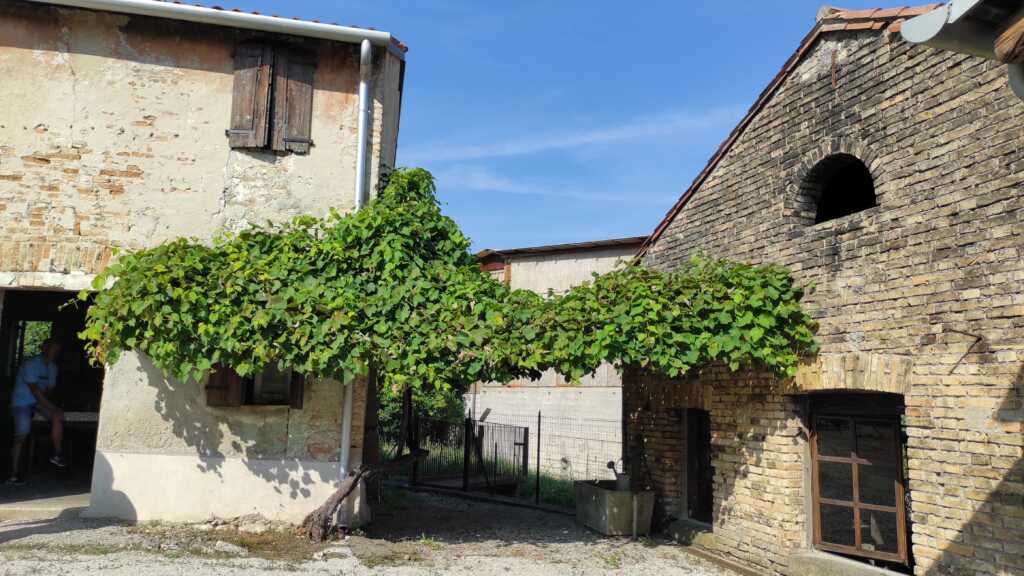
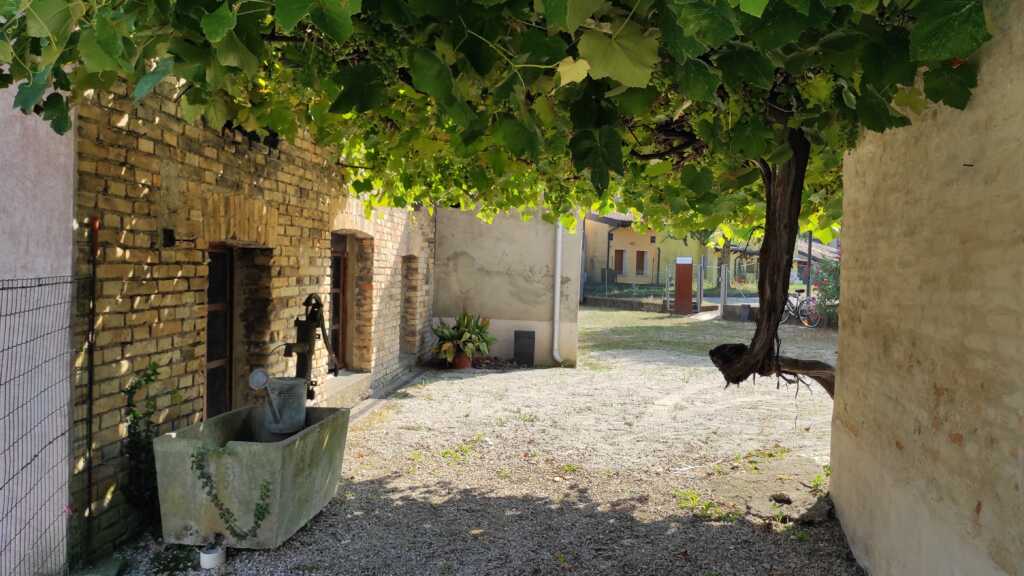
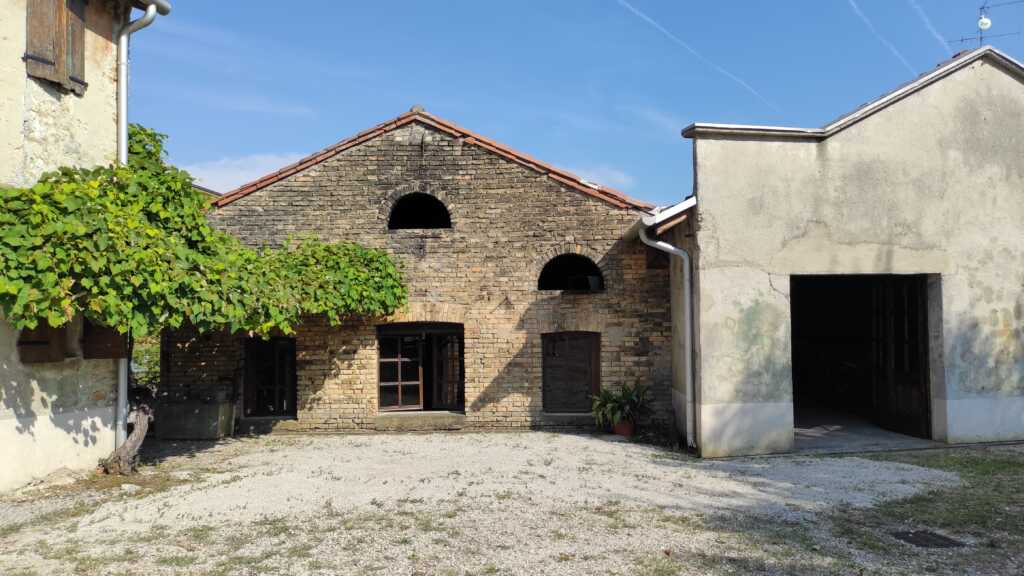
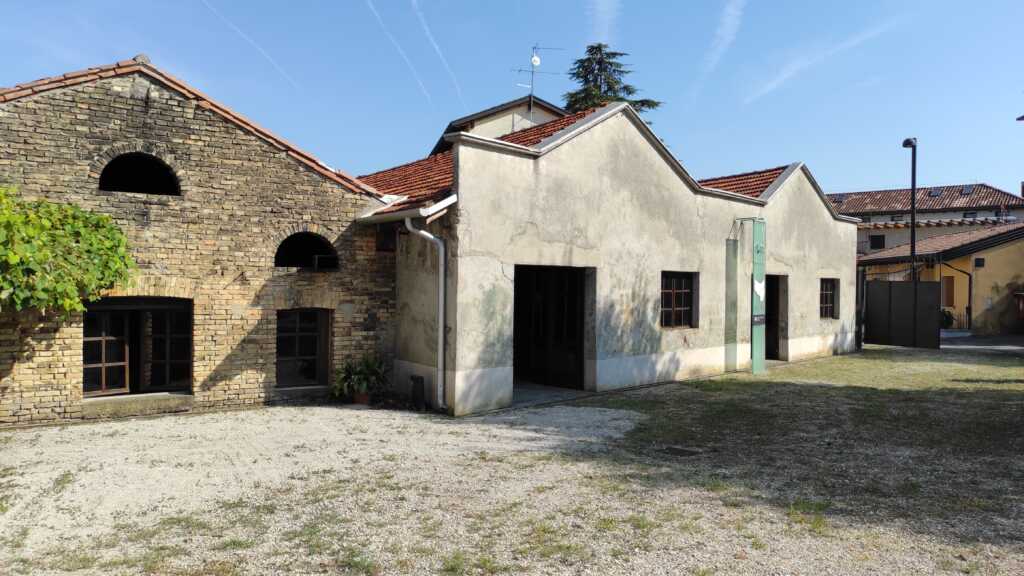
Located in Via del Palù, 18, the Maglio dei Tonet is a fascinating example of proto-industrial archaeology, harmoniously set in the countryside of Francenigo, a hamlet of Gaiarine. Built between 1902 and 1909, the production facility opens onto a large courtyard shaded by two hackberries, beside the old residence of the Moro family, better known by the nickname Tonet.
In the workshops present in the area at the time, the fire was fed by hand bellows, while the red-hot metal was shaped entirely by hand, with an anvil and hammer. Lorenzo Moro, founder of the business, replaced the traditional methods used in the village smithies, which were slower and more laborious, with an ingenious system that harnessed the water power of a nearby watercourse to operate the band saw, the heavy hammer and the ventilation system of the plant that can still be admired today.
The thriving business combined the expertise of his sons Pietro and Domenico Moro, the first a skilled blacksmith and farrier, the second specialized in carpentry and joinery, with the efficiency of the hydraulic hammer mill, making it possible to produce both tools such as shovels, hoes, scythes, spades, picks, two-pronged forks, chains and horseshoes, and heavier, more complex equipment such as harrows, ploughs and ploughshares.
The construction of farm carts, whose wheels were reinforced with an outer iron ring, is the result of the experience Pietro Moro gained during his years of military service with the royal artillery. The metal rim was expanded with the heat of the forge and wrapped around the wheel. Once plunged into cold water, the thermal shock compressed the metal ring onto the wheel, creating a single body of remarkable strength and durability.
The hammer mill canteen
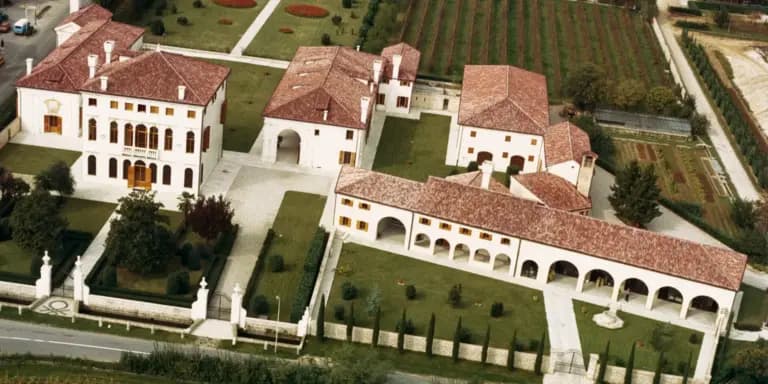
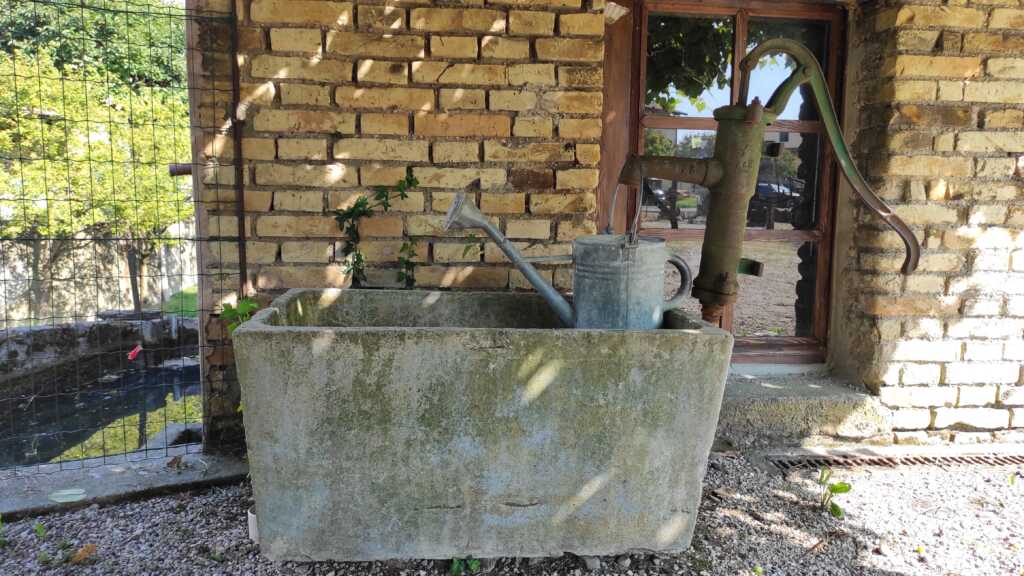
Topped by a simple brick roof, the original Moro family home is a two-storey nineteenth-century building, beside which, in the first decade of the twentieth century, the plant known as the Maglio dei Tonet was built. With the expansion of the smithy workshop, starting in the early 1940s, the rooms of the house were used as a canteen for the company’s employees.
Rural building
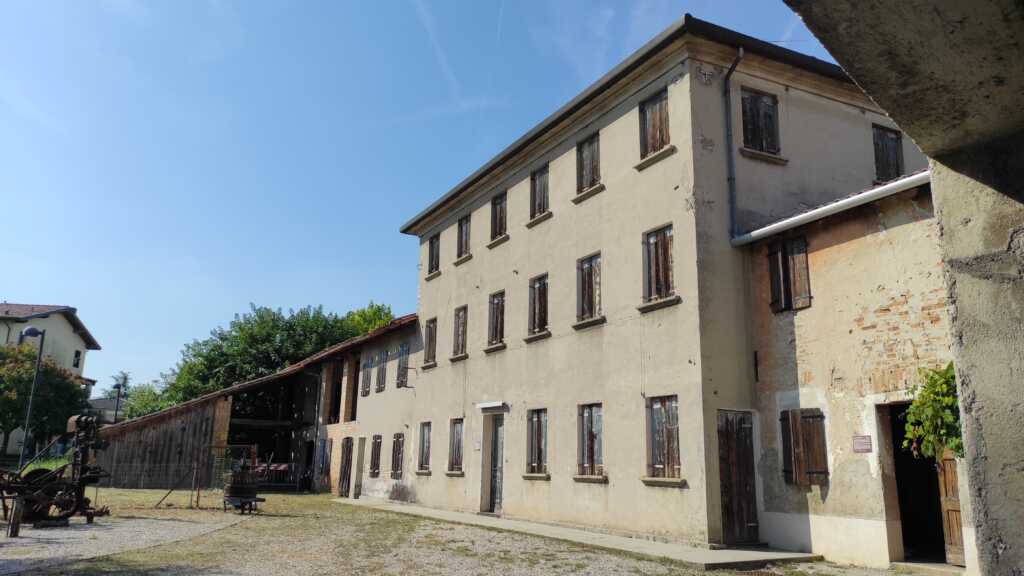
To the west of the hammer mill canteen stand a rural building from the late 1930s and a building once used as a stable and granary. Spread over three levels, the rectangular-plan rustic building was used over the years as the “caretaker’s house”.
The Fossa del Cimitero
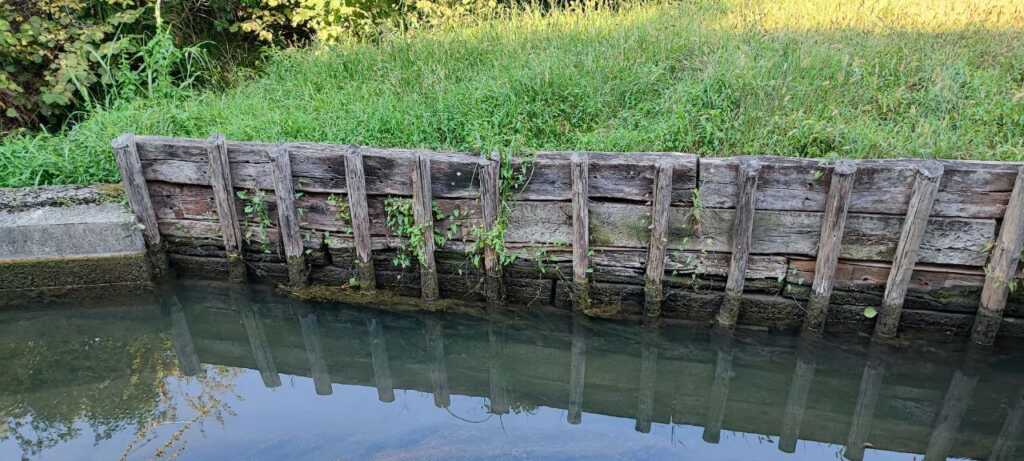
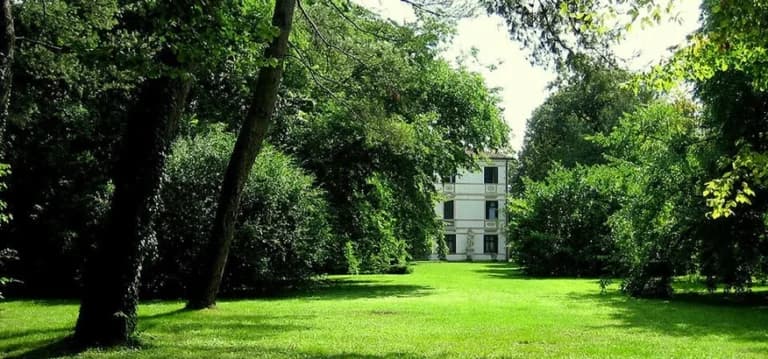
Starting from the large courtyard, the museum route winds through the area behind the architectural complex along the diversion of the Fossa del Cimitero, a sinuous spring-fed watercourse shaded by alders, acacias, hackberries, hazels, plane trees, poplars and many other luxuriant tall trees.
Just downstream from the smithy workshop, the stream of the same name flows into the Aralt river. The latter rises in the municipality of Orsago and flows for about ten kilometres toward the built-up area of Francenigo before joining the Livenza.
Along the route it is possible to observe part of the original basin, designed by Pietro Moro at the dawn of the twentieth century, and part of the retaining wall renovated with the contribution of the GAL (Local Action Group).
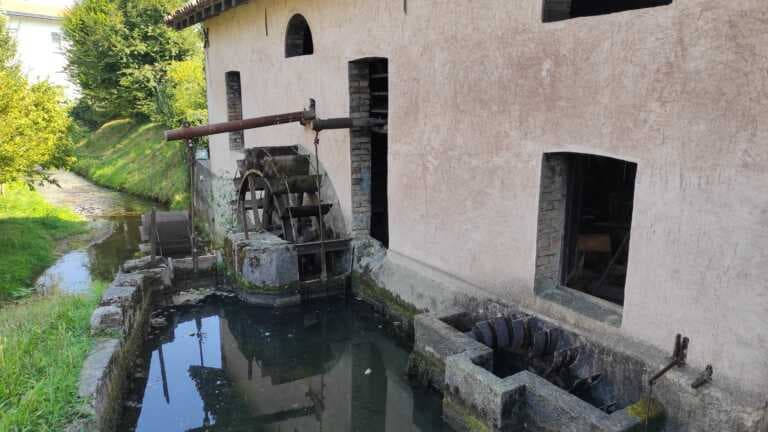
From a convenient small bridge, there is a striking view of the three sluices of the plant, the moss-veiled loading basin, the outer course of the Fossa del Cimitero and the grassy strip of land that separates the two branches of the watercourse.
The sluices of the Maglio dei Tonet

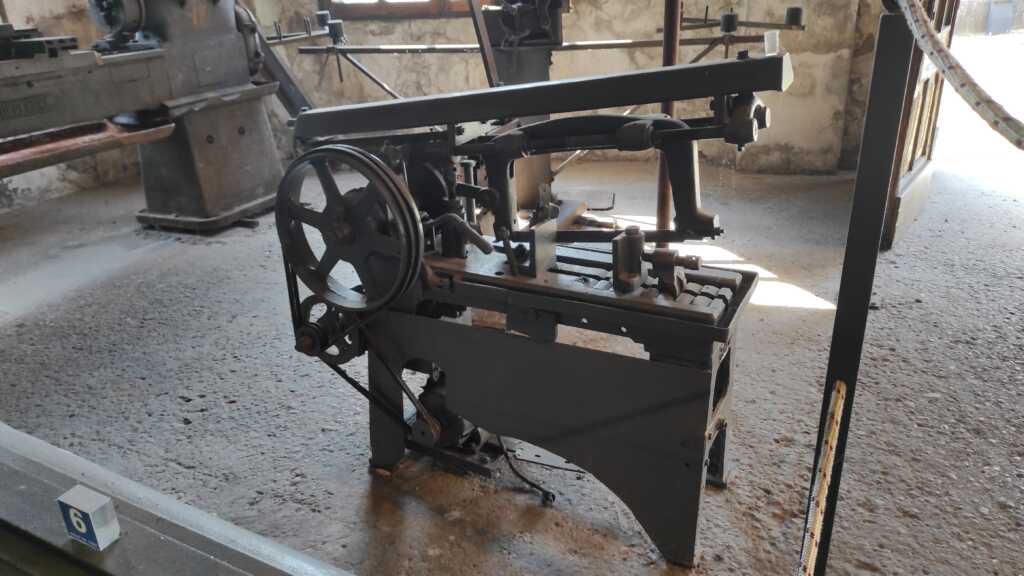
Inside the forge, two sturdy centuries-old levers, called stanghe, make it possible to raise and lower the gates that regulate the water flow of the main sluice and the middle sluice, located lower down. The latter powered a pillar drill, no longer present, and the band saw beside which there are two incalcatrici, tools used to reset the blades in cart wheels.
The smallest wheel, through a sophisticated system of belts and pulleys, operates the fan that feeds the forge fire.
The forge of the Maglio dei Tonet
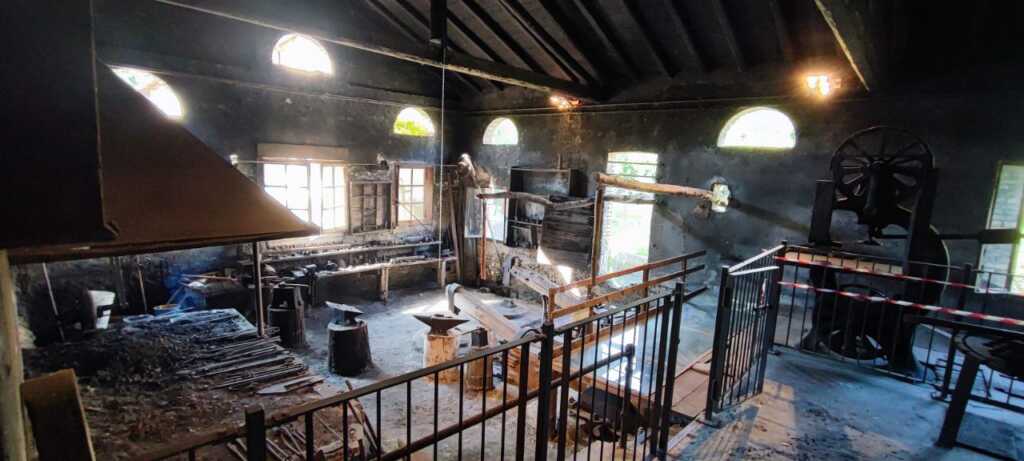
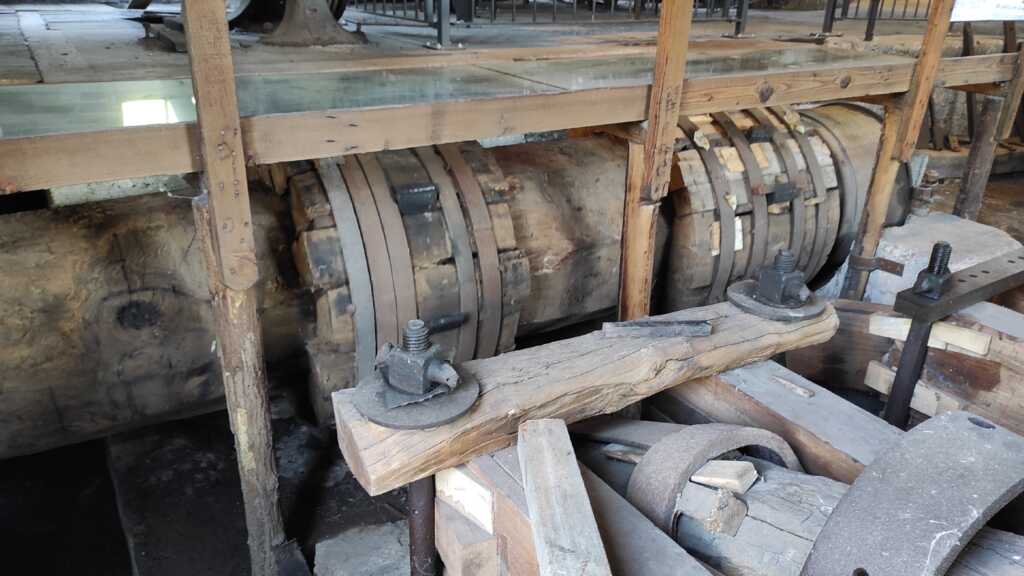
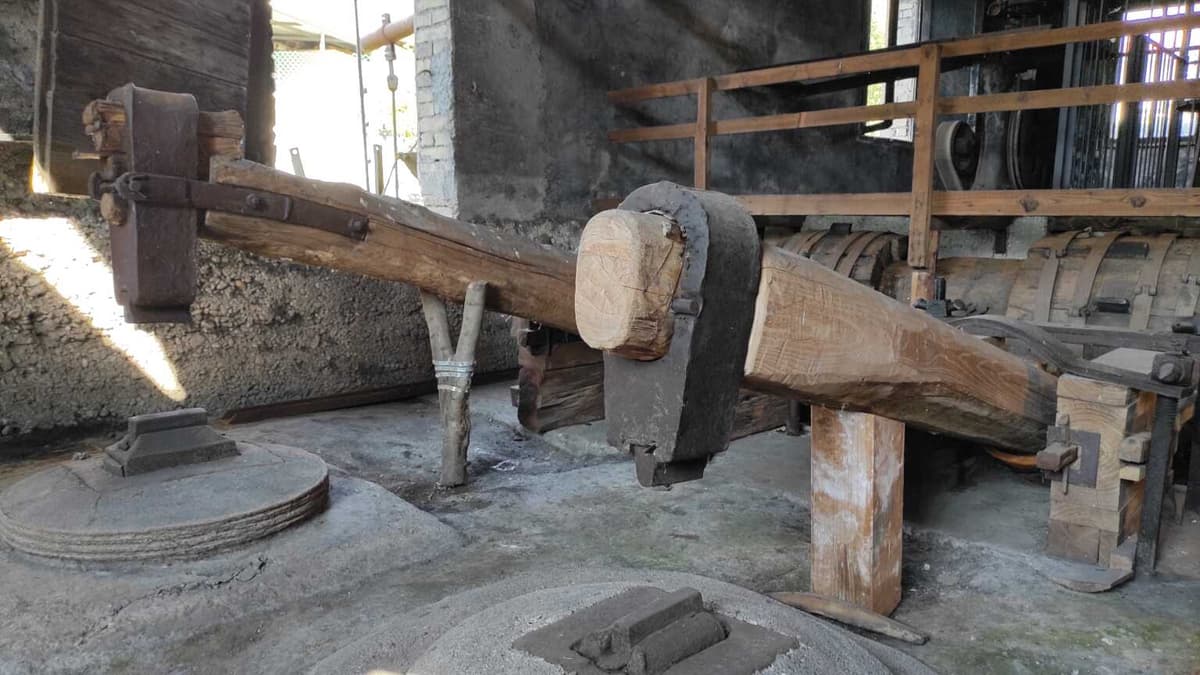
Carved from a 120-year-old chestnut trunk, the drive shaft anchored to the larger hydraulic wheel is bound with iron rings to which the palmele (cams) are attached, that is, the protrusions that lower the tail of the two shafts perpendicular to the transmission shaft. Under the effect of gravity, when the palmela leaves the hammer axle, the hammer head weighing one quintal comes crashing down onto the zhavata. The latter is made of willow slats held together by reinforced concrete, so that the striking surface is not excessively traumatic.
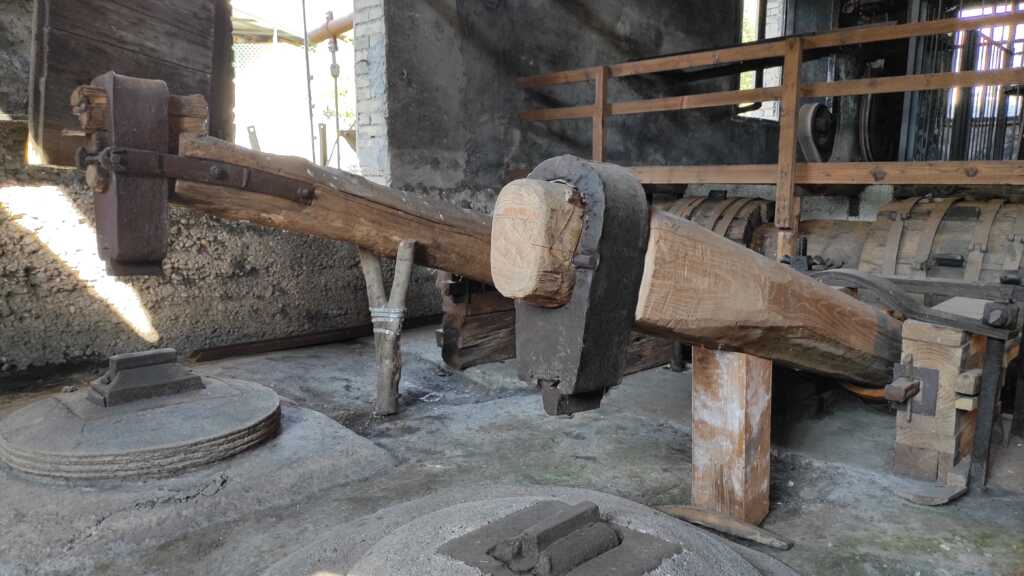
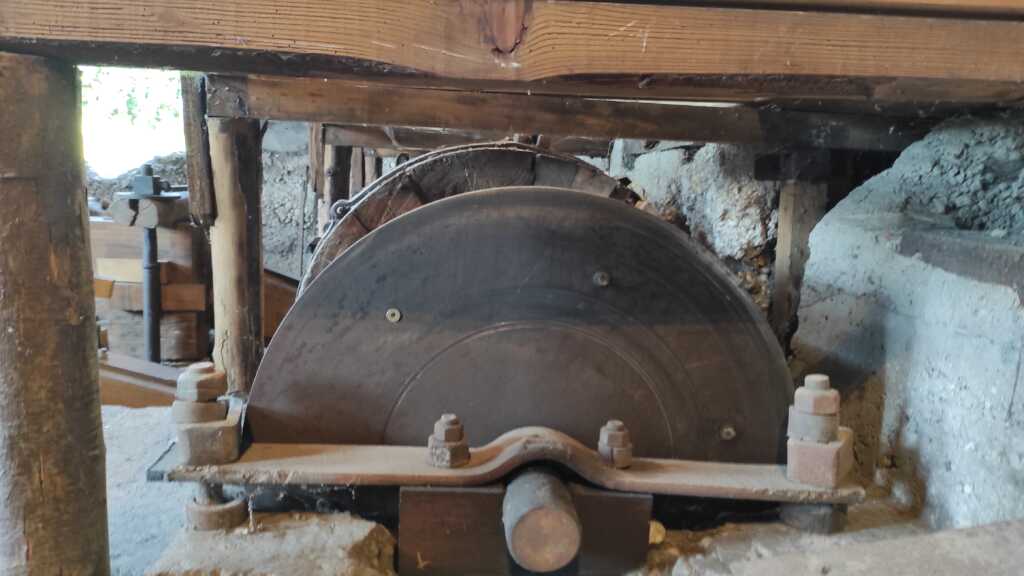
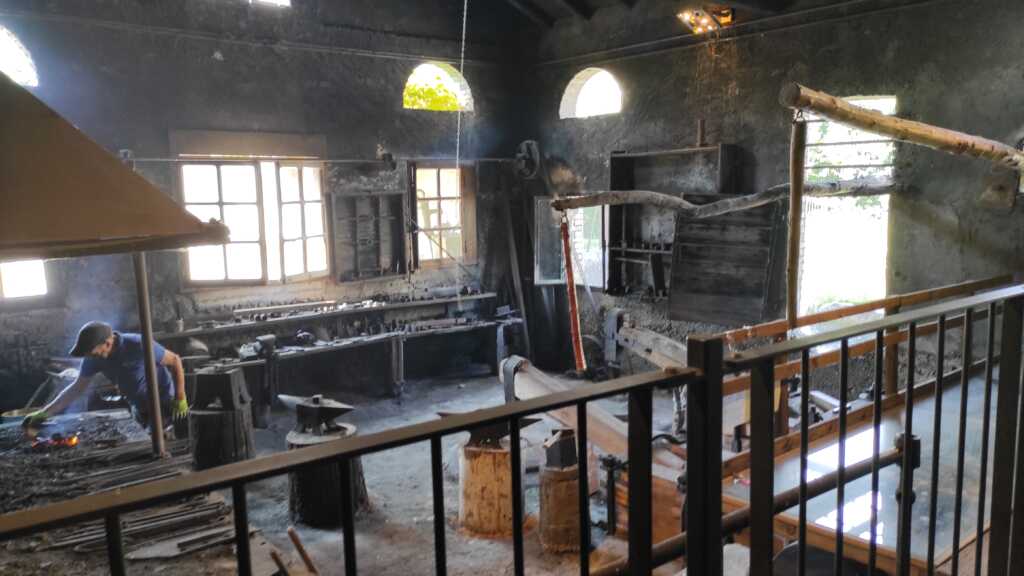
The building’s design called for the rooms to be arranged on two distinct levels. The forge area, where the forge, the two hammers, the anvil and the workbench are located, is set lower than the collecting basin in order to make the most of the water drop on the sluices. The room used as a carpentry workshop, by contrast, stands at ground-floor level to protect the wood from humidity and possible flooding.
Made up of a rectangular concrete base, the structure of the hammer mill is bounded by exposed brick walls and topped by a pitched roof with terracotta tiles.
The presence of semicircular openings without frames is essential to ensure circulation and air exchange inside the dark, sooty environment of the forge.
Expansion of the Maglio dei Tonet
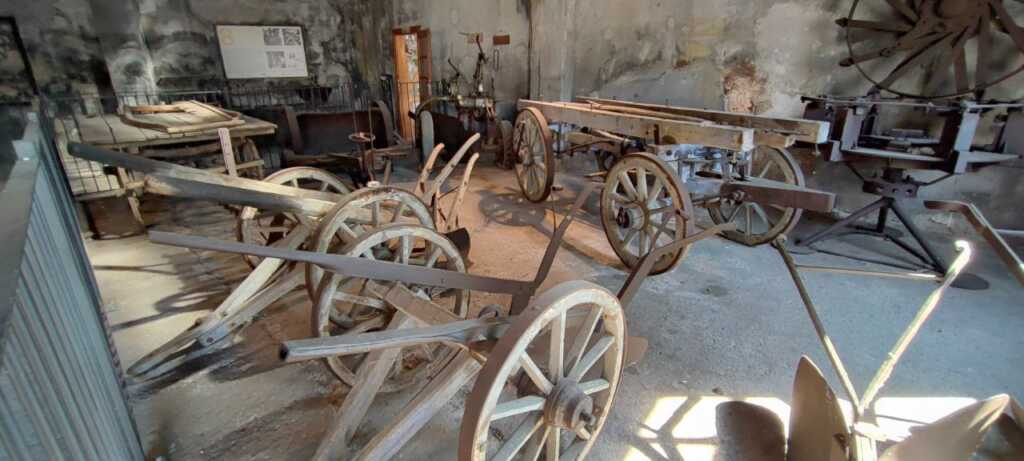
The two sheds located south of the plant date back to 1943 and were built to meet the growing space requirements linked to the production of increasingly large and complex agricultural machinery.
In the 1950s the Moro brothers decided to open a new factory in Pordenone, while keeping the ancient hammer mill in Francenigo in operation, which at the time employed around fifteen workers.
In the room used as a carpentry workshop, carts and agricultural equipment such as harrows, ploughs, furrowers, ridgers, weeders and bulldozers were assembled. On the workbenches, equipped with vices, numerous joinery tools are neatly arranged: drills, hand saws, pliers, rasps, files, planes, punches, squares and compasses.
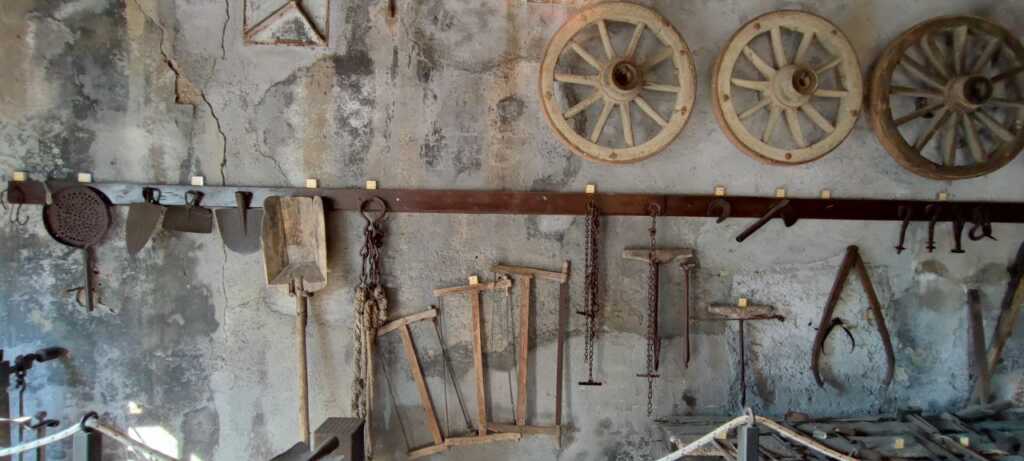
Three yokes for oxen, known in dialect by the term dof, made of wild poplar wood, are hung on the wall of the room. This timber, collected on the gravel banks of the Tagliamento, was particularly suitable for its resilient and flexible quality.

The display includes ploughs, carts and two farm carts from the 1920s, one of which is fitted with an animal hitch.
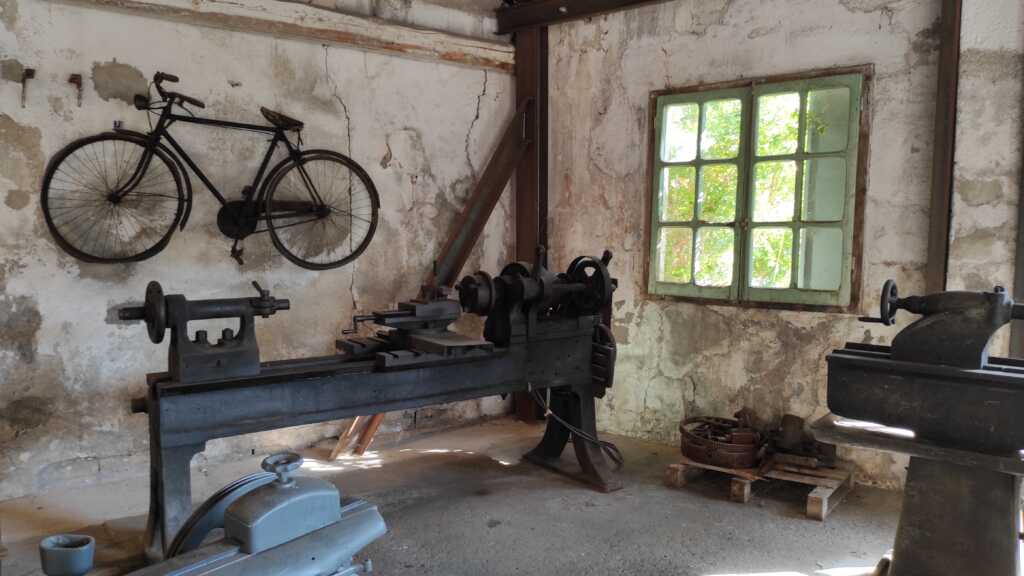
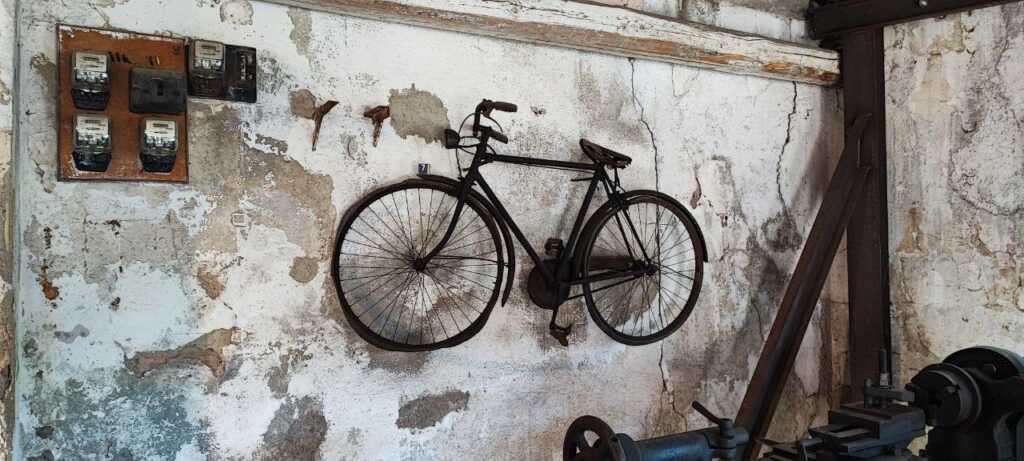
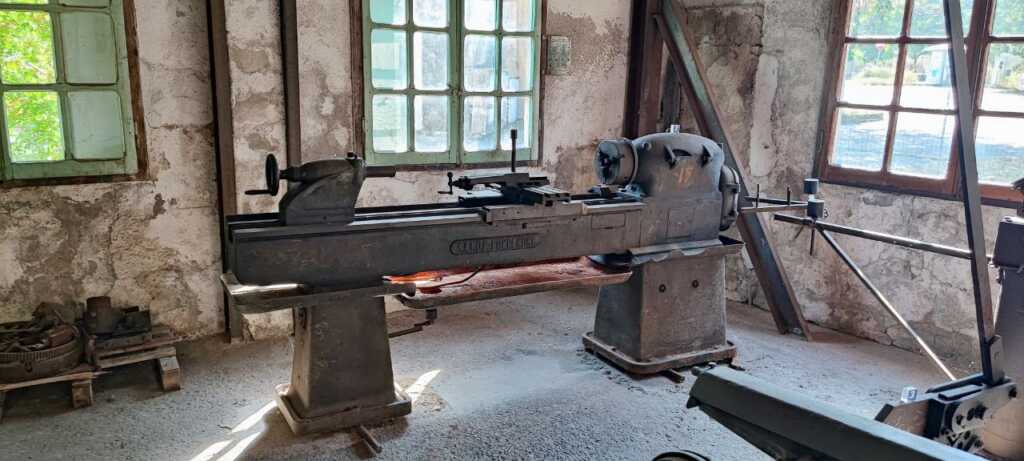
The adjacent storage area, that is, the workshop, displays more modern equipment, including an electric drill, a welding machine, a grinder, a chop saw and two lathes. Hanging on the wall is the bicycle used by Pietro Moro to collect payments and with which, every week, he covered more than one hundred kilometres to reach Pieve di Cadore, where his girlfriend lived.

The redevelopment of the Maglio dei Tonet
Active until the 1970s, the Maglio dei Tonet went through a period of abandonment and in the 1990s was at risk of being dismantled. Fortunately, the Moro family and Gianmario Pezzin, then president of ARCUF (Francenigo Cultural Recreation Association), opposed the demolition of the architectural complex and worked to keep alive the great value, not only emotional but also historical and cultural, of one of the most important business realities in the area.
In 2004, the Moro family donated the Maglio dei Tonet to the municipality of Gaiarine. Thanks to an initiative funded by the GAL, the structure of the ancient hydraulic plant was restored, made functional again and transformed into an engaging and dynamic museum itinerary.
Guided by Luigino Celotto, nicknamed the son of the hammer mill, visiting the ancient plant is at once an interesting educational experience and an exciting sensory journey, during which the sound of the water-driven wheels, the heat of the forge, the smell of coal and the rhythmic hammering of the mighty hammer on the incandescent metal form the beating heart of an early twentieth-century reality still steeped in a medieval atmosphere.