
Where is the Arti e Mestieri de na volta Museum located?
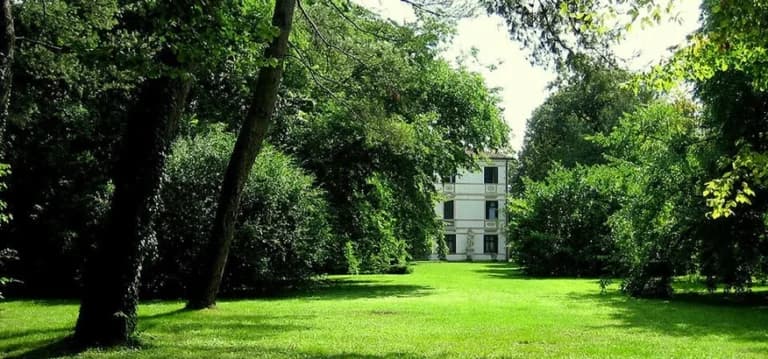
Set up in one of the barns of Villa Pera, a charming aristocratic residence harmoniously nestled in the historic center of Gaiarine, the Arti e Mestieri de na volta Museum preserves a rich mosaic of artifacts that defined the daily life, traditions, agricultural work and craft activities of the local people from the early years of the nineteenth century onward.
Before the end of sharecropping in the 1970s, the vast estate of the Pera family was a self-sufficient world, in which a complex network of rustic outbuildings, needed to manage the farm, developed around the majestic main house dating back to the second half of the seventeenth century.
The first part of the exhibition features numerous tools used by bricklayers, including a series of molds for making cement pipes and blocks, proof of the rural community’s degree of self-sufficiency, able to take care independently even of the maintenance of the buildings and the sharecroppers’ homes.
The larin and domestic life: the heart of the farmhouse
The next thematic area is devoted to the larin, the household hearth around which people gathered to eat and keep warm. Neatly arranged on a sideboard are mortars, pestles, a pepper mill, a tomato pass, a meat grinder, a cheese grater, a speo da osei (bird spit) and a coffee roaster, or bala da cafè, an iron tool made up of two long handles joined to two half-spheres that close like tongs.
Next to a cookstove with various pots and pans, our attention is drawn to a flour bin and a glass container for preserving meat in salt or fat. Beside a typical farmhouse table with a jug of wine and rustic chairs, we notice an old high chair that could also be used as a potty when needed.
Bathroom and bedroom in the nineteenth century
After admiring a cozy sitting room furnished with period pieces and heated by a stove, our gaze falls on an elegant desk; beyond it, on our right, there is a bedroom with an en-suite bathroom, 1860s prams, a cradle, a trunk containing the dota, that is, the trousseau, a wardrobe with nightgowns and a bedside table, known at the time as a lateral because it stood beside the bed.
On winter nights, the latter was warmed with a brazier (mònega) inserted into a wooden frame made of two pairs of curved slats (prete), placed under the blankets about half an hour before going to bed. Some bed warmers, more rudimentary ones, were made from World War I shell casings. Also noteworthy is the paion, a mattress stuffed with corn husks (scarthoz), with two holes that made it possible to remake it every morning. The museum display also includes a bathtub with wheels that allowed it to be moved from one room to another.
Doing the laundry in the nineteenth century
Before the spread of the modern washing machine, laundry was washed in a tub with lye, a cleaning solution obtained by letting ash settle in boiling water. The wooden container had a hole at the bottom that allowed the water and lye to drain away. To prevent clothes from clogging the opening once the stopper had been removed, a pig’s jawbone was placed above the hole. The clean laundry was then rinsed in the river with the lavador, or in the tub with the tavola da lavar.
Silkworm farming and sericulture: from mulberry leaf to silk
Once dotted with lush mulberry trees meant to feed silkworms, the Villa Pera estate was home to a thriving silkworm-farming activity. Among the many tools traditionally used in this sector, the Arti e Mestieri de na volta Museum displays an old incubator, used in spring to keep silkworm eggs at a controlled temperature, and a hygrograph, a device used to measure humidity levels. When the eggs hatched, the larvae began feeding on mulberry leaves, which were then chopped up at the time with the tajafoia.
The life cycle of the silkworm
The biological cycle of the silkworm includes five stages and four moults. The roughly 55,000 specimens contained in an ounce of eggs reach a size of nine centimeters each, end up occupying a total area of 60 m² and require nine quintals of mulberry leaves for nourishment.
To keep the larvae clean from the residue of moulting, at the end of each growth stage sheets of perforated paper were laid over the silkworms and then covered with fresh mulberry leaves. The size of the holes varied according to the stage, and therefore the size, of the larva. Once they reached the surface of the sheet, the larvae were transferred onto racks.
Once they reached the fifth stage, the silkworms, which in the meantime had taken on a satin-white color, stop feeding and look for a support to climb on in order to spin their cocoons. The branches arranged vertically to recreate the so-called “salita al bosco” have recently been replaced by plastic supports, which can be disinfected and reused, making cocoon harvesting easier. One tool made up of a series of iron rods served to clean the cocoons before the spinning process, from which a raw silk was obtained for later stages of processing and refinement.
Arts and Crafts of agricultural and artisanal work
Once the visit devoted to the ancient art of silkworm farming is over, the museum route presents several centuries-old scales and numerous tools for winemaking, including crushers, presses, a sulfometer, a capper and a manual sprayer pump. The collection includes a still for distilling grappa called tamburlan.
Among the tools that made work on the farm easier we find a corn sheller (sgarba panoce), both manual and mechanical, a seed sorter, a yoke (dof), a plow, a harrow called grapa, a chain harrow (erpese), a tajafien, a seed drill, at the time pulled by oxen, a carrying frame for transporting hay and leaves, a beet slicer, a forage chopper, stools and buckets used during milking and dairy-processing equipment, including a butter churn (burcio a mantega) and a scoladora for cheese. Tools used for fishing include a fyke and a spear.
A series of hoes, rakes, forks, scythes and sickles forms the backdrop to the bicicletta del panetier, the farmer’s bicycle and the home barber’s bicycle. The latter is equipped with razors, brushes, scissors, combs and shaving soap containers carefully stored in a suitcase placed in front of the handlebars. Next to a knife-sharpening stone (mola par usar cortei) we find refined sun umbrellas arranged on some period suitcases and trunks. Before entering the carpenter’s room, our curiosity is drawn to the racolon, an instrument that, during the days of Holy Week, replaced the sound of bells to alert the faithful to Mass.
The carpenter’s workshop houses a large number of planes, squares, saws, compasses, hammers, chisels, hand drills, a hand lathe and many other tools for making carts, barrels, furniture and everything needed for managing the estate. During the Resistance, a secret opening allowed partisans to take refuge beneath the floorboards of this room.
Entertainment and modernity: from the record player to the cinema room
The museum’s most modern section houses various models of radios, record players, record-playing machines and televisions, one of which, dating back to 1954, is one of the first televisions in the municipality of Gaiarine.
One of the most atmospheric rooms in the museum is the cinema room, which contains a hand-cranked projector from the 1930s and an electric one from the 1950s, both equipped with a chimney to disperse the smoke emissions produced by the combustion of the electrodes. In one corner of the room there is a forge with the hearth, anvil and the blacksmith’s and farrier’s tools. Beside it are two light carriages with a hood, one of which has candle lamps, still bearing the marks of tax stamp payment.
At the center of the room stands a 1926 clock tower mechanism with manual winding. After viewing some photographs and instruments of the Gaiarine brass band from the 1920s, including a small piano, an accordion, a mandolin and a clarinet, we move on to the weaving area, where knitting machines, pedal and tabletop sewing machines, accurate reproductions of fully working looms, a rope-making tool and a hemp-fiber machine used to obtain textile fiber are on display.
The section devoted to the firefighters of Gaiarine includes a wooden ladder for going up, a rope ladder for coming down and a manual balance pump from the late nineteenth century. Significant testimonies from World War I include an American stretcher and cots from the Gaiarine hospital. The final part of the exhibition shows the workstation of the clockmaker Toni Marchesin and a shoemaker’s workbench, known in dialect as “scarper“.
Visiting the Arti e Mestieri de na volta Museum: a memorable experience
Visiting the Arti e Mestieri de na volta Museum is a recommended opportunity for anyone wishing to discover the deep bond that links the area’s cultural roots to our present. A carefully curated selection of beautifully preserved objects tells the story of the evolution of domestic life and hard agricultural and artisanal work from the early nineteenth century onward, bringing to light the customs of the time and guiding us through some of the most significant historical moments of the twentieth century.
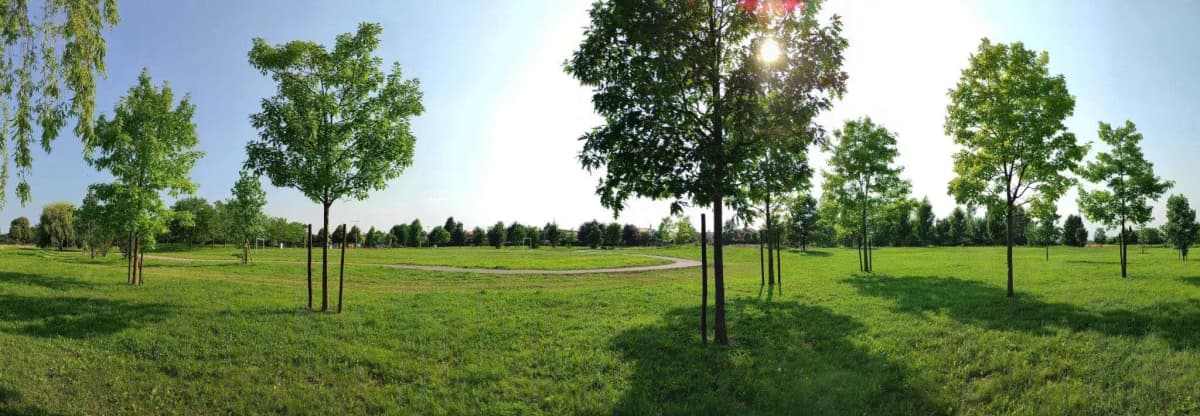
What makes this visit an unforgettable experience, and for which we thank the Riello Pera family and the Association of Volunteer Firefighters of Gaiarine, is the enchanting setting of Villa Pera and its radiant centuries-old tree-lined park, whose beauty will leave you breathless.