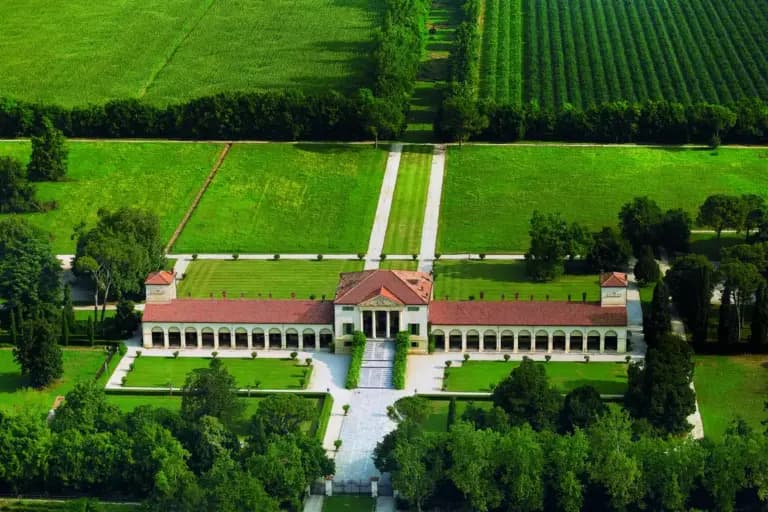

Where is Villa Zanetti located?
The aristocratic complex of Villa Zanetti is located along State Road 13 Pontebbana, an important communication route between Venice and the Austrian border.
Surrounded by lush gardens crossed by bright tree-lined avenues, the many stately residences overlooking its first stretch, the Terraglio, a historic road axis documented since the 13th century, are invaluable testimonies of the “villa civilization” that, from the second half of the 16th century, made the Venetian countryside unique of its kind.
Venetian expansion on the mainland: the “villa civilization” is born
The discovery of the American continent and the resulting shift of the commercial axis to the Atlantic Ocean, together with conflicts with the Ottoman Empire for control of the Eastern Mediterranean and the Aegean Sea, encouraged the Republic of Venice to extend its dominions into the Venetian hinterland between the end of the 15th century and the beginning of the 16th.
Beyond the rapid change in the geopolitical horizon, this expansion responded to needs linked to the supply of foodstuffs and the management of forest resources, fundamental for the construction of boats and of the millions of piles that form the foundations of the city of Venice.
In the mid-16th century, the Venetian aristocracy invested substantial capital in the mainland, carrying out reclamation works and introducing new crops within the context of an agricultural revolution centered on the Venetian villa, the focal point of the estate in which the magnificence of the main residence was combined with the functionality of the buildings needed to run productive activities.
During the 17th and 18th centuries, agricultural settlements spread in which the Venetian villa, while retaining the characteristics of an urban palace, moved away from the compact fabric and blended harmoniously into the countryside surrounding the city walls. This phenomenon is particularly evident in the city of Treviso, whose surroundings are dotted with noble buildings featuring architectural elements generally associated with urban construction, of which Villa Zanetti is a marvelous example.
The origins of Palazzo Trentin
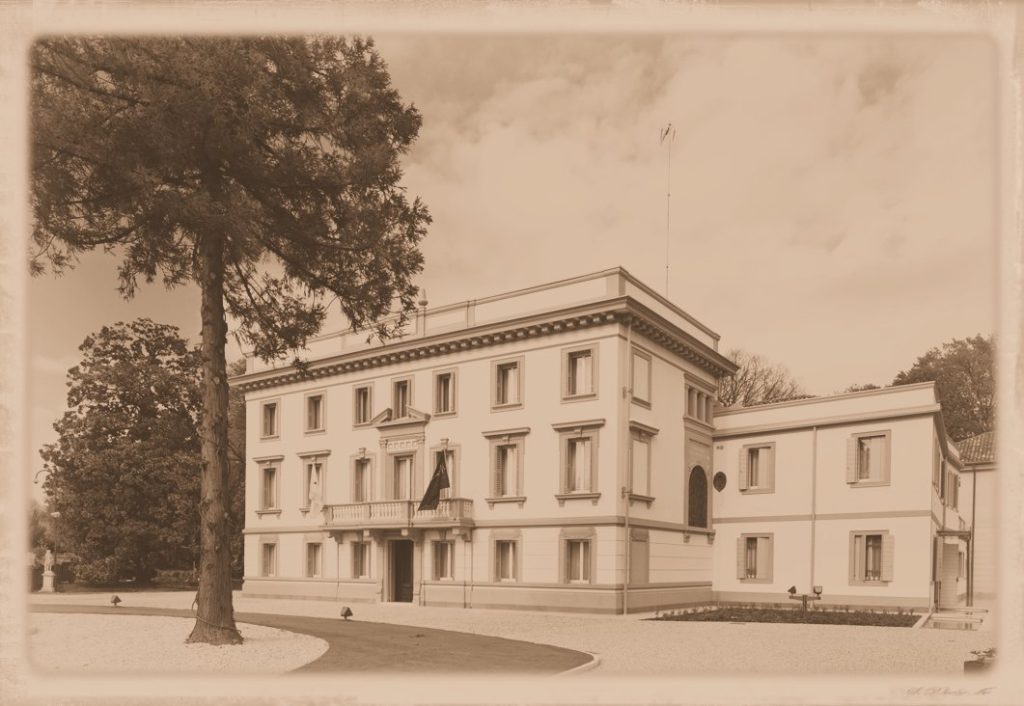
The first cartographic records of Villa Zanetti, once called Palazzo Trentin, date back to the 18th century. However, its proximity to the ancient village of Sant’Artemio, where traces of 16th-century buildings are preserved, supports the hypothesis that the barchessa, the complex’s first built nucleus, dates back to the previous century.
This hypothesis is confirmed by the date 1624, visible on the north side of the central body of Villa Zanetti, followed by the year 1928, bearing witness to the restoration works carried out on the building complex.
The period between 1798 and 1805 dates the inclusion of Palazzo Trentin in Anton von Zach’s Kriegskarte, the Map of the Duchy of Venice. The document shows a long tree-lined avenue that crossed the vast landholding, which then included the entire surface of the current racetrack, west of the main residence, connecting it to the territories of Fontane.
Architecture of Villa Zanetti
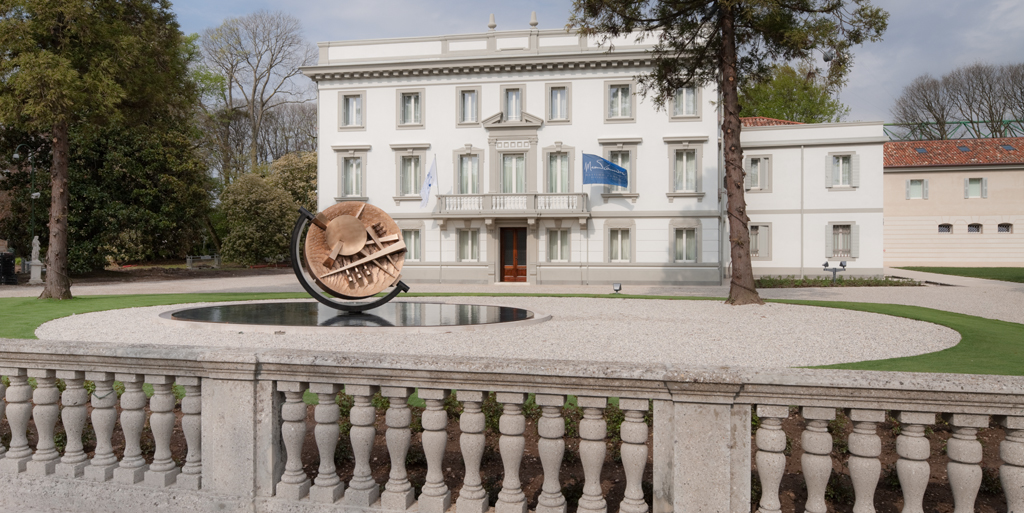
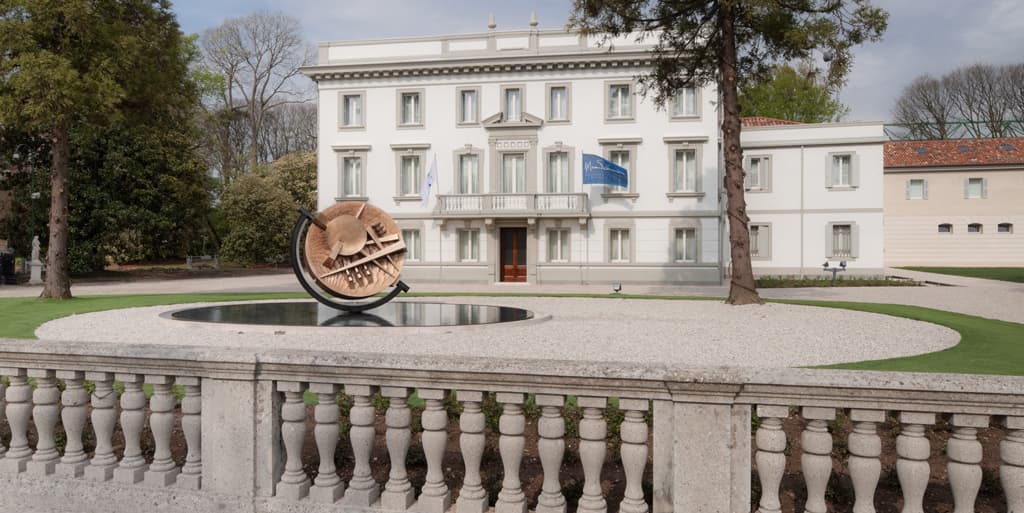
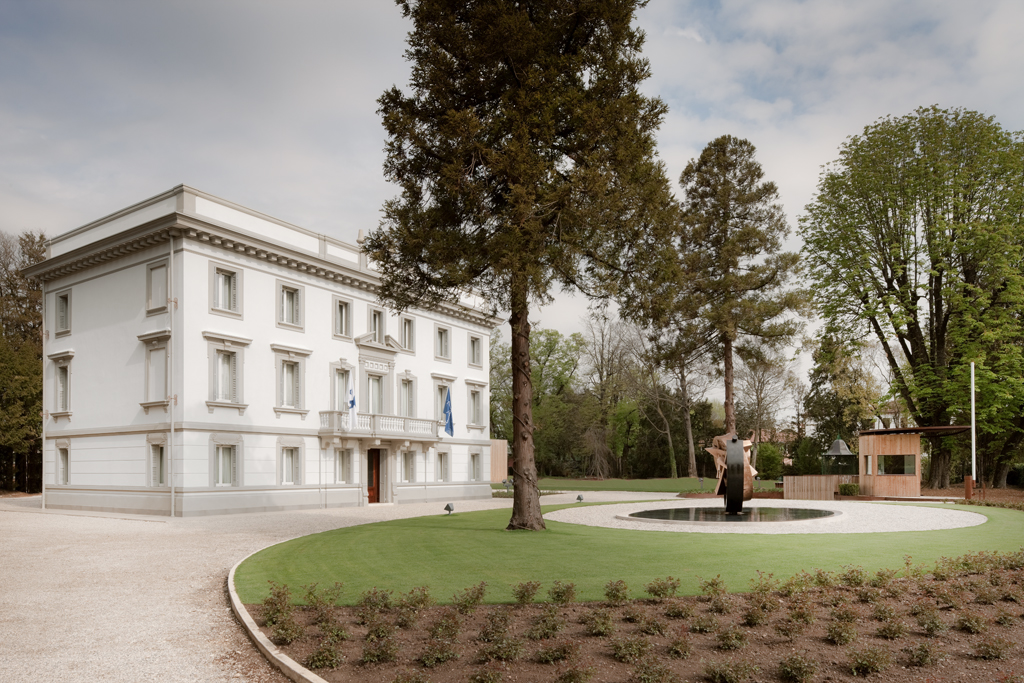
In the Austrian Cadastre of 1842, the floor plan of the building complex is shown with the barchessa and the noble residence. The compact, stereometric volume of the representative façade, facing east toward the Pontebbana, reflects in its forms the stylistic features of the suburban palace, the result of multiple renovation and restoration interventions, the latest of which dates to the late 1920s.
Arranged over three levels, the main façade is refined on the ground floor by a plastered faux ashlar finish. Topped by a broken triangular pediment, the central doorway on the piano nobile and the two windows flanking it open onto an elegant small terrace. The vertical development of the façade is crowned by a continuous cornice embellished with small central pinnacles.
The barchessa of Villa Zanetti
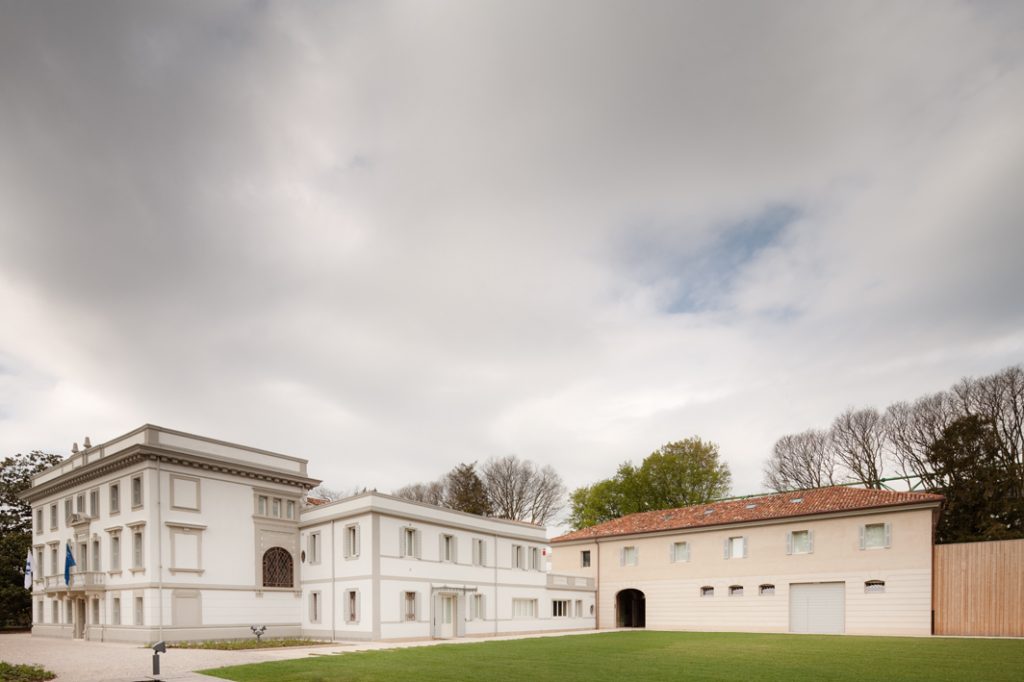
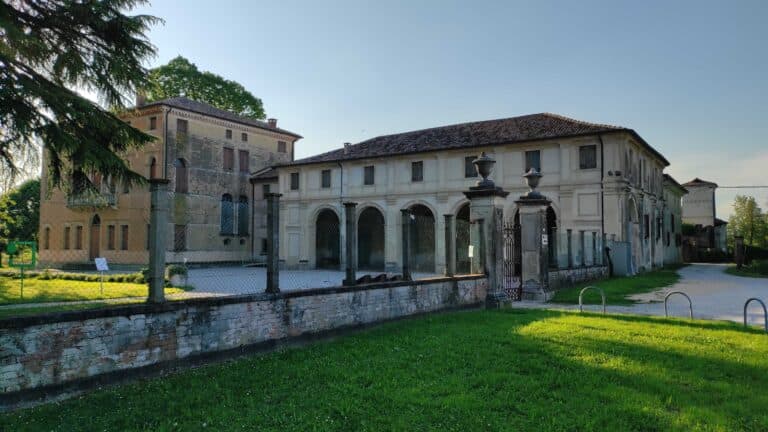
Connected to the residential nucleus by means of an intermediate volume with 20th-century stylistic features, with a loggia and terrace, the barchessa of Villa Zanetti retains the traditional characteristics of the rustic outbuildings of Venetian villas.
Once past the entrance of the 17th-century rural building, you enter the majestic hallway refined by niches and frescoes. Looking up, one is struck by the elaborate ceiling marked by large timber trusses, which span the entire architectural width of the barchessa.
The interiors of the noble residence feature Venetian terrazzo floors, marble fireplaces, and ornamental stuccowork on the walls and ceilings. The fine wood boiseries and wall hangings lend the bright rooms of the palace a welcoming and refined atmosphere that harmonizes with the splendor of the centuries-old park.
The park of Villa Zanetti and the “garden civilization”
“If we were to compare Venice to a fishpond (…), the Treviso area would be its garden.“
Bonifacio, Giovanni. Istoria di Trevigi. 1591.
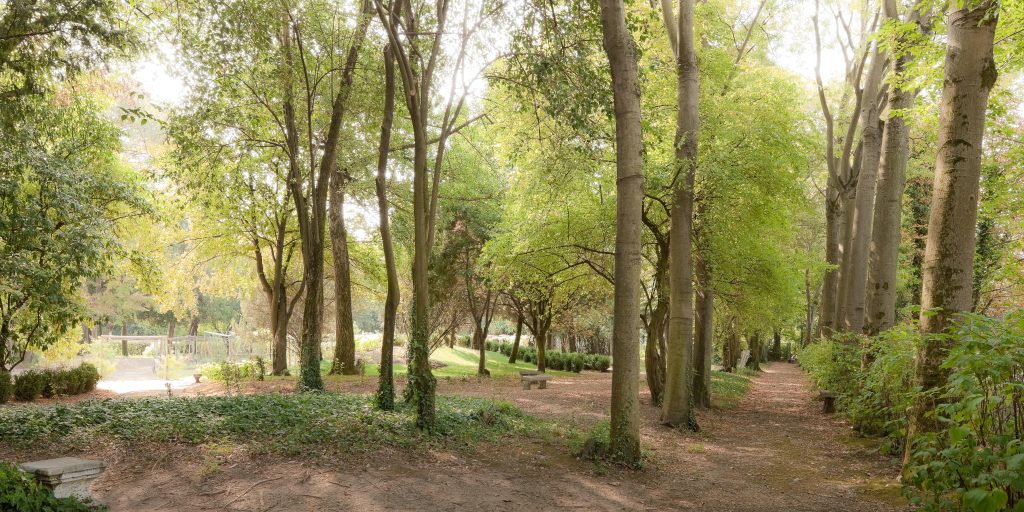
The balance between aesthetics and function on which the Venetian garden tradition is based takes shape in the large elliptical brolo extending across the southern area of the property. It is framed by four varieties of table grapevines, which intertwine to form a lush, shaded gallery.
The productive purpose of the inner vegetable garden dialogues harmoniously with the ornamental elements surrounding it, consisting of a bright little hill for meditation dotted with peonies, a fountain, an aviary, a small partially underground greenhouse, graceful capitals, and refined statues immersed in greenery.
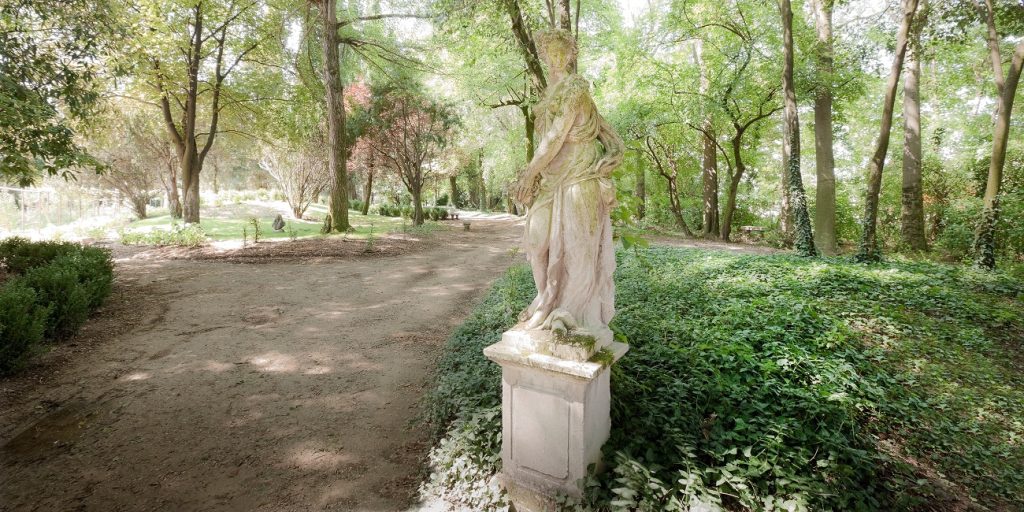
The lively murmur of two clear streams enlivens strolls along the pale loose-gravel paths that wind through this splendid natural setting. Before joining again in the park of Villa Margherita, the two waterways separate at the northernmost point of the garden, one running along the edge of the property bordering the Ippodromo, the other along the outside of Villa Zanetti.
Noteworthy for its remarkable landscape value, a row of centuries-old trees interspersed with small bushes extends along the western side of the property for about half a kilometer, offering highly evocative panoramic views.
Punto nello Spazio by Arnaldo Pomodoro
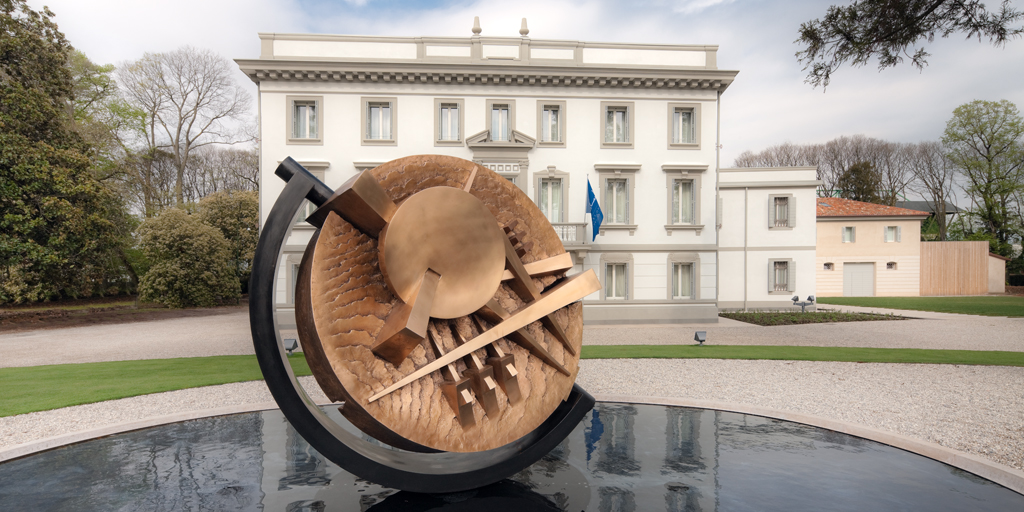
Placed in front of the representative façade at the wish of Massimo Zanetti, Arnaldo Pomodoro’s revolving sculpture Punto nello Spazio rotates slowly and steadily on a 45° inclined axis, ideally tracing the volume of a sphere whose movement connects the work with the surrounding space.
As the Master explains: “The two faces of the disc are marked with sharp protrusions – teeth, ties, wedges, arrows – emerging from a textured, corrugated surface that recalls the veins of cuttlefish bone or the traces left on the sand by the sea waves, and the outer edge is smooth: almost a suspended point without shape or weight”.