
Where is Villa Maria located?
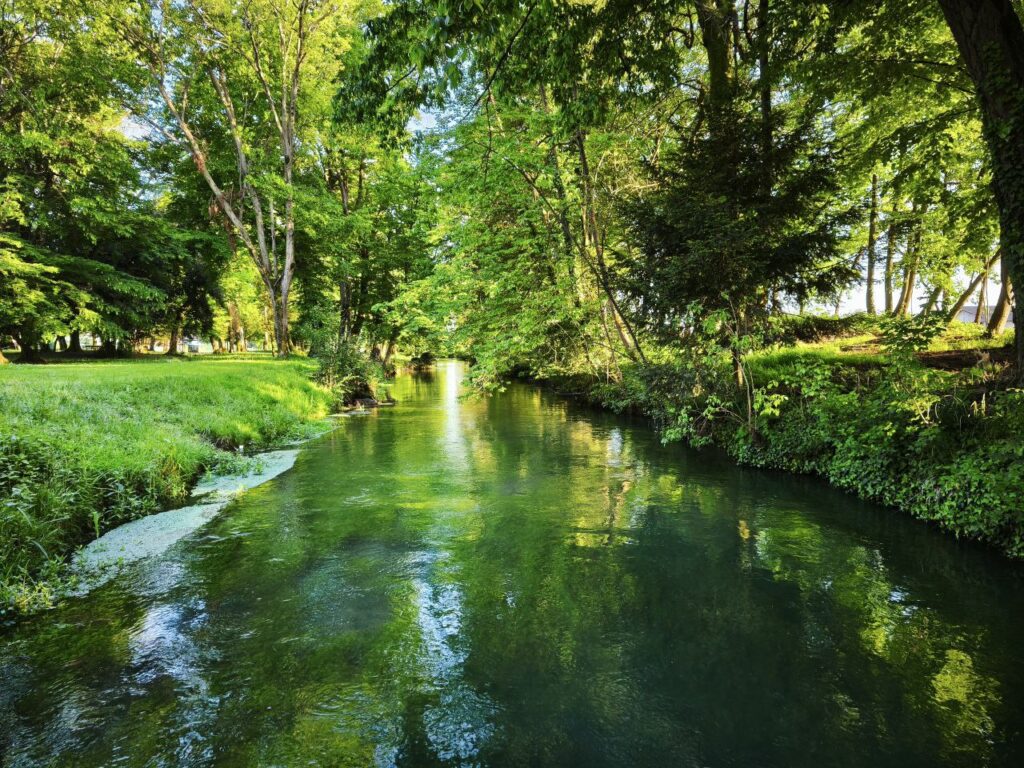
The twelve spring-fed rivers that run through the municipal area from north to south, including the Melma and its tributaries, the Piovesan and the Rul, as well as the rio Polise, the Bagnon, the Mignagola and the Musestrelle, tributaries of the Musestre, have been exploited since ancient times for the development of agriculture and crafts. Their waters were channelled into irrigation canals and the rogge of numerous mills, carpentry workshops, paper mills and hammers that have characterized the landscape of this enchanting corner of the beautiful Marca Trevigiana since the Middle Ages.
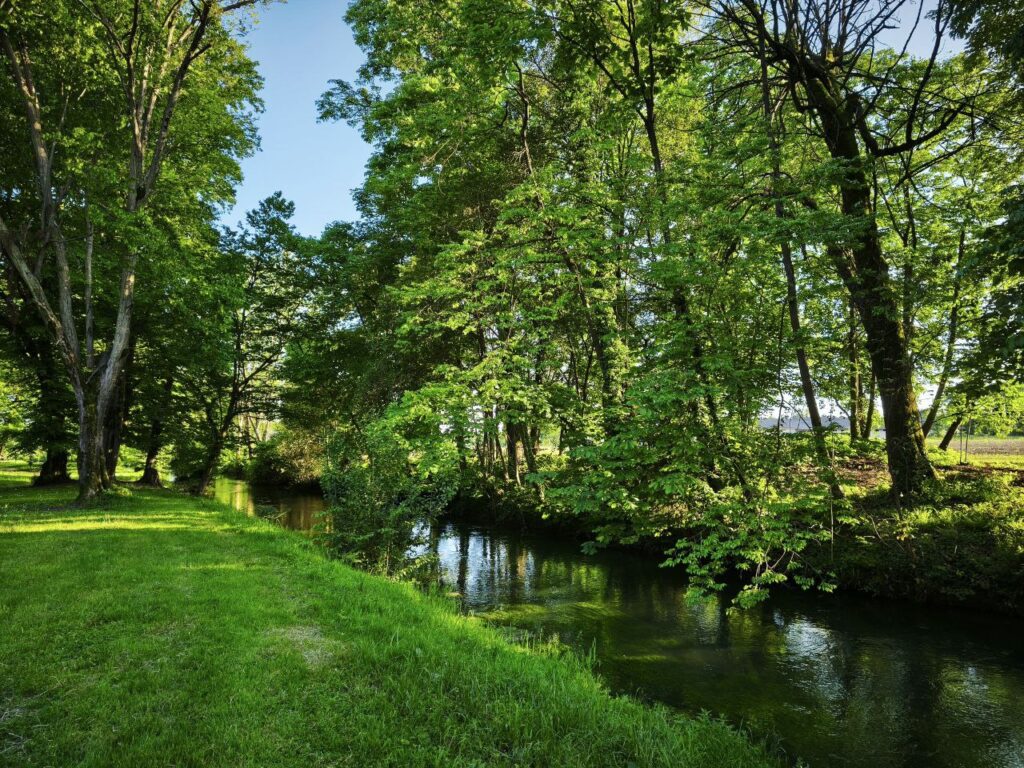
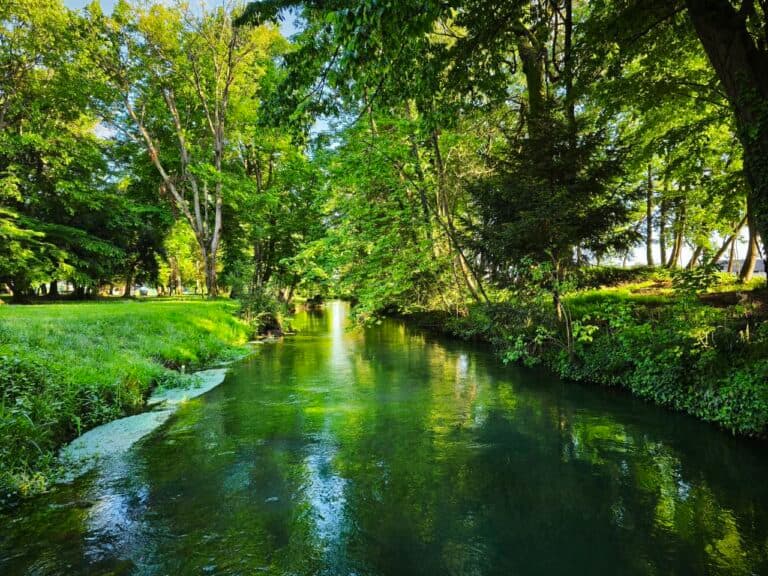
Used for centuries for navigation and river transport, the winding course of the Melma, whose main springs emerge in the area known as “Le Fontane Bianche” in Lancenigo, crosses the peaceful rural landscape of Carbonera, once dotted with farmhouses and casoni made of wood, straw and reeds, surrounded by vast stretches of cultivated fields framed by thick hedges.
Before flowing into the Sile at Silea, the river runs through the parks of Villa Maria and Villa Gradenigo, now Pellegrini, and skirts the properties of Villa Bianchini and Villa Avogadro.
These are just some of the magnificent villas venete that dot the territory of Carbonera, testaments to the expansion of Venetian rule on the mainland from the 14th century onwards. The hub of vast productive estates, they combine the grandeur of the main residence with the functionality of the imposing rural buildings essential for managing the landed property.
The origins of Villa Maria
As shown in the maps of the Venetian cadastre at the dawn of the 18th century, the manor property belonged to Mr Pietro Castelli of Venice.
From the property registers of the time, we learn that: “The aforementioned Mr Pietro (Castelli da Venetia) has a piece of arable land with a palace, garden, barchesse, cellar, stables and a house for tenants with a courtyard. It borders to the east on the road, to the south on the lands of Mr Pietro below Carbonera, part on the Melma, to the west and north on the said Melma. 4 campi.” (State Archive, Treviso, Municipal Historical Archive, B. 1194, c.273v, no. 98).
Further land and property belonging to Mr Castelli are documented in Pezzan, where he owned about seventy-seven campi, six small houses, a casone, a tenant house, a brick house roofed with tiles, and a kiln used for stones and tiles. In Biban and Carbonera, the nobleman’s property included thirty-nine campi, a small house, a casone, a farmhouse, a masonry house, with an upper floor, roofed with tiles and with courtyard and garden.
In the 19th century, the complex made up of the holiday residence, a garden, the oratory and the meadow, the steward’s house and the farm manager’s house belonged to Mr Gaio Sebastiano, son of the late Antonio, one of the largest landowners in Pezzan (State Archive of Venice, Napoleonic Cadastre, Sommarione, 1084, Pezzan di Melma).
Architecture of Villa Maria
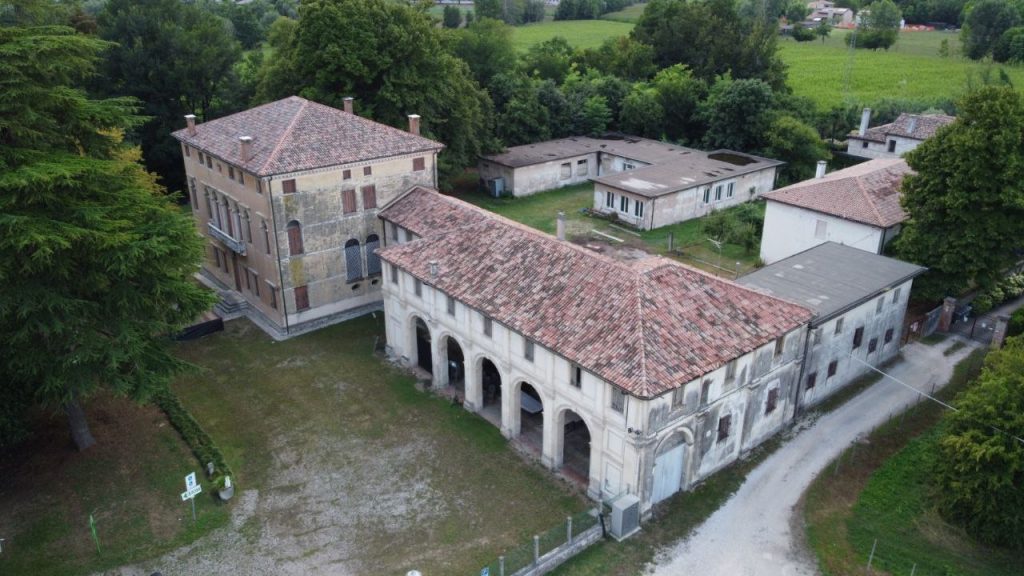
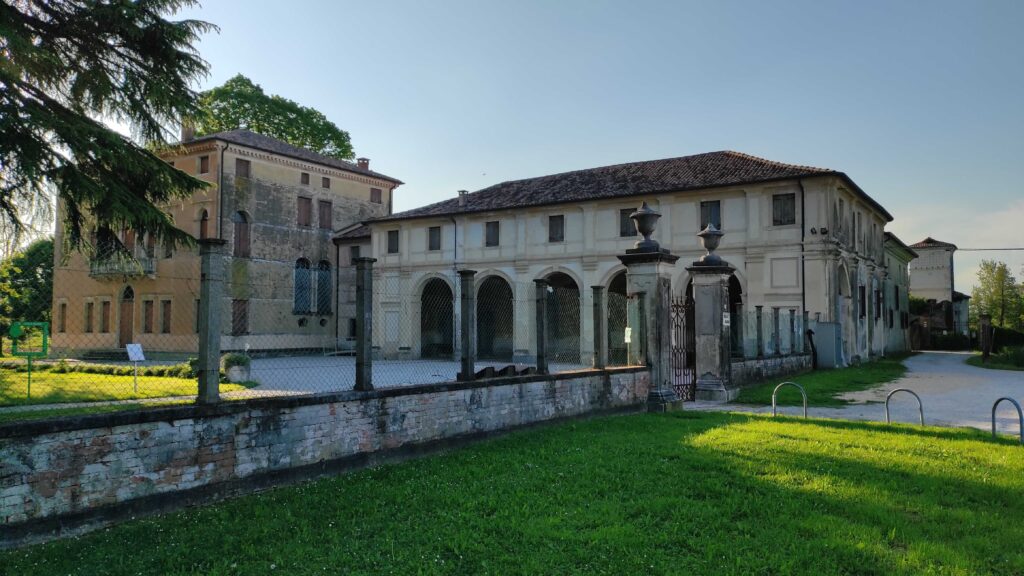
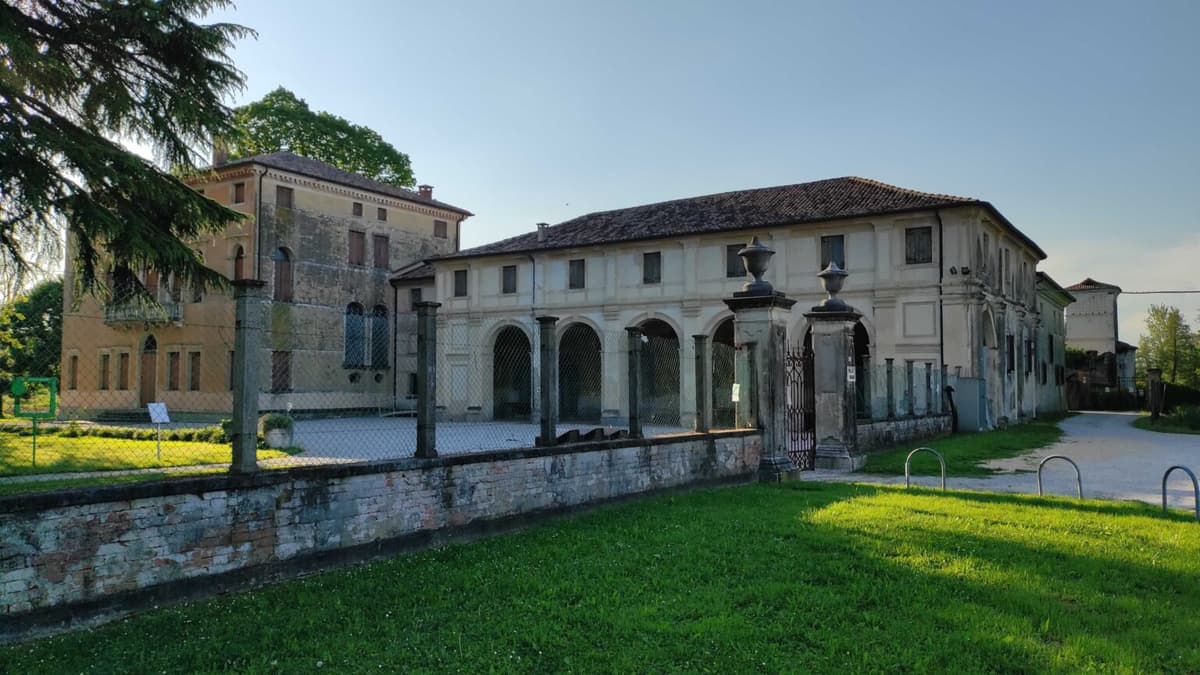
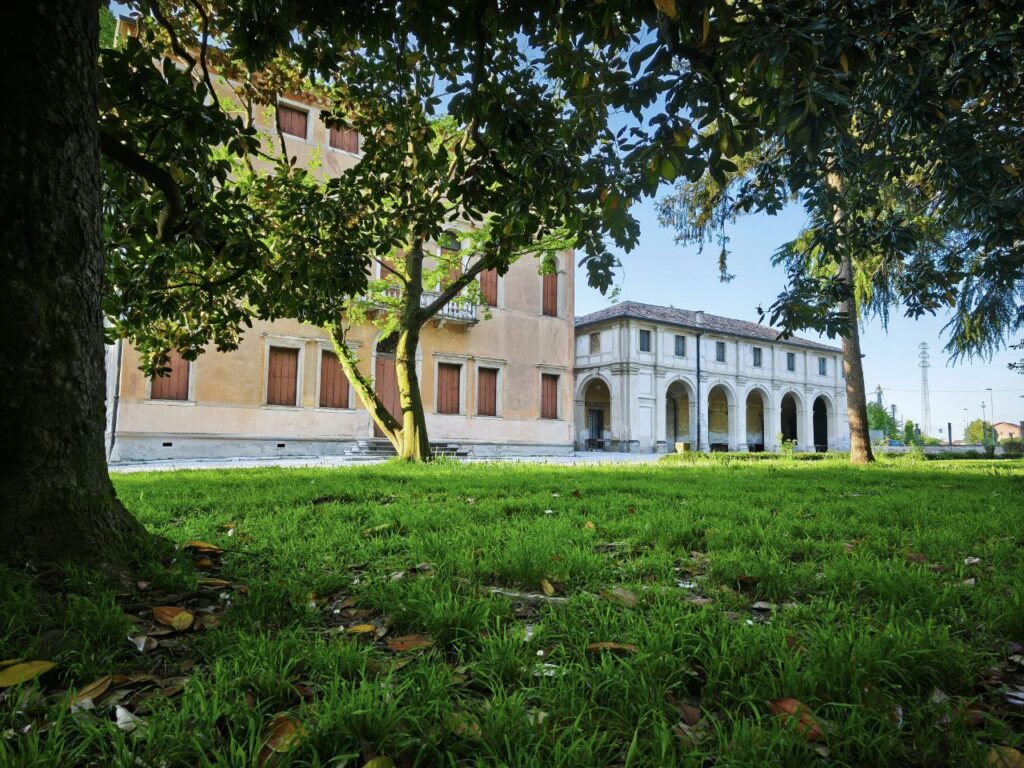
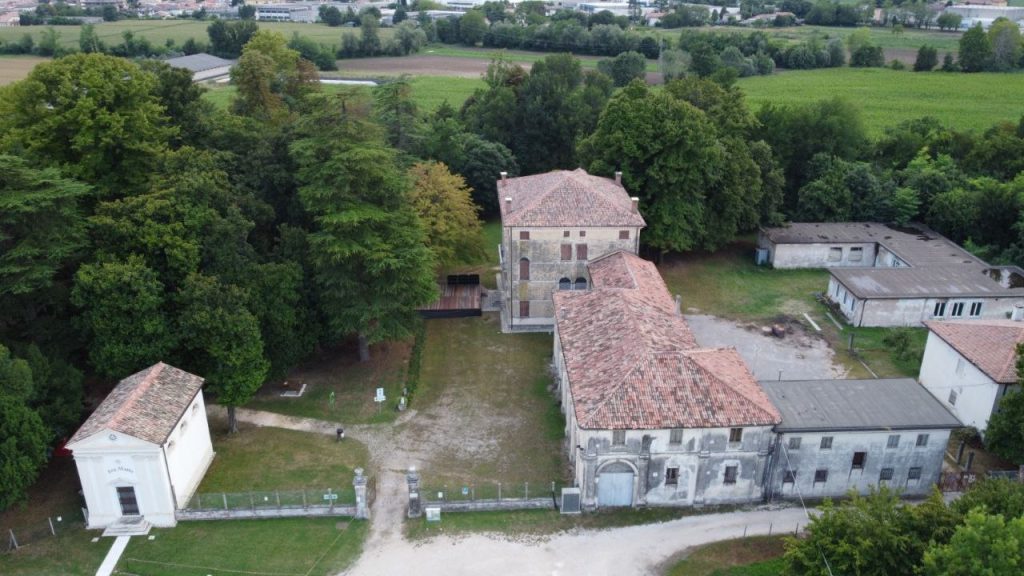
Probably dating from the 17th century, the square-plan residential nucleus is defined by a compact volume, divided into three floors including the attic, reflecting the traditional structure of the Venetian palace with a central hall and side rooms.
Facing south, the main façade is symmetrical and vertically tripartite. Of the seven round-arched windows on the noble floor, the three central ones open onto an elegant stone balcony. The central window, larger and aligned with the entrance portal, offers a privileged view of the 19th-century tree-lined park of the aristocratic residence.
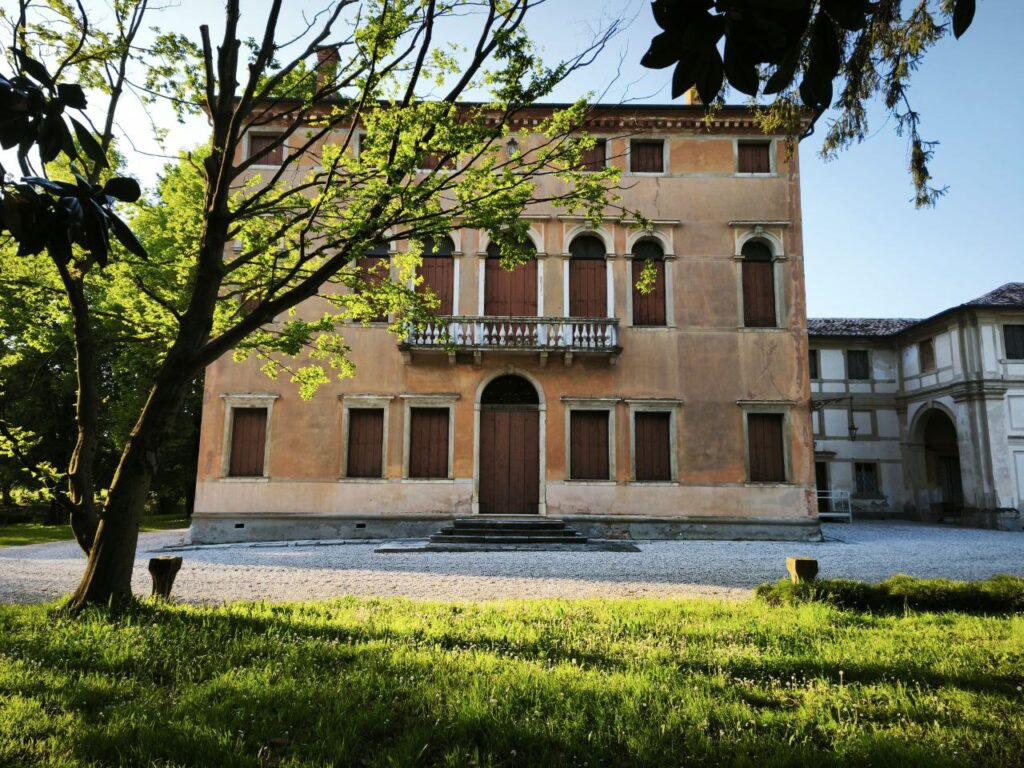
On the second floor, a stone coat of arms stands out among six small square windows, aligned with the openings below. Beneath the eaves, a dentil cornice outlines the top of the building, crowned by a four-pitched roof.
The side walls of the hall on the noble floor feature three painted depictions of rural landscapes, signed F. Bressanin. The frescoes adorning the hall ceiling depict three putti and a female figure.
The barchessa, the oratory, the colombara tower
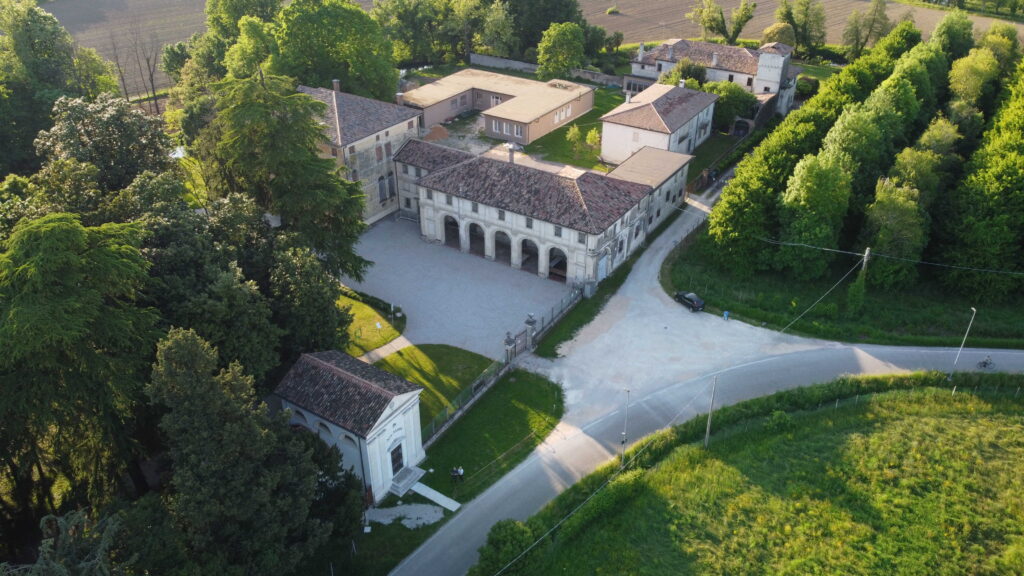
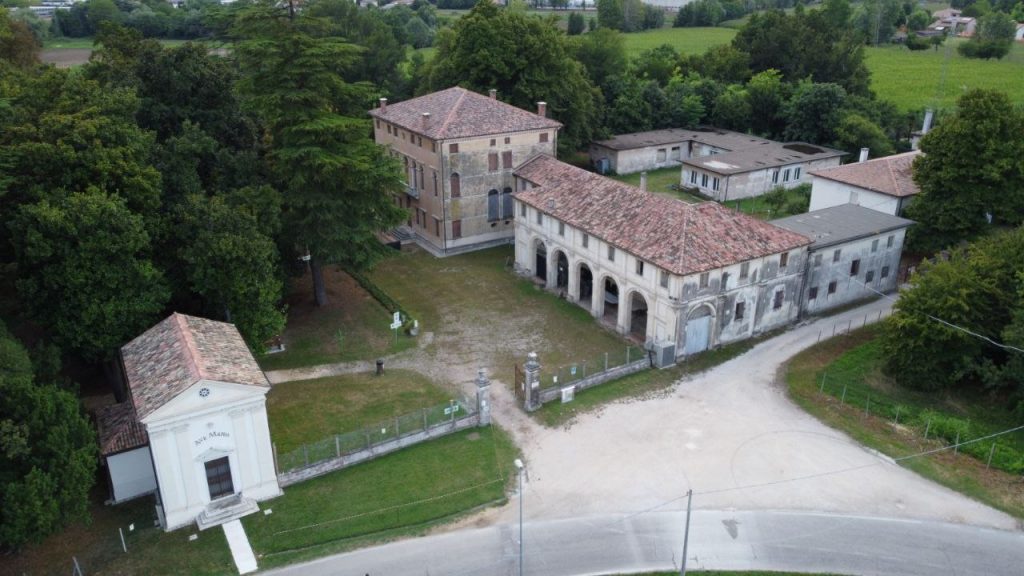
An intermediate volume connects the central body with the imposing porticoed barchessa. Finished with a reduced upper storey, it is marked by five round arches.
On the left side of the entrance gate, the property includes a white oratory, whose restoration was completed in 2019. Facing Via Grande di Pezzan, the façade of the place of worship bears the inscription above the portal: Ave Maria.
It is plausible that the families who owned the chapel, namely the Gaggio, the dal Maschio and the Lebreton, were the same families who owned the Venetian villa we know today as Villa Maria. With the help of the Marist fathers, in 1950 the noble property became an institution for the recovery and reintegration of around forty minors. In 1985 the Ministry of Justice granted the Villa Maria complex on a twenty-year concession to the municipality of Carbonera.
At the rear stands a colombara tower in good condition, the only one in the municipality of Carbonera.
The park of Villa Maria
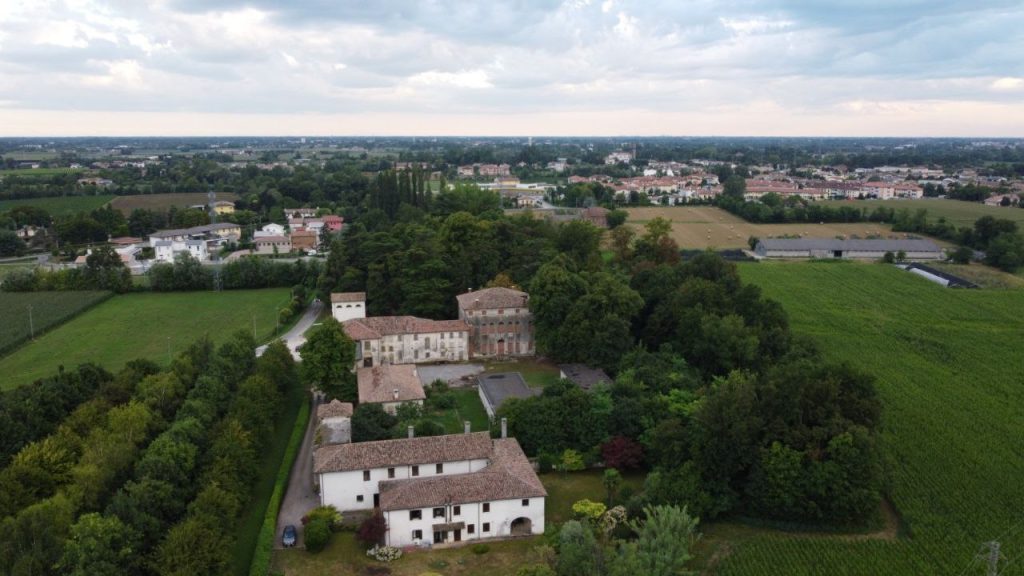
The 19th-century park of Villa Maria (formerly Villa Lebreton) contrasts the symmetry and geometric rigor of the Italian garden with the calculated disorder of the English garden, whose sinuous and unpredictable lines invite visitors to enter a lush and seemingly primeval setting, arousing wonder and amazement.
The park welcomes a wide variety of tree species, both native (fir, cypress, pine, yew, maple, Judas tree, hornbeam, beech, ash, holm oak, privet, field elm, alder, plum, oak, linden, western plane tree) and exotic ones such as palm, American poplar, deodar cedar, persimmon (Diospyros kaki), native to central-southern China, magnolia grandiflora, from the southeastern coast of the United States, and albizia, widespread in the tropical regions of Africa, Asia and Australia.
The presence of exotic flora in the parks of villas venete highlights the patrons’ desire to assert their social and economic prestige, clearly setting apart the monumentality, splendor and refinement of the noble garden from the uniformity of the surrounding countryside.
This intention is confirmed by the great cedar soaring in front of the villa façade, chosen as a representative tree for its regal bearing and its imposing height, capable of reaching forty metres.
Reopened to the public on 9 August 2020 after many years of abandonment, the Park of Villa Maria has returned to its former splendour thanks to redevelopment work carried out by the association “Volontari per Carbonera”. The restoration work on the green area included pruning the trees, mowing the lawn, removing weeds, diseased plants, old trunks and fallen trees. Today, the park of Villa Maria is an ideal place for sports activities and cultural initiatives in which the entire community can take part, in a fairy-tale atmosphere where time seems to have stood still.