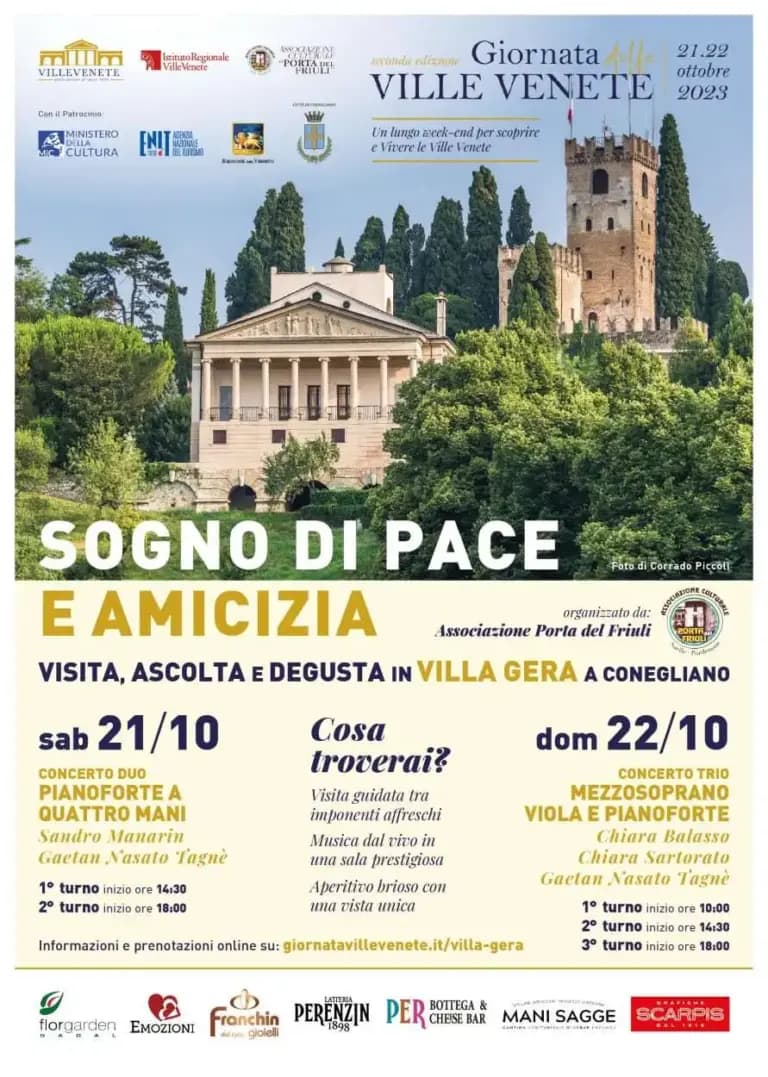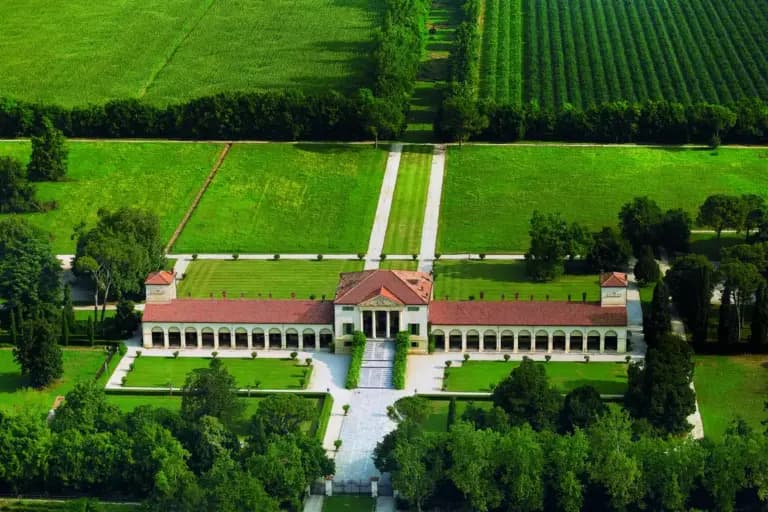

On October 21 and 22, 2023, the second edition of the Day of the Veneto Villas will take place, a long weekend to discover and experience the Veneto Villas during which Villa Gera will be open in an unprecedented guise, namely as a concert venue.
Here is the program of the event “Dream of Peace and Friendship”. Visit, listen and taste at Villa Gera in Conegliano.
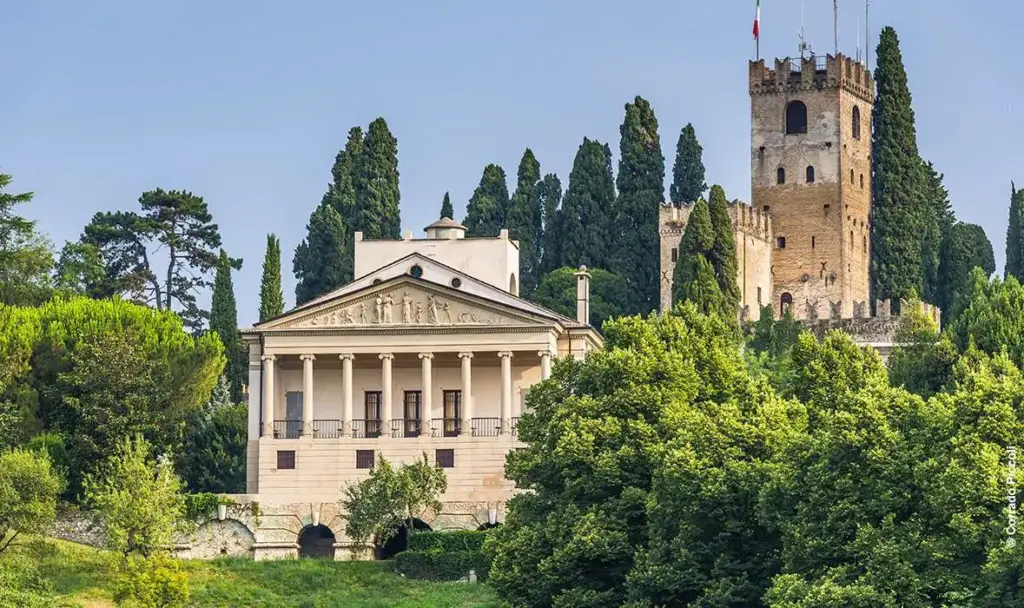
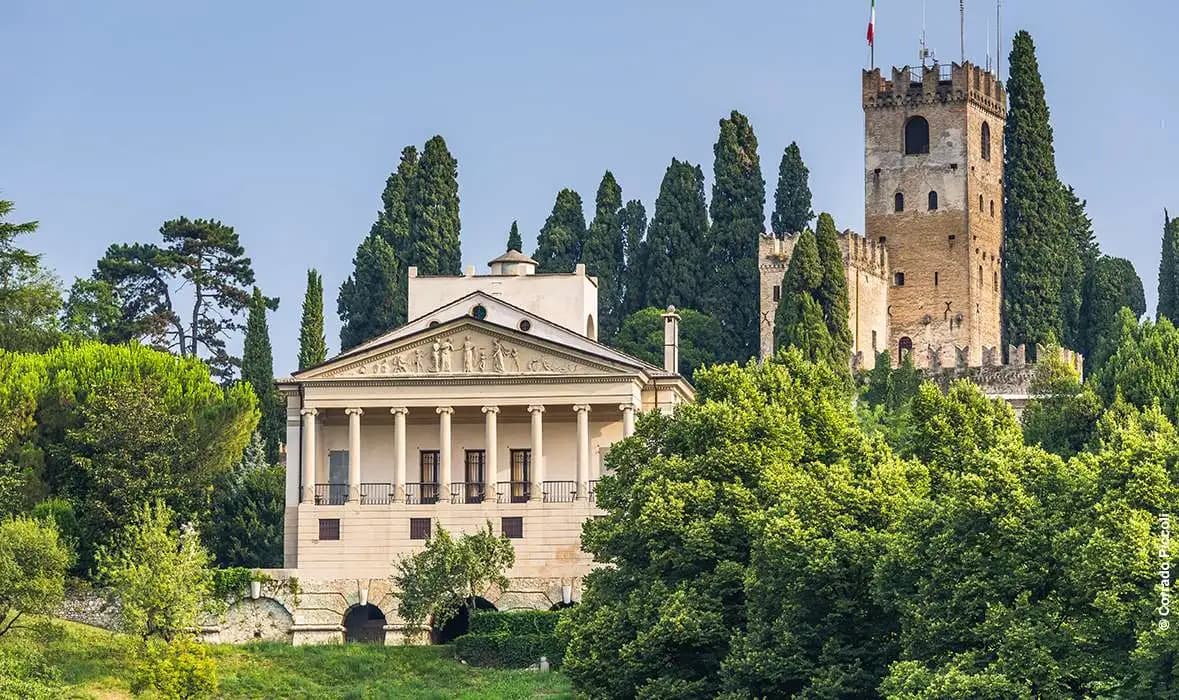
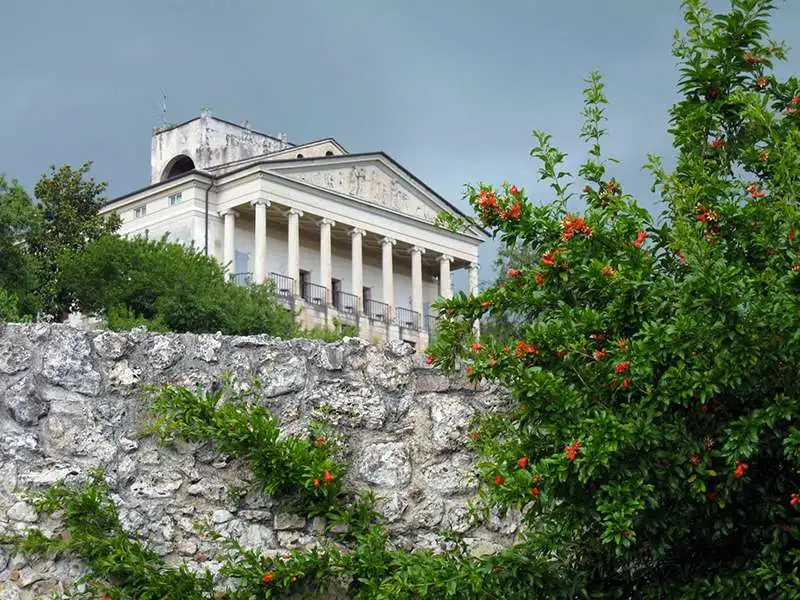
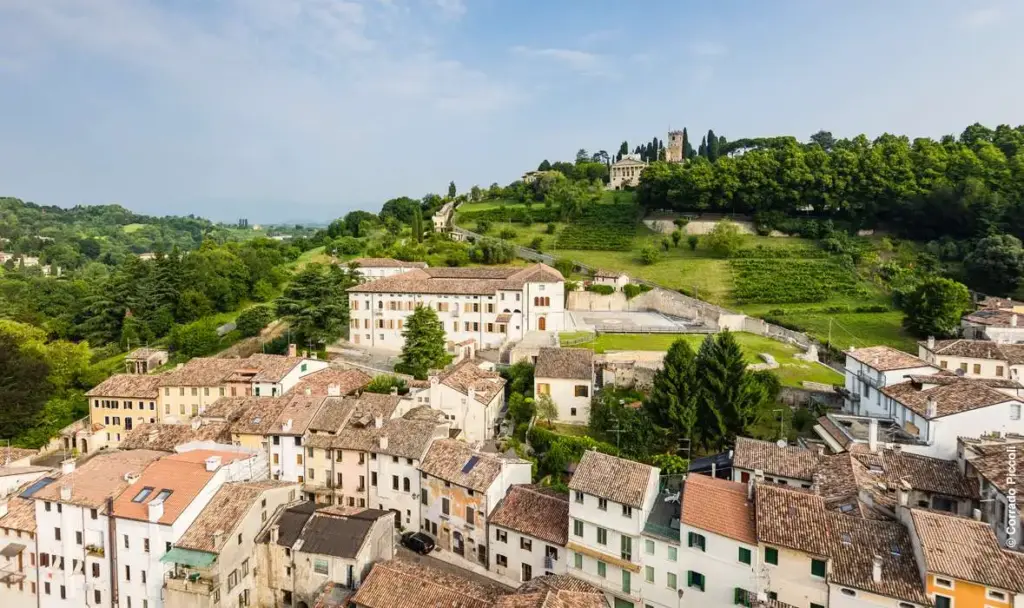
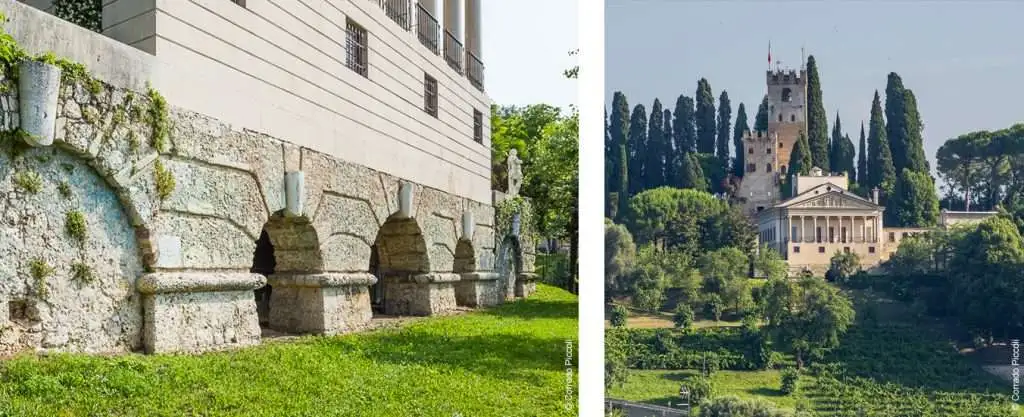
When you arrive in Conegliano, a fascinating historic village nestled in the golden hills of Prosecco, you are struck by the solemn grandeur of a pristine neoclassical residence, harmoniously set into the gentle slopes of a sunny wooded hill.
Resting on the gentle inclines of the hill, the medieval walls of the village, the castle, and the Carraresi walls border the majestic nineteenth-century manor to the west.
The property seamlessly integrates with the wooded ridges of Colle di Giano, at whose peak the soaring crenellated tower of Conegliano Castle vies in height with dark, regal cypresses.
The Gera family
Framed by the dolomitic peaks that watch over the Val Comelico, the castle of Da Camino is one of the oldest testimonies of the noble family originally from upper Cadore, whose founder, Niccolò Gera, was a nephew of the Patriarch of Aquileia Pietro Gera (1299).
Archival records preserve the memory of illustrious figures of the noble family in the cultural and spiritual spheres, from Giovanni Battista Gera, a prominent figure in Comelico as early as the early 16th century, to Bartolomeo (1602–1681), Bishop of Feltre from 1664.
Owners of vast forested estates, the Gera supplied timber to the Republic of Venice and distinguished themselves in various major professional and entrepreneurial activities, later settling in Conegliano with great wealth in the second half of the 18th century.
Bartolomeo Gera (June 30, 1769 – 1848)
Son of Giuseppe and Antonietta Miari, Bartolomeo Gera was born in Conegliano, where his father had settled to manage his many properties in the Conegliano area after the family moved from Cadore to Campea di Miane and lived in the splendid Palazzo Gera (formerly Gamba) in via Cavour, number 23, in what was then the ancient Borgo Cerche di Sant’Antonio.
The Citizens’ Academy of Aspirants and the Project for the New Theater
Actively involved in the dynamic artistic and intellectual environment of Venice, Bartolomeo Gera frequented the milieu of the Academy of Fine Arts, then presided over by Cicognara, while in Conegliano he contributed to city administration through cultural initiatives such as the Casino dei Nobili, of which he was a founder. Later known as the Citizens’ Academy of Aspirants, the Casino dei Nobili was a place dedicated to reading, conversation, and games.
Bartolomeo Gera also participated in the joint-stock company established to provide the city with a new theater, replacing the small Concordia located in what is now via Teatro Vecchio, an ambitious project of cultural promotion through theatrical and dramatic activities, imbued with subtle nineteenth-century patriotic sentiments.
The Origins of Villa Gera
An architect and prominent figure in the cultural elite of late-eighteenth-century Conegliano, Bartolomeo Gera decided to build upon the ancient fortification walls, placed to defend the castle at the foot of Colle di Giano, a villa like the Palladian Malcontenta.
Having consulted with Cicognara and his brother Vittore, an architect, expert in agronomy, and also active in the artistic and cultural fields, Bartolomeo identified Giuseppe Jappelli (Venice 1783–1852) as the suitable architect to give shape to his dream: a splendid villa that would express only the beauty of art and could be for everyone the pearl of Conegliano!
But Bartolomeo Gera did not want his villa to be hidden by the vegetation of the long Brenta, but rather poised high up, like the Parthenon: not just a dwelling, but a meeting place for artist and writer friends; more than a real villa, a place of pleasure, perhaps, even if sources are discordant, a Masonic temple.
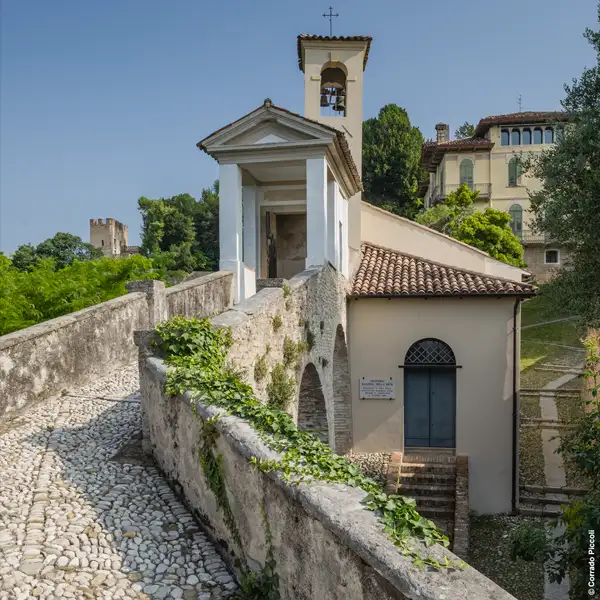
After almost two centuries, the Villa still rises on Colle di Giano in all its magnificence, immersed in a timeless dimension that invites contemplation of the delicate balance between unspoiled nature and neoclassical architecture. Today, as then, Villa Gera opens its doors to those who, with love and respect, wish to breathe culture as Bartolomeo Gera dreamed it, as the inscription on the small temple on the Walls reads: Peace and Friendship.
Architecture of Villa Gera
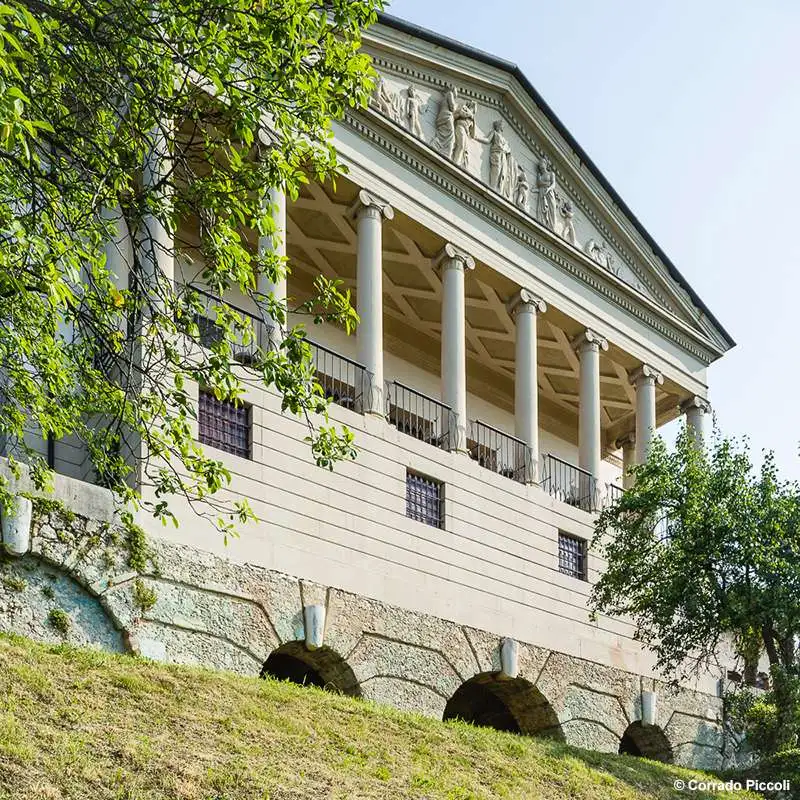
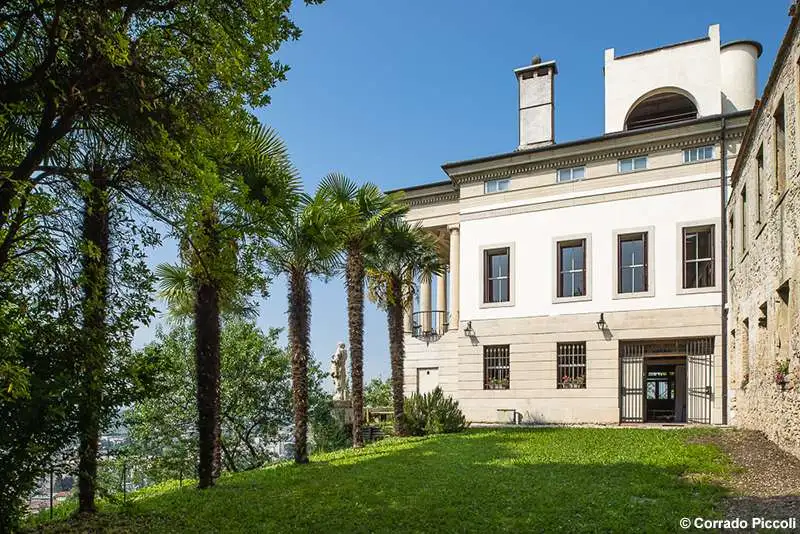
Designed by Giuseppe Jappelli, the structure of Villa Gera features a rusticated basement in which five round arches with trapezoidal keystones open. Positioned on the site of the second wall of the Castle, the mighty base supports the residential core, distinguished by a square grid plan divided into square rooms. The vertical development of the manor is completed by an elegant double-pitched roof with three oculi in the upper pediment.
Once composed of a large arch, the western access portal was adorned at the top by two massive stone spheres, now placed at its sides.
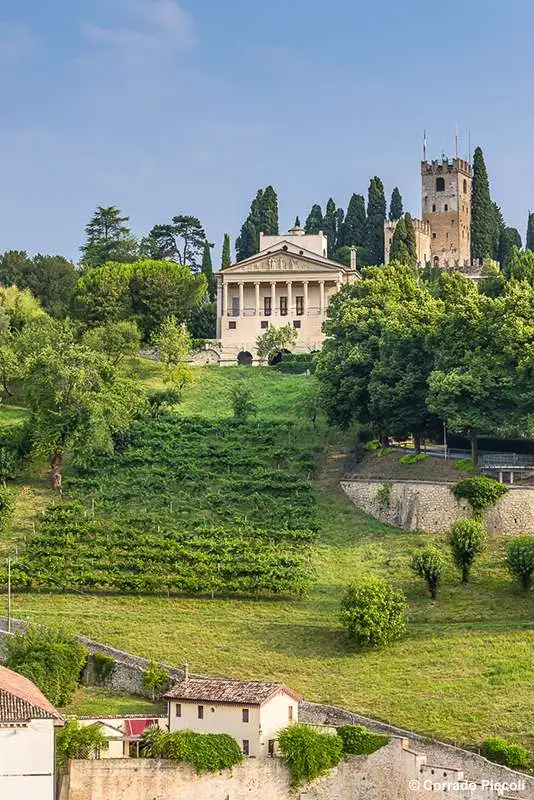
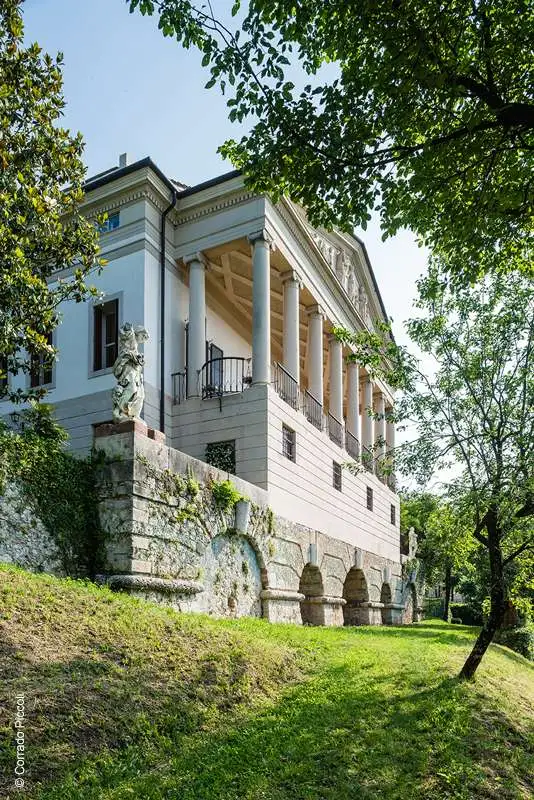
Designed and built in the first half of the 19th century, Villa Gera belongs to a time close to us, but references to antiquity are clear: to the Parthenon in Athens in the Ionic pronaos of Palladian inspiration, to the glory of the Roman Republic in the invaluable pictorial works that decorate the piano nobile, with scenes inspired by Caesar’s De Bello Gallico and De Bello Civili.
According to Jappelli’s original design, the main entrance faces east, in line with the municipal road of the time. The sumptuous portal is accessible via an elaborate Egyptian-style iron gate, whose leaves are embellished with the silhouettes of a dog and a lioness. Worthy of note, from a historical and architectural point of view, is undoubtedly the triumphal arch erected in honor of Garibaldi, hosted at the villa on March 5, 1867.
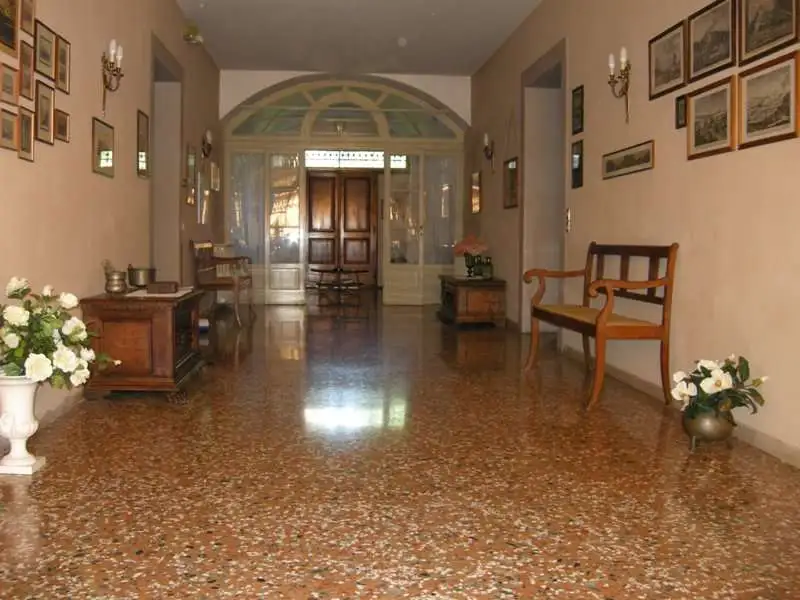
The double entrance is organized around a through hall, originally used for carriage transit, located on the same level as the lush garden.
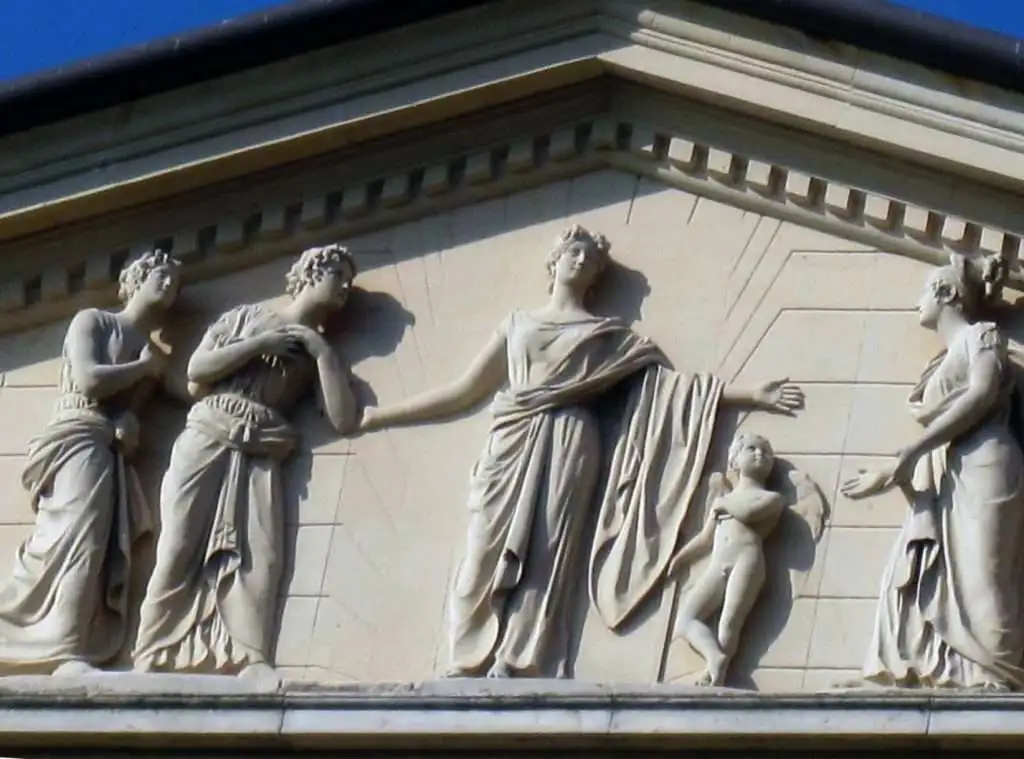
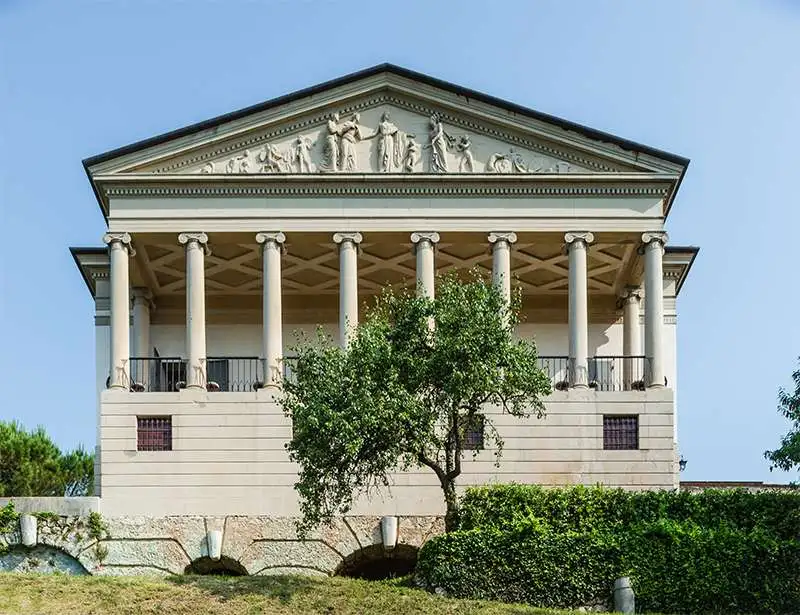
The facade facing the valley is rhythmically punctuated by eight Ionic columns surmounted by a denticulated triangular pediment sculpted by Marco Casagrande, a pupil of Antonio Canova. The life-size sculptures depict Architecture welcoming the other sister arts: painting, sculpture, poetry, and music.
The dominant position of the pronaos offers a stunning bird’s-eye view of the soft grassy mantle of the hill, scored by rows of a lush vineyard and shaded by the foliage of maritime pines, magnolias, willows, lindens, cedars, palms, and fruit trees.
Beyond the flourishing vines and the Carraresi walls, the gaze embraces the ancient urban heart of Conegliano, ranging from the former Convent of San Francesco, a 15th-century building organized around a porticoed cloister, to the Renaissance bell tower of the Duomo, from the Teatro dell’Accademia overlooking Piazza Giovanni Battista Cima, to the 17th-century church of Saints Rocco and Domenico framed by frescoed buildings.
Further in the distance, one glimpses the railway station dating back to the mid-19th century, surrounded by houses and buildings that dot the boundless plain crossed by the Monticano, fading to the horizon like tiny tesserae of a striking mosaic.
The city of Conegliano
An urban jewel of thirty-five thousand inhabitants, the city of Conegliano rises on the left bank of the river sacred to the homeland, between the boundless Treviso plain and the cheerful hills draped in lush vineyards.
The name of Conegliano first appears in a written document in 1016, but the earliest records of the ancient village date back to the 10th century.
During the 13th century, the medieval village began to take on the characteristics of a fortified citadel and was enriched with churches, convents, and confraternities. From 1420 to 1797, under the domination of the Republic of Venice, the city became a thriving center of commercial activity. Stunning frescoed palaces arose around the various orders of walls that envelop the historic heart of the city, home to important religious orders.
The fertility of the land combined with the delicate microclimate of the territory favored the development of agriculture and wine excellences that earned Conegliano the title of “Cantina di San Marco”.
With the end of the Serenissima, the city experienced a long period of French domination, then Austrian (1813-1866). It is precisely during this phase of foreign occupation that the conception and construction of Villa Gera in Castello took place.
Marco Casagrande
Born in Campea di Miane in the province of Treviso, Marco Casagrande (September 18, 1804 – Cison di Valmarino, February 5, 1880) showed from an early age a marked predisposition for drawing and sculpture. Recognizing the young man’s talent, Bartolomeo Gera decided to finance his studies at the Academy of Fine Arts in Venice, where Casagrande obtained several awards before graduating in 1826. Bartolomeo Gera was in fact convinced of the need to promote art among young people and students, without social or political barriers, without discrimination of class or origin.
Inspired by the work of Antonio Canova, absolute genius of neoclassicism, Marco Casagrande sculpted the pediment of Villa Gera from 1826 to 1827. The allegory of Architecture opening its home to Painting, Sculpture, Poetry and Music unequivocally expresses Gera’s personality, ready to welcome, host, open doors to anyone who can contribute with constructive dialogue to cultural, artistic, social growth. Always looking upwards, always choosing the best for everyone, without exclusions.
In Ferrara, Marco Casagrande created the ornamental motif of the pediment of Palazzo Camerini, depicting Fortune favors Hydraulics and brings about Abundance. In Treviso, he embellished Palazzo Bortolan with three bas-reliefs depicting Hector and Andromache, Paolo and Francesca, and Olindo and Sophronia.
An internationally renowned artist, Casagrande was invited to Hungary by the Patriarch of Venice Ladislao Pirker to execute the sculptural decoration of the basilica of Eger, then Esztergom. Author of precious works made in Budapest on private commission, the sculptor returned to Italy after Pirker’s death in 1848 and settled in Cison di Valmarino where he later left valuable statues. In Conegliano, he was commissioned to create the altar of St. Tiziano in the Duomo, adorned with a fine marble statue.
Giuseppe Jappelli
Numbered among the greatest neoclassical exponents, Giuseppe Jappelli (Venice, May 14, 1783 – Venice, May 8, 1852) enrolled at the age of fifteen at the Clementine Academy in Bologna and became an architect, engineer, and landscape designer.
In Venice, he worked as a surveyor and entered the local Masonic lodge, whose ideals he shared. In Padua, he was commissioned important works to improve river and urban mobility. He designed the municipal public slaughterhouse, today the Pietro Selvatico School of Art, located in Largo Egidio Meneghetti, 1. Started in 1816, construction of the building was completed in 1821, as reported in Roman numerals on the architrave supported by the mighty Doric pronaos.
Also by Jappelli is the splendid Caffè Pedrocchi in Padua, inaugurated in 1831 (the piano nobile, dedicated to shows and parties, was inaugurated in 1842 and today houses the Museum of the Risorgimento and Contemporary Age).
A masterful landscape architect, Jappelli designed the Romantic Park of Saonara in 1816. From 1838 to 1840, he was the creator of the garden pavilions of Villa Torlonia in Rome.
From 1823 to 1827, Jappelli designed and built Villa Gera, which he himself called the “palace” of Conegliano, considering it one of his most significant works.
The frescoes of Villa Gera
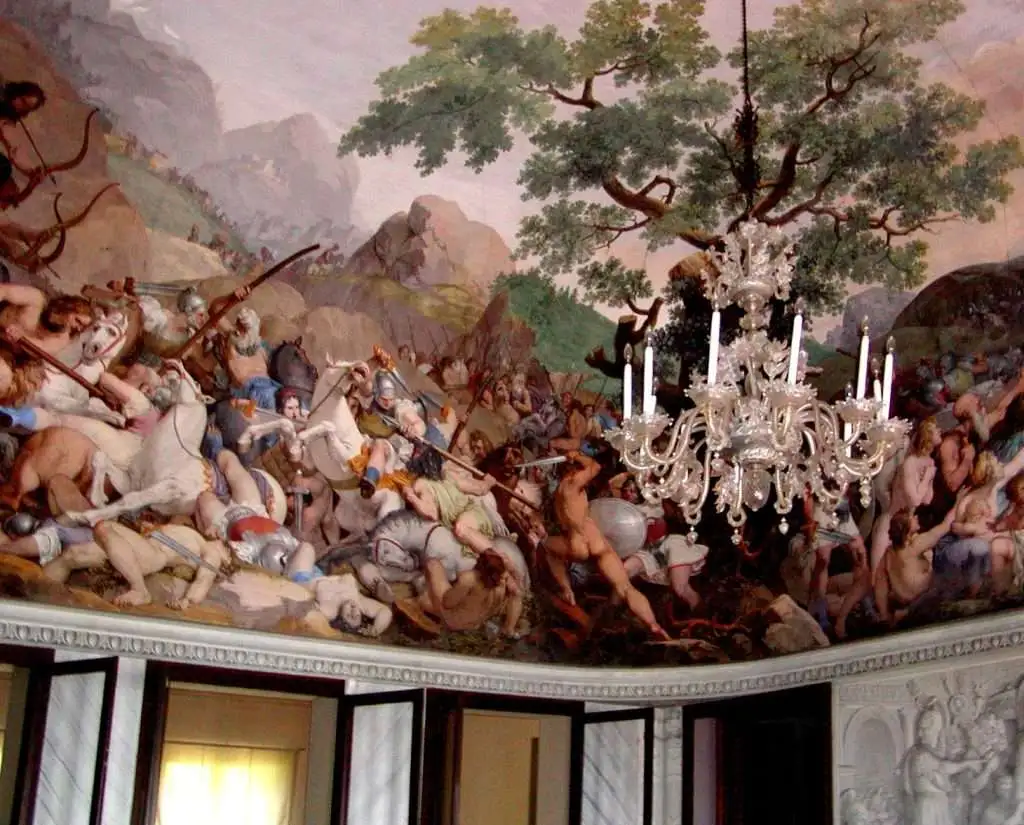
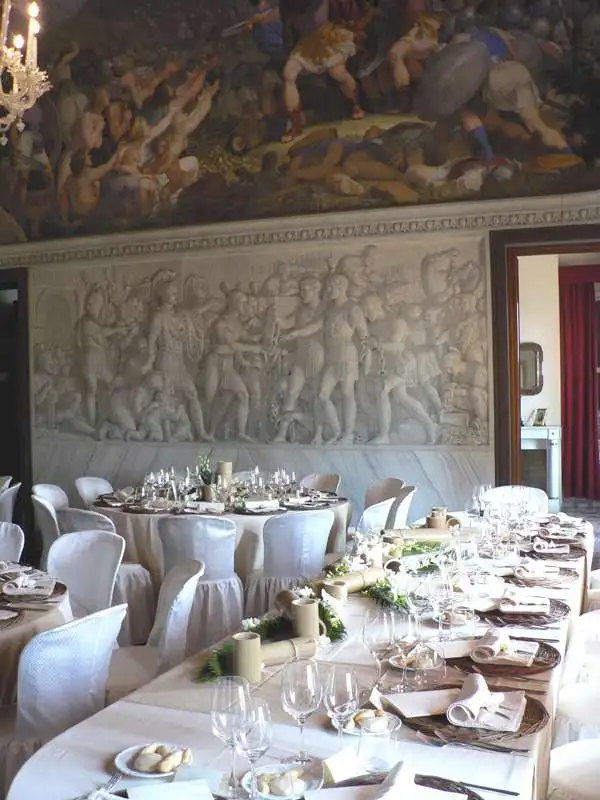
From the through entrance hall on the ground floor, a refined double staircase in red stone leads to the piano nobile, to the large sail-vaulted hall frescoed by Giovanni Antonio De Min with scenes from De Bello Gallico illustrating the victory over the Helvetii and the crossing of the Alps. The walls of the room are ennobled by two splendid monochromes depicting the Ides of March and an act of clemency by Caesar (liberation of prisoners) near the city of Corfinium, inspired by De Bello Civili.
Four drawing rooms and the access to the octastyle pronaos are symmetrically arranged around the central hall.
The cartoons with the draft of the paintings that Giovanni De Min, after more than seven years of discussions and negotiations, presented in June 1835 to Bartolomeo Gera, then sixty-six, allegorically recall the contemporary historical context of Austrian domination.
The glorious conquest of the territory of the Helvetii by Caesar and his army was echoed by the dignified retreat of the proud indigenous population, forced to abandon their native land after a fierce battle. The triumphal glory of Julius Caesar during his life as a leader corresponded to the conspiracy of March 15, 44 BC, demonstrating that history can sometimes redeem the oppressed and grant them justice.
While recognizing the irredentist appeal of the anti-Austrian Risorgimento in De Min’s work, Bartolomeo Gera accepted the risk and gave his approval to the project.
The frescoes in the hall were brought to life by the synthesis between the creative flair of the talented and audacious artist and the lively, resolute personality of Bartolomeo Gera, a man of profound culture and sensitivity, animated by an open, youthful mindset looking towards the future despite his age, then considered venerable.
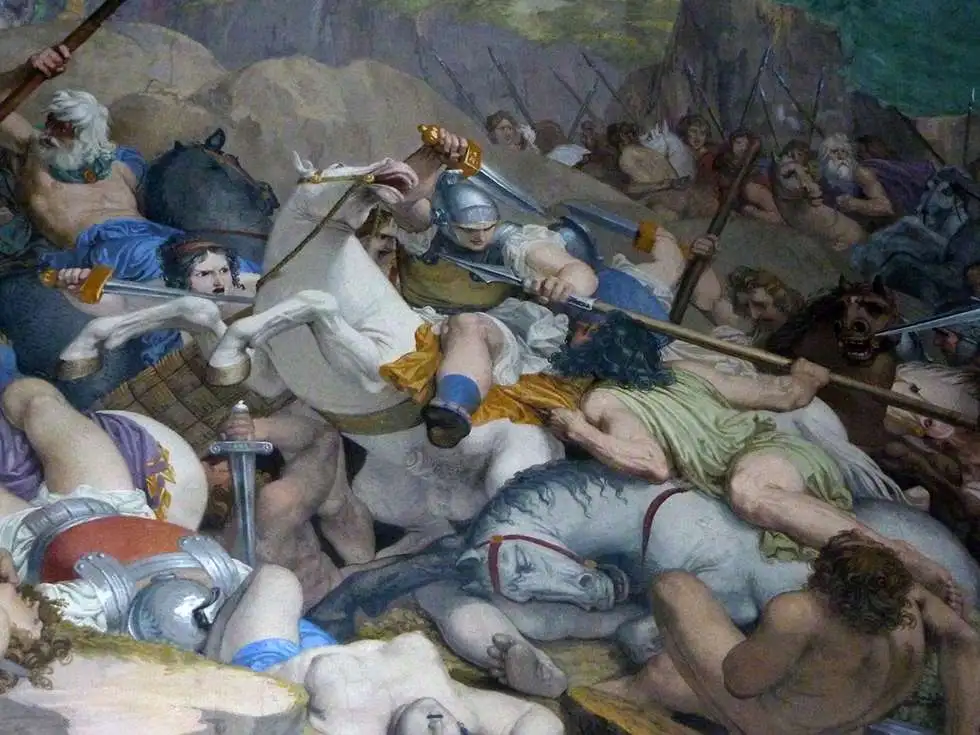
Giovanni de Min
A prolific fresco painter, Giovanni de Min (Belluno, October 24, 1786 – Tarzo, November 23, 1859) was a great friend of the Milanese painter Francesco Hayez and the Venetian artist Giambattista Canal, fresco painters of the Procuratie Nuove in Venice.
Attesting to the intense pictorial activity of the master from Belluno are the frescoes decorating the Chiaramonti Gallery in the Vatican Museums, the oil painting The Queen of Sheba before King Solomon, brought to Venice in 1817 in honor of the wedding of Emperor Francis I. Also in Venice, Giovanni De Min frescoed Palazzo Papadopoli and the Royal Palace.
Author of the frescoes that adorn Caffè Pedrocchi in Padua, the painter was also active in Vicenza (1819-31), Milan (1831-35), Sedico, where he frescoed Villa de’ Manzoni ai Patt, and Belluno, where he frescoed the Municipal Council Hall. In Conegliano, he created the spectacular frescoes of Villa Gera. From 1840 to 1859, De Min worked in Vittorio Veneto, Belluno, Agordo, Candide, Dosoledo, Pove del Grappa, Mirano, Feltre, Mel, Crespano del Grappa, Este, Auronzo, Cison di Valmarino, Tarzo, Moriago, and Codroipo.
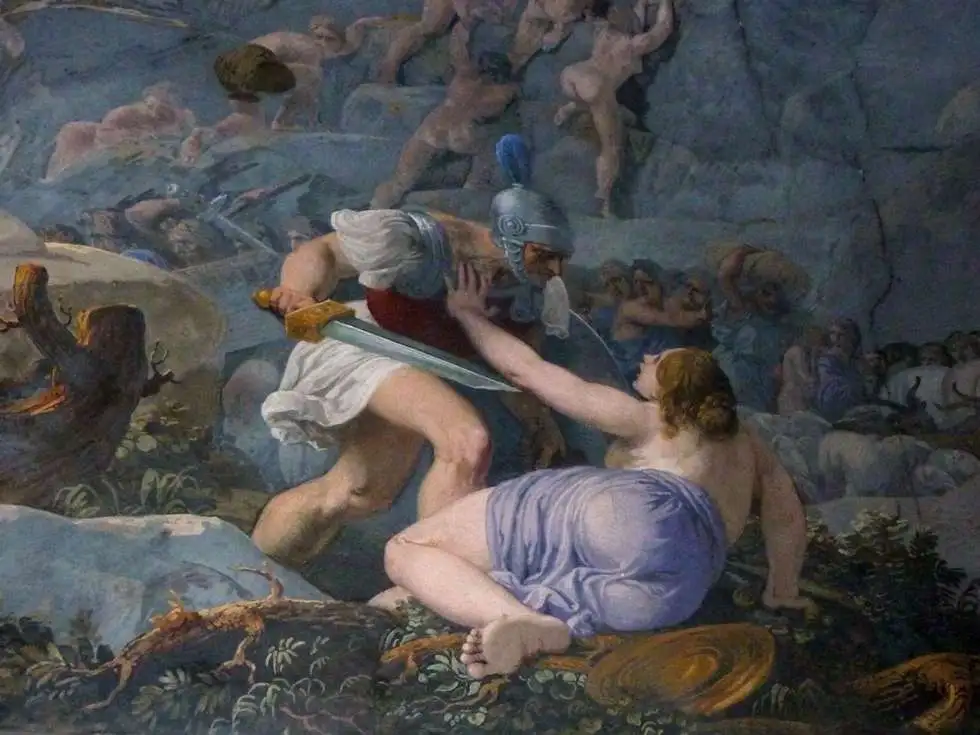
The Adjacent Buildings and Surrounding Land
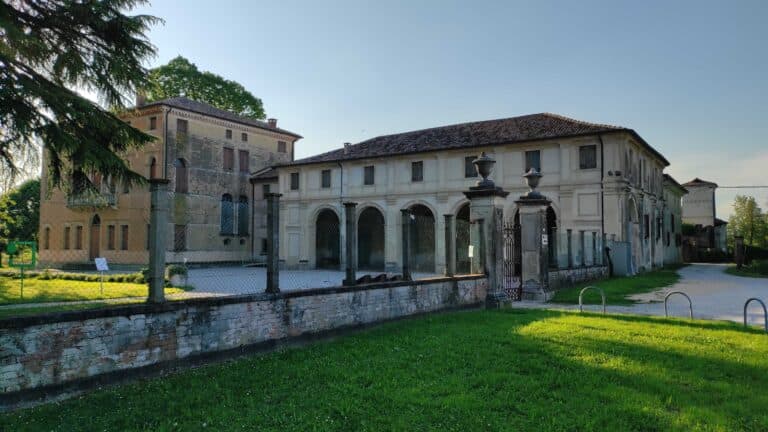
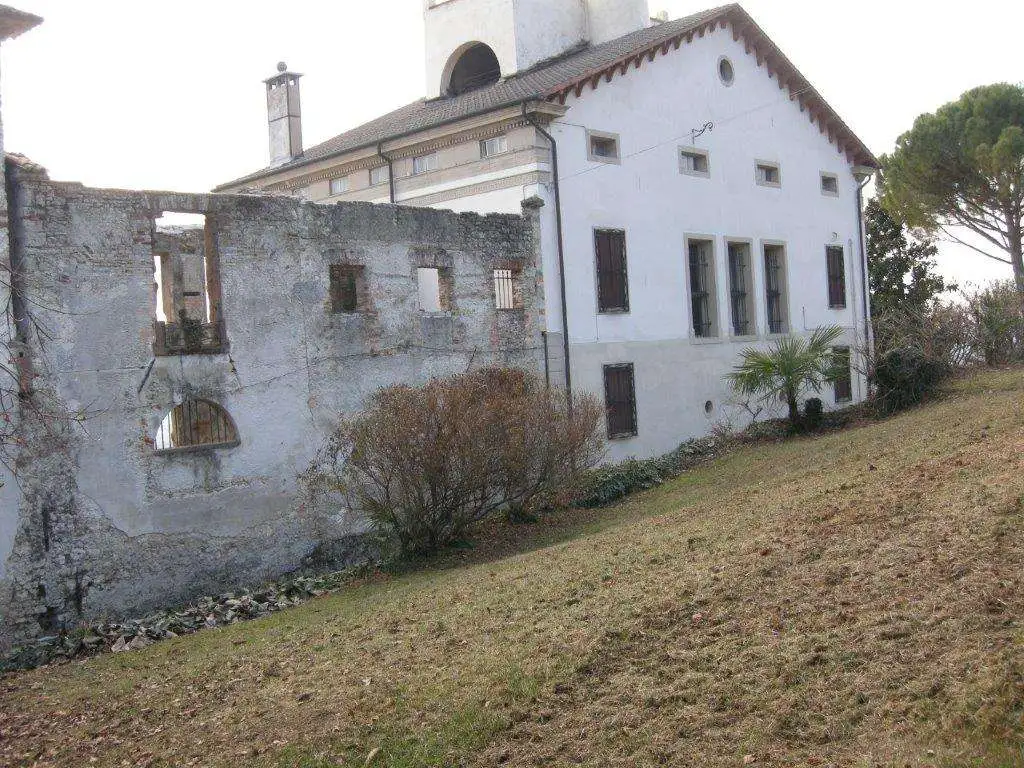
On September 13, 1943, a terrible fire destroyed the fresco by Giovanni De Min “Landing of San Saba in Constantinople” that adorned the wall of a building adjacent to the villa to the east, originally used as Bartolomeo Gera’s study, of which today only the perimeter walls remain.
Completing the architectural complex is a rural building traditionally used as a stable, barn, tool shed, and silkworm breeding facility.
The Carraresi Walls
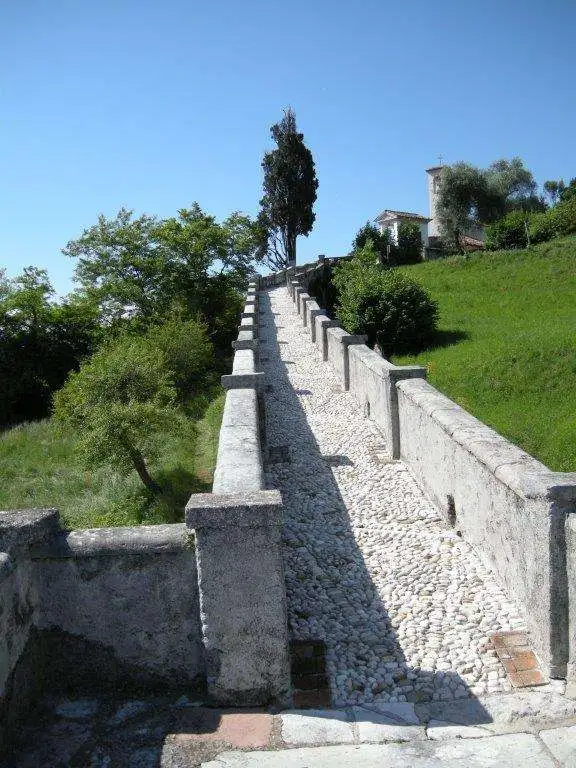
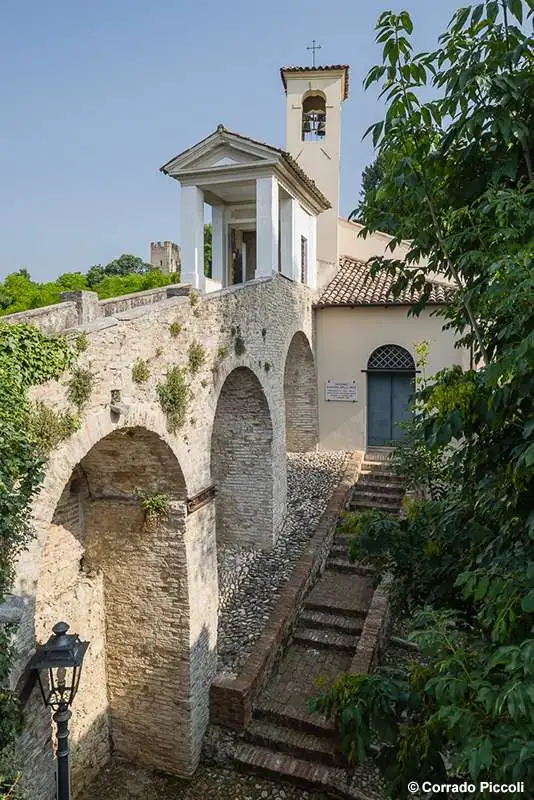
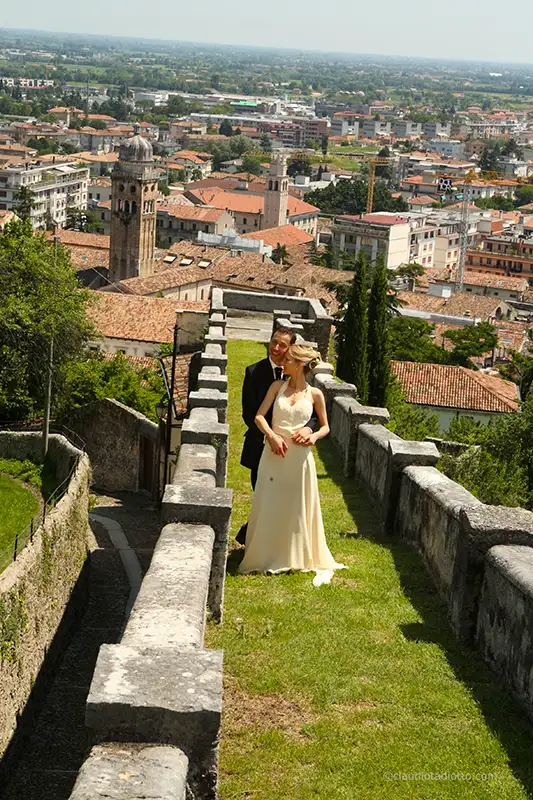
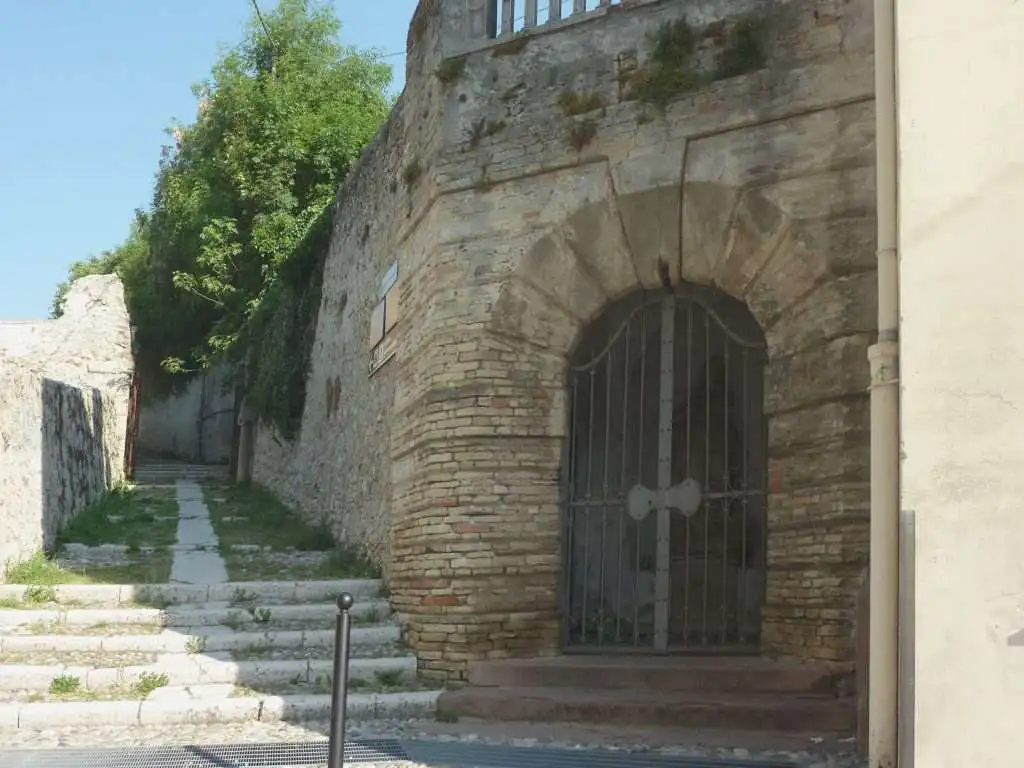
Reachable from the villa via a small bridge, the upper walkway of the Carraresi Walls flanks the calle della Madonna della Neve, accessible from the garden and orchard. The patrol path ends to the north with a votive temple from 1817 from which one can admire the fairy-tale landscape of the green hills, the Prealps towering on the horizon, and the winding course of the river sacred to the homeland. To the south it ends with a belvedere offering exclusive and breathtaking views of the city and the plain.
The ancient city entrance features to the south an artificial grotto adorned with a 19th-century statue of the Madonna and a brick gallery that winds along the walls of the calle della Madonna della Neve.
The invaluable frescoes, the grand colonnade, the breathtaking views, and the lush park of Villa Gera constitute the ideal setting for concluding delicate negotiations, organizing corporate appointments and occasions, gala dinners, Christmas celebrations, and unforgettable weddings.
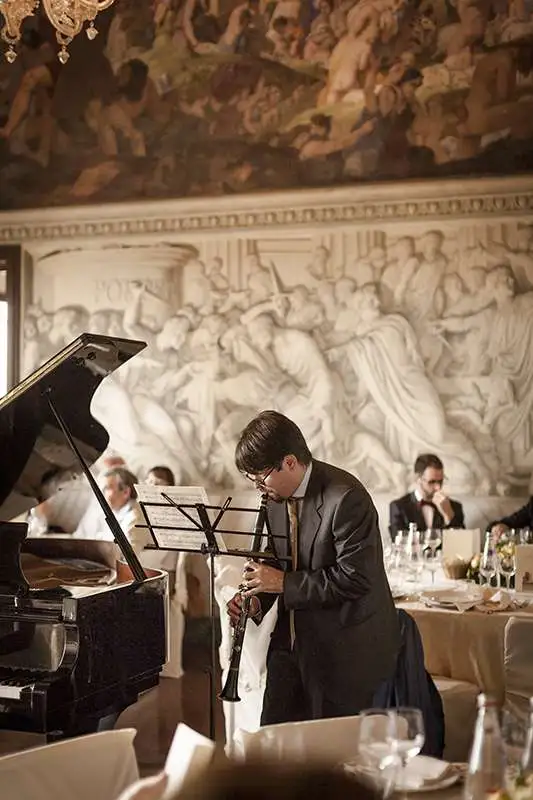
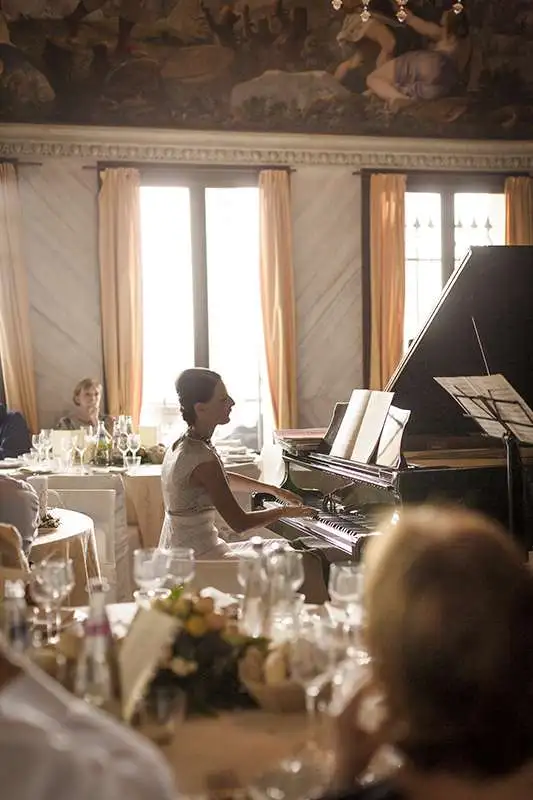
Thanks to its excellent acoustics, the Hall is the ideal setting for chamber music concerts. The bygone atmosphere that pervades the magnificent frescoed rooms of the Villa is perfectly suited for setting up film sets and advertising photo shoots.