
Where is the Alder Grove?
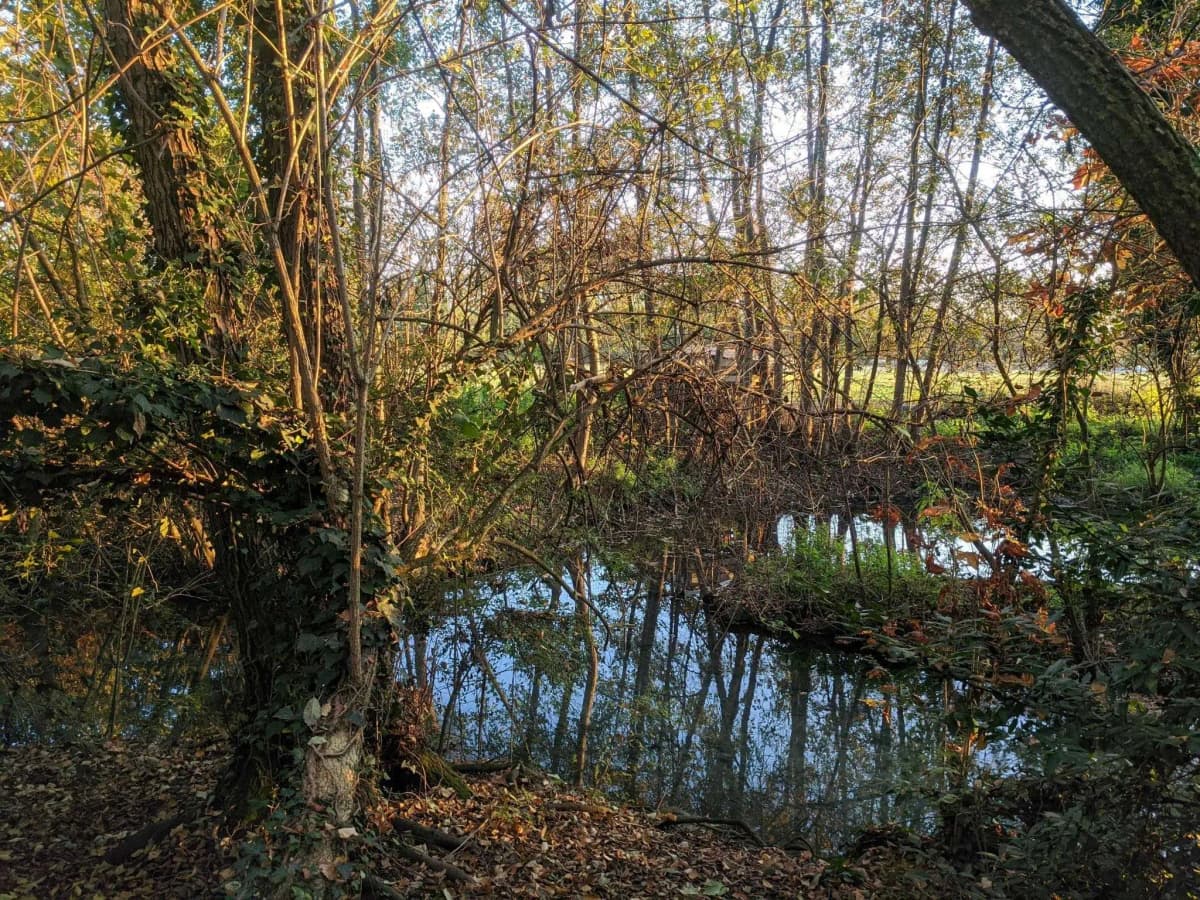
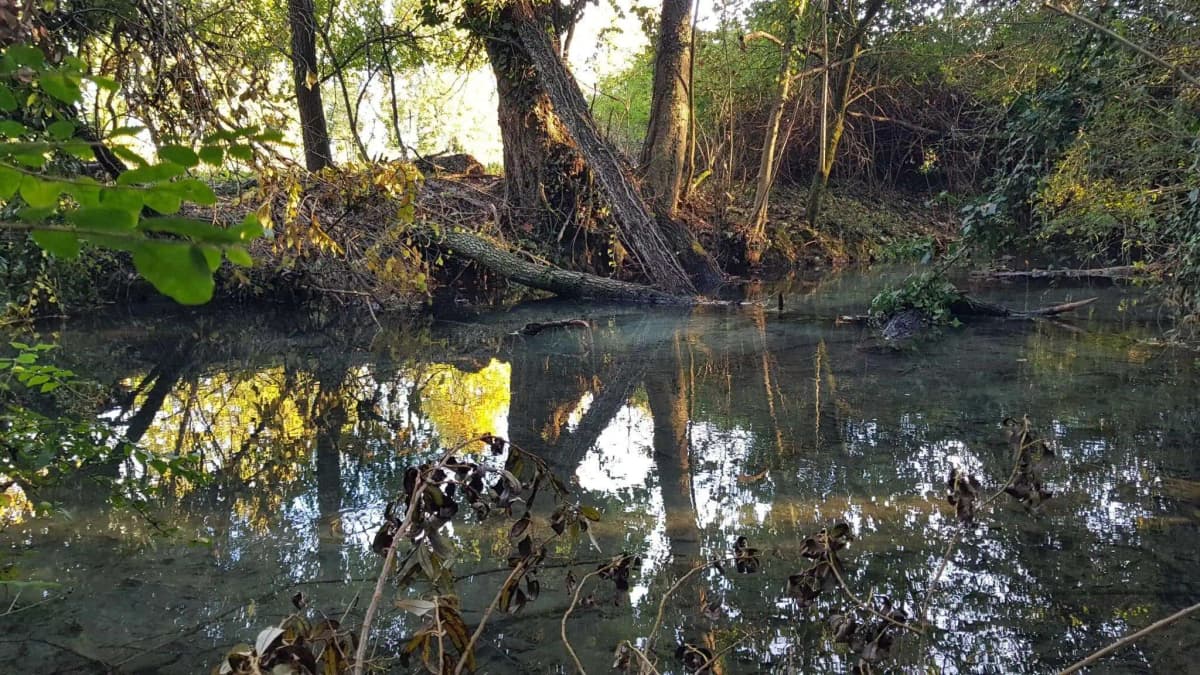
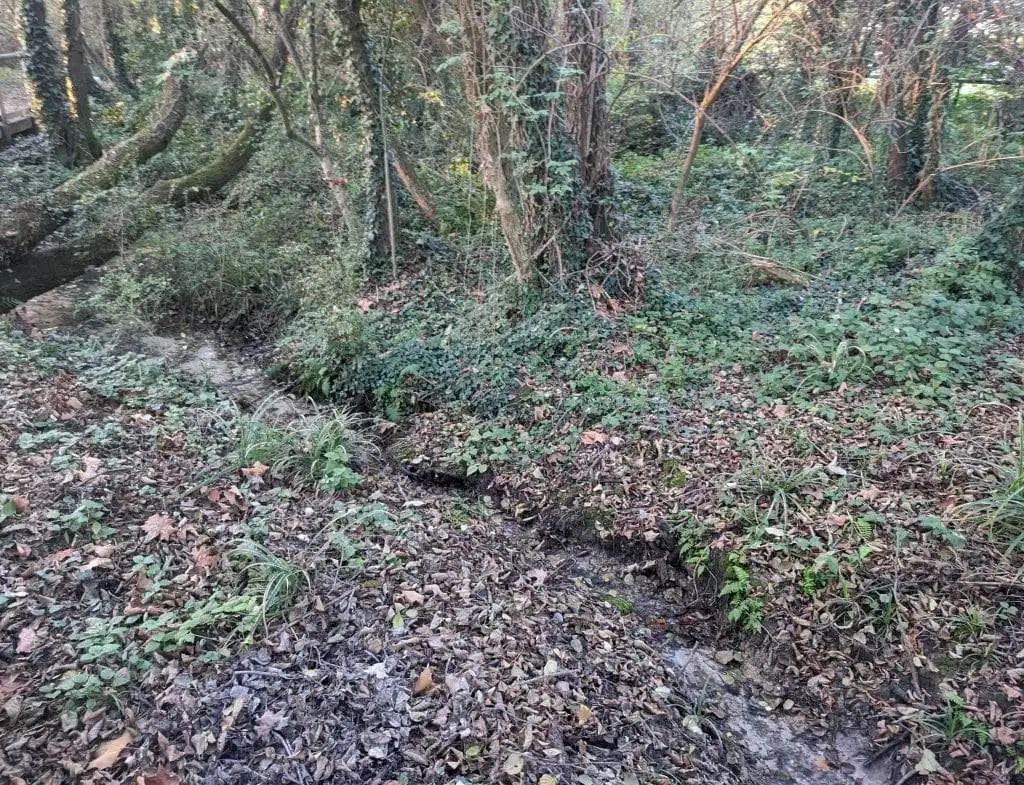
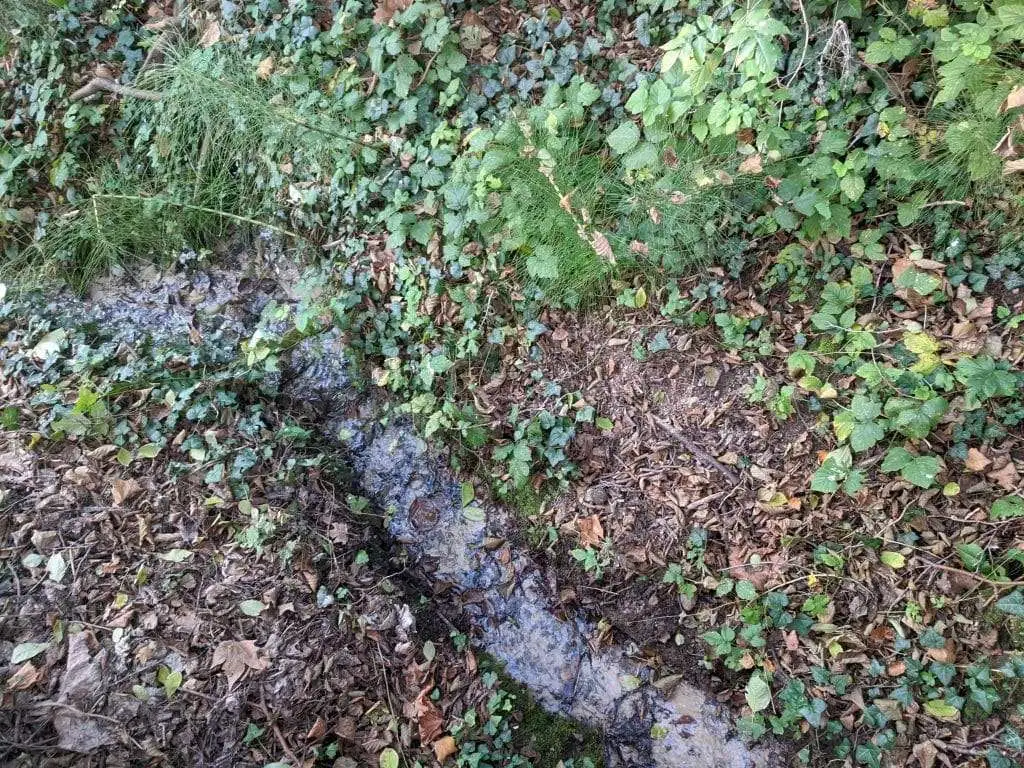
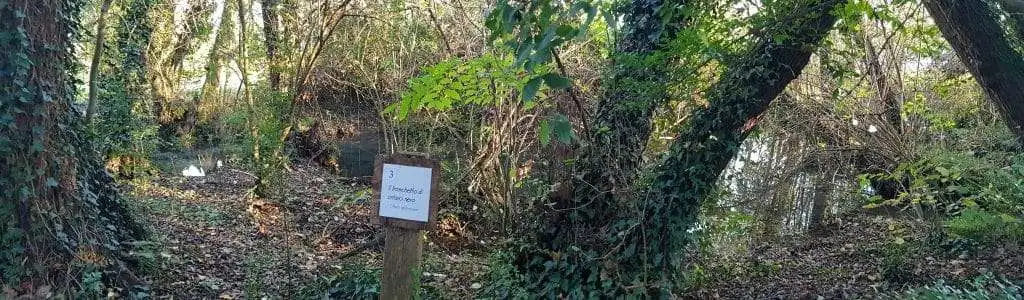
Located on Via delle Risorgive near the Pro Loco of Breda di Piave, the Alder Grove extends over a slight river depression corresponding to the riverbed of the Musestre.
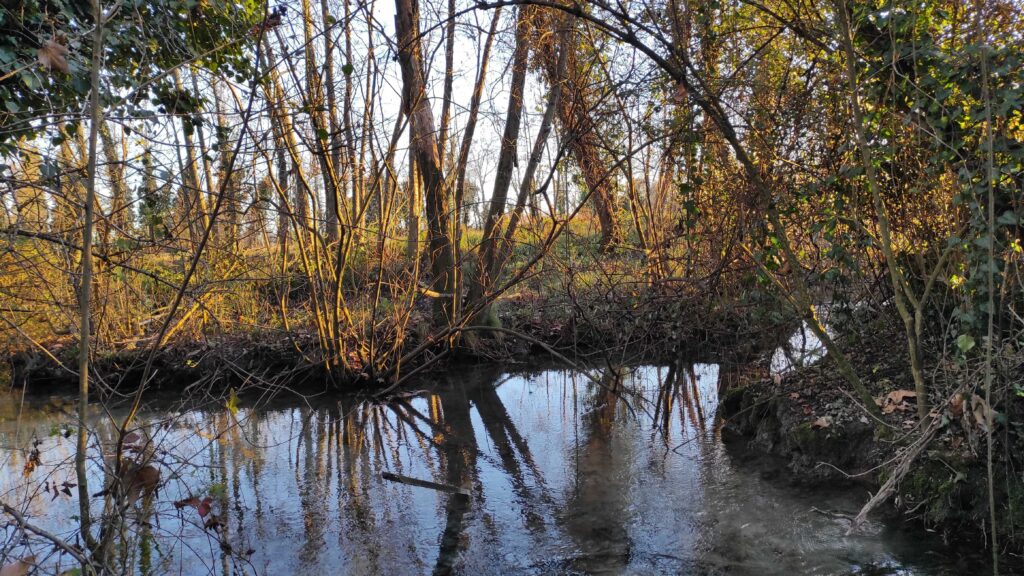
Riverbed of the Musestre
The Musestre rises in Breda di Piave on via Parè, northwest of the town hall. Over its roughly 20 km course, the spring-fed river crosses the town center and passes through the territories of Spercenigo, Biancade, Roncade, San Cipriano and Musestre, where it flows into the Sile.
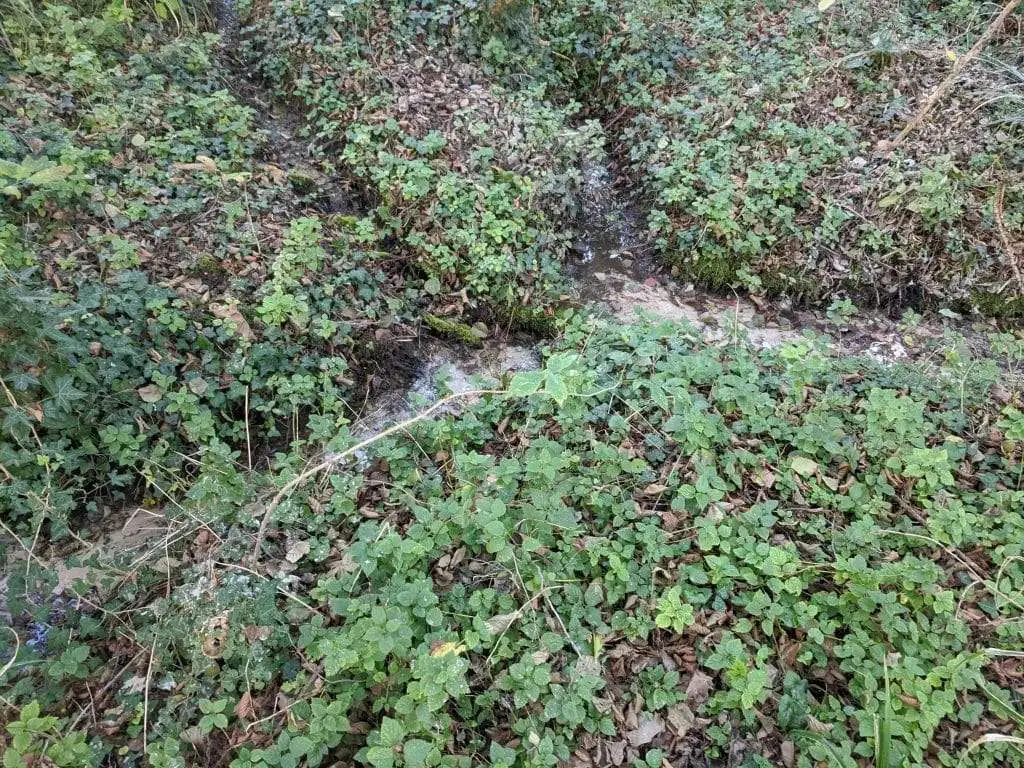
A spring is an outcrop of the water table that occurs when underground water flow is impeded by the less permeable soil of the Lower Plain.
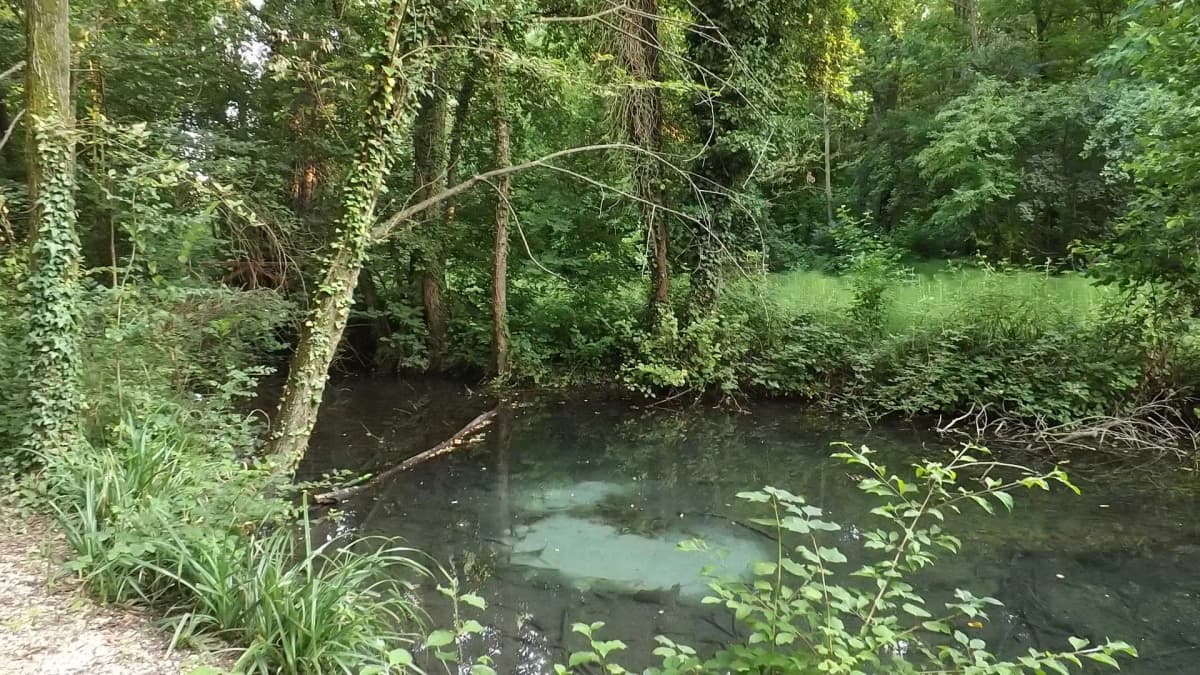
The impermeability of the silty-clayey soil causes groundwater to emerge, giving rise to the clear springs from which bubbles and jets of water gush.
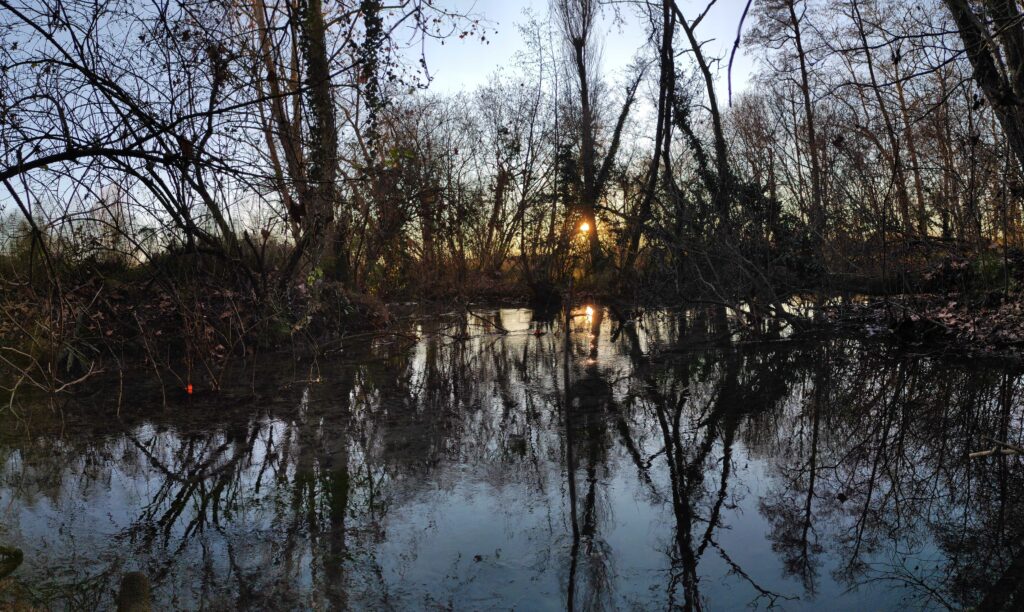
On warm spring and summer days, the sun’s rays filter through the gently swaying tree branches, creating a suggestive play of light and shadow.
One of the most significant natural sites in Breda di Piave, the Alder Grove is an ideal destination for those wishing to immerse themselves in the greenery of a lush wet woodland, guided by the murmur of a crystal-clear river.
The peat bog of the Alder Grove?
The Alder Grove is characterized by a peat-rich soil, formed by the slow decomposition of organic sediments from marsh vegetation.
Alders become hard and resistant when in contact with water. For this reason, their trunks are well suited for producing poles needed for creating pile dwellings and bridges.
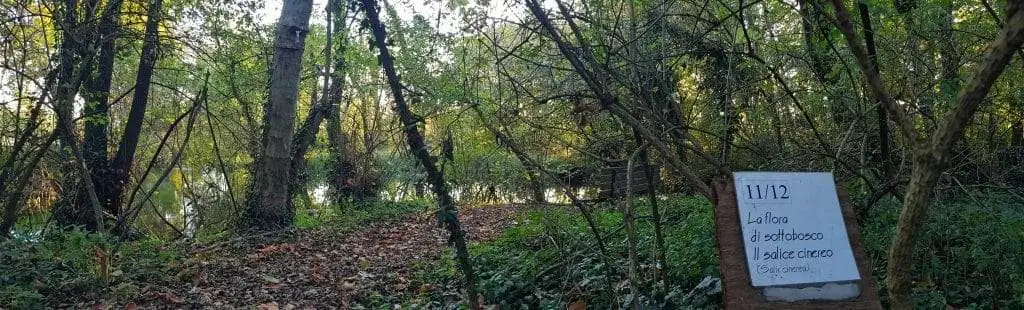
Alder Grove: the path and the walkway
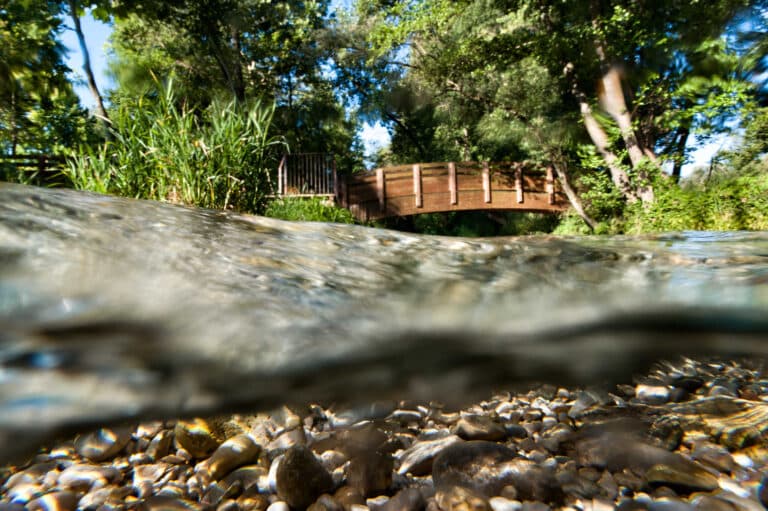
The path guides visitors into an atmosphere restful for eyes and mind. Inside the woodland, a larch wood walkway with chestnut handrails winds its way, the result of renovation work aimed at enhancing the natural heritage of the municipality of Breda di Piave.
Aquatic vegetation of the Alder Grove
Submerged vegetation with hydrophytes
Pond water-starwort (Callitriche stagnalis)
Pond water-starwort (Callitriche stagnalis) is a submerged aquatic plant, rooted, whose scientific name alludes to its thin stems. The leaves, gathered in rosettes, form a dense blanket emerging from the water’s surface.
The term Callitriche originates from the prefix καλλι- (kalli-) from κάλλος (kallos) meaning beauty and θρίξ [τριχός, ἡ] (thríx, trichόs) “hair”.
Also known as greater water-starwort, pond water-starwort belongs to the Plantaginaceae family. The uncertain etymology of the term “plantain” might derive from the combination of “planta, ae”, understood as “sole of the foot” and the Latin verb tango, tangis, tetigi, tactum, tangere, “to touch”, perhaps referring to the pleasant, velvety feel of the plant, or to its resistance to trampling.
Another hypothesis traces its origin to “planta, ae” and the verb “ago, agis, egi, actum, agere”, in the sense of “to emit, bring forth”, referring to the large quantity of seeds, up to 20,000, that this plant can produce.
Fennel pondweed
Fennel pondweed (Potamogeton pectinatus) belongs to the Potamogetonaceae family, a term derived from the Greek ποταμός (potamós), meaning “drinking water”, “river water”, “river” or “stream”, and γείτων (geitón), meaning “neighbor” or “adjacent”, referring to the aquatic habitat where this herbaceous plant grows.
The term pectinatus refers to the shape of the leaves, which appear “combed” by the current. The leaves are sessile (without a stalk), filiform, with stems and secondary branches forming a dense submerged canopy.
Marshy vegetation with helophytes
Lesser water-parsnip
Belonging to the Apiaceae family, Lesser water-parsnip is a hydrophyte with an erect habit (hence Erecta) that also grows in fast-flowing waters.
The word Berula is cited by Marcellus Empiricus, a physician who lived between the 4th and 5th centuries AD, in his treatise Liber de Medicamentis.
This perennial plant is characterized by a hollow stem and imparipinnate leaves, oval-lanceolate and toothed. The upper leaves are smaller.
Lesser water-parsnip has tuberous, long, and swollen roots. From July to August, small white flowers appear, grouped in umbels.
Branched bur-reed
Branched bur-reed (Sparganium erectum) is a perennial aquatic plant, rhizomatous and with an erect habit.
Its scientific name comes from the ancient Greek σπάργανον (Sparganon) meaning strip, band, referring to the leaves, triangular in section, that resemble a ribbon.
In summer, branched inflorescences bloom, composed of spherical white flowers. After flowering, the fruits remain, small spherical drupes that resemble sea urchins.
Tree vegetation of the Alder Grove
Black locust
The name of the genus Robinia originates from Jean Robin, a botanist, pharmacist and herbalist in the service of Henry IV of Bourbon, known as Henry the Great, King of France from 1589 to 1610.
Jean Robin had obtained acacia seeds from the British botanist and naturalist John Tradescant the Elder, originally from the Appalachian mountain range in Virginia.
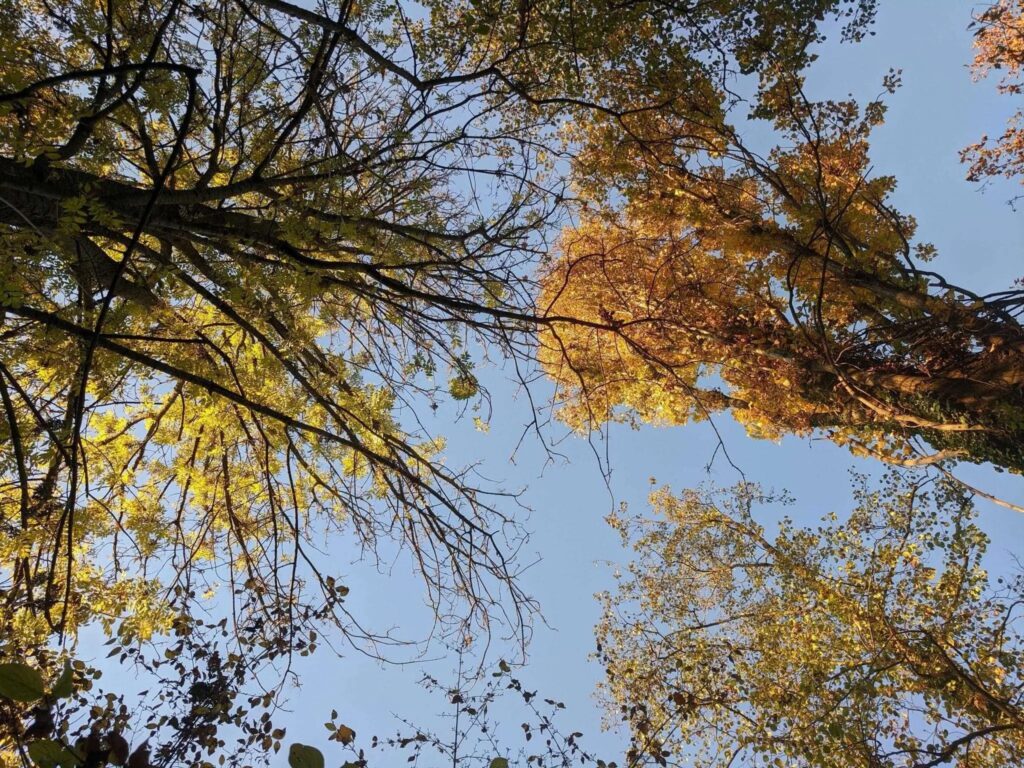
Invasive and aggressive, Black Locust is a consolidating species thanks to the horizontal development of its roots. It is also highly valued for producing firewood and as an ornamental plant.
In spring, Robinia pseudoacacia is covered with white, pendulous, fragrant clusters that attract pollinating insects.
Black alder
Black alder (Alnus glutinosa) is a tree of the Betulaceae family, averaging ten meters in height, but can reach up to thirty meters.
It is widespread in marshy environments along the banks of ponds and watercourses, where it forms pure or mixed woods on moist, clayey, and generally asphyctic soils.
The name ‘glutinosa’ comes from the Latin “glutinosus”, meaning ‘sticky, gluey’, referring to the sticky consistency of the leaves and young twigs.
Characterized by a grey-brown bark, Black alder has a dark, dense, pyramidal crown with deciduous leaves, ovate or oblong, with a cuneate base, rounded or retuse apex, and doubly serrated margin.
The male catkins are long, thin cylindrical inflorescences; the female ones are globose, formed by woody scales resembling small cones.
The roots of alder have nodules with bacteria capable of fixing nitrogen in the soil, making this tree ideal for reclaiming wet and unhealthy lands.
The trunk is straight or arched and has a rough grey-brown bark with horizontal lenticels. The bark is used to produce bitters (bark decoction) and in the pharmaceutical industry for its anti-inflammatory and astringent properties.
Water-resistant, Black alder wood is excellent for producing poles and fuel, for small cabinetmaking and carpentry work, and for flooring.
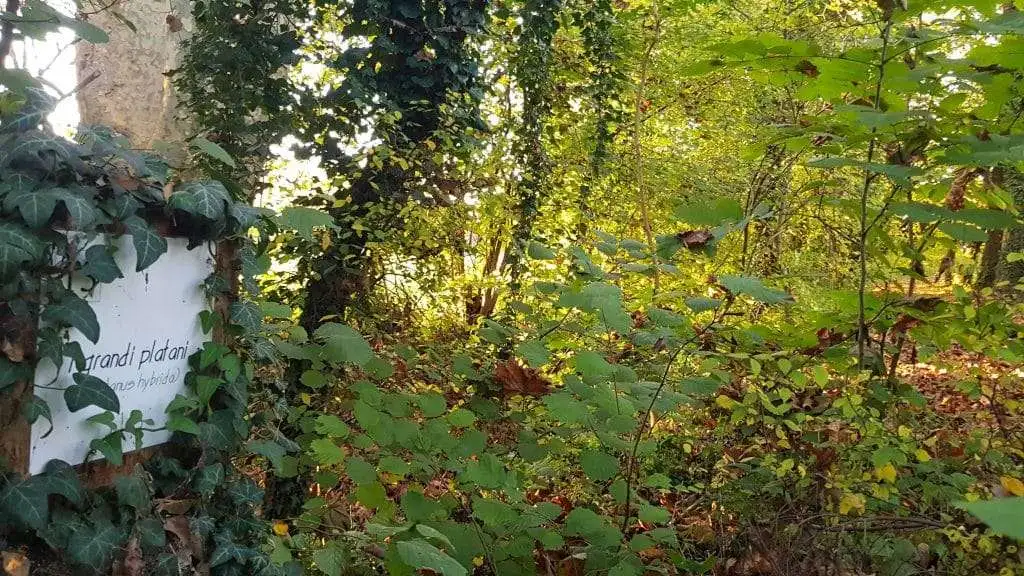
London plane
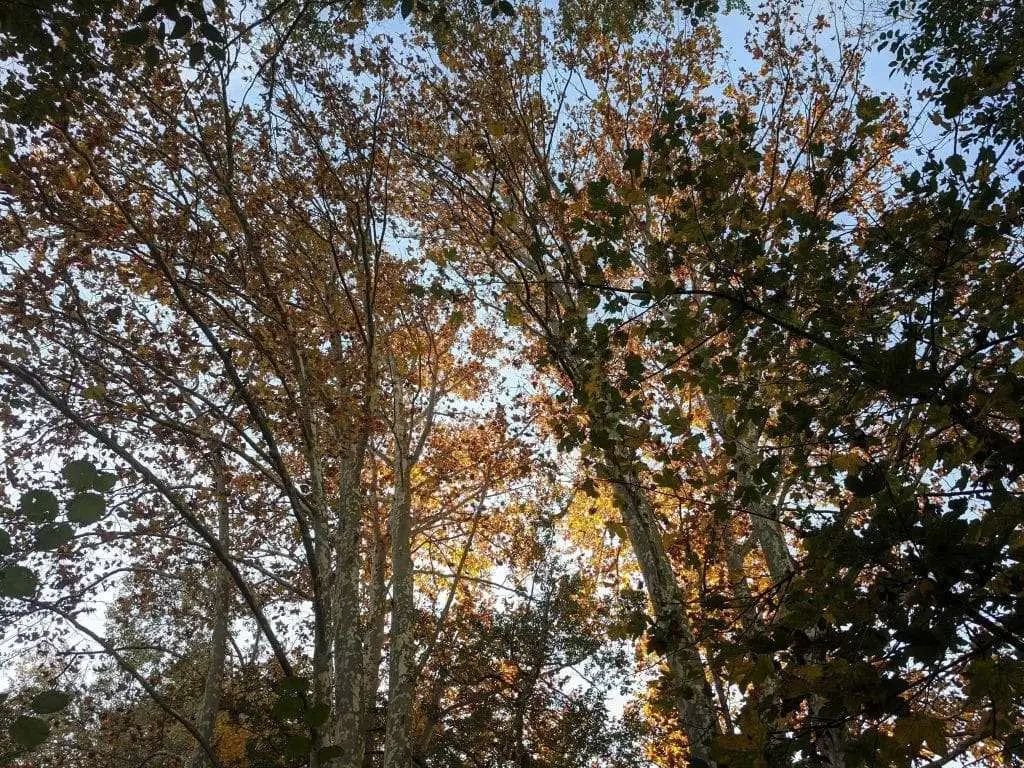
The London plane (Platanus) is a tall tree that rises up to thirty meters, characterized by bark with brown, green and greyish hues. Its leaves are distinguished by a series of triangular lobes, from three to seven.
Shrub undergrowth
Grey willow
Excellent for consolidating alluvial soils, especially river banks, willows are typical of wetlands, natural environments characterized by abundant water such as springs, ponds, marshes, swamps, river oxbows, peat bogs and coastal lagoons.
A shrub that can reach six meters in height, Grey willow (salix cinerea), or Gray willow, is characterized by leaves green on top and hairy on the underside. The shape of the blade varies from ovate-lanceolate to oblanceolate, with a crenate margin, cuneate base, and pointed or rounded apex.
Ivy
Belonging to the Araliaceae family, ivy (Hedera helix) is a creeping vine capable of climbing on various surfaces such as rocks, walls and other plants thanks to adventitious roots, gathered in bundles, that grow along the stem.
The evergreen leaves are persistent, alternate, glossy, dark green, with white veins showing through. From sterile branches grow leaves generally consisting of five lobes. From branches bearing flowers, the leaves have an ovate-rhomboid shape.
Guelder-rose
Guelder-rose (Viburnum opulus) is a shrub belonging to the Viburnaceae family. The deciduous, lobed leaves, similar to those of the maple, turn bright red in autumn.
Between May and June, white, round-shaped flowers bloom. In autumn, Guelder-rose produces clusters of small red berries that remain until winter.
Elder
Of the Adoxaceae family, elder (Sambucus nigra) is a shrub or small tree with branches having white, spongy pith. The leaves are dark green, with a serrated margin and pointed apex.
In spring and summer, white, fragrant flowers bloom, gathered in large umbel-shaped inflorescences. The fruits are small, black-purple, subspherical drupes.
Herbaceous undergrowth
Pendulous sedge
Pendulous sedge (Carex pendula) is a hygrophilous plant that forms dense associations along watercourses, in riparian alder woods and poplar groves along riverbeds. It has leaves with a triangular section, rigid and sharp.
The etymology of the term sedge seems to derive from the Greek κείρω (cheìro) meaning to cut. The inflorescences are like pendulous spikelets at the top of the stem.
Remote sedge (Carex remota)
Like pendulous sedge, remote sedge (Carex remota) belongs to the Cyperaceae family. Cold-tolerant and common in humus-rich soils and moist deciduous broadleaf woods, especially ash, remote sedge is characterized by long, narrow, thin leaves gathered in tufts with a flexible, fountain-like habit.
From April to July, the inflorescence blooms, formed by small yellow-green spikes, with lower female flowers.
Common primrose
A perennial herbaceous plant of the Primulaceae family, common primrose (Primula vulgaris) blooms from late winter to April-May. It prefers moist, well-drained soils in undergrowth and meadows. Its name derives from the Latin “primus” referring to its early flowering.
The flowers have five petals, heart-shaped and funnel-shaped, with a tubular calyx. The petals are pale yellow with a more orange center.
The leaves are obovate, with a revolute margin, i.e., folded inward. Gathered in a rosette, they are leathery, reticulated, dark green, with toothed and inconspicuous margins.
Solomon’s seal
The scientific name of Solomon’s seal (Polygonatum multiflorum) derives from the Greek πολύ (polì) meaning “much”, “numerous”, “copious” and γόνυ (approximate pronunciation “ghò-ni”), meaning “knee”, “node”, referring to the knotty branches of this genus of species.
“Multiflorum” refers to the abundance of flowers that bloom between May and July.
Gathered in inflorescences of 3-5 elements borne on a single peduncle, the small white, tubular flowers end with six green teeth. The fruits are small, round, blue-black berries.
Solomon’s seal is a perennial herbaceous plant with a creeping, horizontal rhizome. The stem, about a meter high, tends to arch.
The leaves are alternate, oval-lanceolate, with a smooth margin and parallel veins.
Male fern
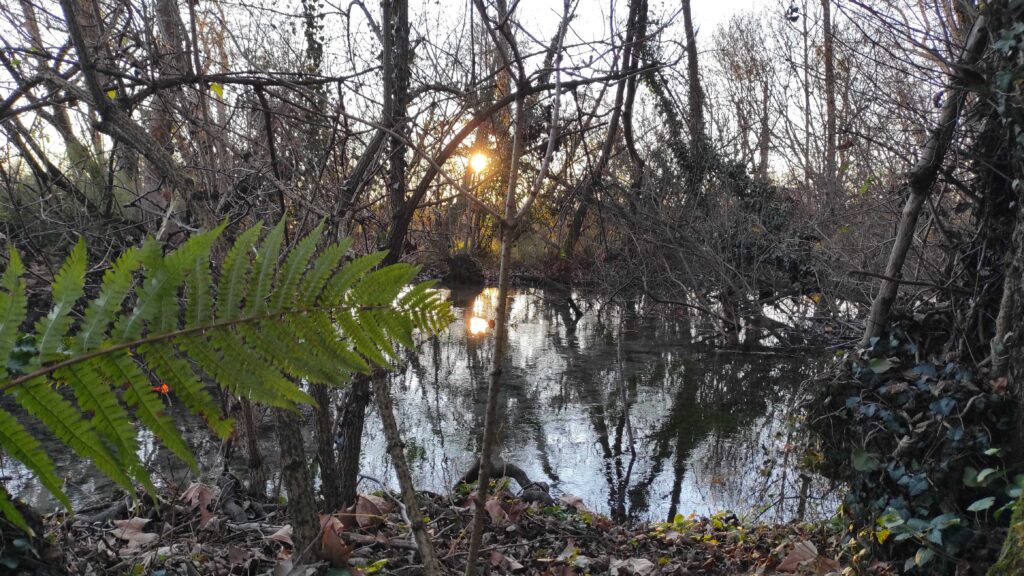
The scientific name of male fern (Dryopteris filix-mas) derives from the Greek δρῦς (drŷs), meaning “oak” and πτέρις (ptéris), fern. Filix-mas means “Fern” and “male”.
A lover of acidic, fresh, moist and well-drained soils, this perennial plant grows mainly along watercourses in oak and chestnut woods, where it reaches a maximum height of one meter.
Very resistant to cold, male fern is characterized by bipinnate fronds, broad and compact, punctuated by toothed pinnules. The sori, i.e., the structures containing the spores, are circular in shape.
Fauna of the Alder Grove
Aquatic environment fauna
Three-spined stickleback
Characterized by an elongated body and a fan-shaped caudal fin, the three-spined stickleback (Gasterosteus aculeatus) is a valuable environmental indicator as it is very sensitive to water pollution.
In spring, the male builds a nest of vegetation which he defends from intruders, then performs a zigzag dance to attract the female and invite her to lay eggs. After hatching, the male watches over the young for several days.
With a size smaller than the female, 6-7 cm long, the male measures 3-4 cm and during the mating season assumes a nuptial livery with an intense blue-green back, throat and sides bright red.
Italian bleak
Of the Cyprinidae family, Italian bleak (Alburnus albidus) is a gregarious species that frequents slow-flowing waters in the plains. It mainly feeds on plankton, invertebrates and plant matter. With dimensions of 5-8 cm, Italian bleak has a silvery belly and sides.
Edible frog
With a size of 12 cm, the edible frog (Rana synklepton esculenta) prefers stagnant or slow-flowing aquatic environments. It feeds on many species of insects and invertebrates that it hunts both in water and on land. Sometimes it preys on individuals of its own species.
In Italy, the edible frog reproduces in April and May, laying eggs in large gelatinous masses. Its coloration can be uniform or present shades from yellowish to grass green, from olive to blackish gray.
Common toad
An amphibian with nocturnal habits, the common toad (Bufo bufo) feeds on snails, caterpillars and insects. It spends the winter burrowed in the ground. Each year, during the mating season, it returns to the pond where it was born, where it externally fertilizes the eggs laid by the female.
Emergent environment fauna
Lataste’s frog
An endemic species of the Po Plain, Lataste’s frog (Rana latastei) does not exceed 8 cm in length. It prefers alluvial forests characterized by alders, pedunculate oaks and hornbeams. It feeds on earthworms and insects found on the forest floor. In winter it takes refuge in ground cavities. In March it lives near ponds, pools and watercourses where it lays eggs in the form of gelatinous masses.
Italian tree frog
The Italian tree frog (Hyla intermedia) is a charming insectivorous anuran (tailless amphibian) 4-5 cm long. The bright green of the back and the whitish color of the belly are bordered by a black stripe that runs from the eye to the hind limb.
Characteristic in the male is the large extensible vocal sac under the throat. The circular suction pads on the legs, which allow it to climb nimbly, make this amphibian an excellent hunter.
Slow worm
Although it belongs to the Anguidae family, a term derived from the Latin “anguis” meaning “snake”, the slow worm (Anguis fragilis) is actually a legless reptile of the saurian suborder. The Greek term σαῦρος (“sau-ros”) means “lizard”.
In winter, the slow worm takes refuge underground up to a depth of one and a half meters, while in spring it comes to the surface to absorb sunlight. In adulthood, it is characterized by a gray-brown and brown color. Females are distinguished by darker lateral bands.
The slow worm mainly feeds on earthworms and gastropods that it finds during its movements on the surface or underground.
Avifauna of the Alder Grove
Cetti’s warbler
Of the Cettiidae family, Cetti’s warbler (Cettia cetti) is a sedentary species that builds its nest in the herbaceous layer of watercourses. With a size of 13-14 cm and a weight between 12 and 18 g, it has a brownish-red color, whitish throat and belly. Its diet is based on insects, larvae, spiders, worms, molluscs and seeds.
Keen on invertebrates, fruit and berries, it finds its habitat in forest and woodland vegetation, where it builds its nest using leaves, moss and spikes.
Common nightingale
With a length of 17 cm, the common nightingale (Luscinia megarhynchos) is a long-distance migrant. This passerine of the Muscicapidae family is characterized by a variable coloration from light brown to dark gray on the belly, brownish wings and back, and a rust-colored tail.
Common wood pigeon
The common wood pigeon (Columba palumbus) is of the Columbidae family. With a length of 40-42 cm, it has a wingspan of 75 to 80 cm and a weight ranging from 460 to 570 grams. The plumage of the head and back is bluish, with darker wings and tail. The chest has a slightly lighter coloration and white patches stand out on the neck.
They inhabit gardens, city parks and forest environments, where they feed on seeds, berries, small invertebrates, acorns and beechnuts.
Eurasian golden oriole
Belonging to the Oriolidae family, the Eurasian golden oriole (Oriolus oriolus) measures about 23 cm. The sexual dimorphism that characterizes it is observable in the bright yellow color of the adult male’s plumage and its black wings, easily distinguishable from the olive-green plumage of the female, with gray streaks on the belly.
It builds its nest between May and June in the forks of branches. Weighing about 70 grams, the golden oriole feeds on insects, eggs, larvae and small invertebrates.
Eurasian jay
The Eurasian jay (Garrulus glandarius) is a medium-sized bird characterized by a length of 34 cm, a wingspan of 53 cm and a weight of 170 g. Its plumage is pinkish-brown, with a black tail and wings distinguished by a band of small blue feathers striped with black.
Of the Corvidae family, the jay is a sedentary bird that prefers cool environments at the edges of clearings, along watercourses and in broadleaf woods where it feeds on acorns, beechnuts, chestnuts, small fruits, berries as well as insects, eggs and small animals
It has the habit of burying seeds to create food stores, indirectly contributing to the regeneration of the forest.
Its call is an ungraceful shrak, but it has the extraordinary ability to imitate the song of the buzzard, owl and tawny owl.
Eurasian woodcock
Belonging to the order Charadriiformes, the same as gulls, the Eurasian woodcock (Scolopax rusticola) is a bird of the Scolopacidae family.
Typical of forest environments, this bird blends in with autumn foliage thanks to its cryptic plumage, marked by brown streaks that stand out against shades ranging from light ocher to reddish.
The shape of the beak, pointed and 6 to 8 cm long, facilitates the capture of other terrestrial invertebrates on which this wading bird feeds.
Its length varies from 33 to 35 cm, the wingspan is between 56 and 60 cm, and its weight ranges between 260 and 405 grams. The backward placement of the black eyes provides the woodcock with 360° vision.
A regular migratory and wintering species, it nests on the ground in coniferous or mixed broadleaf forests with the presence of birches, hornbeams, ashes, oaks, black locusts, chestnuts, alders, larches and beeches.
Mammals in the Alder Grove
European water vole
Of the Cricetidae family, the European water vole (Arvicola amphibius) is a small mammal linked to the aquatic environment thanks to its ability to swim for long periods while holding its breath. Characterized by a thick brownish-red fur, the water vole is observable along the banks of watercourses, where it gnaws on the green plants it feeds on.
The body measures about 20 cm, plus a tail about 11 cm long. It has black eyes, a rounded snout and head. The male is slightly larger than the female.
Wood mouse
The wood mouse (Apodemus sylvaticus) is a rodent of the Muridae family. Primarily nocturnal, it is about 9 cm long plus the tail, approximately the same length. It has black eyes, rounded ears, brownish fur, and hind legs longer than the front ones.
With a weight ranging from 18 to 35 grams, it is distinguished by its extraordinary agility, allowing it to make jumps of 80 cm.
It lives in woodland and scrub environments, along the edges of meadows, agricultural fields and in gardens, where it feeds on seeds, acorns, grain, snails and small vertebrates.
It takes refuge both underground, in lined galleries where it stores food, and in abandoned bird nests.
Western European hedgehog
The Western European hedgehog (Erinaceus europaeus) belongs to the Erinaceidae family. With a length ranging from 22 to 30 cm, this insectivorous mammal with a pointed snout is observable from sea level up to 2,000 meters altitude.
It lives on the edges of broadleaf woods, in bushy areas, agricultural lands, vegetable gardens and gardens, environments where it can find hedges and materials such as leaves, straw and dry branches for building its den, where it takes refuge during hibernation.
Characterized by a gray-brown fur, the adult hedgehog has between 6,000 and 8,000 spines. These are modified hairs, hollow inside, with which it protects itself from predators.
During the breeding season, from May to October, the female gives birth to 1 to 9 young.
For more information on the biodiversity heritage of the Breda di Piave area, please consult the environment and nature section of the official municipal website.