
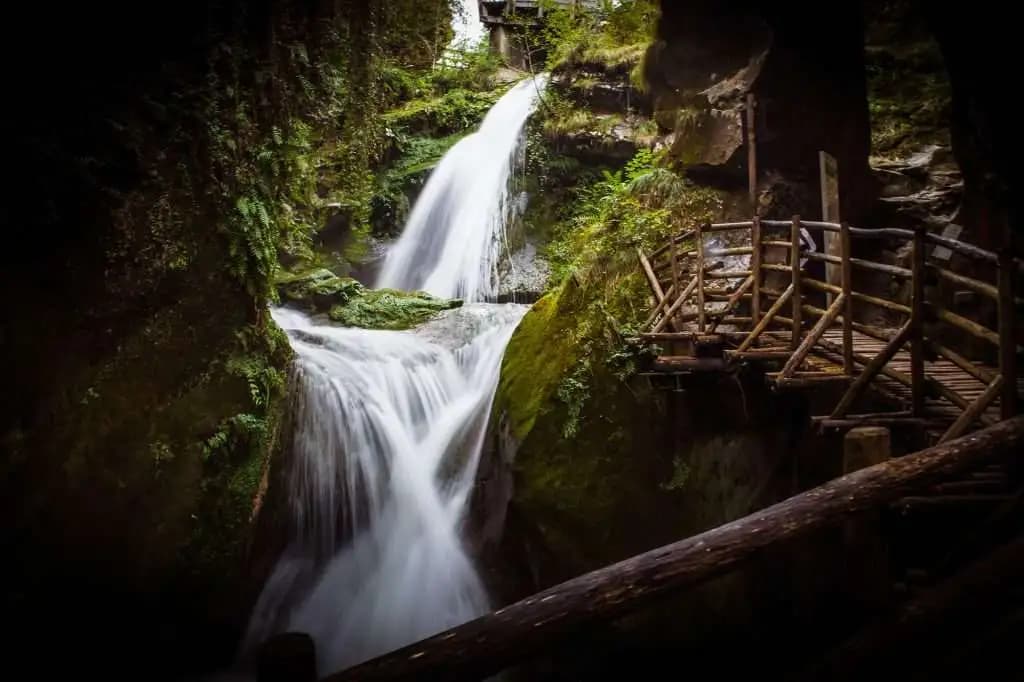
Dominated by the towering wooded mass of Monte Pizzoc and the Cansiglio plateau, the Caglieron Caves Park in the Breda area unfolds in the fairytale setting of a sinuous gorge, a steep karst cavity immersed in greenery, carved by the constant action of the rainwater flowing through the eponymous stream.
Like a patient sculptor, the clear watercourse has, over the course of millions of years, shaped the unpredictable and vertiginous perspectives of an enchanted, primordial environment, made up of alternating layers of limestone conglomerate, sandstone and marl deposited between 16 and 10 million years ago during the Middle Miocene.
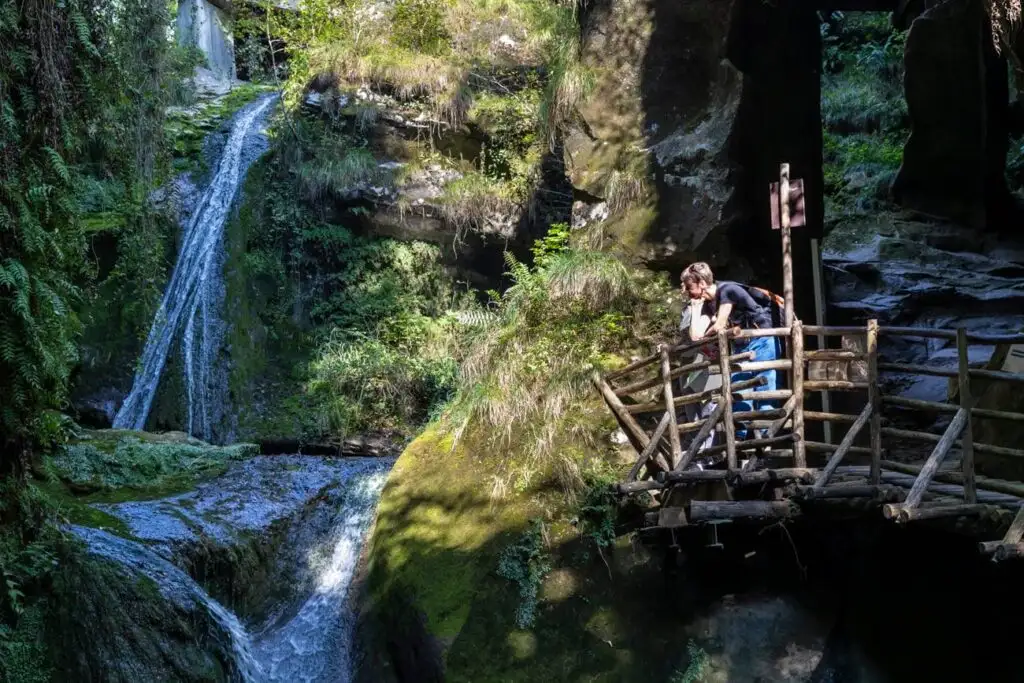
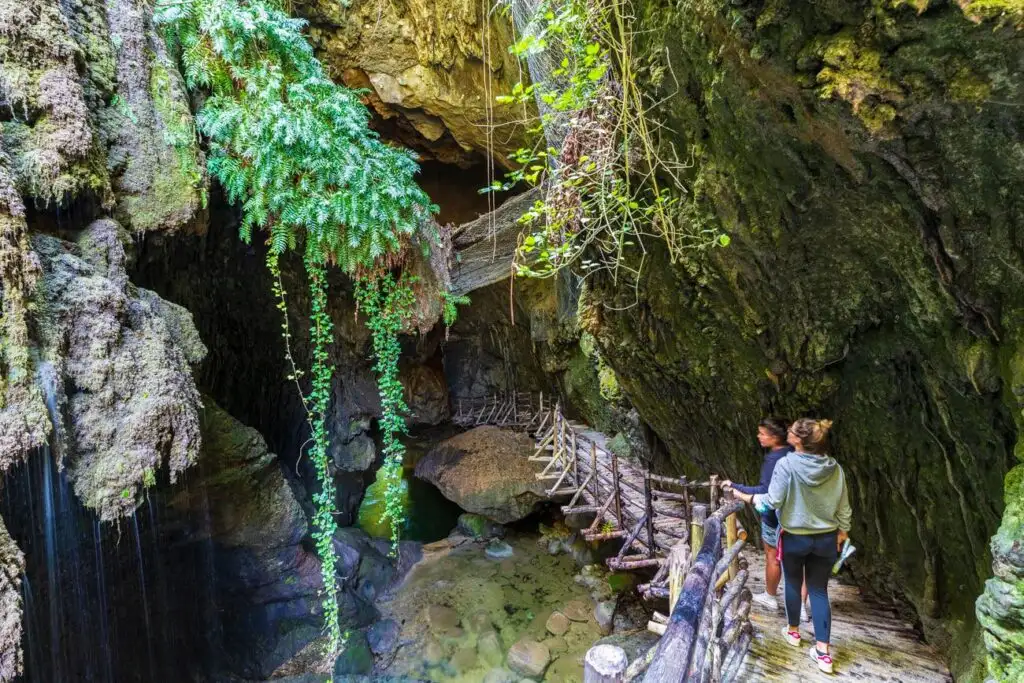
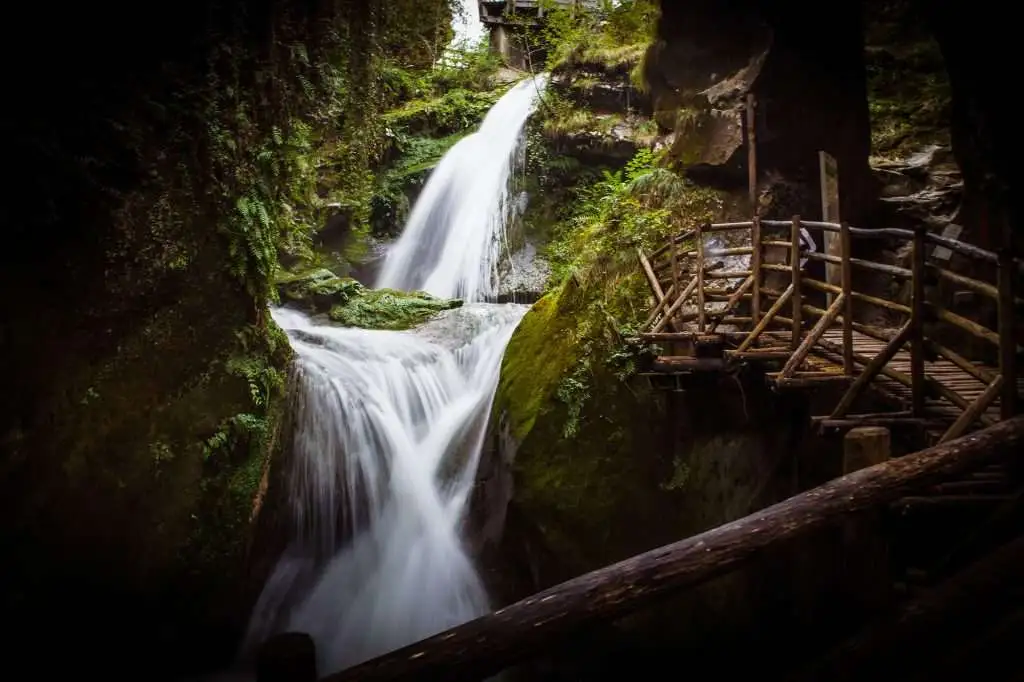
A sturdy wooden walkway winds through the meanders of the serpentine inlet veiled in mosses and lichens, carpeted with ferns and crowned by a dense tree canopy of alders, field maples, acacias, hornbeams, tree of heaven, elms and other lush tall-growing plants rising against the sky.
From damp rocky ledges, slender ivy tendrils hang above the potholes, karst sinkholes slowly carved out by thundering waterfalls with a striking scenic effect. The difference in height of the splashing cascades, several metres high, creates an evocative roar that reverberates off the vertical walls of the gorge.
The sources of light become magical in this labyrinth of rocks, fissures and dripping passages, where imposing limestone concretions overhang part of the gorge, giving visitors the impression of venturing into a mysterious cave. In the brightest areas, the presence of travertine is remarkable, with alternating mosses and other plant remains.
Along the steep sides of the ravine open up several quarry areas, the oldest of which date back to the 16th century, created to extract sandstone. This particular soft stone, known as Piera Dolza (used by some as early as Roman times), was employed to build door jambs, lintels, cornerstones, sills, steps and other structural elements and artefacts that can still be seen on the old houses and palaces of Vittorio Veneto, Serravalle and the surrounding area.
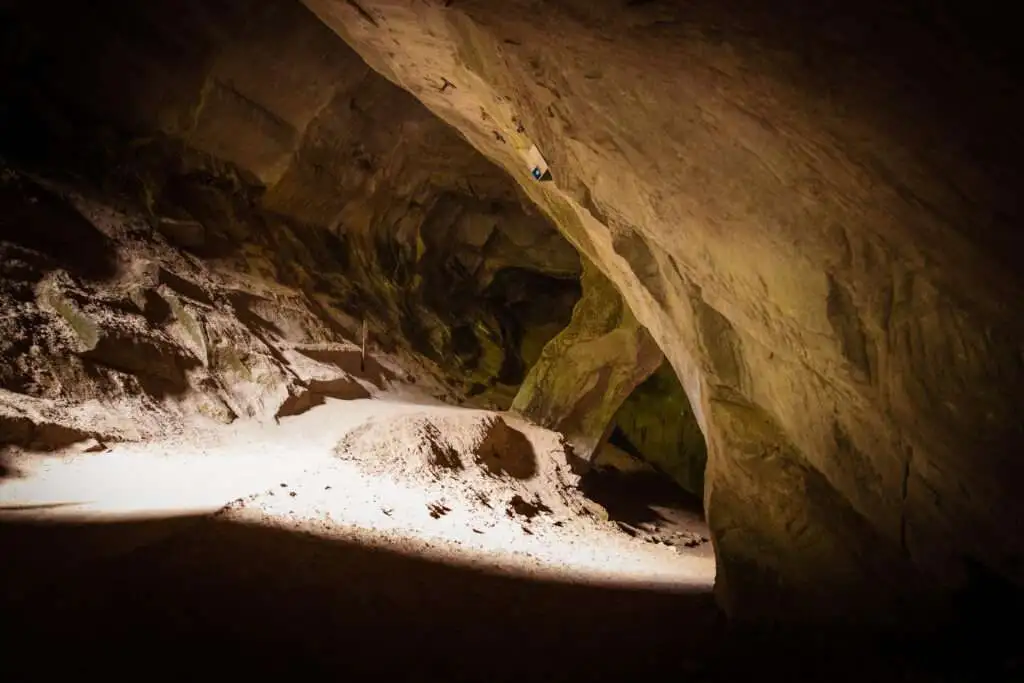
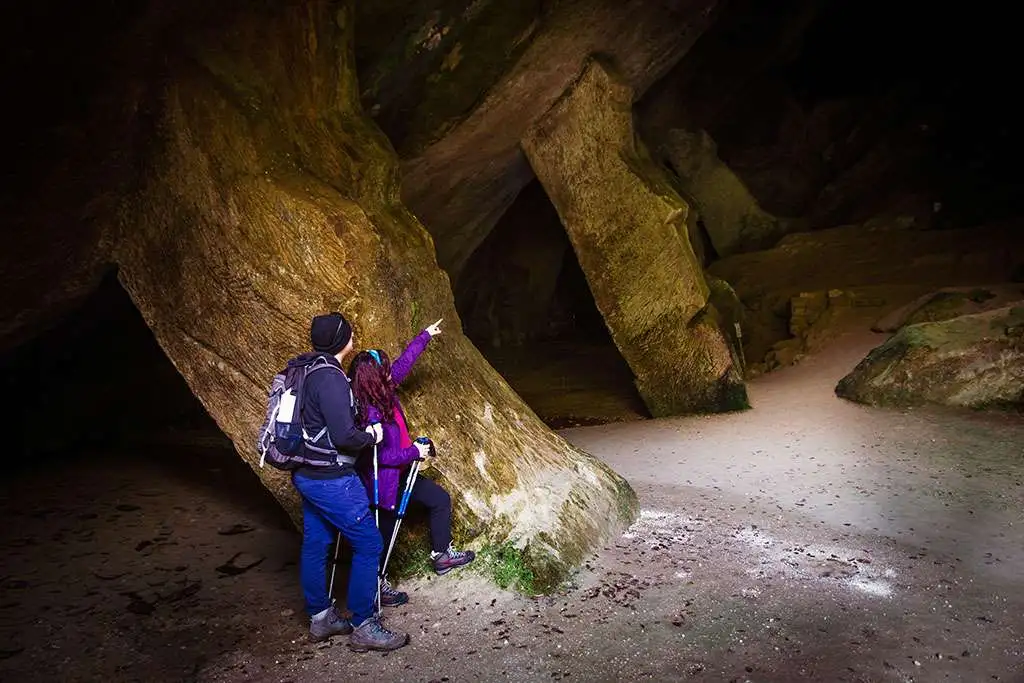
These fascinating artificial caverns offer a spectacle of evocative geometries, with imposing slanted columns like gigantic stone fingers raised to support the limestone vault. Perpendicular to the quarry ceiling, these load-bearing structures follow the site’s sloping topography, with gradients sometimes exceeding 45°.
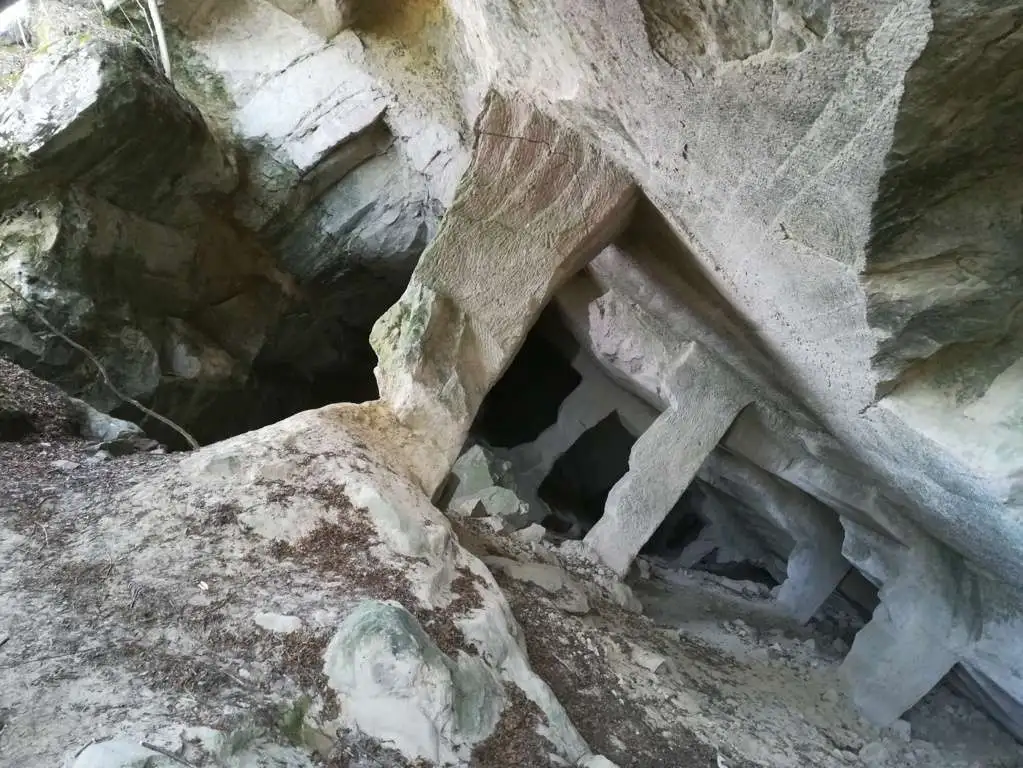
Wonderful examples of industrial and extractive archaeology, the quarries are valuable evidence of the work of the stonemasons, known as the miners of Caglieron, skilled in using the hammer to carve and extract blocks of Piera Dolza. In the deepest recesses of the tunnels, where icy crystalline pools spread out, the quarry floor is dotted with cave pearls, tiny spheres of calcite formed by limestone deposits around sand grains.
The constant temperature inside the quarries, combined with the high humidity and limited exposure to the sun, creates a series of microenvironments of great botanical and zoological interest.
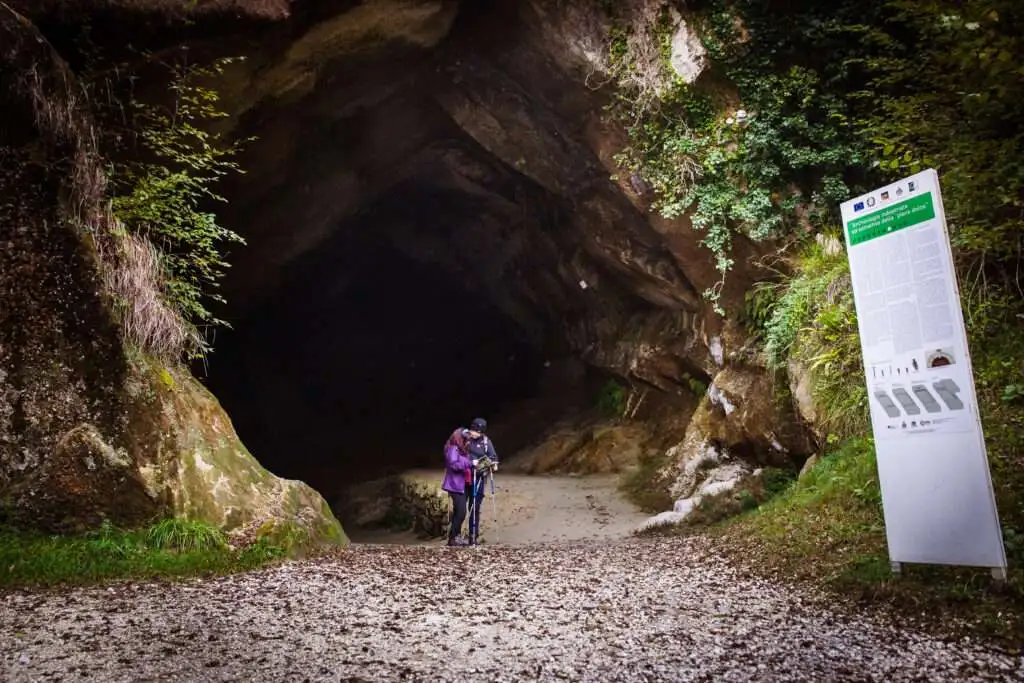
The itinerary of the Caglieron Caves Park
The starting point of the nature itinerary is located at Via Ronzon 2, a short distance after the Visitor Centre. After crossing the pedestrian walkway that leads into the gorge, the route descends along a wide path and then passes under the provincial road bridge. A little further on, on the right, is the Breda cave, recognisable by the characteristic slanted columns supporting the sandstone layers that form the ceiling.
Accessible via a comfortable wooden walkway, the next stop on the route is the San Lucio Cave, used for aging the characteristic cave cheese of the Soligo dairy. The path leads to a panoramic point from which you can take in the natural gorge, which can be crossed on walkways that are partly suspended.
The itinerary leads visitors to a centuries-old mill complex, now used as a restaurant. Following the signs, you then arrive at the Mulinetto, a two-storey building open to the public for photographic exhibitions and events. Looking out of the window on the second floor, you can enjoy a pleasant view of the nearby waterfall.
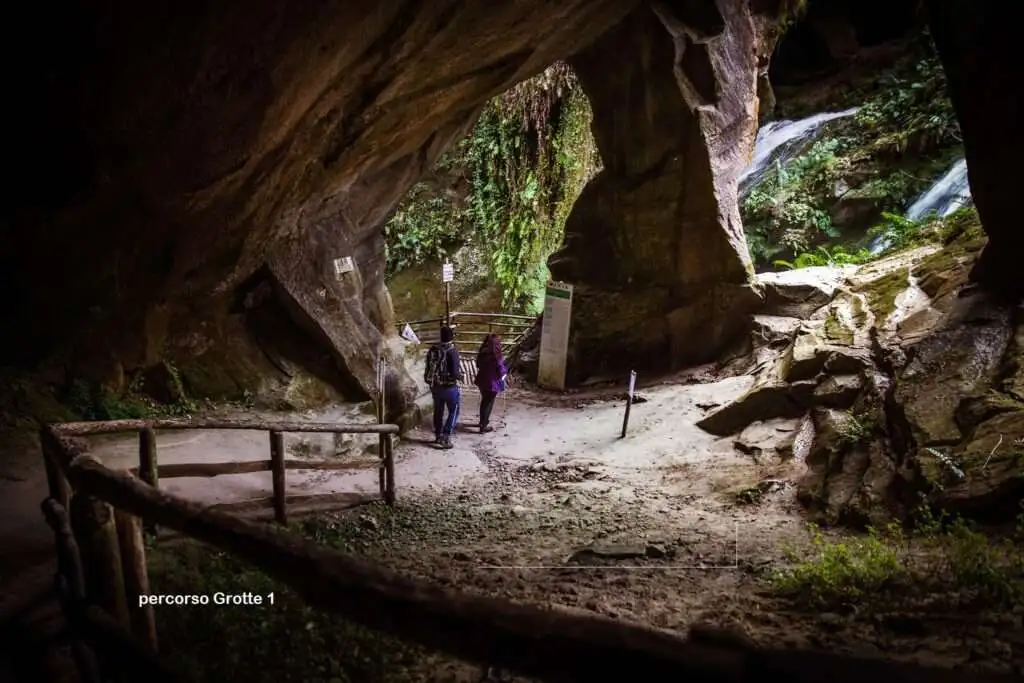
Heading back up the path that passes above the restaurant mill, you proceed towards the final part of the route. Along the last stretch of the itinerary, first steep and then level, we come across the “Breda washhouse” on the left, overlooking the gorge, and then on the right two small renovated houses, destined to become the Stonemason Museum, as a tribute to this ancient craft.
The last part of the route winds along Provincial Road 151 (please be careful). Here you will find the Santa Barbara Cave, originally used as a mushroom farm. Continuing towards the beginning of the trail, we find the “Madonna Cave”. A steep path starting in front of the ticket office leads in ten minutes to the “Canton” and “Fai” caves.
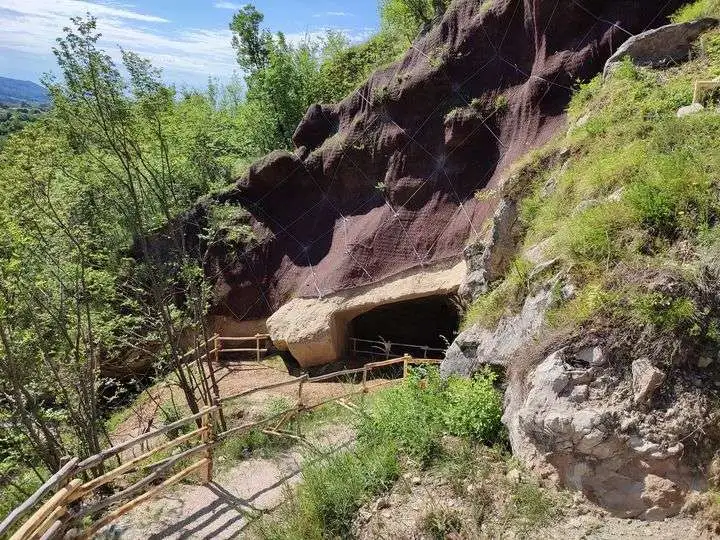
FAI heart site
Thanks to the petition drive organised by a special committee in 2016, the Caglieron caves won 3rd place in the Census and became a “FAI heart site”. With the prize money, a video was produced and a corner was set up inside the Visitor Centre, where it is possible to admire a small collection of tools donated by Mr Arturo Breda, the last stonemason of Fregona.
Food and wine specialties
Grotta del Caglieron – Caseificio Agricansiglio Soligo
Made from a selection of qualified farms producing raw milk cheeses in the Cansiglio and Piadera area, in the Prealps of Treviso, the milk used to produce this renowned dairy speciality is processed raw, without any heat treatment, coagulated with the sole addition of lactic ferments, and left to rest for more than two months in one of the natural caves of the “Grotte del Caglieron” complex.
Characterised by a slightly straw-yellow colour, the cheese has a soft paste that is compact when cut, with little or no holes. Sweet, slightly acidic and slightly salty in flavour, the cheese stands out for hints of cooked butter, citrus yogurt, minerals (stone) and damp wood.
Il Torchiato di Fregona DOCG
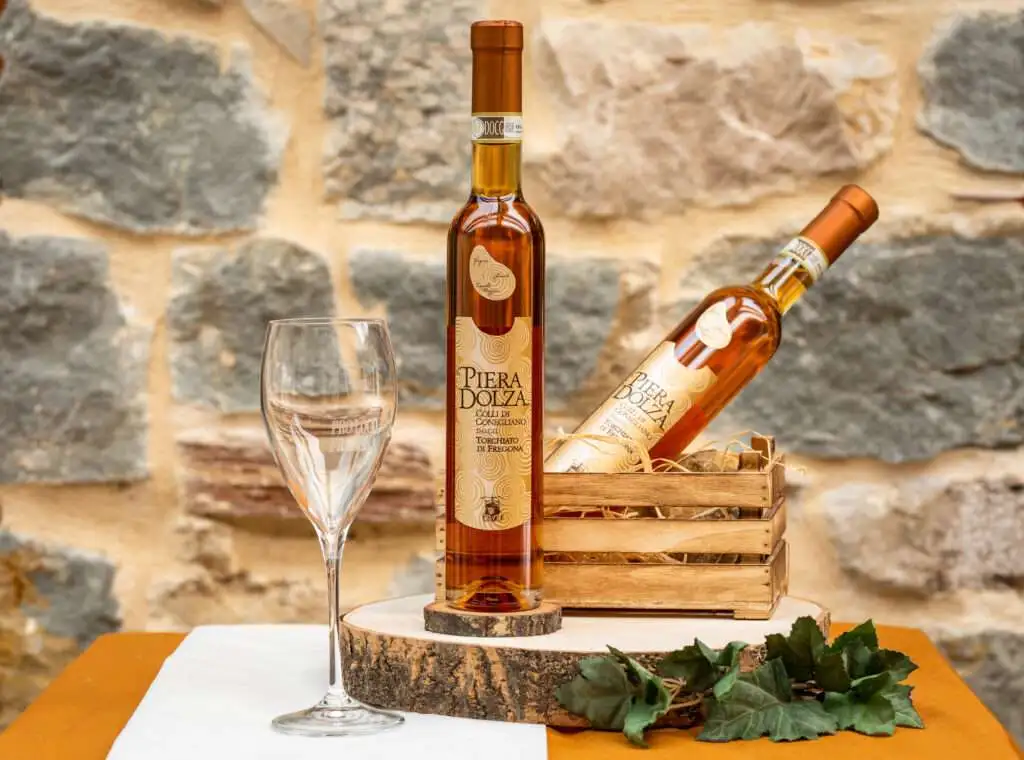
One of the most representative excellences of the area, Torchiato di Fregona is a passito wine born from the fertile, sunlit hills of Fregona, Sarmede and Cappella Maggiore. Soft, velvety and at the same time lively and fragrant, this prized wine is distinguished by a deep golden-yellow colour. On the nose, it releases aromas with notes of apricot, raisins, dried fruit, as well as figs, citrus fruits and soft spices that verge on vanilla.
The balanced synthesis between acidity and sugar content gives Torchiato di Fregona a pleasant sweetness without ever becoming cloying, making it ideal to accompany spicy and blue cheeses in general, foie gras and desserts, especially dry pastries.
Useful information
Indicative opening hours
(updated opening hours visible on the Pro Loco di Fregona website)
Winter: 10:00 – 16:00
Spring/Autumn: 10:00 – 17:00
Summer: 09:30 – 17:30/18:00
Price
Admission € 3.50
Reduced admission for groups/school groups over 20 paying participants: € 3.00
Exclusive guided service by reservation € 110.00
20% discount: Pro Loco and FAI members
Free admission:
Children up to 12 years old, accompanied by family members
People with disabilities and one accompanying person
Residents of the municipality of Fregona
Owners of businesses in the municipality of Fregona
Guests and staff of Fondazione Casa Amica Onlus
Blogger/Journalists
- A reservation is not required to visit the Park, except for groups and parties of more than 20 people.
- The length of the circular route is about 1 km and the visit is estimated to take about one hour.
- The visit must be carried out without creating crowds. It is strictly recommended to follow the one-way route and the directions shown on the signs installed along the path and on the map.
- Animals are allowed if kept on a short leash; it is recommended not to leave any waste on site and to use the appropriate bins.
- The park cannot be visited with pushchairs or wheelchairs, as the route has significant difficulties such as slopes, stairs and uneven ground; however, special requests may be submitted to the managing authority.
- Within the route between the ticket office and the lower gate, it is mandatory to show the entrance ticket to the staff in charge of checks.
Parking
- It is possible to park cars in Via Grotte del Caglieron and Via Ronzon, in the designated parking areas, upon mandatory payment of the parking ticket (hourly rate €2.00) in Via Ronzon and Via Grotte del Caglieron – Breda, hourly rate €1.50 in Via Grotte del Caglieron – Piai.
- Other free parking areas are in Piai, 700 m away.
- The caves can also be reached on foot via trail 1037 B “Pont de Fer”, starting next to the Municipal Stadium – walking time about 45 minutes – length 1,750 m, elevation gain 100 m. Parking near the cemetery (free parking or paid €1.00/hour, first hour free)
- Camper vans may stay overnight in the free parking areas near the schools, on Via Roma.
Picnic area
In the cave area there are some picnic tables along the stream and near the info point; in the green area next to the Fregona bell tower and behind the rectory there are 6 picnic tables; waste must be taken home for disposal.
Interactive visit and virtual tour (in progress)
Educational activities, workshop themes
The engaging nature itinerary includes several information panels with insights into the geomorphology of the landscape and the history of the quarries. The educational activities give visitors the opportunity to experiment with teaching materials and apply scientific research techniques.
The downloadable poster below sets out the exciting activities and initiatives that can be enjoyed in the Caglieron Caves Park.