
Where is the Botanical Garden of the University of Padova?
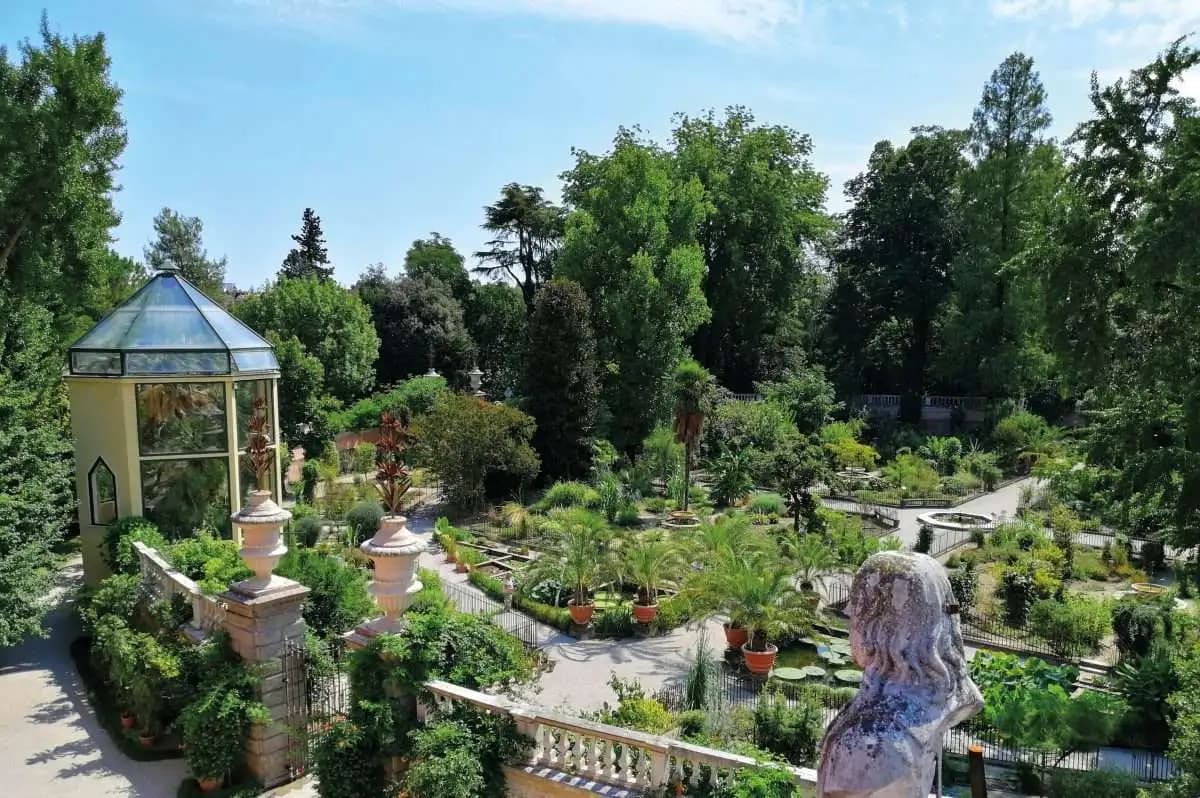
Located at Via Orto Botanico, 15, 35123 Padova (PD), the Botanical Garden of the University of Padova is one of the most precious, delicate, and fascinating natural attractions in the world.
Born as an hortus medicus, this natural site is the oldest university botanical garden to have maintained its original location unchanged, preserving its original characteristics almost entirely intact since its foundation in 1545.
Set in the historic heart of the city of Padova, the Garden has been part of the UNESCO World Heritage Site since 1997, as the incredible wealth of biodiversity preserved within it (3,500 species spread over an area of 3.5 hectares) has facilitated the evolution of scientific disciplines such as botany, medicine, chemistry, ecology, and pharmacy over the centuries.
The design of the Botanical Garden of Padova
Built thanks to the efforts of Francesco Bonafede (1474 – 15 February 1558), a botanist, physician, and holder of the chair of “reading of simples” (aimed at helping students identify medicinal plants) at the University of Padova,
the natural site presents a complex structure consisting of a circle with an inscribed square, itself divided into four squares defined by two perpendicular paths.
The geometric rigor that distinguishes the spaces of the ancient Garden is not an end in itself: the layout allegorically reproduces a vegetative microcosm in accordance with the philosophical principle of harmony between humans and the universe.
The wise balance between the language of art and architecture and the symbolism of the natural world makes the Padova Garden a point of reference and an exemplary model for the establishment of other botanical gardens throughout Europe.
Divided into flowerbeds arranged in evocative geometric patterns, the four quarters, or terraces, take their name from the plant that most characterizes them: magnolia (southwest), ginkgo (northwest), tamarisk (northeast), and albizia (southeast).
The presence of species as rare and delicate as they are precious necessitated the construction of a perimeter wall in 1552, while the early 17th century saw the construction of four monumental portals, the leveling of the difference in height between the paths and the terraces, and the placement of six fountains corresponding to the quarters and at the intersection of the paths.
With the introduction of the Arboretum, two additional fountains were later added, one dedicated to the Greek philosopher Theophrastus and one adorned with marble busts depicting the four seasons.
The botanical theater, the masonry greenhouses, and the three large sundials date back to the first half of the 19th century.
The Biodiversity Garden
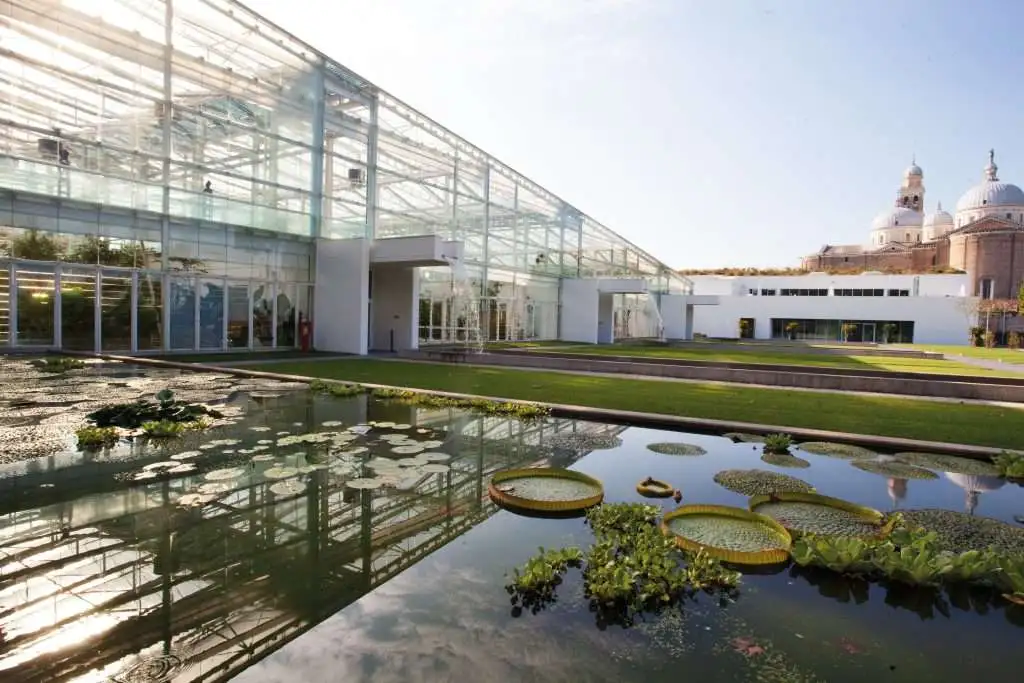
Designed by architect Giorgio Strapazzon and inaugurated in 2014, the Biodiversity Garden features five greenhouses that reproduce the arid, temperate, Mediterranean, tropical, and subtropical biomes.
Visitors can discover and observe 1,300 plant species kept in their ideal habitat through two itineraries:
Plants and the environment: a route that illustrates the varied plant heritage of the climatic regions of America, Africa, Asia, temperate Europe, and Oceania.
Plants and humans: divided into four areas, this section of the garden explores the relationship between humans and vegetation, from the process of selecting plants for medicinal and food purposes to the agricultural revolution that 11,000 years ago led humans to transform and produce them more effectively.
The historical plants
Goethe’s Palm
Planted in 1585, the centuries-old Palm of Saint Peter is the oldest plant in the Botanical Garden. Although it is a small herbaceous plant, the specimen belonging to the Chamaerops humilis family kept in the Padova Garden has reached a height of 12 meters thanks to greenhouse cultivation.
The name Goethe’s palm derives from the visit of the eponymous scientist and writer, who on 27 July 1786 observed and described the splendid shrub during his journey to Italy.
Oriental plane tree
The majestic plane tree was planted in 1680 and is characterized by a dense shady crown and a tall, mighty trunk. The Platanus orientalis is common in an area extending from the eastern Mediterranean region to east of the Himalayas. A notable and botanically interesting feature is that the tree, made hollow after being struck by lightning, continues to thrive thanks to the still-functioning conducting tissues located in the outer part of the trunk.
Ginkgo biloba
Planted in 1750, the magnificent centuries-old tree belonging to the Gymnosperms is native to China and dates back 250 million years. Also known as maidenhair for the intense golden color its leaves take on in autumn, the Ginkgo biloba is one of the most spectacular trees in the Botanical Garden.
Magnolia grandiflora
Native to the southern regions of the United States, the specimen kept since 1786 in the ancient Padova Garden is probably the first Magnolia grandiflora introduced to Italy.
The plant can reach considerable heights of 20–30 meters, although the one kept in the eponymous quarter of the Garden is characterized by more modest dimensions.
What strikes with its dazzling charm are the pure white flowers and bright red fruits, as well as the elegant lanceolate leaves, glossy green on the upper side and dark on the lower side.
Nature, art, architecture, philosophy, and science harmonize in a charming microcosm skillfully inserted into the urban fabric of the city between the Basilicas of Saint Anthony and Saint Giustina. The relaxing environment of the garden and the Garden is combined with stimulating informative routes capable of arousing the curiosity and wonder of visitors who walk through them, making the Padova Botanical Garden one of the most recommended destinations in the world for lovers of serene walks immersed in greenery as well as for scholars and enthusiasts of botanical science determined to defend and preserve the fragile and fundamental value of biodiversity.