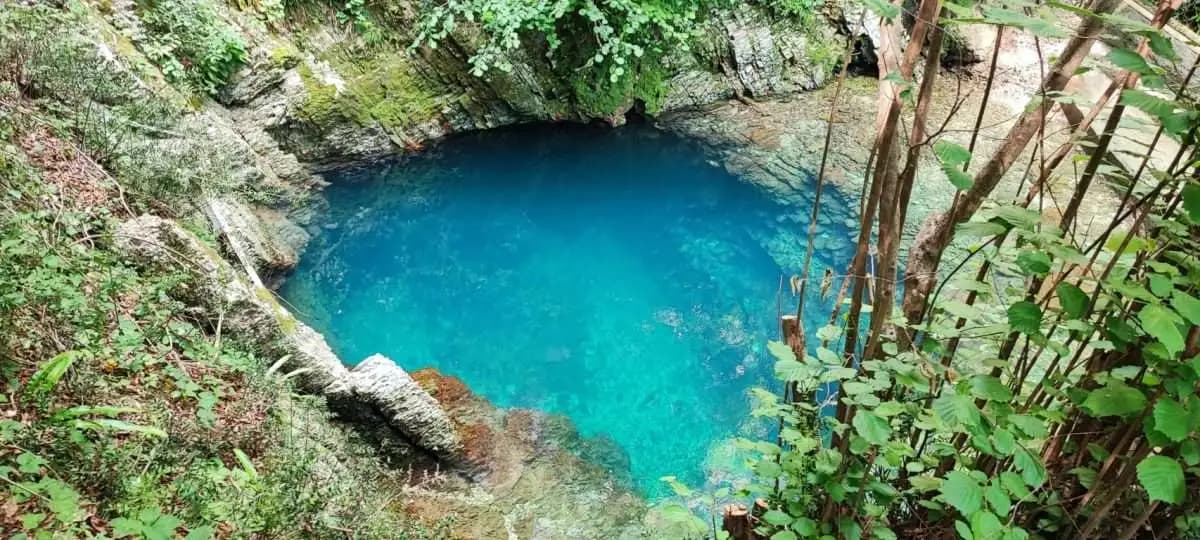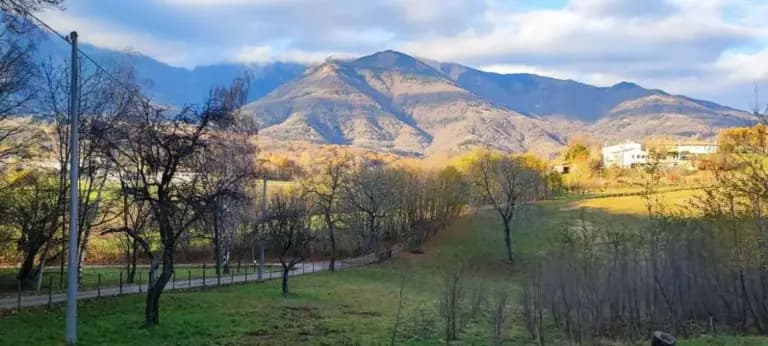


If you are wondering what to do in Pieve del Grappa in the province of Treviso, the locations suggested in this article might be just what you need!: the Monte Grappa Shrine, the Vittorio Emanuele III Gallery, and the Meatte path.
For those who are passionate about hiking and cannot resist the historical and naturalistic charm of spectacular mountain ridges whose rocks bear the marks of some of the most important chapters in our country’s history, visiting Pieve del Grappa will be an unforgettable experience!
Where is Pieve del Grappa?
The municipality of Pieve del Grappa in the province of Treviso borders to the north with Alano di Piave and Seren del Grappa, to the south with Fonte and San Zenone degli Ezzelini, to the east with Possagno and Castelcucco, to the west with Borso del Grappa.
Born from the union of Paderno and Crespano del Grappa, the municipality of Pieve del Grappa is immersed in a vast and enchanting hilly area in the heart of the Veneto region.
The gentle green slopes, dotted with picturesque ancient villages surrounded by a vast mosaic of floral, tree, and fauna biodiversity, are delimited by the courses of the Piave and Brenta rivers, while the majestic slopes of Monte Grappa, marked by the indelible traces of the First World War, solemnly dominate the valley.
Monte Grappa Shrine
The ancient mountain, which at 1776 meters in height dominates the Veneto plain, features on its summit one of the most important military shrines in the entire Peninsula, containing the remains of nearly 23,000 Italian and Austro-Hungarian soldiers who fell during the fierce conflicts of the Great War.
A white paved path 300 meters long, the heroic road connects the monumental semicircular stairways of the ossuary, resting on the summit of Monte Grappa, to the colossal observatory, a grandiose structure built with large stone blocks whose top reproduces the shape of a sarcophagus.
Vittorio Emanuele III Gallery
The underground tunnel dedicated to the King of Italy crosses the bowels of the mountain below the architectural complex that dominates the summit.
The interior of the gallery, whose entrance is located on the right side of the Caserma Milano, evokes the monstrous and suffocating atmosphere experienced by young Italian soldiers during the decisive moments of the Great War.
Carved into the rock starting from November 1917 and with a total length of 5 km, the underground communication route consists of a main tunnel from which a dense network of smaller galleries branches off.
The dark and claustrophobic road network carved from limestone played a role of fundamental strategic importance in halting the advance of the Austro-Hungarian forces.
A numerous succession of lateral openings ensured the placement of cannons and machine guns, whose dominant position would have had a devastating effect on the enemy.
Nature trails and the Meatte path
Starting from the locality of Fietta you can reach the valley of San Liberale, much loved by hiking enthusiasts, where you can find parking and refreshment points.
Following the signs for Monte Grappa, it is advisable to take the CAI 151 path, a route built during the First World War to allow the passage of caravans, mules, and other pack animals.
The itinerary enters a cool and shady woodland area that, with increasing altitude, offers the visitor a breathtaking panoramic view of the splendid valley stretching as far as the eye can see.
Once you reach Pian dea Bea, you continue onto the CAI 152 path, characterized by gentler slopes that make the walk even more pleasant.
The itinerary was built in 1918 by digging and drilling the rocks of Boccaor to allow the movements of the Italian army, and it is still possible to cross its galleries.
After reaching the summit of Mandria, at almost 1500 meters in height, where you can admire the immense surrounding plain from the Vedetta dell’Archeson, you can begin the return route via the CAI 153 itinerary.