
Where is Villa Spineda dal Vesco?
Villa Spineda dal Vesco is located at Via Alvise Dal Vesco 3, 31030 Breda di Piave, Treviso (TV).
Architecture of Villa Spineda dal Vesco
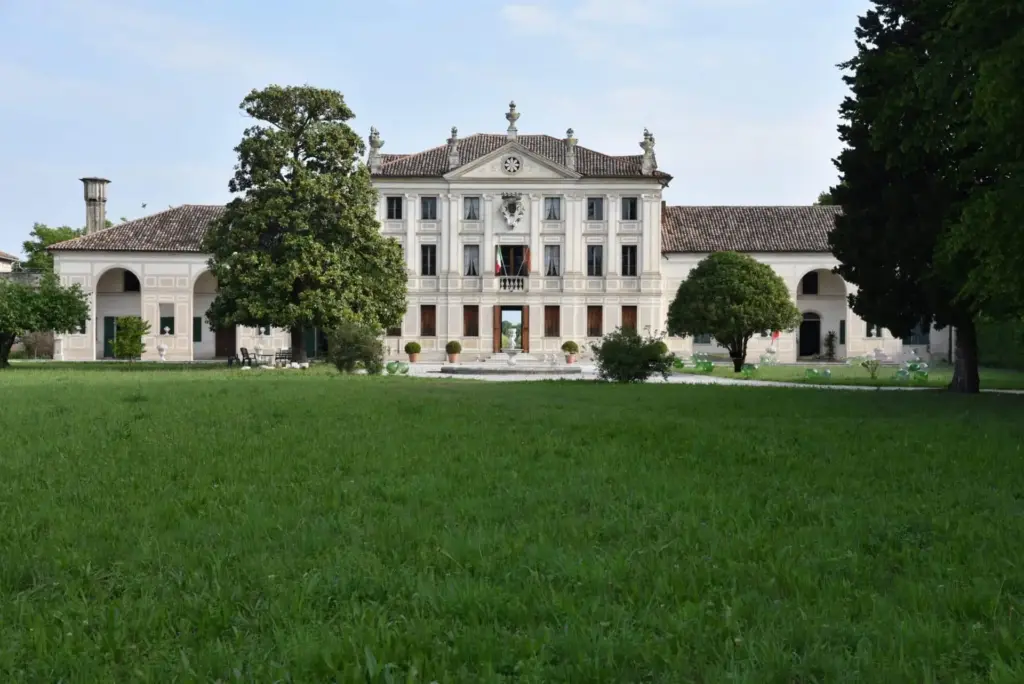
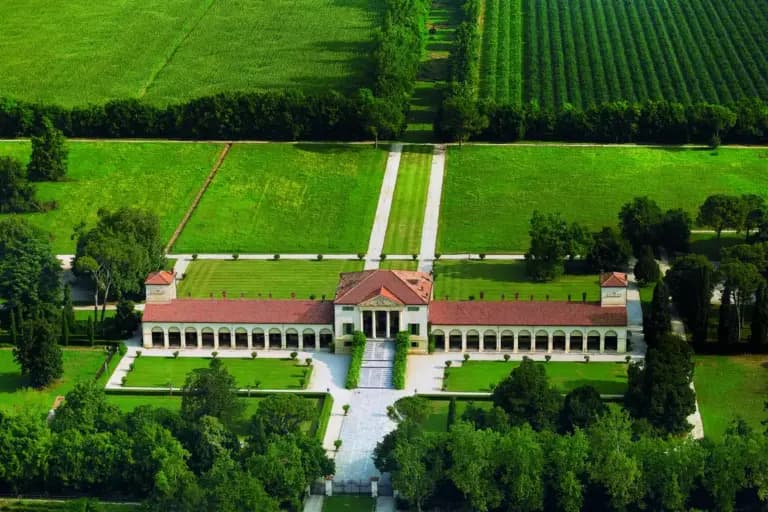
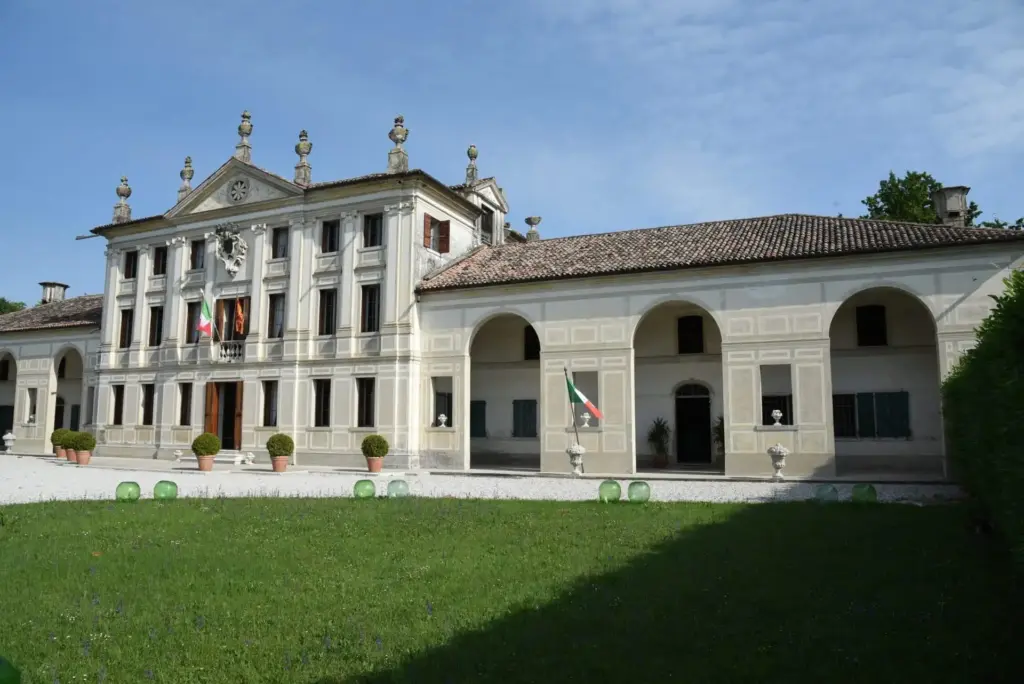
Harmoniously set within a radiant park of 125,000 m², the neoclassical architectural complex consists of a three-story residential core flanked by two white symmetrical barchesse.
Oriented along the east-west axis, the arcaded wings are punctuated by three round arches alternating with four rectangular windows adorned with stone vases. The western barchessa is connected to a two-story rustic building, also arcaded.
The south façade of Villa Spineda dal Vesco
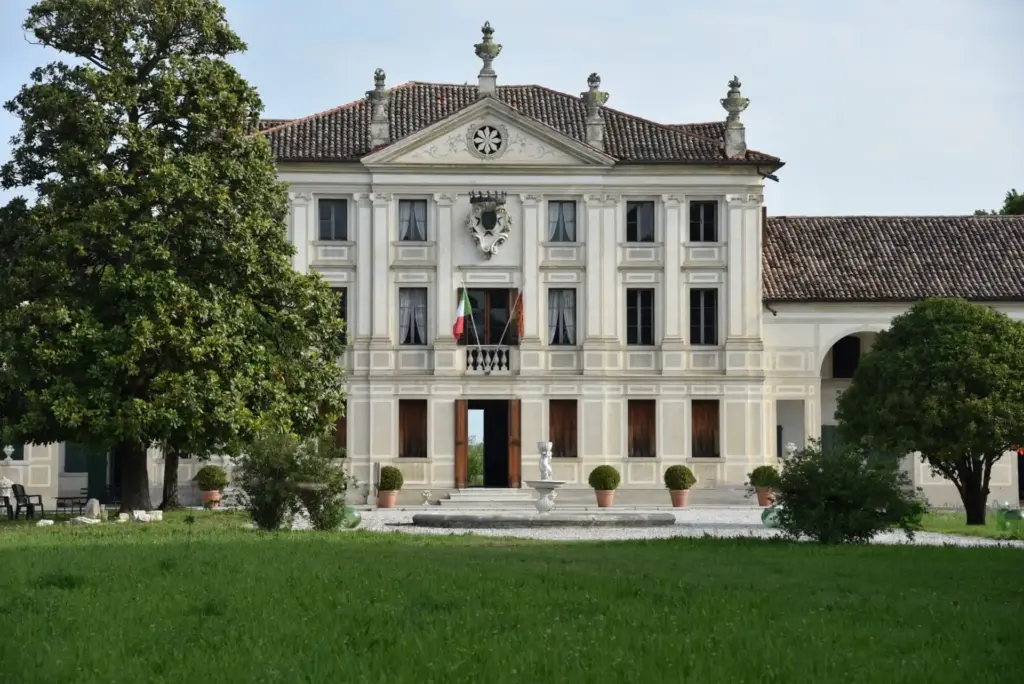
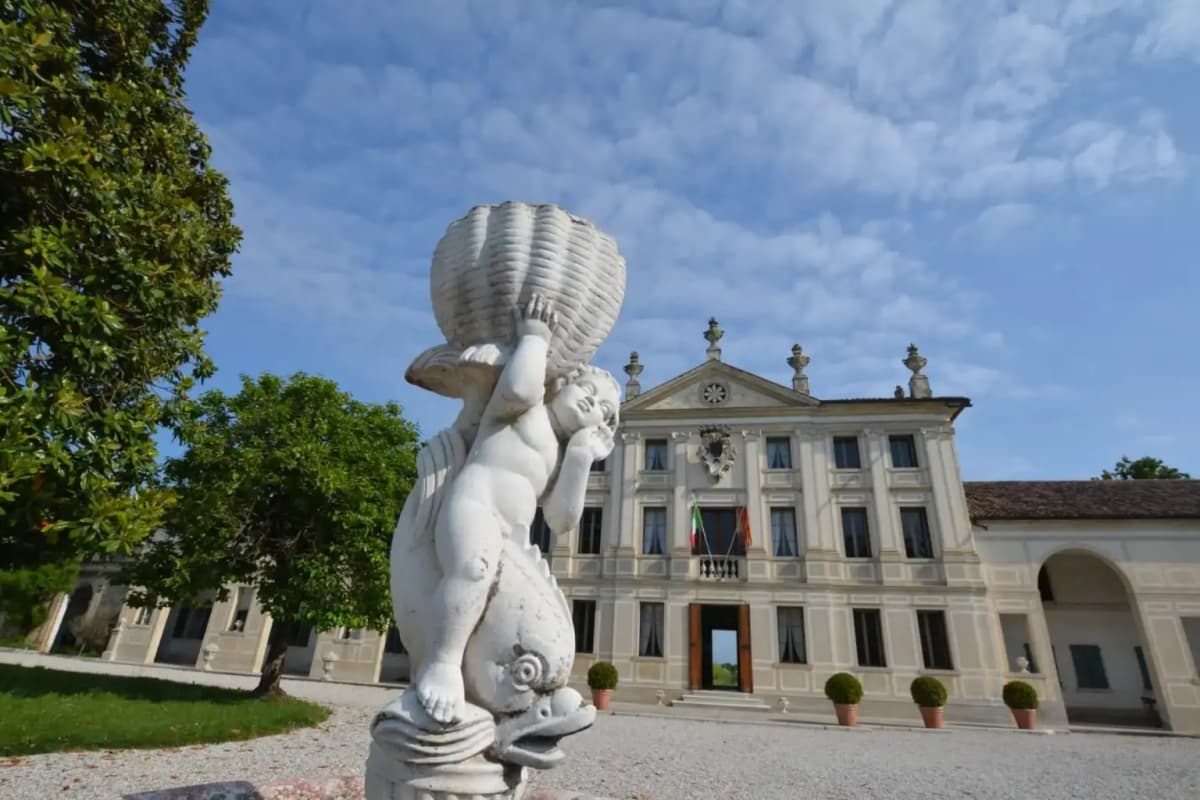
The southern façade of the stately residence is rhythmically divided on the first floor by a series of pilasters topped with composite capitals.
Facing a refined balustrade, the window at the center of the piano nobile is crowned by the Spineda family coat of arms. Framed by a stone cartouche, the crest bears the cross of the Order of Saint Stephen of Tuscany and is surmounted by the bronze comital crown.
Completing the vertical development of the façade is the triangular pediment, embellished with acroterial vases, at the center of which stands out a rose window with an eight-pointed star.
The interiors of Villa Spineda dal Vesco in Breda di Piave
The frescoes of Villa Spineda dal Vesco
The pictorial works decorating the halls of the Villa are the fruit of the genius of Giuseppe Bernardino Bison (Palmanova, June 16, 1762; Milan, August 24, 1844), a celebrated artist active in the Treviso area around 1793.
The cycle of frescoes in Villa Spineda dal Vesco stands out for its extraordinary scenic quality, giving human, animal, and mythological figures a vital, exuberant, and dynamic character.
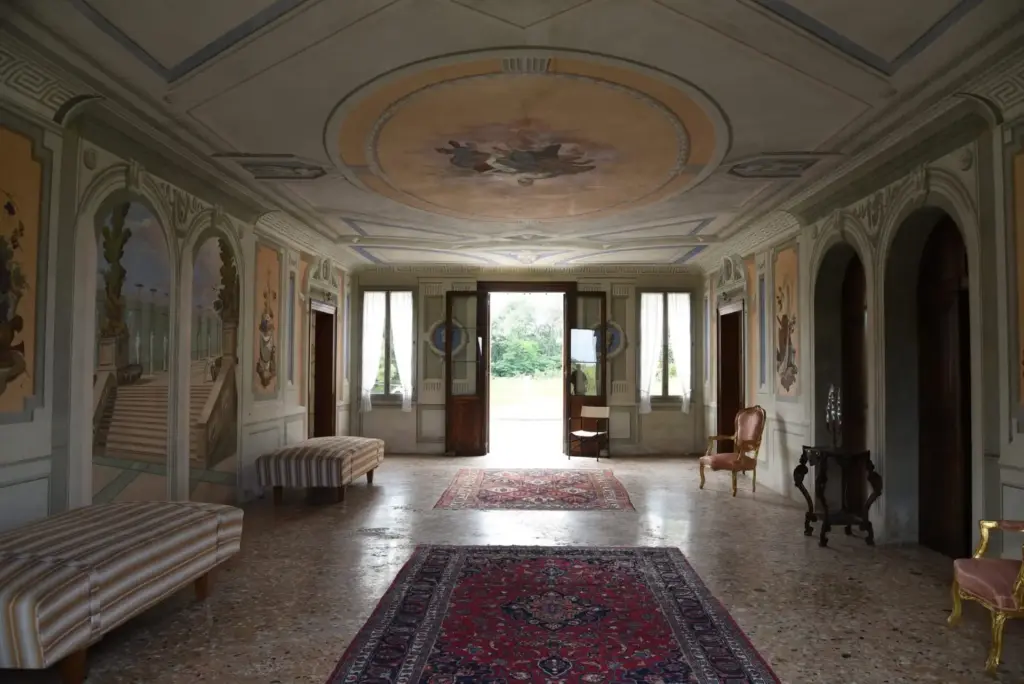
Crossing the entrance of the Villa, it is enough to raise your eyes to admire the splendid fresco depicting the allegory of the Marca Trevigiana that adorns the ceiling of the central hall. The walls of the ground-floor hall are decorated with representations of the four seasons.
The painted architectures capture the viewer’s attention with perspective illusions of remarkable scenic impact. Among them, two large round arches stand out, framing a lush Italian garden in which a greyhound drinks from a dolphin-shaped fountain.
The pictorial decorations include bright floral motifs alternating with figures of carefree and joyful putti.
The Countess’s sitting room and the piano nobile
In the Countess’s sitting room to the southeast, the solemn and radiant figure of the mythical Apollo, God of the Sun, arts, music, poetry, prophecies, and medical arts, emerges. Beside the Olympian deity, the majestic figure of Pegasus, the mythological winged horse, appears.
Dedicated to the myth of Pan, an ancient sylvan divinity with the appearance of a faun, the northeast room stands out for a masterful trompe-l’œil in which a boundless celestial panorama envelops the personification of Zephyr in the company of two putti. The incarnation of the spring wind is portrayed with a scepter in one hand, while with the other he caresses a swan.
On the piano nobile, two playful putti holding the coat of arms of the Spineda family stand out, placed above a mascaron. The composition is set between two round arches opening onto a painted balcony, from whose illusory perspective one can contemplate an enchanted landscape.
From the monumental classical palace that dominates on the left, the observer’s gaze moves toward the naturalistic panorama on the right, dotted with ancient rural homes immersed in greenery, until glimpsing the profile of a distant mountain that gently fades into the horizon, wrapped in light clouds.
The scene is framed by a red drape from which a little monkey hangs, which a picturesque figure invites to come down.
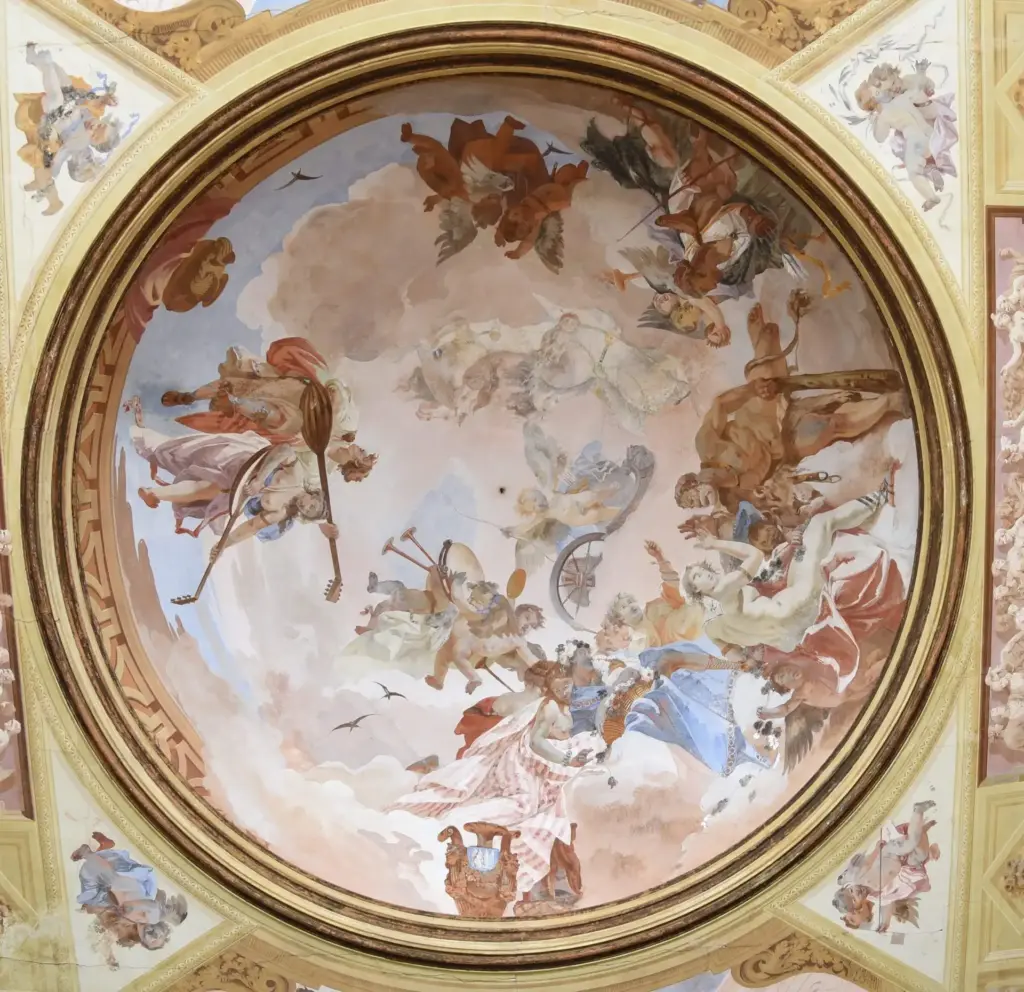
The fresco adorning the dome on the piano nobile depicts the wedding of Hercules and Deianira. Among the guests at the ceremony, the graceful figures of Zephyr and Flora can be recognized, while at the center of the scene stands the Chariot of the Sun. The celebration is enlivened by musical putti and two muses playing the lute.
The mythical and passionate events continue branching out into the bright rooms of the villa’s salons: the hall of the gods, of the ruins, of the continents, and of the animals.
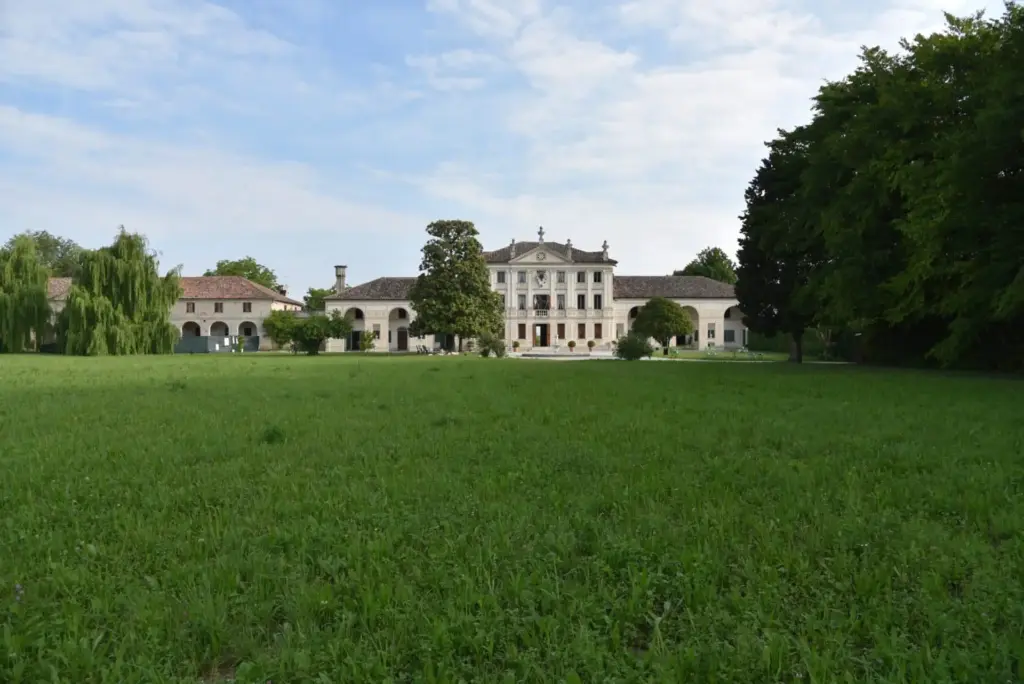
The park of Villa Spineda dal Vesco
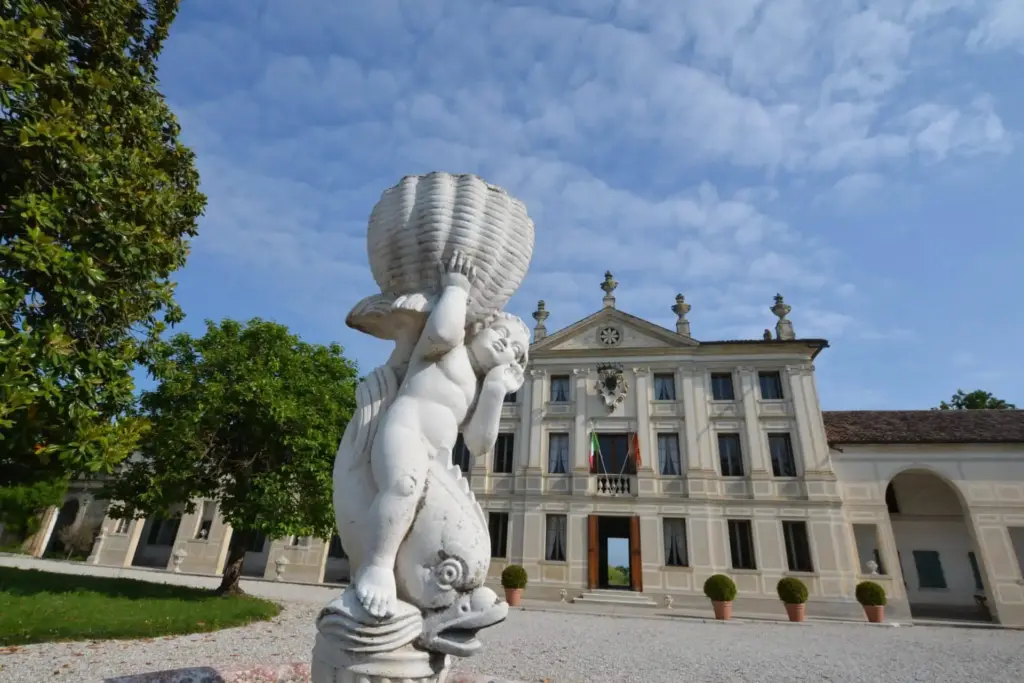
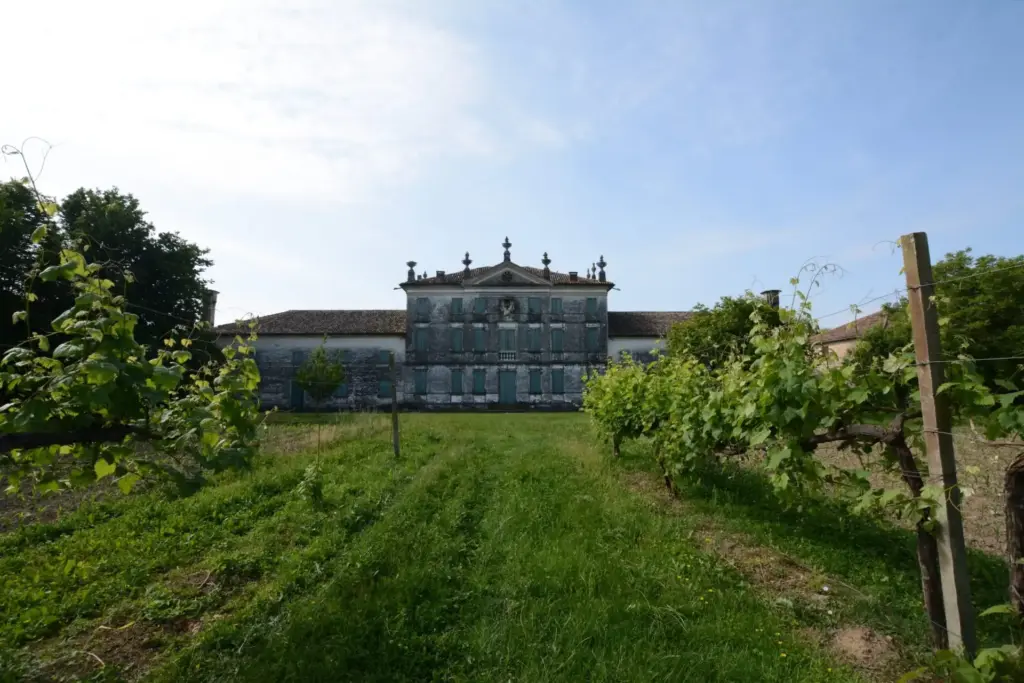
The southern façade of Villa Spineda dal Vesco overlooks a vast garden enclosed by tall, well-kept hedges and adorned with a precious stone fountain. The park is decorated with lush tall trees, among which majestic magnolias, weeping willows, and a soaring cypress stand out. The vast agricultural area extending north of Villa Spineda dal Vesco, now cultivated as arable land, is crossed by a perspective avenue framed by lush rows of vines.