
We thank Elena Santagà for the photographic material and for the careful analyses by Gino Santagà and Luciano Vanzella.
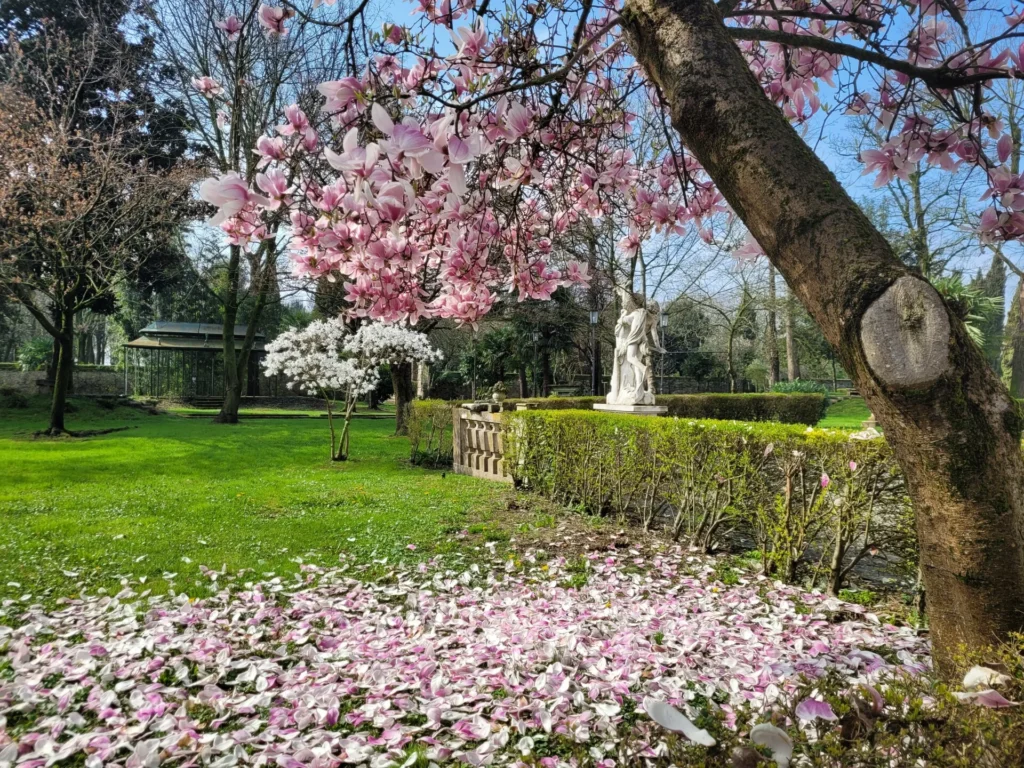
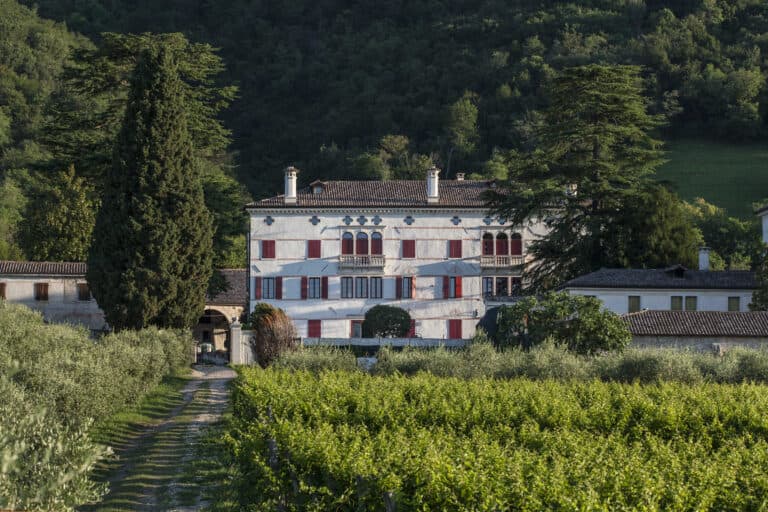
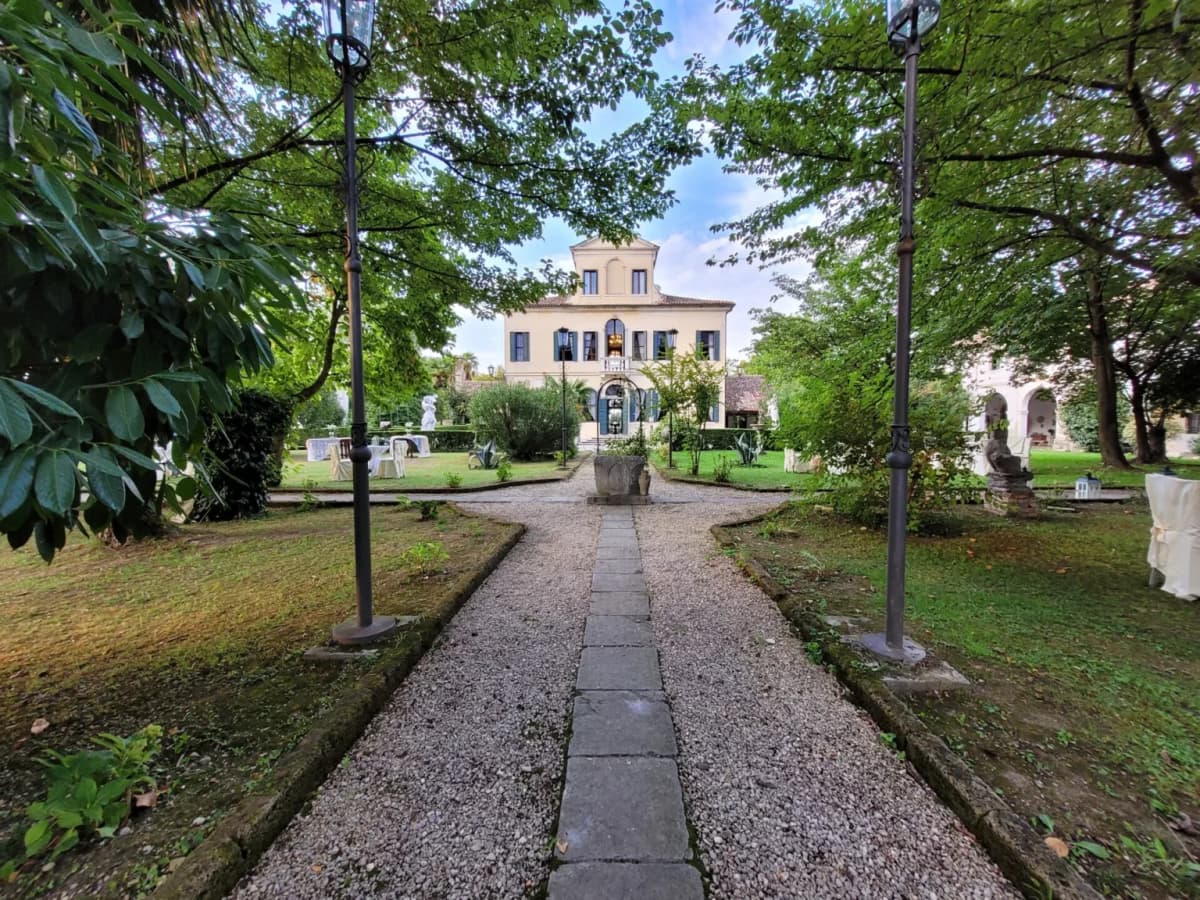
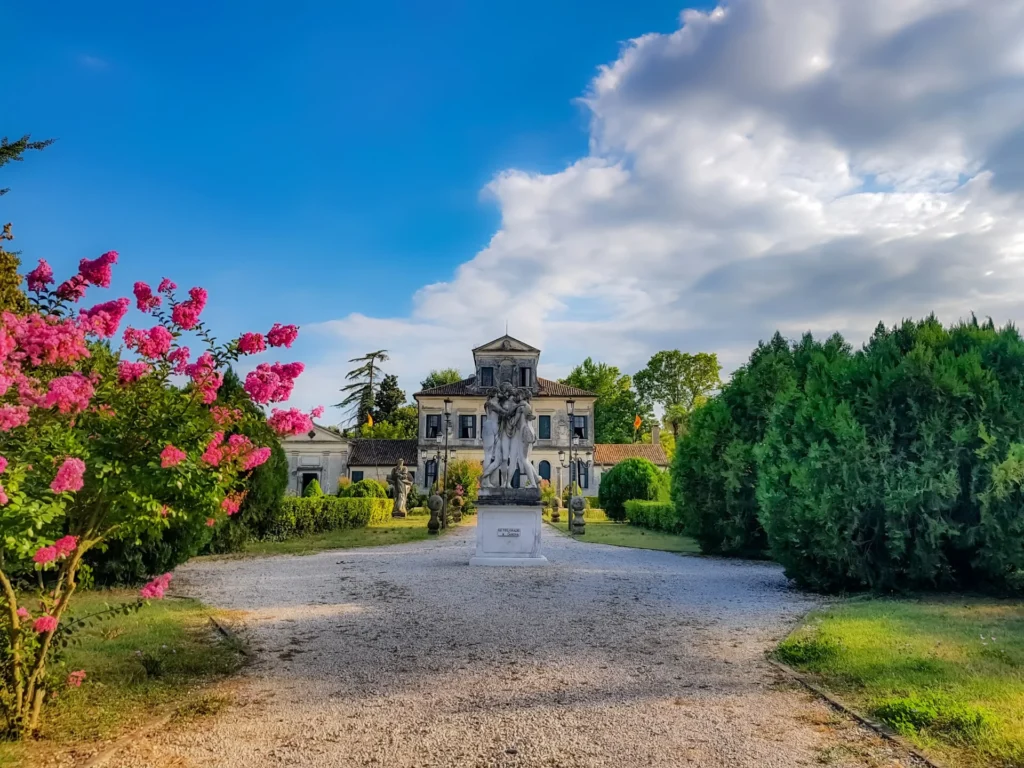
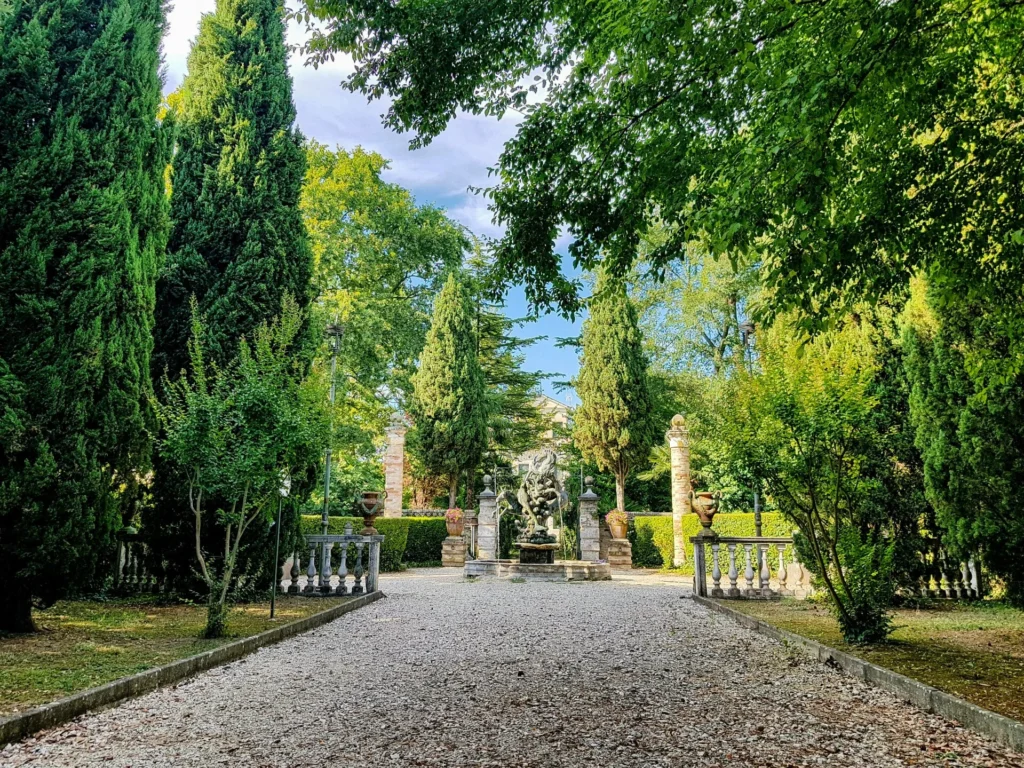
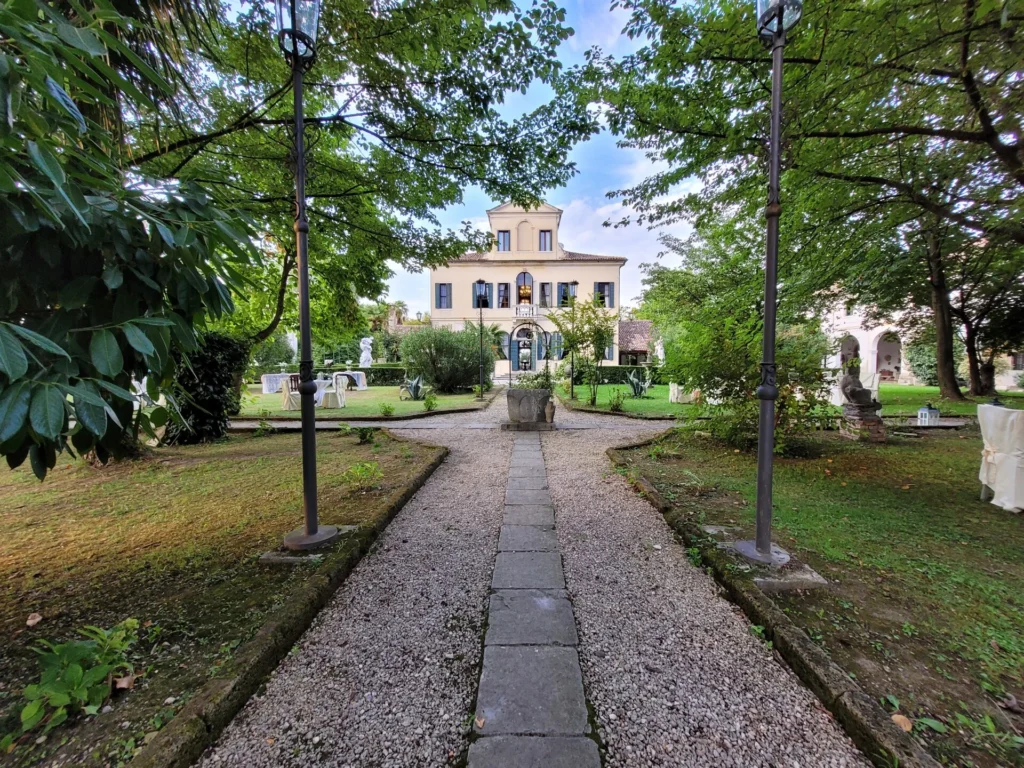
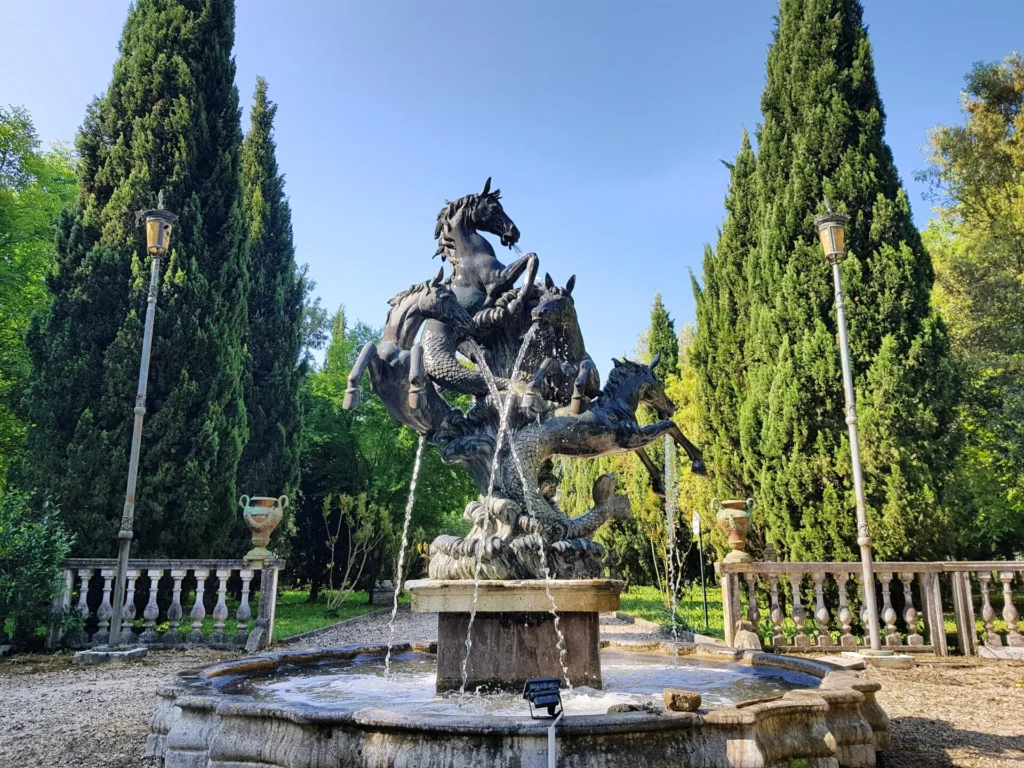
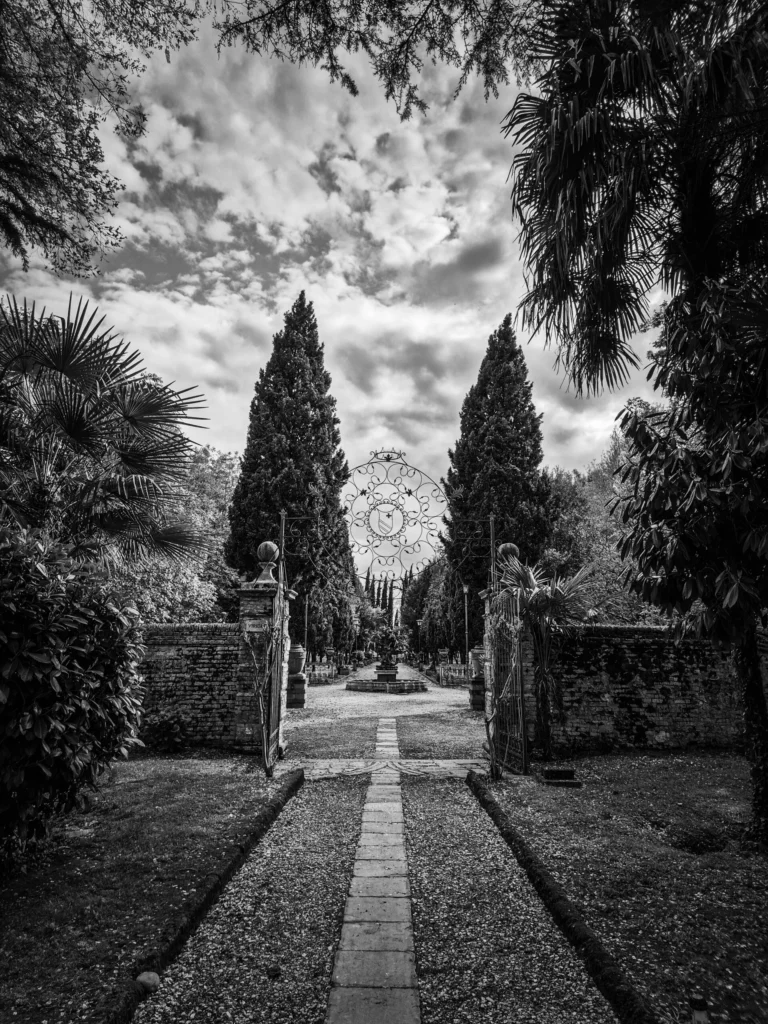
One of the rare examples of a Villa Veneta that has remained intact in all its structures, Villa Navagero Erizzo is framed by a park of almost five hectares, crossed by more than two kilometres of avenues and Italian-style gardens where, with the arrival of spring, a triumph of light and colour unfolds, leaving you breathless.
The complex is located a short distance from the white neoclassical church of San Mauro Abate. Surrounded by holm oaks, cedars and cypresses, the 18th-century place of worship stands along the placid course of the Meolo, whose grassy banks receive the shade of weeping willows and towering black poplars.
Renowned for the production of Prosecco and D. O. C. wines, the territory of the joyful Marca in which the villa blends harmoniously is crossed by a dense network of spring-fed rivers with meandering courses, including the Nerbon, the Musestre, the aforementioned Meolo, the Rio Piavesella and the Vallio, whose clear waters, winding through flourishing vineyards and thick hedges of acacias, alders, elms, maples, mulberries and many other tall trees, are channelled into the moat that centuries ago bounded the lavish gardens of the grand Villa Da Lezze, a lost masterpiece by Baldassarre Longhena.
The restoration of Villa Navagero Erizzo
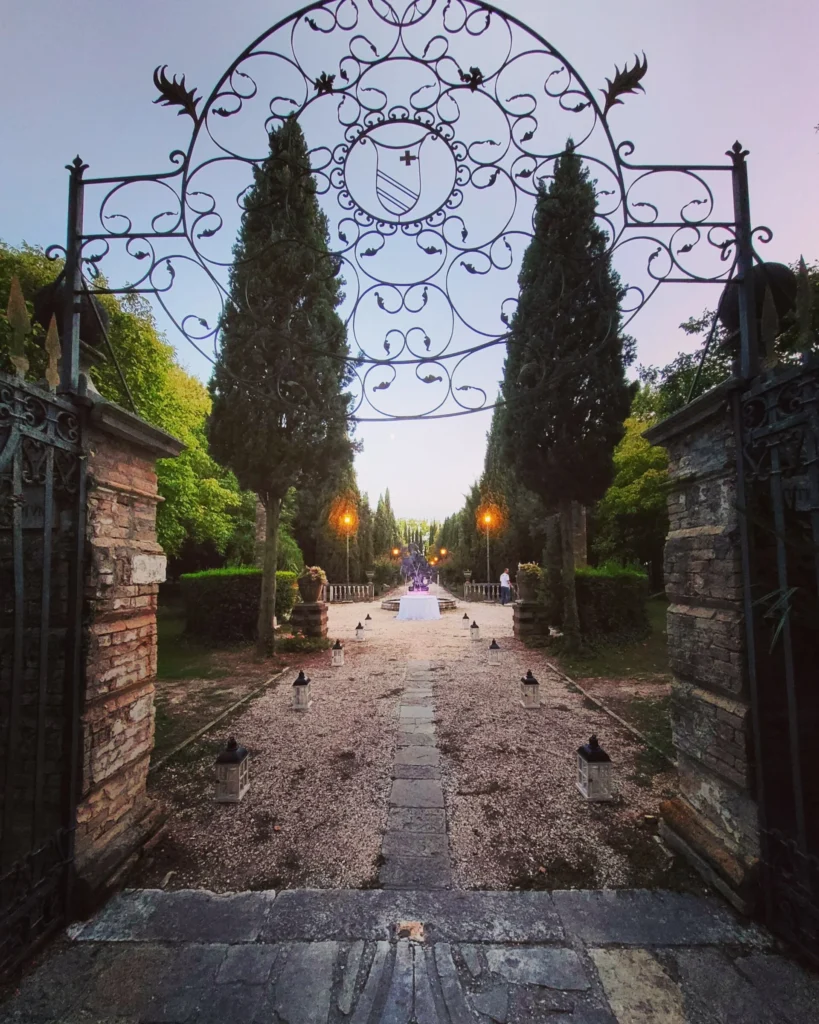
Until eight years ago, when the villa was intended exclusively as a private residence, the northern elevation of the historic home could only be glimpsed through the elegant main gate on Via XXV Aprile. Ornamented with the Navagero coat of arms, the gate is set between rusticated pillars crowned with statues, depicting on the right a lady wrapped in elegant drapery, on the left a warrior with helmet, armour and cloak, armed with spear and shield. The two solemn figures watch over the noble estate, which is still permeated by an aura of charm and mystery.
Purchased by Gino Santagà in the late 1970s, the noble complex underwent meticulous restoration and redevelopment work over the course of thirty years. The works involved the main villa, the private chapel, the former stables, the apartments in the east barchessa, as well as the complete replacement of the roofs and floors of the west barchessa, with the aim of restoring the monumental complex to its authentic splendour.
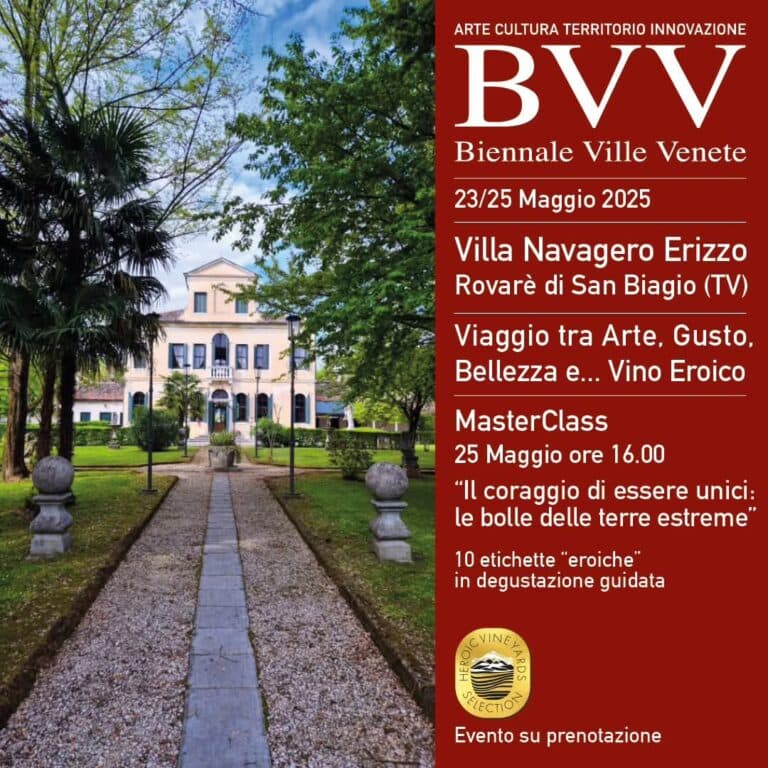
For the past five years, Elena Santagà has been in charge of organising events in the villa and in the barchessa, both for weddings, birthdays, conferences and private events and by creating public events in collaboration with Biennale Ville Venete and Grande Galà della Moda, with recurring appointments dedicated to Alto Artigianato Italiano featuring the participation of some of the best Italian artisans.
History of Villa Navagero Erizzo
The Navagero family
Although the appointment of Giovanni Navagero as Podestà of Treviso in 1420 constitutes the first evidence of the link between the noble Venetian family and the territory of the Marca, the earliest documentary traces of a Navagero residence in the countryside of Rovarè, complete with outbuildings for the management of the farm estate, appear for the first time in the will of Bernardo Navagero (dated 16 July 1576), probably a nephew of the cardinal and bishop of Verona of the same name (Venice 1507 ; Verona 1565).
It is nevertheless plausible to assume that the country house already existed in the first half of the 16th century and that it was a holiday retreat of Andrea Navagero (Venice, 1483 ; Blois, 8 May 1529), poet, humanist and refined man of letters as well as a close collaborator of Aldus Manutius, considered one of the greatest publishers and printers of all time.
Supporting this hypothesis are Andrea Navagero’s Epigrams, in which the author, immortalised alongside Agostino Beazzano in Raphael’s 1516 portrait, sketches scenes from life in the Treviso countryside and references to the country residence in Rovarè.
Also noteworthy is the year 1595, engraved on the bell of the oratory.
From the 1710 land registry records we learn that the sumptuous property included a “brolo arativo, prativo, vitato con palazzo dominicale et sue barchesse, giardino orto e tutte le sue abentie et pertinenze, il tutto recintato di muro, sono campi 4 12”. The contemporary cadastral map presents the image of the house with a raised noble floor and an upper floor, characterised by five windows of reduced height.
This configuration, together with elements such as the coats of arms of the Navagero and Papadopoli families adorning the ground-floor fireplace and the polychrome marble decorations of the staircase, suggests that the raising of the original 16th-century structure may have involved Baldassare Longhena in the second half of the 17th century, a period during which the architect was working in Rovarè on the construction of Villa Da Lezze.
On the death of the last member of the family, also named Andrea, former decemvir and triumvir as well as a generous supporter of the Dominante in the Peloponnesian War, the property was acquired by the Erizzo family, who continued the enhancement works on the building complex and the flourishing landed estate.
Among the most significant cartographic records of the property is a drawing by the surveyor Alberto Cian, depicting a vividly coloured aerial view of the monumental complex, the brolo and the baroque garden in the locality of “Roverè”, a place-name that in 1811 changed to the current “Rovarè”.
The Erizzo family
Last descendant of the ducal family, Niccolò II Guido Erizzo (1761 – 1847) stood out for his refined ability to interpret and adapt to the profound changes in the European geopolitical landscape between the 18th and 19th centuries, from the decline of the Republic of Venice to the Napoleonic invasion, from the dissolution of the Kingdom of Italy to the establishment of the Kingdom of Lombardy-Venetia. Proof of this are the many honours he received: Knight of the Order of the Iron Crown, Count of the Austrian Empire, Councillor and Grand Chamberlain to the Emperor, as well as Grand Majordomo of the Kingdom of Lombardy-Venetia.
In addition to his recognised political acumen, Guido Erizzo also demonstrated ingenuity and entrepreneurial spirit in the building field, using, according to functional and decorative criteria, the materials recovered from the demolition of nearby Villa Da Lezze to improve the noble estate, as documented by Alberto Cian in the “Catastro e Disegni dei Beni fondi spettanti all’agenzia di Rovarè” of 1842.
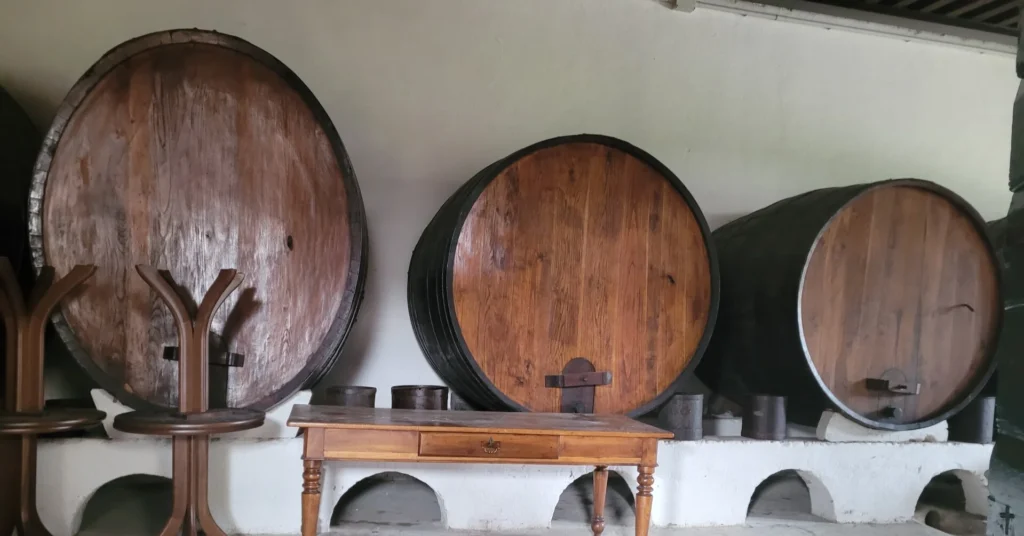
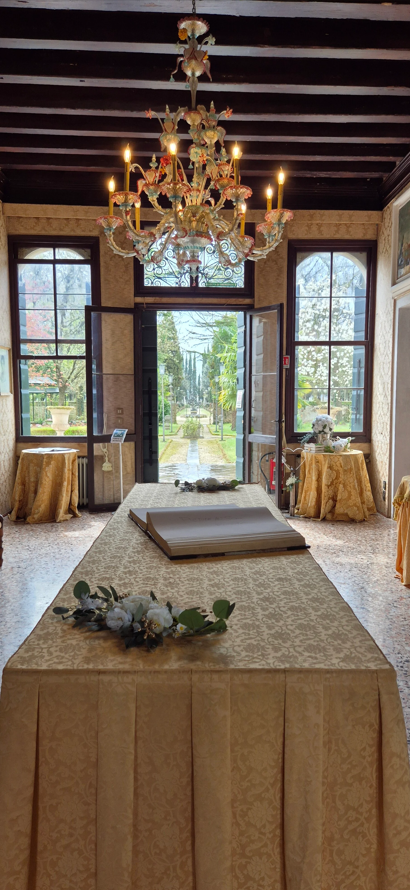
These works included the enlargement of the agricultural outbuildings, cellars and stables adjacent to the buildings of the complex, the construction of the portico between the main building and the Foresteria and the creation, inside the latter, of the winter residence, paved in terrazzo alla veneziana, in which the monogram “G.E.” is inscribed, together with the date 1811 and the Erizzo coat of arms (azure, with a gold bend bearing, at the top, a porcupine, at the bottom, a Gothic “E”).
The new oratory dates from 1818, the year shown on the dedication plaque.
Villa Navagero Erizzo from 1847 to the present day
In 1847, with the death without direct heirs of Guido Erizzo, the property was inherited by Marquis Guido Bandini. In 1850 it belonged to Mrs Maria Gaspari Balolarini, who in 1851 resold the entire estate to the Dalla Rovere family of Treviso.
Acquired by Tatiana Levada, Villa Navagero Erizzo was sold by her to the property developer Gastone Gasparello and, in October 1977, purchased by Gino Santagà, who, under the supervision of the Superintendency, began the careful restoration of all the buildings in the complex (main villa, private chapel, former stables, apartments in the east barchessa, and the rebuilding of the roofs and floors of the west barchessa), whose extraordinary results we can admire today.
Architecture of Villa Navagero Erizzo
The main house
The country house, with a square plan, consists of a raised floor dating from the 16th century to which the noble floor was added, most likely in the second half of the 17th century. Topped by a double-pitched roof, the central raising dating from 1901 extends across the full depth of the building, crowning its vertical development.
The façades of Villa Navagero Erizzo
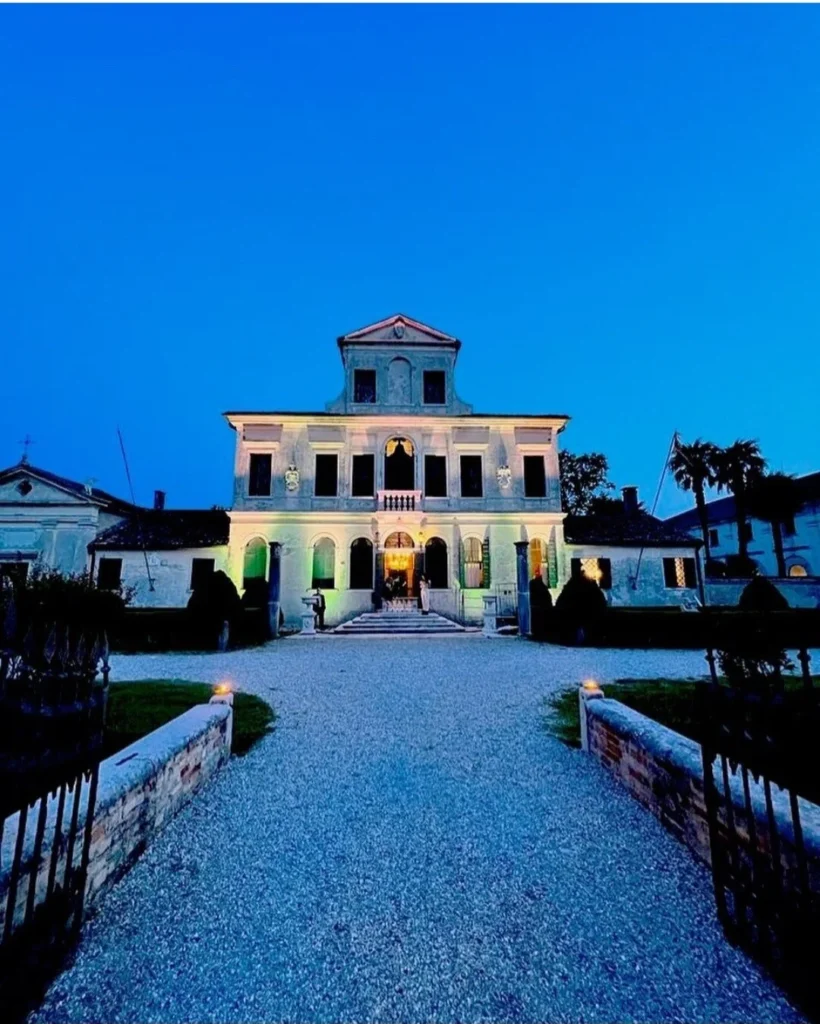
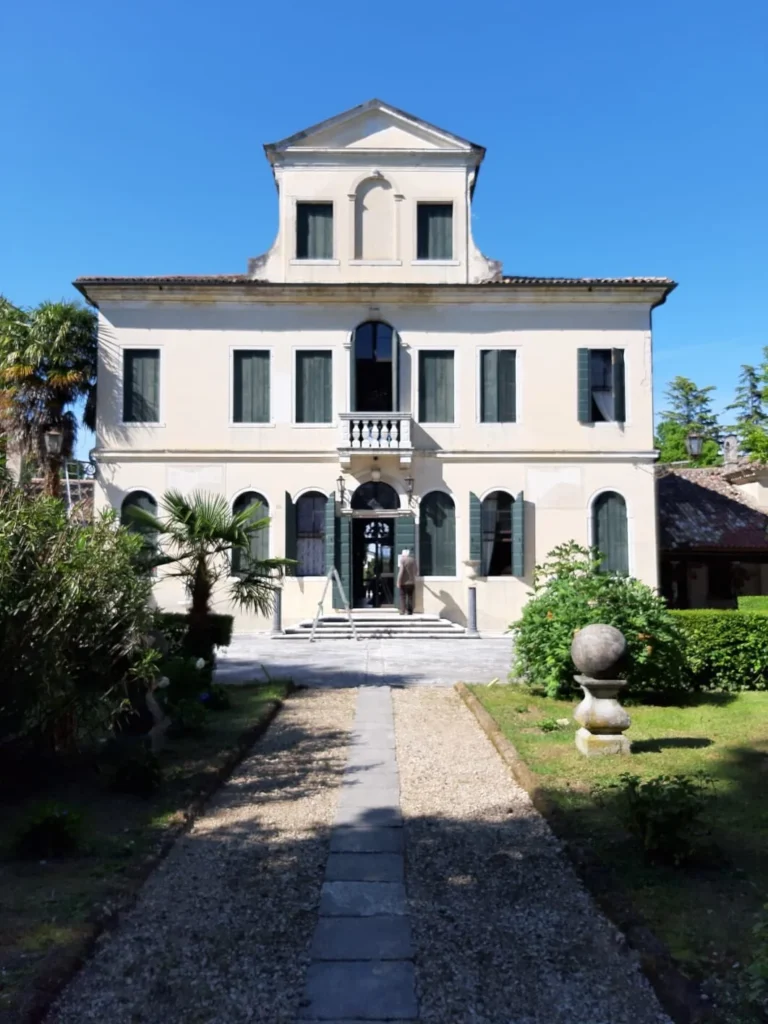
Topped by a triangular pediment, the façade of the upper volume features two rectangular windows placed on either side of a round-arched niche.
A stringcourse separates the round-arched windows on the ground floor from the rectangular ones on the first floor.
The latter flank a French window with a full-arched profile that opens, at the centre of the façade, onto a slightly projecting balcony, aligned with the entrance portal and the false opening of the pedimented volume above. Both the balcony and the window surrounds are finely crafted in Istrian stone.
Heraldic and decorative elements
On the northern front, at the height of the noble floor, the marble coats of arms of the Navagero and Erizzo families stand out, with helmet, volutes and plumes. The coat of arms of the Marino family, related to the Dalla Rovere family then owners of the complex, stands out on the façade of the habitable pediment.
The southern façade is adorned with a sundial and a zodiac with monochrome frescoed landscapes, probably dating from the late 19th century. On the ground floor, the focal point of the northwest room is the fireplace decorated with pink marble details and baroque-style stuccoes, among which the Navagero blazon and the symbol of the phoenix reborn from its ashes stand out.
The interiors of Villa Navagero Erizzo
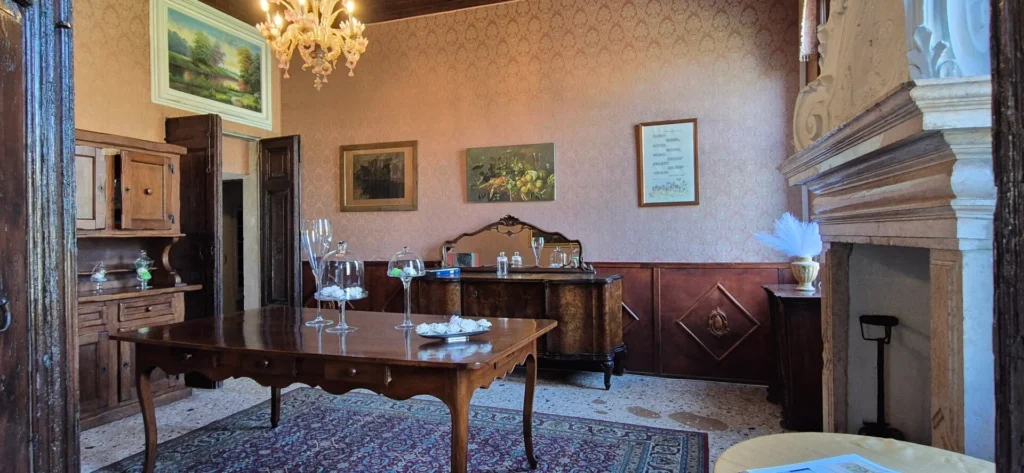
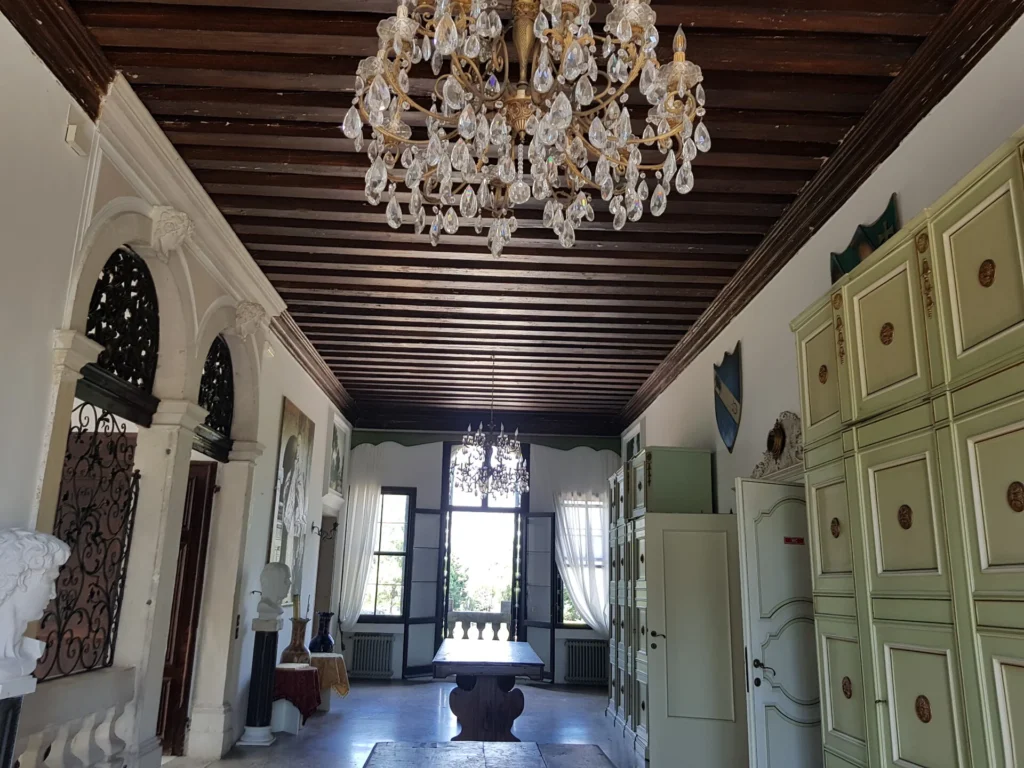
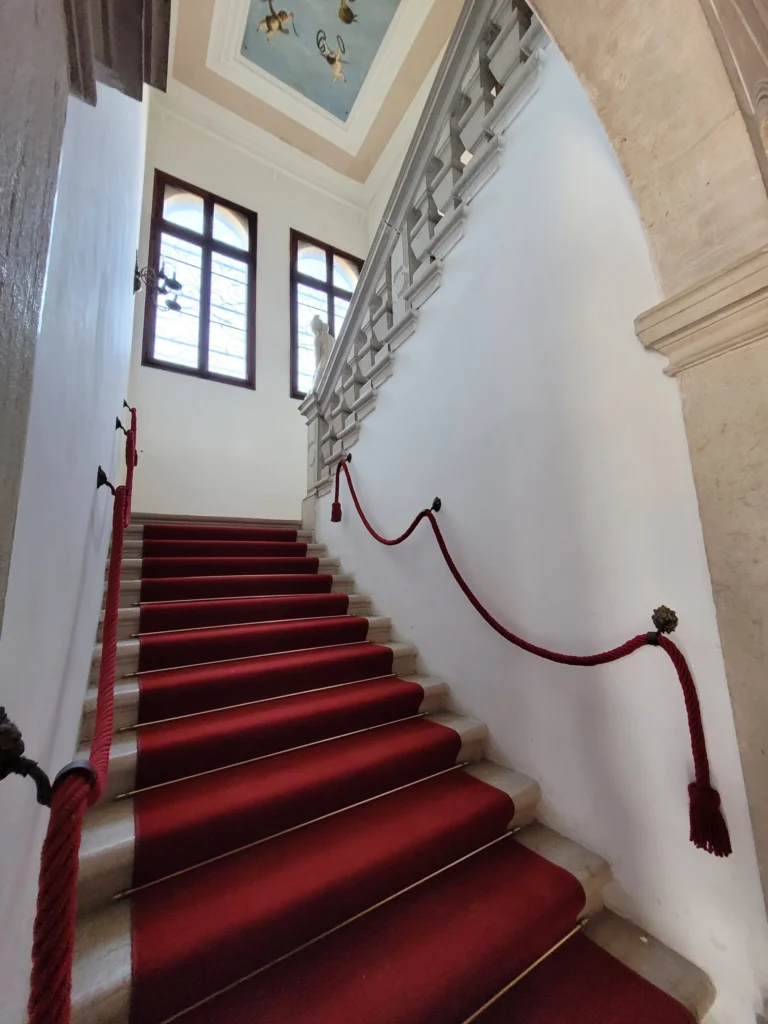
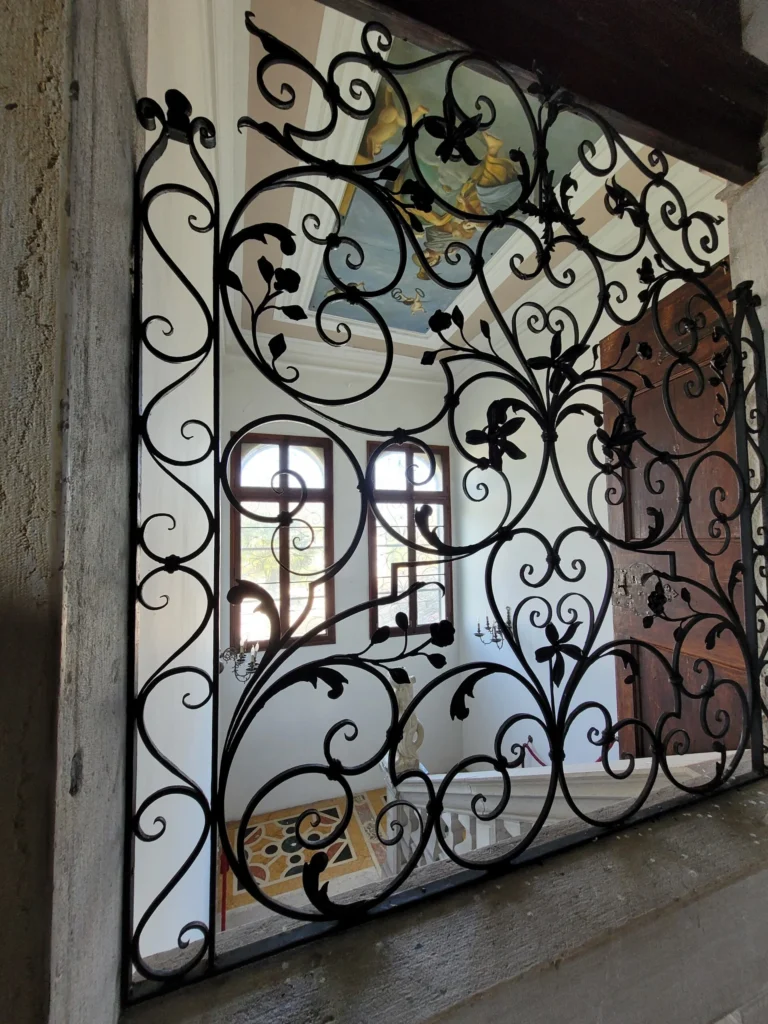
The traditional Venetian floor plan is reflected both in the composition of the façades, symmetrical and vertically tripartite, and in the layout of the interior spaces, which include eight side rooms, four per floor, arranged around the through saloons on the ground floor and the noble floor. Characterised by terrazzo alla veneziana floors and sansovinesque ceilings, the two levels are connected by a charming staircase with an Istrian stone balcony and a balustrade in polychrome marble.
One of the most architecturally valuable elements of the noble complex, the staircase is enclosed by a pair of arches with moulded Istrian stone frames. These are crowned by keystones depicting, on the ground floor, moustached warriors with feathered helmets, and on the floor above, female faces with elegant hairstyles.
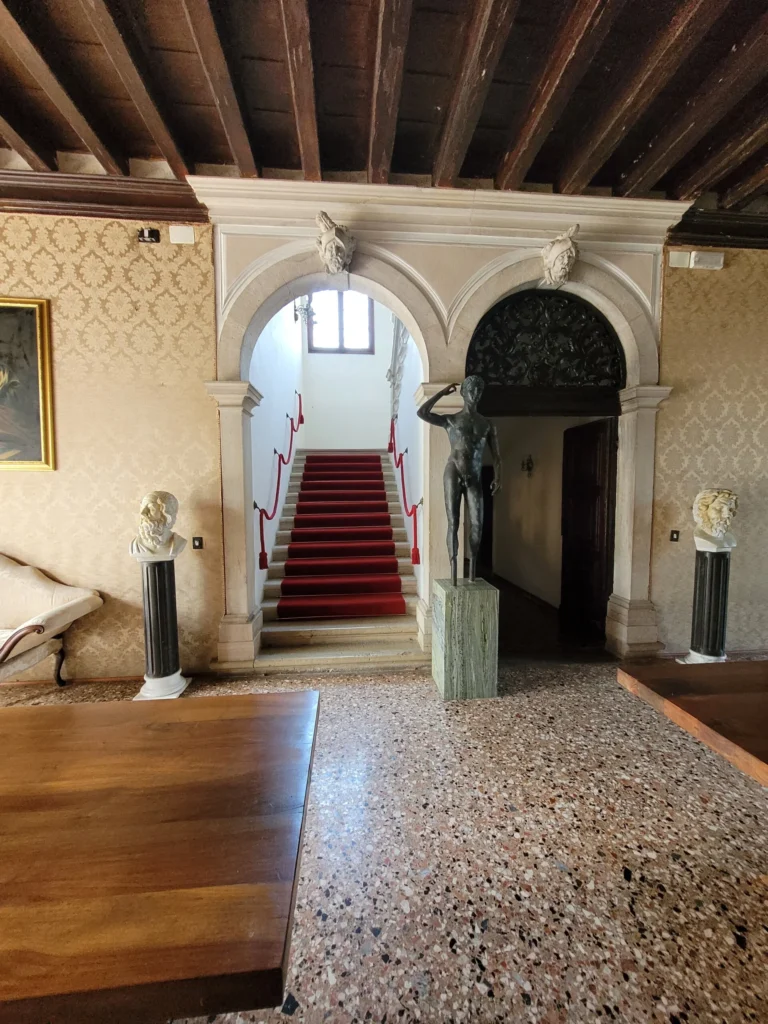
The presence in San Biagio di Callalta of the distinguished architect Baldassarre Longhena (Venice, 1597 ; 18 February 1682), engaged in the second half of the 17th century in the construction of Villa Da Lezze, together with the stylistic features of the staircase, which recall the monumentality of the one at the “Fondazione Cini” on the island of S. Giorgio in Venice, suggests that the staircase of the Villa in Rovarè should also be attributed to Longhena’s hand.
The barchesse and the oratory of Villa Navagero Erizzo
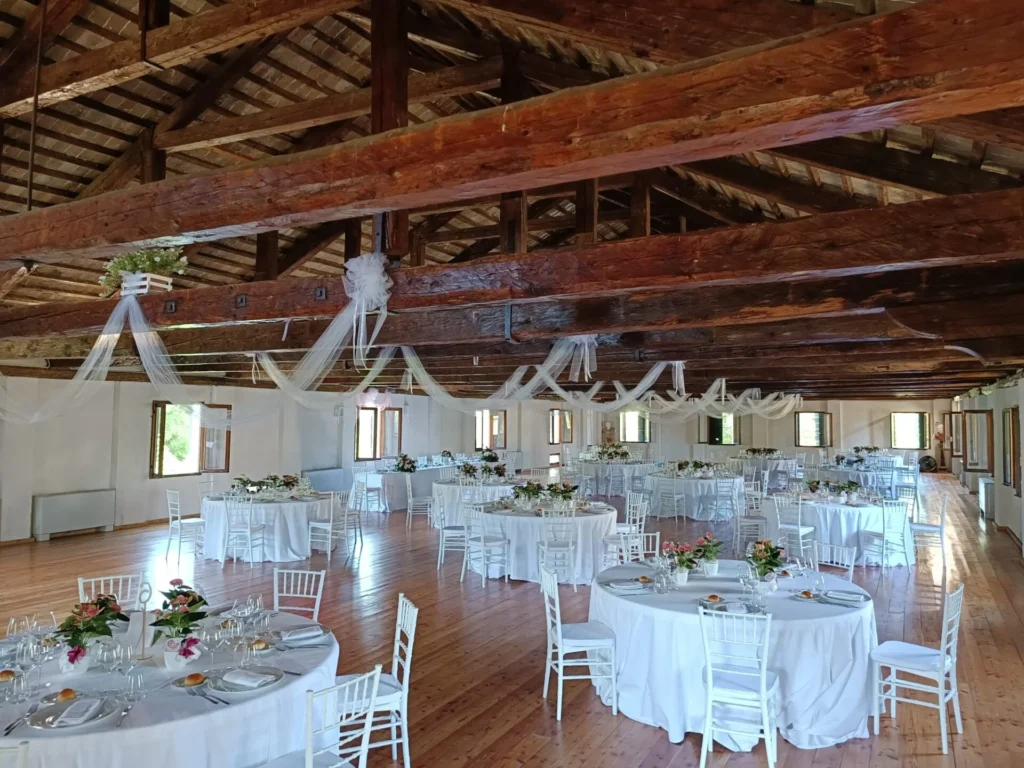
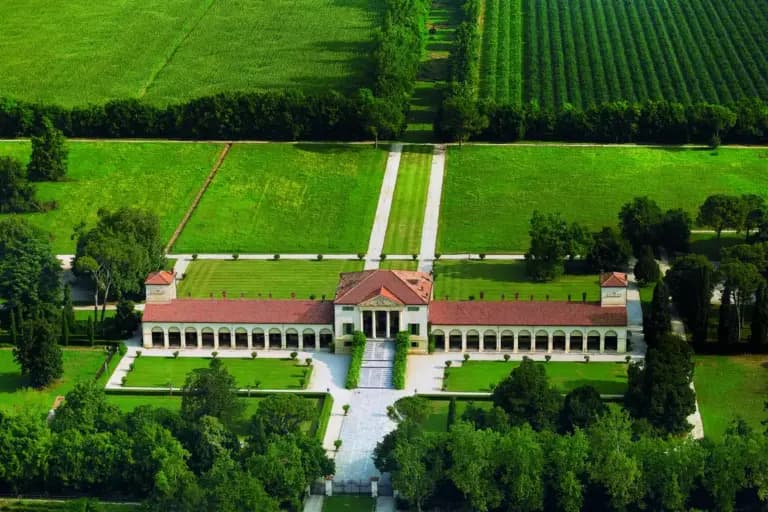
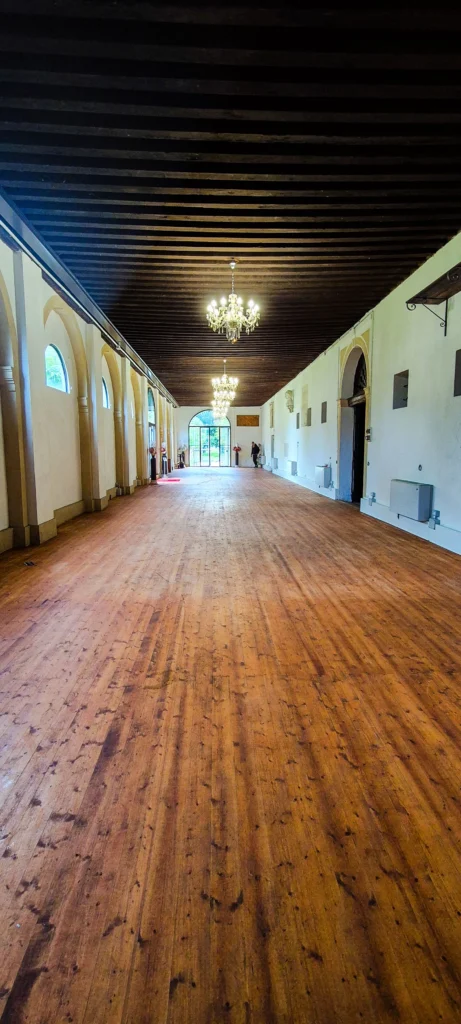
Orthogonal to the development of the villa, two majestic rectangular barchesse extend towards the garden and the brolo of the noble estate. The broad round arches that ventilate the monumental buildings, some of which were closed in the early 20th century, are interspersed with Tuscan-order pilasters.
Perfectly aligned with the representative façade of the main building and with the ends of the two barchesse, the façade of the oratory continues this architectural language. Completed in 1818 at the behest of then owner Guido Erizzo, this stylistic choice can be seen in the Tuscan pilasters framing the chapel entrance portal.
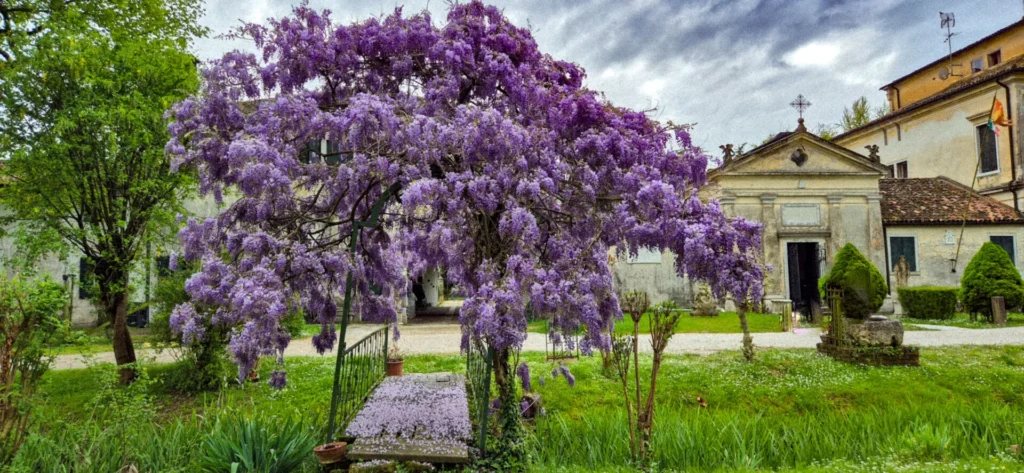
Dedicated to Our Lady of the Rosary, the oratory houses a fine canvas by Francesco Trevisani from the early 18th century, originally depicting the Virgin of Mount Carmel, skilfully reworked to suit the new dedication.
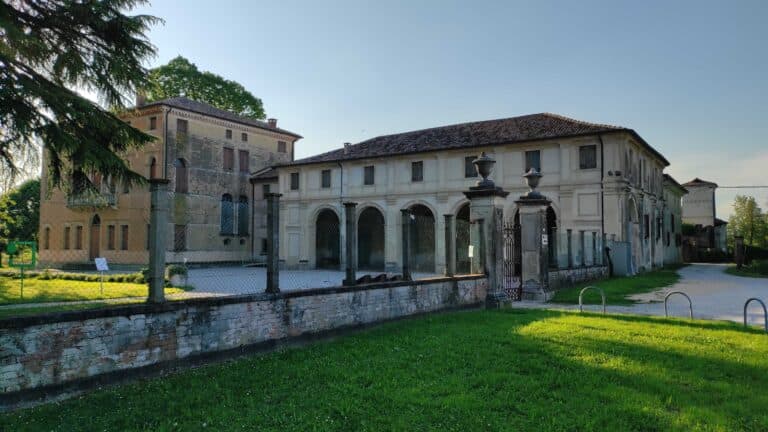
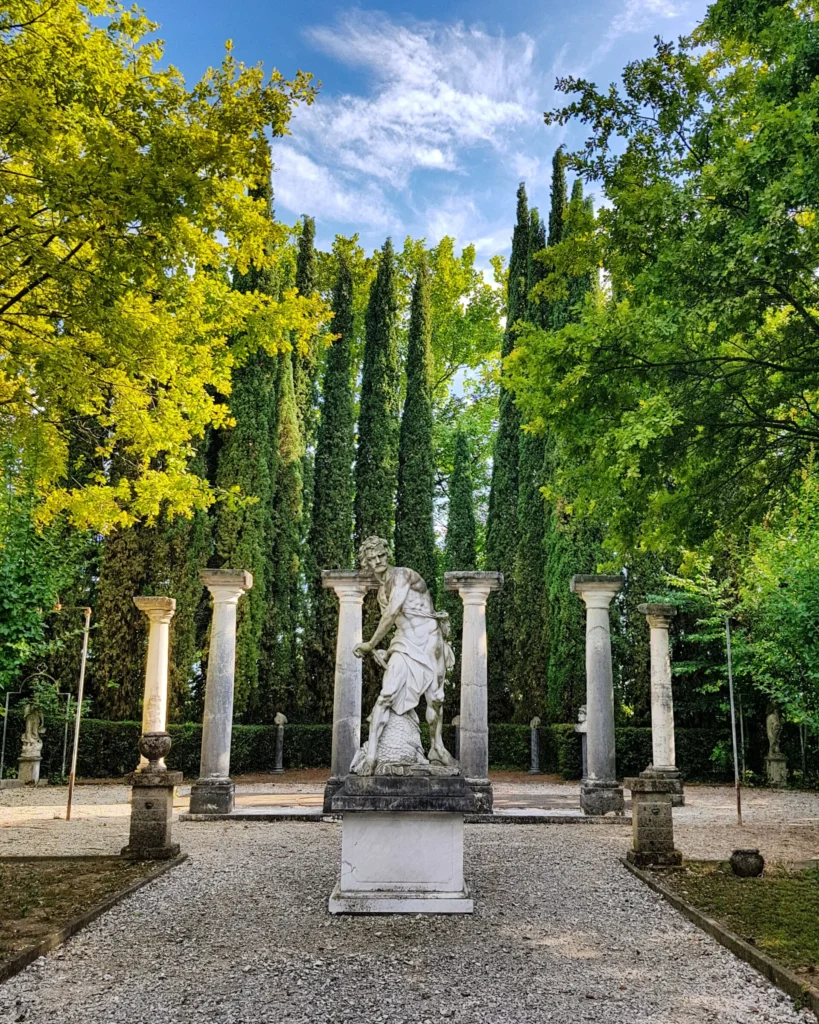
Created in the 19th century by Guido Erizzo, the charming portico that connects the main residence to the Foresteria is supported by marble columns recovered from the cedar groves of Villa Da Lezze.
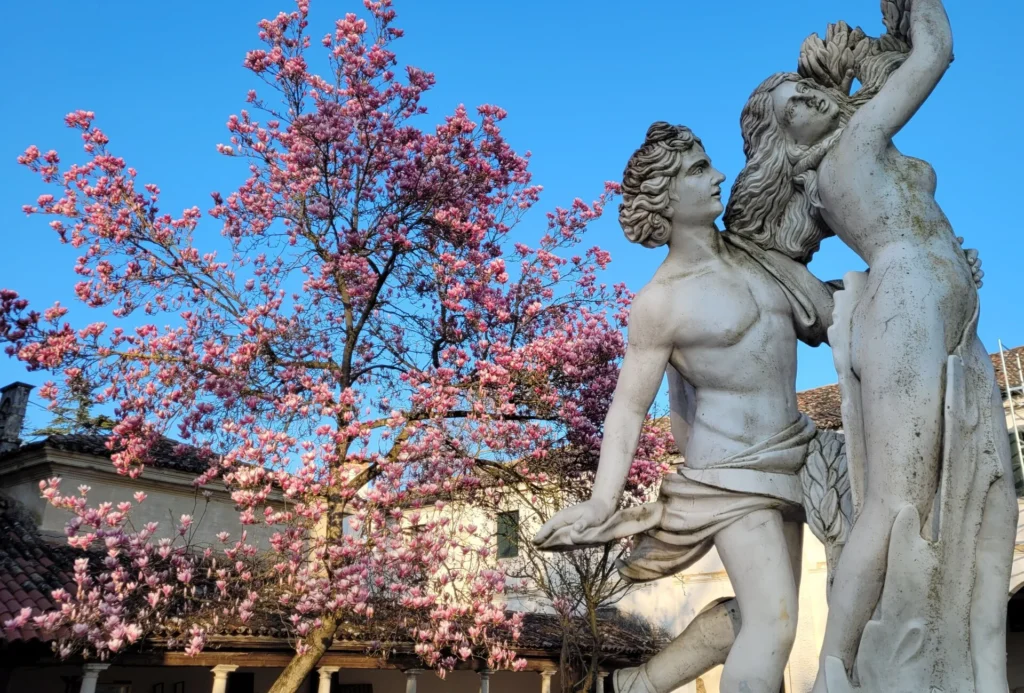
Linked to the pleasant rural landscape of the Treviso area through a lush centuries-old wooded park, Villa Navagero Erizzo combines the Renaissance ideal of the villa estate, in which the main residence is at once a holiday home, a place of otium and the focal point of an efficient agricultural enterprise, with the scenic refinement of Venetian Baroque expressed by one of its most authoritative interpreters.