
An invaluable gem nestled in the heart of Roncade, Villa Giustinian, Ciani Bassetti represents the harmonious synthesis of art, Renaissance architectural genius, nature and food and wine.
The Castello di Roncade is a must-see destination for anyone who wishes to discover one of the most significant cultural landmarks in the history of Italian art.
The origin of the Castello di Roncade
The oldest documents attesting to the presence of a manor on the site where Villa Giustinian, Ciani, Bassetti stands date back to the second half of the 10th century, when Otto II, co-emperor of the Romans from 967 and King of Italy from 980, donated this noble residence to the Collalto family.
The patronage
Razed to the ground by the Veronese condottiero Cangrande della Scala, the noble residence was rebuilt in the early years of the 16th century at the behest of Agnesina Badoer and her second husband Girolamo Giustinian, an important Venetian patrician who later became Procurator of San Marco.
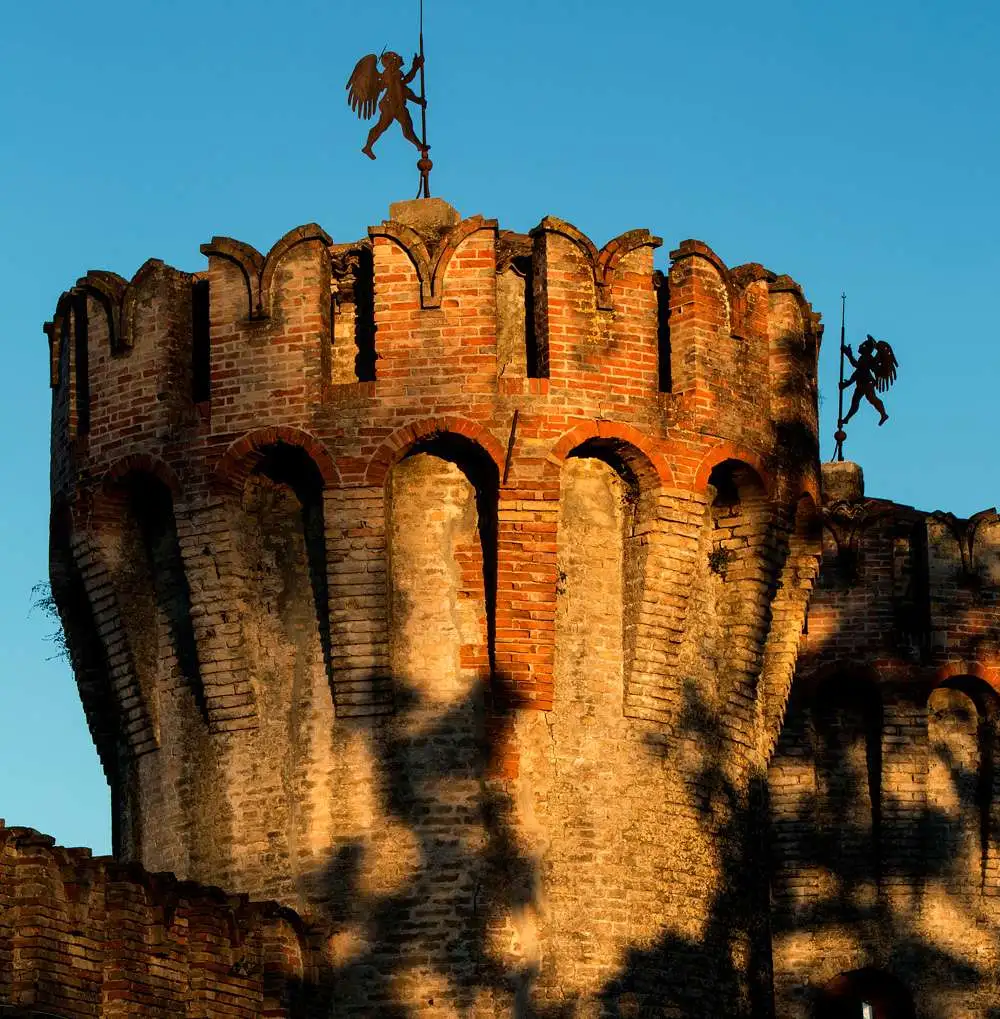
The coats of arms of the noble families adorn several sculptures in the villa garden and stand out on the cylindrical turrets at the entrance to the pre-Palladian villa.
When was the Castello di Roncade built?
The design and construction period of the noble residence has been identified as spanning from 1497 to 1508.
A polychrome map from 1536 illustrates the completed architectural complex, in all its splendour, just as it appears today.
The architecture of Villa Giustinian, Ciani Bassetti
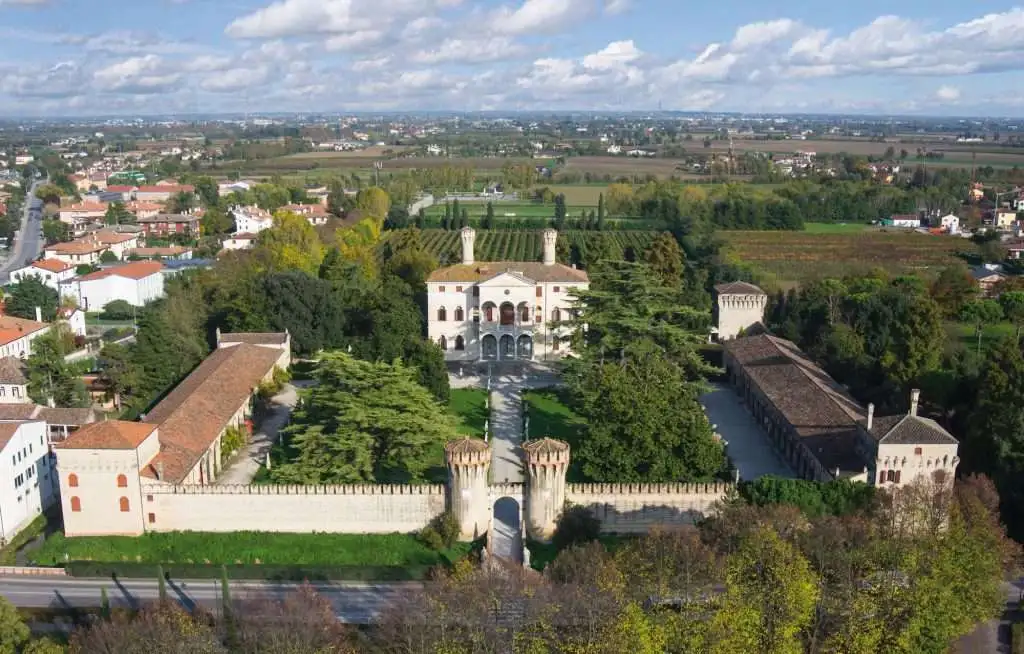
The walls, the towers, the barchesse
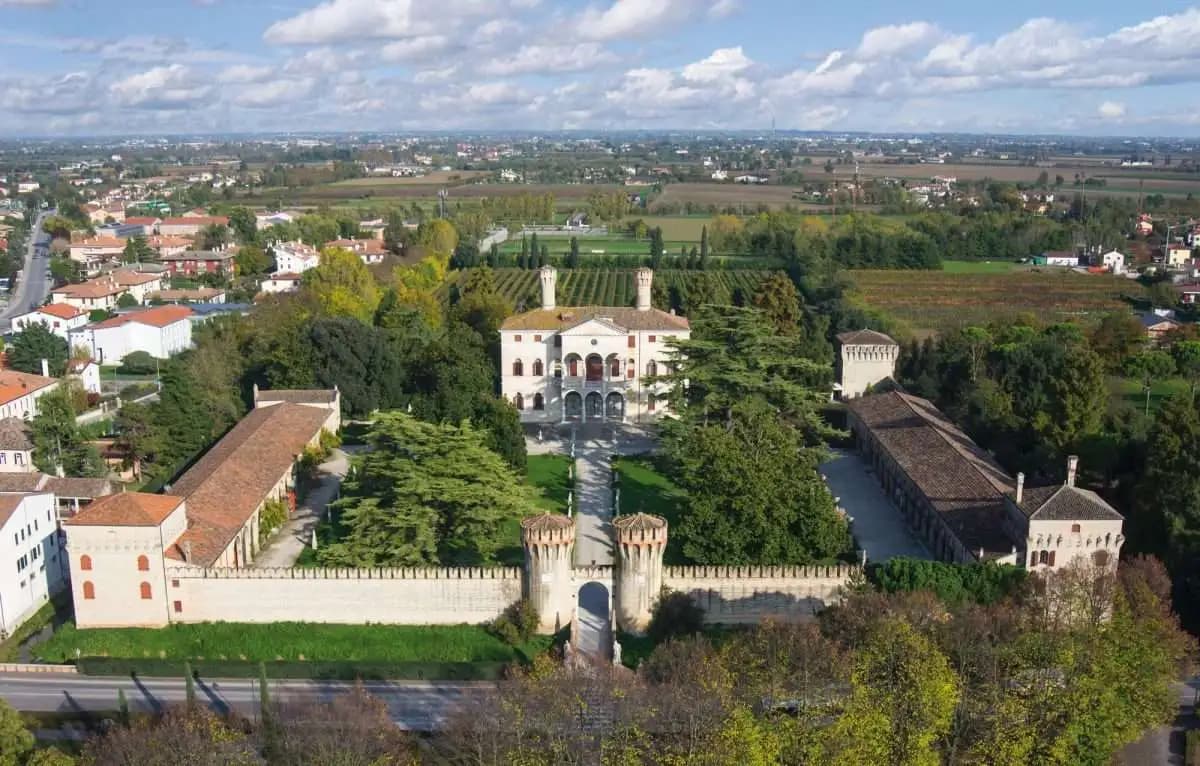
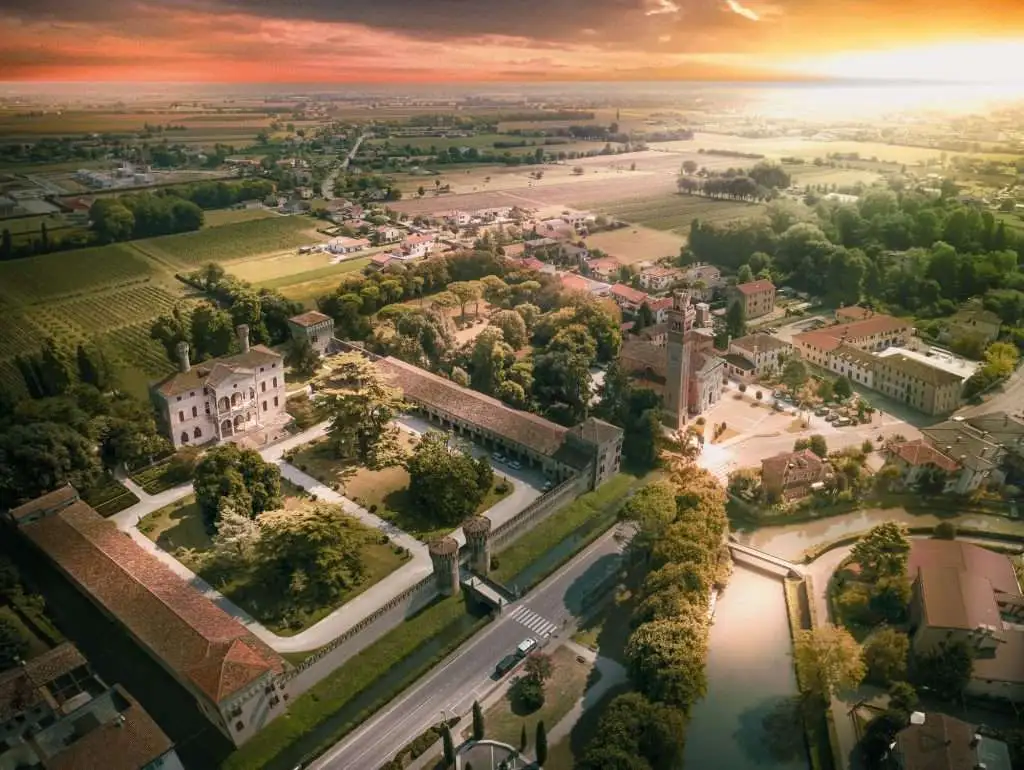
The 16th-century villa is framed by two majestic porticoed barchesse and by seven-metre-high walls crowned with swallowtail battlements.
Bounded by four massive corner towers, the perimeter of the property is externally crossed by a deep moat, whose grassy banks are linked by a charming little bridge that leads to the main entrance.
The large round arch that gives access to the radiant tree-lined park is flanked by two soaring battlemented cylindrical towers, whose shape is echoed by the two refined chimneys rising above the villa roof.
The main body
Vertically divided into three sections, the main residence features in the centre a double projecting loggia marked by round arches supported by columns in Istrian stone. Completing the vertical development of the structure is the elegant dentilled triangular pediment.
On the ground floor and first floor, windows with round arches open, while on the mezzanine there are square windows aligned with those below.
The garden of Villa Giustinian, Ciani Bassetti
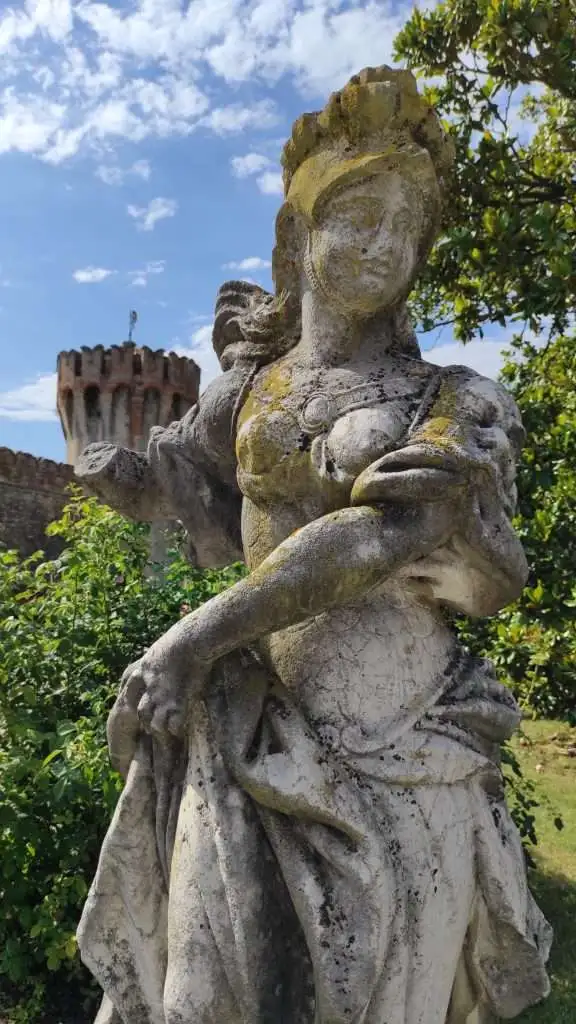
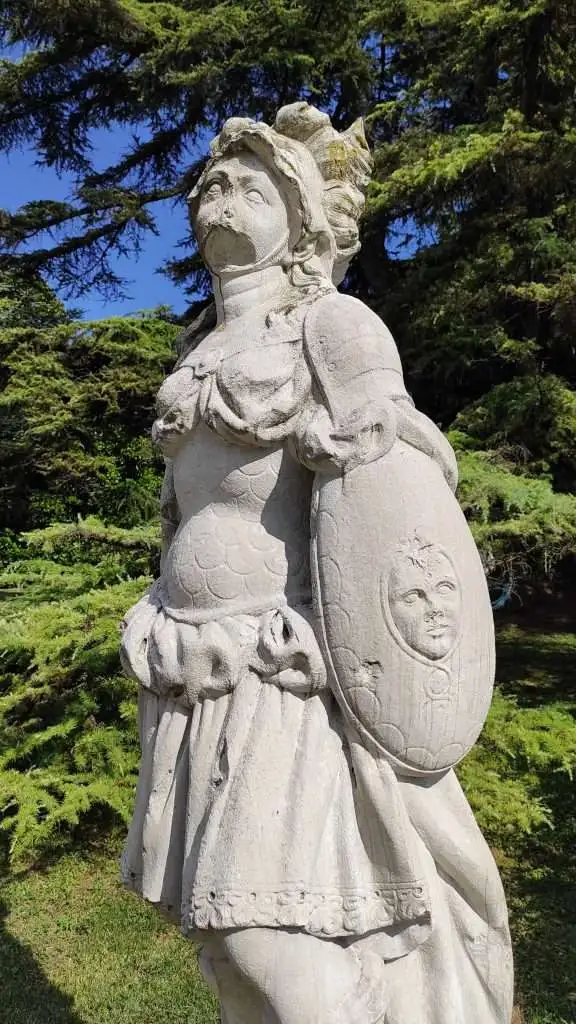
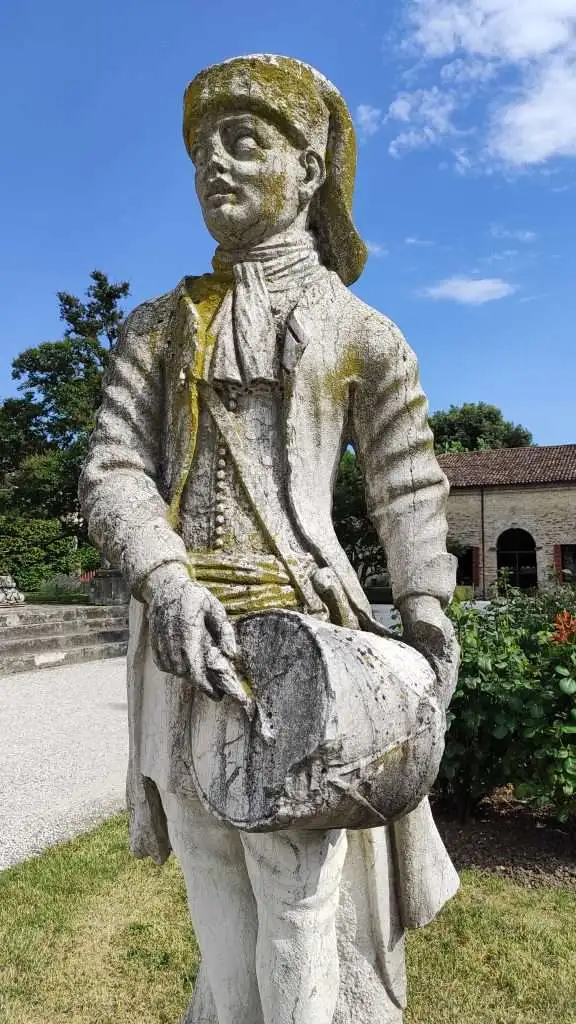
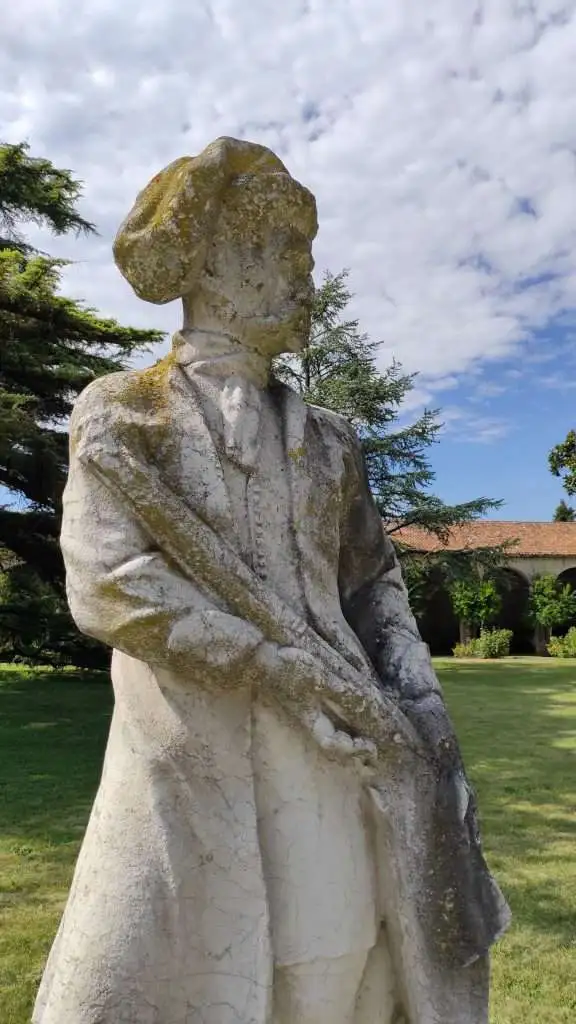
The delightful garden is dotted with centuries-old monumental trees, among which two Lebanon cedars and two magnolias stand out. The garden is further enhanced by twenty-five Istrian stone statues representing a company of schiavoni, an armed unit of the Republic of Venice, among which the figures of arquebusiers, drummers and standard-bearers stand out. The sculptural group also includes female figures in ceremonial dress. These precious works date back to the period between the 17th and 18th centuries.
Of no doubt note are the statues placed on the bridge, attributed to the Venetian artist Giovanni Marchiori (1696 – 1778).
The winery
Characterized by fertile, healthy soil and a delicate microclimate with scant rainfall, the estate’s one-hundred-and-ten hectares of vineyards guarantee the production of top-quality wines that can be tasted during guided tours and bespoke events.
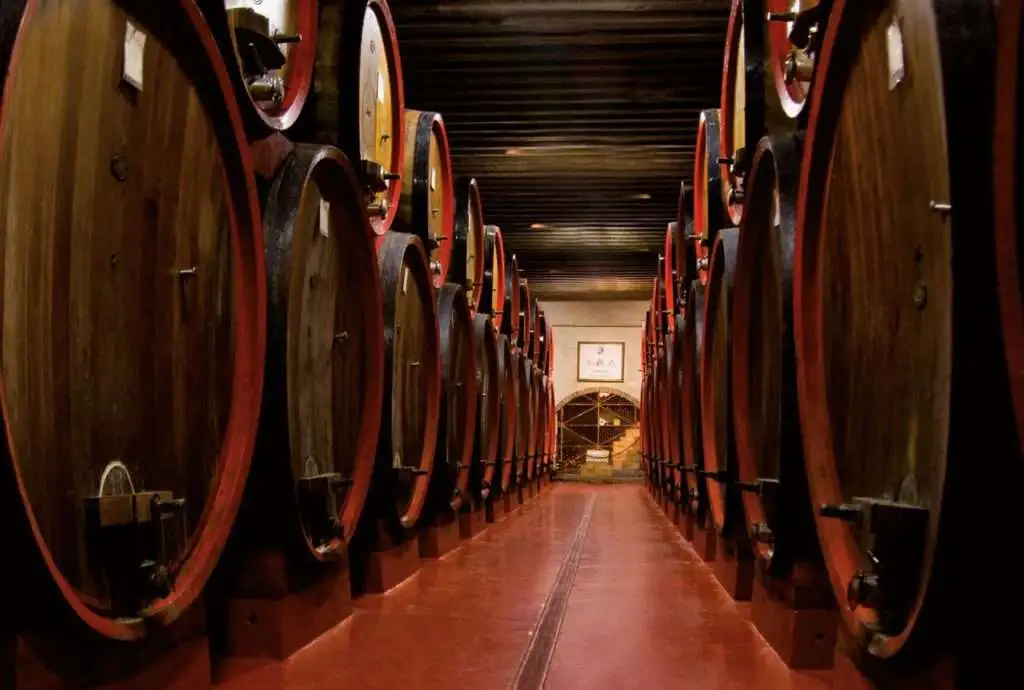
One of the most fascinating experiences Villa Giustinian, Ciani Bassetti offers its visitors is the walk beneath the castle walls to discover the red-wine ageing cellar, an ideal setting in which to appreciate the organoleptic qualities of the estate’s wine production.
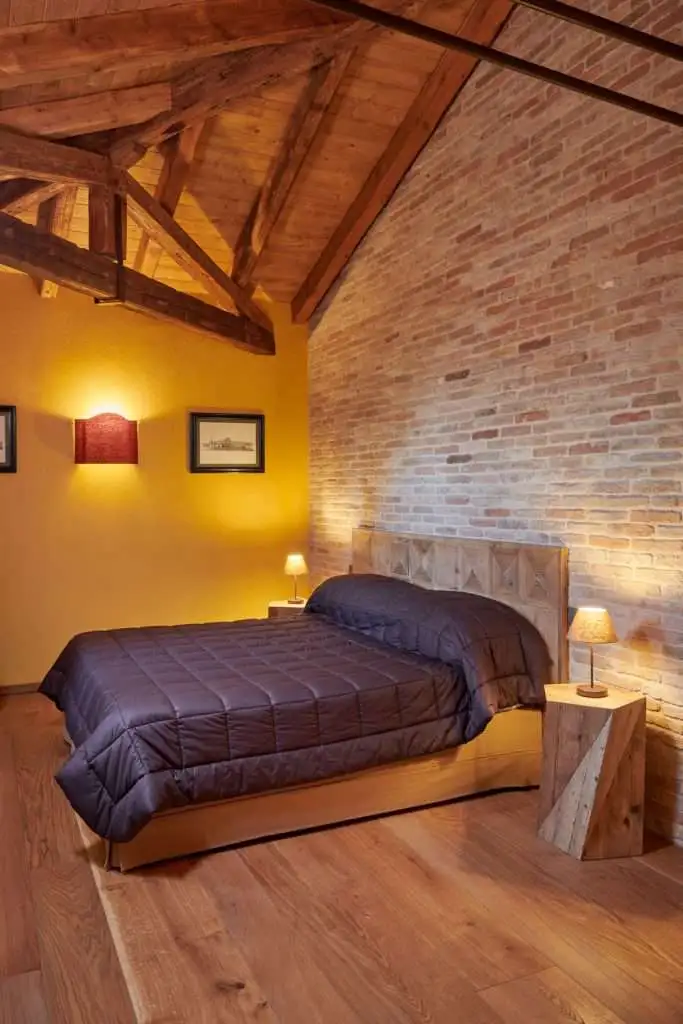
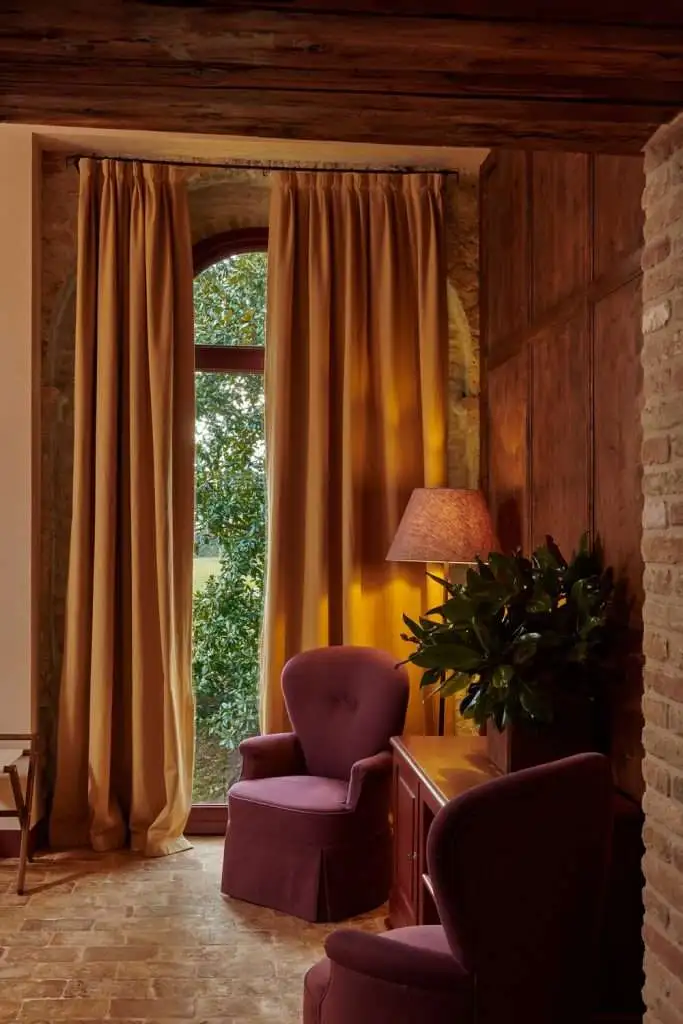
The castle also makes the villa rooms and the towers available, allowing visitors to immerse themselves in the fairytale atmosphere of this extraordinary 16th-century manor.
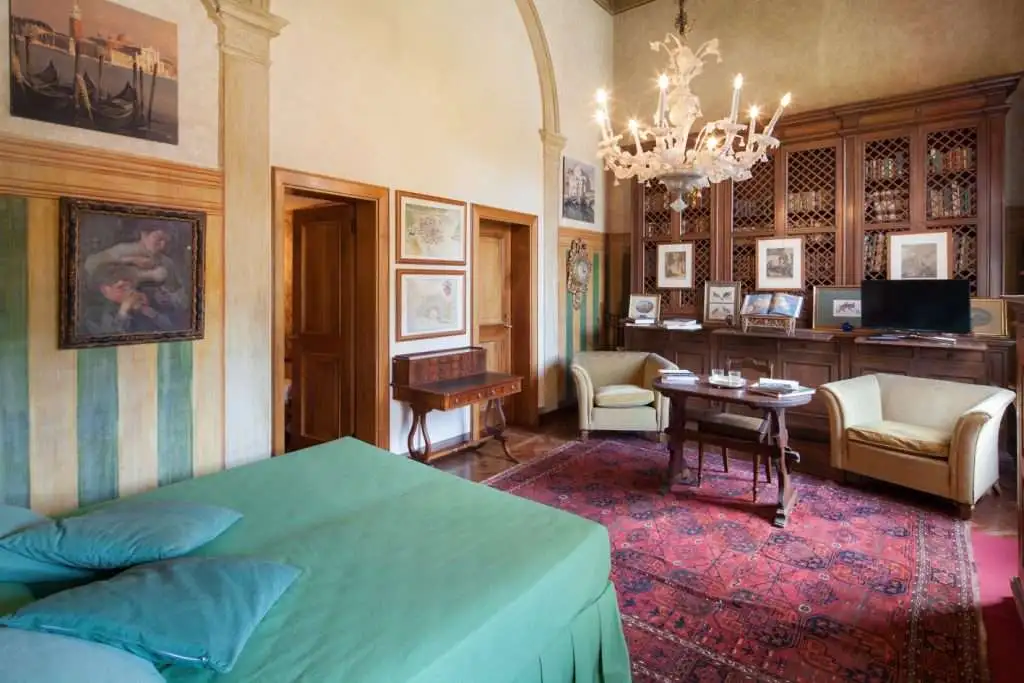
On the Castello di Roncade website you will find all the information regarding events, walks and guided tours. If you are interested in enjoying a unique experience by staying in the villa or in the towers of this fascinating 16th-century architectural complex, the website provides all the information you need.