
Index
Where is the Brion Memorial located?
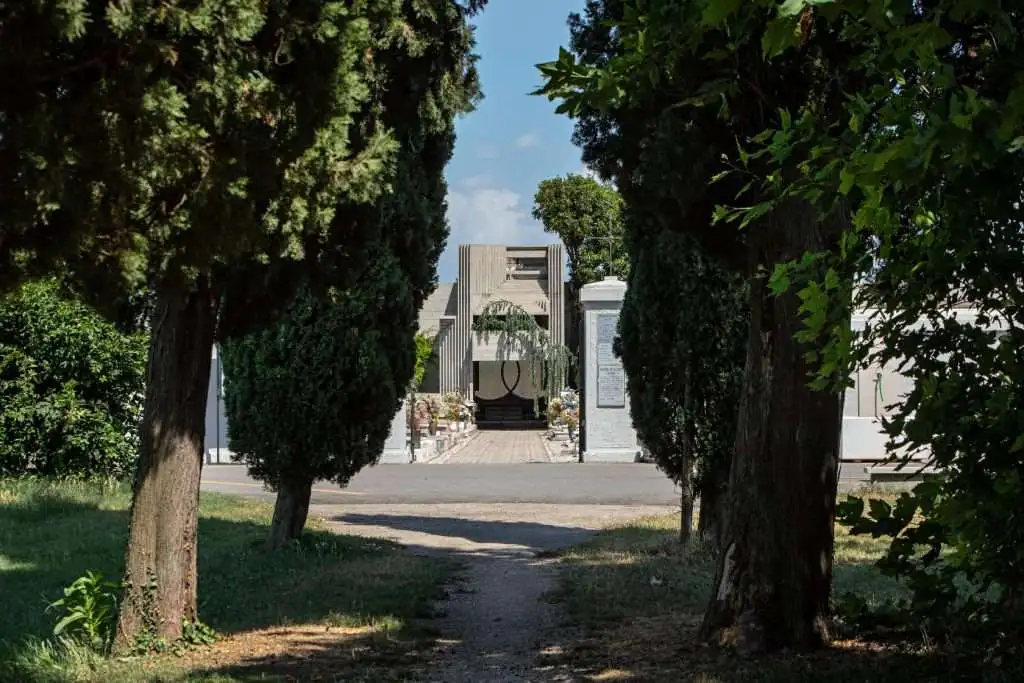
A masterpiece by Carlo Scarpa (Venice, 2 June 1906 – Sendai, 28 November 1978), the Brion memorial occupies an area of over 2,200 m² extending along the eastern and northern sides of the cemetery of Altivole, on Via Brioni.
The monumental complex was commissioned in 1969 by Onorina Tomasin-Brion in memory of her late husband Giuseppe Brion, who died on 12 September 1968.
Born in San Vito d’Altivole on 26 May 1909, Giuseppe Brion was the founder and owner of Brionvega, a leading company in the production of audio and visual devices in the postwar period.
The huge success of this entrepreneurial venture lay in the original synthesis between the cutting-edge technology of electronic devices and their fascinating futuristic aesthetic, inspired by the period when Americans and Soviets challenged the cold, mysterious depths of the cosmos to be the first to land on the Moon.
The rounded, futuristic and captivating lines that distinguished Brionvega’s production echoed the enthusiasm of the space age that, from the late 1950s onward, had captured the collective imagination, creating an irresistible, iconic and timeless design.
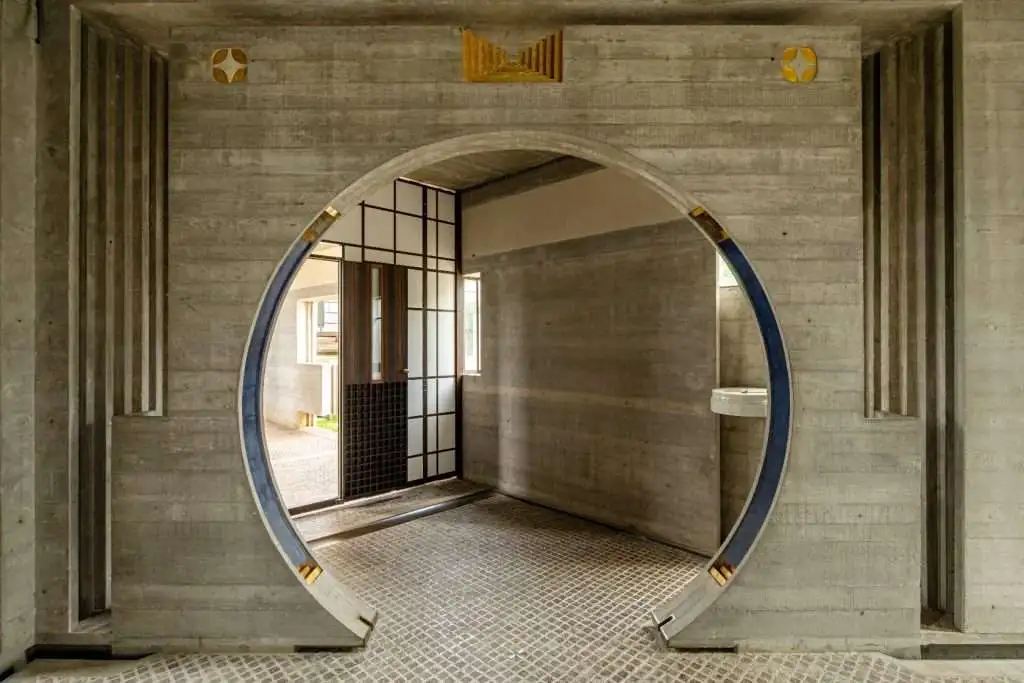
The architecture of the Brion tomb
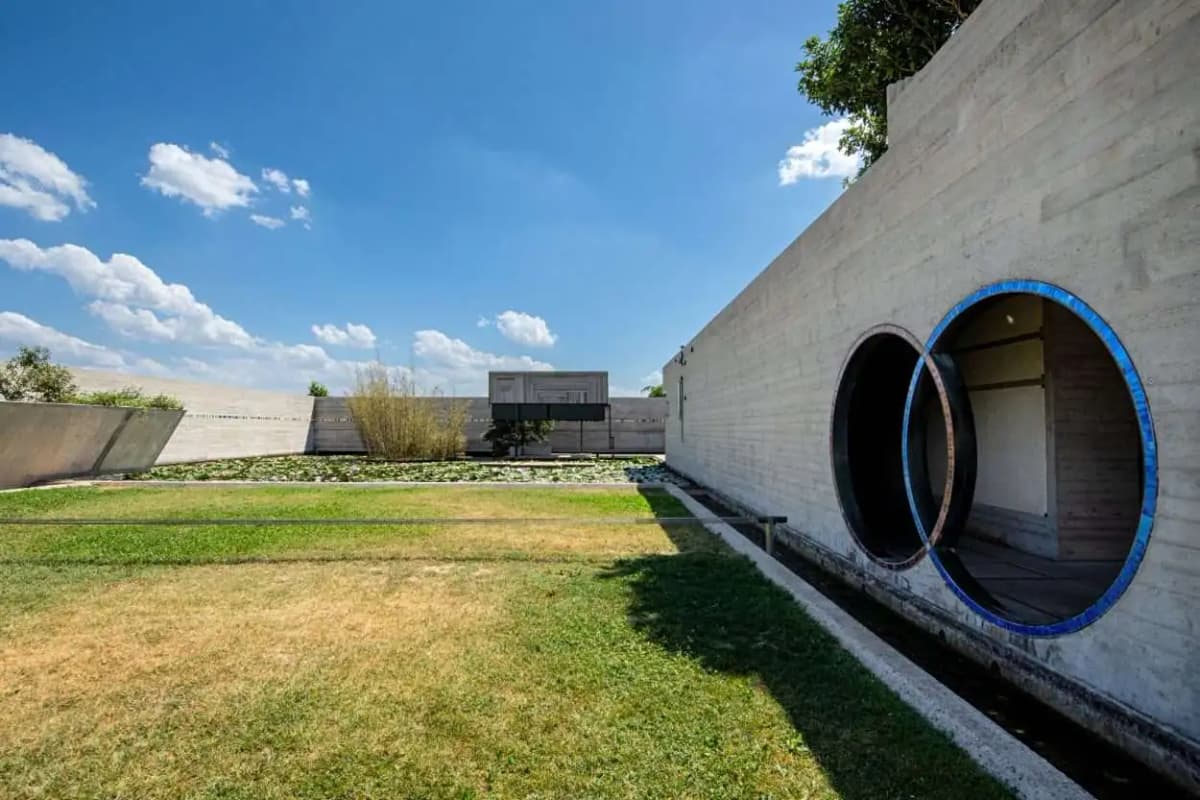
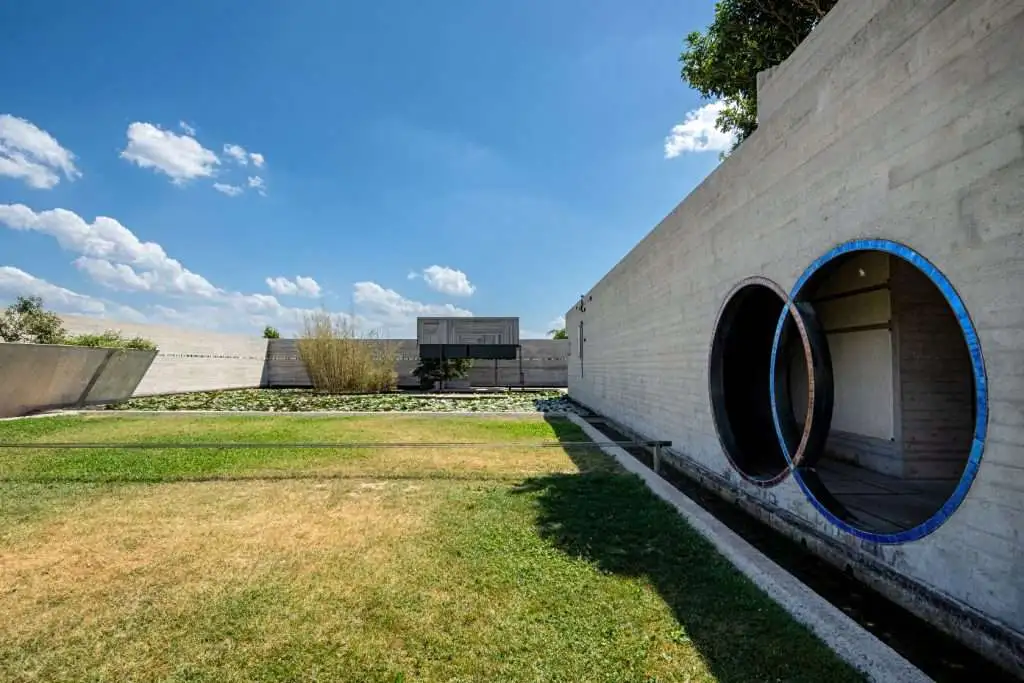
Raised above ground level, the memorial area is defined by an L-shaped layout, bordered by a concrete wall perimeter tilted at 60° that separates it from the serene rural setting of the Treviso area, marked by lush cornfields and bright avenues of dark cypresses.
The propylaea
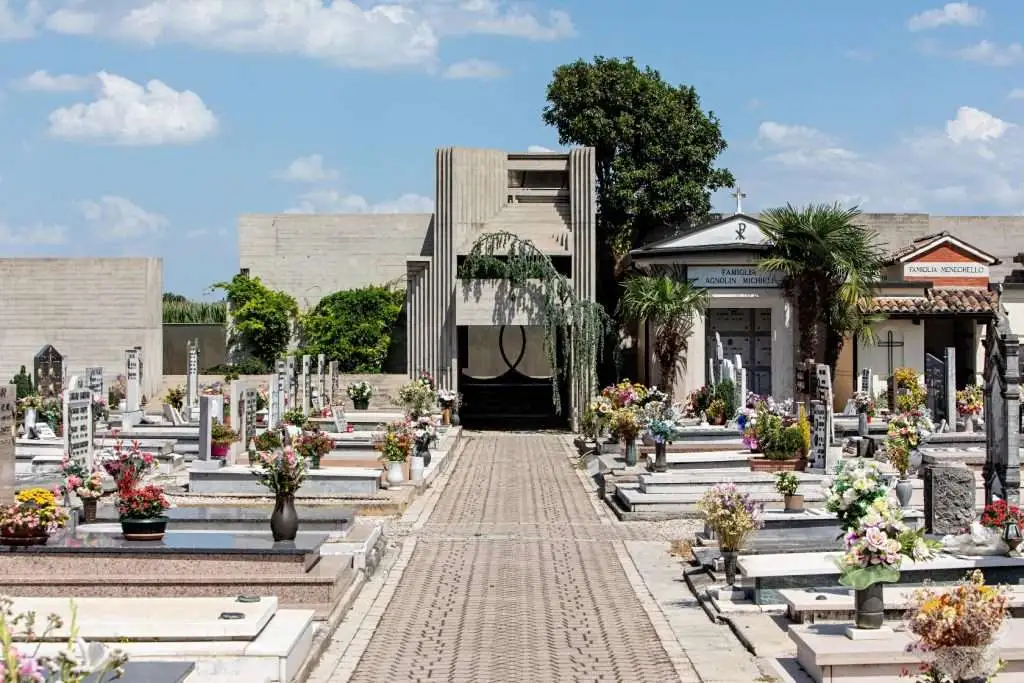
The memorial is accessed through a monumental entrance called the propylaea, a term of Greek origin meaning “situated in front of the gate”, the most representative example of which is the grand colonnade of the 5th century BC that provided access to the Athenian acropolis.
Inside the propylaea, three steps, shifted to the left, connect the level of the cemetery to the raised level of the monumental complex.
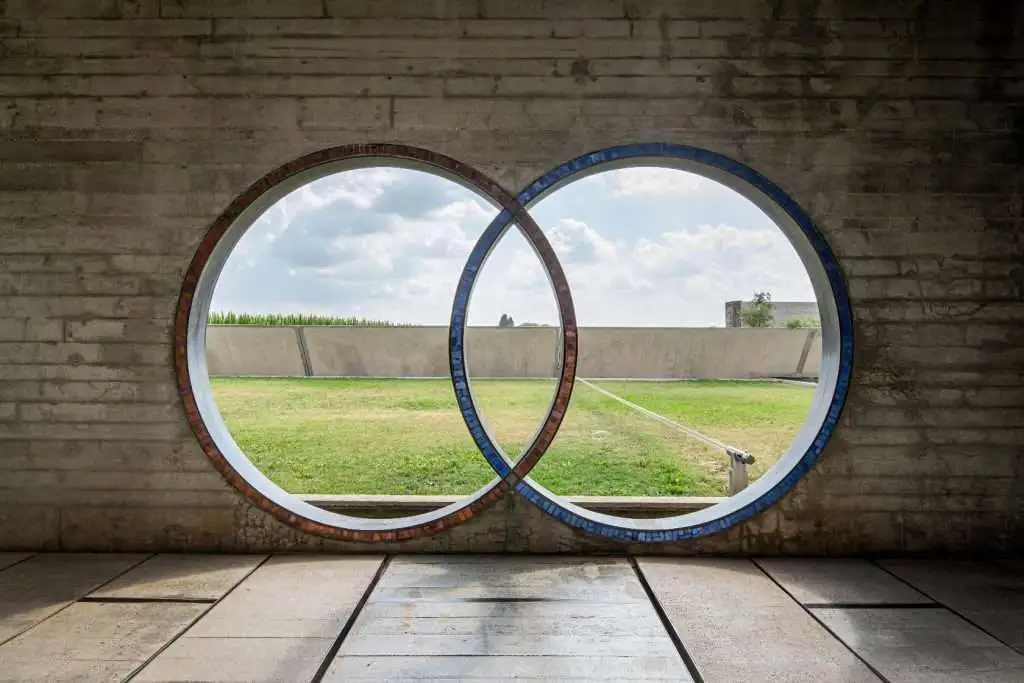
In front of the steps stand two interwoven rings, a representation of love and the happy marital union between the two spouses. The rings are coloured pink on the left and blue on the right, whether viewed from the east or from the west, which means that both colours are present on each ring, a poetic expression of how the identities of Onorina Tomasin and Giuseppe Brion completed one another.
The arcosolium
A perpendicular tunnel oriented along the north-south axis connects to the propylaea. Continuing north, you reach the arcosolium, a lowered concrete tomb arch beneath which the spouses’ sarcophagi are placed; their slanted position symbolises dialogue and the eternal bond between Giuseppe and Onorina.
The intrados of the majestic arch that rises above the two burial chapels is softened by a mosaic sky vault with blue, green and gold tiles.
The Family Chapel, the Brion Tomb, the little temple
Along the northern side of the funerary complex are arranged, in addition to the arcosolium, the relatives’ tomb, the sacristy and the little temple for funeral ceremonies. The latter consists of a concrete cube framed by a sheet of water and a cypress avenue. Set in a secluded area between the Brion Memorial and the cemetery of Altivole, Carlo Scarpa’s tomb, which now also holds the remains of his wife Nini Lazzari, was designed by his son Tobia and Fabio Lombardo, also an architect.
The pavilion on the water
If you proceed to the right from the propylaea, a narrow corridor that allows just one person at a time to pass leads to the meditation pavilion. It is surrounded by a large water basin covered with water lilies. The roof of the small building has golden panels on the inside, while the external panels are made of larch.
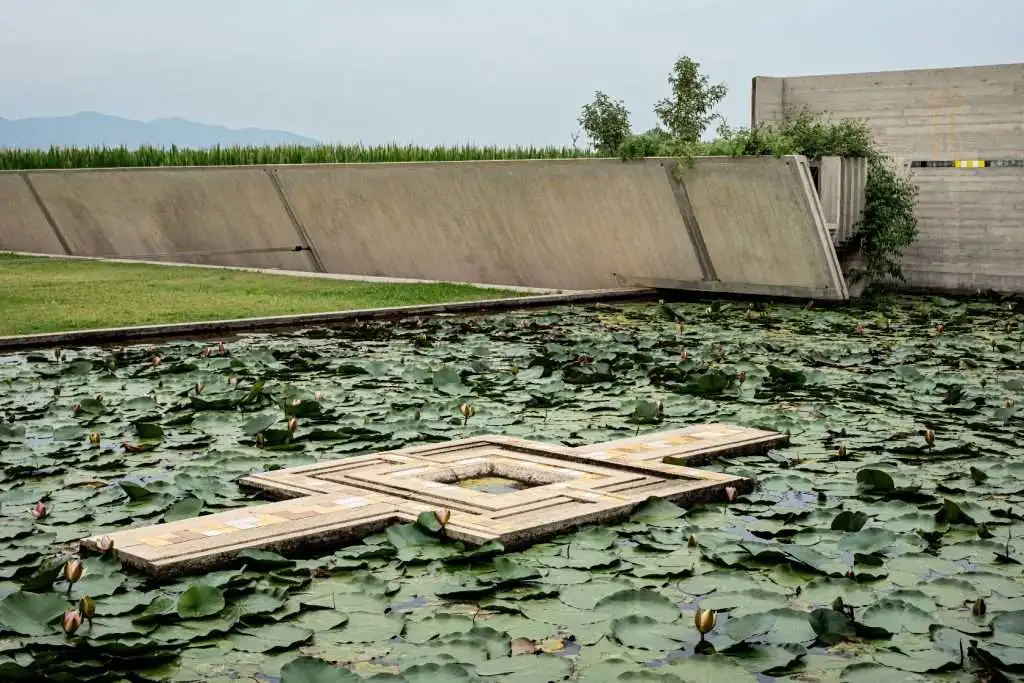
From the position of this elaborate artificial island, the gaze is directed north towards the arcosolium, with the bell tower of the church of San Vito and the evocative profile of the Colli Asolani in the background.
The skilful plays of light, the unpredictable and sinuous geometries of the monumental complex and the masterful use of water as a unifying element among the various architectural components of the Brion Memorial create a sacred atmosphere that guides visitors to discover ancient worlds, from shining funerary monuments inspired by Etruscan civilisation to silent Japanese islands inhabited by goldfish, wrapped in water lilies and dotted with reed beds.
Nestled in the rural heart of Altivole, the Brion Memorial is an oasis conceived to honour the memory of beloved ones and ease the turmoil of the soul. Immersed in a timeless dimension, this contemplative place invites reflection on life and death with calm and unruffled detachment.
Opening hours and guided tours
Open free of charge, the Brion Memorial is the first and only FAI memorial at national level.
During visits, you are asked to turn off your mobile phone and keep your voice low.