Are you wondering what to do in Fregona? Discover breathtaking natural sites and unforgettable food and wine events! The 2022 edition of the Torchiato Exhibition of Fregona, the ruins of Piai Castle, the Cansiglio Plain, the Art Wood and the Pont del Ferr Trail.
Torchiato Exhibition
Where is the Torchiato Exhibition held?
The Torchiato Exhibition will take place at the Torchiato Producers’ Drying Center in Osigo, at Via Castagnola, 50, 31010 Fregona (TV).
Origin of Torchiato di Fregona
According to tradition, a particularly cold season in the early 17th century led a winemaker from Fregona to place the grape clusters on the attic floor to complete the ripening process in a place that was both ventilated and dry.
To press the grapes, which had a soft consistency and high sugar concentration due to water loss, the farmer used the press to obtain the must, which he then fermented in special wooden barrels.
The result was a passito wine with an amber color, golden hues, a sweet taste and delicate toasted notes, ideal for tasting before and after meals.
The wine event will take participants on a sensory journey to discover the peculiarities that make Torchiato di Fregona a unique and valuable wine, the result of three pressings to extract the delicate nectar from the pomace.
Today’s processing method combines modern technologies with ancient tools to obtain a product faithful to the centuries-old tradition, through which you can perceive the flavors and aromas of the land of Fregona and its sunny hills, marked by the regular succession of lush vines, immersed in a fairy-tale atmosphere that awaits only to be discovered and savored.
If you are wondering what to do in Fregona, attending the Torchiato Exhibition will be a memorable food and wine experience!
The ruins of Piai Castle
Where are the ruins of Piai Castle?
Standing on the summit of the mountain from which the fortress took its name, the remains of Piai Castle presumably rise on a pre-existing fortified settlement of Paleo-Venetian origin that arose thousands of years ago.
Cloaked in lush tree vegetation, the white sunny ruins are part of the cultural heritage of the branch of the da Camino di Sopra family and represent one of the most fascinating and romantic destinations in the province of Treviso, an irresistible destination for enthusiasts of quiet nature hikes on foot or by bike.
The thousand-year-old ruin rises in a dominant and strategic position from which you can see Mount Pizzoc near the Cansiglio Plain as well as the strongholds of Serravalle, Ceneda and the territories of the municipality of Sarmede.
Reduced to rubble partly due to the defeat suffered against Leopold of Austria, and partly due to the incursions into the Cenedese territory by the leader Filippo Buondelmonti degli Scolari, the stronghold was abandoned to the wild vegetation that partly covers its structure.
A discovery of impressive value for the ingenuity and skill with which it was made as well as for the extraordinary state of preservation, a medieval wooden chest bearing a sophisticated mechanism still intact that allows the safe to be opened through three locks.
Pont de Ferr Trail
How to reach Pont de Ferr?
To reach Pont de Ferr, you can leave your car at the Fregona football field parking lot on Via Concia 62.
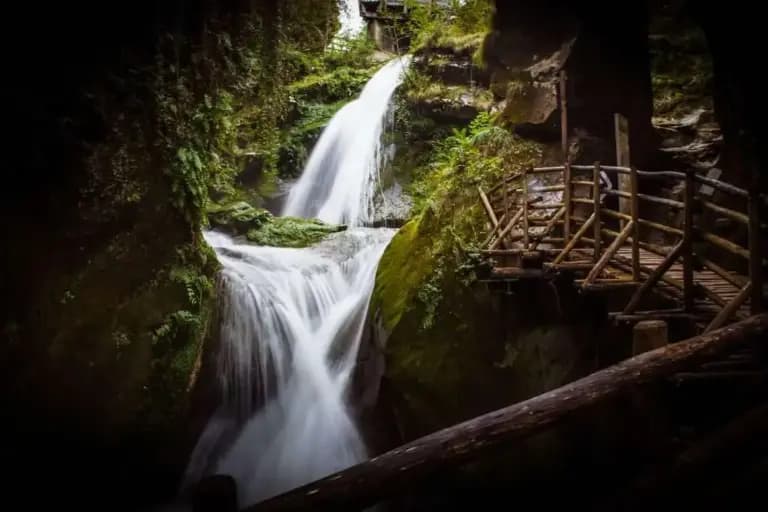
Following the signs for the nature trail, you will soon find yourself enveloped by the lush tree vegetation that you can explore via a partly dirt, partly cobbled path that leads to the iron bridge suspended over a lively and cold stream.
Continuing along the path that leads to the Caglieron caves (to which we have dedicated an in-depth article thanks to the kind collaboration of the Caglieron Caves Park) you will also find a fun equipped area for physical exercise and muscle stretching, beyond which you will reach the village of Breda (not to be confused with Breda di Piave!). Once you reach the intersection, keep right and take Via Grotte del Caglieron to visit one of the most evocative and enchanting locations in the Veneto region.
Visit the Art Wood
Where is the Art Wood located?
Located on Via Castagnola, 32, 31010 Fregona TV, the Art Wood is a large natural area whose thriving tree, shrub and flower vegetation forms a healthy and delicate ecosystem where various bird, mammal and insect species find their habitat.
The beneficial influence of the color green on the psyche, linked to the idea of rebirth and recommended for those seeking a place to regenerate, relax and restore their emotional balance, may be one of the reasons that have led several artists to combine their creativity and talent with this lush and silent oasis of peace, today a place for exciting excursions as well as the seat of an artistic workshop useful for giving shape to one’s inspiration and enriching the complex array of works of art that integrate and coexist harmoniously with the environment in which they are placed.
For those wondering what to do in Fregona, the Art Wood is an ideal place for those seeking inspiration in contact with a serene and uncontaminated environment.
Visit the Cansiglio Plain
Located in the provinces of Belluno, Treviso and Pordenone, the karst plateau consists of a large grassy depression enclosed by a majestic forest extending over more than 6,500 m², among whose tall and lush canopies a rare and precious mosaic of plant and animal biodiversity thrives and finds refuge.
The spectacular stratification of the tree heritage depends on a particular atmospheric phenomenon determined by the geological conformation of Cansiglio: cold air currents, denser than warm air, descend from the mountain ranges causing a greater lowering of temperatures in the valley compared to high-altitude areas.
Delimiting the vast grassy expanse is the grand coniferous forest where Norway spruces dominate, with their solemn bearing and suited to freezing climates. As the altitude increases, you can glimpse silver firs, distinguishable from the former by their silvery bark and dark green needles bearing two thin white lines that follow their profile.
Longer-lived than the Norway spruce, which can live up to 400 years, the silver fir can reach 600 years of life.
With thin bark and slightly wavy, elliptical leaves, beeches rise at high altitudes where the temperature is milder and offer with their changing colors exciting panoramic views especially in autumn, when their canopies take on warm tones of golden, orange and bright red hues.
The centuries-old guardians silently watch over the ancient plateau, offering shelter with their prickly canopies to various bird species such as the goshawk, (recognizable by its white belly feathers with dark horizontal speckles), the kestrel, of the falcon family, with brown feathers and black spots, as well as the black woodpecker, the capercaillie, the buzzard, the mysterious tawny owl, (difficult to spot as it is active mainly at night), just to name a few of the numerous bird specimens that find their habitat here.
A sleek, warm, vigorous and elusive animal, the male deer lives in the dark belly of the forest and announces its presence during the mating season by showing its mighty branched antlers and emitting powerful roars that break the night silence, intimidating rival males and asserting its rank to females.
Uncorrupted by human intervention, a vast portion of the fragile ecosystem shows the characteristics of a primordial and uncontaminated environment where life and death intertwine beneath the great arboreal dome, among whose fronds, sometimes still sometimes shaken by the wind, lights and shadows dance in almost total silence among the unpredictable reliefs of limestone rocks that emerged from the sea millions of years ago.
Solemn columnar trunks, deep fissures, mysterious caves and the cold water mirrors of the sinkholes create an environment of spectacular beauty suitable for hosting countless species of mammals, including squirrels, deer, badgers, bats, moles and hedgehogs.
For nature lovers wondering what to do in Fregona, the VenetoAgricoltura website offers several itineraries that will guide you to discover one of the most fascinating natural parks in the world.