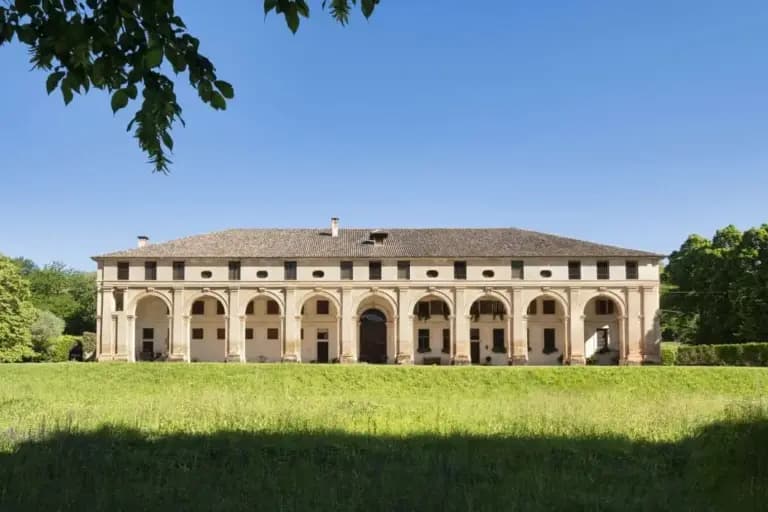

Discover things to do in Volpago del Montello: spectacular 15th-century buildings immersed in greenery, nature trails exploring the enchanting wooded sites of the western slope of Montello, and characteristic folk traditions that form the soul of an ancient community.
Where is Volpago del Montello located?
The municipality of Volpago del Montello in the province of Treviso borders to the north with Moriago della Battaglia and Sernaglia della Battaglia, to the south with Trevignano, Paese and Ponzano Veneto and Povegliano, to the east with Povegliano and Giavera del Montello, to the west with Crocetta del Montello, Montebelluna and Trevignano.
Things to do in Volpago del Montello?
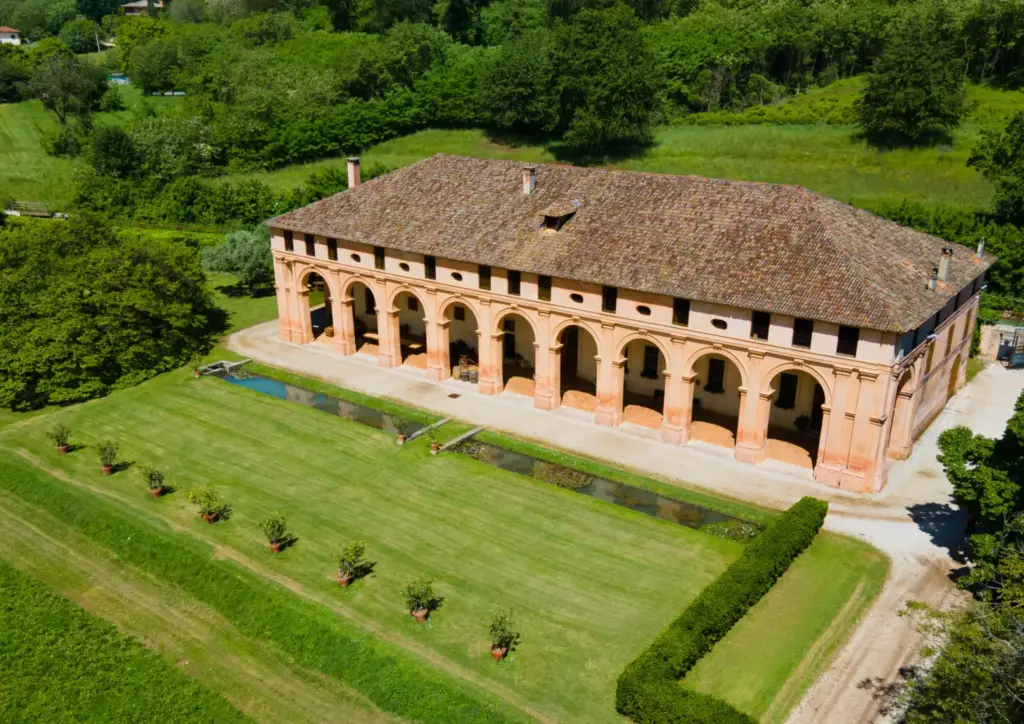
A visit to Barchessa Loredan
Events and celebrations
Between the first and second week of October you can take part in the Montello and Chestnut Festival at Santa Maria della Vittoria, an event where you can eat excellent roasted chestnuts, visit the local artisans’ market, and attend commemorations of the Great War.
Undoubtedly more religious in nature but no less important is the Festival of the Holy Cross in Selva del Montello, where, between the second and third week of September, after the procession with the holy relic, a food and wine event kicks off, accompanied by musical and fireworks shows.
If you are wondering what to do in Volpago del Montello, these events are ideal for those looking for events that promote local craftsmanship and gastronomy, through handicrafts and typical products that pass on the cultural identity of this charming town in the upper Treviso plain.
Nature trails
The numerous roads that climb Montello offer the possibility of entering the forest paths of this unique area. Montello, in fact, is an isolated relief that reaches about 370 meters above sea level.
Climbing the mountain, you can reach the church of Santa Maria della Vittoria, built immediately after the end of the Great War to celebrate Italy’s victory.
Although originally a predominantly oak forest, Montello now has a prevalence of black locust, which is very invasive, but does not detract from the scenic beauty of these places.
Historical notes
The discovery of archaeological finds in Venegazzù has confirmed human presence since prehistoric times. The area was later inhabited by the Paleoveneti, although evidence of a Roman presence has been found near Lavaio.
During the Middle Ages, Volpago became the head of a pieve, while Selva was the site of one of the most influential castles in the area, namely that of the Vidoti family. Afterwards, under the Serenissima Republic of Venice, it was annexed to the Lordship of the Podestà of Treviso, under which it remained until the fall of the Republic itself in 1797.
Over the centuries, it became the seat of a silk mill and a sericulture center owned by the Gobbato family, pioneers of local industry, which provided employment for the population of the area and distinguished Volpago as an important center of silk processing.
During the First World War, it was here that the Battle of the Solstice was fought, which broke the Austrian advance.
Later, the Tromba del Montello, a particularly violent tornado that struck the area on July 24, 1930, irreparably damaged the parish church of Selva, which boasted one of the most important artistic heritages in the entire diocese of Treviso.
It was replaced by the new church (which today still contains what was saved from destruction of the ancient artistic heritage), designed by architect Fausto Scudo, who also designed the church of Santa Maria della Vittoria.
Volpago was also the birthplace of Jacopo Gasparini, a protagonist of the Royal Colonial Enterprise as Governor of Eritrea, from 1923 to 1928.