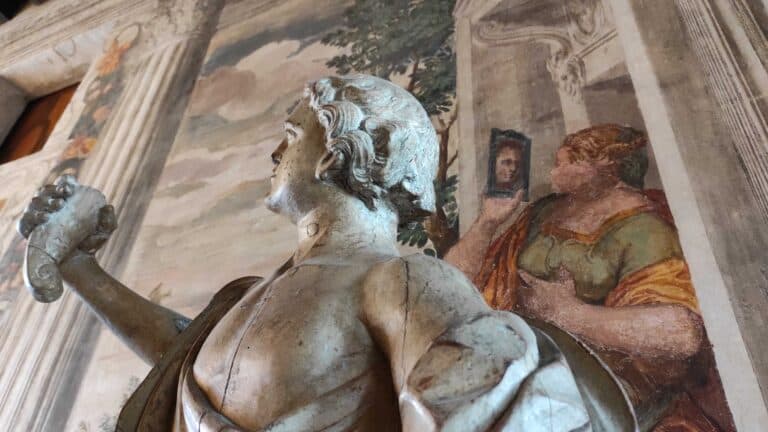

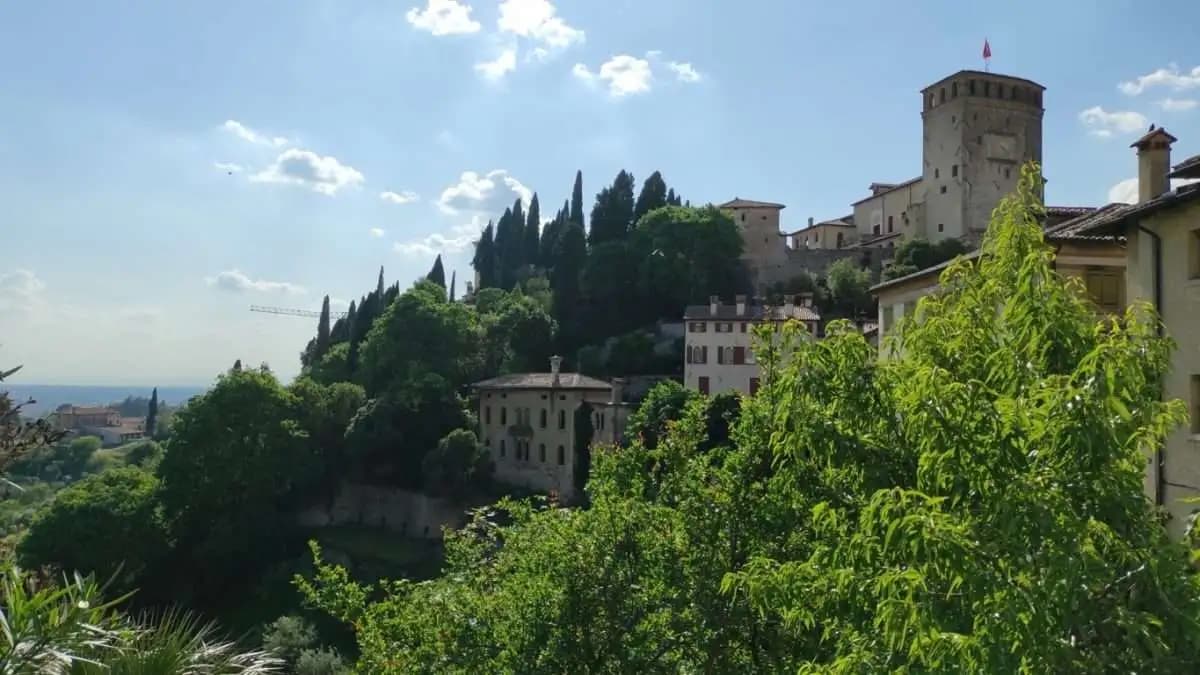
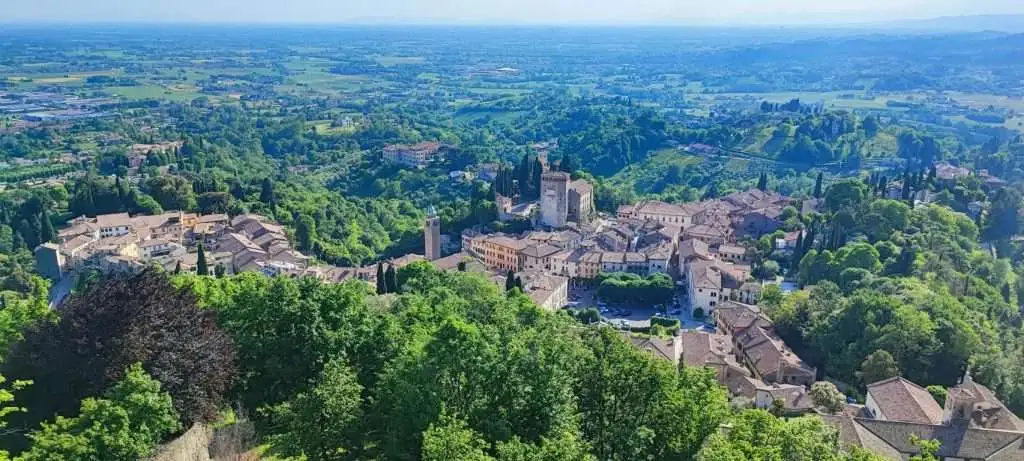
Discover things to do in Asolo: the Rocca d’Asolo, the castle of Queen Corner, the Palazzo della Ragione, the civic museum, the Longobard house, Casa Duse, the Zen fountain, the main fountain in Piazza Garibaldi, the Cathedral of Santa Maria Assunta, the Assunta Fair. Want to know more? First of all…
The Village
The splendid village of Asolo in the Province of Treviso lies on the gentle green slopes of the Asolani hills, natural reliefs enclosed by the great rivers Piave and Brenta and crossed, along the municipal territory, by the lively waters of the Musone stream.
The radiant natural environment in which the ancient town is harmoniously inserted is dotted with countless artistic, architectural, and cultural testimonies that make the Municipality of Asolo both unique and precious, capable of fascinating with its history and landscapes the thousands of visitors who go there every year.
What are the borders of Asolo?
The municipality of Asolo in the province of Treviso (as did Piazza dei Signori appear in the 18th century?) borders to the north-east with Monfumo, to the north-west with Castelcucco, to the south-east with Altivole, to the south-west with Riese Pio X, to the east with Maser and Altivole, to the west with Pieve del Grappa and Fonte.
How to get to Asolo?
To reach the heart of the village, we left the car in the paid parking lot Park Asolo. However, on weekdays, it is possible to park for free in Via Forestuzzo.
At the intersection with Via Forestuzzo, turn right and proceed for about 60 meters, then turn left into Via Risorgimento and continue for about 350 meters until you find an ancient lowered arch that gives access to the historic center of Asolo.
10 things to do in Asolo:
Zen Fountain
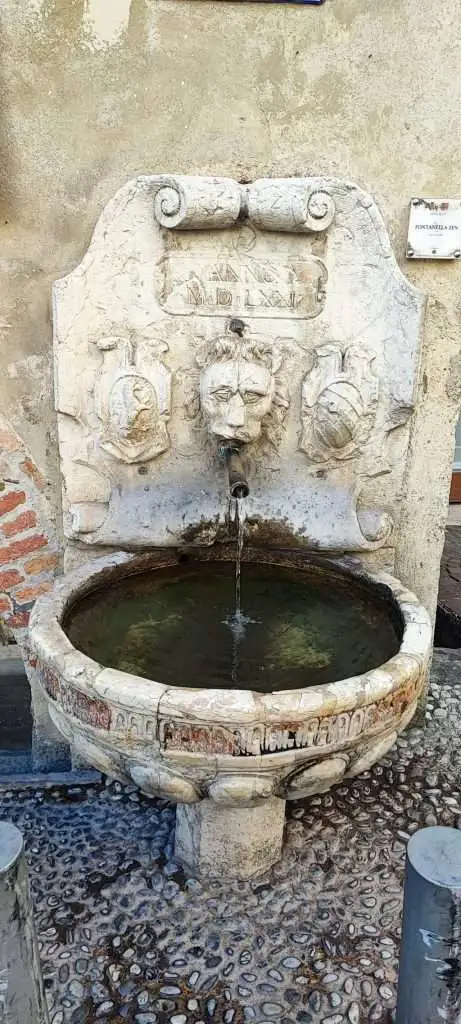
Once past the charming arch, you will find on your left the Zen fountain, in Via Forestuzzo, 139/159, near Villa Freya.
A jet of icy, drinkable water springs from a metal tube placed under the jaws of a stone lion.
Above the lion’s head, flanked by noble coats of arms, the date MDLXXI, i.e., 1571, is visible.
If you are wondering what to do in Asolo, the Zen fountain is the ideal reference point for those who want to quench their thirst and cool off during hot summer days.
The Rocca d’Asolo
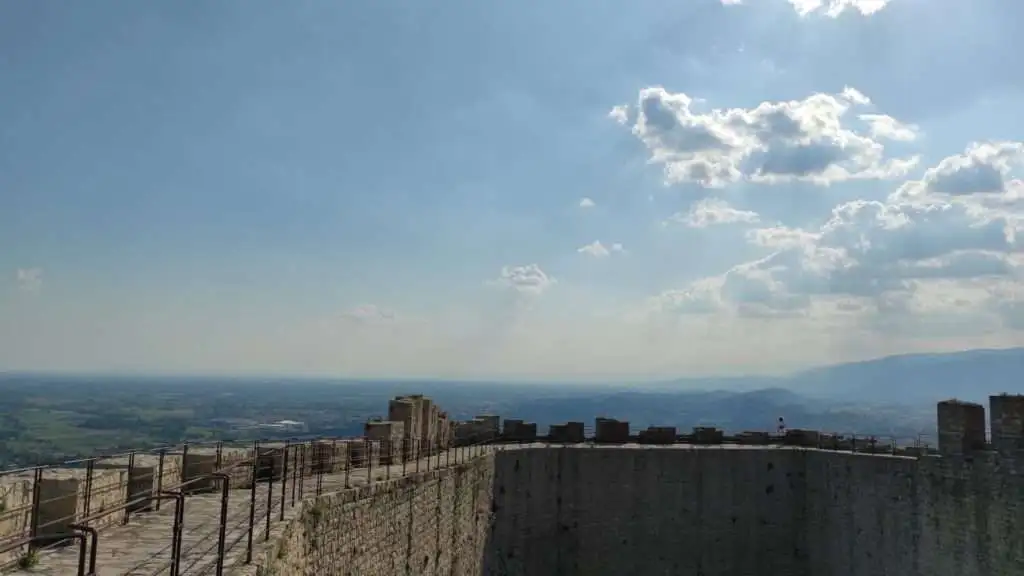
How to reach the Rocca d’Asolo?
From Piazza Monsignor Angelo Brugnoli, leave Villa Scotti Pisani on your right and proceed north towards the Albergo al Sole. Take Via Collegio and follow the ancient walls until you find, on your left, Porta Colmarion.
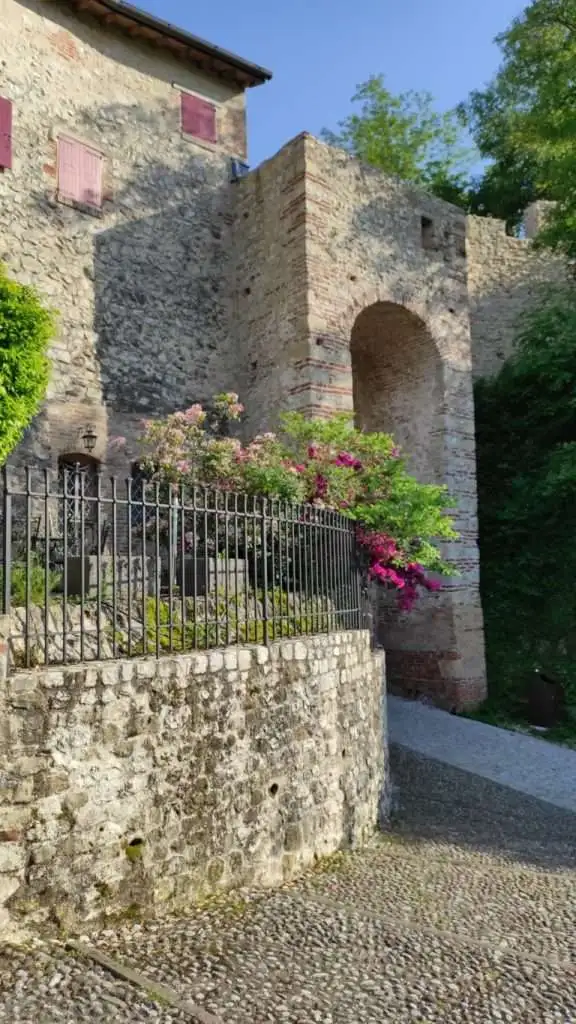
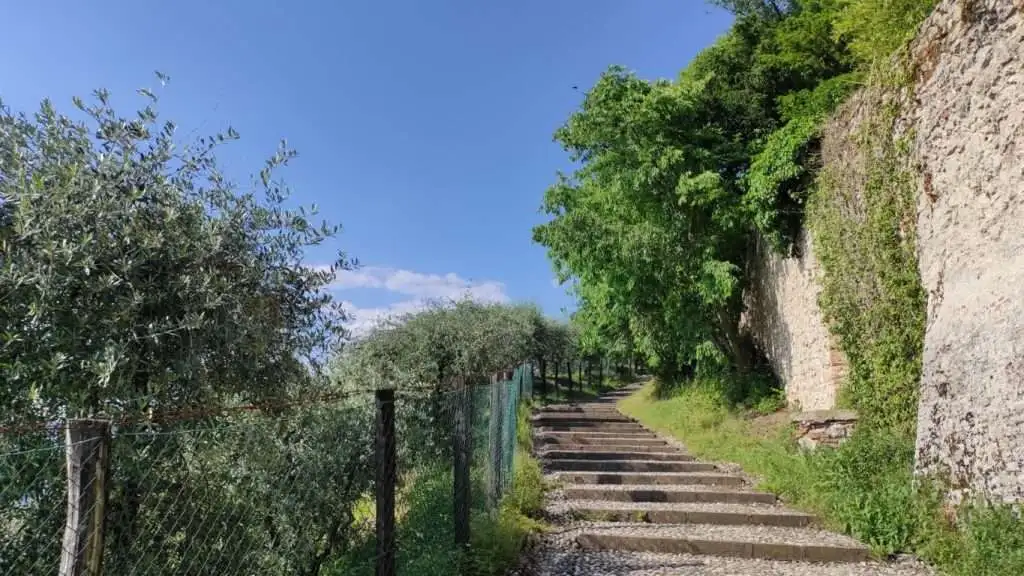
Once through Porta Colmarion, keep right and proceed uphill along the cobblestone staircase from which you can admire spectacular panoramas of the Asolani hills.
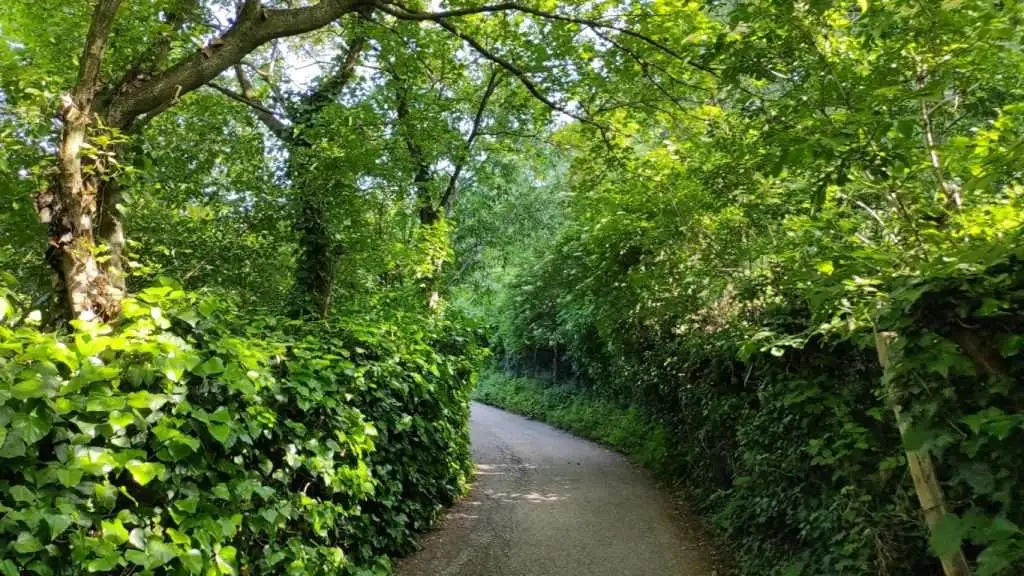
Once you reach a rural dwelling veiled in ivy, follow the short descent and at the fork keep right on the asphalted path that leads to the entrance of the Rocca.
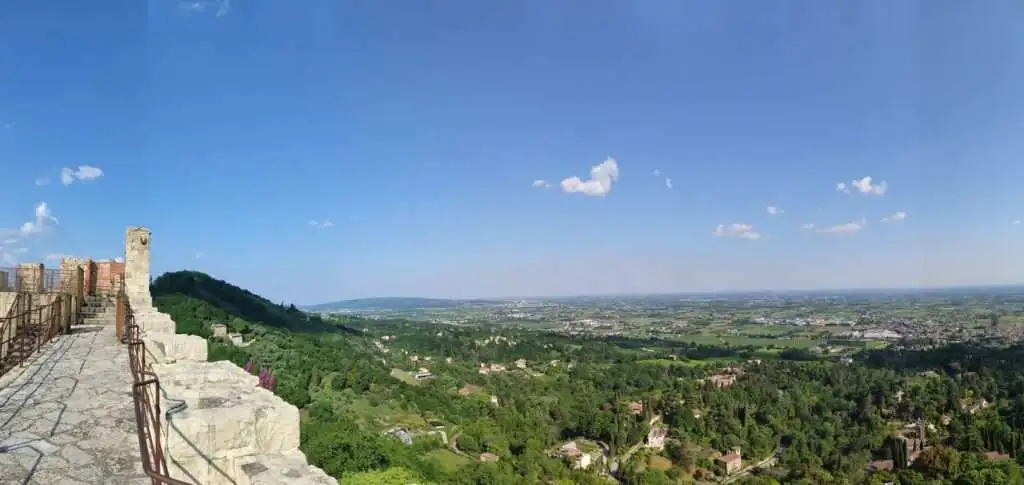
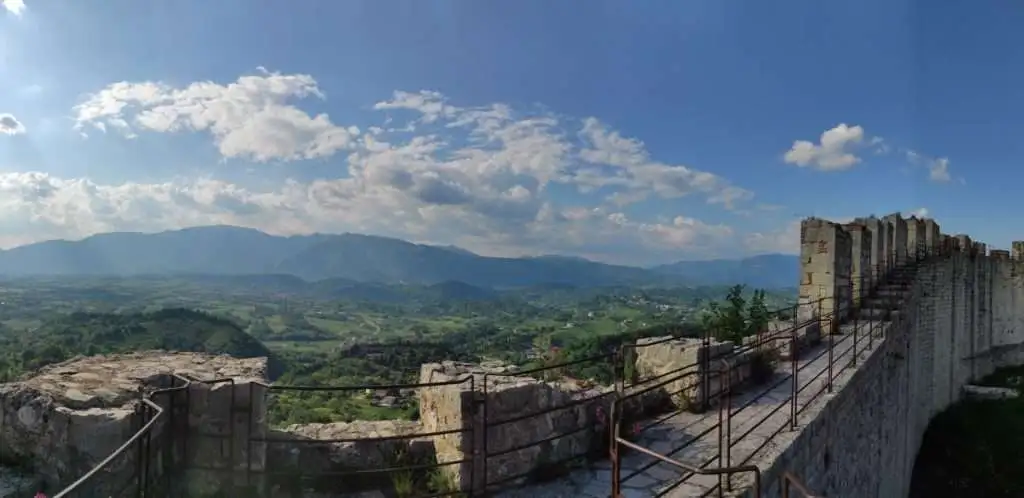
Steep on the top of a hill dotted with olive groves, field maples, cypresses, robinias, ashes, willows and oaks, the majestic crenellated wall dominates the enchanting wooded hills of Asolo wrapped in an aura of charm and mystery.
From the second half of the 13th century, the bulwark was occupied by Treviso, the Republic of Venice, the illustrious Paduan house of da Carrara, then again by Venice.
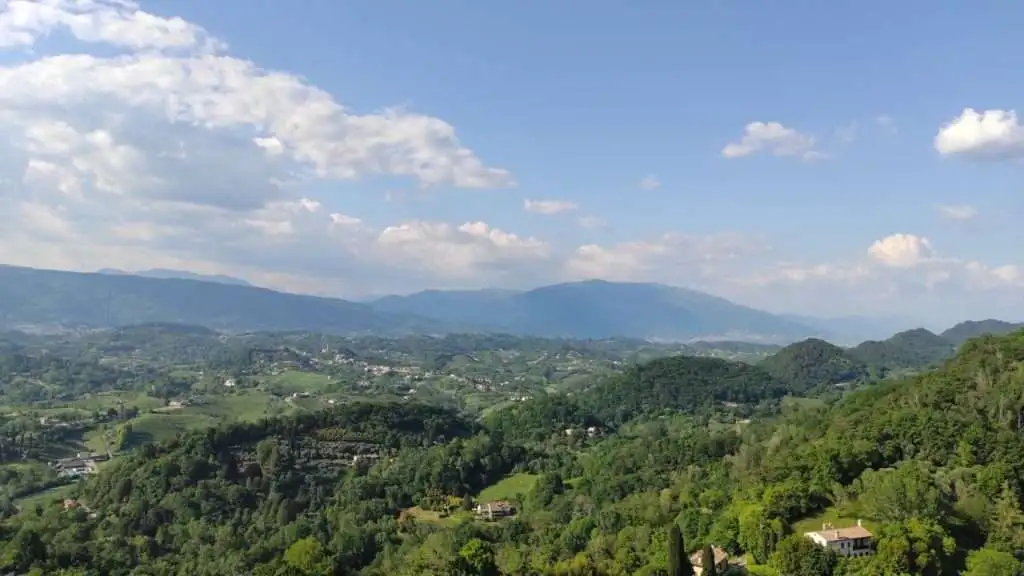
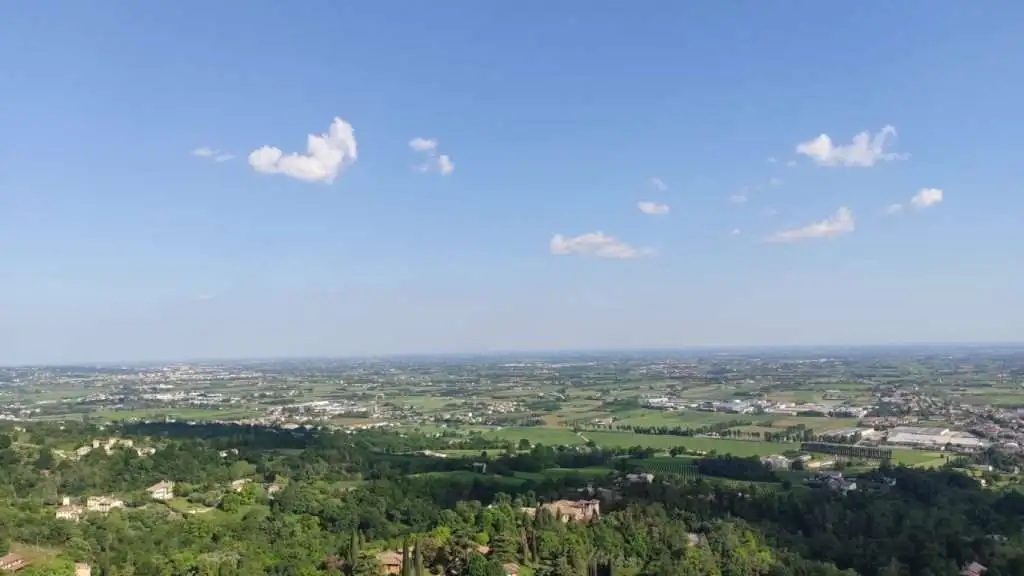
From the patrol path you can enjoy a wide-ranging view of the imposing mass of the Monte Grappa massif, the historic heart of Asolo nestled in the lively sunny slopes and, to the south, the boundless Treviso plain dotted with rustic farmhouses and cultivated fields that from this perspective resemble tiny mosaic tiles.
Hidden for centuries under the grassy mantle of the hilltop, the rich archaeological heritage currently kept in the civic museum reveals the enigma related to the origins of the stronghold.
If you are wondering what to do in Asolo, the fortress is one of the most significant cultural and landscape landmarks of the municipality.
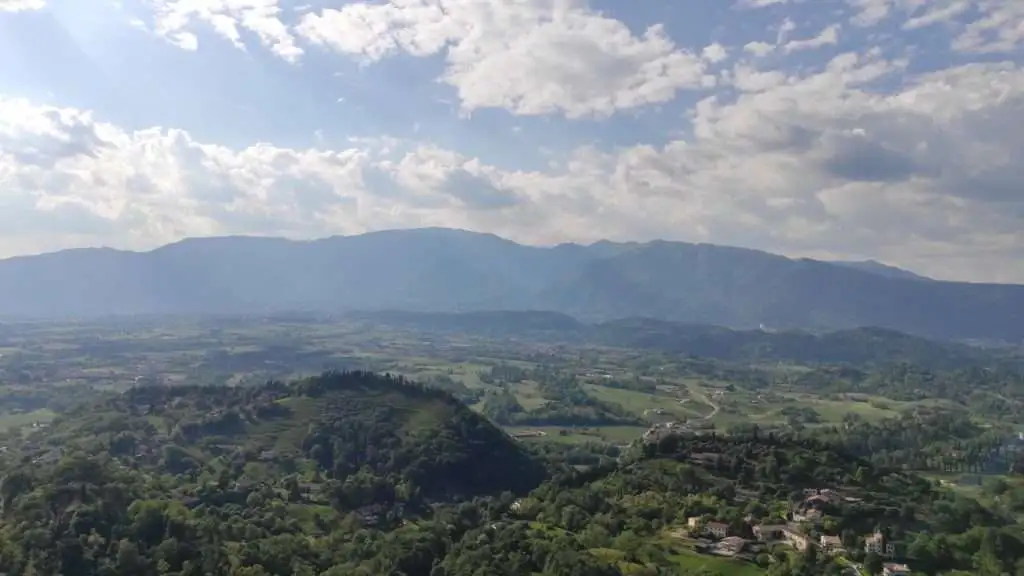
At the bottom of the article you will find other photos taken from the patrol path of the Rocca.
The Castle of Queen Cornaro
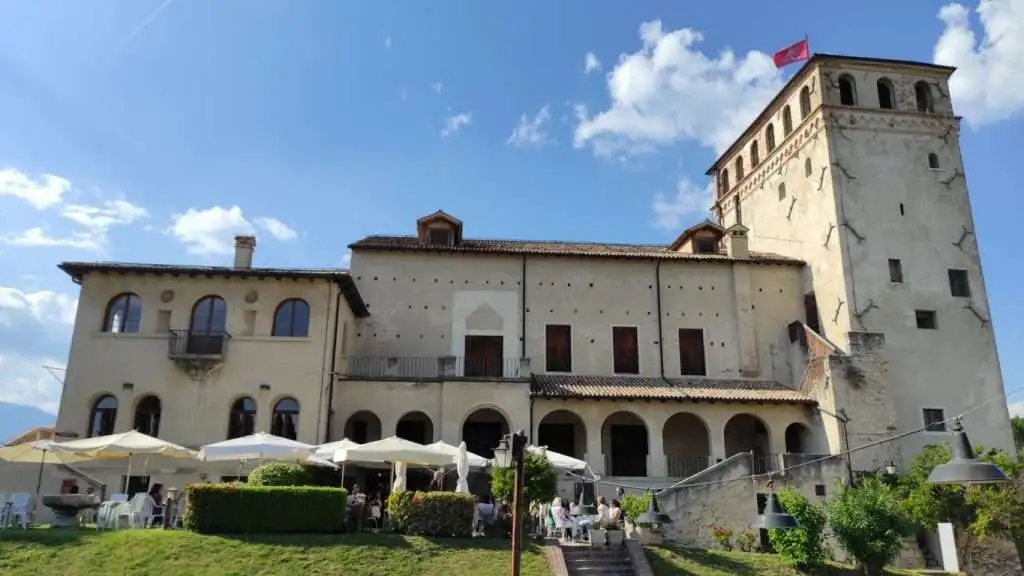
Harmoniously set in the historic heart of Asolo, the sumptuous palace was the home of Caterina Cornaro from 1489 to 1509.
Caterina Corner
Born in Venice in 1454, Caterina was the daughter of Marco Corner (whose great-grandfather, his namesake, had been doge from 1365 to 1368) and of Fiorenza Crispo, daughter of the lords of Syros and Santorini.
In 1468, Caterina married by proxy Giacomo II of Lusignan, king of Cyprus. The union would benefit both the Republic of Venice, interested in expanding its control over the island (important commercial hub in the Mediterranean), and the sovereign, in need of the Republic’s support to defend himself from the retaliation of his sister, whom he had deposed four years earlier, from Turkish territorial expansion policies and from ancient Genoese claims on the island of Famagusta.
Having foiled an attempted conspiracy in 1488, the Republic of Venice forced the queen to renounce the title of sovereign of Cyprus and, once she reached Venice, she was appointed queen of Asolo.
The sumptuous palace was the home of Queen Cornaro until 1509, the year she had to move to Venice due to the advance of imperial troops during the War of Cambrai.
The castle
Built between the 10th and 13th centuries, the imposing medieval fortification was enlarged in the 14th century by the Scaliger dynasty. In the 15th century, the castle was assigned by the Republic of Venice to Caterina Cornaro.
Accessible through a Gothic portal, the central courtyard of the architectural complex is framed by high and mighty walls against which leans the great clock tower, one of the oldest and most characteristic elements of the palace.
The refined pictorial works that embellish the rooms of the castle attest to the importance the queen attributed to art and literature. In fact, it was in this palace that Pietro Bembo, author of ‘Gli Asolani’, had been hosted.
The Palazzo della Ragione
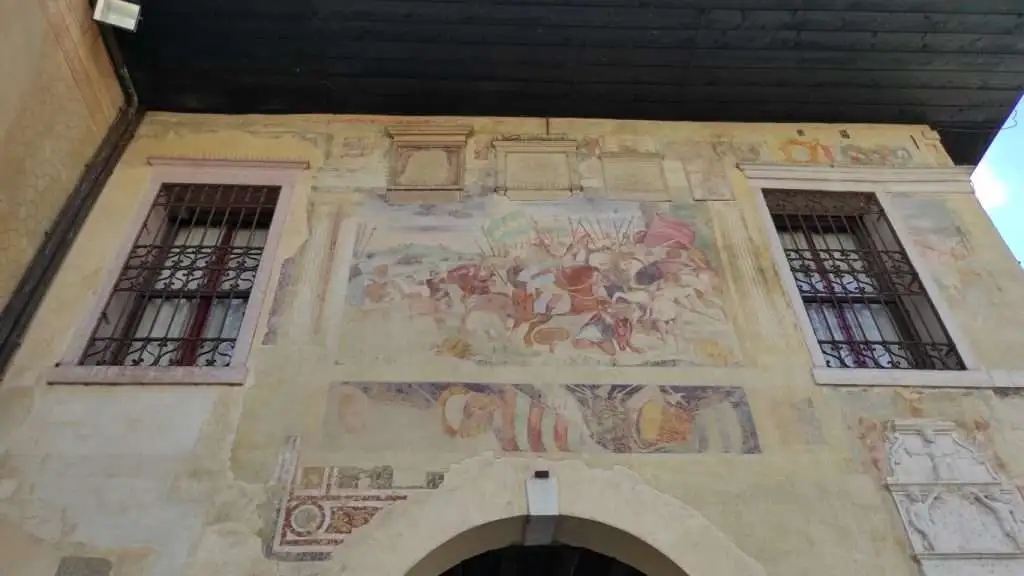
Located at Via Regina Cornaro, 4, the 15th-century palace is lightened on the ground floor by an airy loggia punctuated by wide round arches.
Overlooking Piazza Garibaldi in front of the Cathedral of Santa Maria Assunta, the east side of the building bears on the first floor a 16th-century fresco depicting the heavy defeat inflicted on the Roman army, led by Licinius Crassus, by the Parthian army in the Turkish city of Carrhae (now corresponding to Harran) on June 9, 53 BC.
Things to do in Asolo? Visit the Civic Museum
On the first floor of the Palazzo della Ragione, a museum itinerary is set up that tells the history of Asolo starting from finds from the Paleovenetian and Roman eras. The museum includes a splendid art gallery and invaluable sculptural works from the school of Antonio Canova. A section of the museum is dedicated to three illustrious women of Asolo: Caterina Corner, the famous theater actress Eleonora Duse and Freya Stark, British author and traveler.
The Longobard house
Located at Via Foresto di Pagnano, 243, the house is divided into two levels and finished with a double-pitched roof. The south facade is punctuated on the ground floor by four pilasters and two caryatids.
In the left caryatid, in a better state of preservation, a female face with long hair falling over her shoulders can be distinguished.
Between the ground floor and the first floor extends an elaborate frieze with triglyphs and metopes adorned with floral motifs, bull skulls, and bearded faces.
On the first floor, four windows open with balustrades adorned with female figures, among which a woman with two children stands out, and the symbolic representation of justice, depicted with sword and scales.
The four balustrades are interspersed with Ionic pilasters, the central one of which depicts a woman with her tongue out, characterized by thick wavy hair, a full bosom, and, instead of legs, two long scaly tails wrapped in a spiral.
Below the dentilled cornice, decorated with a volute motif that resembles a wave motion, the words NATIONE LONGOBARDUS are engraved.
Casa Duse
Located on Via Canova a few steps from the church of Santa Caterina, Casa Duse was the residence of Eleonora Duse, one of the most important theater actresses of the 19th and 20th centuries. Overlooking lush wooded slopes, the porticoed house contains precious relics belonging to the actress.
As evidence of how extraordinary the landscape views of Asolo were, it is worth recalling how Eleonora Duse remembered the city of one hundred horizons: “When in the morning I open the shutters of my room, in the window frame Monte Grappa appears. Then I put two vases of flowers on the windowsill. Here is an altar.”
Main Fountain in Piazza Garibaldi
The fountain in Piazza Garibaldi is crowned by a regal Lion of Saint Mark, with a proud bearing, spread wings, and its paw resting on the city’s coat of arms. Water flows from four tubes that emerge from as many lion heads.
The Cathedral of Santa Maria Assunta
Located in Piazzetta S. Pio X, 192, the Cathedral of Asolo is distinguished by a projecting façade vertically tripartite by four pilasters.
The porticoed place of worship is accessible through three tympanum portals, the central one of which is embellished with a lunette bearing the monogram of Christ in the center flanked by the letters A and Ω. Above the side portals, two circular windows open. Above the central door, a mosaic work set in a circular frame stands out, depicting the Madonna on a gold background.
Internally divided into three naves punctuated by cross vaults, the church houses splendid marble altars, a precious altarpiece of the Assumption by Lorenzo Lotto, and a valuable pipe organ.
Assunta Fair
The Assunta Fair takes place every year, with rare exceptions, in the month of August. The 2022 edition took place on August 22. In addition to the spacious dining areas where you can taste traditional specialties of Treviso cuisine, the festival includes live music performances, vintage tractor exhibitions, recreational activities for children, and workshops illustrating the artisan activities of our grandparents and great-grandparents.
If you are wondering what to do in Asolo and wish to spend the beautiful season in the carefree atmosphere of a bygone fair with food and wine specialties in the historic center of a pleasant stone town surrounded by sunny wooded hills, attending the Assunta Fair might be just what you need!
10 things +1 to do in Asolo
Villa Contarini
Among the symbols of greatest artistic and architectural value of the Municipality is undoubtedly Villa Contarini, a 16th-century gentleman’s estate located in Via Fosse, 2.
The architectural complex consists of two buildings, separated by the Messano hill and communicating with each other through a gallery that crosses the hill.
The central body of the noble building, whose façade is framed by two tall cypresses, develops on three floors symmetrically tripartite and surmounted by a triangular pediment decorated at the vertices with three statues that evoke classical mythology:
Ceres, an Italic goddess associated with the cultivation of wheat, on the left, Jupiter with the eagle in the center and Leda, ancient queen of Sparta depicted with the swan, placed on the right.
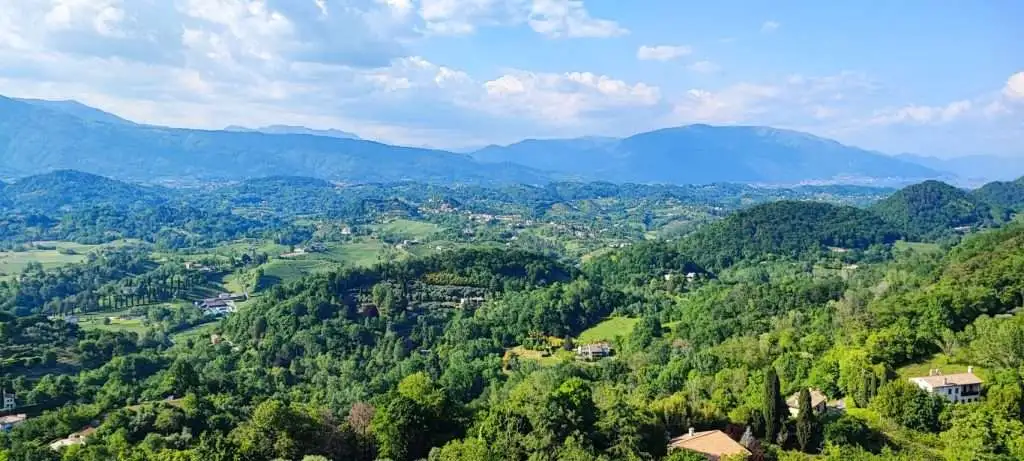
Panoramic views from the Rocca d’Asolo