
Where is the Abbey of Santa Maria di Pero located?
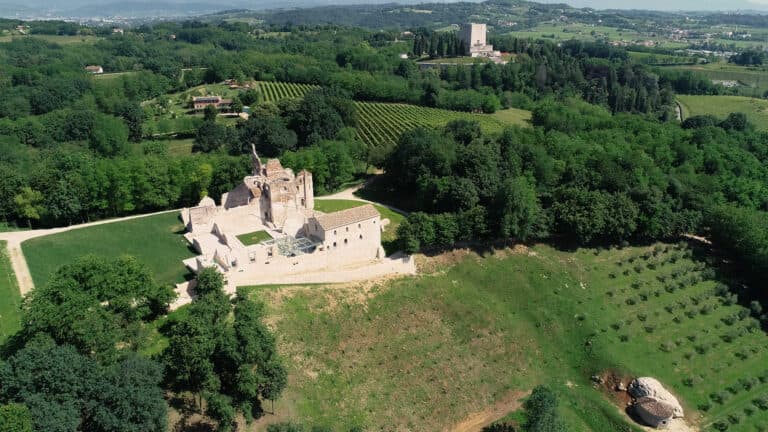
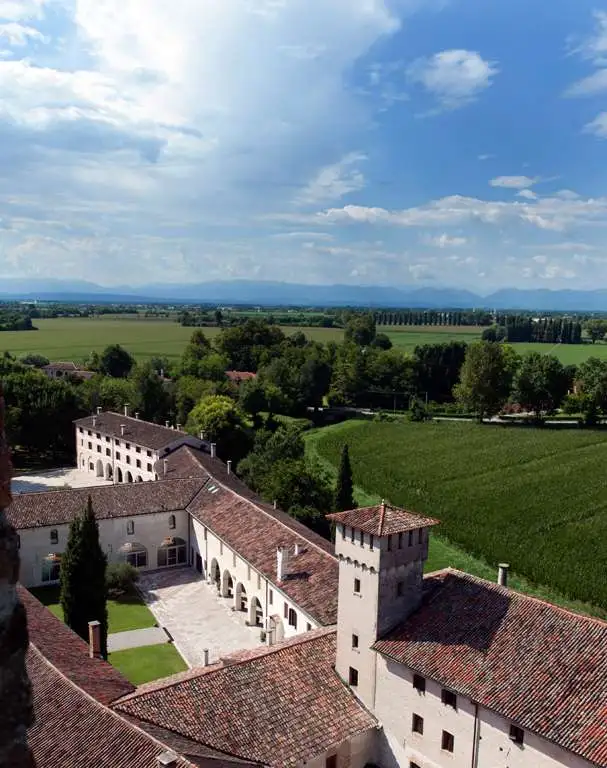
Located at Via Monastero, 3, the Abbey of Santa Maria di Pero is the oldest building in Monastier di Treviso (the place name, in fact, derives from the word “monasterium”) as well as one of the region Veneto’s most significant historical, architectural and cultural landmarks.
The origins of the Abbey of Santa Maria di Pero
Founded around 958 AD during the Holy Roman Empire following a donation by Otto I, the abbey complex stands in the serene rural setting of the Lower Treviso area, crossed by the clear waters of the Meolo. Formerly called Pero, this important river hub enabled thriving trade with the Venice Lagoon.
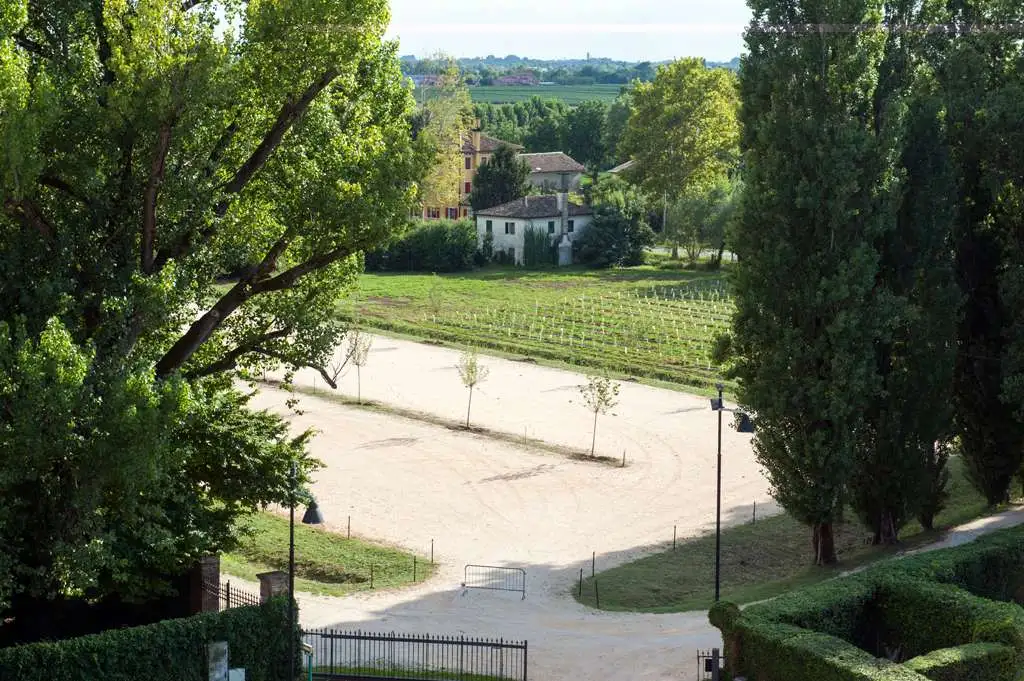
Built near the Via Claudia Augusta, a Roman road from the 1st century AD that connected the Po Valley to Bavaria, the architectural complex is skilfully adapted to the fertile countryside of Monastier di Treviso, marked by flourishing vineyards, vast cornfields, bright avenues of cypress poplars, rows of plane trees and dense hedges of elm, willow, acacia, poplar and walnut.
From the Benedictine monks to the Napoleonic suppression
Beautifully set within a centuries-old park dotted with cedars, maritime pines, black locusts, beeches and many other tall trees, the monastery experienced its period of greatest splendour starting in 1479, when ownership passed to a Benedictine congregation and it was entrusted to the Abbot of San Giorgio Maggiore in Venice. The rule of the Serenissima was followed by that of Napoleon, during whose supremacy, in 1807, the suppression of monastic orders was imposed. In 1837 the Abbey of Santa Maria di Pero was purchased by the Venetian noble Ninni family, of Greek origin.
The Abbey of Santa Maria di Pero during the First World War
During the Battle of Caporetto (24 October – 12 November 1917), the advance of the German and Austro-Hungarian armies forced the soldiers of the Regio Esercito to retreat 150 km, establishing the new defensive line along the river sacred to the fatherland.
During this phase of the conflict, the Abbey of Santa Maria di Pero served as a field hospital and hosted Ernest Hemingway, then just eighteen years old, who had enlisted as a volunteer and served as an ambulance driver for the American Red Cross. The young writer also took care of passing on information to the soldiers and supplying them with comforts in the trenches. The American author would later recall his wartime experiences in these territories in his works “A Farewell to Arms” (A Farewell to Arms) and “Across the River and Into the Trees” (Across the River and Into the Trees).
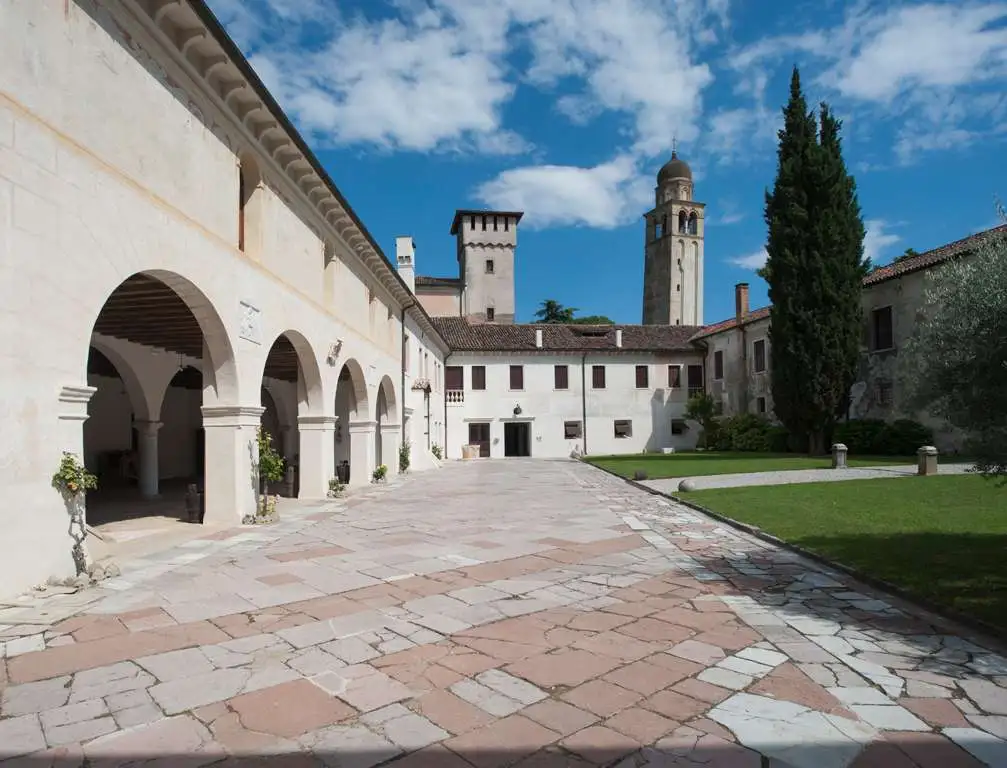
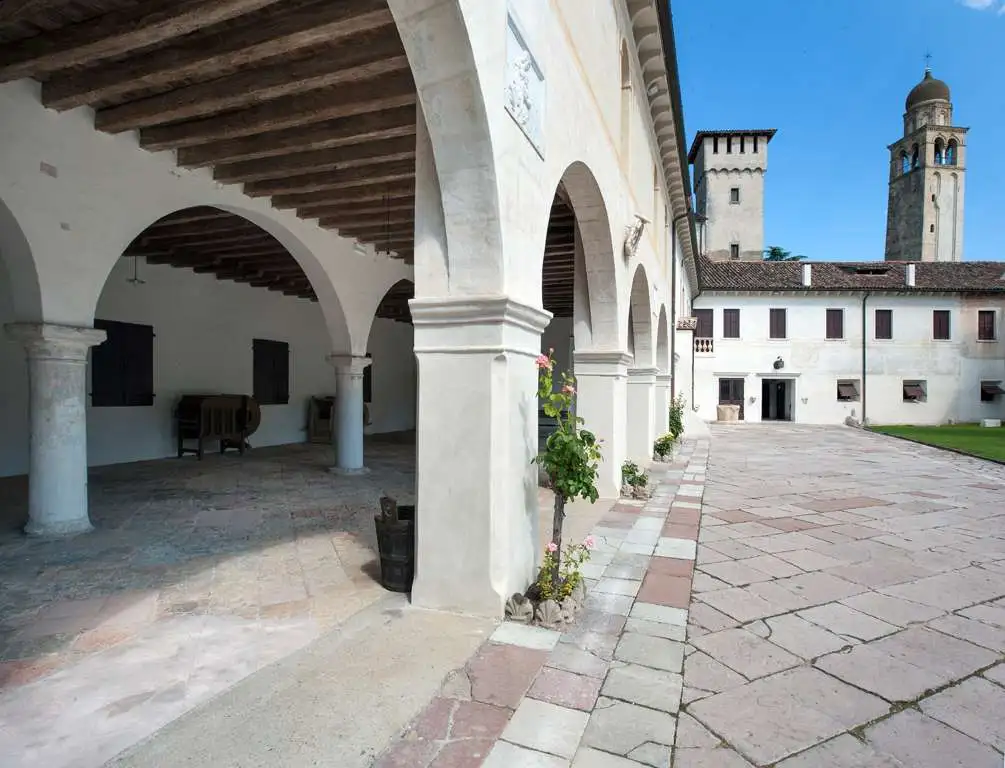
Standing 44 metres high, the abbey’s bell tower was used as a lookout post to signal the approach of enemy troops and aircraft. For this reason, Austro-Hungarian artillery targeted the bell tower but hit the abbey church instead, of which only ruins remain today.
In the decades following the war, the Ninni Riva family continued to live in this architectural gem. From the early 2000s, thanks to meticulous restoration work, the Abbey of Santa Maria di Pero has been brought back to its original charm.
The cloister of the Meridiana
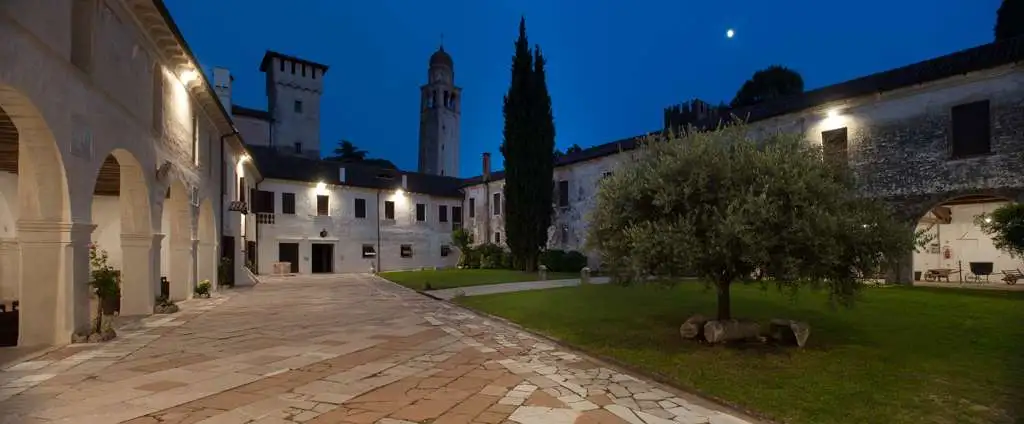
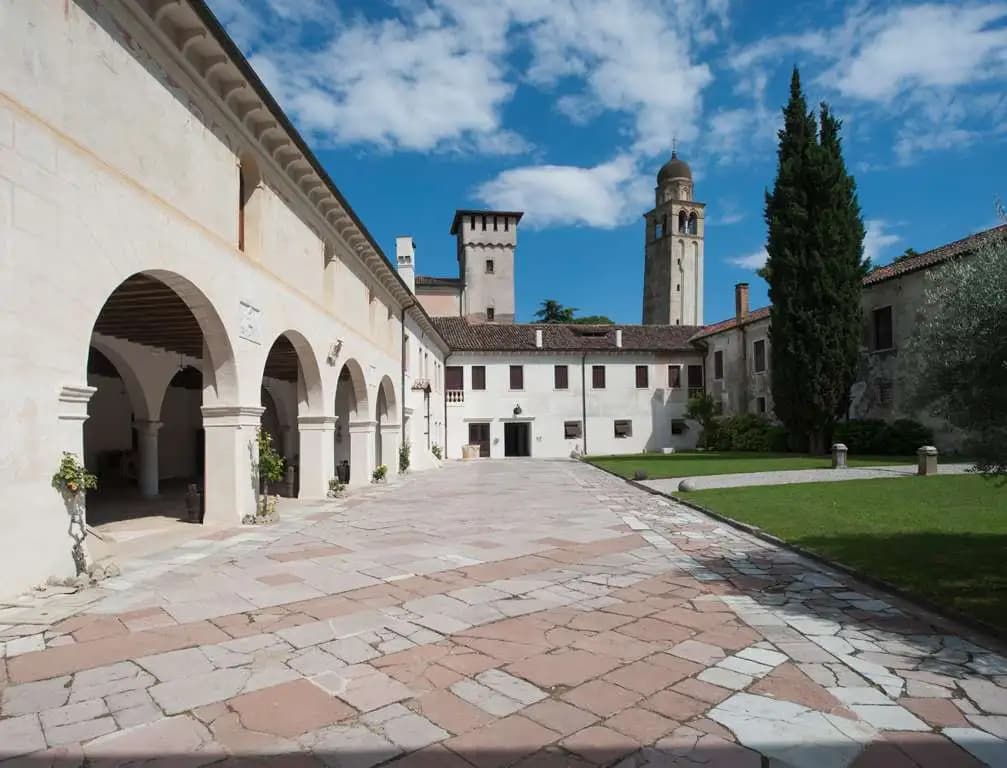
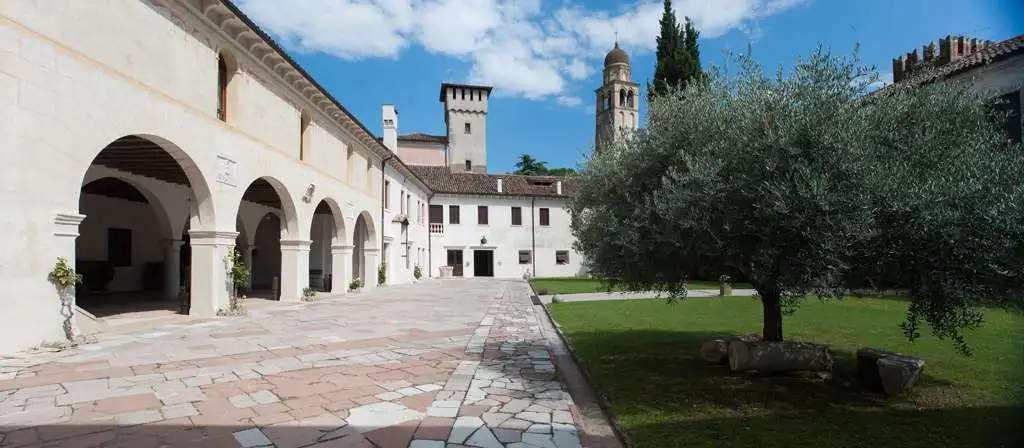
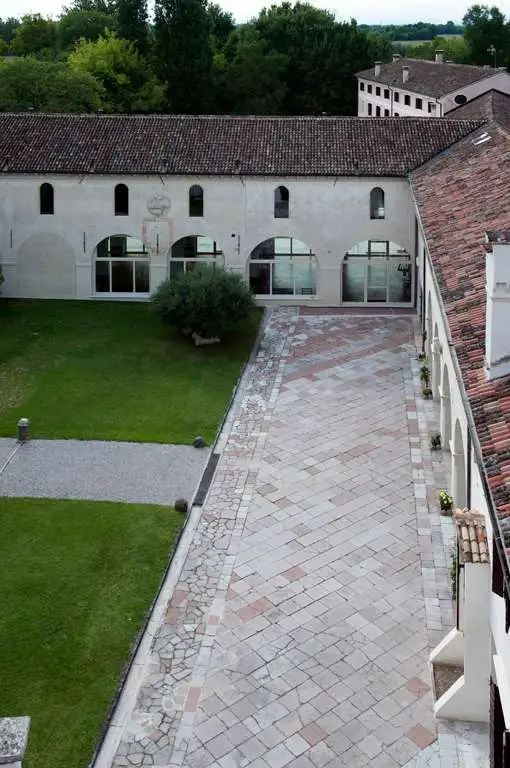
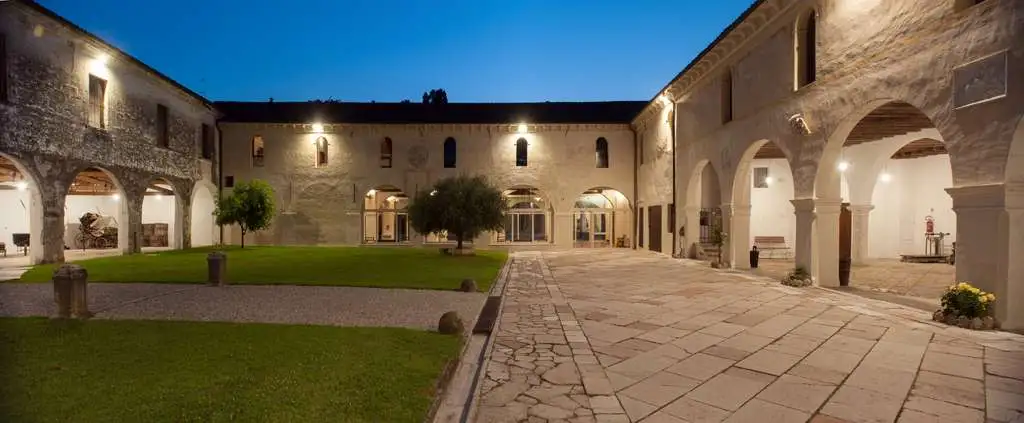
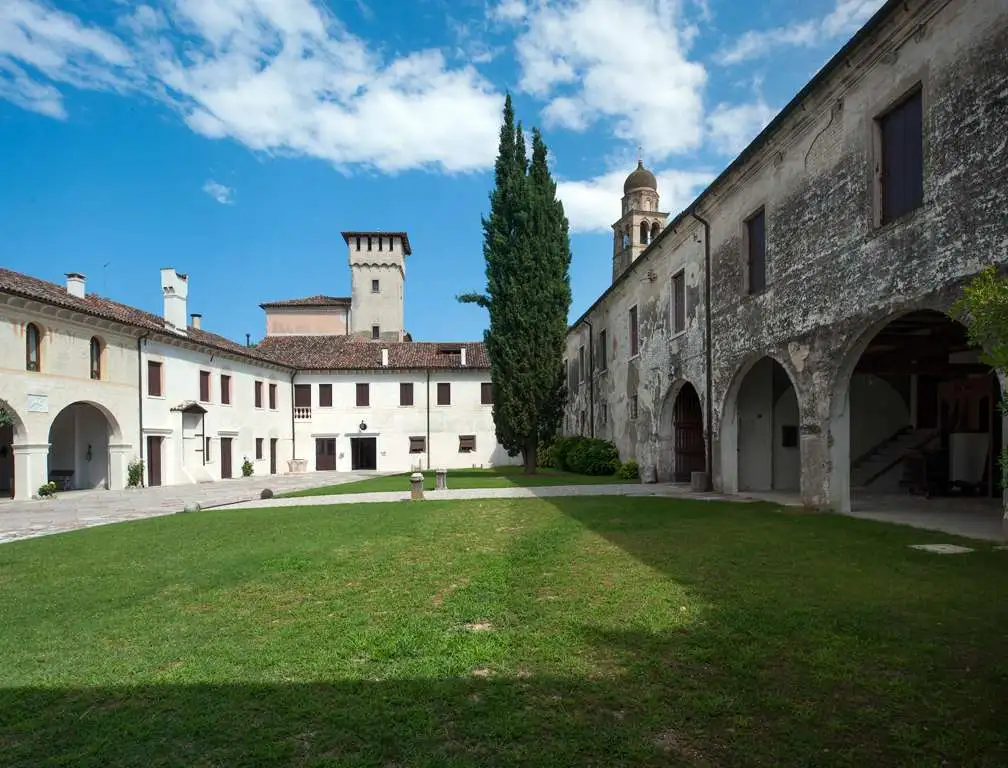
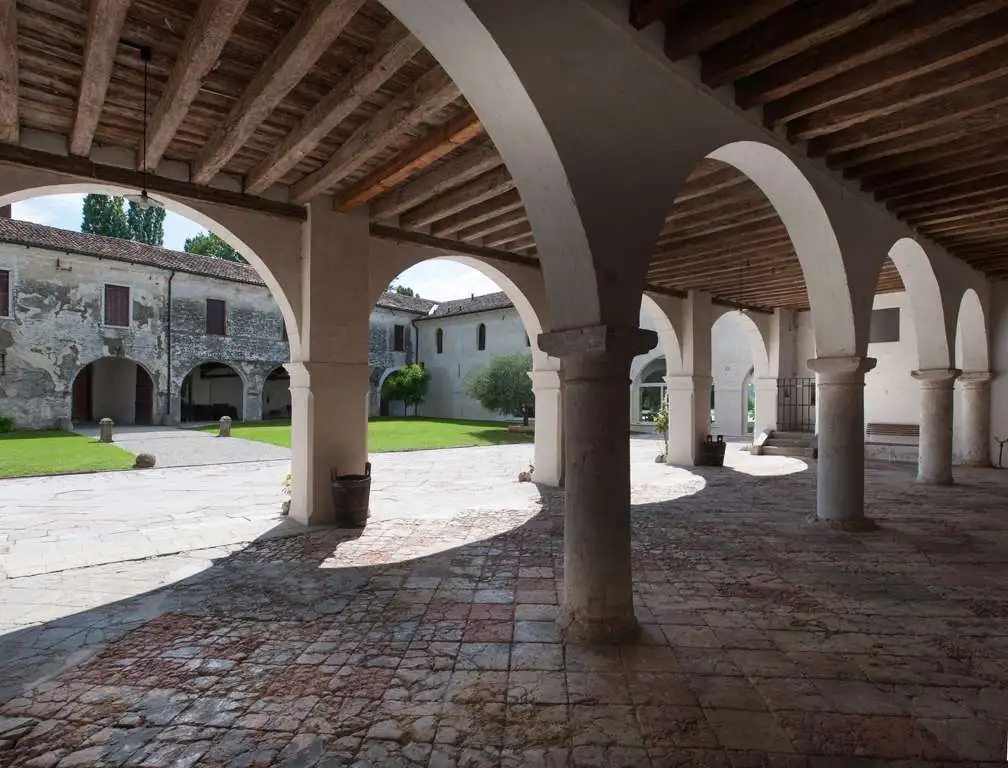
Named for the presence of two 15th-century sundials, the Renaissance cloister is embellished with fine fresco decorations and a bas-relief depicting San Giorgio killing the dragon.
Framed by broad, airy round arches, the central area of the cloister is partly paved and partly softened by a well-kept garden where a lush olive tree and a dark cypress grow.
Used as a military hospital during the Great War, the inner courtyard of the former monastery can accommodate up to two hundred people and is the ideal setting for unforgettable meetings and events, such as company gatherings, in an intimate and evocative atmosphere.
The Abbot’s portico
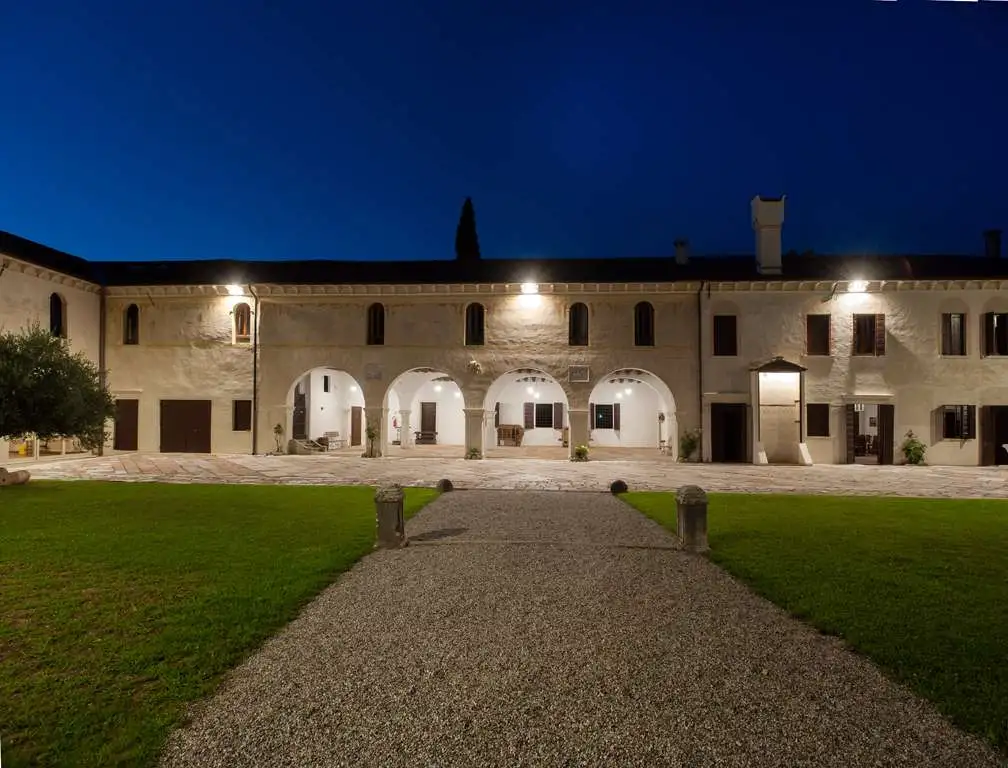
Marked by an enchanting colonnade supporting broad round arches, the northern portico of the Abbey of Santa Maria di Pero was restored in 2015. With a capacity of one hundred and twenty people, the Abbot’s Portico offers breathtaking views of the pleasant rural setting of the estate and the clear waters of the Meolo, whose sinuous grassy banks stretch a short distance from the complex.
The Press Portico
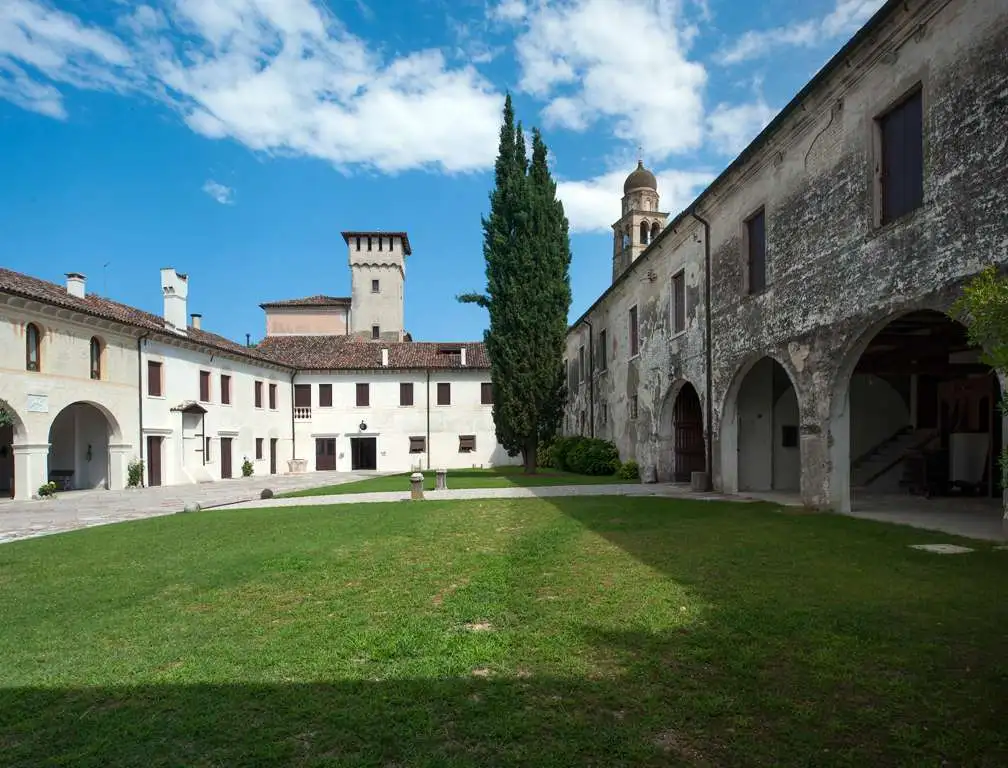
Capable of accommodating one hundred and ten people, the spacious and bright rooms of the portico preserve a mid-20th-century press, still in working order.
The Press Room
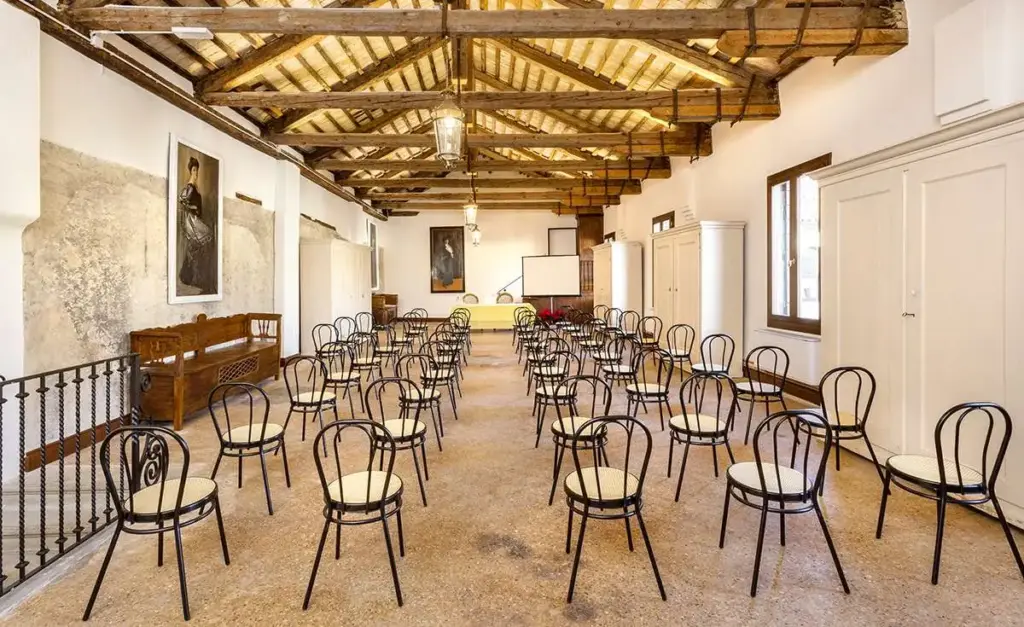
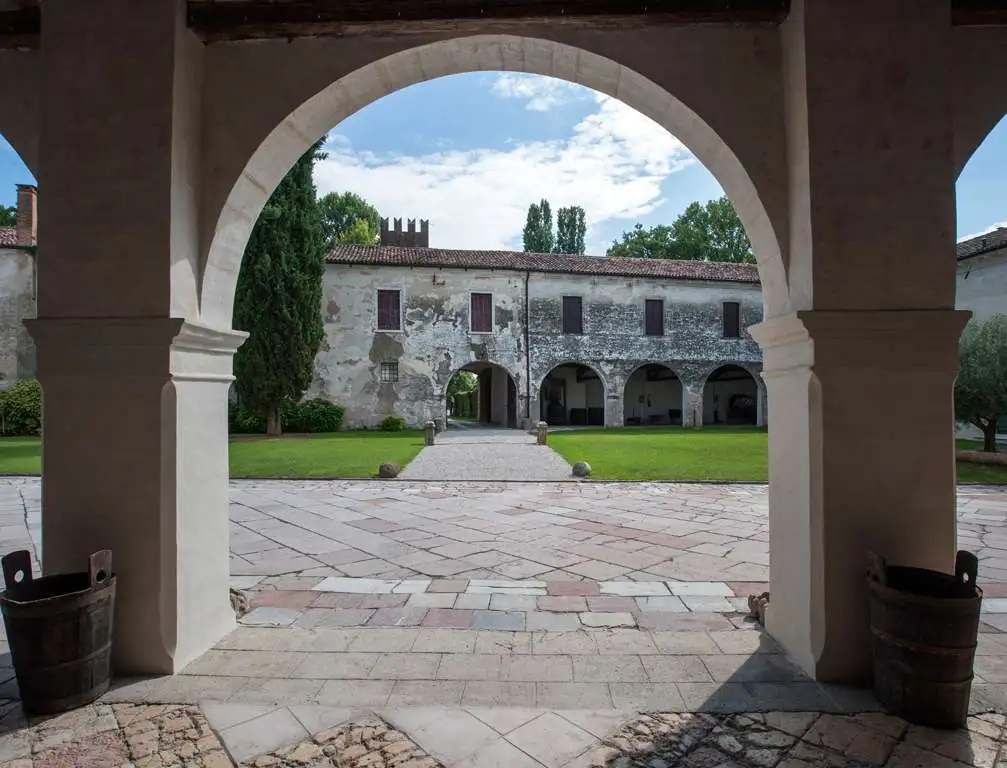
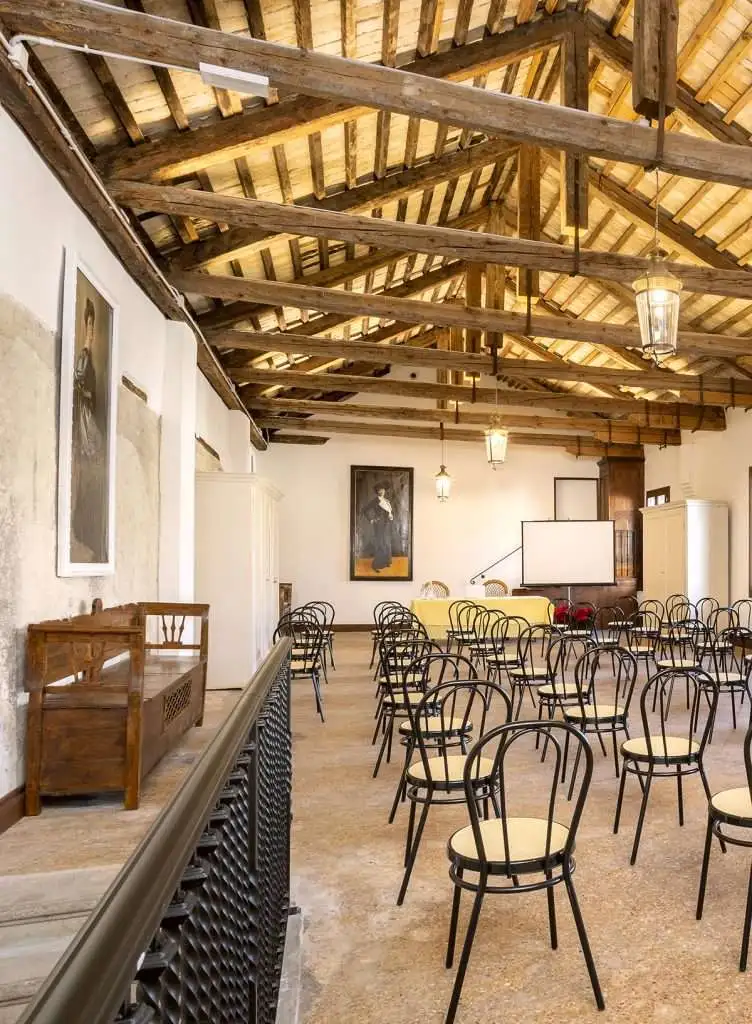
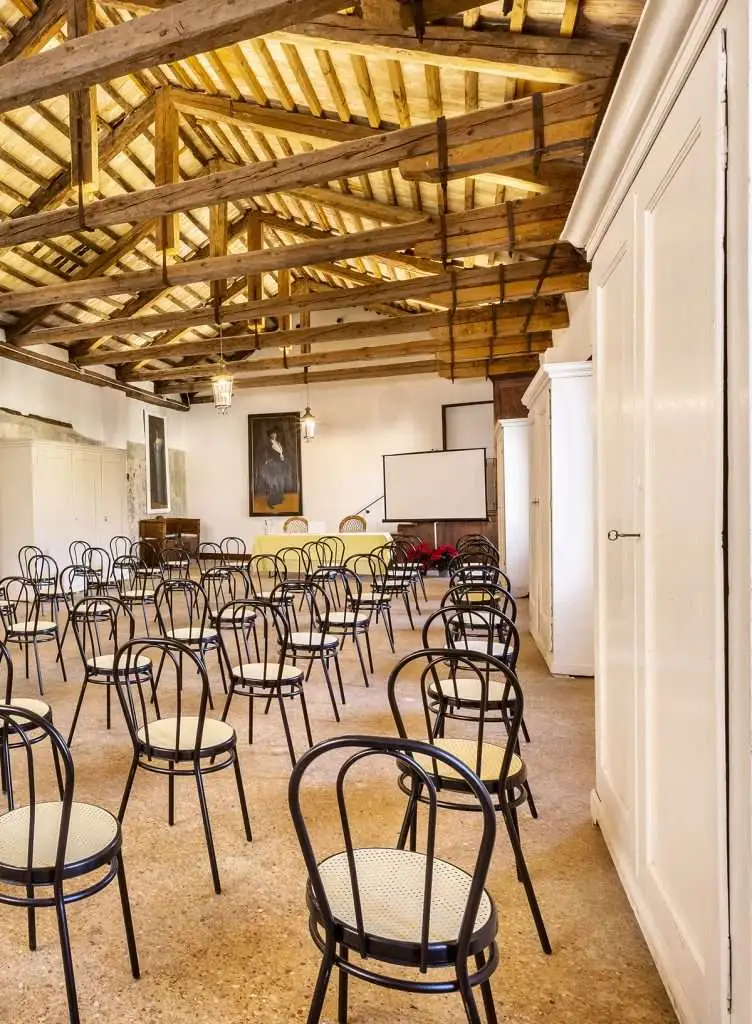
Above the Press Portico, the Press Room can accommodate up to one hundred people. Completed in 2021, the restoration work enhanced the refined Venetian terrazzo floor and the elegant geometry of the centuries-old wooden beams.
The Rule Room
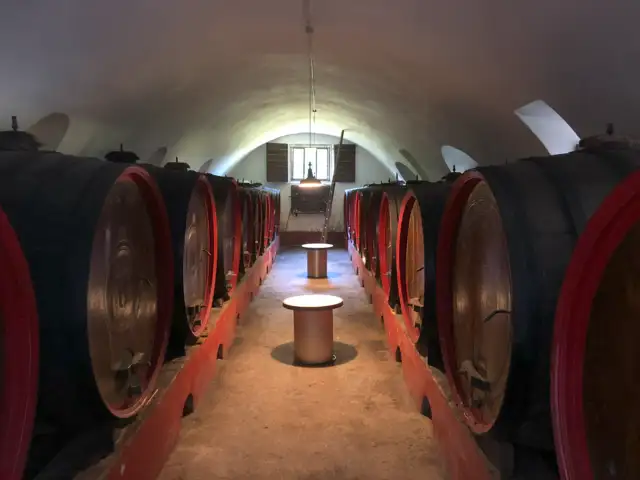
The monastic refectory rooms of the Abbey of Santa Maria di Pero now serve as an exhibition space for original photographs from the family archive, illustrating the abbey complex at the time of the First World War. The historical value of the room is enriched by the presence of an antique carriage and centuries-old barrels, once used for storing wine.
The Fireplace Room
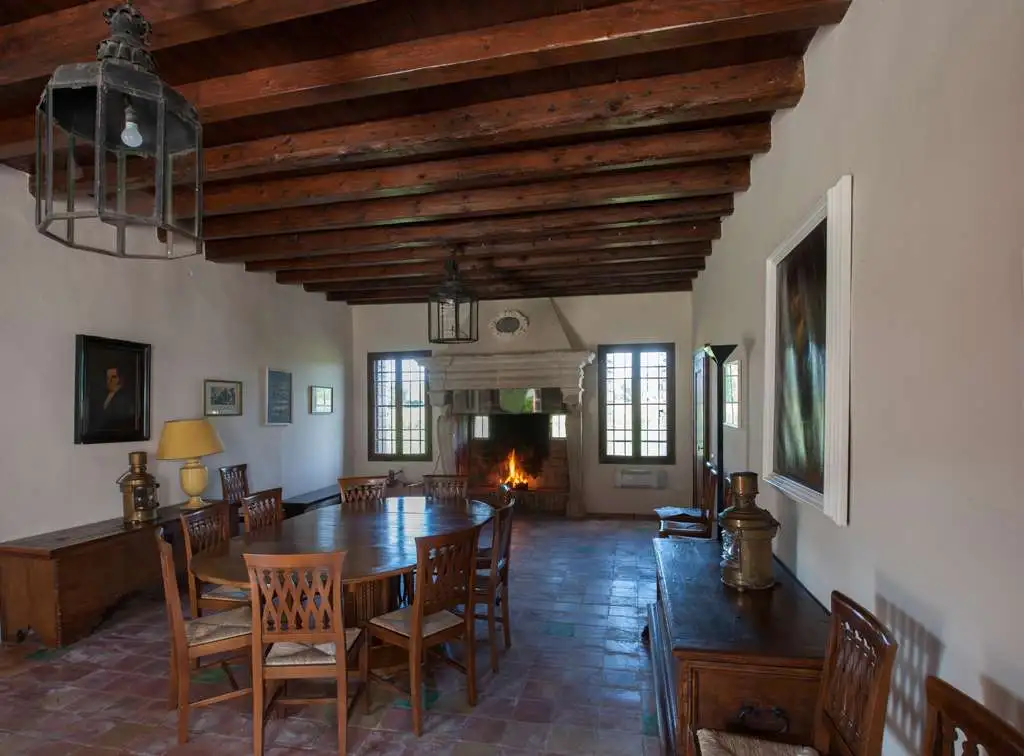
The room’s intimate and private atmosphere, with exposed beams, is dominated by the large fireplace, still in working order.
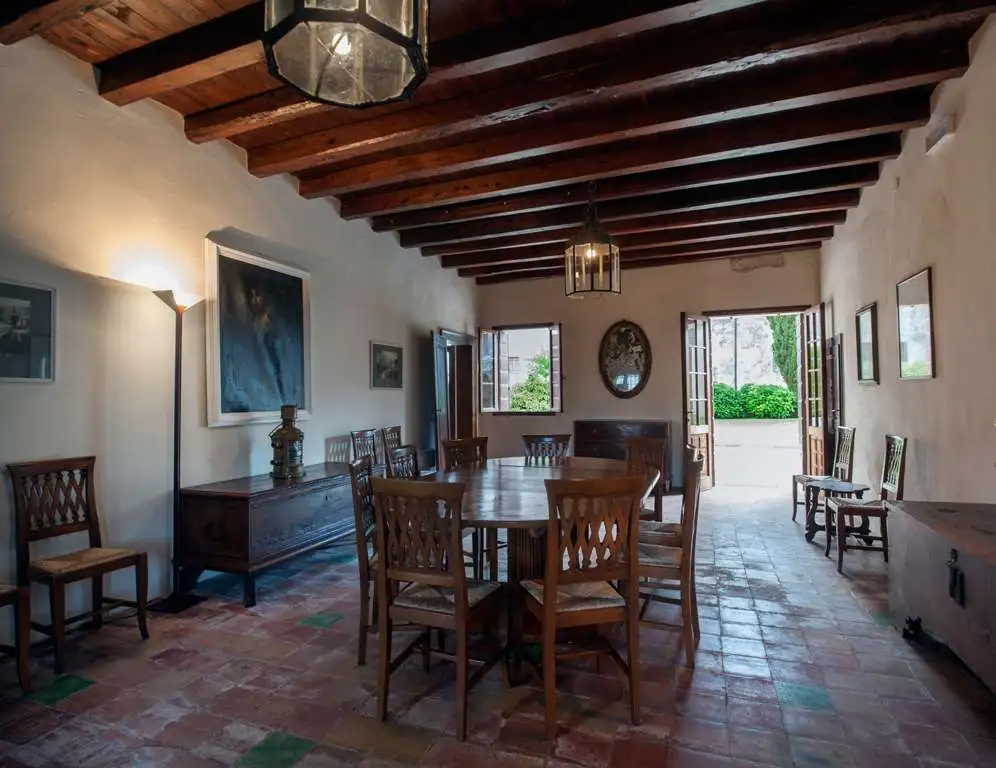
The San Giorgio Room
With a capacity of seventy people, the bright San Giorgio Room is enhanced by a collection of artworks belonging to the Ninni Riva family.
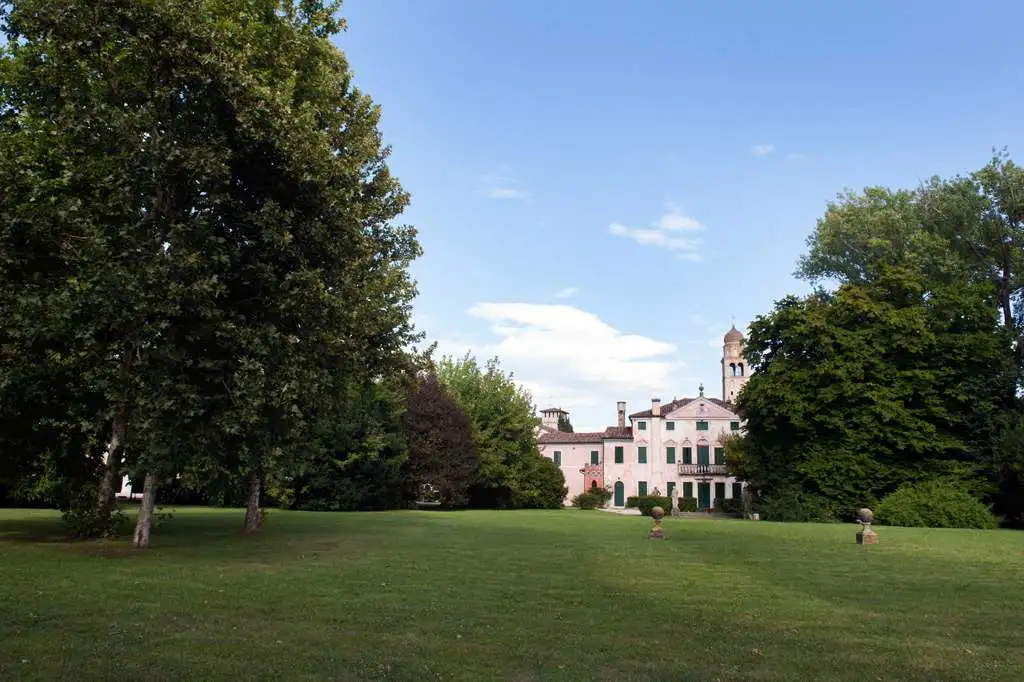
The Brolo
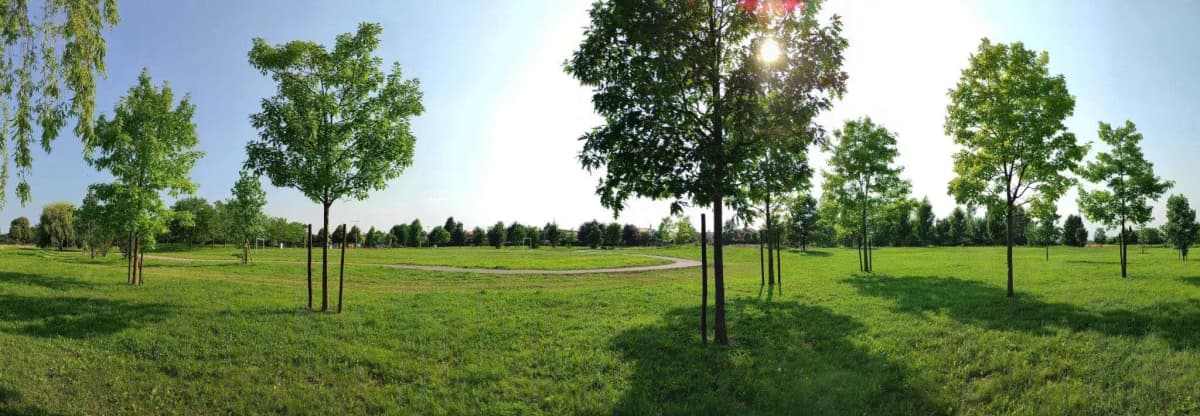
Covering an area of 9,000 m², the brolo is a haven of peace dotted with poplars, oaks and walnuts. If you are wondering what to do in Monastier di Treviso, the Abbey of Santa Maria di Pero includes three splendid rooms ideal for those who wish to stay in the intimate, timeless dimension of a thousand-year-old abbey immersed in greenery.
The Abbey of Santa Maria di Pero combines the old-world charm of a welcoming and majestic medieval architectural masterpiece with the most modern comforts, ensuring an unforgettable and extraordinary experience in a romantic, fairytale-like natural setting.
For more information about the rooms, suites and the fine wines produced on the estate, please visit abbaziadipero.it.