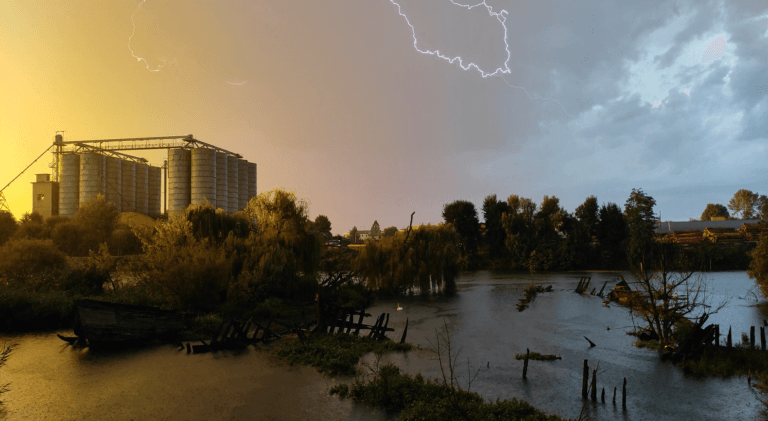

We thank the municipality of San Zenone degli Ezzelini and the Oasi San Daniele association for their kind collaboration.
Where is the Oasi San Daniele?
The Oasi parking lot is located on Via S. Daniele (45.80682112289879, 11.812360917884773).
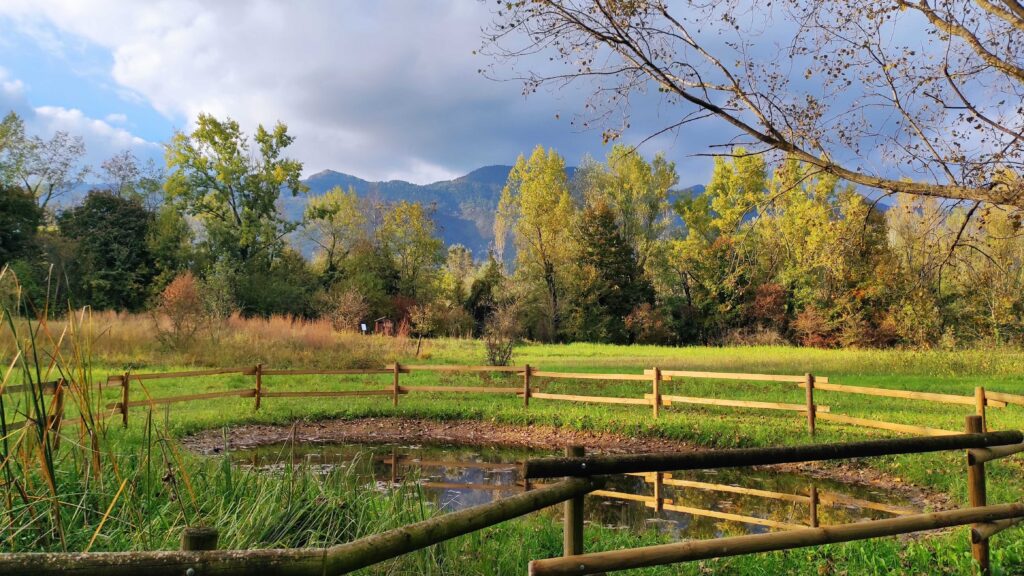
Covering approximately 100,000 m², San Daniele Oasi Nature Park is located in the hamlet of Liedolo at the northern edge of San Zenone degli Ezzelini, bordering the municipalities of Borso del Grappa to the north and Mussolente to the west.
Framed by cypress poplars, black locusts, elms, tree of heaven, field maples, dogwoods, oaks, cherry trees, elderberries, and mulberries, white country paths wind through vast expanses of corn, vineyards, and sunlit wheat fields that surround this lush freshwater park fed by the karst springs of the Massiccio del Grappa.
A majestic mountain group of the Veneto Prealps, the latter towers between the courses of the Piave and Brenta rivers, whose icy waters separate its eastern and western slopes from the Cesen-Visentin group and the Asiago Plateau respectively.
Populated by a rich heritage of flora, trees, and fauna, the Oasi includes itineraries usable by people with disabilities, accessible to wheelchairs and strollers.
History of the San Daniele Oasi Nature Park
The geology of the Oasi
The area where San Daniele Oasi Nature Park extends once stood at the foot of a hill, along the shores of a lake basin. The deposit of fine silty and clayey sediments, transported by numerous watercourses, caused the uplift of the area with the consequent disappearance of the lake and other bodies of water present in the high plain of the Marca Trevigiana.
Originally modulated by a system of modest valleys carved by streams and brushed by clear springs, the heart of the Oasi was used as a clay quarry from the 1960s for brick production at the nearby “Serena” kiln.
From abandoned quarry to earthly paradise
With the abandonment of mining activities in 1984, the desolate expanse of mud and rubbish slowly began to recover the characteristics of the pristine environment of old.
Monitoring and renaturalization interventions have given life to an important reservoir of faunal and plant biodiversity that finds in the Oasi ecosystem suitable conditions to thrive.
The municipal administration and a spontaneous committee of citizens, led by the Sentieri Natura Association of San Zenone degli Ezzelini, showed tenacity and ecological awareness in successfully carrying out a political-legal battle, started in 1997, to prevent the real estate group La Fenice, owner of the area corresponding to the former quarry, from building a landfill for sludge classified as hazardous waste. In June 2003, the Council of State accepted the appeal of the municipality of San Zenone degli Ezzelini, definitively confirming the ban on the landfill and making it possible to establish the San Daniele Oasi Nature Park.
The landowner was allowed to build a hospitality facility, on condition that they also create educational classrooms within the site.
The failure to fulfill this obligation generated a series of legal vicissitudes between the real estate company La Fenice and the municipality, which ended with the recognition in favor of the latter of an amount of about 150,000 euros. In 2019, the administration won at auction, for 50,500 euros, the surface area of 85,000 m² corresponding to the lands of the Oasi and the buildable area, to which an additional portion of 12,000 m² was added.
The pond of the San Daniele Oasi Nature Park
Thanks to a contribution won from a call by the Veneto Region and the contribution of the municipality of San Zenone degli Ezzelini, the service company Verde Idea di Botter Michele and Dr. Andrea Venturi assisted the Oasi San Daniele Association in the design and construction of a pond in the area where four circular pools stood, no more than a meter deep, subject to seasonal droughts and winter freezing.
The current lake basin, characterized by greater depth, and the native plants that frame its banks constitute an ecological niche of great value for local flora and fauna.
The phytodepuration system
Also the work of Verde Idea is a phytodepuration system, a method of treating wastewater based on the interaction between soil and aquatic plants. The waterproofed basin, filled at the bottom with gravelly material, is covered with crushed stone at the inlet and collection of the effluent.
The plant species used (Alisma plantago aquatica, Carex sp., Juncus effusus, Typha latifolia, Typha angustifolia) transfer oxygen from the atmosphere to the effluent at depth through roots and rhizomes, creating suitable conditions for the proliferation of microbial, aerobic, and anaerobic communities, fundamental for pollutant degradation processes.
The ecological sensory barefoot path
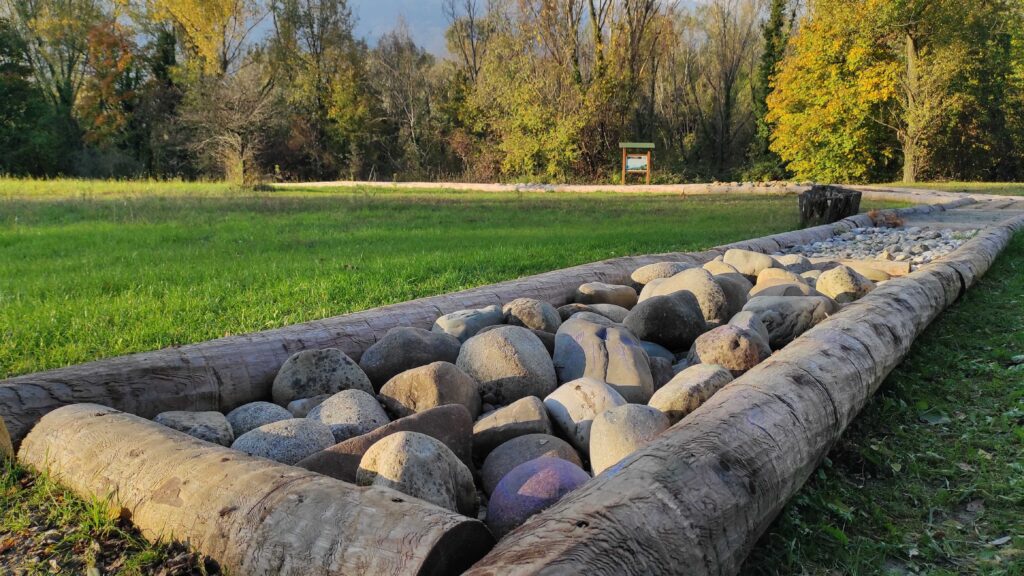
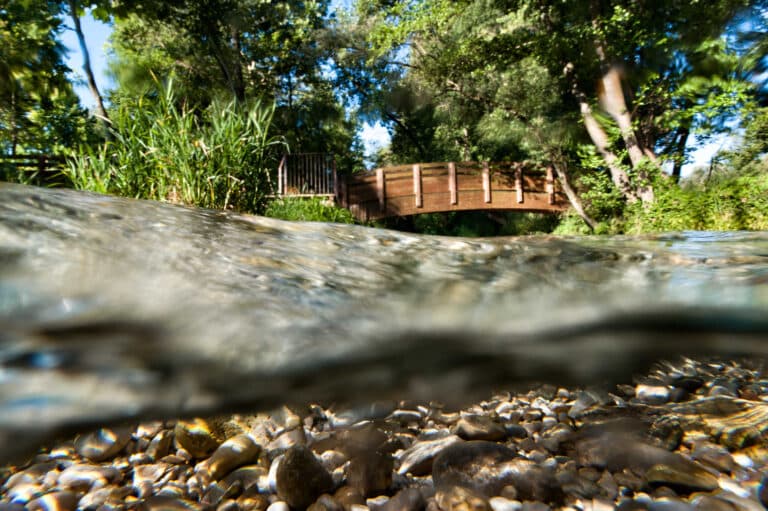
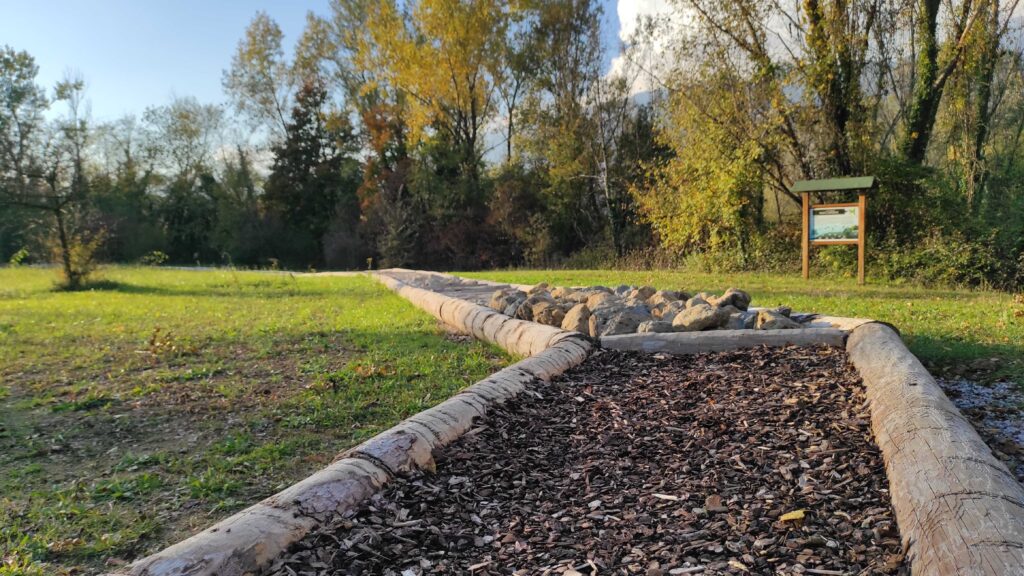
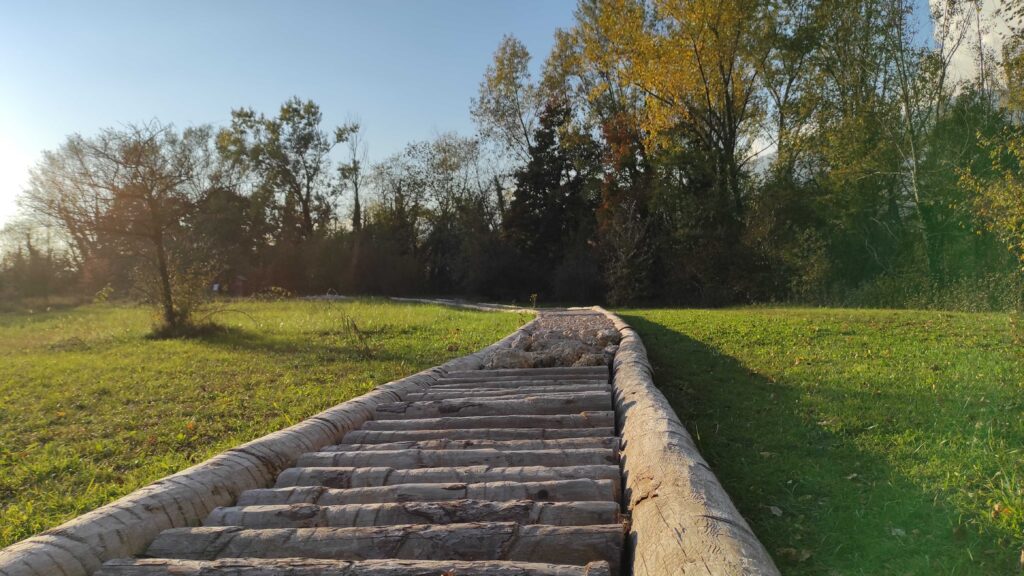
Created by the company Verde Idea, the 130-meter sensory itinerary that ideally connects the Piave and Brenta rivers is punctuated by thirty stations made with materials linked to the geological history of the area: from marble blocks of the Massiccio del Grappa and gravels of different grain sizes from the Brenta, Lastego, Piave, and Muson to the typical clay of the Oasi and the hills of Possagno, alternating with grassy stretches or otherwise soft soils.
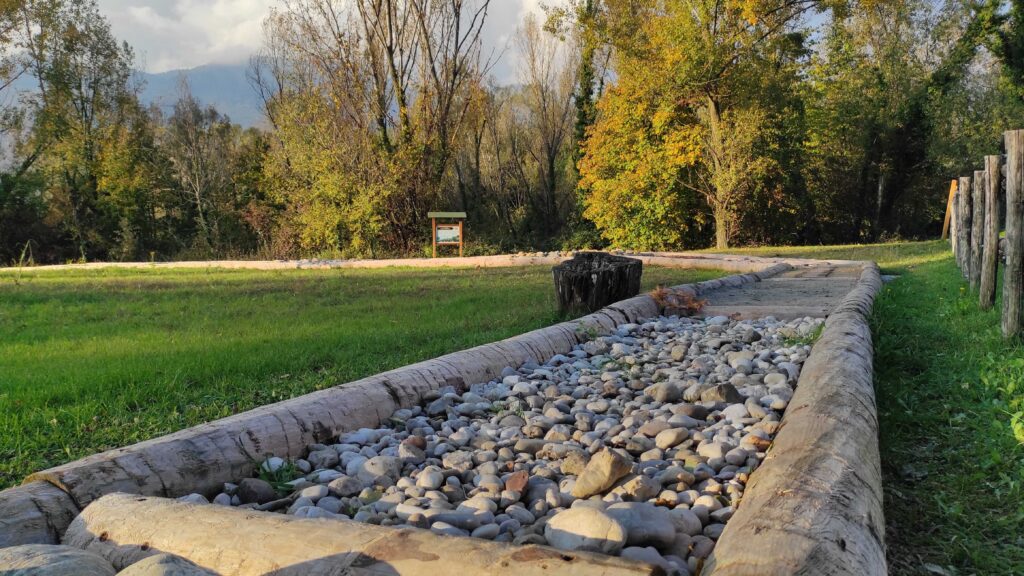
Known as earthing or grounding, the practice of walking barefoot, for which the path was designed, is associated with potential psycho-physical benefits, including stress reduction, improved sleep quality, and cardiovascular function.
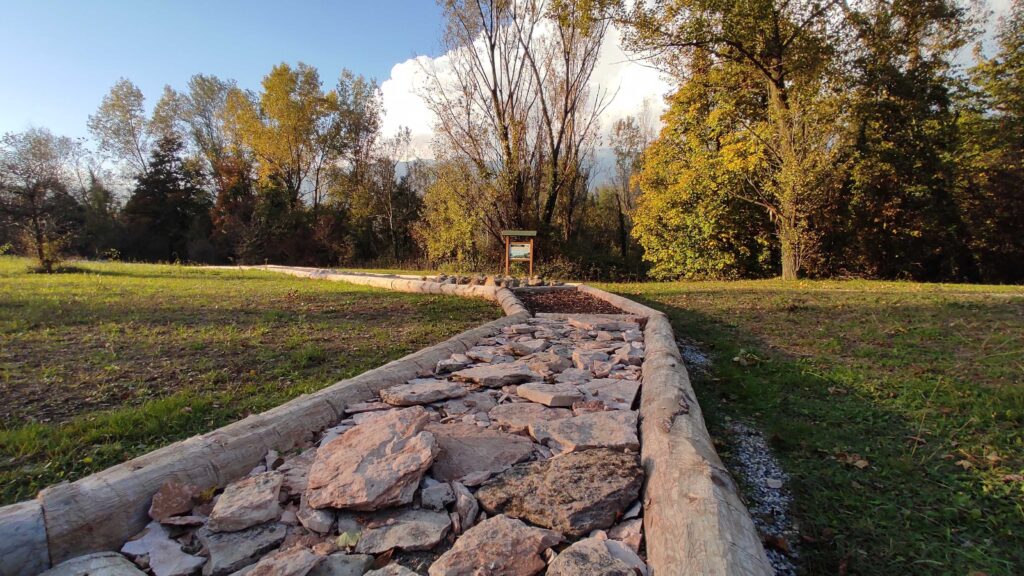
The direct contact of the skin with the surface of rocks, stones, wood, grass, and earth allows one to perceive their consistencies, temperatures, and porosity, stimulating and refining one of the senses that is often neglected.
The open meadow
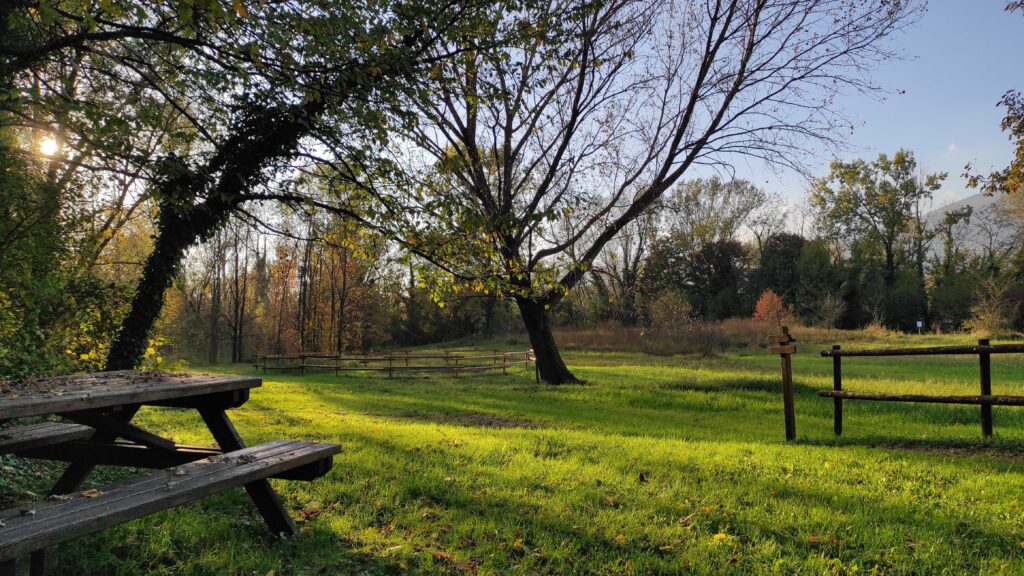
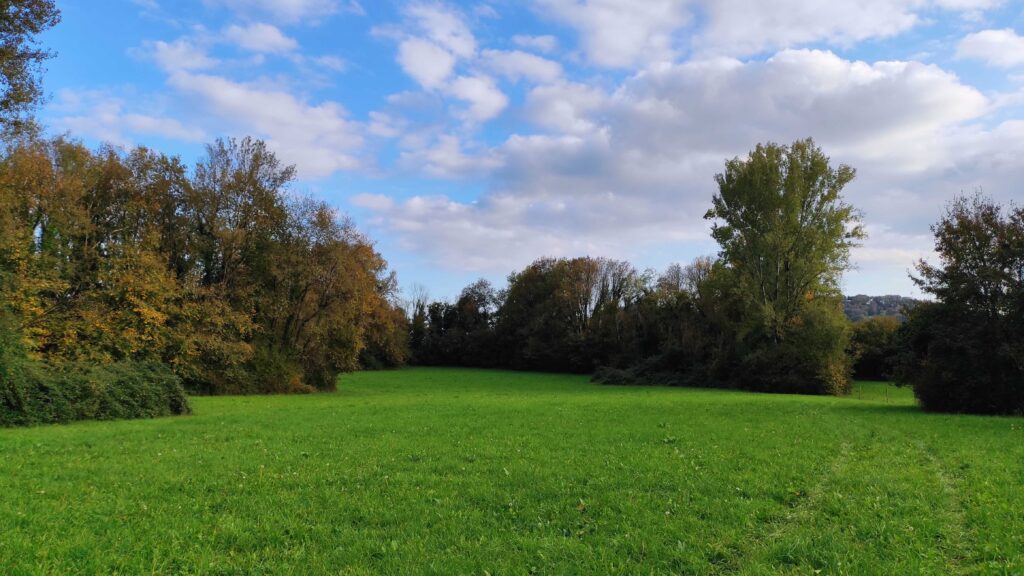
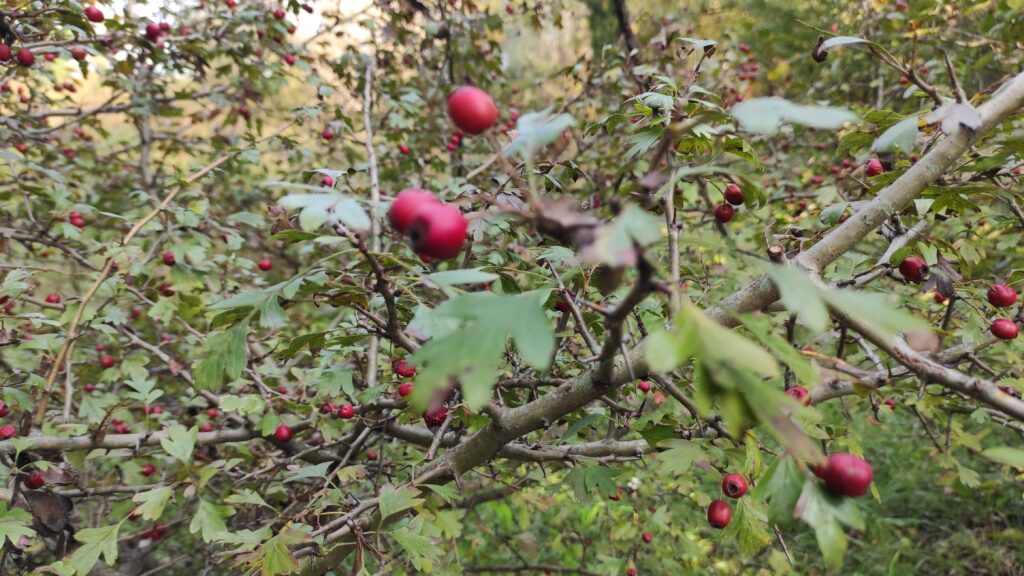
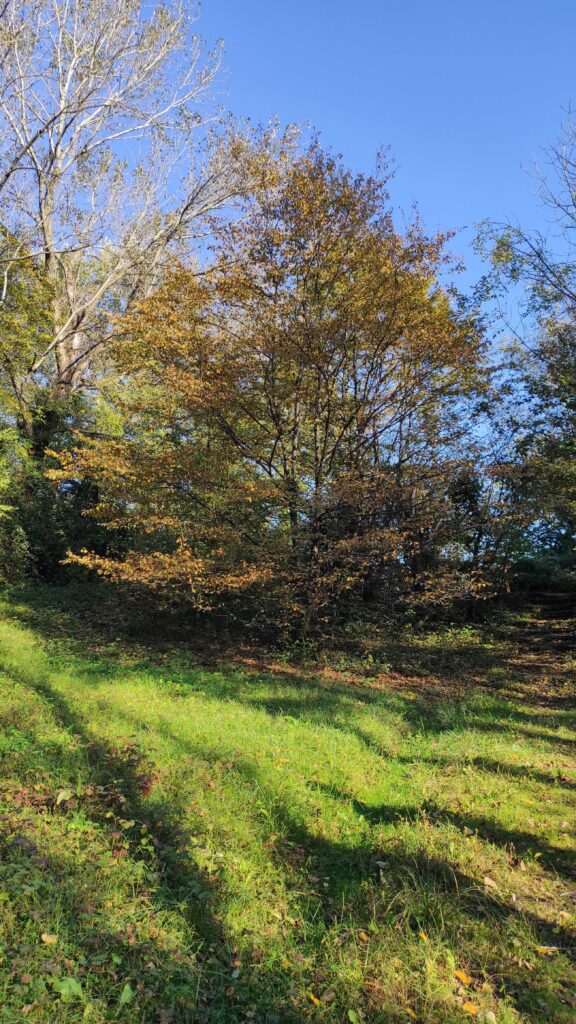
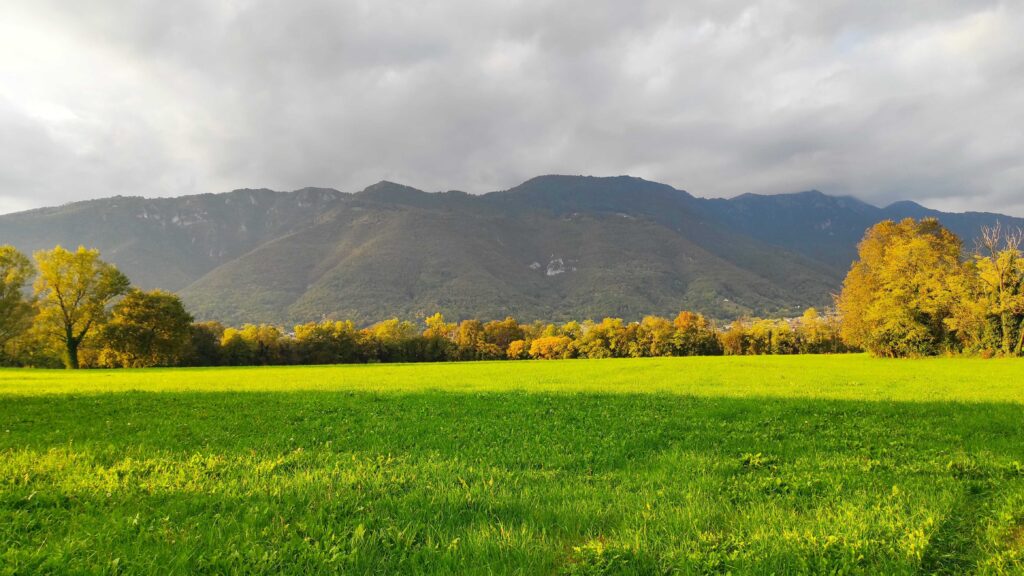
Past the entrance of the Oasi, the gaze spans a vast and bright meadow framed by black locusts, mulberries, tree of heaven, hawthorns, hazels, hornbeams, maples, poplars, cypresses, and many other shrubs and tall trees.
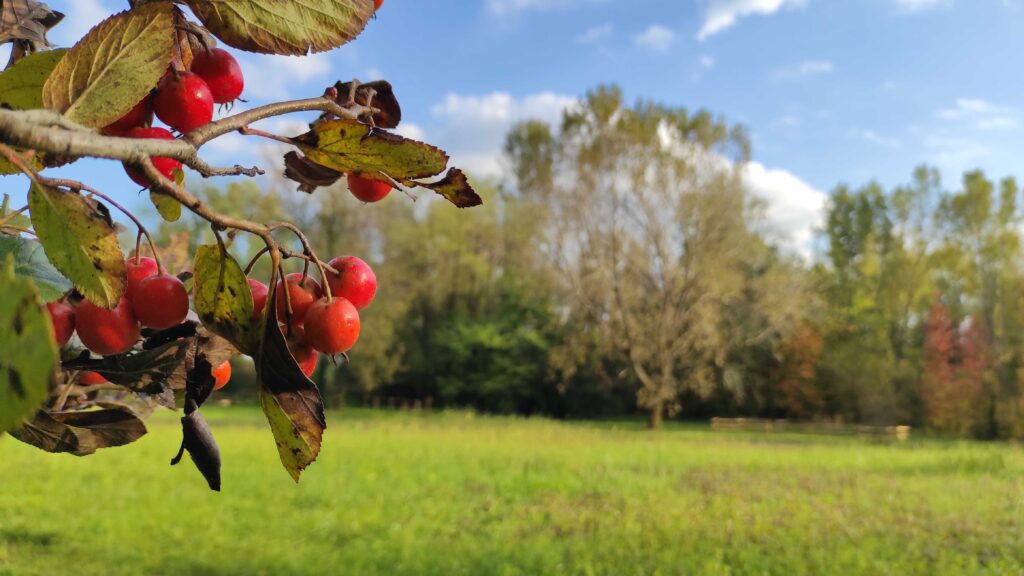
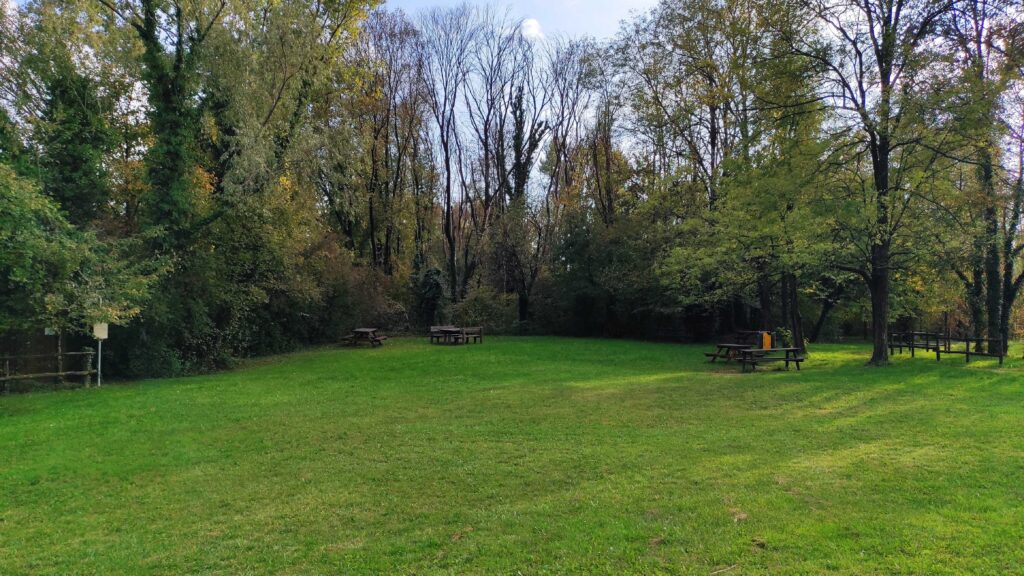
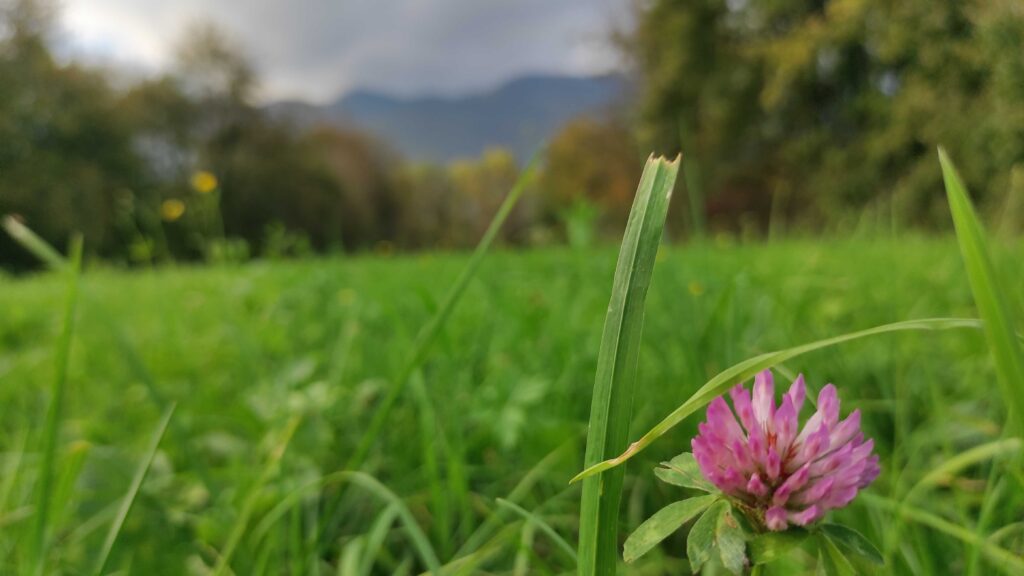
The tree vegetation that wraps around the placid grassy carpet shades the wooden tables and benches of the picnic area, from which one can admire, in the spring season, the pale pink petals of the dog rose, the flowering of the buddleja, commonly known as the “butterfly bush”, as well as showy nymphalid and lycaenid butterflies. At dusk, accompanied by the chirping of crickets, the glow of fireflies creates in this environment a magical atmosphere that invites calm contemplation of nature.
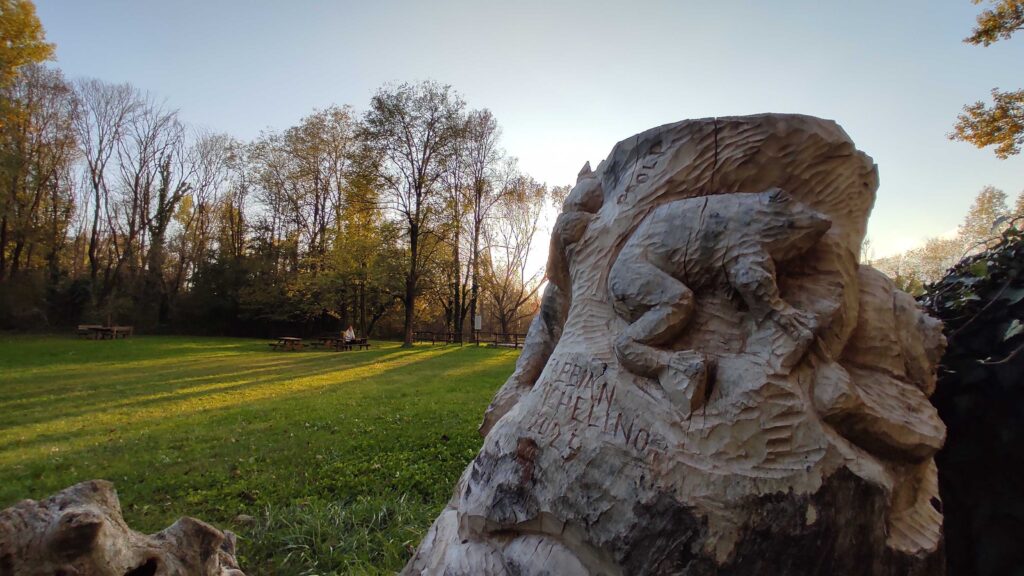
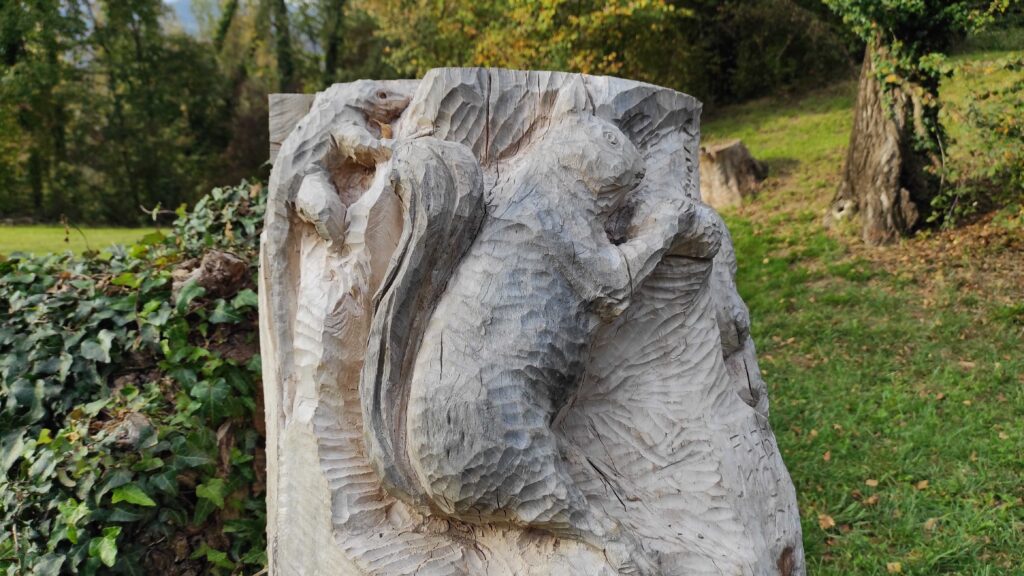
From the stump of a poplar, felled because it was unstable, emerge the figures of a squirrel, a salamander, a snail, and a tree frog skillfully carved by Michelino Fabbian, testifying to the environmental sensitivity, creativity, and passion for art underlying the desire to give new life to this lush wetland area.
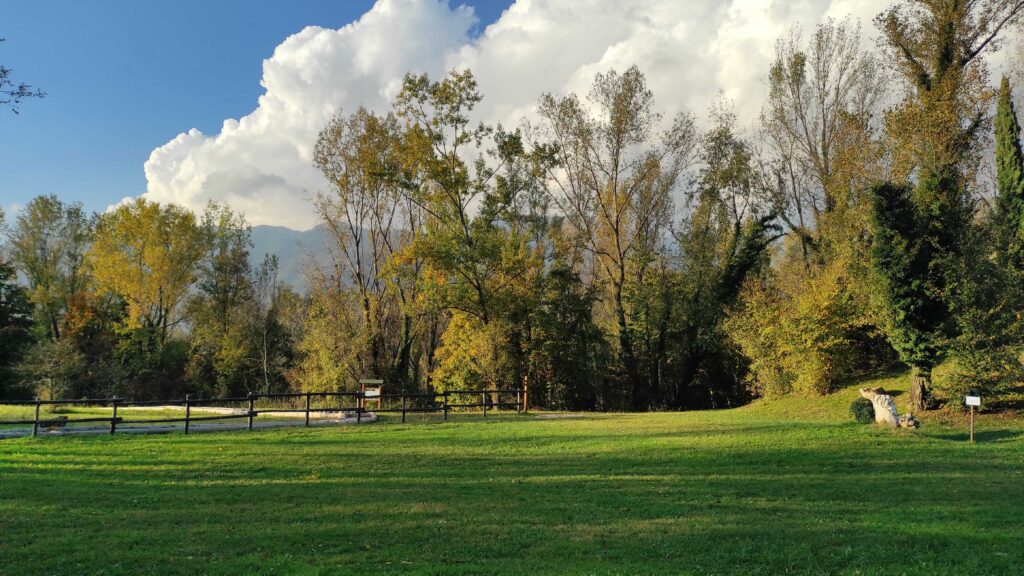
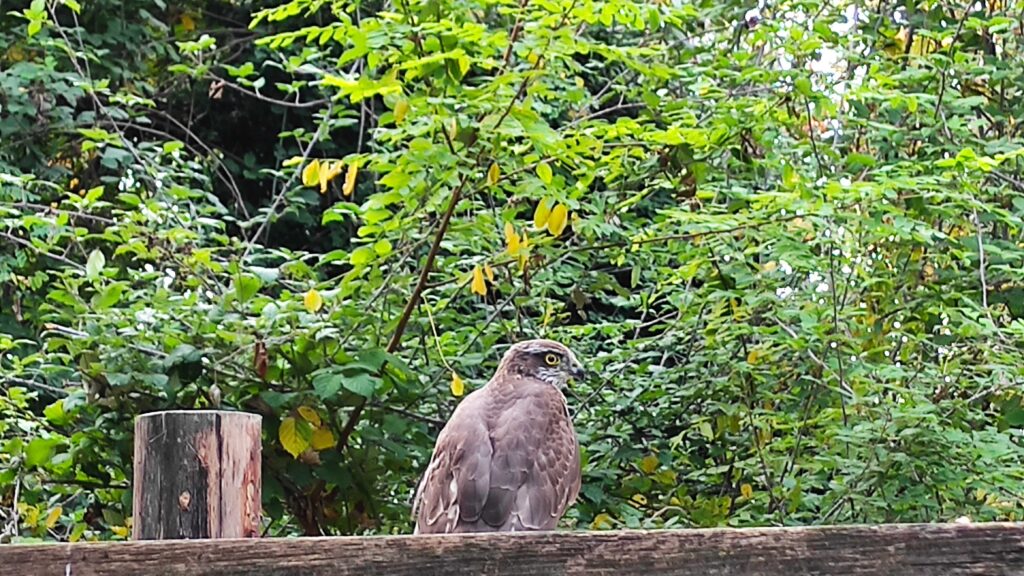
An important reservoir of biodiversity, the green area hosts birds such as the cattle egret, the buzzard, the red-backed shrike, the green woodpecker, and the pheasant, mammals such as hares, hedgehogs, and moles, as well as amphibians such as the green lizard, the green frog, the fire salamander, and the aforementioned tree frog, symbol of the San Daniele Oasi Nature Park.
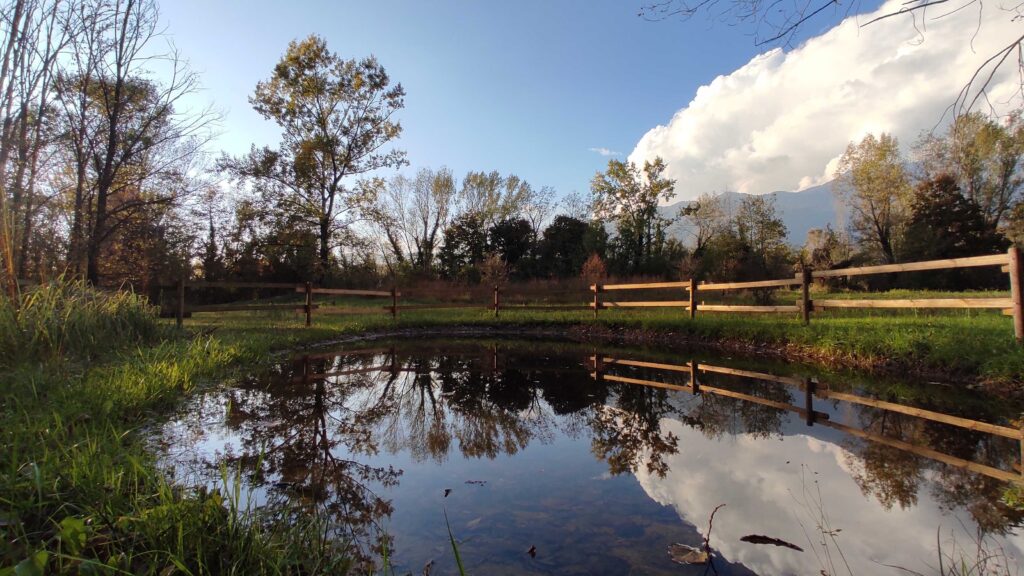
Inside the fertile sunny meadow there is a pond bordered by dense associations of soft rush and narrowleaf cattail (Typha angustifolia), whose inflorescence consists of a lower female part, velvety, brown, cylindrical, and an upper, yellow and thin, male part. In spring and summer, one is enchanted by the water lilies floating on the water surface.
The Insect Hotel
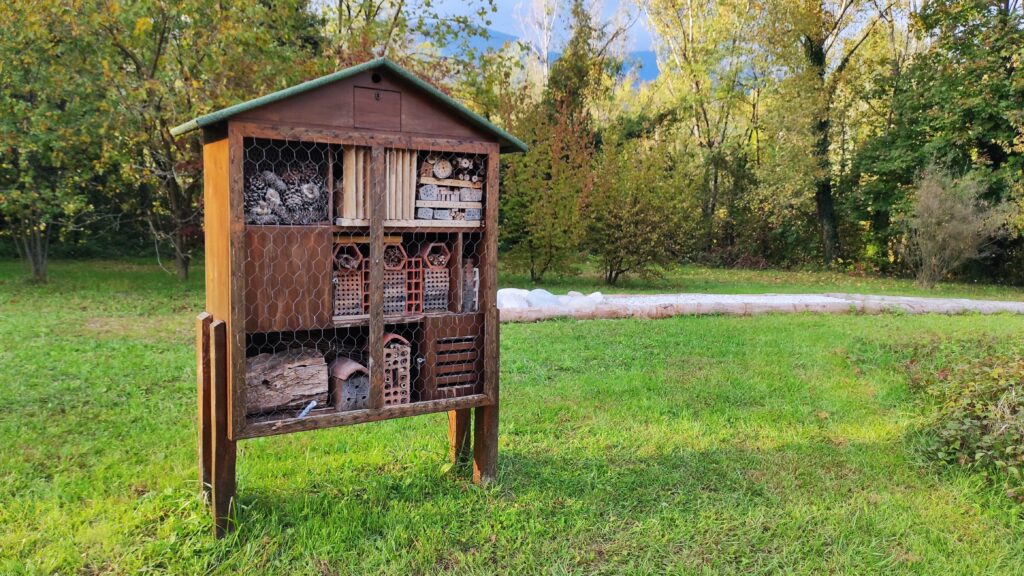
Crossed by the sinuous sensory itinerary, the meadow hosts a structure designed to promote the reproduction and wintering of numerous insect species, contributing to the maintenance of biodiversity. In addition to insects, it can also accommodate arthropods, reptiles such as field lizards, and small mammals.
The Insect Hotel is dedicated to Mattia Gastaldello, a benefactor who enabled the Oasi San Daniele Association to build it.
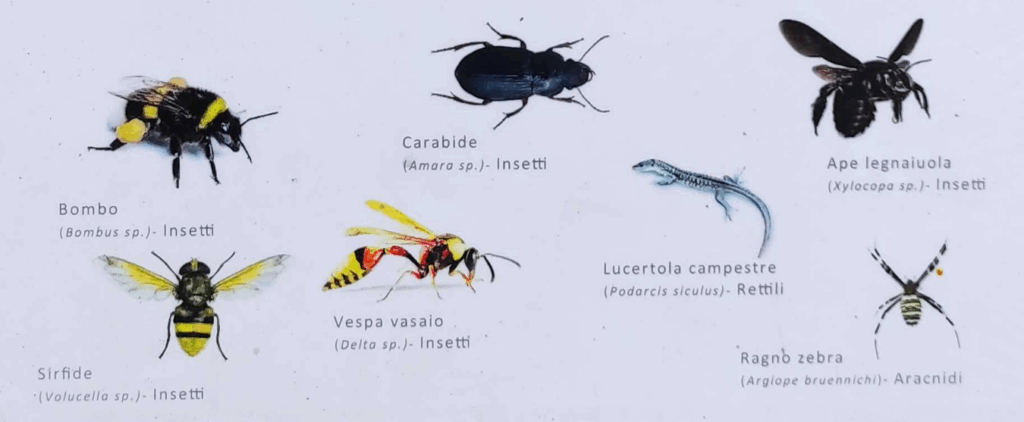
Among the most common species are the bumblebee (Bombus sp.), the ground beetle (Amara sp.), the carpenter bee (Xylocopa sp.), the hoverfly (Volucella sp.), the potter wasp (Delta sp.), the Italian wall lizard (Podarcis siculus), and the wasp spider (Argiope bruennichi).
The lowland forest
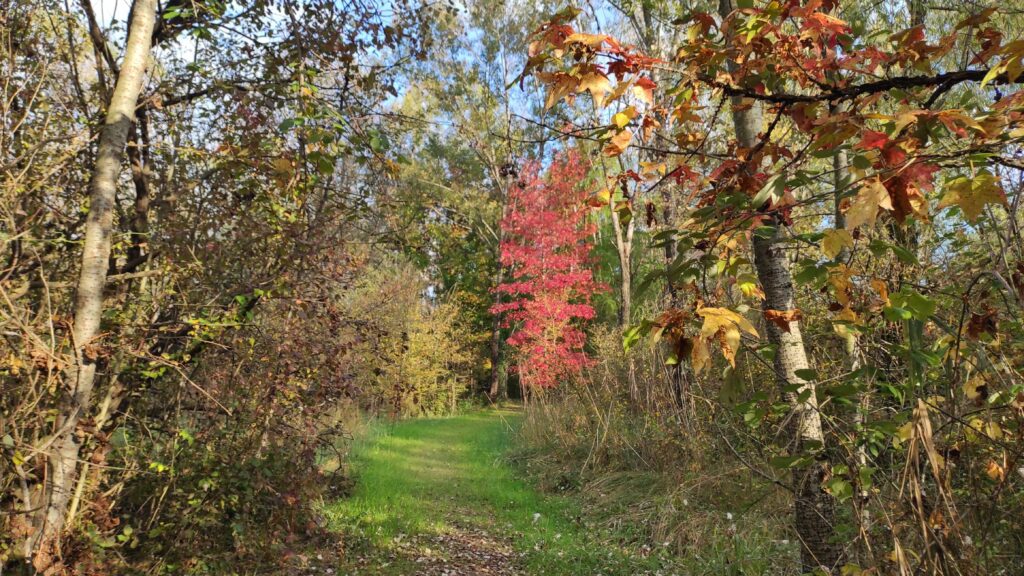
After crossing the barefoot path, the trail enters the placid scenery of the lowland forest, whose bright colors fascinate in every season of the year.
The current landscape of the Po Valley, dominated by monoculture and vast urban agglomerations, was covered in pre-Roman times by endless forest expanses, with a prevalence of downy oak woods mixed with firs and beeches, populated by human settlements dedicated to simple cultivation in forest clearings.
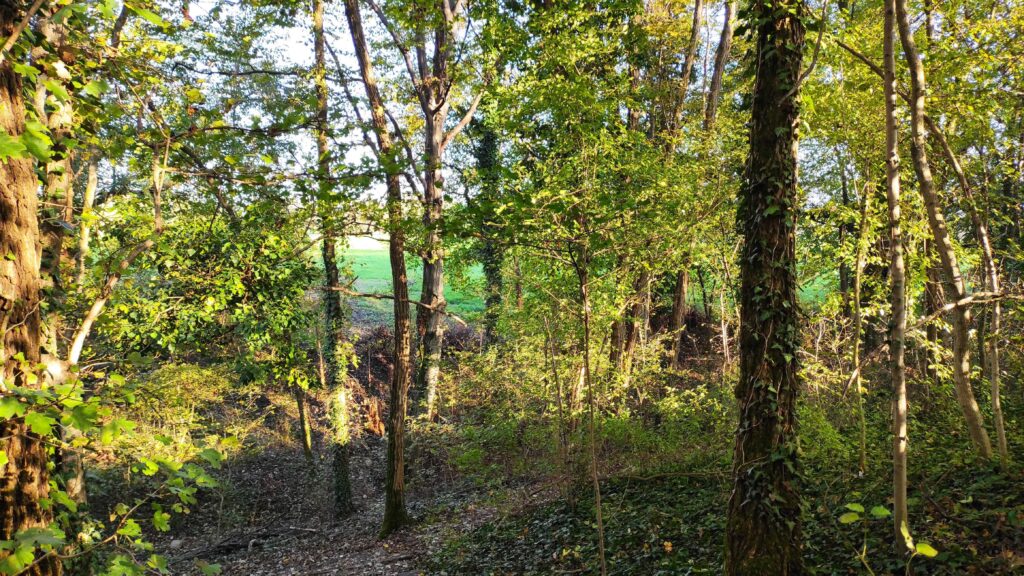
Rising on clayey soil, the lowland forest of the Oasi includes an ancient part, formed by relic woods that were part of the park of a Roman villa, to which newer sections are added, planted in the areas where excavation vehicles passed.
Rising on clayey soil, the lowland forest of the Oasi includes an ancient area, consisting of relic woods that were part of the park of a Roman villa, where some orchid species bloom such as the bird’s-nest orchid (Neottia nidus-avis) and the twayblade (Neottia ovata), and a more recent section, planted in areas once traversed by excavation vehicles.
The tendency of some areas of the forest to retain rainwater leads to the formation of a drier, sunnier zone and a belt with more shady and humid undergrowth, where one can admire spring blooms of primroses, violets, bellflowers, anemones, hellebore, and vegetation typical of riparian areas and water bodies, such as horsetail and various species of willow.
The dense mantle of black locusts, field maples, tree of heaven, downy oaks, black poplars, dogwoods, and blackberry brambles offers shelter and food to mammals such as foxes, wild boars, badgers, squirrels, stone martens, and roe deer, to birds such as the robin, the sparrowhawk, the buzzard, the great spotted woodpecker, the jay, the nightingale, the blackcap, the nuthatch, and to beetles such as the stag beetle. A beetle of the Lucanidae family, the latter owes its name to the male’s large mandibles, similar to the antlers of a stag.
The hedgehog hibernacula
Near a pond we notice small wooden constructions, covered by a thick layer of branches, which blend into the undergrowth vegetation.
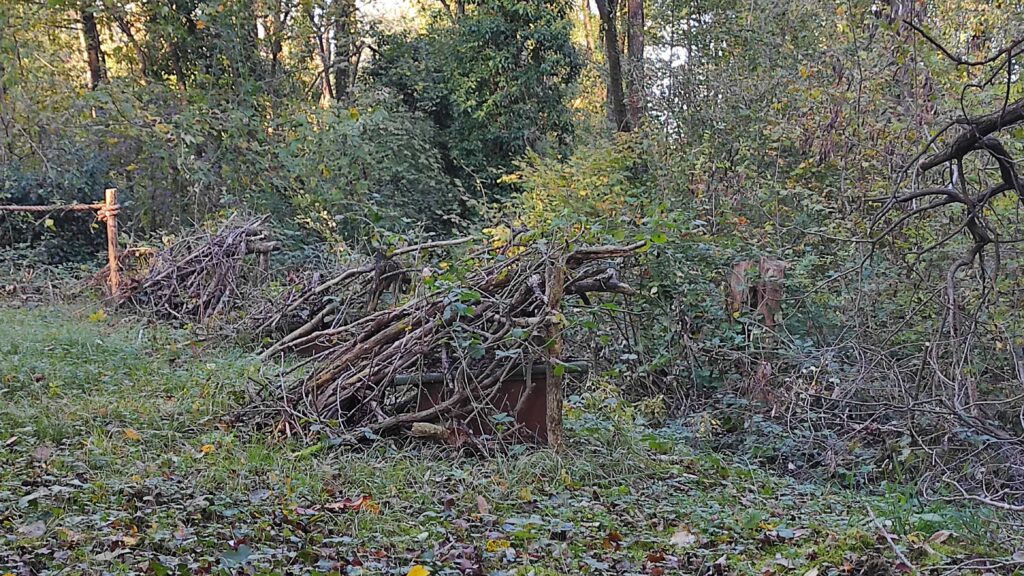
These are artificial dens for the mating of the European hedgehog (Erinaceus europaeus), which, at the end of the breeding season occurring between May and October, finds in these shelters a safe environment for hibernation.
Forest edges and bushy, rural, and suburban areas best meet the needs of this insectivorous mammal, which in this habitat feeds on beetles, caterpillars, millipedes, earthworms, slugs, as well as woodlice, carrion, young mice, and small bird eggs.
The seasonal pond
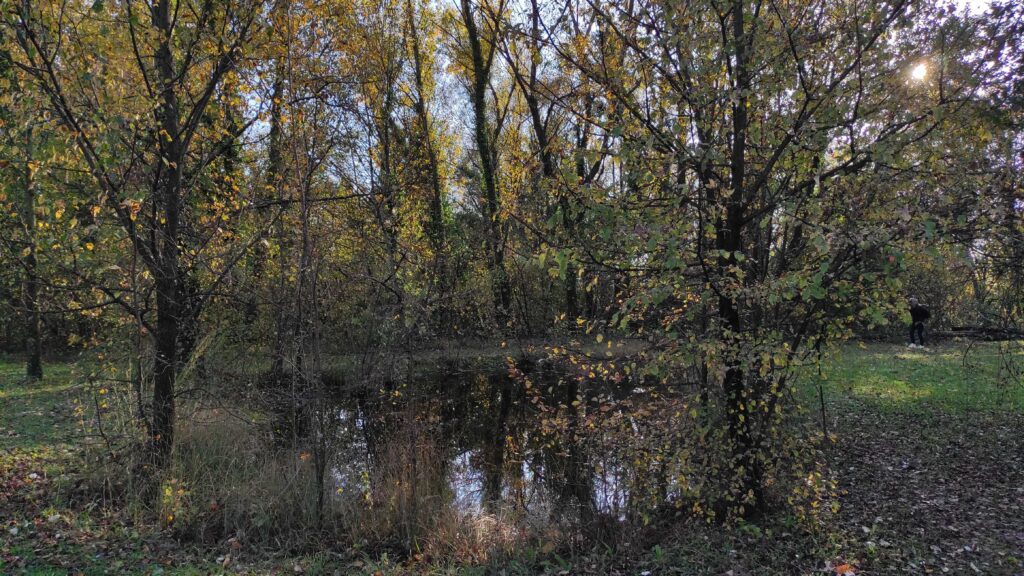
The seasonal pond is a basin for collecting rainwater with a depth not exceeding 50 cm, whose level is subject to significant daily and seasonal fluctuations, both in terms of temperature and water quantity. Such basins tend to dry up in summer, due to evaporation, and in winter, due to scarcity of precipitation.
This ecosystem favors the presence of invertebrates that have developed over evolution the ability to adapt to periods of drought and frost, resuming their biological cycle when water returns. This is the case of aquatic invertebrates such as backswimmers, water striders, beetles, and diving beetles, which fly to the nearest permanent waters during the dry phase of seasonal ponds, then return when they fill with spring or autumn rains.
Other invertebrates, including mayflies, dragonflies, caddisflies, flies, and various beetles, modulate the duration of the larval cycle based on environmental conditions and water availability. When the dry phase arrives, these insects have already reached the adult stage and are able to fly, or they create a cocoon, the pupa, inside which metamorphosis occurs.
Among amphibians, urodeles, with tails, such as salamanders and newts, and anurans, without tails, such as frogs and tree frogs, find shelter until the mating period in temporary pools, where they lay eggs.
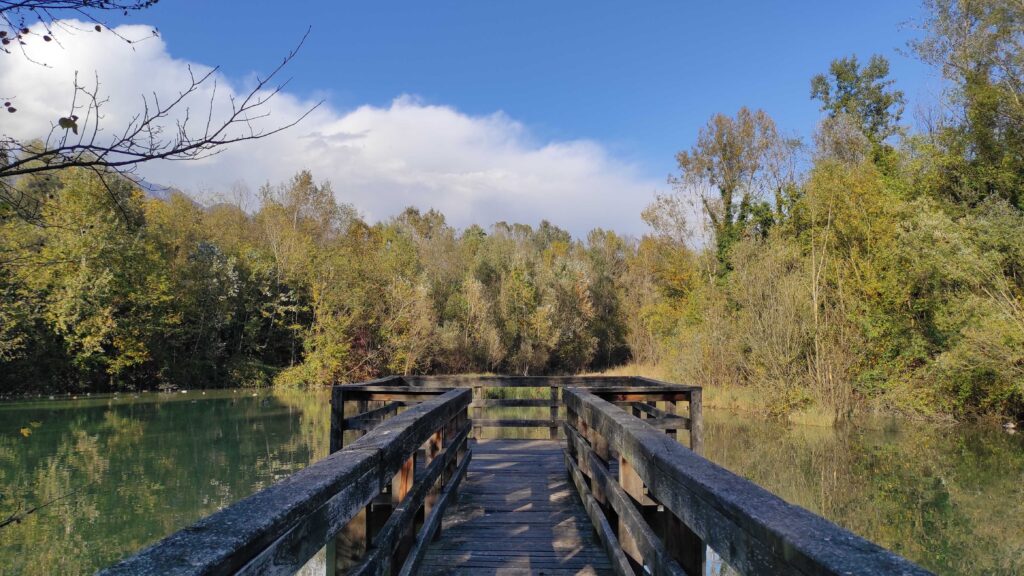
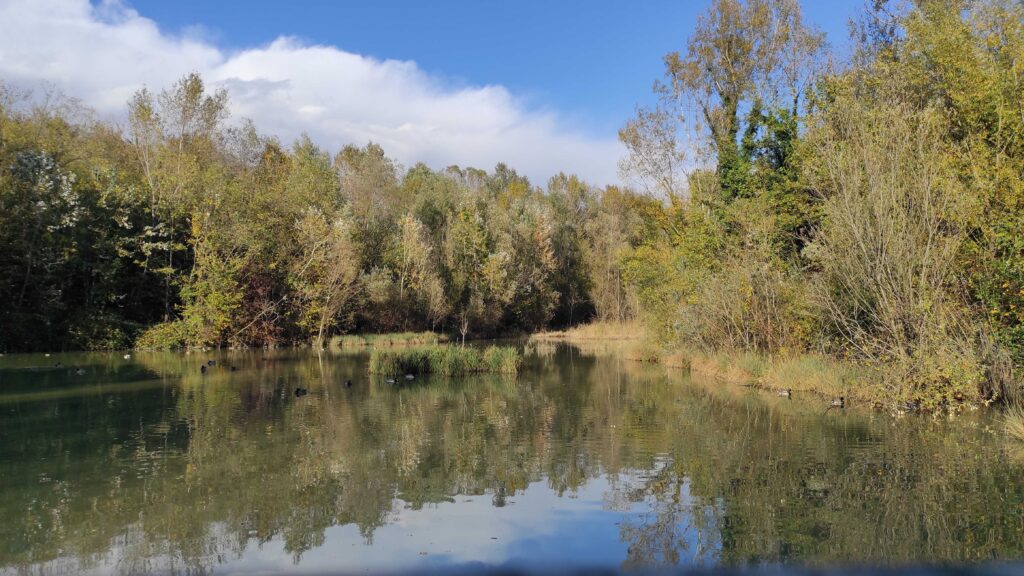
We proceed west and descend a dirt stairway, covered with dry leaves, leading to the lower part of the Oasi, where we can contemplate enchanting ponds surrounded by riparian vegetation.
Continuing westward, we reach a fork. Turning left, the path leads to a vast flowery clearing, bounded by the forest of the Oasi and lush hedges: a peaceful grassy expanse from which one can admire fascinating panoramic views of the southern slope of the Massiccio del Grappa.
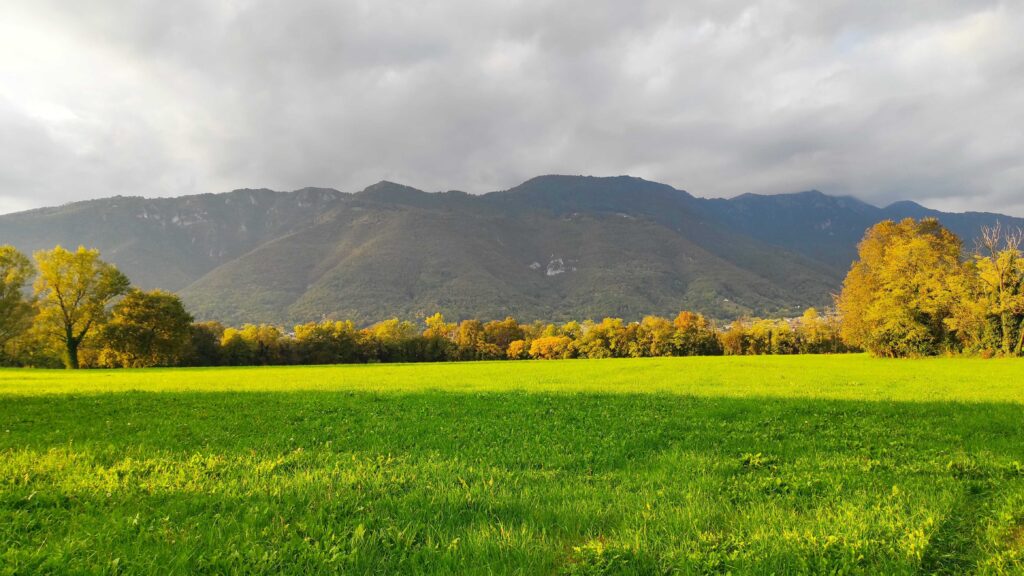
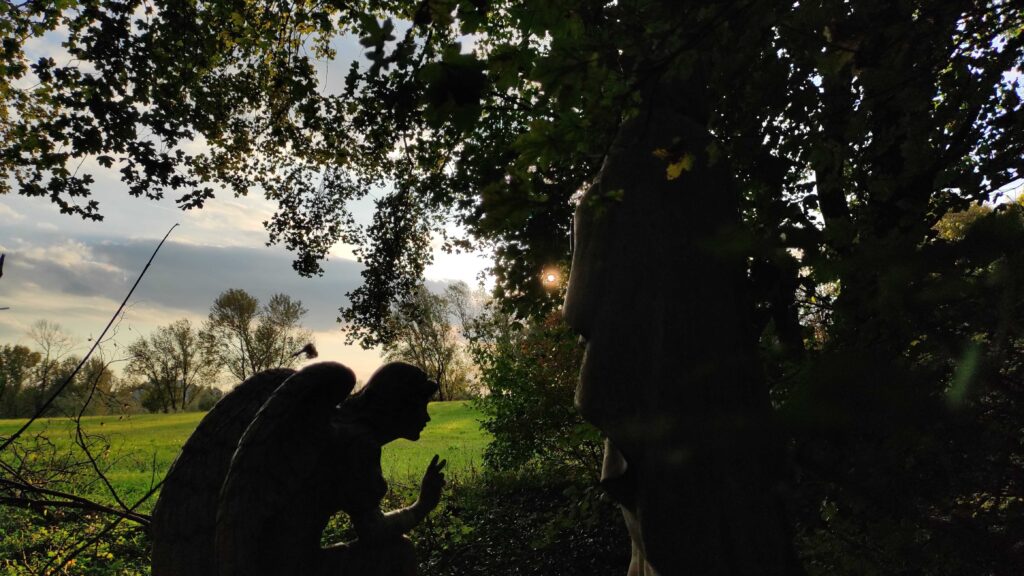
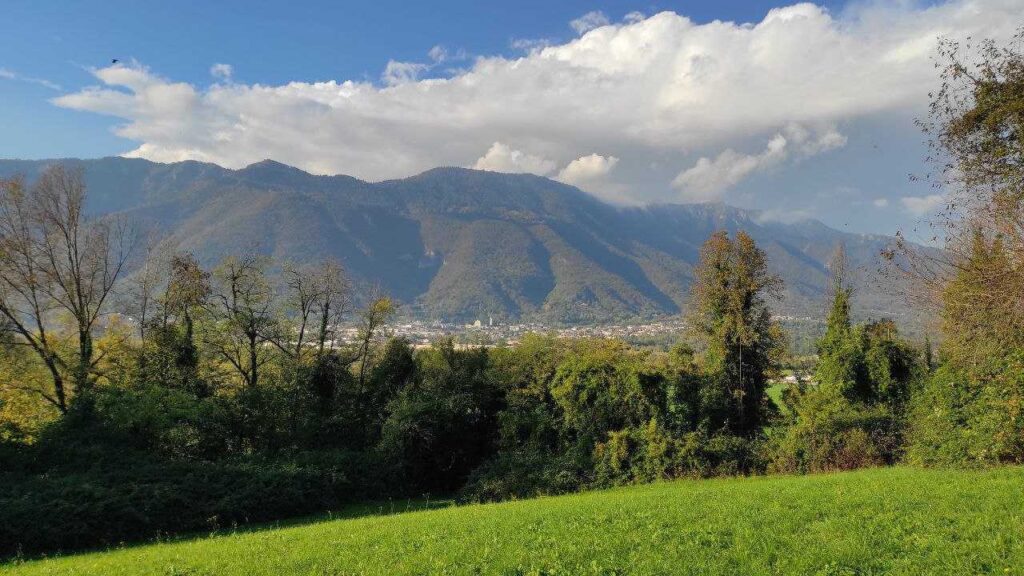
Turning right instead, we reach a bright hill, from whose summit one can embrace with the gaze the valley dominated by the Massiccio del Grappa and the town of Borso del Grappa standing at its feet. In the distance, the bell tower and the Archpriest Church of Saints Mary and Zenone are visible.
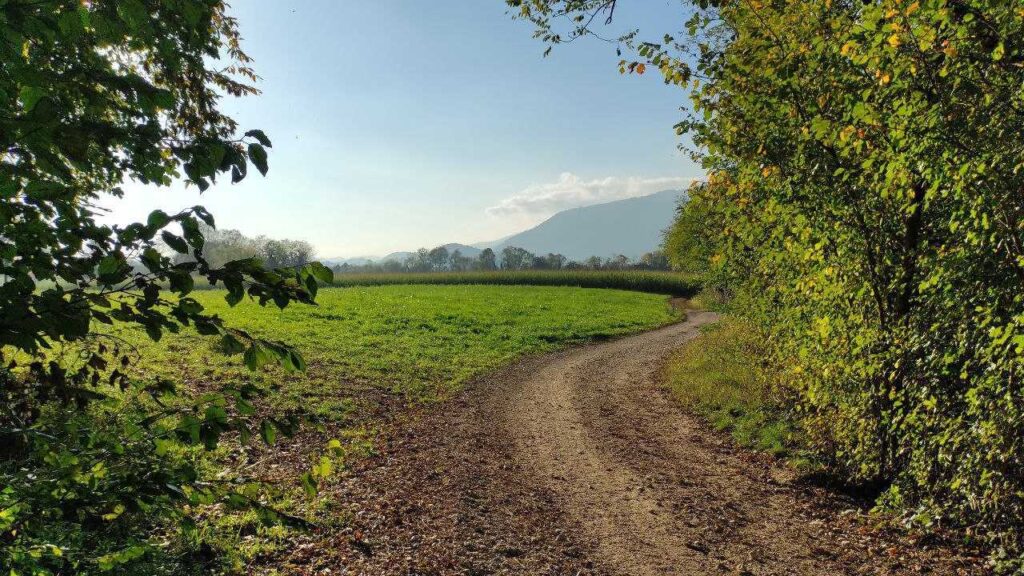
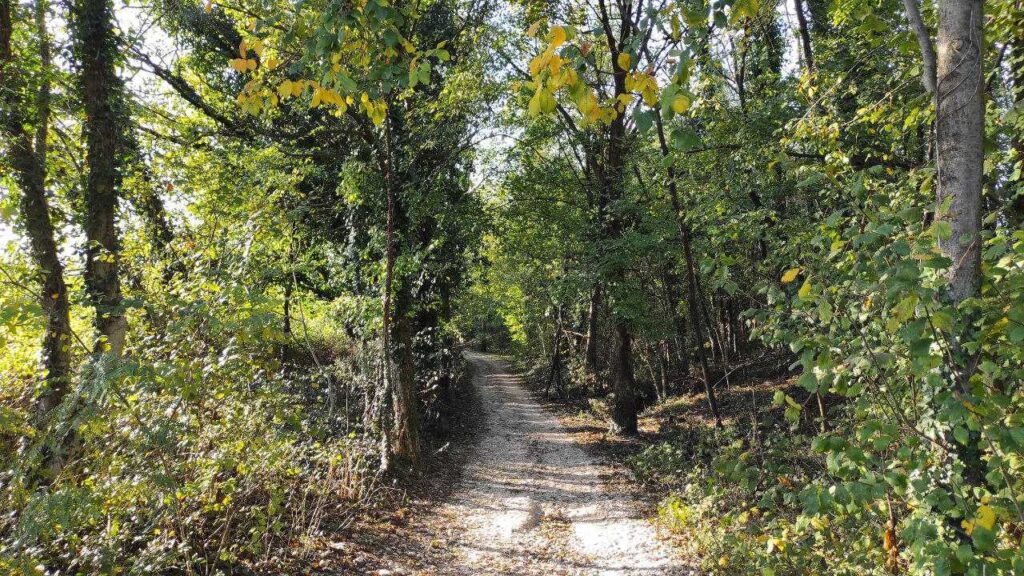
We continue north until we intersect Via S. Daniele, then turn left to take the oak path, a loop trail that runs along the edges of the Oasi.
The Typha path
The itinerary best suited for observing the ponds of San Daniele Oasi Nature Park and the extraordinary faunal and floral complex that characterizes them is the Typha path.
Past the entrance of the Oasi, to our right we find a green hill crowned with holm oaks, elms, and cypresses. After passing the decorative stump carved by Michelino Fabbian, we follow the signs for the Typha path.
The three basins
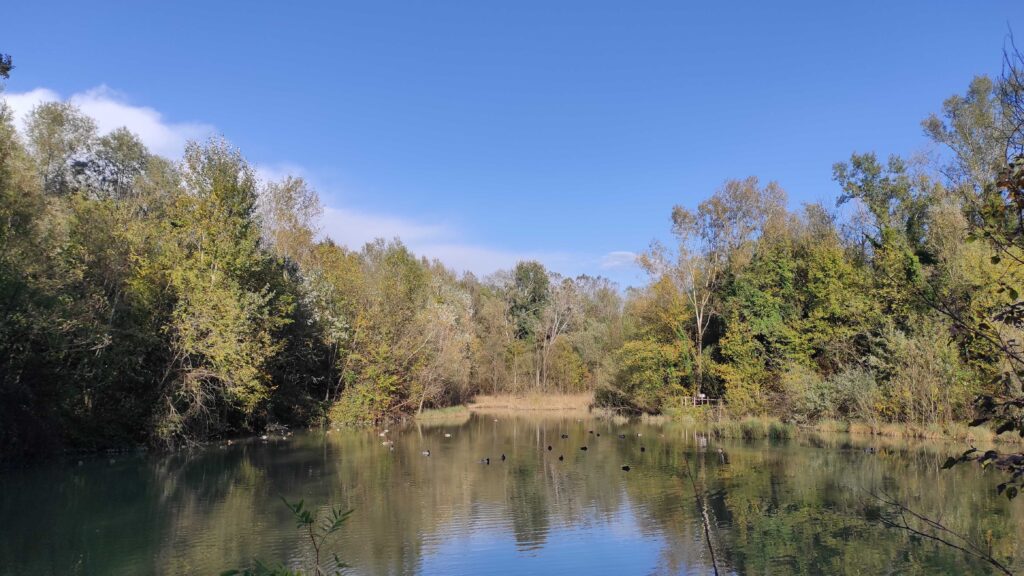
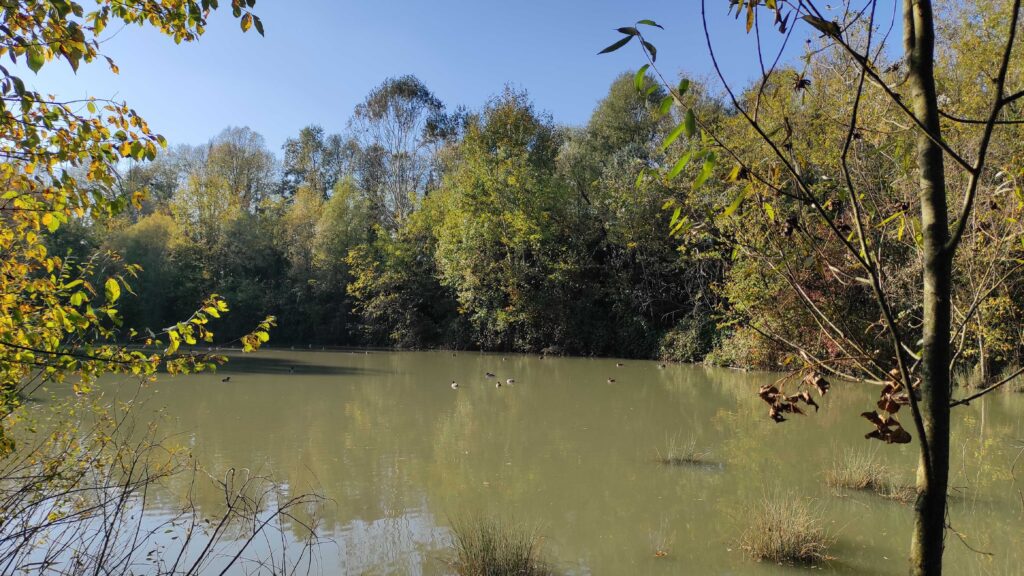
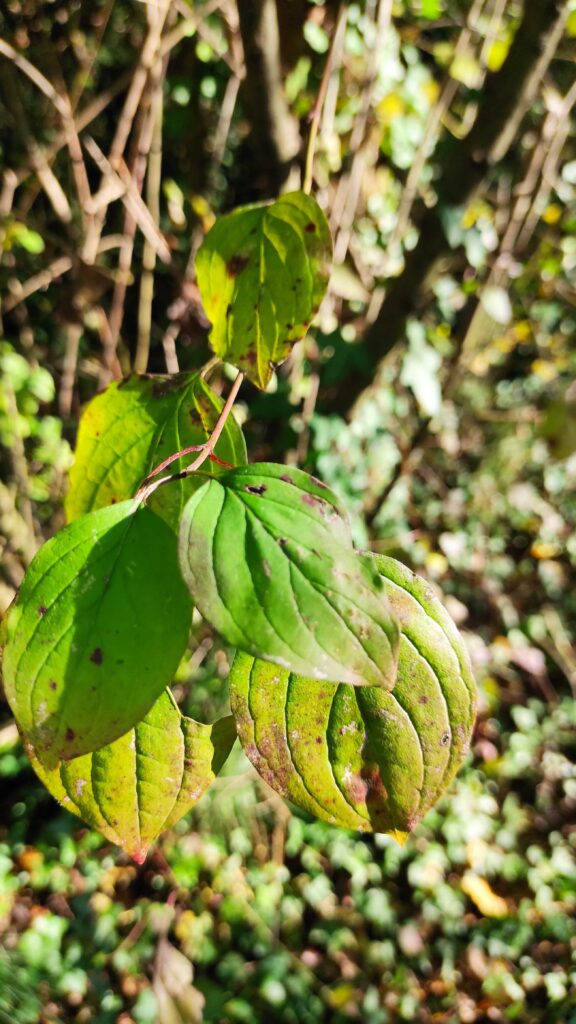
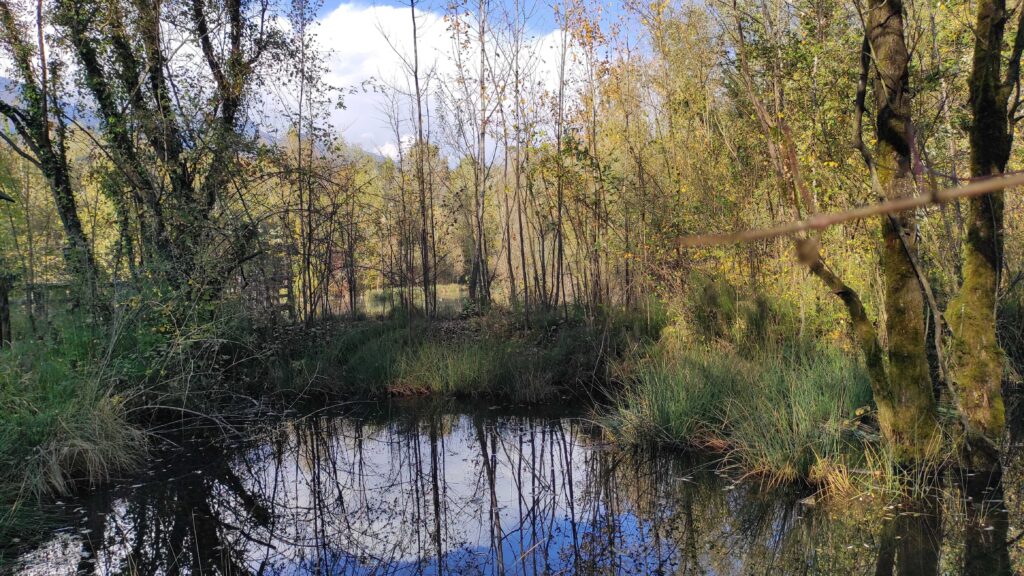
After descending a short staircase of wood and packed earth flanked by a lush hornbeam, you take the path that runs alongside the placid ponds of the Oasi surrounded by willows, horsetails, field maples, acacias, dogwoods, elms, poplars, and many other trees and riparian plants.
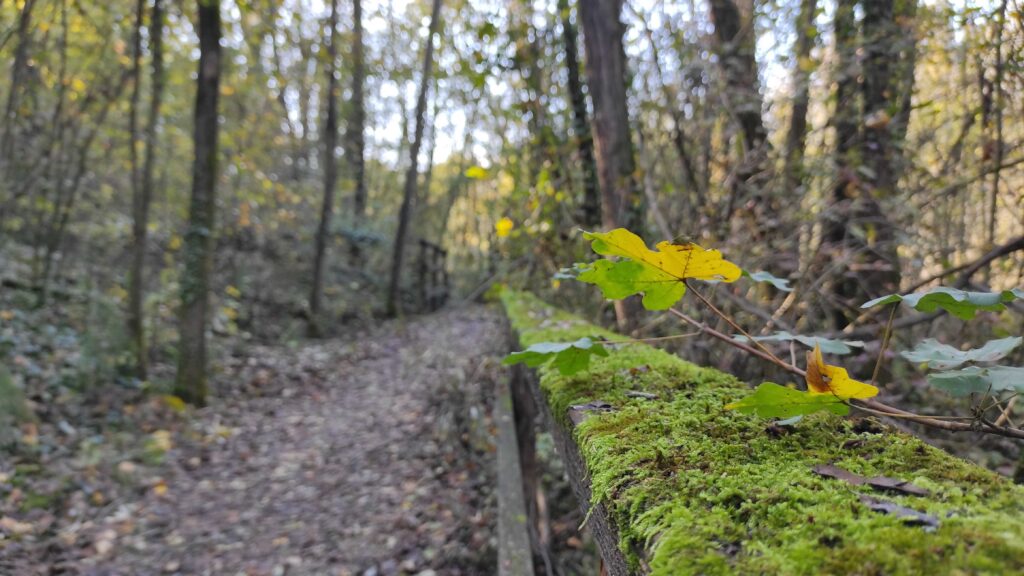
Important reservoirs of biodiversity, these precious biotopes constitute a suitable place for the wintering and reproduction of numerous amphibian species that find a safe refuge from the pollution produced by industrial and agricultural activities within the Oasi.
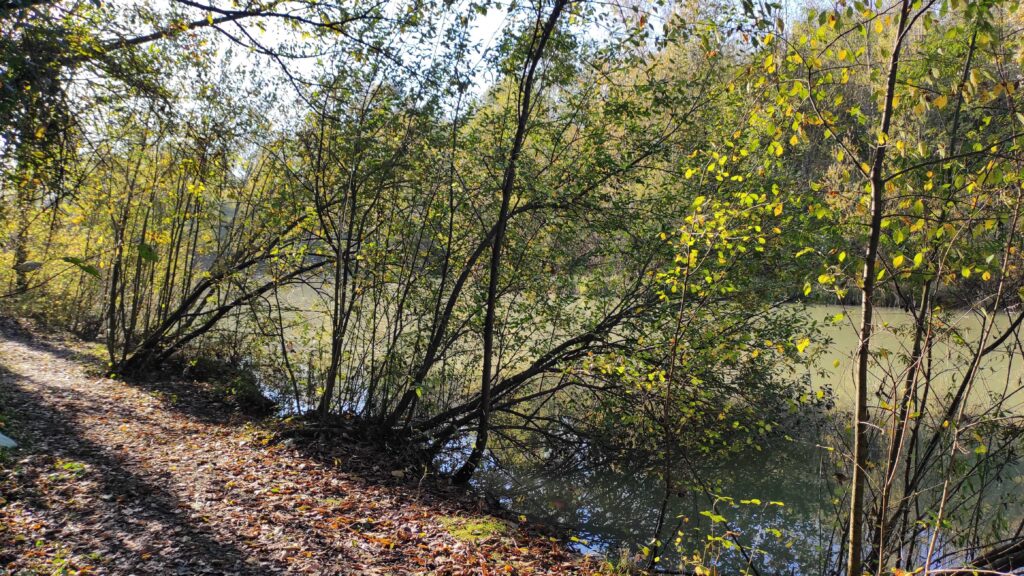
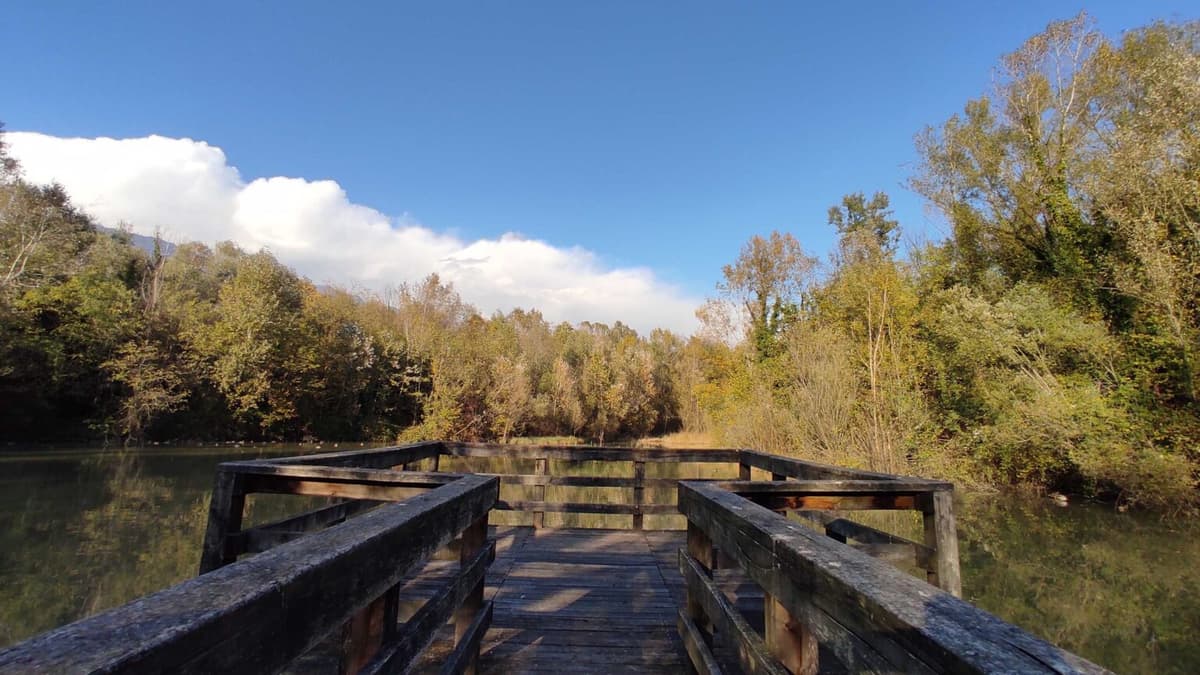
The quiet panoramic trail leads to a comfortable wooden walkway from which we spotted splendid specimens of mallard, one of the many bird species that populate the ponds of the naturalistic site.
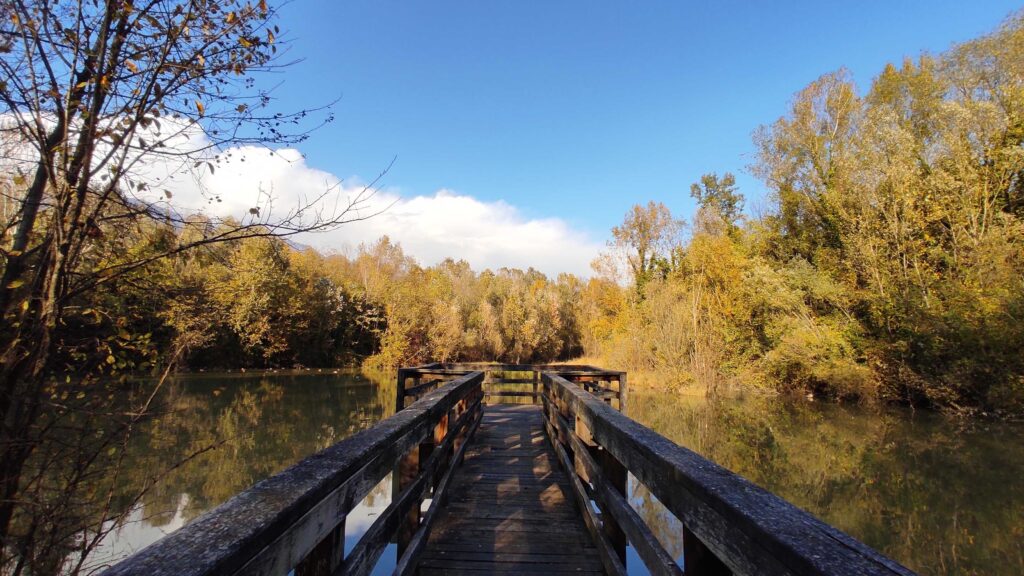
The deep stable pond
The pond is a water body with water circulation, whose depth, exceeding one meter, can reach a maximum of five meters. In the absence of turbid waters, sunlight reaches the bottom of the basin, making possible the growth of macrophyte plants.
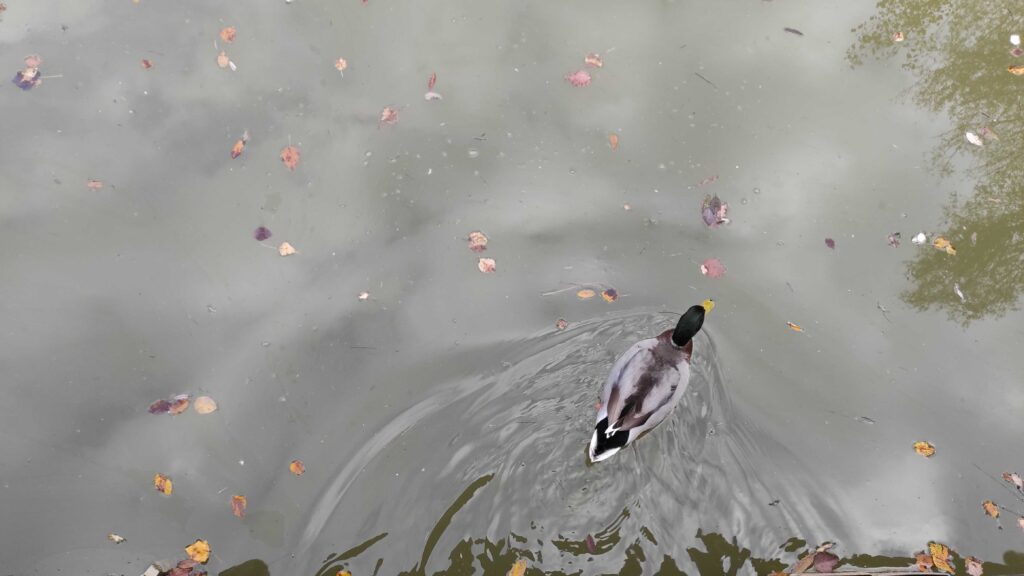
Along the banks of the pond thrive the common reed, flowering rush, broadleaf cattail, and narrowleaf cattail, the flagship of the Oasi, set against a backdrop of towering black locusts, white willows, and goat willows, whose male flowers, at the end of winter, become covered with silvery gray hairs called catkins.
Testimony to the health of this delicate ecosystem, one can spot, in addition to the mallard, specimens of little grebe, grey heron, black-crowned night heron, water rail, and common moorhen.
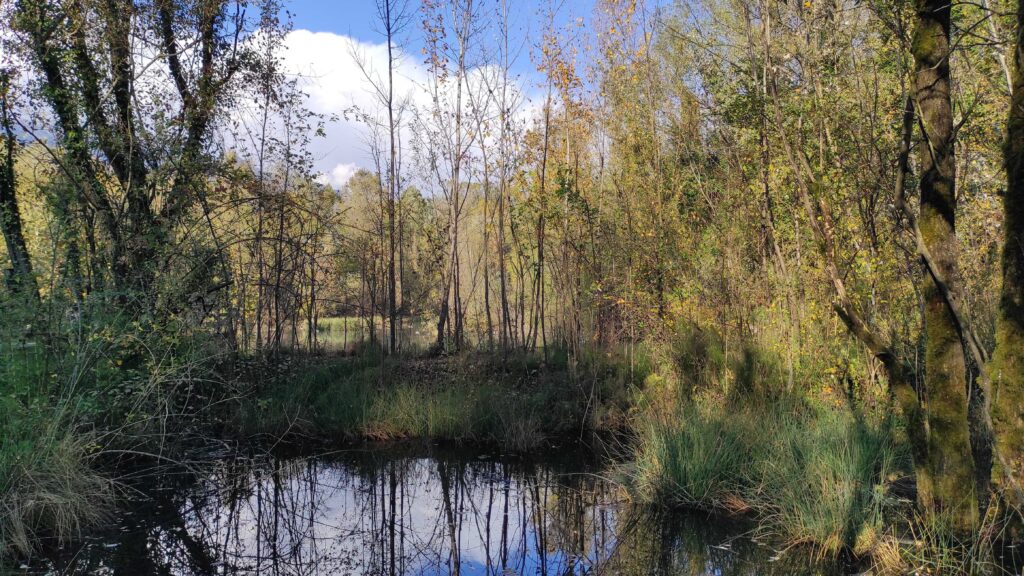
Fish species that frequent this aquatic environment include tench, crucian carp, bleak, and three-spined stickleback. The fauna inhabiting the pond includes the green frog, the red-eared slider turtle, and the grass snake, while dragonflies and damselflies hover among the reeds and on the water surface.
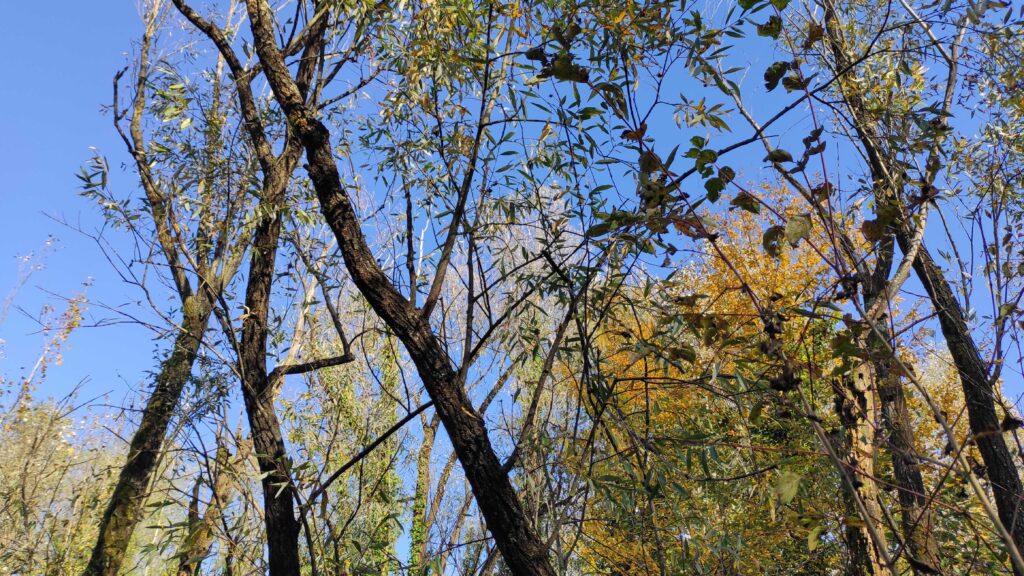
Summit area with observation hides
Accessible by reservation, the hides in the naturalistic experimentation area have been built by volunteers to host photographers who wish to immortalize the local birdlife.
Covered by a sparse pine forest, the ground on which they stand hosts a feeder and a pool of clear water to attract wildlife especially in winter, a season when food is scarcer.
Bird ringing
Inside the San Daniele Oasi Nature Park, bird ringing is practiced, a scientific method of research and study of birds through which ornithologists can take measurements and monitor the health status of birds that pass through or nest in the naturalistic site.
The name of this practice derives from the identification ring applied to the birds’ tarsus.
Nest boxes for raptors
The San Daniele Oasi Nature Park also hosts five nest boxes for the nesting of the tawny owl (Strix aluco), the scops owl (Otus scops), and the little owl (Athene noctua). In addition to nocturnal raptors, the artificial nests provide shelter for passerines such as the great tit (Parus major) and the nuthatch (Sitta europaea). The latter is not a true woodpecker and nests in natural cavities or in nests excavated by true woodpeckers, whose entrance hole they reduce in size by adding mud or clay.
The success of the project is evidenced by the nesting of the tawny owl, the nuthatch, and the great tit, which colonized the artificial nests from the first year of their installation.
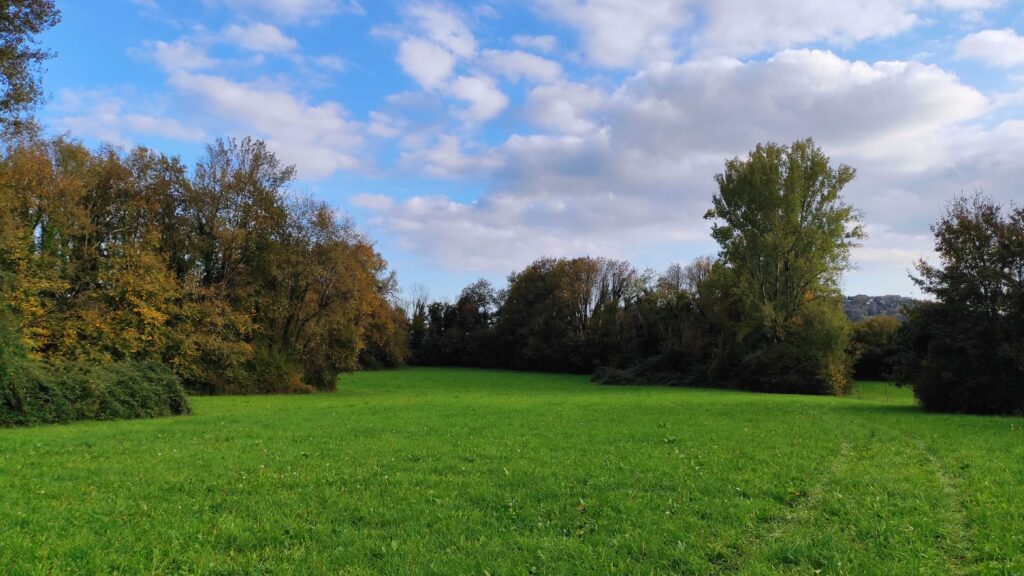
If you are wondering what to do in San Zenone degli Ezzelini, the San Daniele Oasi Nature Park is an unmissable destination for those wishing to explore an uncontaminated green lung, nestled between the Piave and Brenta rivers, restored to its former glory thanks to careful reclamation and environmental restoration works.
Cloaked in ancient forests brushed by ponds dotted with water lilies, the fertile naturalistic site, watched over by the colossal mass of the Massiccio del Grappa, is crossed by sinuous paths shaded by willows, towering poplars, and majestic oaks. An ideal destination for photography and hiking enthusiasts, the Oasi allows one to admire a delicate ecosystem that has survived agricultural and industrial expansion.
For more information, you can visit the website www.oasisandaniele.it
The photographic material, videos, and written content are the exclusive property of the Oasi San Daniele Association of San Zenone degli Ezzelini (TV). All copyrights are reserved. Copyright of Oasi San Daniele.