We would like to thank the Comune di Treviso for allowing the publication of the photos and the work “Piazza della Signoria o Piazza Maggiore” by Medoro Coghetto.
Discover what to see in Treviso: sinuous canals framed by medieval porticoes, elegant Renaissance walls crossed by avenues shaded by majestic horse chestnuts, the ancient frescoed loggia from the 13th century where nobles and knights gathered, the fountain of the tette, an enigmatic work of art whose history and scars are tied to the glory and fall of the Republic of Venice: these are just some of the places that inspire amazement and wonder in those fortunate enough to visit Treviso. To explore the full richness of the province, discover all the towns in the province of Treviso on a journey through history and culture in Veneto.
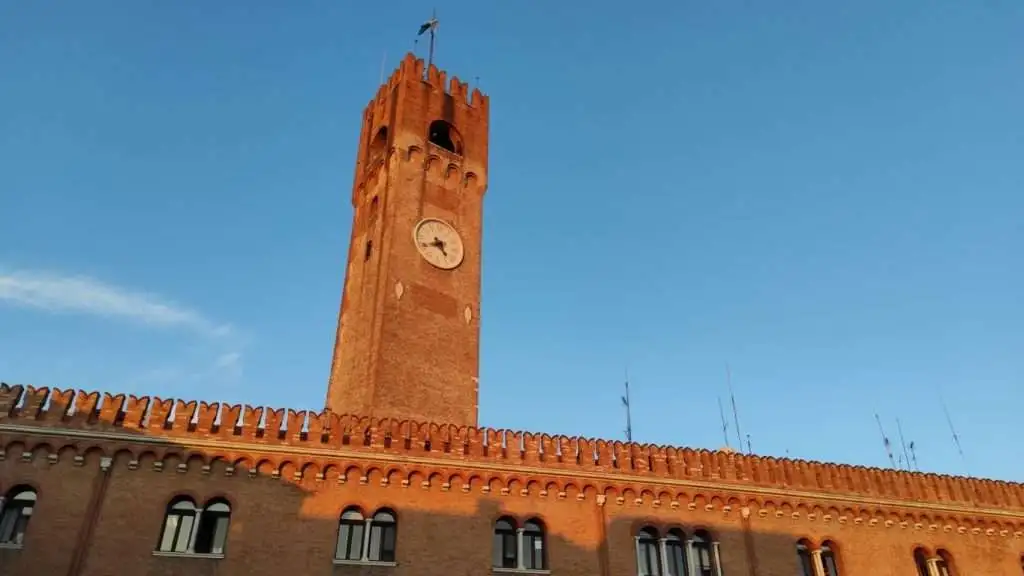
For more information about the extraordinary heritage of art, history, secrets, curiosities, monuments and itineraries that this decalogue presents as only a small yet significant part, we recommend going to the Tourist Information and Hospitality Office (IAT) in Piazza Borsa, 4, where you will find not only helpful staff ready to answer your questions, but also the engaging Ciao Treviso city guide, an appealing volume full of details and suggestions that will make your experience in the splendid city immortalized in the verses of the Divina Commedia even more captivating.
The palaces
Palazzo dei Trecento
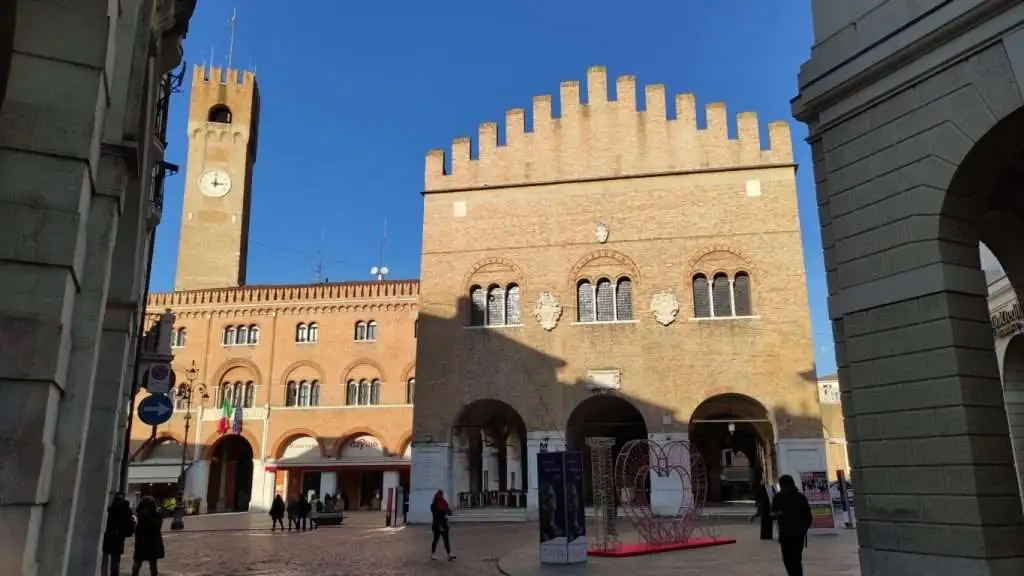
One of the most representative buildings in the Comune di Treviso, the Palazzo della Ragione was built between the 12th and 13th centuries as a place for civic assemblies. Over the years, the grand architectural work became the seat of the court of the Consuls, the seat of the podestà responsible for administering justice, as well as the seat of the Maggior Consiglio, a constitutional body with legislative functions made up precisely of three hundred members.
Accessible via a white staircase located on the left side of the palace, the assembly hall is decorated with spectacular painted works illuminated by elegant mullioned windows that soften the uniform mantle of red bricks of the mighty Romanesque building.
Crowned by Guelph battlements, the imposing mass of the palace is lightened on the ground floor by the airy 16th-century loggia, where one of the most fascinating and mysterious works of the enchanting city of Treviso is on display: the fountain of the tette.
Documenting the structural and aesthetic evolution of the palace, the painting by the artist Medoro Coghetto shows what Piazza dei Signori looked like in the second half of the 18th century.
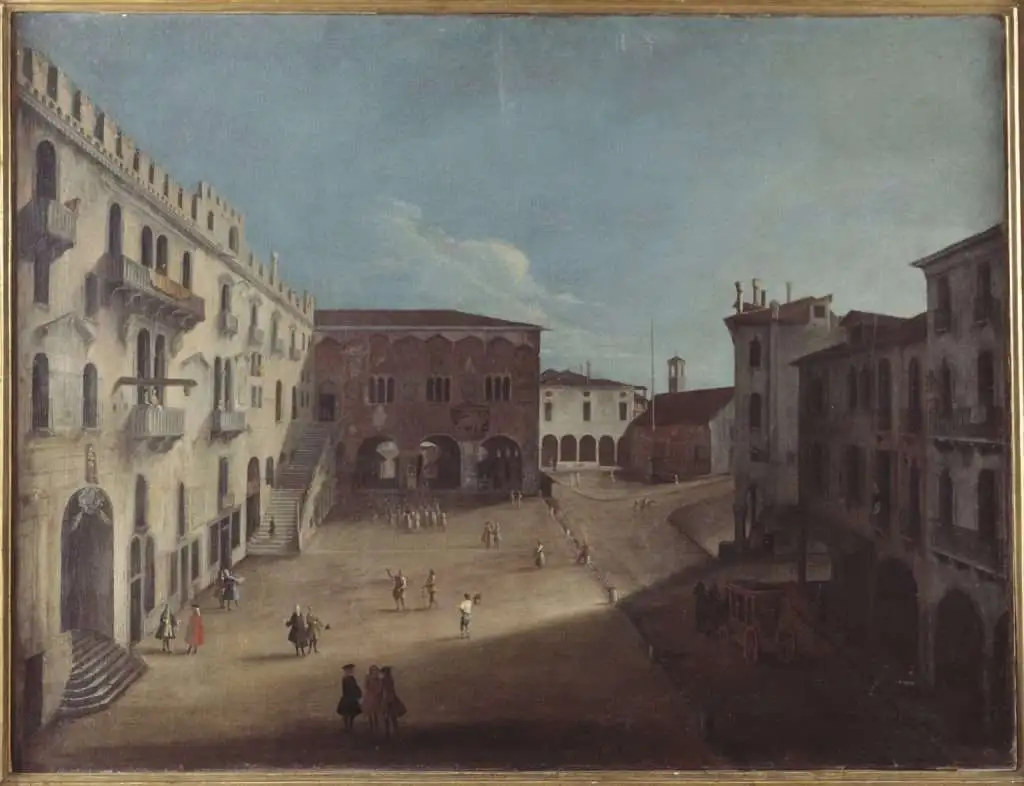
The staircase attached to the Palazzo della Prefettura stands out immediately, later relocated between Piazza Monte di Pietà and Piazza Indipendenza. Also noteworthy is the façade of the former Palazzo della Prefettura, which at the time lacked the broad arches that characterize it today.
Heavily damaged by the bombing of 7 April 1944, the Palazzo dei Trecento was saved from demolition thanks to the intervention of Ferdinando Forlati, the superintendent of monuments who persuaded the authorities to reinforce the walls with buttresses in order to preserve and restore the frescoes in the hall.
Clearly visible on the façade and on the wall of the staircase, an irregular groove marks the part of the structure rebuilt with the bricks recovered after the collapse, an indelible testimony to the catastrophes of the Great War and at the same time to the courage, zeal and hope that animated the people of Treviso in one of the city’s darkest and most tragic periods. The bombing caused around sixteen hundred casualties.
The loggia of the Cavalieri
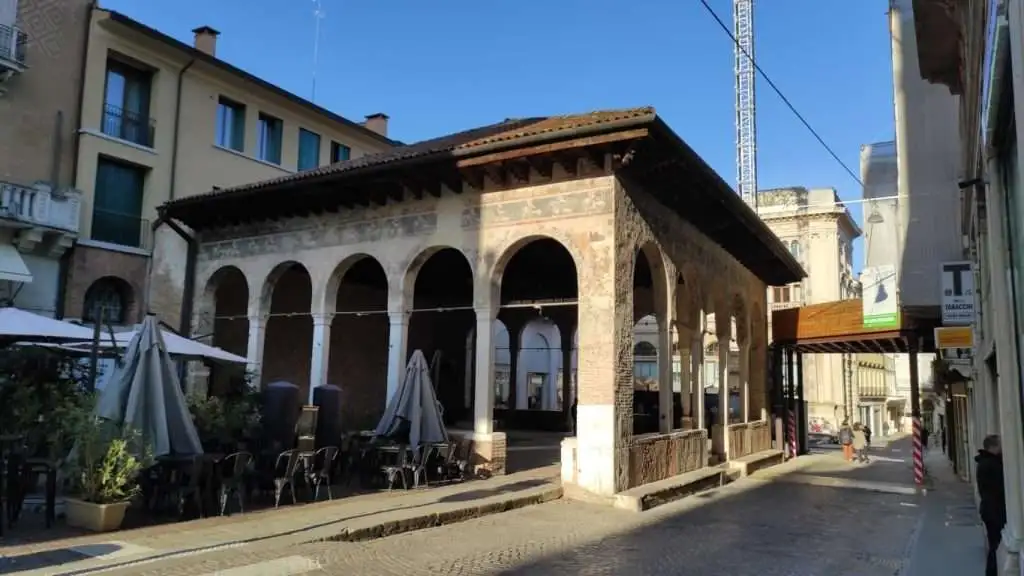
Dating back to 1276, the loggia of the cavalieri was built at the point where the cardo and decumanus, corresponding to the intersection of Via Indipendenza and Via Martiri della Libertà, meet in the heart of Treviso.
Open on three sides, the building was the place where nobles and knights gathered sheltered from the sun and the elements while waiting for the sovereign to arrive or to engage in leisure activities such as chess.
The devastation of the Second World War did not spare the ancient Loggia dei Cavalieri either, which was hit on 14 May 1944.
The immense tragedy, in terms of death and ruin, did not, however, diminish the unshakable courage and diligence of those citizens who, in the hours following the bombing, collected and preserved bricks, tiles, beams and pillars needed for the reconstruction and restoration of the incredible frescoed jewel.
If you are wondering what to see in Treviso, the loggia of the cavalieri is one of the most significant monuments set in the historic heart of this splendid medieval little town.
The fountain of the tette
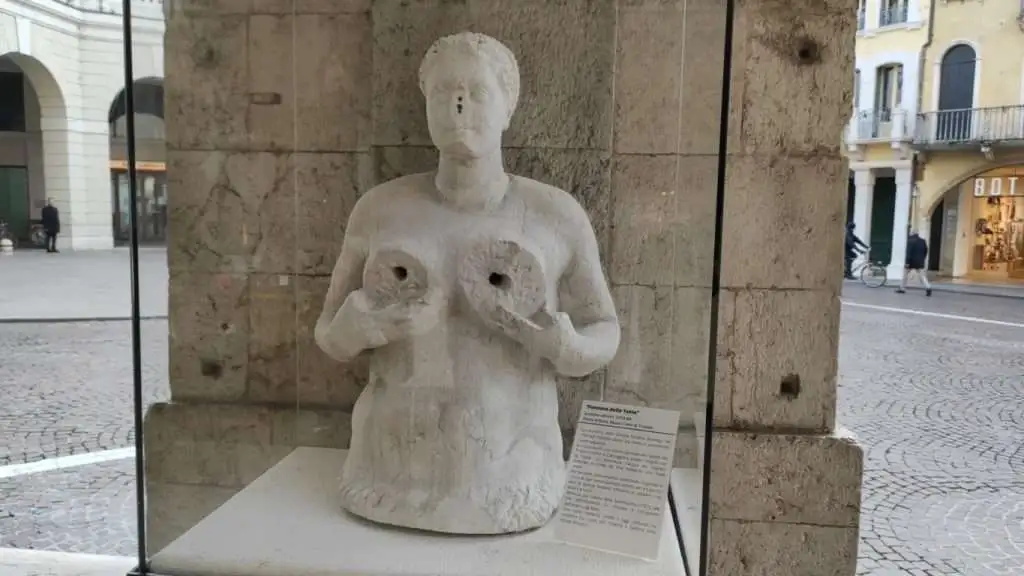
Created between 1559 and 1560 at the behest of the podestà Alvise da Ponte, the fountain of the tette was originally placed in a niche of the Palazzo Pretorio in Via Calmaggiore.
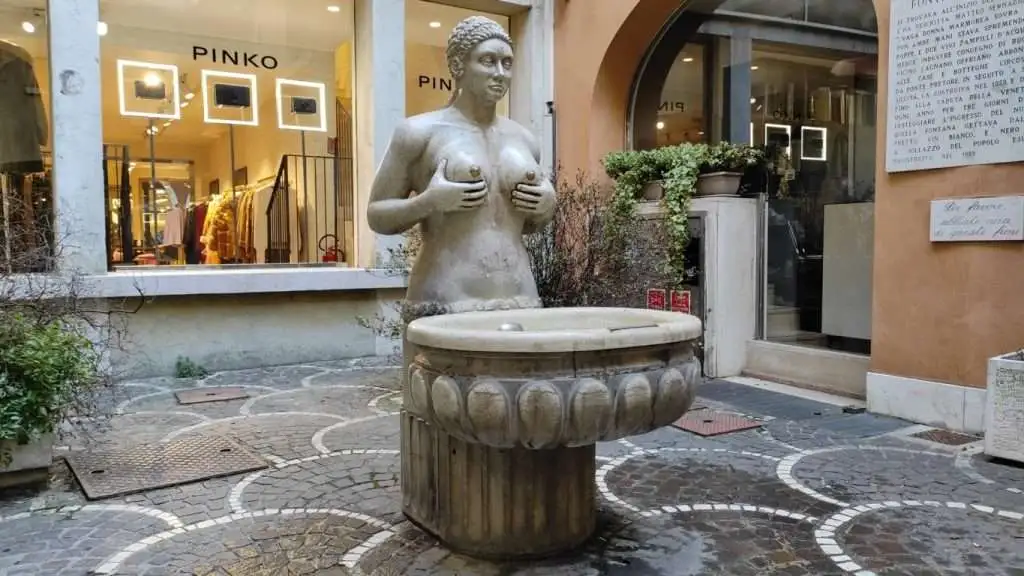
Fed centuries ago by the waters of the Cagnan through a roda mata, the fountain depicts a woman from whose ample breasts, on the occasion of the arrival of the new podestà in the city, white wine and red wine flowed for three days.
Mutilated by French troops during the Napoleonic invasion of 1797, the emblematic work of art, humiliated and degraded, remained abandoned until Abbot Luigi Bailo (1835 – 1932) brought it back to light, restoring value to its history.
Made of Istrian stone by the Peruvian sculptor Miguel Miranda, a copy of the fountain of the tette, from which drinking water flows, is located at C. del Podestà, 11.
Walks
La pescheria
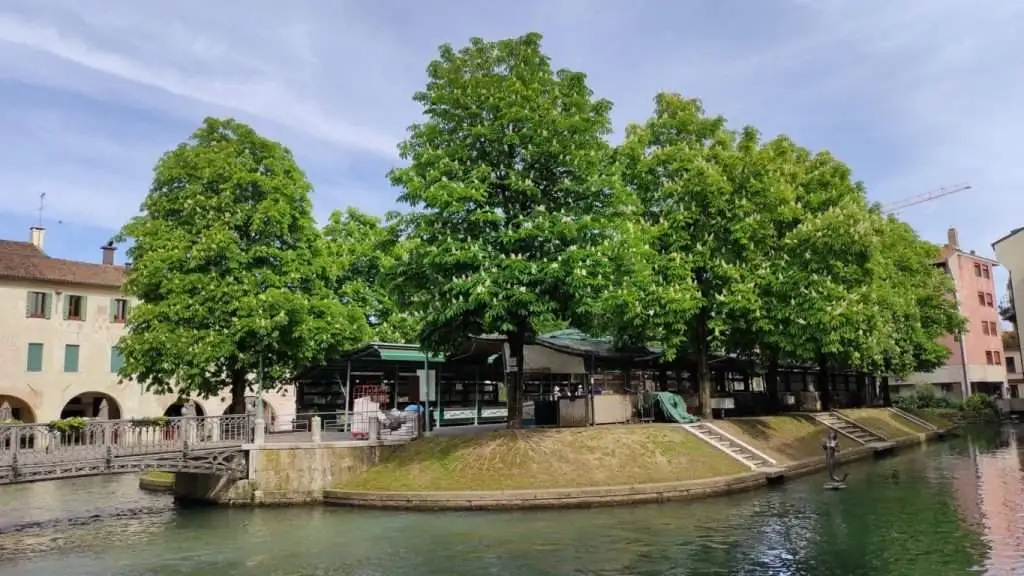
Isola della pescheria was created in the mid-19th century to move the fish market, which originally took place in Piazza del Monte di Pietà.
The result of the ingenuity of architect Francesco Bomben, the deposits of debris carried by the waters of the Cagnan were then incorporated to create a larger elliptical artificial island.
Rhythmically lined with rows of tall, well-aligned horse chestnuts, the island is connected to Via Pescheria and Vicolo del Molinetto by two small bridges adorned with elaborate balustrades and fish-shaped sculptures.
Framed by the sumptuous porticoes of Ca’ dei Carraresi and the former medieval convent of the Camaldolese nuns, this distinctive spot is immersed in a dreamlike atmosphere from which, rising from the waters of the Cagnan, emerges the statue of a mermaid with her gaze turned to the sky.
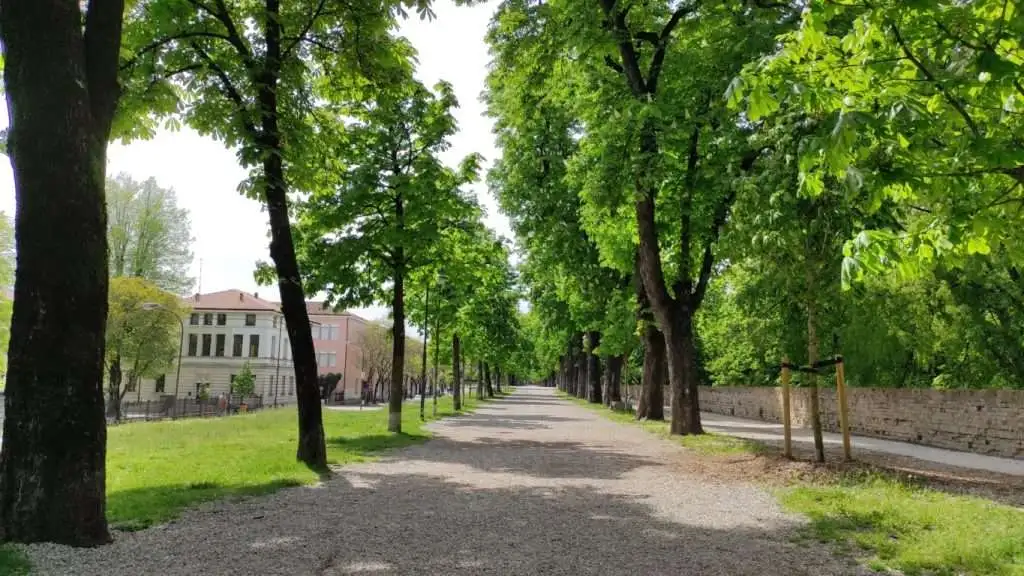
The walls of Treviso
In the 14th century the city of Treviso was enclosed by walls with Guelph battlements, in which eleven gates were opened.
Following the heavy defeat suffered by the army of the Republic of Venice at the Battle of Agnadello in 1509, it became essential to modernize the medieval fortifications in anticipation of the advance of the forces of the League of Cambrai.
The task was entrusted to the engineer Giovanni Monsignori, also known as fra Giocondo da Verona, to whom is owed the decision to replace the obsolete 14th-century wall with stronger walls made of brick-faced embankments with internal galleries.
The hydraulic works designed by the Dominican friar consisted in digging a moat to channel the course of the Botteniga around the perimeter of the walls. A system of locks was also devised, at the point where the river enters the city flowing under Ponte della Pria, to allow flooding of the surrounding plain if necessary and thus hinder the enemy advance.
In 1511 the works were entrusted by the Senate of the Republic of Venice to architect Alessandro Leopardi, to whom is owed the strengthening of the defensive system from a strategic point of view.
In October of the same year, the improvements made proved effective during the siege by Franco-Imperial troops, which ended in a defeat for the army of the League of Cambrai.
To conclude the works was the commander Bartolomeo d’Alviano, who oversaw the expansion of the walls in 1513.
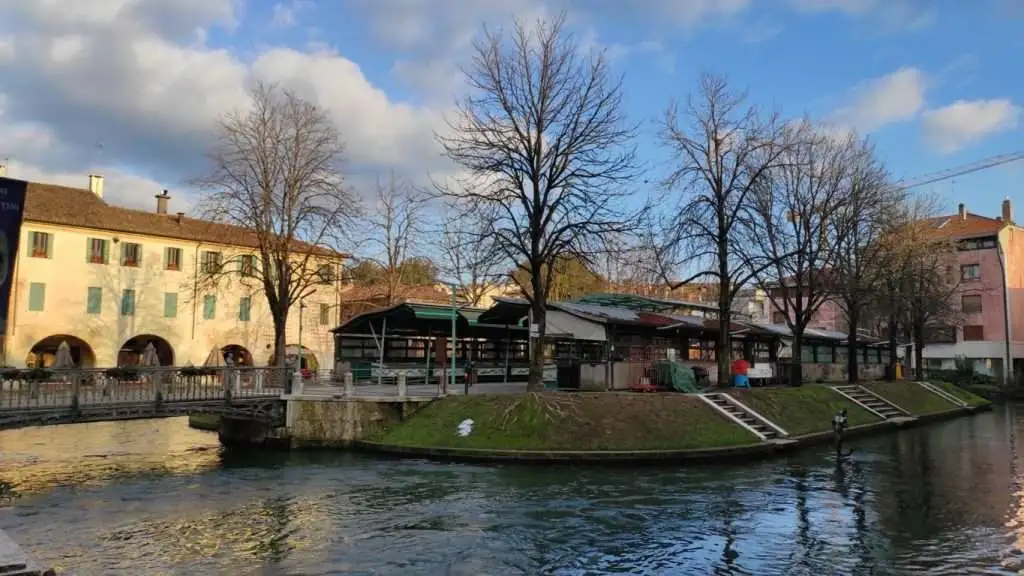
If you are wondering what to see in Treviso and are looking for a peaceful place to walk, the embankment that stretches from Porta San Tomaso to Porta Santi Quaranta is crossed by a tree-lined avenue from which you can enjoy a privileged view of Ponte della Pria, the bell tower of the convent of San Francesco, the Civic Tower and the 16th-century moats that surround the walls.
The gates
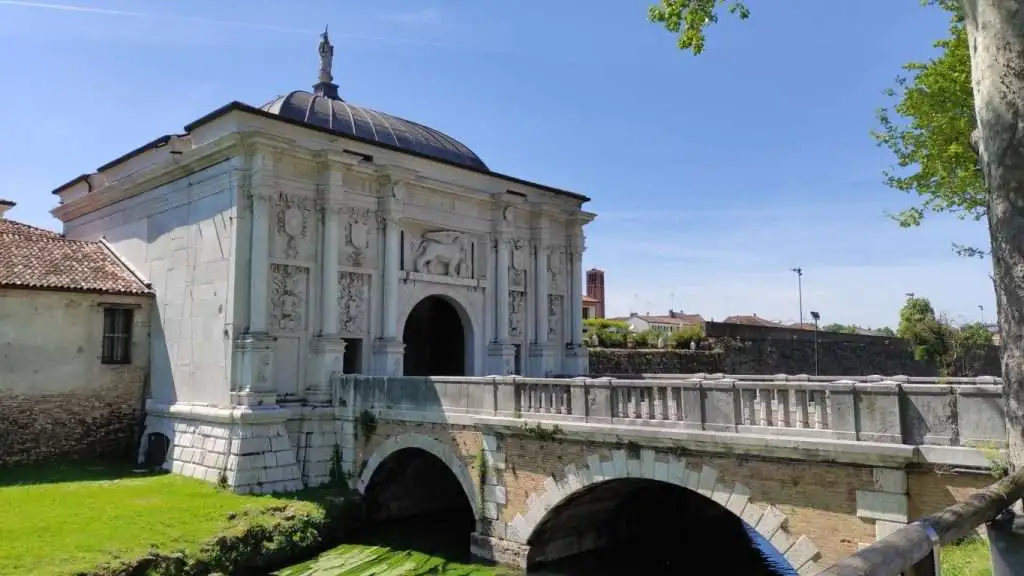
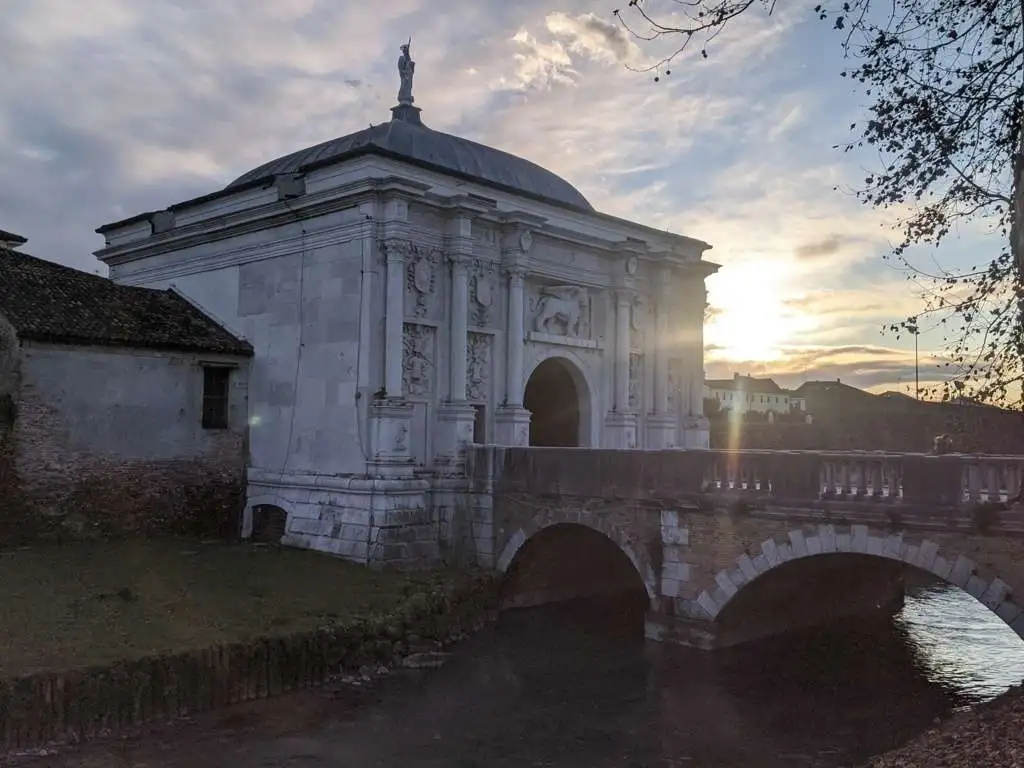
Porta Mazzini or Porta San Tomaso
Dedicated to Saint Thomas Becket, Archbishop of Canterbury, the majestic Istrian stone gate was built in 1518 at the behest of the podestà Paolo Nani. and is crowned by the white statue of Saint Paul, standing out above the large lead-and-wood dome.
Crowned by the white statue of Saint Paul, standing out above the large lead-and-wood dome, the gate is marked by six columns set on massive bases decorated with leonine images in high relief.
Above the central arch, in which the words porta – de – san – Thomaso are engraved, stands out the solemn figure of the Lion of Saint Mark, flanked by noble coats of arms and the ancient loopholes that originally allowed the drawbridge to be opened.
The interior façade instead bears the Latin inscription Dominus custodiat introitum et exitum tuum.
Porta Santi Quaranta
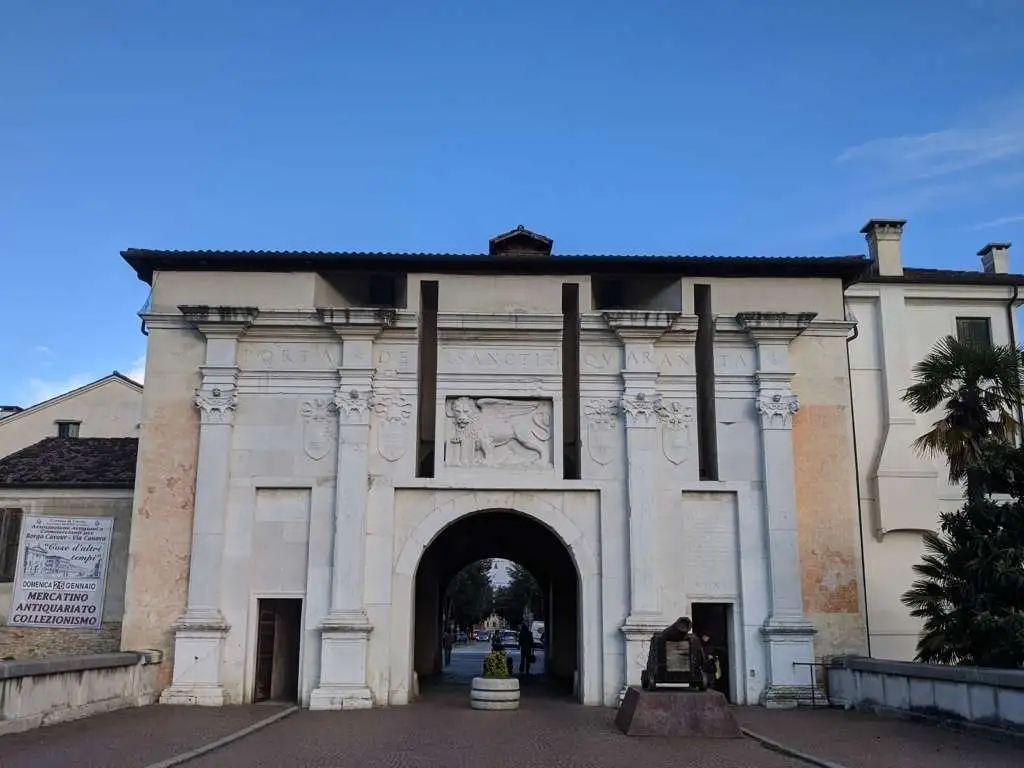
Built in 1516 to a design by Alessandro Leopardi, the access gate located on the west side of the city was commissioned by the podestà Andrea Vendramin, after whom it was named Porta Vendramina.
Also made of Istrian stone, the façade of Porta Santi Quaranta is divided into three parts by four pilasters. The monumental arch is topped by the Lion of Venice, above which stands the inscription porta de sancti quaranta.
Of considerable interest is also the dedication, engraved above one of the side doors, to Bartolomeo d’Alviano, a commander and politician who provided valuable guidance during the construction of the 16th-century walls of the Comune di Treviso.
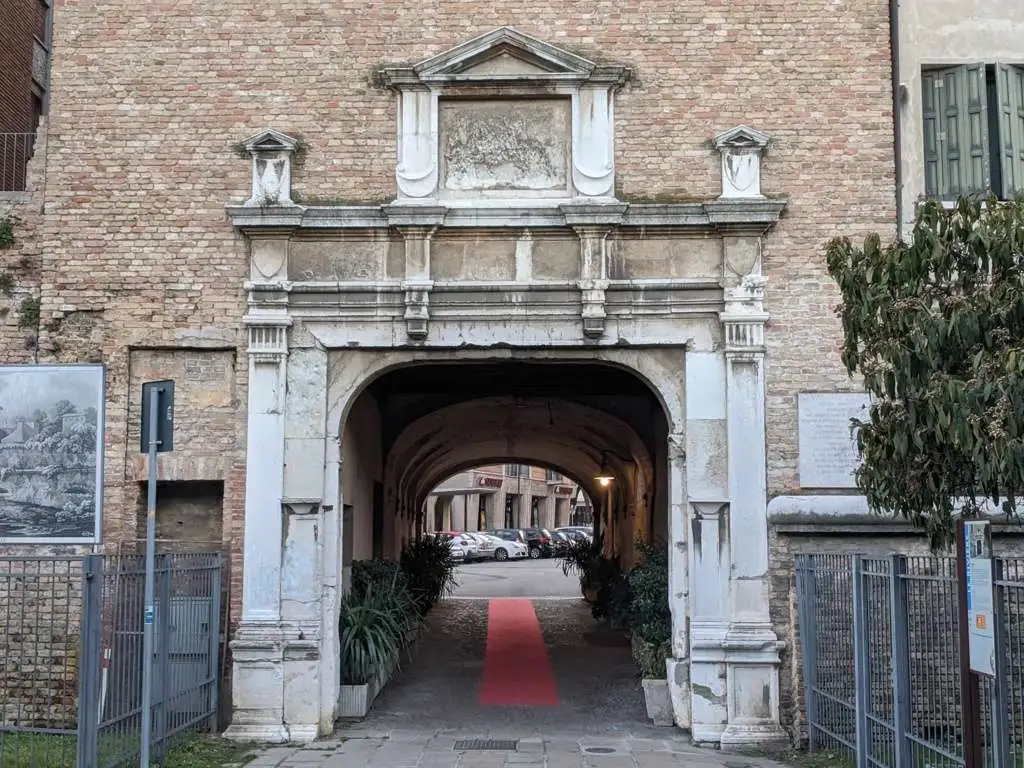
Porta Altinia
Built between 1513 and 1515, Porta Altinia stands out from the gates mentioned above from a structural and decorative point of view.
With its sober and elegant appearance, the outer front of the entrance portal features two slender pillars supporting the entablature, once topped by a winged lion, while the stern appearance of the interior façade betrays its original function as a defensive tower.
The gate was called Altinia in relation to the Roman city of Altino, which Attila, king of the Huns, had put to the torch.
The canals
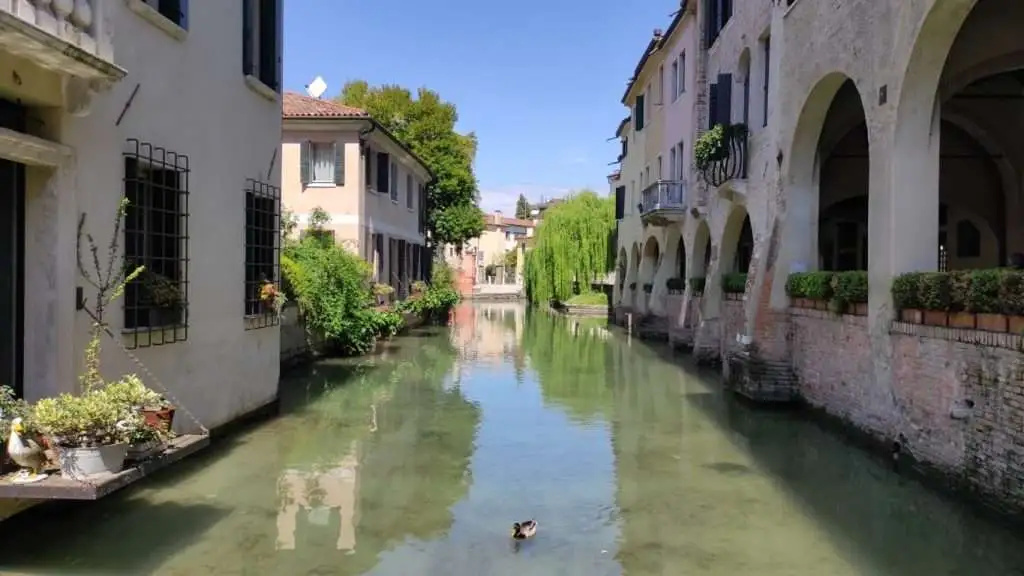
The Buranelli canal
From the clear spring in the area of San Pelagio, the Botteniga enters Treviso from the north, flowing under Ponte de la Pria before branching into the Siletto canal, or roggia, the Cagnan Grande and the Buranelli.
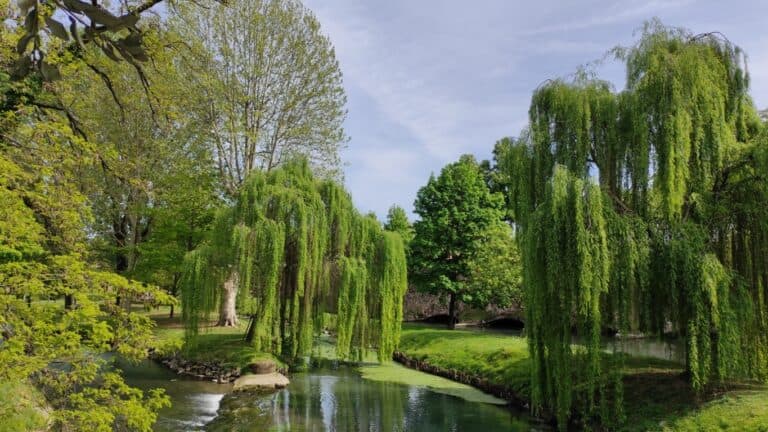
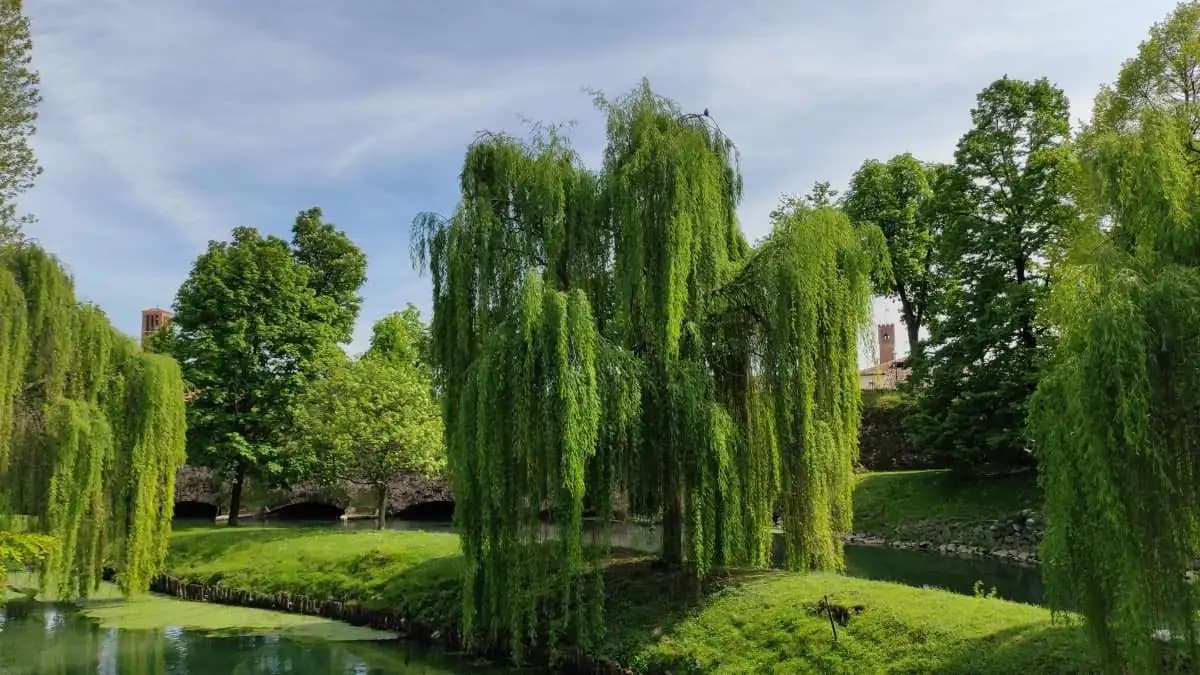
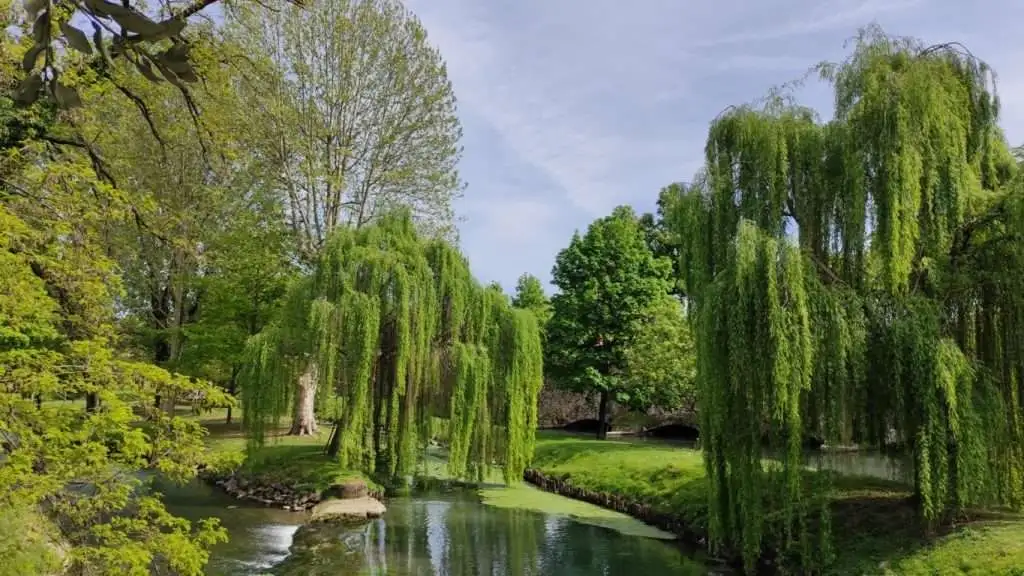
The latter, also known as Cagnan de mezo, crosses the historic center flanked by ancient arcades and the lush branches of weeping willows that bend over and reflect in the water.
Particularly evocative are the panoramic views visible from ponte Rinaldi, ponte dei Buranelli and ponte della Malvasia, from which you can admire the tuffatrice, a statue depicting a feminine figure with sinuous, slender lines poised to throw herself into the waters of the canal.
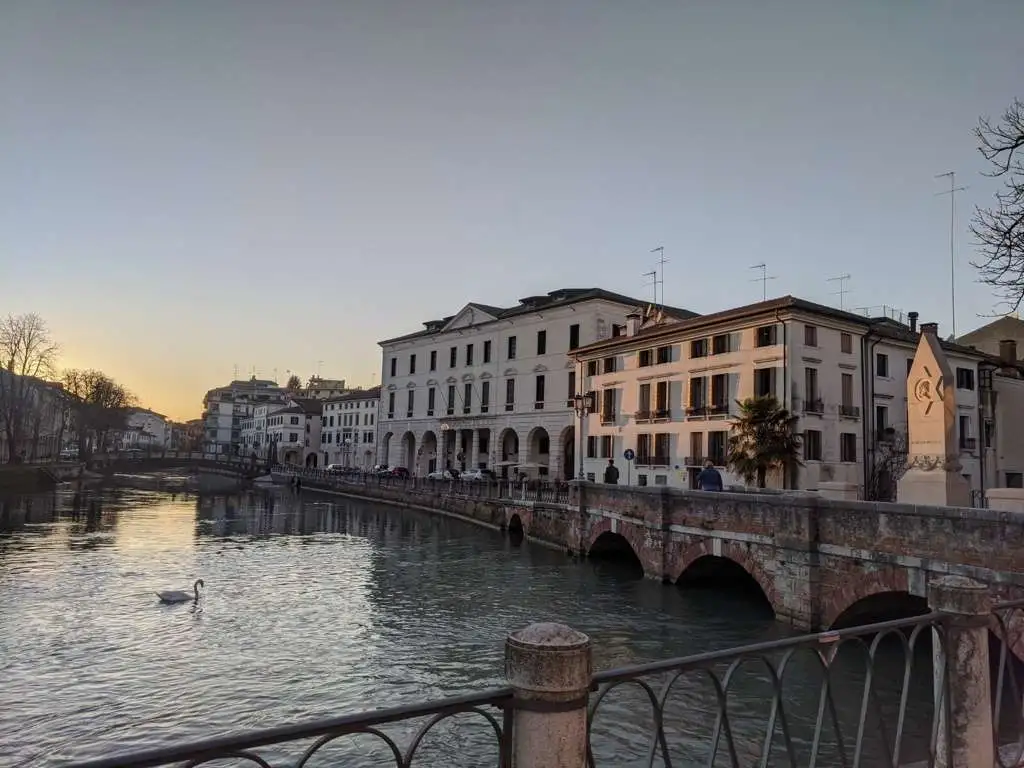
Ponte Dante
The Sile rises from the bubbling springs between Casacorba di Vedelago and Torreselle di Piombino Dese. The river winds peacefully for 20 km until it reaches the city of Treviso, where it receives the waters of the Cagnan Grande at Ponte Dante.
“Là dove Sile e Cagnan s’accompagna” (Paradiso, canto IX v.49) is the line of the Divina Commedia that the famous poet dedicated to the confluence point of the two rivers, whose different shades can be observed, the Sile green, the Cagnan marked by a darker tone.
If you are wondering what to see in Treviso, Ponte Dante is one of the most scenic viewpoints in the city, from which you can take in the Botteniga, the white bulk of Palazzo san Leonardo, the university bridge connecting the elegant Quartiere Latino to Riviera Santa Margherita, and Castello Fortunato Romano, which towers over the great brick bastion adorned with the solemn figure of the Lion of Saint Mark.