
What to see in Maserada sul Piave? Here are 12 things to see
Piavenire Nature Trail
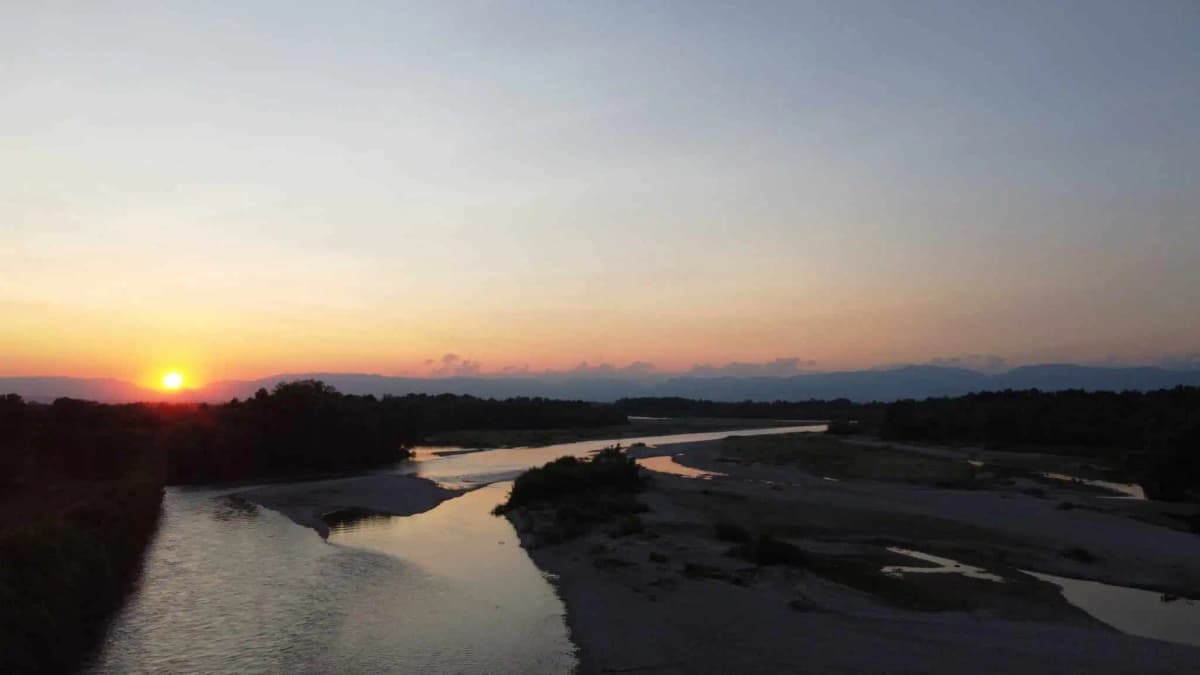
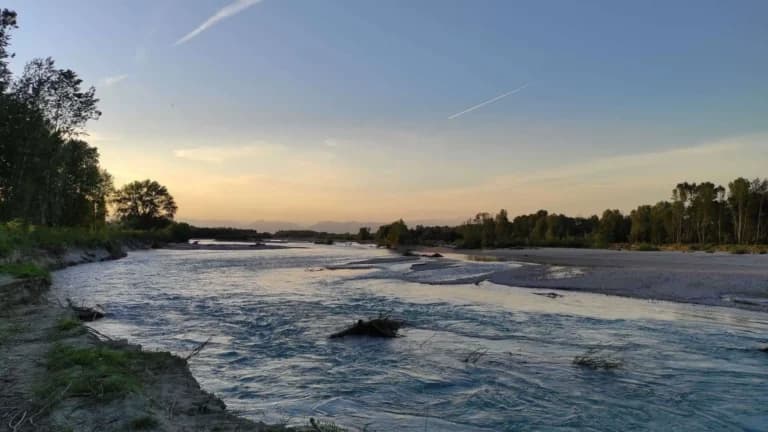
The territory of the Municipality of Maserada sul Piave is characterized by splendid river landscapes crossed by the namesake river sacred to the homeland and by clear streams on whose banks the vegetation grows luxuriantly, creating a lush and delicate ecosystem. g
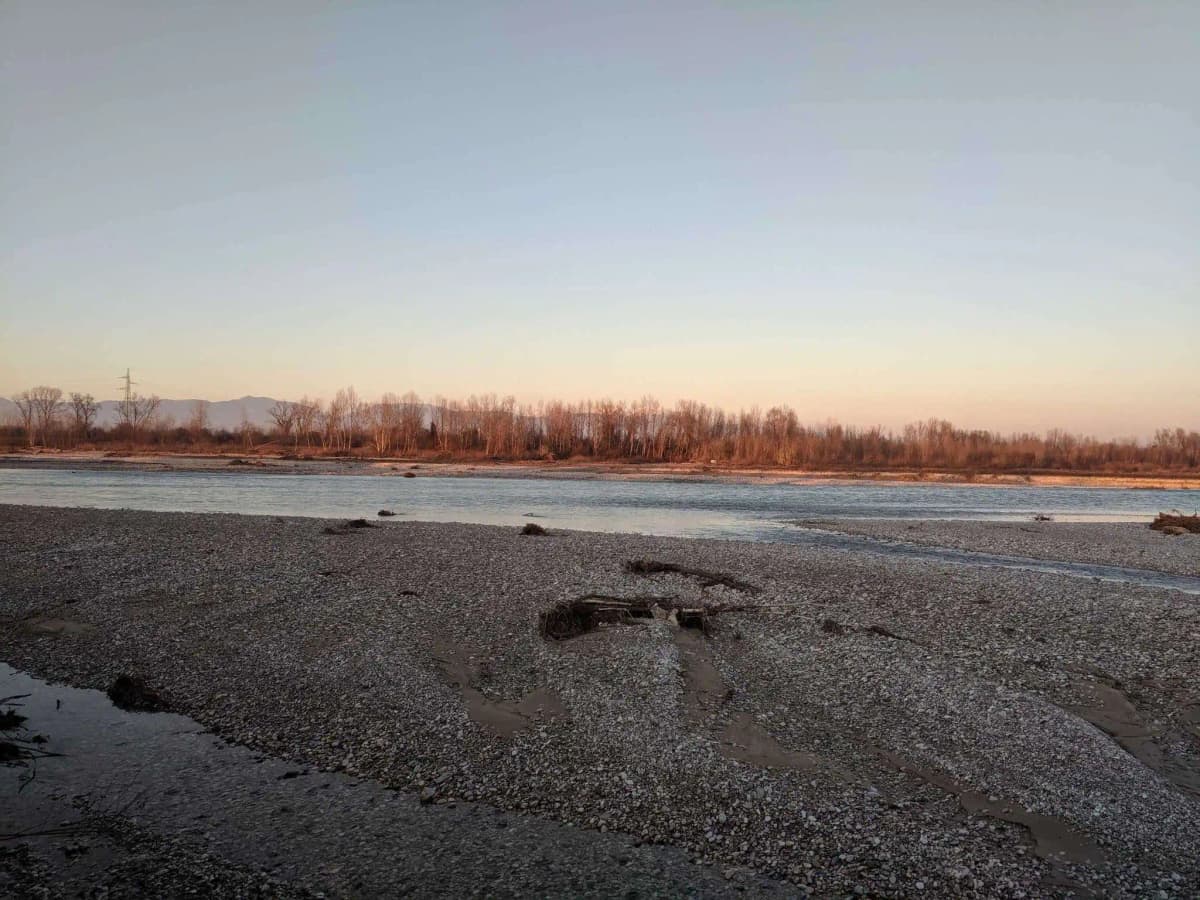
The vital relationship with nature and the water element, predominant in the territory of the municipality, is confirmed by the etymology of the word Maserada, deriving from the Latin term maceries, relating to the accumulation of stones, pebbles, and gravel carried downstream by the current of the Piave.
The name Salettuol, on the other hand, originates from Salicetum, i.e., the wooded area populated mainly by willows, lovers of moist soil.
And it is precisely in this natural setting that the piavenire trail crosses the 24-hectare floodplain area (flat area near the low-water channel of a watercourse) of the Piave River, in the context of the natural oasis of Codibugnolo, located in Salettuol di Maserada sul Piave.
Hygrophilous Wood
The presence of a gravel processing plant led to the accumulation of silty layers near the nearby grove through the deposition of wastewater.
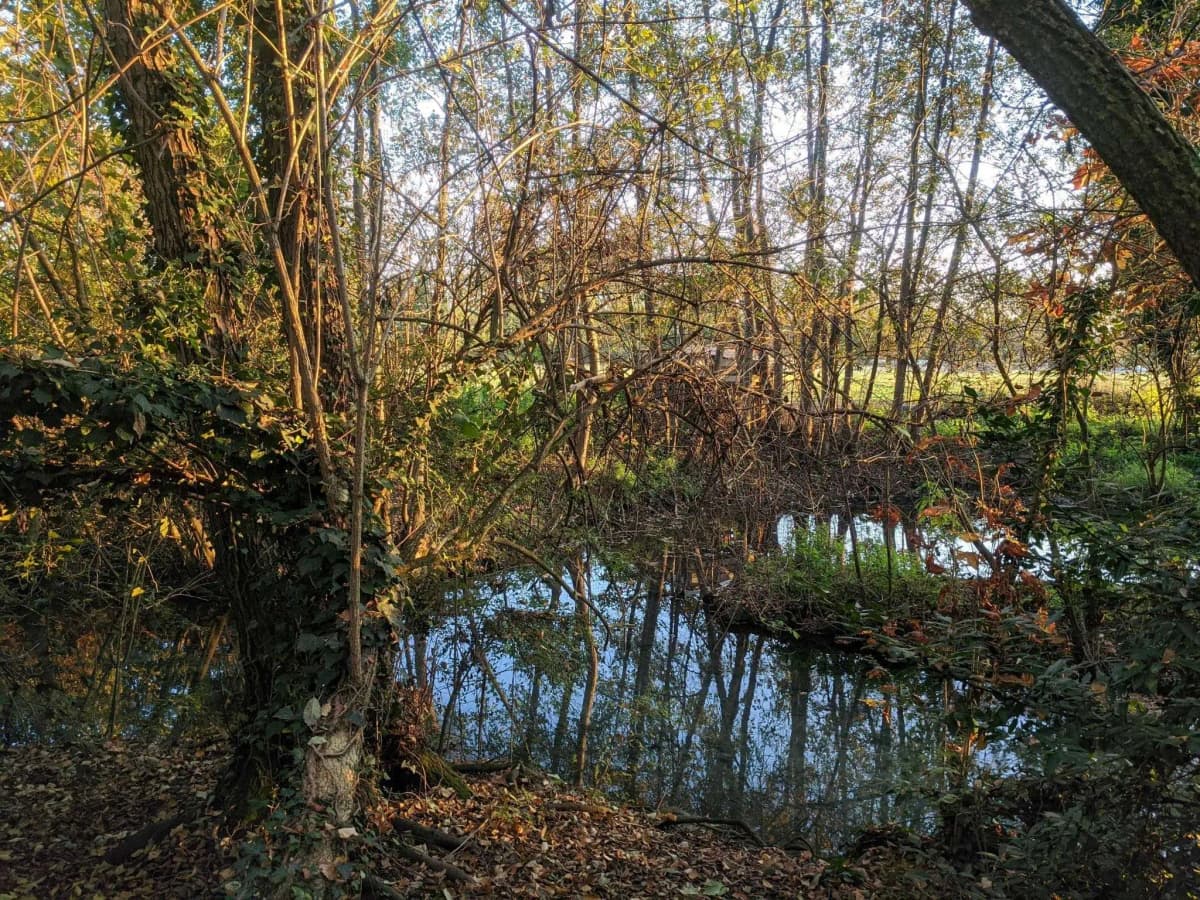
This series of circumstances made the soil more impermeable, able to offer a greater amount of water to vegetation and thus favor the development of remarkable biological diversity, including the presence of classic White Willows, or Salix alba, Black Poplars (Populus nigra), Black Alders (Alnus glutinosa), as well as a notable variety of shrubs such as Elderberry (Sambucus nigra), Buckthorn (Frangula alnus), and the Osier (Salix eleagnos).
False Indigo Thicket
Adding to the already diverse ecosystem crossed by the Piave River is the Amorpha fruticosa, an exotic shrub variety of North American origin whose flower consists of a dense spike of intense purple and golden hues.
Unlike the plants mentioned earlier, the Amorpha fruticosa prefers sandy and permeable soils near the riverbed.
One of the most evocative environments you can admire along the Piavenire trail is the path puddle, located in a depression made impermeable by layers of silt from the nearby wooded area. The ecosystem that formed in these areas hosts a wide range of aquatic plants such as Blue-green algae and Green algae.
The nature trail is also dotted with fruit trees and other plants that humans have domesticated and cultivated for food needs since the Neolithic.
In addition to the need to obtain nourishment from trees such as apple trees, pear trees, fig trees, and the Canadian vine, other plants, like the black locust, were used to create agricultural tools and support poles, while the mulberry served to feed silkworms and was used as a support in the rows of vines.
Other wonderful tree varieties you can find along the Piavenire path include the Hornbeam, Dogwood, Linden, and Hawthorn.
The signs of World War I
The territories of the municipality of Maserada crossed by the Piave were the scene of crucial battles during World War I.
Between November 1917 and November 1918, the Piave and the Grave di Papadopoli were scenes of bitter fighting between Italian troops and the Austro-Hungarian army along the last line of defense to prevent the invader from reaching Treviso and Venice.
After the defeat of Caporetto, the defensive line covering the entire front area was strengthened with additional trench sections to prevent the Austrians from outflanking.
Today it is still possible to observe reinforced concrete positions for one or two machine guns, of which we can still see traces in the area slightly downstream of the Lovadina motorway bridge up to Salettuol.
In addition to permanently marking the territory of the Piave, the dramatic testimonies of World War I have indelibly marked the history and memory of entire generations.
Birdlife of the Clearing
The deep scar inherited from the war now coexists with the unstoppable force of Nature that continues to spread and proliferate, giving life to the fragile balance in which countless animal and plant life forms coexist.
An example is the birdlife of the clearing within the nature trail, of which it is worth mentioning the partridge, a specimen of the Phasianidae family very skilled at camouflage and distinguishable by the dark brown spot on its chest.
The long-tailed tit, a small plump and rounded bird of the Aegithalidae family, with its characteristic long tail and white plumage. The red-backed shrike, of the Laniidae family, is recognizable by its reddish coloration on the upper part of the body, white-pinkish on the belly, and typical black tail with white sides.
The botanical garden of Shrubs
Along the path, you can admire a splendid botanical garden located on an alluvial terrace of dry grassland, where shrubs from the surrounding woods have been planted.
The varieties of shrubs present in the botanical garden, of notable importance for maintaining the balance of the forest ecosystem, include species such as:
Viburnum, hazel, common juniper, dog rose or rose hip, hawthorn, spindle tree, sea buckthorn, alder buckthorn, elderberry, dogwood, and privet.
Villa Rossi-Papadopoli
Dating back to the 14th century, the ancient architectural complex is located near the historic center of Maserada sul Piave. The villa features a rectangular courtyard with an 18th-century well. The main building is flanked by two factory bodies of different heights.
The north side is closed by an arcaded barchessa set at a right angle to the villa, to which the 18th-century oratory is connected, facing the road.
The facade, facing northeast, develops on three floors surmounted by a triangular tympanum. Four half-columns on the ground floor support the stone balcony of the first floor, on which opens a serliana
(typology of three-light window in which a round arch is flanked by two openings surmounted by an architrave), while a cornice supports a small balcony and the two side windows on which the triangular tympanum rests.
The 14th-century villa began as a Franciscan hospital convent, later purchased by the family of the Venetian nobleman Papadopoli in the 1400s, then passed into the ownership of numerous owners who followed one another during the 17th and 18th centuries.
During the Napoleonic occupation and the Risorgimento period, Villa Papadopoli was looted and occupied by the French and Austrian commands respectively. The ancient building suffered the same fate during World War I and II, then was purchased in 1934 by the Rossi family.
One of the 16th-century frescoes decorating the interior of the villa illustrates how the villa appeared at that time and its function as a farm.
Historical Museum of the Great War
Located at Viale Caccianiga, 77, 31052 Maserada sul Piave (TV), the Historical Museum of the Great War displays precious artifacts relating to life on the front and the type of military technology used by the Italian and Austro-Hungarian armies during the conflicts on the middle Piave.
The museum also reveals testimonies of the British contingent that supported the Italian troops along the Piave line during the war.
For information on the exhibitions and the various display itineraries organized by the Museum and involving both Italian and foreign universities, please visit the official website of the Maserada museum or call 0422 878415.
Population
9,361 (4,647 men, 4,714 women)
Hamlets of Maserada sul Piave
Candelù, Capitello, Cascina Lazzaris, Case Pastori, Case Trentin, Ronchi, Salettuol, Saltore, Trentinaglia, Varago.