
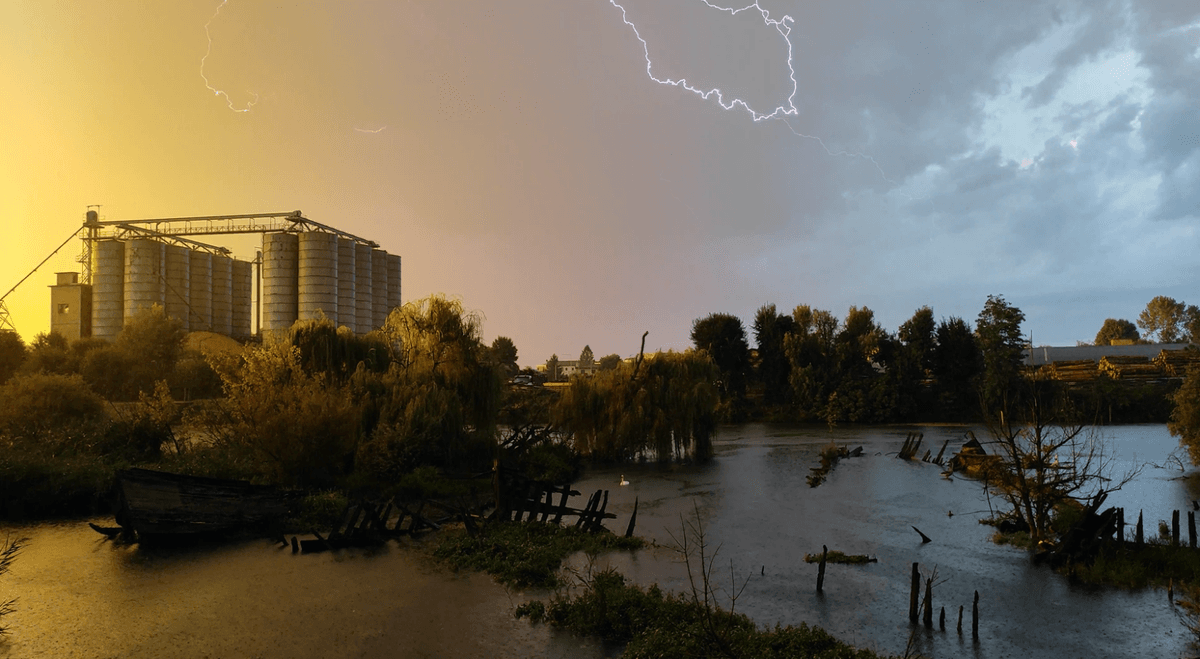
Here are 10 historical-natural locations that are delightful and majestic by day, enigmatic and gloomy at nightfall, ideal for experiencing Halloween in an authentic and spectral way. Are you ready?
Burci Cemetery in Casier
Where is the Burci Cemetery?
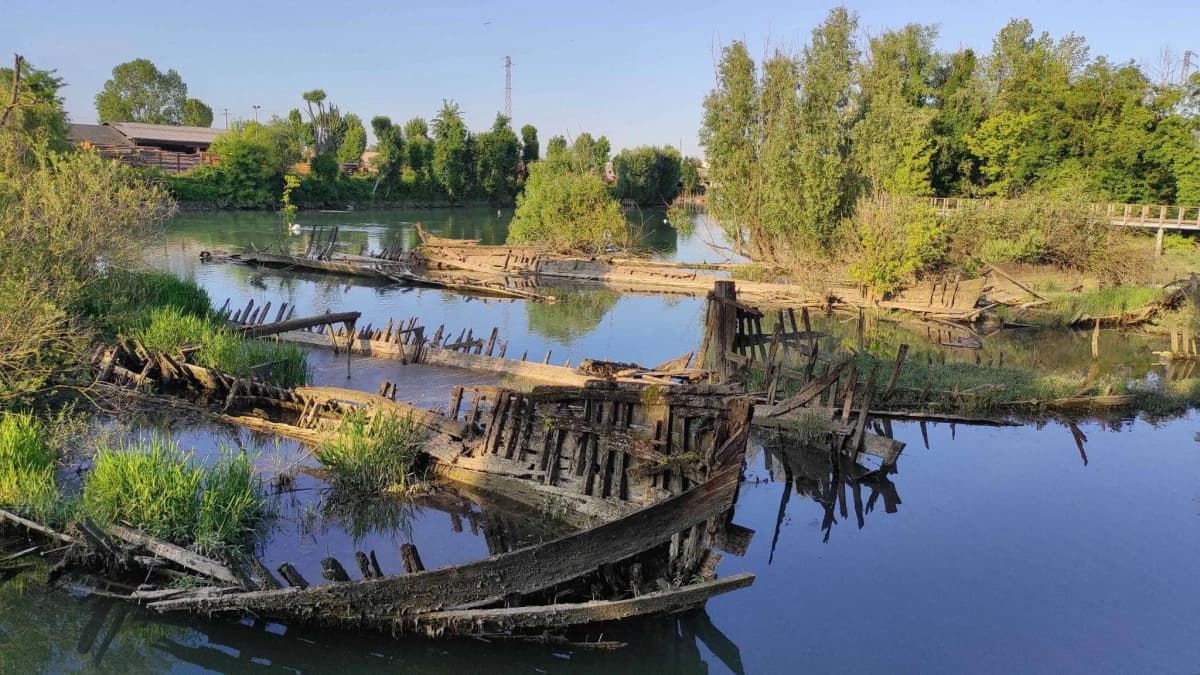
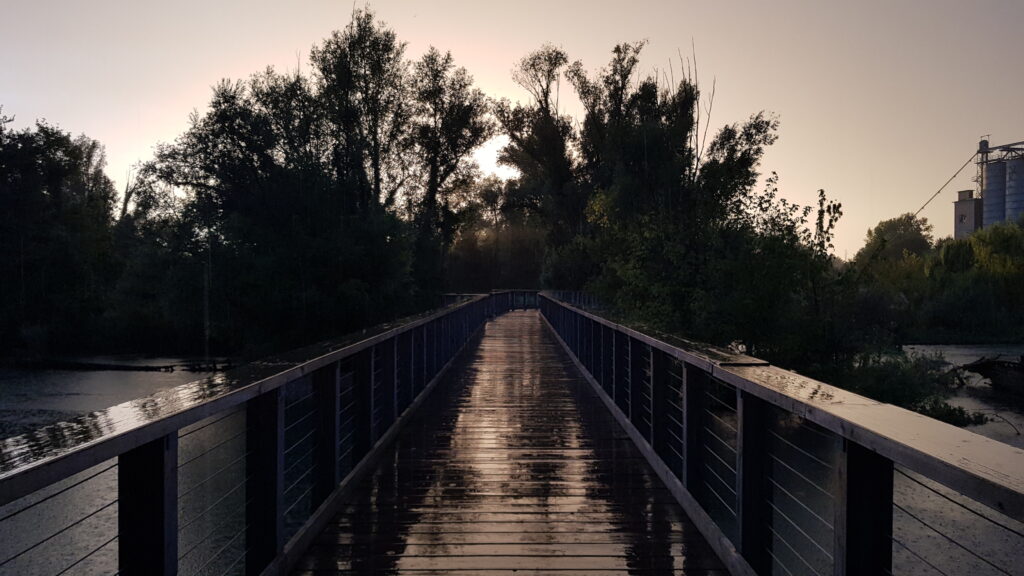
Visible from a wide and comfortable wooden walkway, the Burci Cemetery is a fascinating historical site located in the municipality of Casier in the province of Treviso.
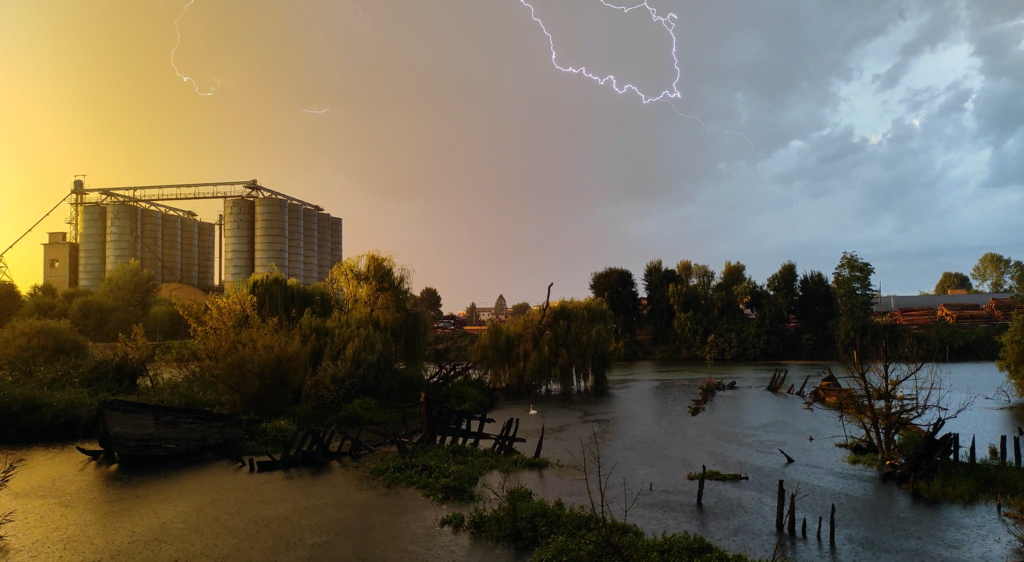
In addition to burci, flat-bottomed river transport boats, the Burci Cemetery includes specimens of comacine, gabarre, batei, a topo, and a barchetto, which are difficult to distinguish due to the deterioration of their structure and the gradual disappearance of the nautical knowledge that technological progress and the modernization of transport have made increasingly obsolete.
Enveloped in the autumn season by a pale blanket of fog, the profiles of the ancient drifting boats immersed in the quiet riparian environment of reeds and marsh grasses stand out for their decadent charm, ideal for spending the eve of All Saints’ Day in an unforgettable way.
Mulino Toso
Where is Mulino Toso?
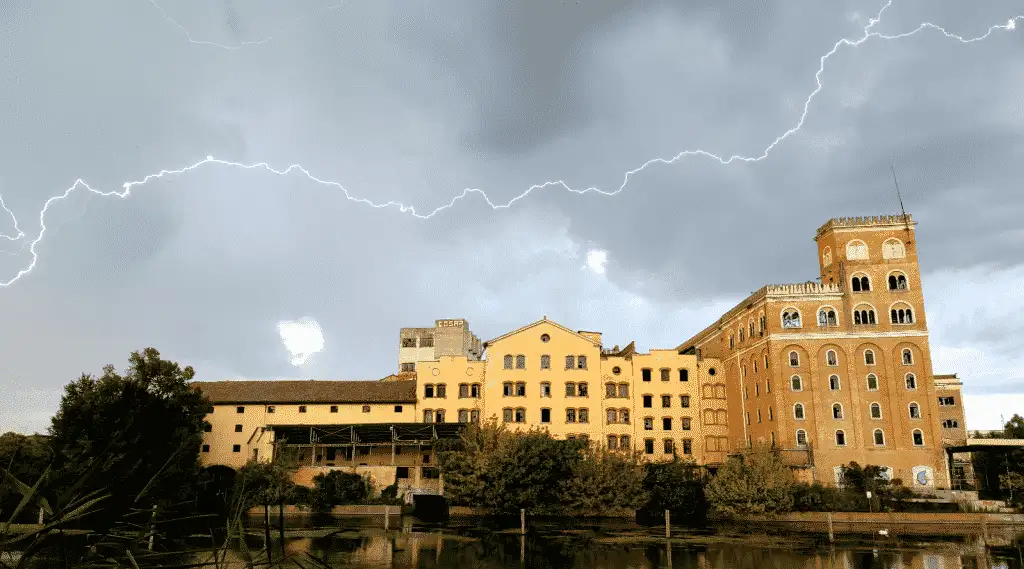
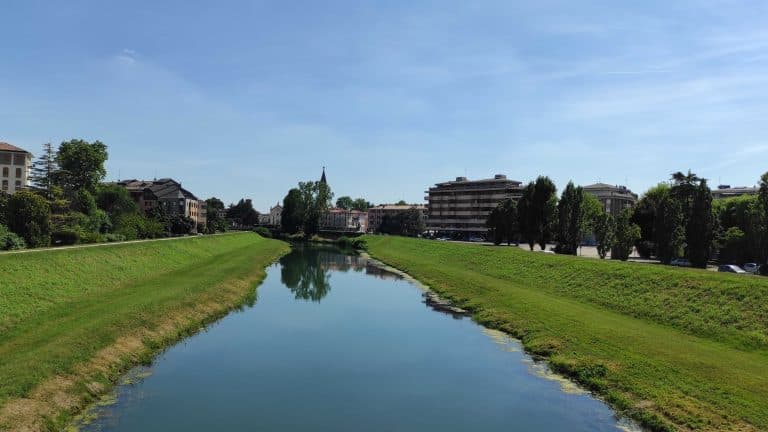
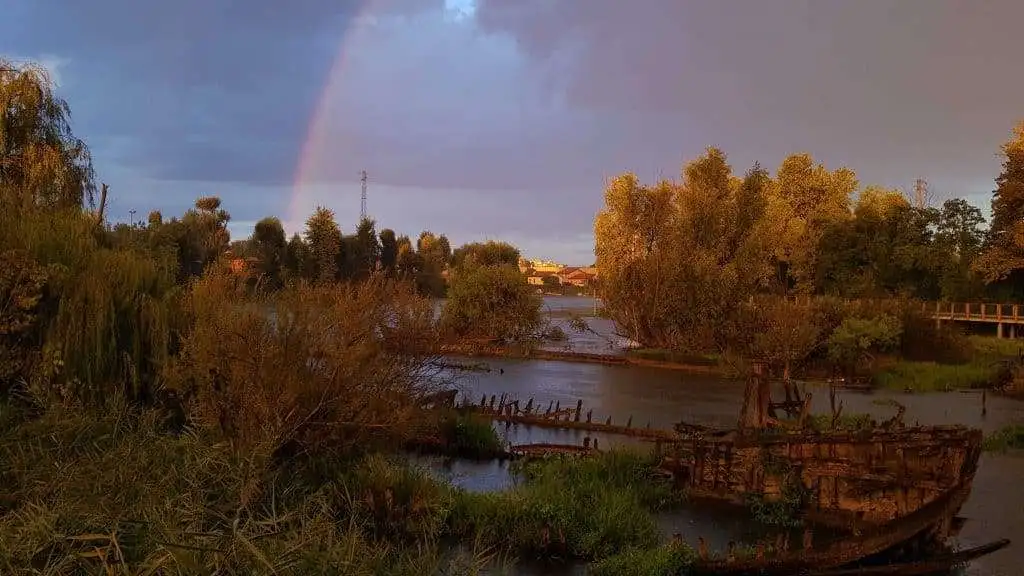
After passing the wooden hulls emerging from the water, relics of a great open-air museum, continue for about 500 meters along the wooden walkway and a tree-lined path that follows the course of the Sile. At a point where the arboreal vegetation appears thinner, across the river you can see the majestic structure of what was once the milling plant of Angelo Toso.
A spectacular example of industrial archaeology, the abandoned building is flanked by the former Chiari e Forti oil mill, whose giant red brick facade, crowned at the top with swallowtail battlements, fascinates passersby and cyclists every day.
A Bit of History
Founded in 1920 thanks to the entrepreneurial spirit of the Chiari, Forti, and Medioli families, the milling company purchased the Toso mill in 1937 as its fourth plant. Later, the plant introduced equipment that in the 1950s led to the creation of the historic brands Topazio and Olio Cuore.
Following the period of crisis arising from false accusations later disproven, the company was revived.
In 2001, the sale of shares by previous investors left the company with debts of about 175 million euros. After failed attempts to convert the area, the production plant was put up for auction without success. Following the 2015 fire, possibly arson, hopes of redeveloping the production facilities vanished entirely.
Storga Park
Where is Storga Park?
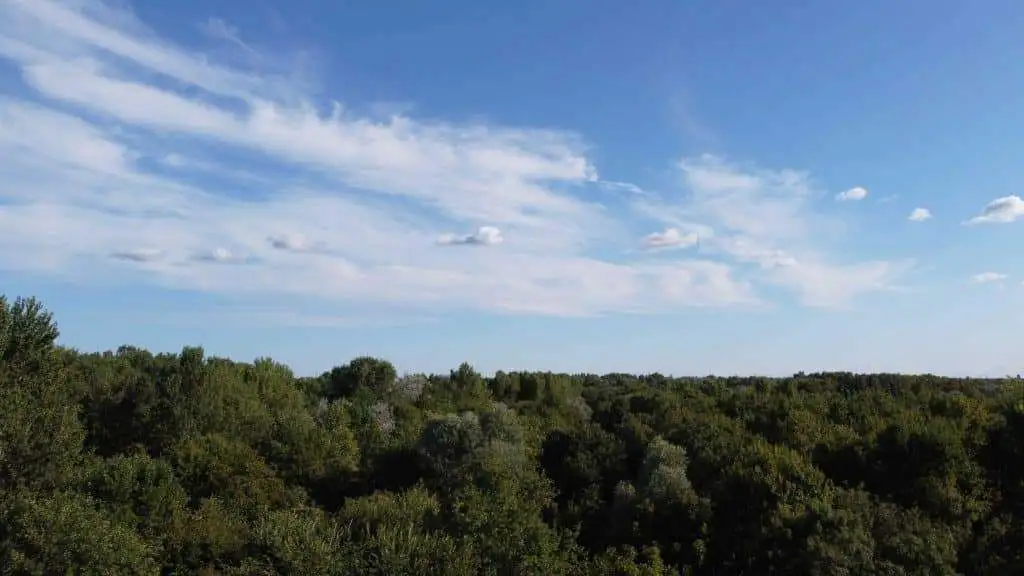
The vast wooded area extends for 67 hectares in the municipalities of Treviso and Carbonera. The starting point of the nature itinerary begins at the parking lot near the Comunità Murialdo of Treviso at Via Cal di Breda, 67, 31100 Treviso (TV). The southern entrance is at the Chiesetta della Madonnetta, in Via della Madonnetta, 33, 31100 Treviso (TV).
The path that crosses the park runs alongside the architectural complex of Sant’Artemio, a former psychiatric hospital within whose walls many vulnerable patients suffered during the 20th century the devastating effects of marginalization, isolation, and unspeakable pain caused by debilitating treatments, now fortunately discontinued.
The delicate yet evocative archaeological site, set within the Sile River Regional Park, contains as many as 19 wrecks abandoned during the 20th century.
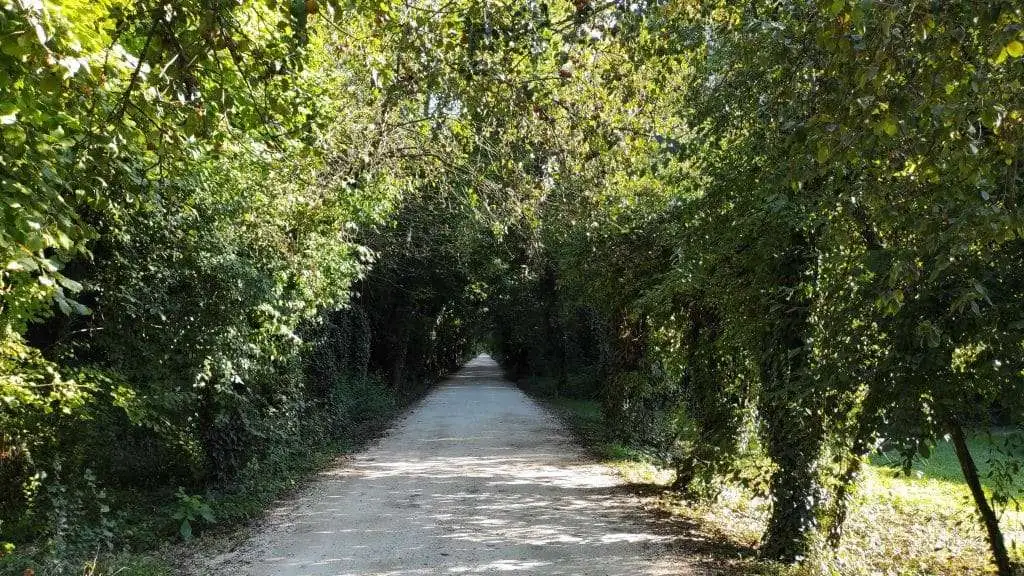
The splendid green oasis is populated by a rich heritage of tree biodiversity including poplars, willows, alders, ash trees, hornbeams, hazels, elms, plane trees, as well as fruit trees such as wild cherry and apple trees. Among the floral species present in the park, worthy of mention are the Siberian squill, the wood anemone with its white petals, the yellow anemone, the butcher’s broom with its characteristic red berries, and other showy varieties such as the primrose and the wild bellflower with violet-blue petals, to name a few.
The proliferation of dense herbaceous vegetation surrounding the cold springs, the winding course of the Storga River, and the sinuous profile of bare trees with gnarled branches create during the autumn season a grim, unsettling atmosphere irresistible to lovers of horror settings.
The Old Pieve of San Biagio
Where is the Pieve of San Biagio?
Located at via Pier Fortunato Calvi, 21, 31048 San Biagio di Callalta (TV), the centuries-old church is one of the most arcane and fascinating places of worship in the municipality of San Biagio di Callalta and in the province of Treviso, although the severe state of neglect has made the pieve inaccessible for several decades.
Dating back to the 14th century, the ancient abandoned church is internally divided into three naves with cross vaults and barrel vaults bearing precious painted decorations.
The gabled facade features a double-sloping profile consisting of two pilasters supporting the triangular pediment, above which stands a niche, also framed by pilasters supporting a tympanum.
The square-based bell tower, over thirty meters high, has a belfry with two round-arched mullioned windows per side. Four other openings open onto the octagonal drum, surmounted by an onion-shaped spire.
Collalto Castle
Where is Collalto Castle?
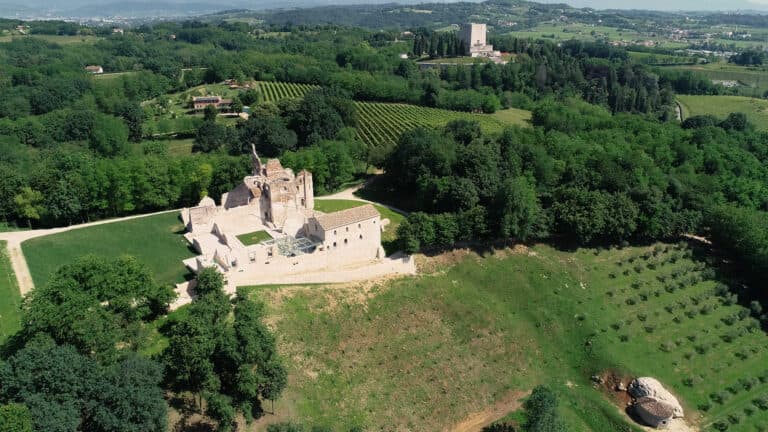
A recommended destination for lovers of history and antiques, Collalto Castle is a grand fortification built in the first half of the 12th century at the behest of Ensedisio I, feudal lord and Count of Treviso. Surrounded by the ruins of the ancient village, the massive tower dominated the surrounding territories crossed by the Piave River.
Enveloped at nightfall by an occult and threatening aura, the imposing bulk of the fortress is the place where the horrifying story of the death of Bianca da Collalto took place, whose tragic demise is worthy of one of Edgar Allan Poe’s most terrifying tales.
The desperation of Bianca da Camino over the departure for war of Tolberto da Collalto, the nobleman to whom the girl was deeply attached, aroused the terrible jealousy of Aicha da Camino, who, to avenge her wounded pride, waited for the count’s departure and ordered the young woman to be walled up alive and left to agonize in the dark dungeons of the castle, condemning her to die of hunger and thirst.
According to legend, the ghost of Bianca da Collalto still wanders the castle’s rooms today, and the spectral laments of her tormented soul can still be heard.
Castle of San Salvatore
Where is the Castle of San Salvatore?
The powerful fortress towers over the top of the hill of the same name, which Alberico da Romano, podestà of Treviso, had sold to the noble Collalto family in 1245.
In 1312, Count Rambaldo VIII obtained from Emperor Henry VII total political and administrative jurisdiction over the counties of Collalto and San Salvatore, ensuring considerable autonomy for himself and his family over the surrounding territories while remaining under the control of Treviso and later the Serenissima.
Site of a Franciscan monastery in the 16th century, later converted into a silk mill in the Napoleonic era, the Castle of San Salvatore is enriched by spectacular pictorial works by Renaissance artists such as Il Pordenone and Francesco da Milano.
Like the fortress of Collalto, the Castle of San Salvatore did not escape the heavy cannonades of the First World War, which, although compromising its structure, could not erase the magical, enigmatic, and arcane aura that distinguishes the stunning medieval castle and makes it a coveted destination for mystery lovers.
Abbey of Santa Maria del Pero
Where is the monastery of Santa Maria del Pero?
The monastery of Santa Maria del Pero is located at Via Monastero, no. 3, 31050, Monastier di Treviso (TV).
The foundation of the solemn Benedictine abbey, originally dedicated to Saint Peter, dates back to the second half of the 10th century thanks to a donation from Otto I. The monastery was later dedicated to Santa Maria Assunta in the 13th century.
The ancient soul of the abbey still seems populated by phantom presences, perhaps too attached to these places to be able to detach themselves. According to various testimonies, within the walls of the monastery the distant echo of praying monks continues to resound, whose liturgical chant accompanies processions that take place at nightfall.
Though seemingly unsettling, the spectral apparitions do not appear to corrupt the peaceful and restful environment of the monastery. On the contrary, more nostalgic than tormented, the souls of the Benedictines seem to regret the sacred and quiet splendor of what was once their refuge, and in returning, they betray their presence by slamming a door or window, or reciting a prayer aloud, arousing the curiosity or unease of guests.
Abbey of Sant’Eustachio
Where is the Abbey of Sant’Eustachio?
The Abbey of Sant’Eustachio is located at Via Collalto, 1, 31040 Nervesa della Battaglia (TV).
The harmonious and placid natural setting in which the Benedictine site is situated seems to invite calm meditative recollection, prayer, and introspection.
A landmark in the historical, archaeological, and cultural landscape of the territory of Nervesa, the foundation of the Abbey of Sant’Eustachio is attested by the papal bull of Alexander II from 1062, according to which the construction of the ecclesiastical building took place at the behest of Rambaldo III of Collalto (a noble feudal lord of Lombard origin, lord of Lovadina and Santa Felicita Collalto) and his mother Gisla.
The looting and depredations of the Napoleonic period, combined with the issuance of a decree of secularization and suppression of the abbey by Pope Pius IX, began a long state of neglect of the place of worship, whose structure would be irreparably devastated by massive Austrian bombardments during the First World War.
The constant devastations suffered over the centuries, however, have not managed to erase the true soul of the ancient Benedictine site, consisting of its thousand-year history and kept alive by historians, restorers, volunteers, and all visitors who show curiosity towards the invaluable cultural and artistic mosaic that characterizes our territory.
Black Masses at the Abbey of Sant’Eustachio
In recent years, the ancient sanctuary has been the center of satanic cults, whose occurrence is evidenced by the presence of small candles placed in a ritual position and traces of vandalism carried out with spray paint, from which the Latin phrase “memento mori” stands out, meaning: remember that you must die.
Residents have also reported sightings of fires near the abbey ruins and sounds of drums during the night.
Visiting the Abbey of Sant’Eustachio, a historical and architectural monument immersed in greenery and steeped in mystery, will make Halloween a memorable day.
The Ezzelini Tower
Where is the Ezzelini Tower?
Located at via Castellaro, 27, 31020 San Zenone degli Ezzelini (TV), the white stone fortification dominates a hill from which you can admire the fabulous panorama of the territories once belonging to the da Romano family. The serene natural setting of green slopes marked by lush rows of vineyards and shady woodland extensions surrounding ancient sanctuaries contrasts with the horrifying events that marked the end of the da Romano family, whose tragic fate was consummated in the stronghold where Alberico and his family had taken refuge.
Ezzelino III da Romano, the Terrible
A belligerent Venetian condottiero, Ezzelino III da Romano was a fervent supporter of Frederick II of Swabia, Emperor of the Holy Roman Empire, from whom the pugnacious Ghibelline received the appointment as imperial vicar of Lombardy. Driven by ambitious expansionist aims, the conqueror subjugated the territories of Bassano, Belluno, Brescia, Padua, Treviso, Trento, Vicenza, and Verona, establishing under his dominion what can be defined as a proto-signoria.
Politically weakened after the death of Frederick II, Ezzelino showed himself so hungry for power that he attracted the hostility of Pope Innocent IV, who excommunicated him in 1254.
Defeated at Cassano d’Adda in 1259, Ezzelino III was captured at Soncino and, refusing treatment, let himself die on September 27 of the same year.
The Massacre of the da Romano Family
With the death of Ezzelino III, a coalition formed by the municipalities of Treviso, Padua, Vicenza, Verona, and Mantua besieged the castle on Colle Castellaro, where Alberico, Ezzelino’s brother, and his family had taken refuge.
Betrayed by the German soldiers, the stronghold was stormed, and on August 26, 1260, the last members of the da Romano family were brutally executed: the women burned alive, the men beheaded. Alberico, before being decapitated, was tied to the tail of a horse and dragged through the brambles.
Centuries after the chilling slaughter, numerous testimonies from local residents claim to have heard the heartbreaking laments of Ezzelino III and his family echoing among the ruins of the fortress.
Castle of Conegliano
Where is the Castle of Conegliano?
Located at via Coderta, 3, 31015 Conegliano (TV), the imposing 12th-century fortification is one of the most representative monuments of the municipality of Conegliano, as well as one of the most historically, architecturally, culturally, and artistically significant buildings in the province of Treviso.
The imposing structure is recognizable by the majestic bell tower, whose chimes formally marked the beginning of the City Council.
The interior spaces of the elegant architectural complex currently house the Civic Museum of Conegliano, which features several itineraries tracing and illustrating fundamental elements of the municipality’s cultural heritage: from a varied collection of archaeological finds dating from the Paleolithic to the Roman era, to splendid sacred paintings and frescoes from the Renaissance, as well as various artifacts and finely crafted works recovered from ancient churches in the area.